God Owed Joseph for Blocking Esau's Eye and Paid in Cows
Esau came over the ridge with four hundred men and Jacob put his family in order. The smallest boy walked out and stood in front of his mother.
Table of Contents
 Click for full size
The Boy Who Stood in Front of His Mother
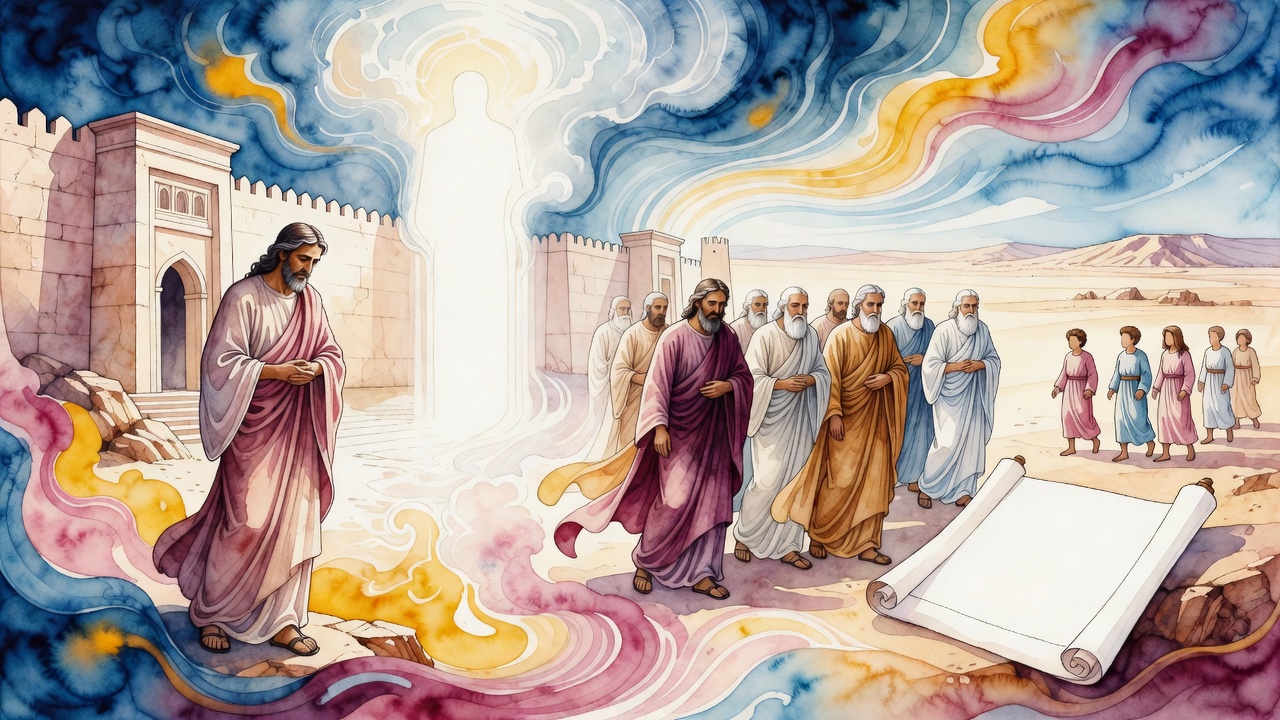
Jacob arranged them the way a man arranges what he is prepared to lose. The maidservants and their children went out first. Leah and hers came behind them. Rachel was last, and Rachel's son was with her, and out in front of all of it Esau was coming down with four hundred men.
The maidservants approached and bowed. Leah approached with her children and bowed.
Then the verse names the last pair, and it names them in the wrong order. Joseph, and then Rachel. The son before the mother.
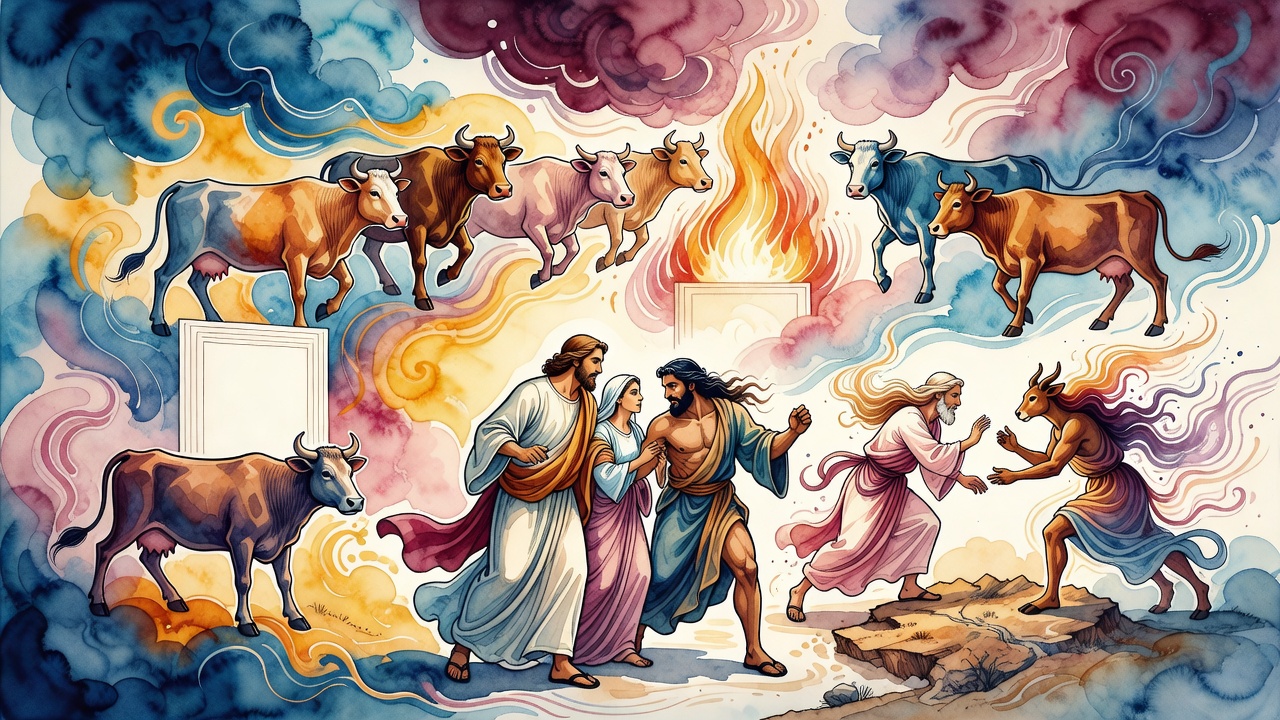
He had done the arithmetic himself while the line was forming. That man has a covetous eye, he said, and he is not going to put it on my mother. He was a child. He got out in front of her and stood as tall as he could and made himself into a screen, and Esau came the rest of the way down and looked at a boy.
A Debt God Said He Owed
Rabbi Berekhya taught in the name of Rabbi Simon what God said about that.
It is incumbent upon Me to repay you for that eye.
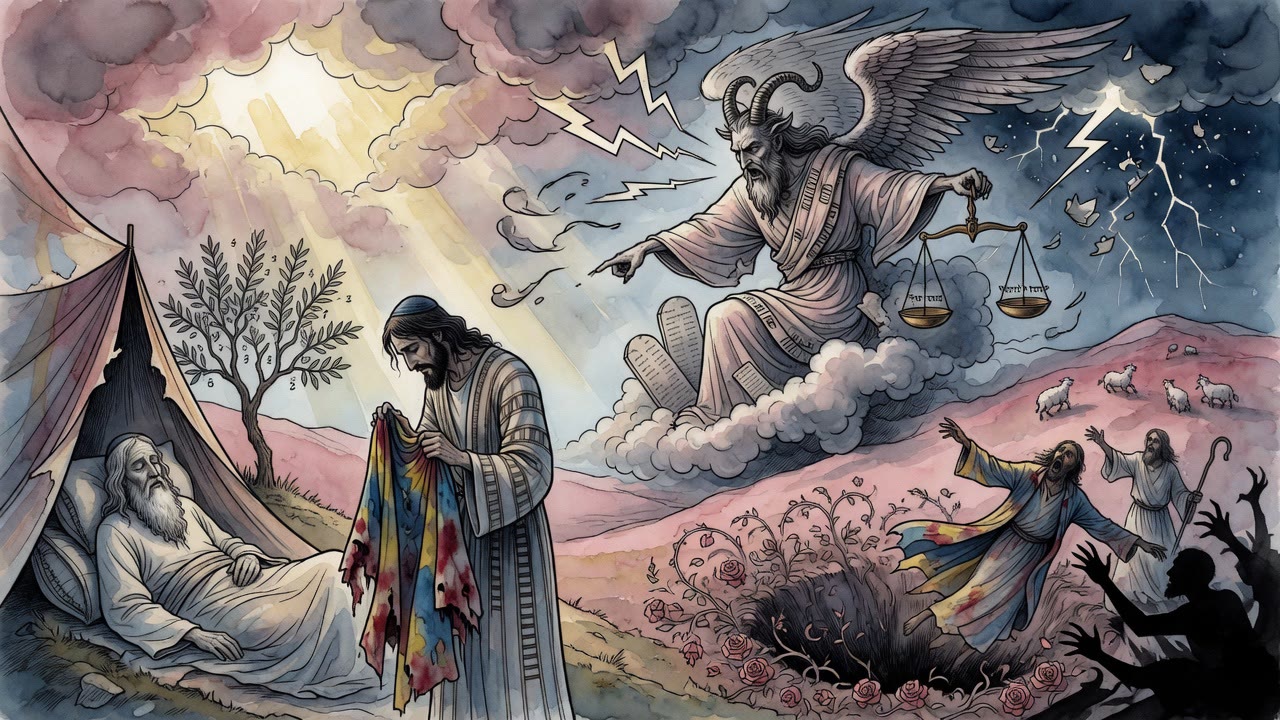
The receipt got written into the blessing Jacob gave Joseph on his deathbed, in a phrase that has been carrying three meanings ever since. Joseph is a fruitful tree, a fruitful tree beside a spring. The word for spring is also the word for eye, so the line reads as a tree that grew tall enough to cover an eye. The word for fruitful sounds like the word for cows. And the same root gives the word for paying a debt.
Blocked an eye. Raised by cows. Paid in full. One phrase in a dying man's mouth, holding all three.
They Rushed Him Out and He Stopped to Shave
The payment took twenty-two years and started with a dream.
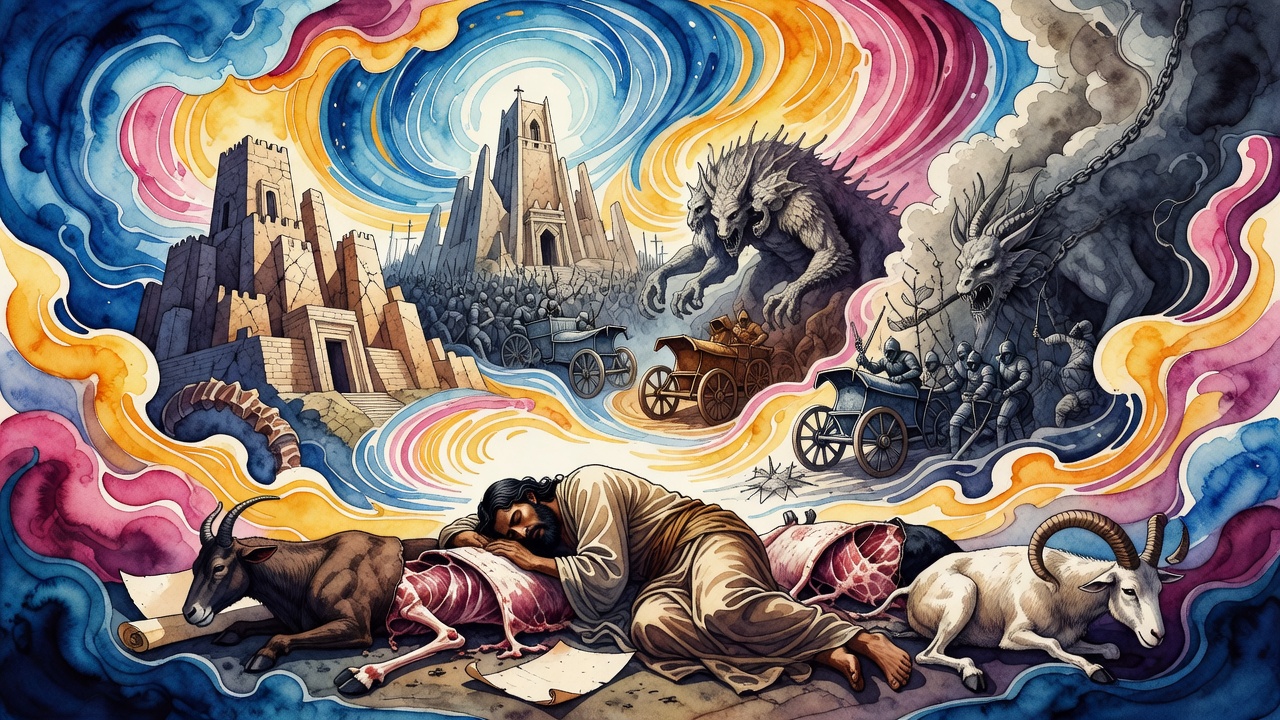
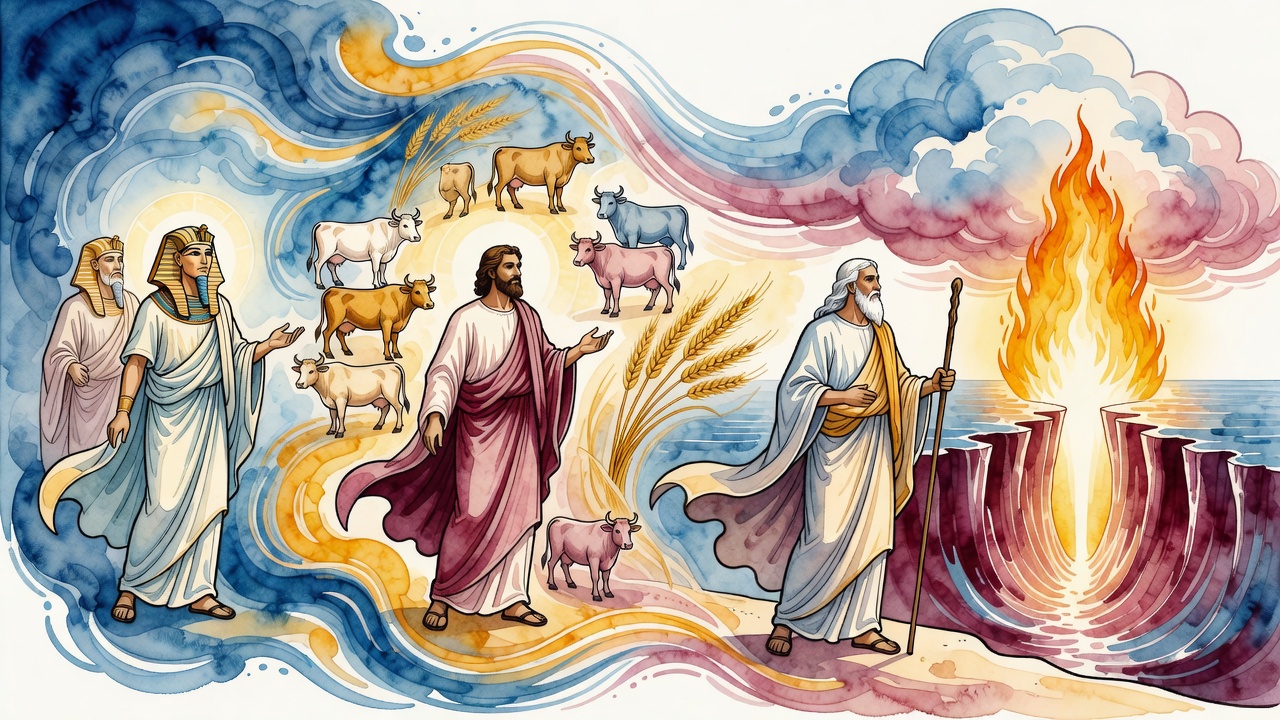
Seven fat cows came up out of the Nile and grazed, and seven starved ones came up behind them and ate the fat ones and stayed thin. Seven full ears of grain, seven scorched ones, and the scorched ones swallowed the full. The magicians of Egypt had readings for it and every reading slid off. Then the cupbearer remembered a man he had promised not to forget.
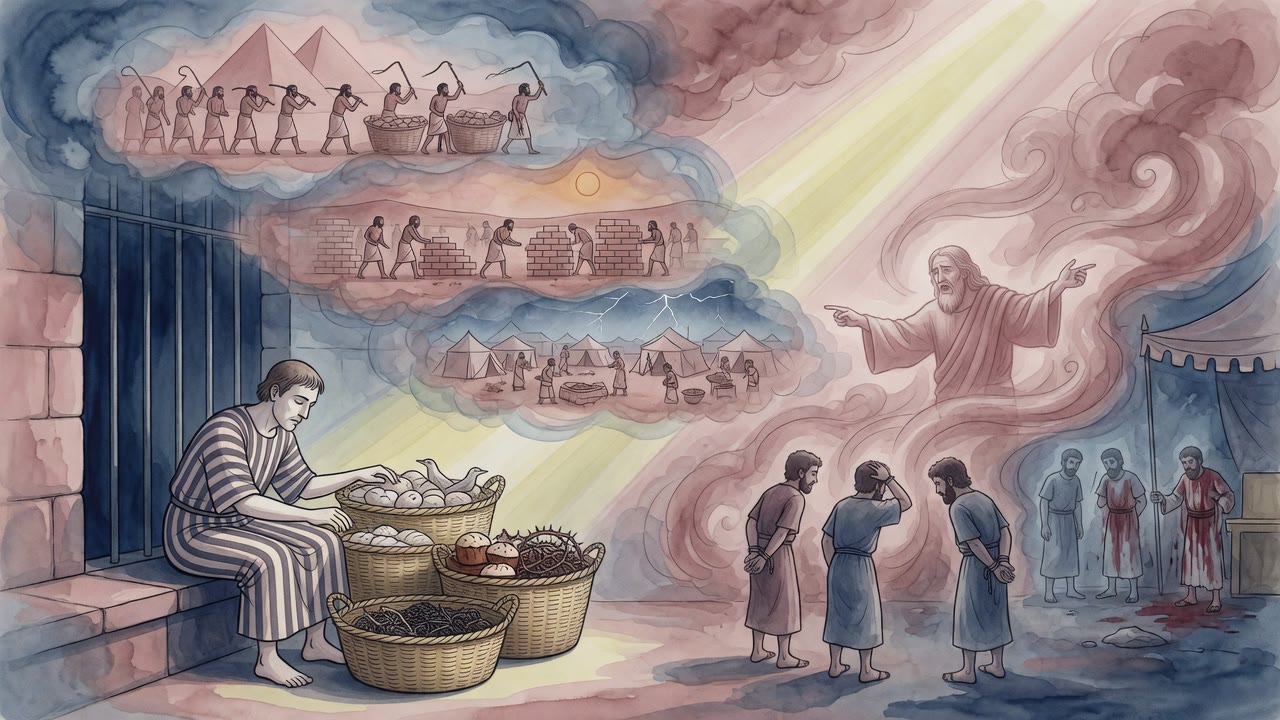
They came down into the pit for him at a run. Everything about that morning was speed, the guards hauling him up out of the dungeon, the throne room waiting, a king who had not slept.
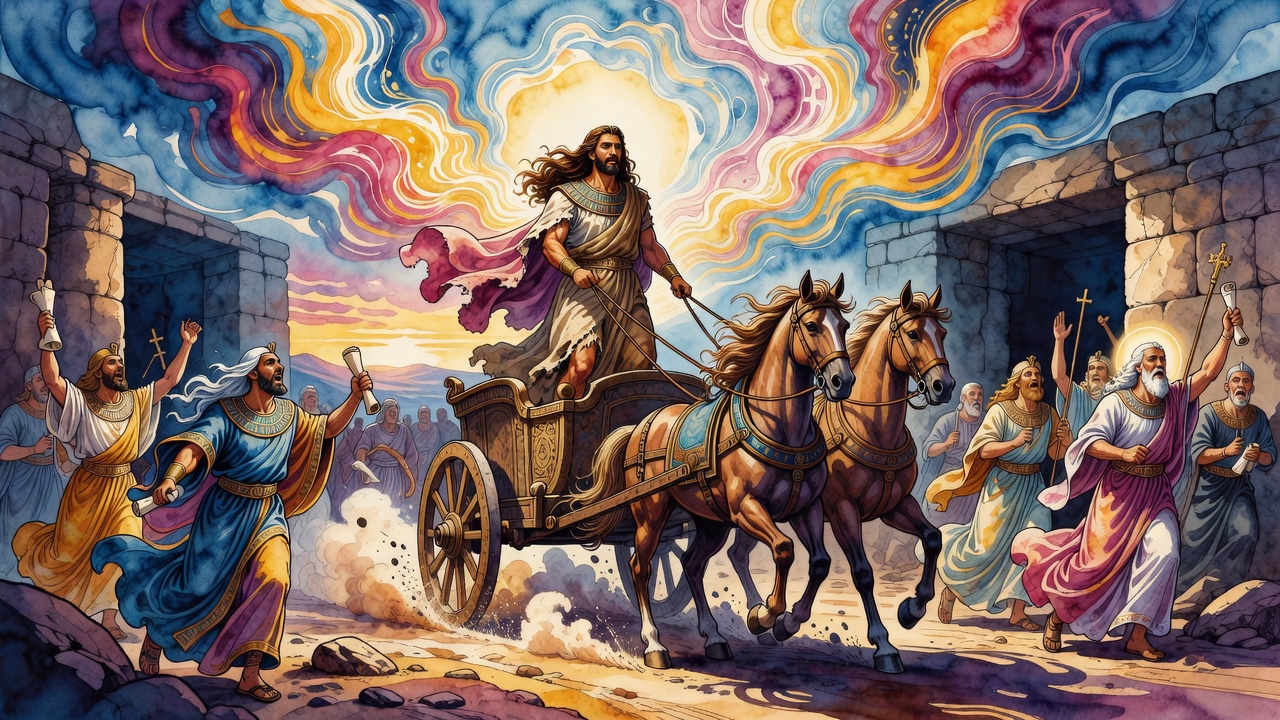
Joseph made them wait while he shaved and changed his clothes. He had been in a hole for years and he was not going to walk in front of a crown looking like it. The rabbis noticed that although others were rushing him, the shaving was his own idea, and they filed it under respect for royalty.
Not by Me
He got the first sentence out before Pharaoh could finish flattering him.
"Not by me. God will respond for Pharaoh's peace."
A prisoner standing in front of the man who can free him or kill him, being told he is famous for interpreting dreams, and the first thing he does is hand the whole thing back to the one who started it.
It ran in the family afterward. Asher's daughters were beautiful enough to be married into royal houses, dressed in scarlet and fine things, and his brothers counted him fortunate for it. Naphtali's inheritance was the valley at Ginosar, which ripens so fast the sages compared it to a doe let loose, so his people got the first fruit of the season into a king's hands before anyone else could, and they knew what to say while they were standing there. If the king was displeased with them when they came in, he was not displeased with them when they left.
How Long the Famine Should Have Run
The arithmetic of the hunger was argued for centuries.
Rabbi Yehuda said fourteen years, seven for the cows and seven for the withered stalks, because that is what Pharaoh saw. Rabbi Nehemya said twenty-eight, because Pharaoh saw it and then described it out loud to Joseph, and the telling counts. The other sages said forty-two, because Pharaoh saw it, and said it, and then Joseph repeated it back to him, and every recital of a decree adds its own weight.
Rabbi Yosei ben Hanina said it lasted two years. Two. The famine stopped the day Jacob came down into Egypt, and forty years of desolation were left owing on the account until the days of Ezekiel, when Egypt paid the rest.
A boy stepped sideways in a line of women and children and put his body between his mother and a look. Everything after that was settlement of the debt: the cows, the grain, the ring, the chariot, and a country that stopped starving the moment his father crossed the border.
← All myths