Rabbah Fled the Tax Collectors and Died Ruling a Leprous Mark Clean
Denounced for hiding twelve thousand students from the poll-tax, Rabbah ran through the marshes of Babylonia until heaven itself summoned him.
Table of Contents
The villages were empty, and the king's men did not understand why. Twice a year, in the weeks before Passover and again before the Feast of Tabernacles, the tax collectors of the Persian crown walked into town after town to take the annual poll-tax, and found no one. Doors shut. Fields untended. Twelve thousand men gone all at once, every year, as if the land swallowed them. The collectors followed the empty roads until the roads led to a study hall in Pumbeditha, where Rabbah bar Nachmani sat teaching the Talmud, and the twelve thousand sat in front of him.
 Click for full size
To the crown this was not learning. It was theft. A man who could empty the tax rolls for two months of every year was a man hiding the empire's silver inside the word of God, and the king signed an order for his arrest.
The Word Reached Pumbeditha Before the Soldiers Did
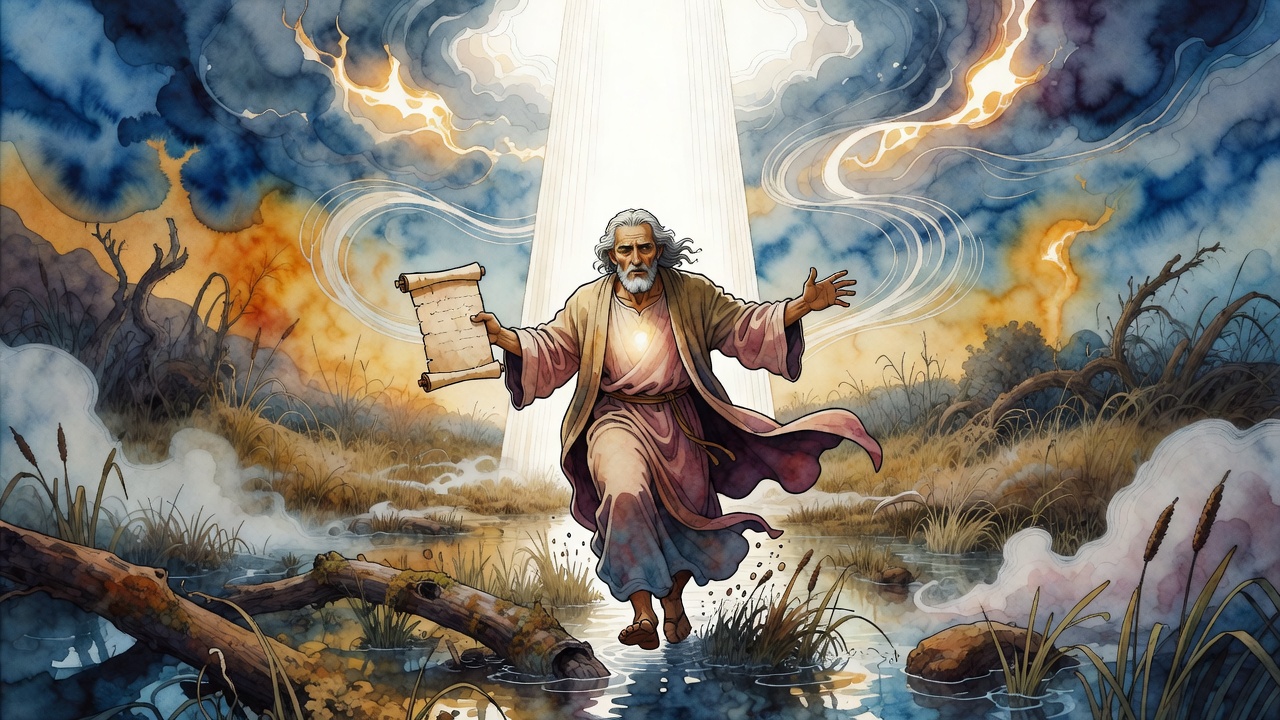
Rabbah did not wait at the gate to be taken. He ran. From Pumbeditha to Akra, from Akra to Agmi, from Agmi to Sichin, from Sichin to Zeripha, to Ein d'Maya, and then back to Pumbeditha, doubling through the marsh-towns of Babylonia, sleeping where the reeds were thick and the water hid a man's tracks. The greatest mind in the academies of the east had become a thing the soldiers chased through swamp grass.
And by the kind of turn few accounts dare, the royal messenger sent to seize him and the fugitive he hunted came to the same inn on the same night, and neither knew the other's face.
Two Cups Too Many at the Inn
The innkeeper set wine before the king's agent and poured. Two cups. The man drank them both, and when the table was cleared his head wrenched around on his neck until his face stared backward over his own spine.
This was the work of the shedim. Pairs are an open door. Drink an even number of cups and you have counted out a welcome for the demons, who answer the count. The innkeeper, shaking, went to the quiet guest in the back room for help, never guessing he was begging the very man his guest had come to arrest.
Rabbah told him what to do. Set the table again. Pour again, but this time an odd number, so the count breaks the pair and shuts the door the wine had opened. The innkeeper obeyed. The agent drank the odd cup, and his face turned forward on his neck, and the demons let him go.
Healed, the man remembered his errand. "The one I am hunting," he said, "is in this house." He took Rabbah and locked him in a room. "If I could free you and lose only my own life, I would," he told him. "But they would not stop at my life. They would take it slowly. I cannot let you go." Rabbah prayed against the wall, and the wall opened, and he was gone into the swamp again.
Under the Tree at Agma
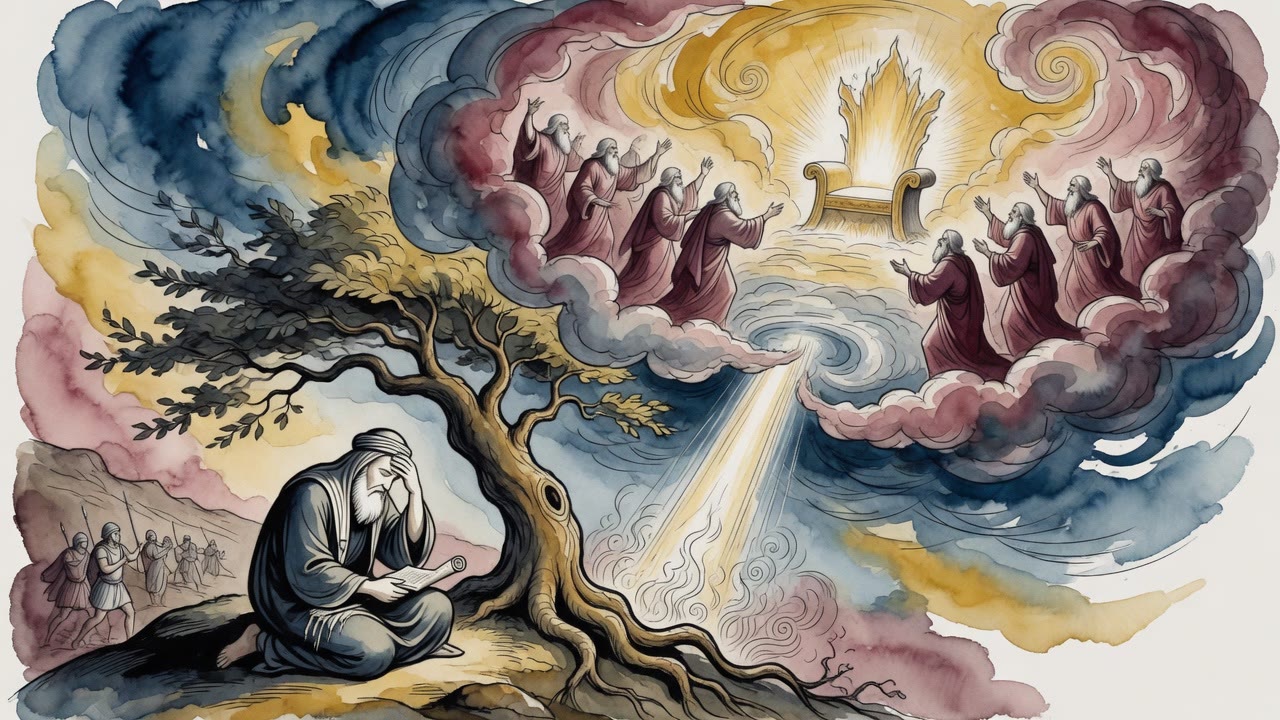
He came at last to Agma and sat beneath a tree and opened a difficult passage in his mind, the laws of leprous marks and the laws of tents, the two domains where he had once said of himself, "In these I stand alone." His lips moved over the words. He could not stop reciting, and that was his armor.
Far above the tree, in the academy of the firmament, the sages of heaven were locked in a quarrel they could not end. A particular leprous hair, by the law of Leviticus, was it clean or unclean? The Holy One, blessed be He, ruled it clean. Every voice of the heavenly academy ruled it unclean. The court of heaven stood deadlocked, God on one side and all the sages on the other, and they asked who alive could break the tie. One answer came back. Rabbah bar Nachmani, who stood alone in exactly these laws.
The Reed of Death and the Last Word
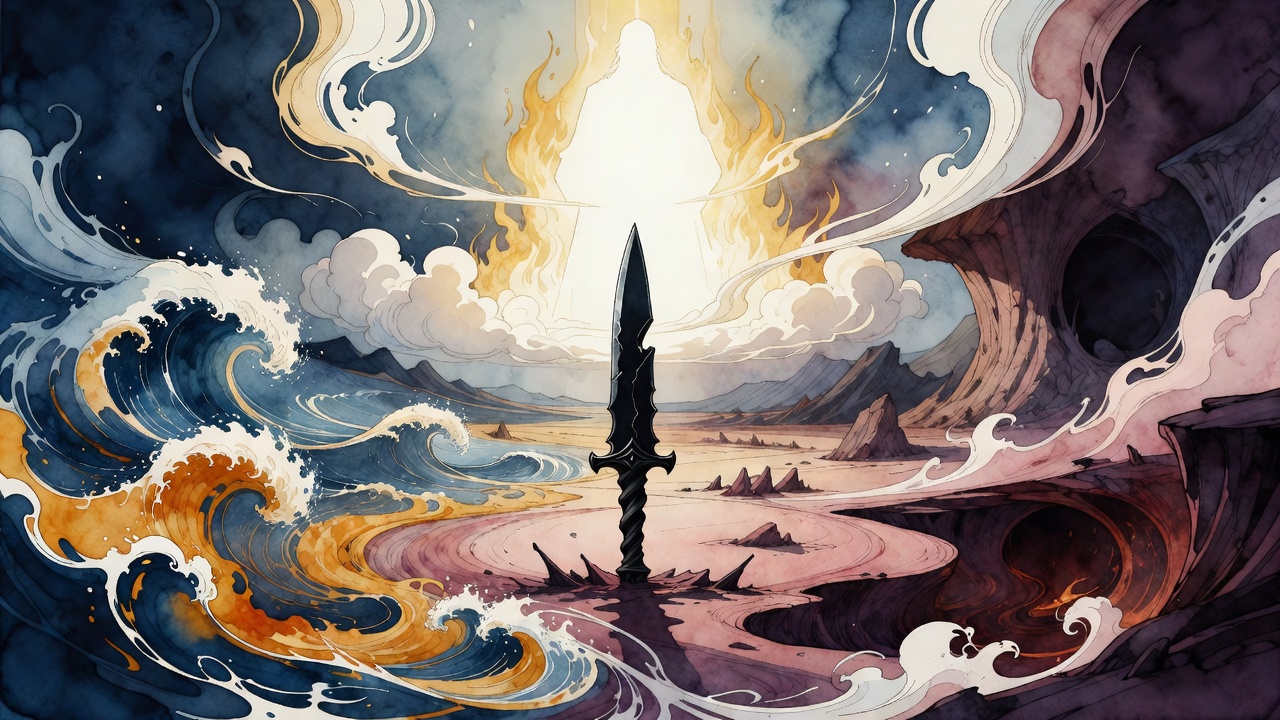
The Angel of Death was sent down to fetch him. But the angel could not lay a hand on a man whose mouth never stopped moving over Torah, and Rabbah's mouth did not stop. So the angel took another shape. He raised the sound of a Persian cavalry troop, hooves and harness and the roar of soldiers crashing through the reeds toward the tree, the very thing Rabbah had fled across six towns to escape.
Rabbah heard the empire coming for him at last. "Better to die by the angel," he cried, "than fall into their hands." And in that breath the voice of heaven asked its question across the deadlocked court. Clean or unclean? "Clean," said Rabbah, and with the word his soul left him under the tree, the empire's phantom hooves still thundering through the marsh.
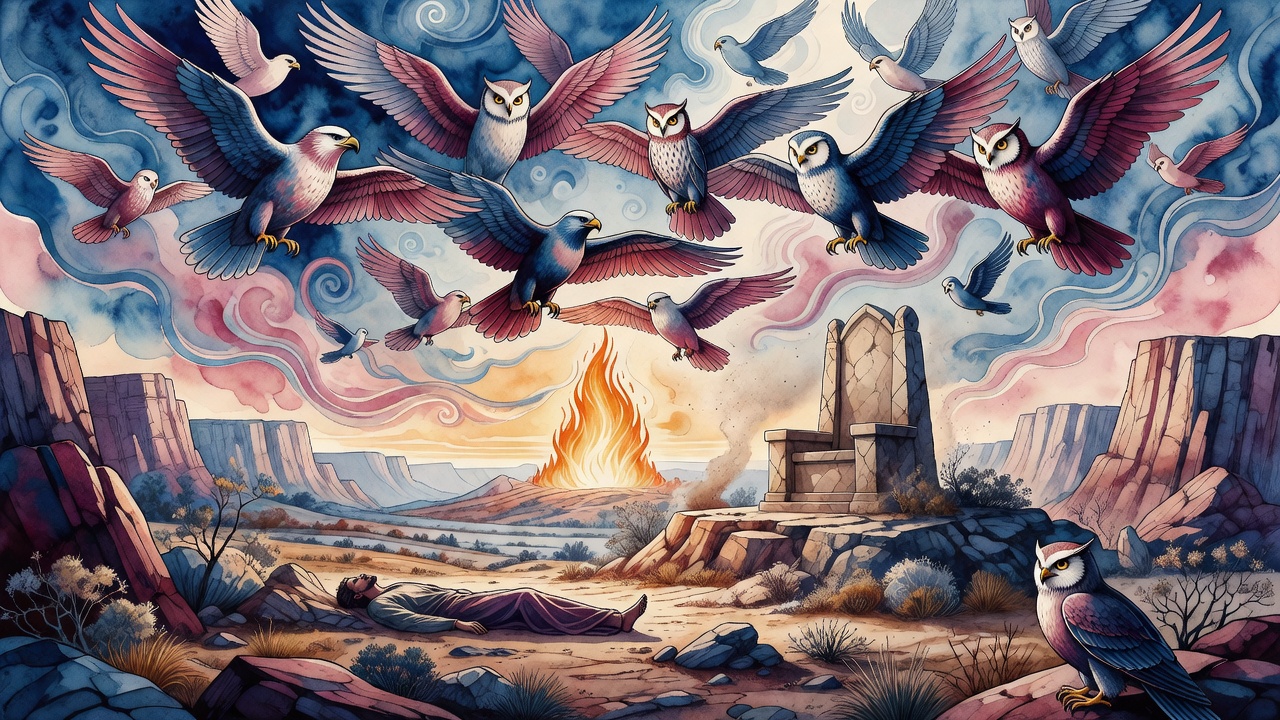
A voice broke from the sky. "Blessed are you, Rabbah bar Nachmani, for your body is clean, and clean was the word on your lips when your spirit went out." His body lay alone in the open field. Then birds came, a great wheeling flock from every quarter of the sky, and locked their wings into a roof of feathers over him, holding a shadow against the sun. The disciples of Pumbeditha, hunting the swamp for their master, saw the dark turning cloud of birds and ran toward it, and found him beneath the canopy.
A scroll fell out of heaven into Pumbeditha. It named him admitted to the academy of the firmament. On the day he died a tempest tore through the valley, and the soldiers who had chased him from town to town were scattered into the storm with nothing left to seize.
← All myths