Pharaoh's Magicians Failed at the Lice and Collapsed at the Boils
Balaam's sons copied the blood and the frogs. Dust would not become lice for them. When the boils came they could not even stand in the hall.
Table of Contents
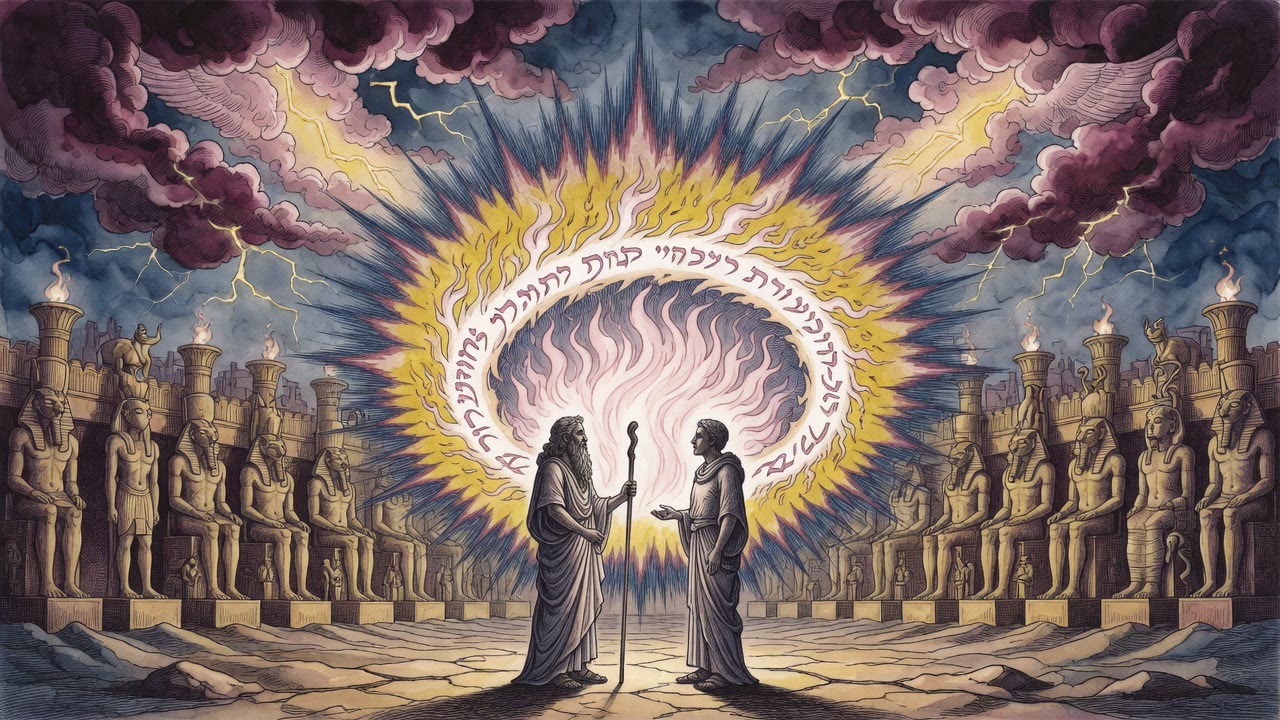
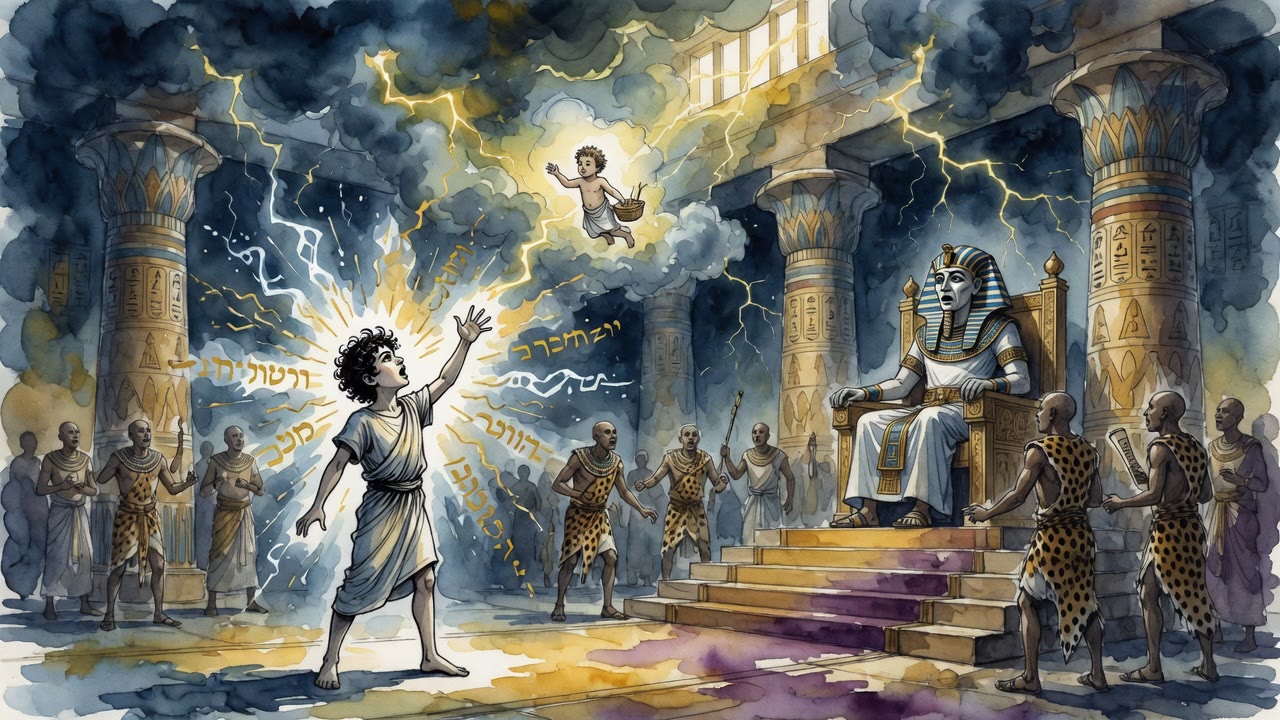
Pharaoh kept lions at the palace gates. When Moses and Aaron walked up with the first demand, the lions should have stopped them. Instead they put their heads down and fawned like dogs and stood aside.
 Click for full size
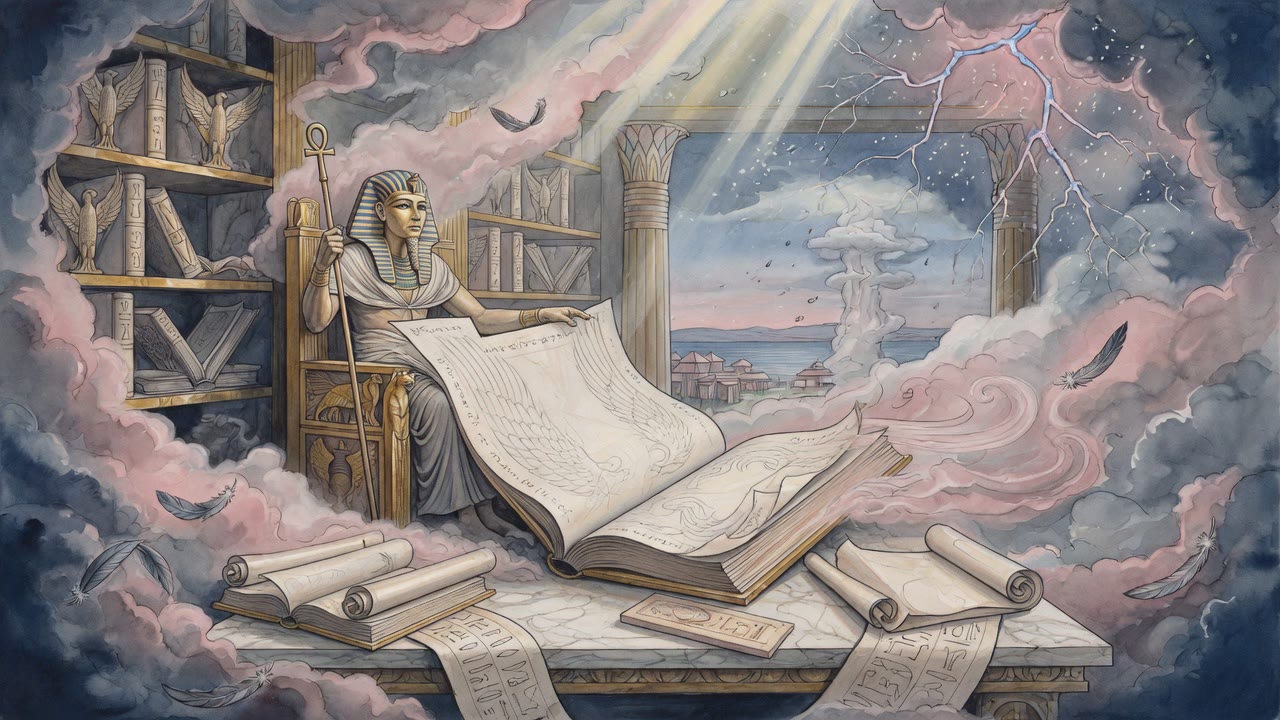
Pharaoh called his magicians. At their head was Balaam, who would later be hired to curse Israel in the wilderness. He had brought his sons Jannes and Jambres with him. Balaam heard about the lions and did not panic.
"Just magicians," he said. "We can match them."
Serpents on the Marble
Aaron threw down his rod in the throne room. It became a serpent on the marble. The magicians threw down their rods. Their rods became serpents too. For a breath the floor held a tie.
Then Aaron's serpent turned and ate the others. The magicians' rods were gone. The fact sat in the room with everyone. Pharaoh chose to read it as a draw and refused to let the Hebrews go.
Blood They Could Copy
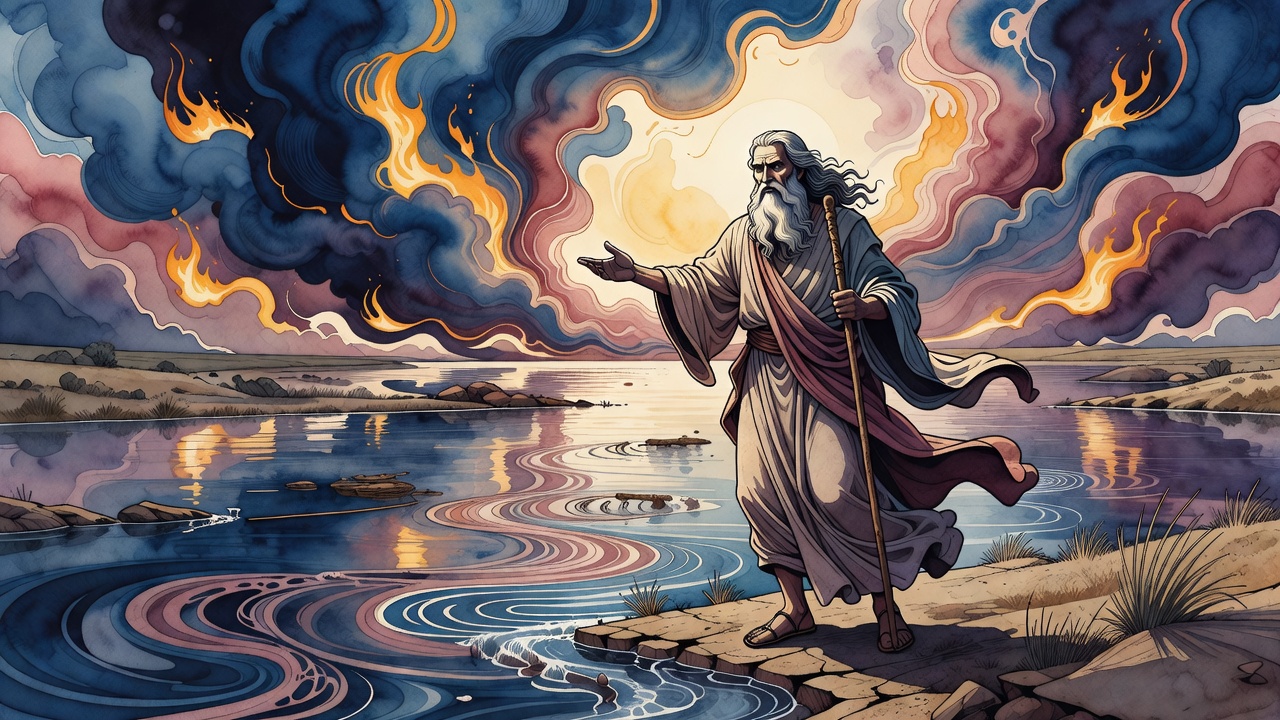
The Nile turned red and stank. Moses stood back from this one. The river had saved his life as an infant, and he would not strike the water that had carried him. Aaron stretched out his hand. The court magicians produced blood from water too, enough for Pharaoh to say the effect could be repeated and therefore proved nothing. He went home to the palace. The plague ran seven days.
The frogs followed. Moses raised his staff over the rivers and streams and they boiled up with frogs, frogs in the houses, in the kneading bowls, in the beds. The magicians produced frogs as well. They added to the problem without solving it, which was all the confirmation Pharaoh needed.
"Not yet," he said.
Dust That Would Not Live
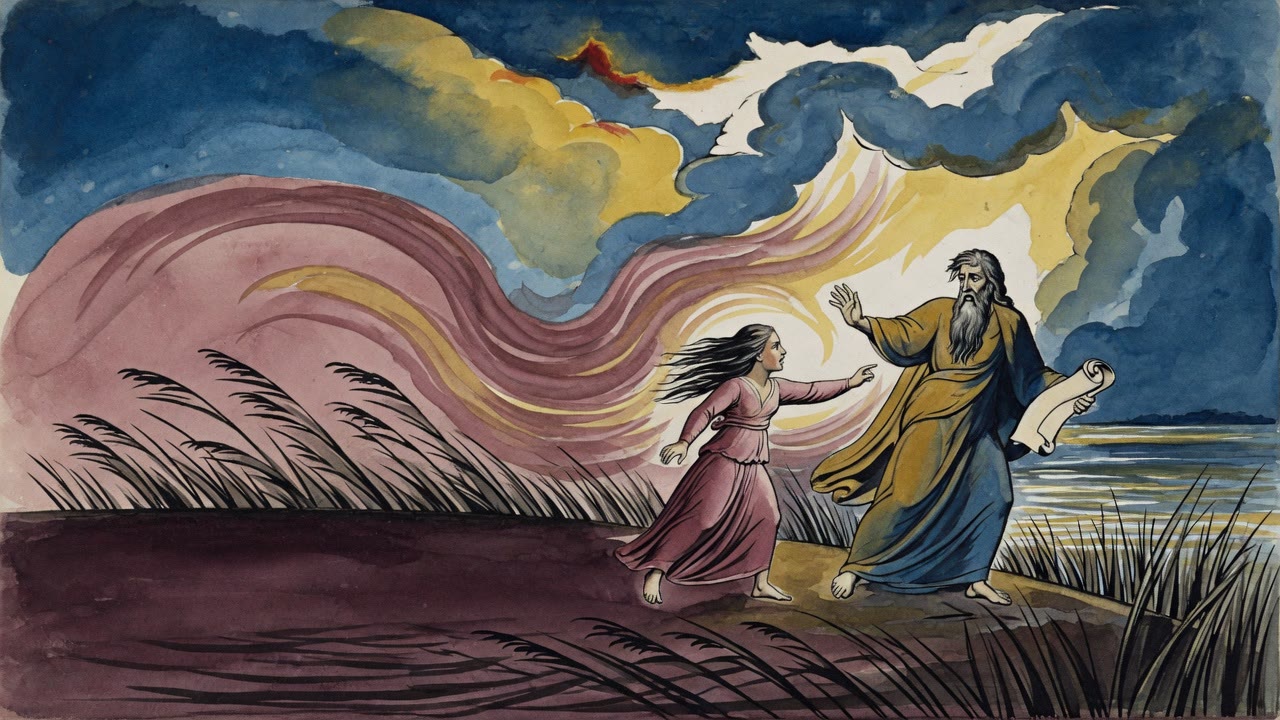
The third plague was lice. Aaron stretched his staff over the dust of the earth, and every grain of dust in Egypt became a louse, covering man and animal (Exodus 8:13). Jannes and Jambres stood over their fires and their burnings and tried to do the same thing.
Nothing happened.
They tried again. The dust stayed dust. The lice kept multiplying, and the magicians could not produce a single one. Their arts could move a thing larger than a grain of barley. A louse is smaller than that. They could flood a room with frogs by finding more frogs. They could not make dust live.
They turned to Pharaoh. "This is not by the power of Moses and Aaron," they said. "This is a plague sent from before the Lord" (Exodus 8:15). They named it the finger of God. Pharaoh's own astrologers had bent. Pharaoh's heart did not. He would not hearken to them, and the contest in the hall was already over, even if he would not leave his chair.
They Could Not Stand
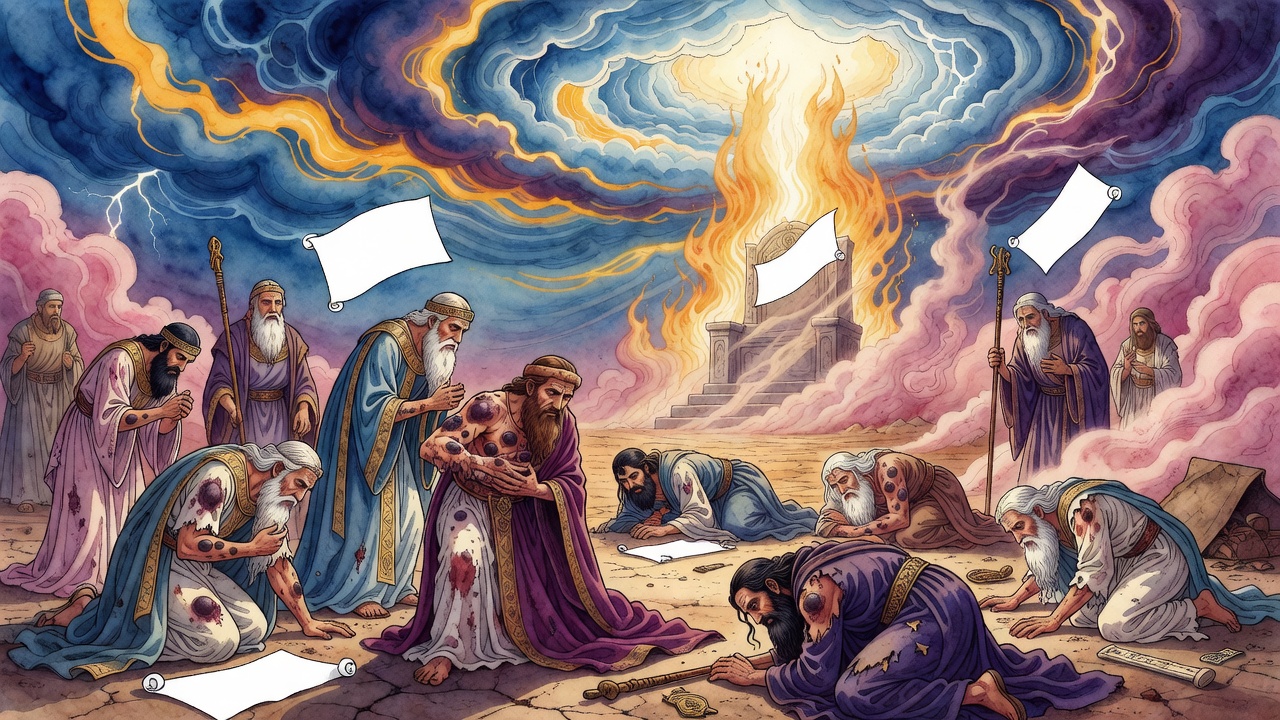
The plagues went on. Wild beasts. The cattle. Then the sixth: boils. Moses took ashes from a furnace and scattered them into the air. Burning sores broke out on every person and every animal in Egypt (Exodus 9:10).
The magicians were covered like everyone else. They could not stand before Moses (Exodus 9:11). Their bodies failed in the same hour their craft had failed at the lice. What the third plague had done to their hands, the sixth did to their legs. They left the hall. They did not come back.
Pharaoh watched them go and hardened his heart further. The lions at the gate had already chosen a side. The men who had promised to match Moses could not even stay on their feet in front of him, and still the king sat.
← All myths