Moses Made Aaron High Priest, Then Fire Killed Two of Aaron's Sons
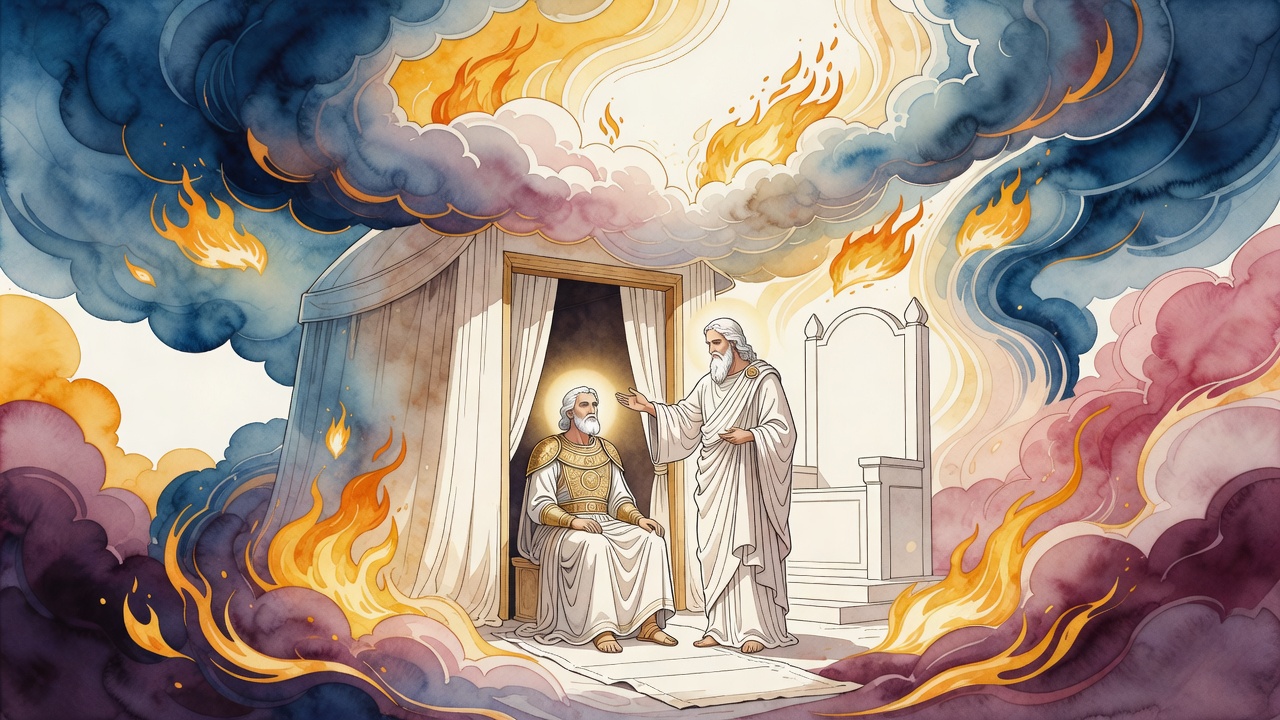
God told Moses not to whisper the appointment. Bring Aaron's sons. Bring the elders. Let the camp hear it together.
Table of Contents
Moses was going to tell his brother privately. God stopped him before he could.
 Click for full size
"Do not just inform Aaron. Bring him in. Bring his sons. Bring the elders. Announce it where the whole camp can hear it at the same time."
If the appointment is whispered to Aaron alone, someone in the wilderness will say he seized the priesthood by leaning on his brother. The charge will attach to the office and never come off. The community has to be present at the founding moment, or the institution carries a suspicion it can never fully answer.
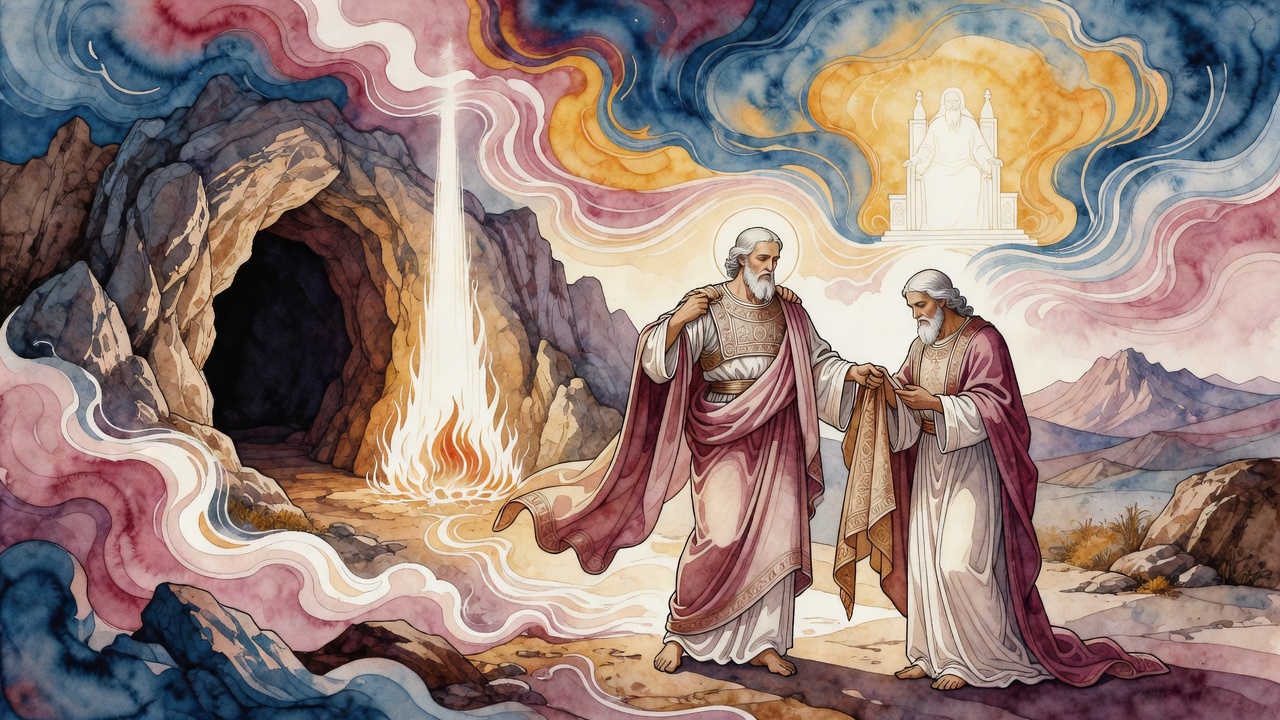
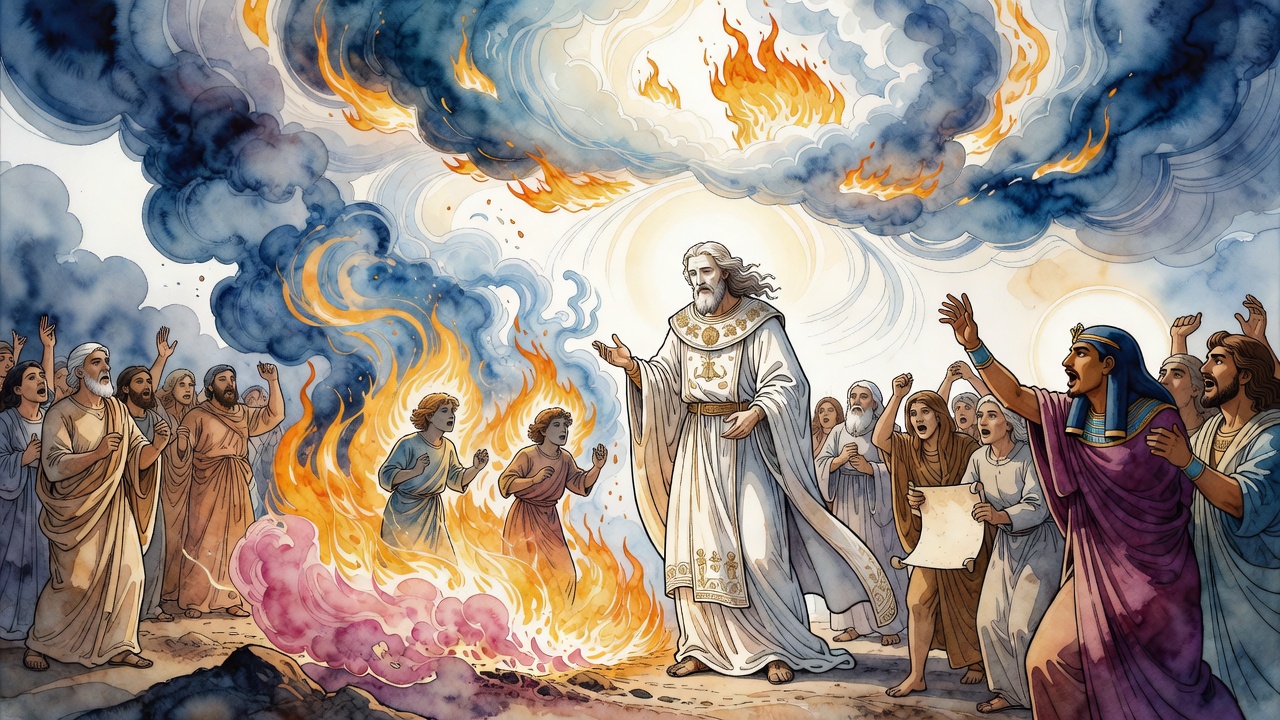
So Moses staged it. He went to Aaron first, then to Nadav and Avihu, then to the seventy elders, descending in rank from the innermost to the outermost, the same order God had used at Sinai. The robes were brought out. The anointing oil was poured. Aaron stood before all of Israel and became what he became in full view of the people he would serve.
The Fire No One Had Commanded
The inaugural service of the Tabernacle was the high moment of the wilderness. Aaron finished the offerings. He lifted his hands and blessed the people. Moses and Aaron went into the Tent of Meeting and came out and blessed the people again. The glory appeared before all the assembly. Fire came from before God and consumed the burnt offering on the altar. When the people saw it, they fell on their faces and shouted.
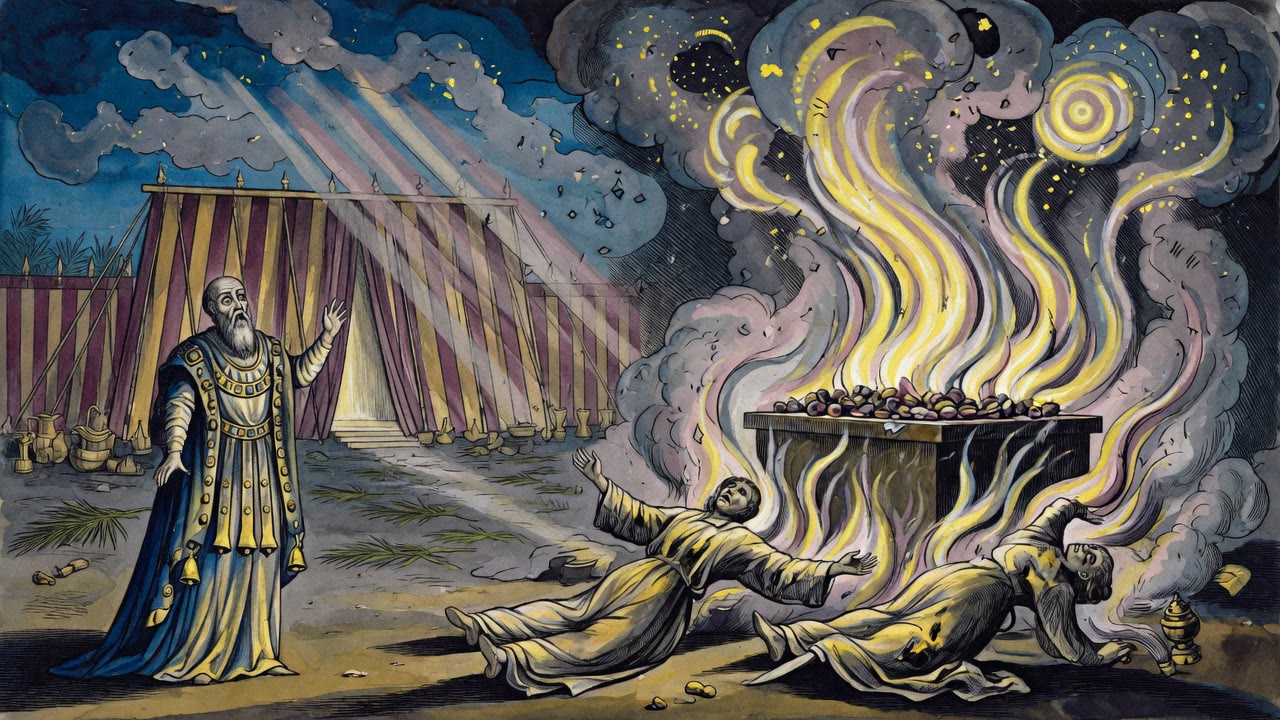
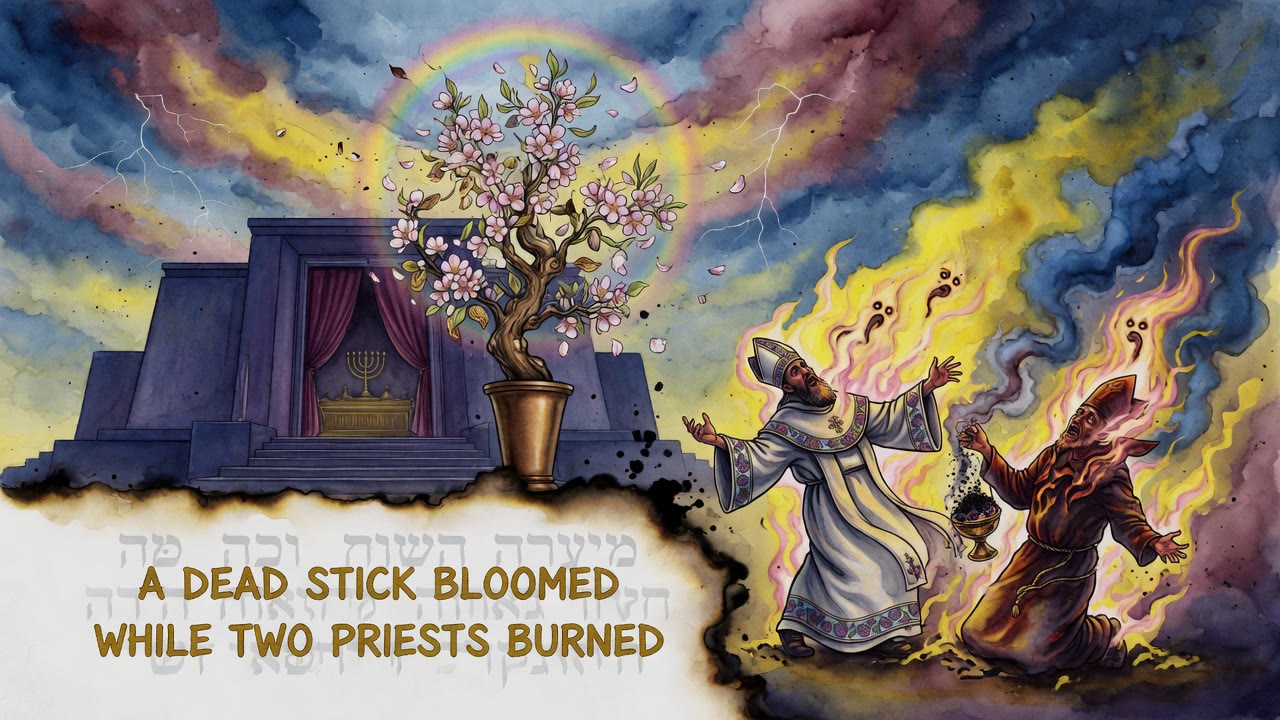
Then Nadav and Avihu, Aaron's two eldest sons, each took his fire pan and put incense on it and brought a strange fire before God, a fire God had not commanded. Fire went out from God and consumed them. They died before God.
The same fire that had eaten the offering ate the sons. The camp was still on its face. The robes were still new.
Aaron Did Not Speak
Moses turned to Aaron. He said, "This is what God meant when He said I will be sanctified through those near to Me." On Sinai God had told him the Tabernacle would be sanctified by those who glorify Him. Moses had thought it might be himself. He had thought it might be Aaron. He understood now that the sons had been nearer still.
"Your sons died to glorify the name of the Lord."
Aaron was silent. He took the blow without a murmur and without a lament. He did not rail. He did not ask why the fire that had just accepted his offering had also taken his boys. God noticed the silence. In the depth of that quiet, God addressed Aaron directly and gave him priestly law, a speech granted to a mouth that had refused to open.
Some said the sons had entered the inner sanctuary without leave. Some said they had offered the incense drunk. Some said they had presumed to rule on a point of law in Moses' presence. All of that came later. In the moment there was only a father in new robes, two bodies, and a brother trying to make the fire mean something other than waste.
The Camp of Dan Turned Him Away
Among the people in the wilderness was the son of an Israelite woman named Shelomith and an Egyptian man. His father was Egyptian, which meant that under the tribal system he had no place. When he went into the camp of Dan, the men of Dan refused him. "Each man by his own standard, with the ensign of his father's house" (Numbers 2:2). "Your father is not ours. You are not ours."
He argued. My mother is a daughter of Dan. I belong here. They pointed at the decree. Descent followed the father's line. He appealed to Moses. Moses upheld the Danites.
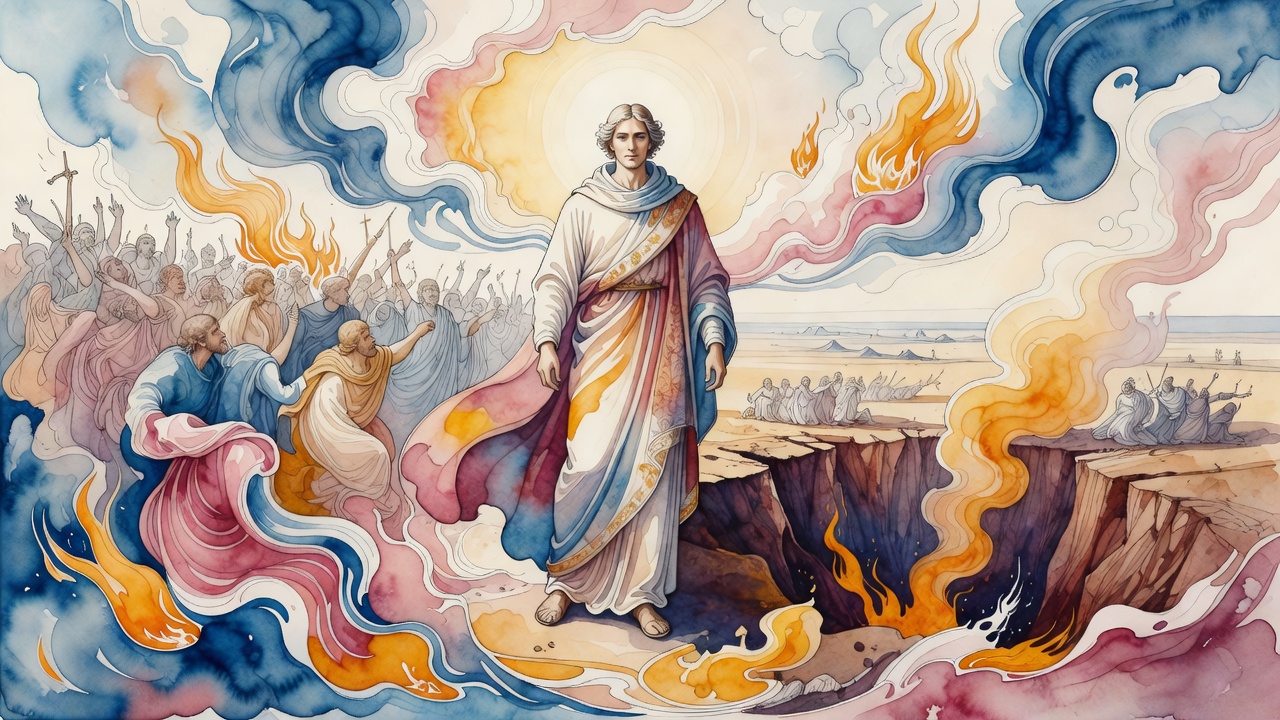
The refusal sat in him. He went back out of the camp and he blasphemed the Shem Hameforash (שם המפורש), the Ineffable Name, the Name he had heard proclaimed at Sinai. He cursed Moses with it. He mocked the newly given law of the camp that had just told him he had no banner.
The guards at the gate seized him and brought him to Moses, and Moses did not know what to do. The law for blasphemy was not yet on the books for a case this tangled. Moses held the man in custody and inquired of God.
Judgment at the Camp Gate
The answer was total. "Take the blasphemer outside the camp. Let all who heard him lay their hands on his head. Let the whole congregation stone him. Whoever curses God shall bear his sin." The statement applied to the native-born and the stranger equally. The law was now written.
Aaron, the High Priest who had stood silent at his sons' deaths, who had stood in the gap between God's holiness and human error since the day the oil ran down, was still wearing the robes when this verdict was pronounced. A man with no father's ensign had cursed the Name at the camp gate. The same camp that had watched Aaron crowned in public so no one could say he stole the office now watched a man with no office at all pay for a word.
Two sons had touched a fire they were not ready to touch. One man had touched a Name he was not permitted to aim. Aaron's silence sat between those two fires and did not explain them. The gate held. The robes stayed on. The camp had learned, in the wilderness, what it cost to stand near the flame.
← All myths