The Rose, the Dark-Ones, and the Sea of Torah
The slaughterer turned a lung and found a rose stuck where air should pass. That same cling had already taken hold in a living chest.
Table of Contents
The slaughterer turned the lung over in his hands.
 Click for full size
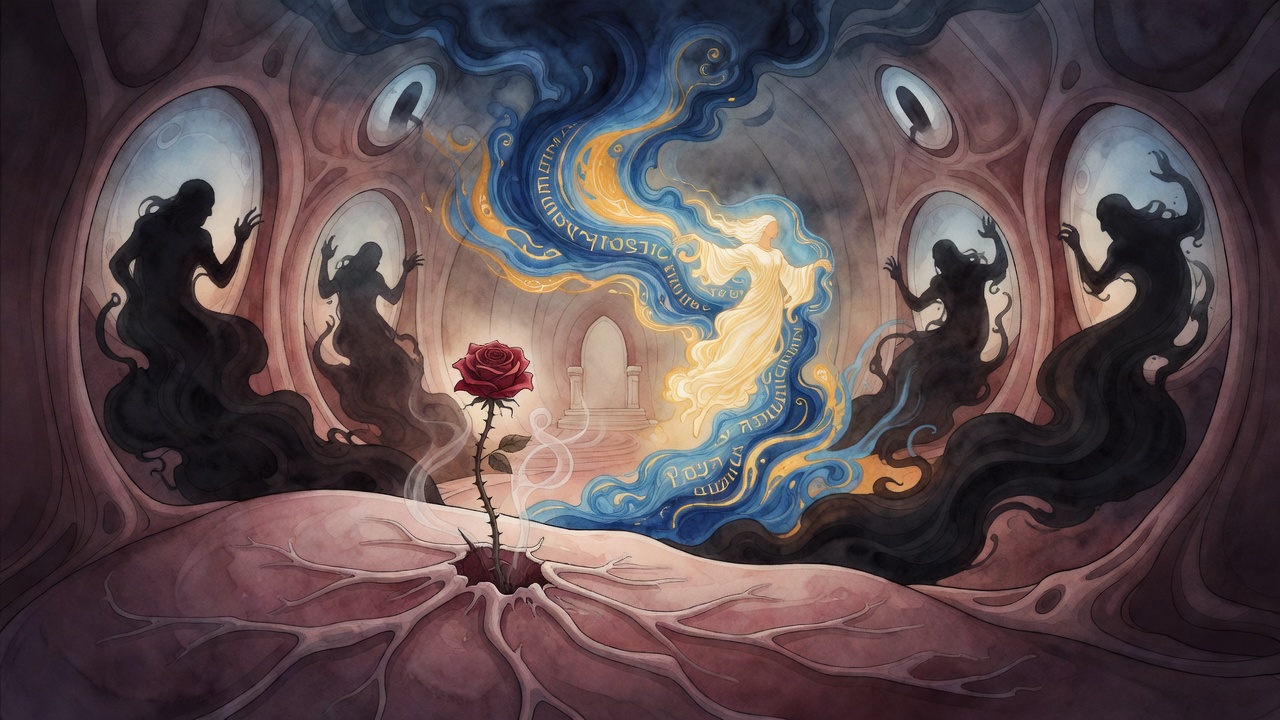
He knew the look of a clean one. Air should move through it. This one had stuck to itself. Tissue clinging to tissue, a sirkha, a cling in the wrong place. In the yard they also called that cling a rose.
A Rose Where Breath Should Move
He lifted it to the light. The rose was not a flower anyone would put on a table. It was adhesion in the wrong lobe, the lung that should have been feeding the heart turned into a closet for something that would not let go. He threw the animal aside. Unfit. Dead through the limb that would not release.
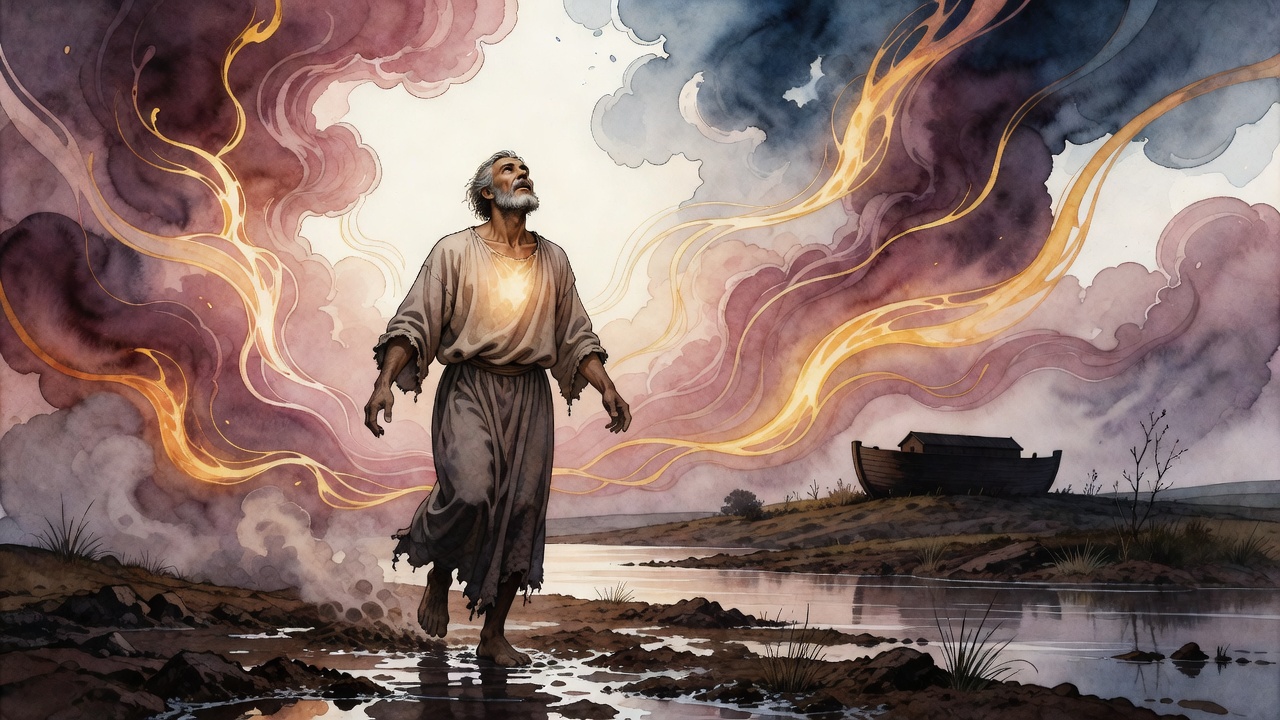
That night his own breath caught.
Not a stitch from the day's work. A cling inside the chest, as if the same rose had taken a living lung for a seat. He sat up on the bed and pressed a palm to his ribs. Air went in thin. Air came out thinner. Every offense he had refused to drop had found a spot and fastened. The animal in the yard had been a warning he could throw away. The rose in him had nowhere to go.
He walked the room. He drank. He lay down again. The cling stayed. It sat in the lobe and killed by inches, through the limb that had done the work and would not let go of what it had done.
Dark-Ones at the Windows
His eyes went next.
Not blindness. A crowding. Shapes at the windows of the eye, the way thieves crouch at an opening in a wall and wait to reach through. The dark-ones. They did not live in the eye. They lived at the sill. They blocked the look that should have found the Shekhinah (שכינה), God's presence in the world.
Morning light hit the shutter and did not open anything in him. The people in his house sat behind glass. He stood to pray and the words came out like a list. He was not missing faith. Something active had filled the windows until light could not get in. Beauty did not land. Other faces did not land. The Presence was still in the world. He could not see her from where he was standing.
Exile at His Own Table
He sat down to bread and tasted almost nothing. He was not in Babylon. He was not in Rome. He was at his own table, in his own house, with the lung clogged and the sills of the eyes thick, and that was exile enough.
The Shekhinah had not left. She does not leave. She was buried under the cling and the crowding. He felt her only as dullness, as the failure of a good thing to move him, as prayer that would not catch. A man can keep every outward condition of a Jewish life and still have the inside of him closed.
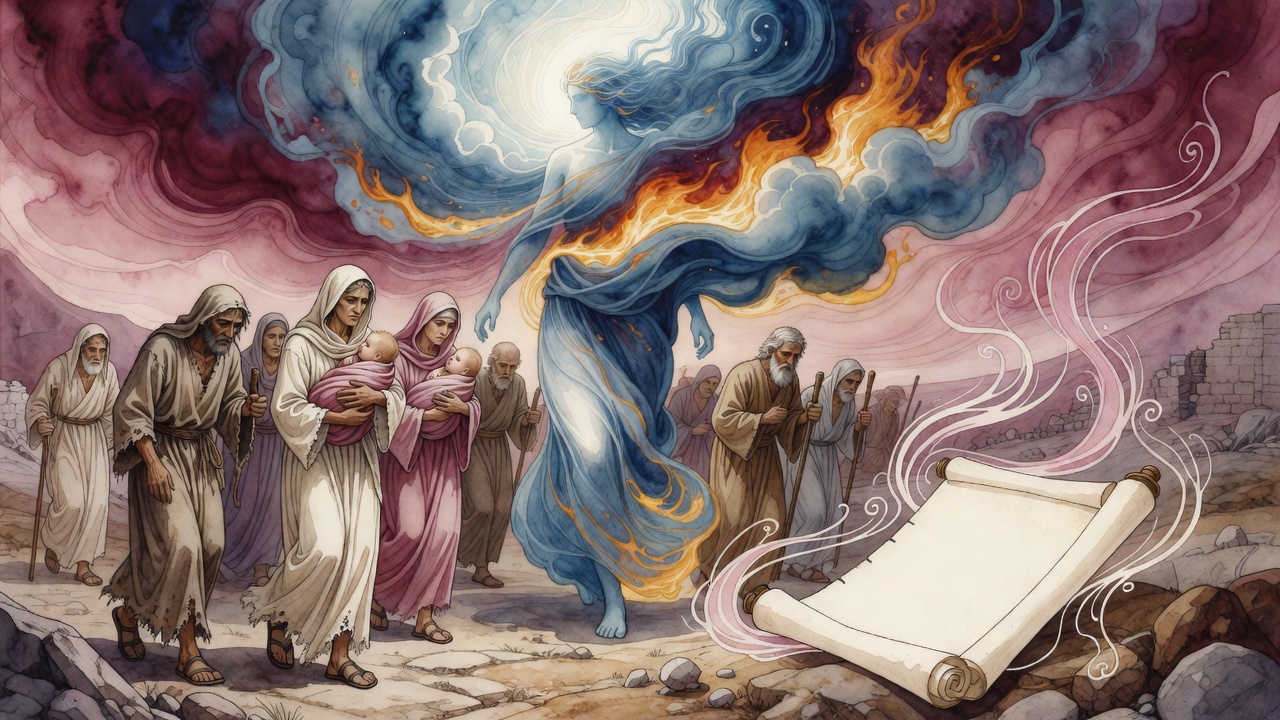
He put the bread down. He went out. In a doorway down the street, schoolchildren were reciting, heads bent, mouths moving. Scholars sat beyond them over open books. The chicks and the eggs, the Master's students and the children of Scripture, the ones for whose sake presence still consents to rest on Israel. He stopped in the street and listened. The words coming out of that room were not a list.
He Went Into the Sea
He did not need a new name for the rose. He needed water.
He sat down among the students and went into Torah the way a body goes into a sea. Not reading from the bank. Not stacking knowledge on dry ground. He got wet. He lost his footing. He swam. The sea is not gentle. It is the element a soul was built for, and when he was in it, things that had been stuck for years began to move.
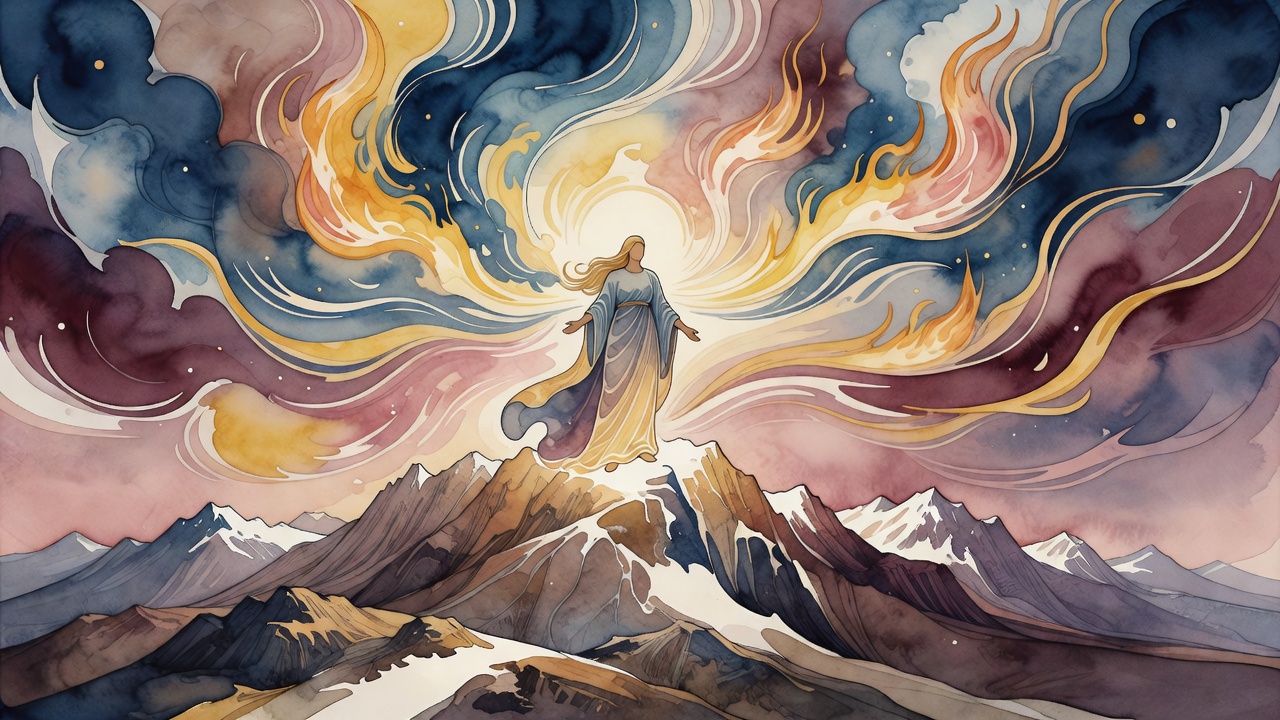
The water reached the lung. The rose loosened. It reached the windows and shoved the dark-ones back from the sills. The Shekhinah came up the way water comes up through a cleared spring, not rushing, steady, filling what had been empty longer than he could count.
He drew a full breath. The rose dropped. The dark-ones scattered. For a while the body that had been a battlefield was what it had been under the damage: a place where presence could live.
← All myths