The Sea Ran From God, Not From Moses' Staff
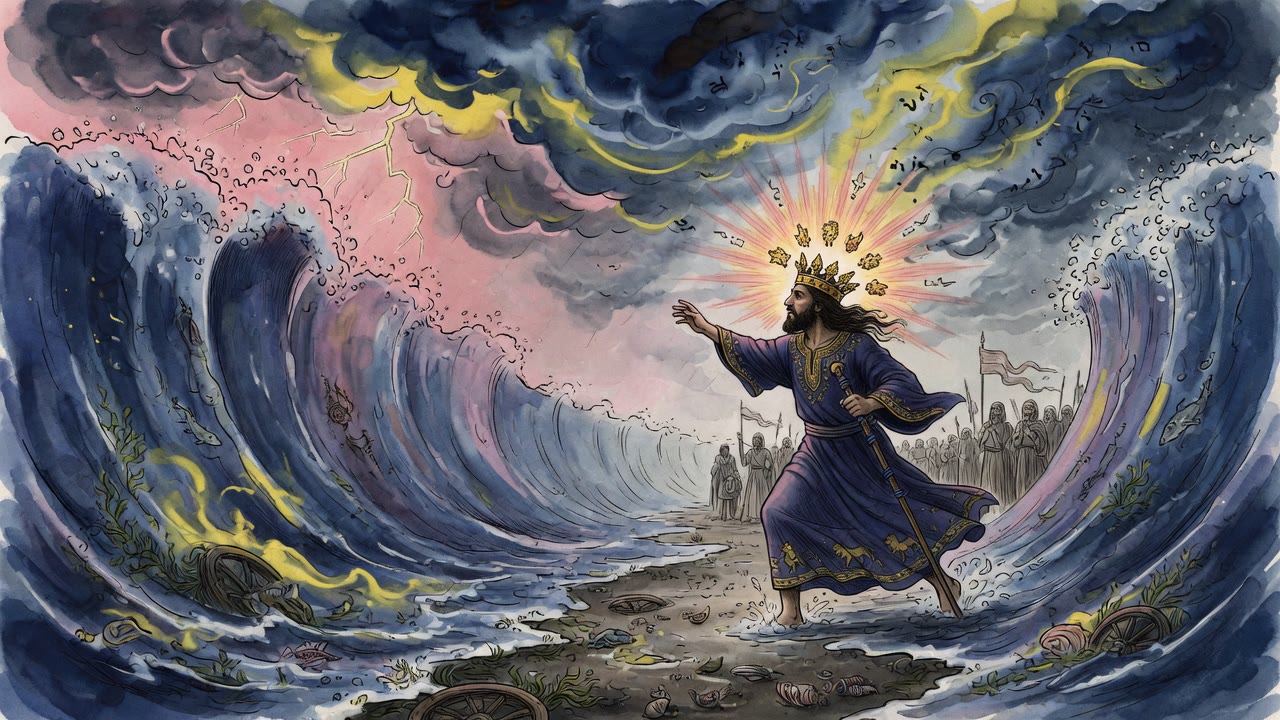
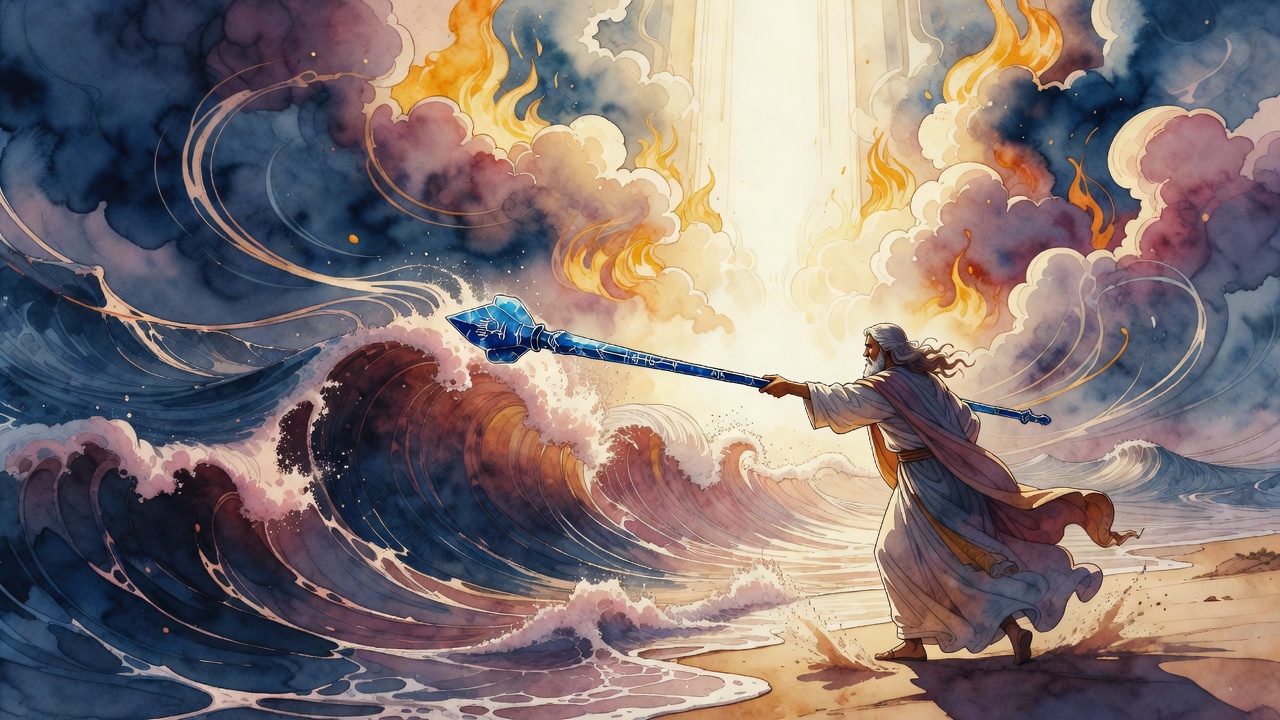
Moses stretched out the ancient sapphire staff over the water and the sea refused him, standing firm until the King Himself appeared at the shore.
Table of Contents
Moses held the staff that had been made at the twilight before the first Sabbath, handed down from Adam through every patriarch to Jethro's garden, and the sea said no.
 Click for full size
He commanded it to split in the name of the Holy One. The water stood firm. He held up the staff that had turned the Nile to blood and called down ten plagues on Egypt. The sea would not budge. Moses stood at the shore with the most powerful object in creation in his hand, the word of God in his mouth, and an army behind him, and the water refused to move.
The Purple Seller Who Fell Silent Before the King
Before the sea, before the plagues, before the commission, Moses at the burning bush had said: I am not a man of words. The sages explained his silence with a parable. A merchant walks through the street calling out that he has purple for sale, the rarest color in the world, the color of royalty. The king hears him and summons him. What are you selling? Nothing at all, the merchant says. When the king presses, the merchant finally explains: it is purple, my lord, but next to you it is nothing. So it was with Moses. Standing before the Holy One who fashioned the very mouth and the gift of speech, Moses could only confess that whatever words he had, they were nothing before the Source of all speech. But next to Israel, that same Moses became these are the words, the opening of Deuteronomy. Eloquence is relative. The man who was silent before God was eloquent before the people.
The Staff That Waited for Moses in Jethro's Garden
The staff God told Moses to take was no ordinary shepherd's rod. The sages traced its ancestry to the sixth day of creation, fashioned at twilight in the last hour before the first Sabbath, along with other objects whose making the world had not yet been ready to receive. It passed from Adam to Enoch, from Enoch to Shem, from Shem to Abraham, from Abraham to Isaac and Jacob, who carried it down into Egypt. From Jacob it went to Joseph, and when Joseph died his household goods were scattered and the staff ended up somewhere in Pharaoh's palace.
Jethro, then serving as a court magician, saw it, coveted it, and carried it home. He planted it in his garden. After that, no one could pull it free. Every hand that tried, the staff resisted. It stood in the garden like a planted thing until a stranger from a distant land walked in, read the letters engraved along its length, reached out, and lifted it as if it had been waiting for him. Jethro knew then who Moses was. He gave him his daughter and released him, because the man who could lift the staff was not a man to hold by any other means.
The Sea Refused Moses Until the King Appeared
A king owned two gardens, one nested inside the other. He sold the inner one to a buyer. When the buyer came to take possession, the gatekeeper barred him. The buyer invoked the king's name: no effect. He produced the king's signet ring: still nothing. He showed the deed of sale: the gate stayed shut. Only when the king himself walked up to the gate did the gatekeeper turn and flee. The buyer called after him: all day I spoke in your king's name and you ignored me, so why run now? The gatekeeper answered: I am not fleeing from you. I am fleeing from the king himself.
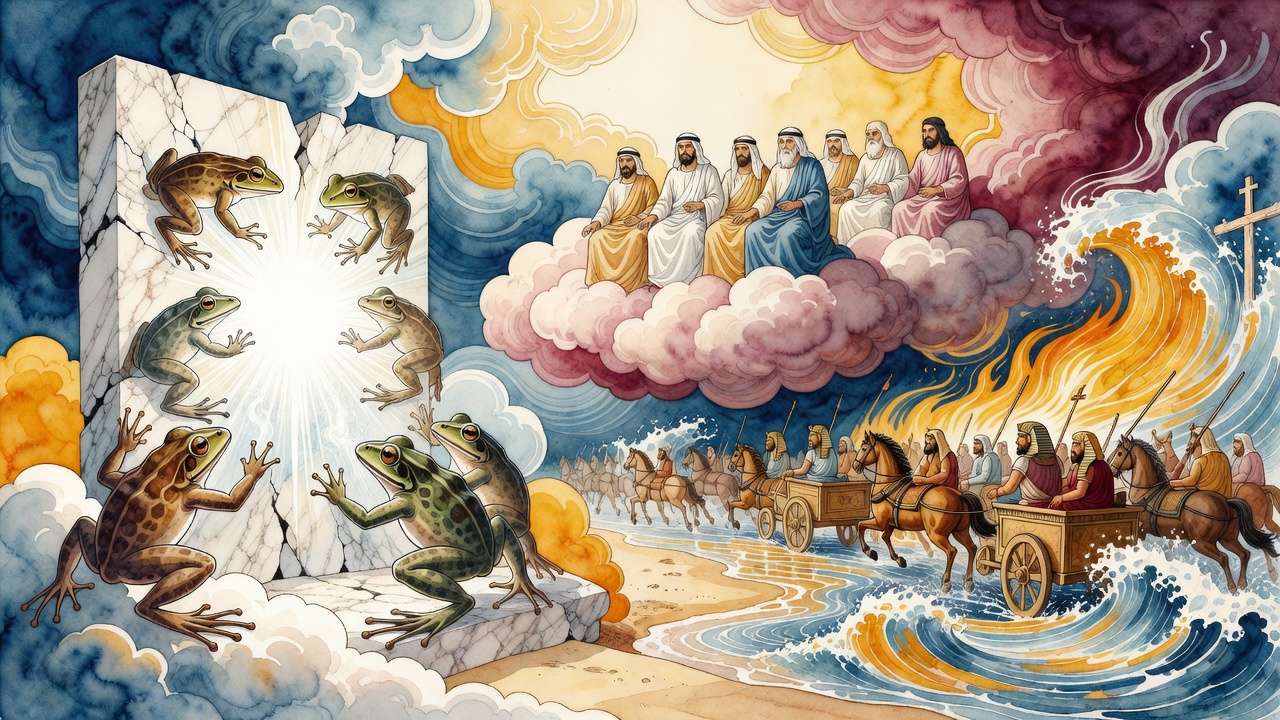
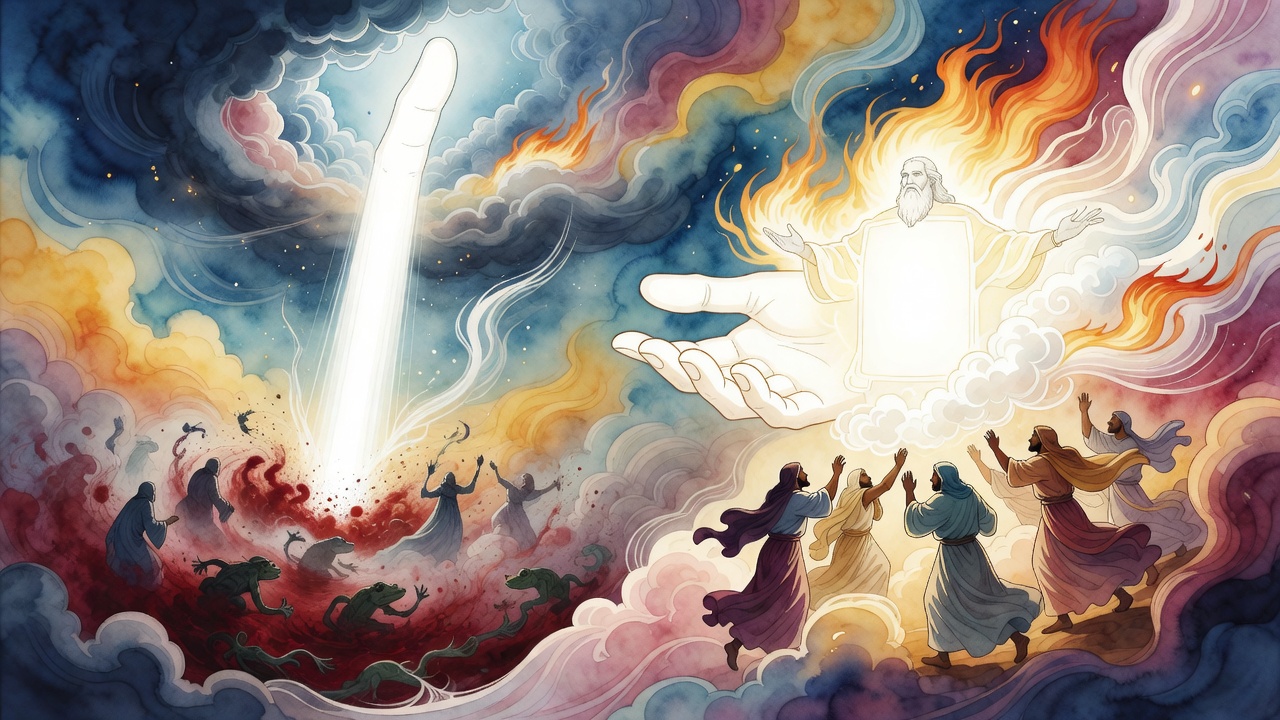
So it was at the sea. Moses' words, Moses' staff, Moses' authority were all real, but the sea did not move for any of them. The sea had been created with a prior condition, sealed into it on the first day of creation, that it would split when the time came. But the time had not been sealed to Moses' staff. It had been sealed to the appearance of God. When the Holy One arrived at the shore, the sea ran, not from the prophet or the instrument or the name invoked in the prophet's mouth. The sea ran from the King.
The Passover the Patriarchs Observed Before Egypt
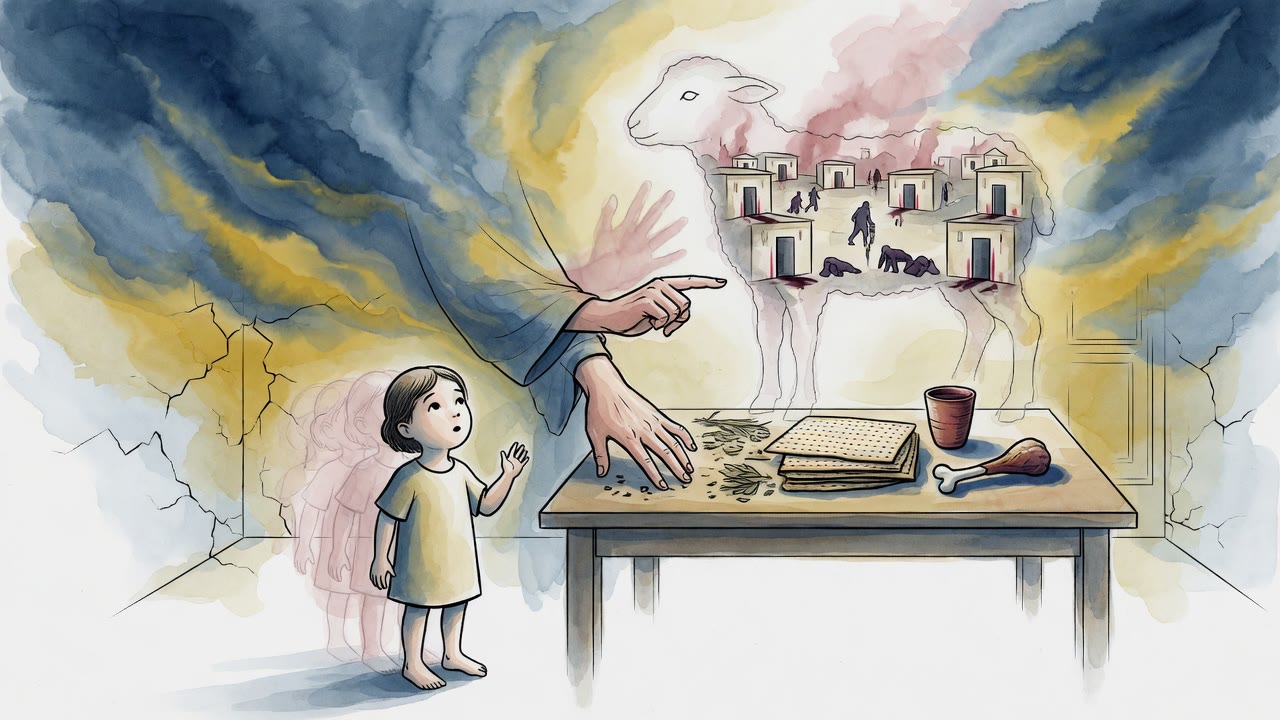
The midrash notes that Moses spent three days at the burning bush, which corresponded to yesterday and the day before. The rabbis read those three days as the three days Moses needed to consult with the elders, travel, and return to Egypt. And the conversation at the bush lasted as long as the first Passover observance that Abraham, Isaac, and Jacob had each kept in their own generations, in secret, before Israel existed as a nation, before the name of the feast had been given to the calendar. The festival was older than its occasion. The Passover the patriarchs observed and the Passover Israel would observe in Egypt were different performances of the same divine appointment, made at the same moment in the sacred year.
← All myths