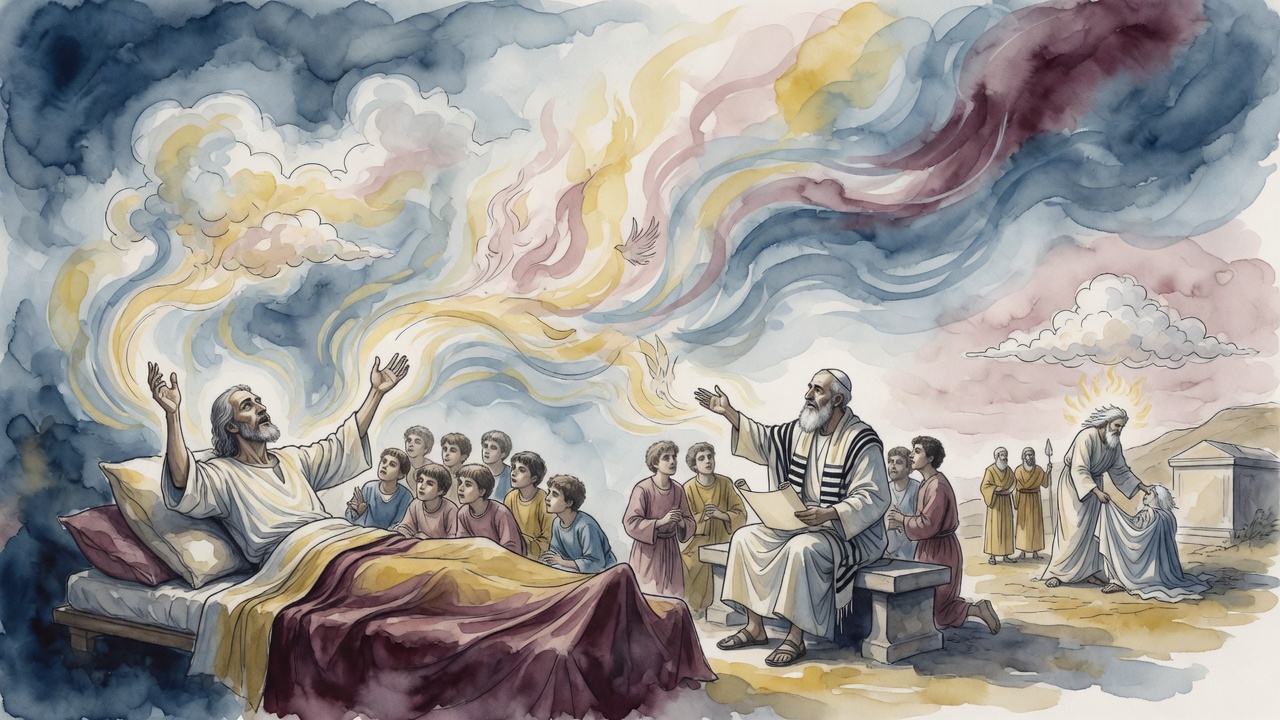
The Second Day Opened and God Grieved Over Adam
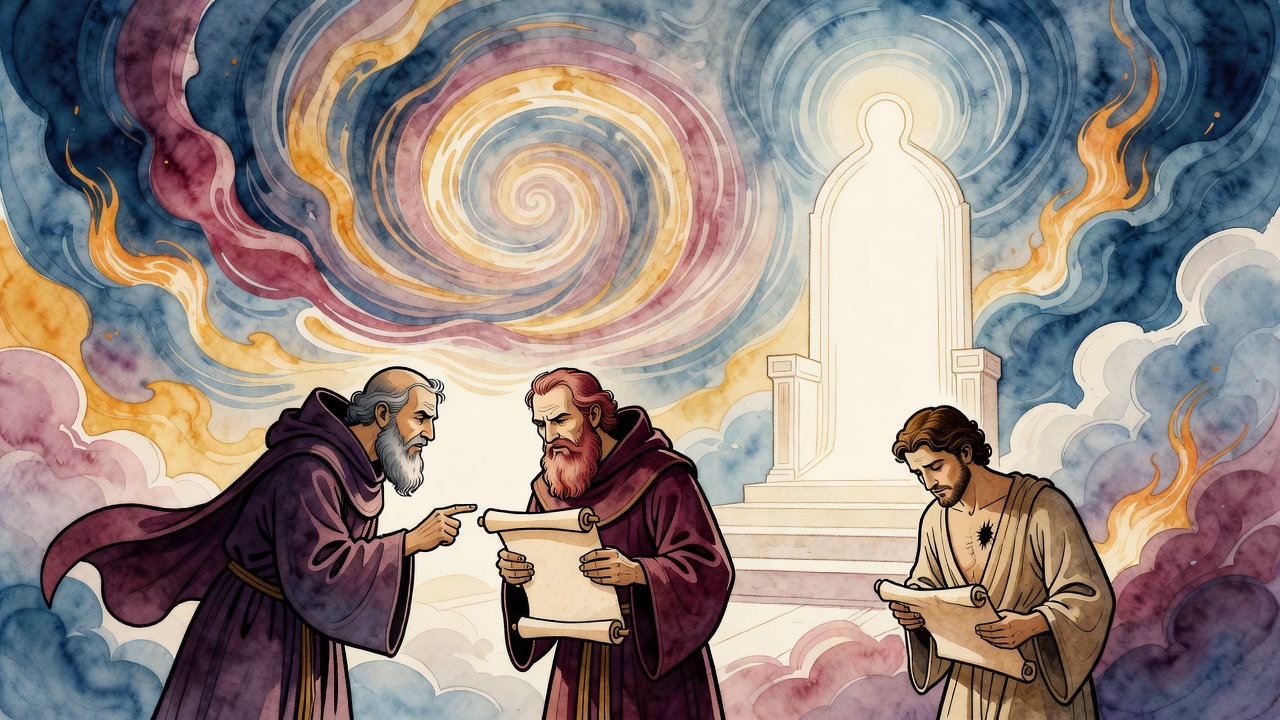
Two rabbis quarrel over a single word while the second day of creation swallows its own praise and the human carries a flaw God placed inside him.
Table of Contents
On the first day light came, and the Holy One looked at it and called it good. On the third day the dry land rose out of the water, and again the word came down like a blessing. "And God saw that it was good." But between them sat the second day, and over the second day no such word was ever spoken. The sky was split from the sea, the waters above torn loose from the waters below, and the mouth of heaven stayed shut. No praise. The day that divided the world was the only day of the six that the Maker would not call good.
 Click for full size
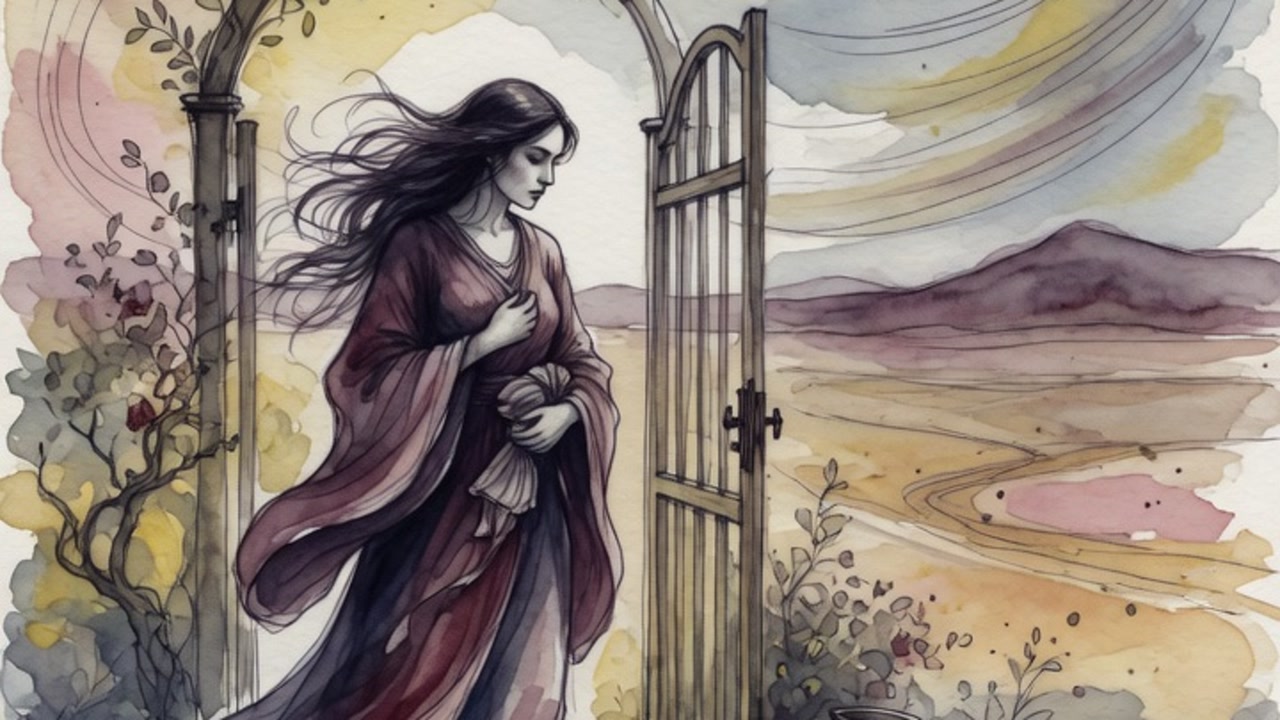
Below, where no eye had yet been made to see it, a door opened in the ground.
The Day the Pit Was Dug
That second day, while the waters were still arguing over which would stay above and which would sink, God built the place of punishment. Not a single pit. Seven, one beneath the other, each with its own name and its own torment. Sheol (the grave, the realm of the dead) came first, and under it Abaddon, and under that Beer Shahat, the well of corruption, and below that Tit ha-Yawen, the miry clay, then the Gates of Death, then the Gates of the Shadow of Death, and at the bottom Gehenna (the realm of judgment after death) itself.
The size of the thing was a kind of madness. To cross the height of a single one of these seven chambers, or its width, or its depth, a traveler would walk three hundred years. To pass through all seven, and the tract of land that stretched between them, six thousand three hundred years. The world was not yet a day and a half old, and already it held a hollow that no lifetime could measure.
That is why the praise was withheld. A division is not good, even a necessary one, and a hole dug that deep on the second morning is not something a Maker says "good" over.
The Word That Cut Both Ways
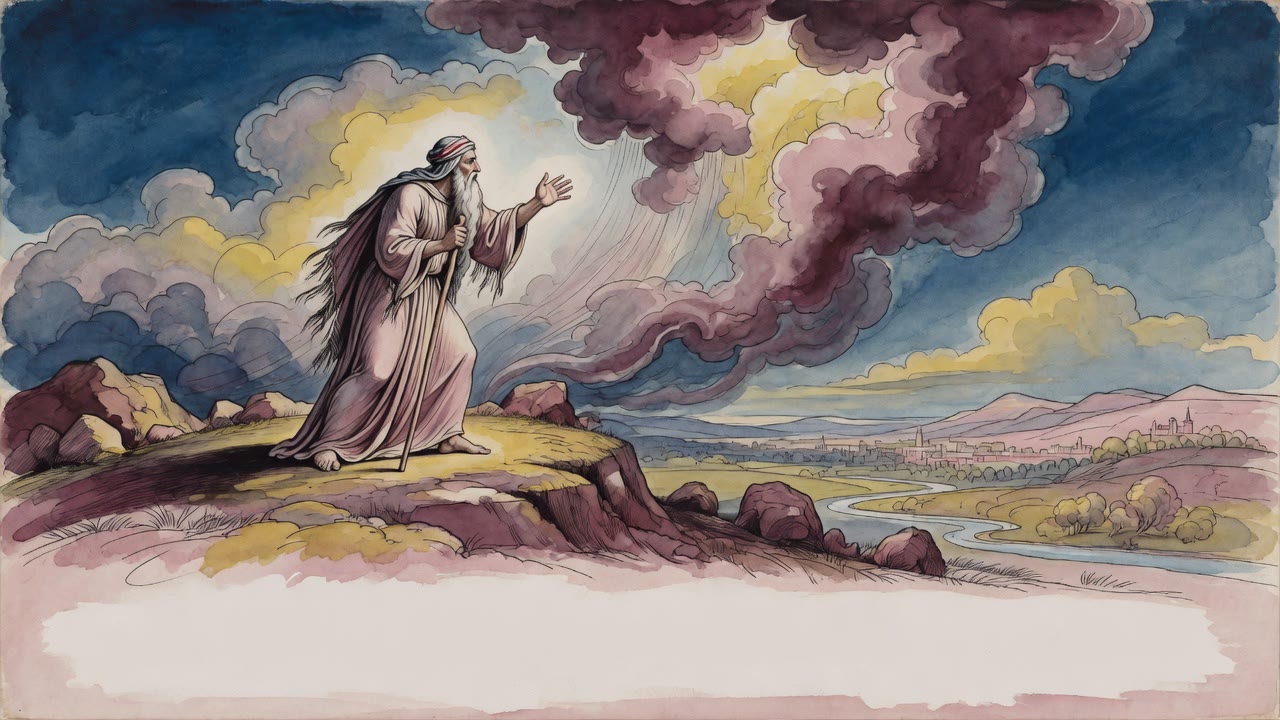
Generations later, when the earth was full of violence and the flood stood ready in the clouds, Scripture said a thing that stopped two rabbis cold. "And the Lord regretted that He had made the human." Regretted. The Holy One, who knows the end of a thing before its beginning, undone over His own handiwork.
Rabbi Judah read it plainly and it frightened him. He said the Holy One was distressed, truly grieved, that He had made the human. And he heard the Creator's own reasoning inside the word. "Had I made him in the heavens, he would not have sinned, just as the angels do not sin." The flaw, in Rabbi Judah's hearing, was the address. Earth was the wrong country. A creature raised among the lower beings learned to rebel the way the ground teaches its weeds to grow.
Rabbi Nehemiah would not have it. The same word, he said, is not the word for sorrow. It is the word for comfort. The Holy One was consoled that He had set the human on the earth and nowhere else. "For had I created him in the heavens and settled him beside the angels, he would have incited them to rebellion, just as he rebelled among the lower beings." Hear the difference. To Rabbi Judah, earth ruined a creature who would have been clean in heaven. To Rabbi Nehemiah, earth was the quarantine, the one mercy, the wall that kept the human's appetite from reaching up and turning the angels against their own Maker. The same trouble that opened the pit on the second day was the trouble God penned into the dust on purpose.
The King Bent Over a Dead Son
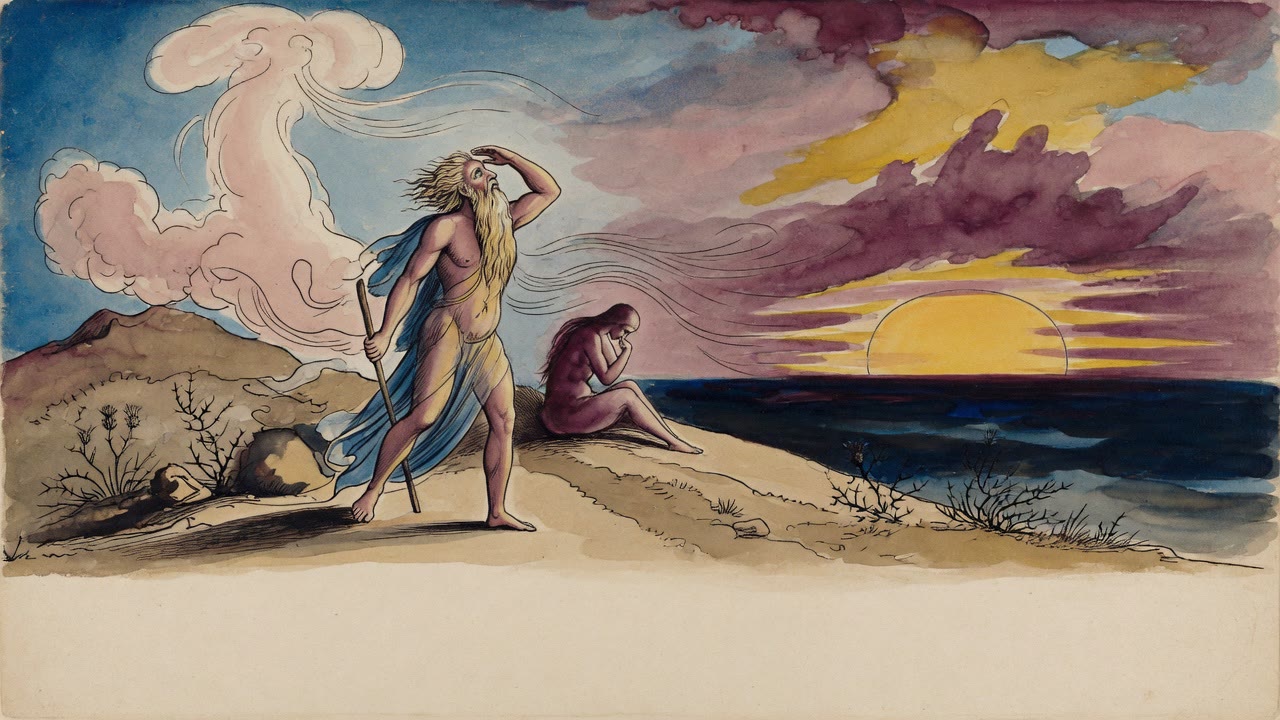
Rabbi Aha son of Rabbi Hanina took the verse from a different angle. He saw a king bent over a dead son. When the Holy One looked at His ruined world before the flood, the Holy One mourned, the way David mourned over Absalom until the whole victory turned to grief. "And He grieved to His heart." Not anger. A father in a house gone silent.
Then Rabbi Abbahu turned the verse one last time, and his reading is the one that does not let the Maker off. He grieved to His heart, Rabbi Abbahu taught, means He grieved over the heart, the human heart. Picture a craftsman who finishes a thing, holds it up, and knows in his hands that it is bad work. He says, "What have I done?" And the Holy One says it of Himself. "I am the one who placed the evil leaven in the dough." The sour starter that turns the whole loaf. He had folded it in with His own hands, because the inclination of the human heart is evil from its youth, and He had known that from the youth of the world.
The Flaw Folded In on Purpose
So the picture closes around one grim symmetry. On the second day the Maker dug a pit deep enough to swallow six thousand years of walking and withheld the only word that would have called the day good. On the day He shaped the human He set the evil leaven in the dough and knew it would rise. Rabbi Judah heard regret, Rabbi Nehemiah heard comfort, Rabbi Aha heard a bereaved king, and Rabbi Abbahu heard a maker confessing the defect was his own. None could make the word mean that God was surprised.
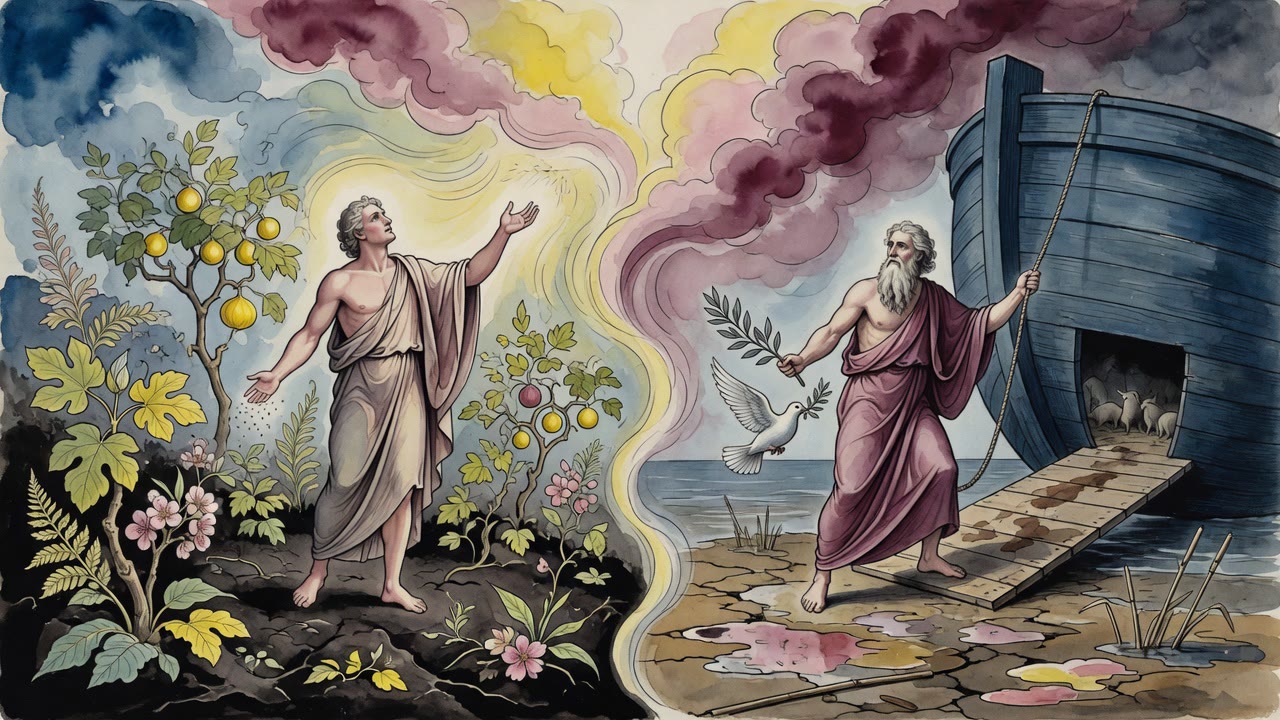
The flood came and scoured the ground clean, and the leaven survived it in the heart of every man who climbed down from the ark. The pit dug on the second day was still there, seven chambers deep, waiting under the washed world. The Maker had built the flaw and the furnace in the same first week, looked at His work, and made the human anyway.
← All myths