Adam and Noah, Two Men God Restarted the World With
Noah stepped off the ark into wet mud and began to farm, just as Adam had. The rabbis found Adam's 930 years hidden in the letters of a silver dish.
Table of Contents
 Click for full size
The Second First Man
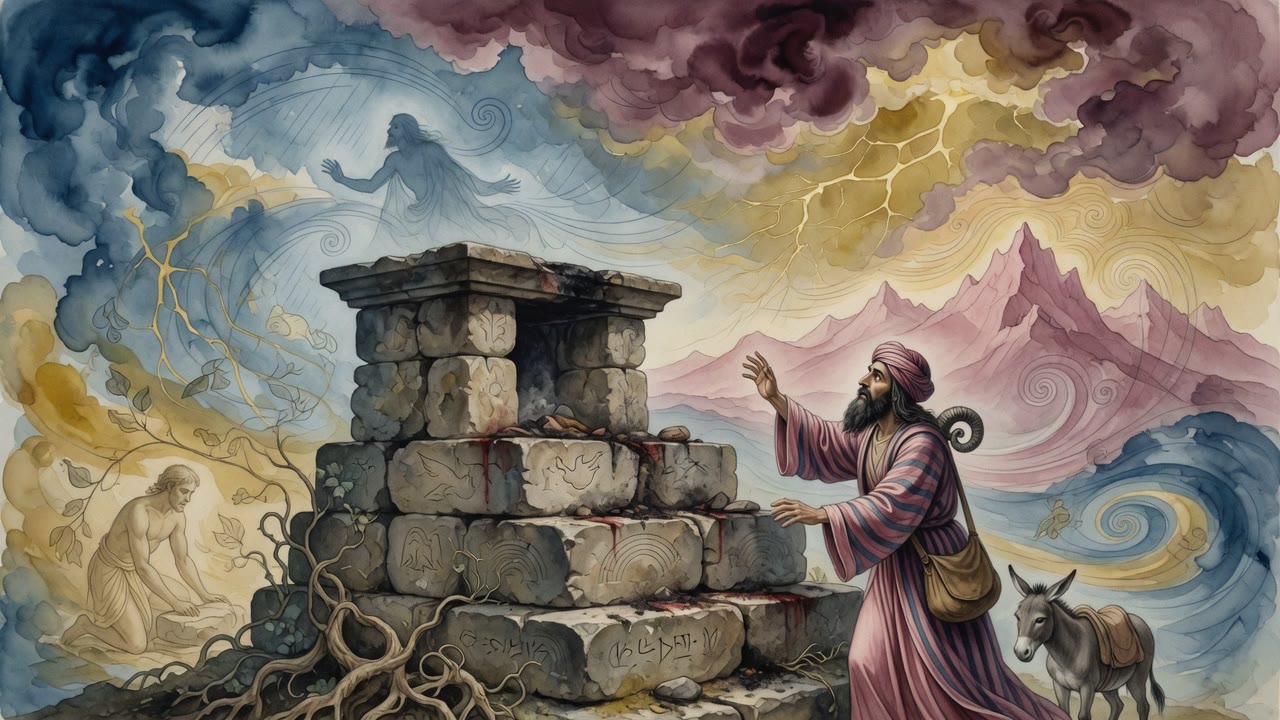
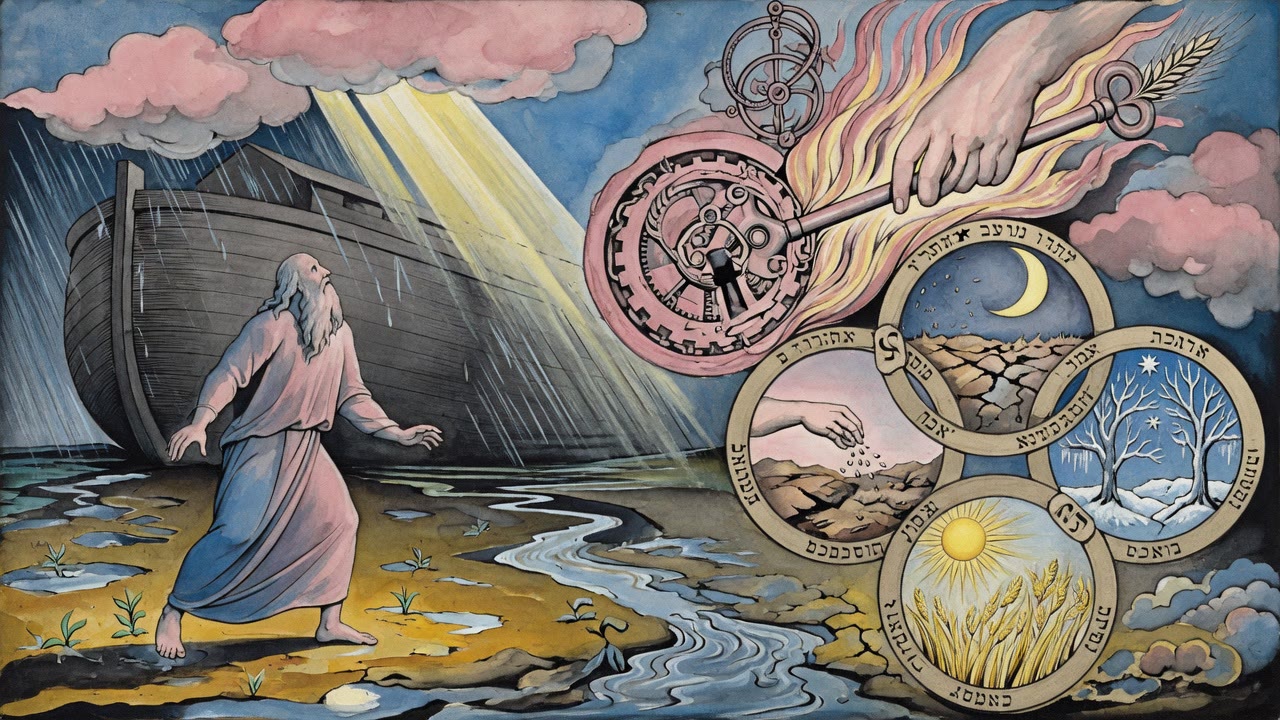
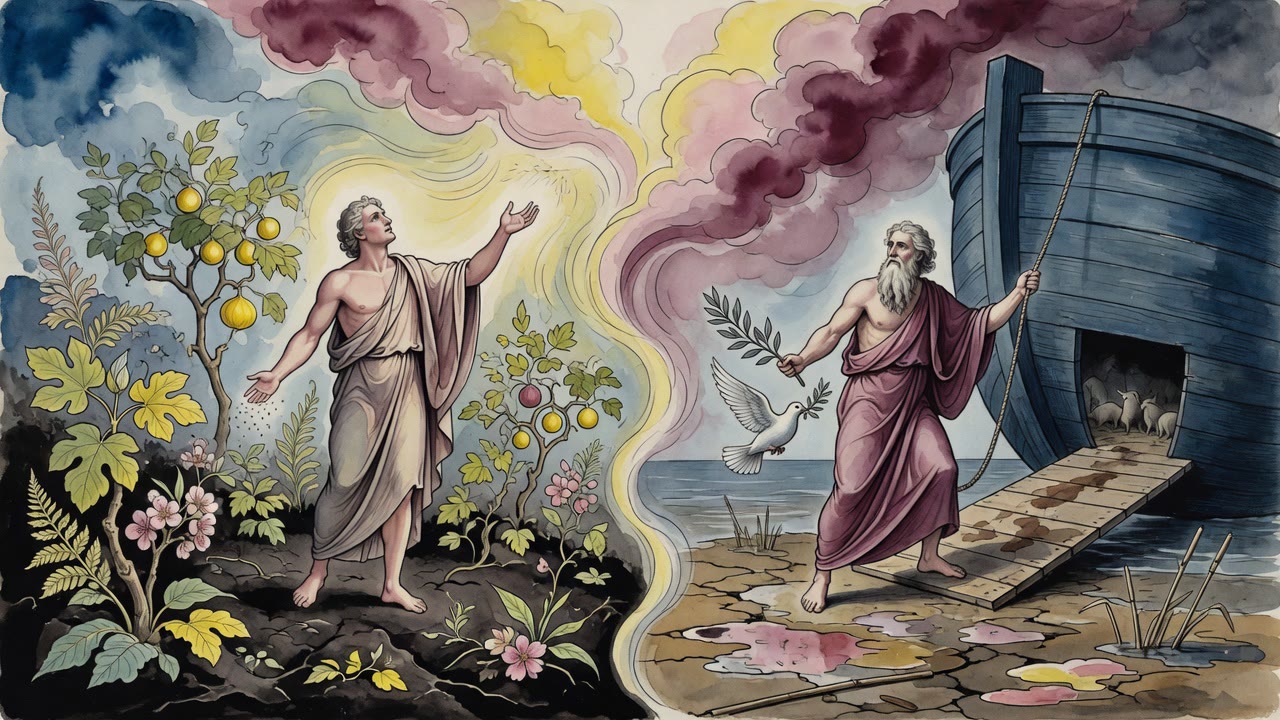
Noah stepped off the ark onto ground that had not been walked on in over a year. Everything was wet and new, the way creation had been after the first waters drew back. He stood on the mud of a remade world and, like Adam before him, began to cultivate the earth. Philo of Alexandria noticed the parallel first, or at least wrote it down most explicitly: just as Adam had begun to till the ground after God formed him, Noah began again after the flood. Two men, two worlds, the same first act.
The question the rabbis brought to this parallel was not whether it was real but what it meant. If the world needed two beginnings, what did Adam's beginning fail to establish that Noah's had to repair? And what did it mean that a man chosen for his righteousness, the most righteous of his generation, immediately planted a vineyard and got drunk?
What the Numbers Carried
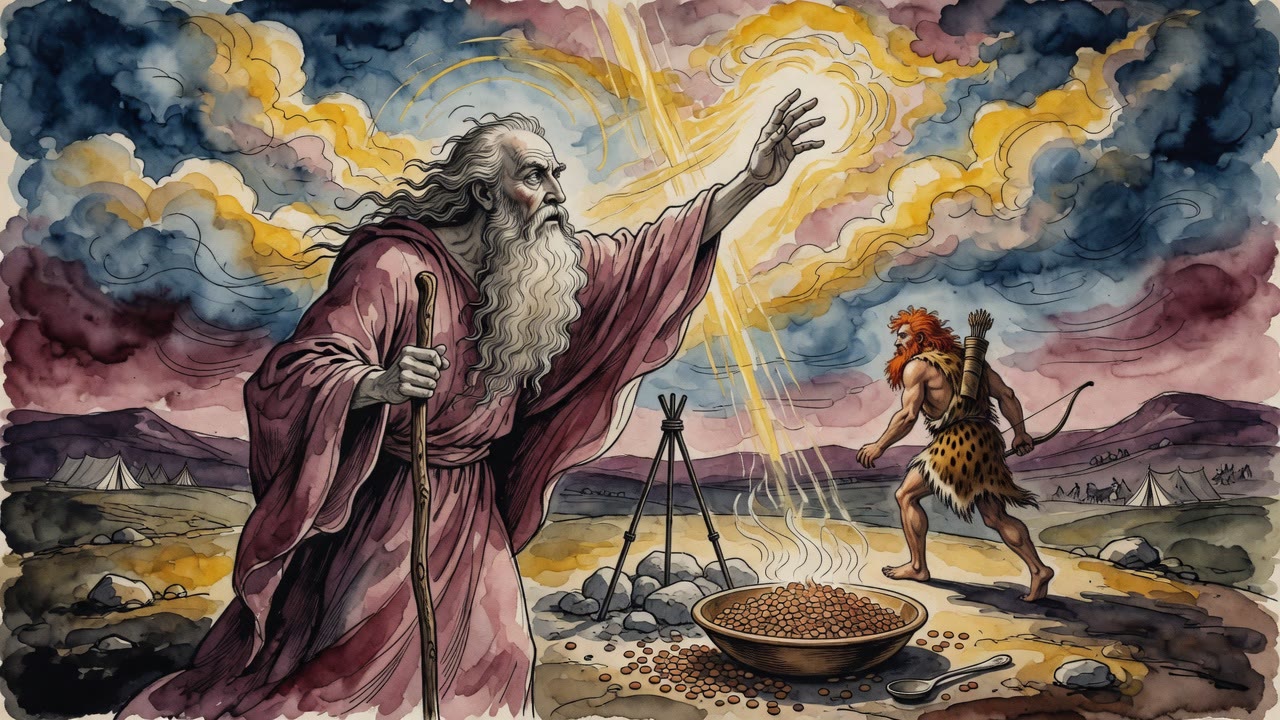
The tribal princes brought their offerings to the Tabernacle in the wilderness, and the Book of Numbers records each one in identical language: one silver dish, one silver bowl, one gold pan. The repetition looks ceremonial and largely decorative until you start counting the letters.
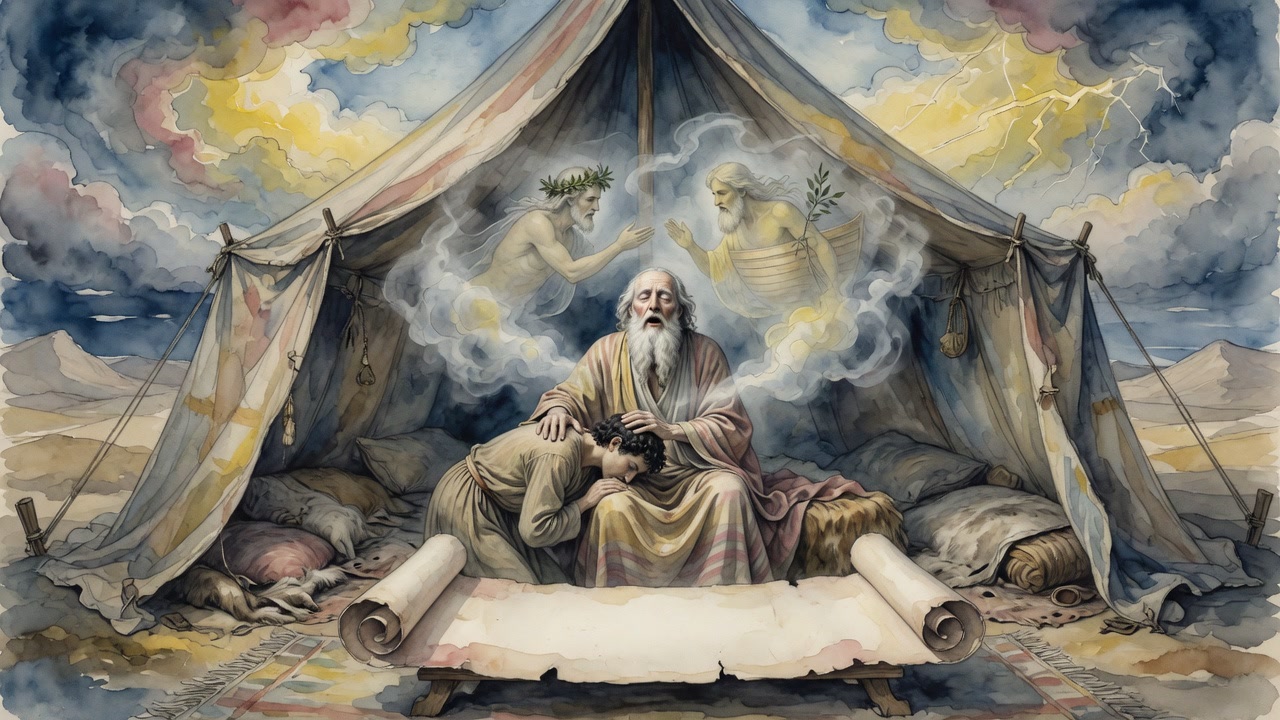
Rabbi Pinchas ben Yair took the Hebrew word for "dish," kaarat, and read it as a cipher. Its numerical value in Hebrew letters added up to 930, exactly the number of years Adam lived. The silver charger weighed 130 shekels: the age at which Adam fathered Seth, the son who would carry the righteous line forward after Cain's violence had broken the first family. Every number in the offering formula, when read through the lens of gematria (the numerical value of Hebrew letters), mapped back to Adam's biography.
The Weight of Generations
Ginzberg extended this reading through his account of the tribal offerings as a compressed history of the world. The offerings were not repetitive. They were cumulative. Each prince brought the same objects but each object pointed to a different moment: Adam's sacrifice, the lifespan of the patriarchs, the founding of the covenant line, the descent into Egypt, the years of slavery, the exodus.
The Chronicles of Jerahmeel filled in a genealogy that Genesis had compressed into a single verse. After Seth, Adam lived 700 more years and fathered eleven additional sons and eight daughters. Seth himself fathered sons named Elideah, Funa, and Matath. The names fill a list that the standard biblical text collapsed into the phrase "other sons and daughters." They were real people, the tradition insisted, and their lives had weight even though no stories attached to them by name.
Noah as Adam
The Vayikra Rabbah made the comparison explicit through the logic of sacrifice. Adam, the first human being, had offered a bull. Noah, after the flood, had offered from every clean animal and every clean bird. The sacrifices moved from one animal to many. The gesture was the same: a man standing on raw earth, acknowledging that the world he stood in had been given to him and not earned, and that the first act in a new world should be an act of gratitude.
What Philo added was the weight of cultivation as commitment. To begin tilling the earth was to commit to it. Adam's cultivation in the Garden was a form of stewardship, dress it and keep it, the Torah says, two verbs that imply ongoing labor and ongoing accountability. Noah's planting of the vineyard, even with its disastrous sequel, was the same commitment made in a harder circumstance. He planted not in a Garden prepared for him but in soil that had been drowned and dried, and he planted without knowing whether it would grow.
What the Parallel Refused to Say
The rabbis were careful about the comparison. They drew it tightly. Noah was like Adam in the moment of beginning: standing on new ground, beginning cultivation, carrying the weight of a world's future in the seed he planted. But Noah was not Adam, and the world after the flood was not Eden. The rainbow made a promise that the Garden had not needed to make, because the Garden had not yet been threatened.
Between Adam and Noah, the entire first history of humanity had played out: murder, genealogy, wickedness so total that God regretted creation, and a flood that swept the record mostly clean. What Noah inherited was not innocence but survival. He was the second first man, and that meant he knew what had happened to the first one.
← All myths