Parshat Noach6 min read

The Census That Counted a Drowned World Back to Life

Noah outlived the rain by 350 years. Six centuries on, a census counted 714,100 men, the regrowth of a doomed world from a single felled tree.

Curated by Arthur · Told by Maggid ·
Table of Contents
  1. The Ledger of Three Sons
  2. The Names the Water Took
  3. Giants Who Ate a Thousand Oxen a Day
  4. The Dream of One Tree Left Standing
  5. The Old Man and the Returning Dark

Six hundred forty years after he stepped out of the ark onto a scoured world, Noah was still alive, and someone sat down to count what had been lost. The reckoning came back in a single line of ink. Seven hundred fourteen thousand, one hundred fighting men, and that was only the men. The women were not counted. The children were not counted. The number was a remnant doing the arithmetic of a graveyard, the survivors tallying the descendants of three sons to measure against the teeming, drowned multitude the waters had taken.
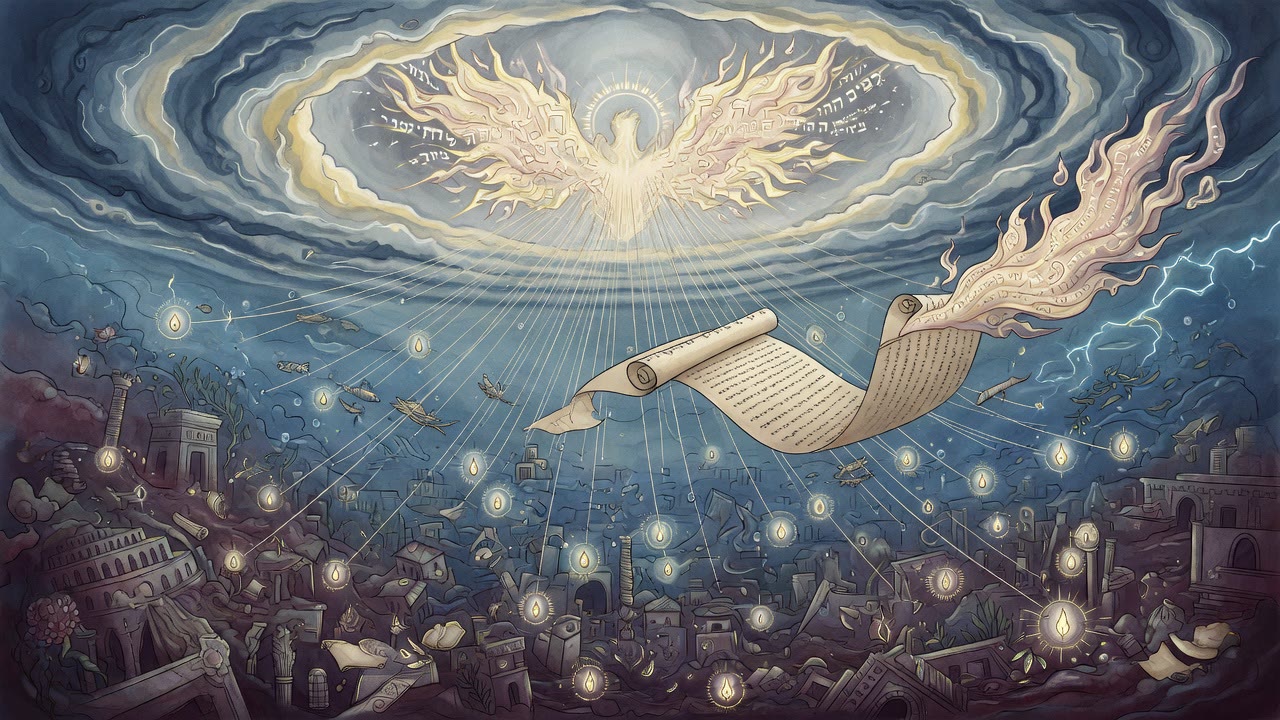
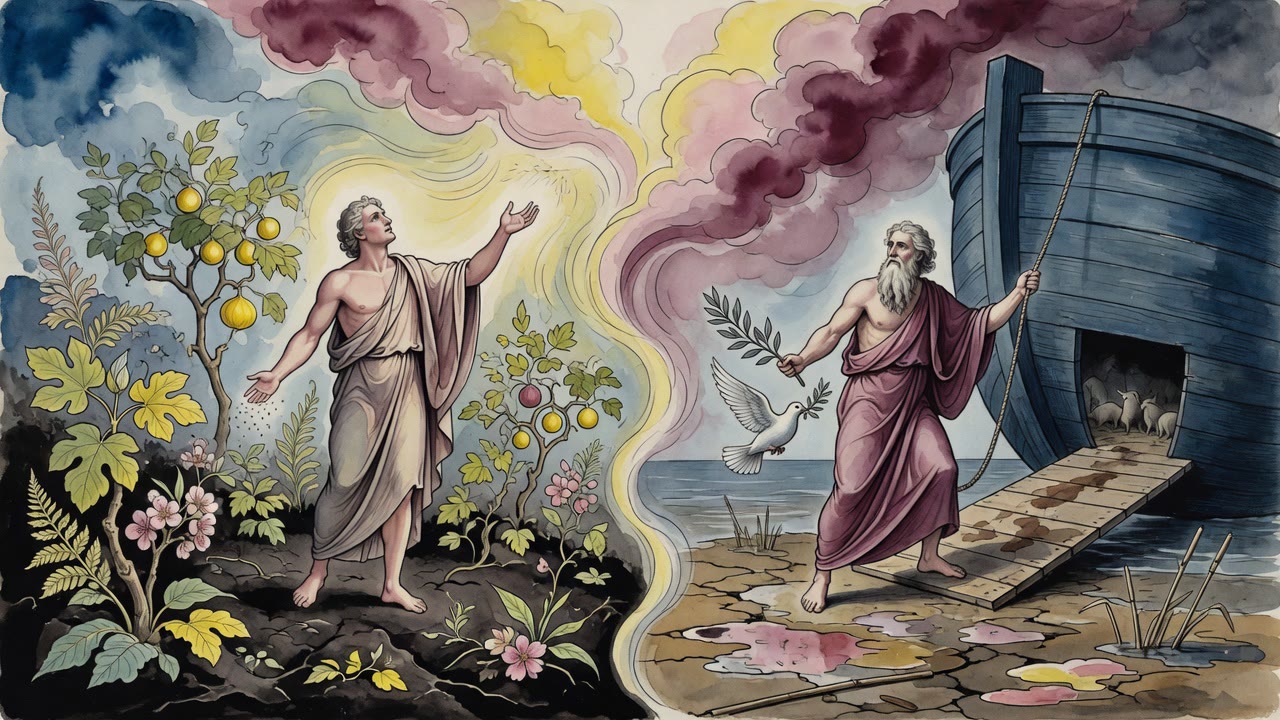
The old man had watched it all. He lived three hundred fifty years past the flood and died at nine hundred fifty, which meant he outlived the rain long enough to see the new earth begin doing the old earth's worst tricks again.

The Ledger of Three Sons

The scribe wrote the lines like a man dividing a body into three. From Japheth came the cold northern clans, Gomer and Magog, Madai and Yavan, Tubal, Meshech, and Tiras, one hundred forty-two thousand warriors under their prince Pinhas. Kittim was the great house at eighteen thousand three hundred. Gomer was the smallest, five thousand eight hundred, a family barely outnumbering a town.

Then came Ham, and the ledger swelled until it threatened to tip over. Four hundred ninety-two thousand under their prince Nimrod, the hunter who would build Babel and call himself a god. The sons of Canaan alone counted thirty-two thousand nine hundred. The clan of Sabtecha reached forty-six thousand four hundred. The numbers stacked and stacked, and a careful reader could feel the scribe's hand pressing harder. This was the line of the man Noah cursed, the seed that bred fastest, the multitude that filled the warning fastest.

The Names the Water Took

Behind those clean totals stood a world the flood had erased, and the chronicle would not let it vanish unnamed. Adam had fathered three sons and three daughters first, Cain with his twin wife Qalmana, Abel with his twin wife Deborah, Seth with his twin Noba, and then eleven more sons and eight more daughters across seven hundred years. Mahalalel had raised seven sons and five daughters. Enoch had five sons and three daughters before God desired him and took him away into the Garden, to wait there for Elijah at the end of the world.

Cain's branch ran darker and louder. He took Temed to wife at fifteen and built seven cities, and out of his house came every tool a hand could grip. Jabal drove the first flocks. Jubal found music and cut it into two pillars of marble and brick so the songs would survive any deluge. Tubal-Cain hammered the first iron weapons. Naamah spun the first cloth. They invented the world. Then they used the music to corrupt the earth and carved gods out of stone to bow before.

Giants Who Ate a Thousand Oxen a Day

And there were things in that lost census no ledger could number, because they were not quite men. Two angels, Shemhazai and Azael, had stood before God and reminded Him they had warned against making humanity at all. "Did we not say, do not create man?" they said. God answered that earth would bend them the same way it bent everyone, worse, even. The angels swore they would go down and sanctify His name instead. They lasted no time at all. The moment they saw the daughters of men, they could not hold themselves back.

Their sons were giants. Heyya and Aheyya each devoured a thousand camels, a thousand horses, and a thousand oxen in a single day, hunger walking on two legs across a planet running out of patience. Azael became the master of paint and ornament, every glittering thing used to pull men toward sin. This was the population pressing up against the four hundred ninety-two thousand and the seven hundred fourteen thousand, the world filling itself with appetite faster than it could fill itself with anything else.

The Dream of One Tree Left Standing

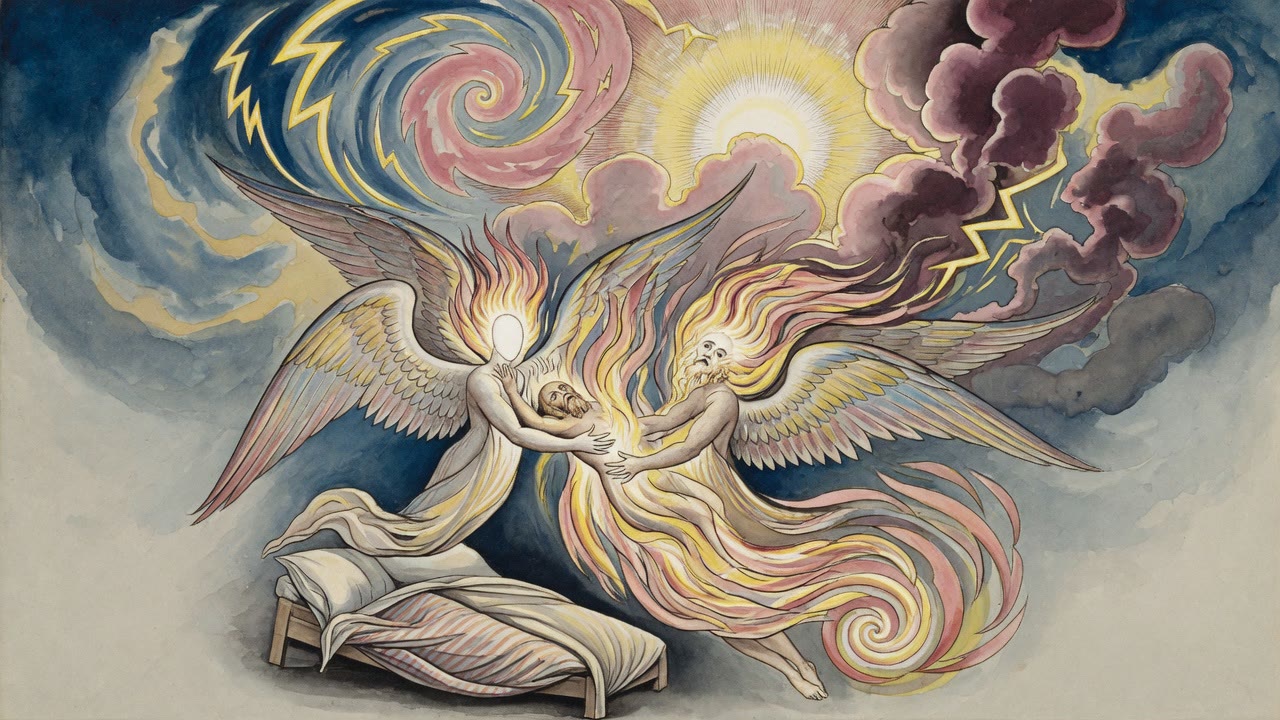
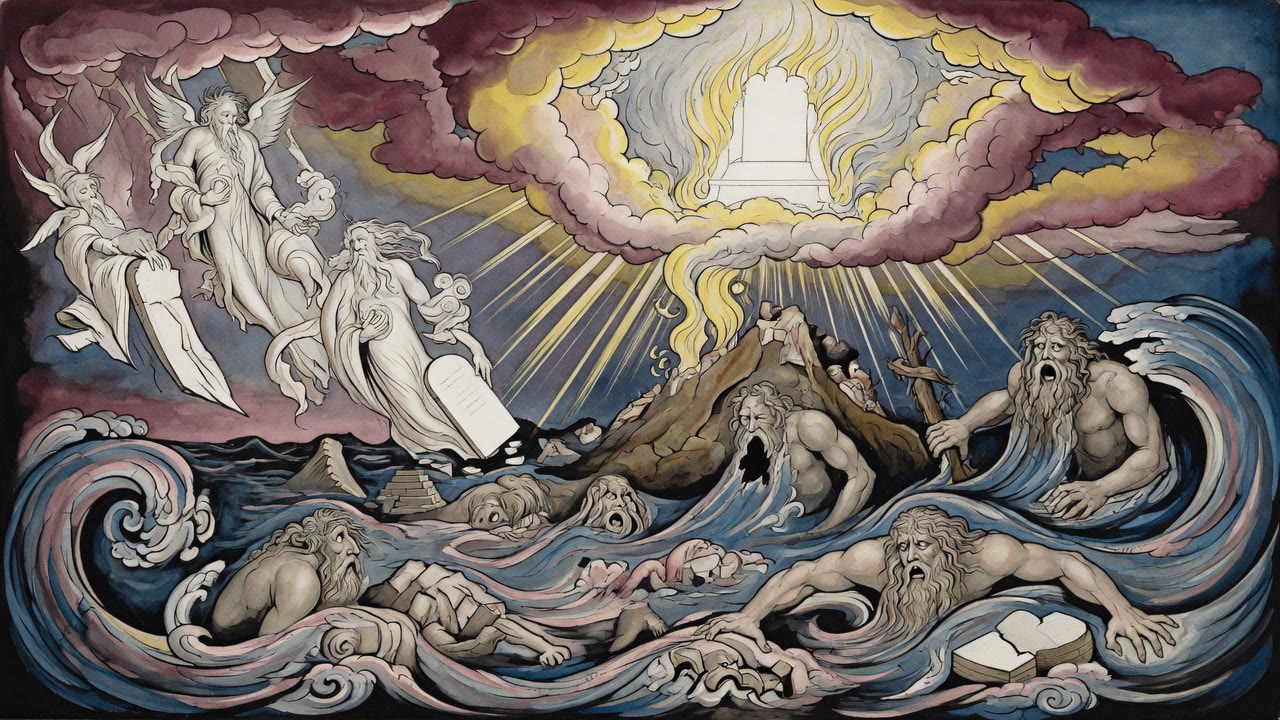
When the flood came near, God sent Metatron to warn Shemhazai, and the fallen one wept for his children. His giant sons dreamed in the dark. One saw a great stone tablet dense with writing, and an angel came down and scraped away every word but four. The other saw an orchard thick with trees, and an angel chopped through all of them until one tree stood with three branches.

Shemhazai read the dreams aloud. The world would be wiped to a single line. The orchard would be felled to one trunk with three boughs. One man and his three sons. That was the arithmetic underneath the census, run in reverse, the whole roaring multitude of giants and clans and inventors reduced to a man named Shem, a man named Ham, a man named Japheth, and the father who kept them dry.

The Old Man and the Returning Dark

So the seven hundred fourteen thousand were not a triumph. They were the slow regrowth of a forest from one trunk, and the scribe who counted them knew the soil. By the days of Serug and his sons, the new generations had already begun reading the stars for omens, working divination, passing their own children through fire. Only Serug's house refused to walk that road.

Noah saw it. He had survived the corruption once, watched the giants drown and the cities sink and the music go silent under the water, and now he was old enough to watch the same hunger crawl back into the same kind of people. He had been promised the rain would never return for this. The next judgment, God had warned, would come by famine, by sword, by fire, by pestilence, by the earth opening its mouth. The count of seven hundred fourteen thousand was a mercy and a fuse at once, a measure of how much the world had refilled, and how much there now was to lose.


← All myths
From the tradition

Sources

3 sources

The texts this telling draws on, in full. Open a card to read inline, or expand it for a wider, quieter read.

Chronicles of Jerahmeel XXVIIChronicles of Jerahmeel (Gaster, 1899)

How many people were alive before the flood? According to the Chronicles of Jerahmeel, a 12th-century Hebrew chronicle translated by Moses Gaster in 1899, an exact census was taken 640 years after Noah left the ark. The total population descended from Noah's three sons was precisely 714,100 fighting men, not counting women and children.

The text provides a detailed breakdown. The descendants of Japheth. Gomer, Magog, Madai, Yavan, Tubal, Meshech, and Tiras, produced 142,000 warriors under their prince Pinhas. The largest Japhethite clan was Kittim at 18,300; the smallest was Gomer at 5,800. The descendants of Ham vastly outnumbered them. Under their prince Nimrod, the Hamites numbered 492,000 valiant men. The sons of Canaan alone counted 32,900, while the clan of Sabtecha reached 46,400.

The chronicle traces an intricate genealogy from Noah's sons through to Abraham. Through Shem came Arpakhshad, then Shelah, then Eber, from whom two lines branched: Peleg (in whose days the earth was divided) and Yoktan. From Peleg came Re'u, who prophesied that in four generations a child would arise "whose throne will be established on high", "a perfect righteous man, the father of a multitude of nations." From Re'u came Serug, then Nahor, then Terah, and finally Abram, Nahor, and Haran.

The world was already darkening. In those generations, the inhabitants of the land began practicing astrology, divination, and passing their children through fire. Only Serug and his sons refused to walk in those ways. Noah himself witnessed all of this. He lived 350 years after the flood, dying at the age of 950, long enough to see the very corruption he had survived begin again.

Full source
Chronicles of Jerahmeel XXVIChronicles of Jerahmeel (Gaster, 1899)

The Hebrew Bible names Adam's famous sons. But the Chronicles of Jerahmeel, a 12th-century Hebrew chronicle translated by Moses Gaster in 1899, names the ones you have never heard of. Adam fathered three sons and three daughters, Cain with his twin wife Qalmana, Abel with his twin wife Deborah, and Seth with his twin wife Noba. After Seth, Adam lived 700 more years and fathered eleven additional sons and eight daughters, all named in the text.

Each patriarch's extended family fills out a genealogy far richer than the biblical version. Seth fathered sons named Elideah, Funa, and Matath. Enosh had sons named Ehor and Aal. Mahalalel fathered seven sons and five daughters. Enoch had five sons and three daughters before God "desired him and took him away", placing him in the Garden of Eden to wait there until Elijah appears to restore the hearts of fathers to children.

Cain's parallel line runs darker. He married Temed at fifteen, fathered Enoch, and built seven cities. His descendants invented civilization's tools, Jabal pioneered shepherding, Jubal discovered music and preserved it on twin pillars of marble and brick to survive the flood, Tubal-Cain forged iron weapons, and Naamah invented textile arts. But these inventions came alongside corruption. The people used music to corrupt the earth. They made graven images for worship.

The chapter ends with God's promise after the flood. Noah offered sacrifices, and God vowed never again to curse the earth with water. But the promise carried a warning: if humanity sinned again, judgment would come by famine, sword, fire, pestilence, or earthquake. And at the end of days, God declared, "I shall revive the dead and awaken those who slumber in the dust. The grave shall close its mouth. There shall be a new earth and new heavens for an everlasting habitation."

Full source
Chronicles of Jerahmeel XXVChronicles of Jerahmeel (Gaster, 1899)

Two angels told God not to create humanity. When the generation of the flood proved them right, Shemhazai and Azael stood before God and reminded Him: "Did we not say, 'Do not create man'?" God answered with a challenge. "If you lived on earth, the evil inclination would sway you just as it sways humans. And you would be even more stubborn." The angels insisted. "Let us descend, and You will see how we sanctify Your name." According to the Chronicles of Jerahmeel, a 12th-century Hebrew chronicle translated by Moses Gaster in 1899, God let them go.

They failed immediately. The moment Shemhazai and Azael beheld the daughters of men, they could not restrain themselves. But one woman outsmarted them. A girl named Estirah refused Shemhazai unless he taught her the Ineffable Name of God. He did. She spoke the Name and ascended straight to heaven. God said, "Since she has departed from sin, set her among the stars." She became the brightest star in the Pleiades.

After that humiliation, both angels took wives and fathered children. Shemhazai's sons, Heyya and Aheyya, were giants, each consumed a thousand camels, a thousand horses, and a thousand oxen daily. Azael became chief over all cosmetics and ornaments used to entice men to sin. When God sent Metatron to warn Shemhazai that a flood was coming, Shemhazai wept for his children.

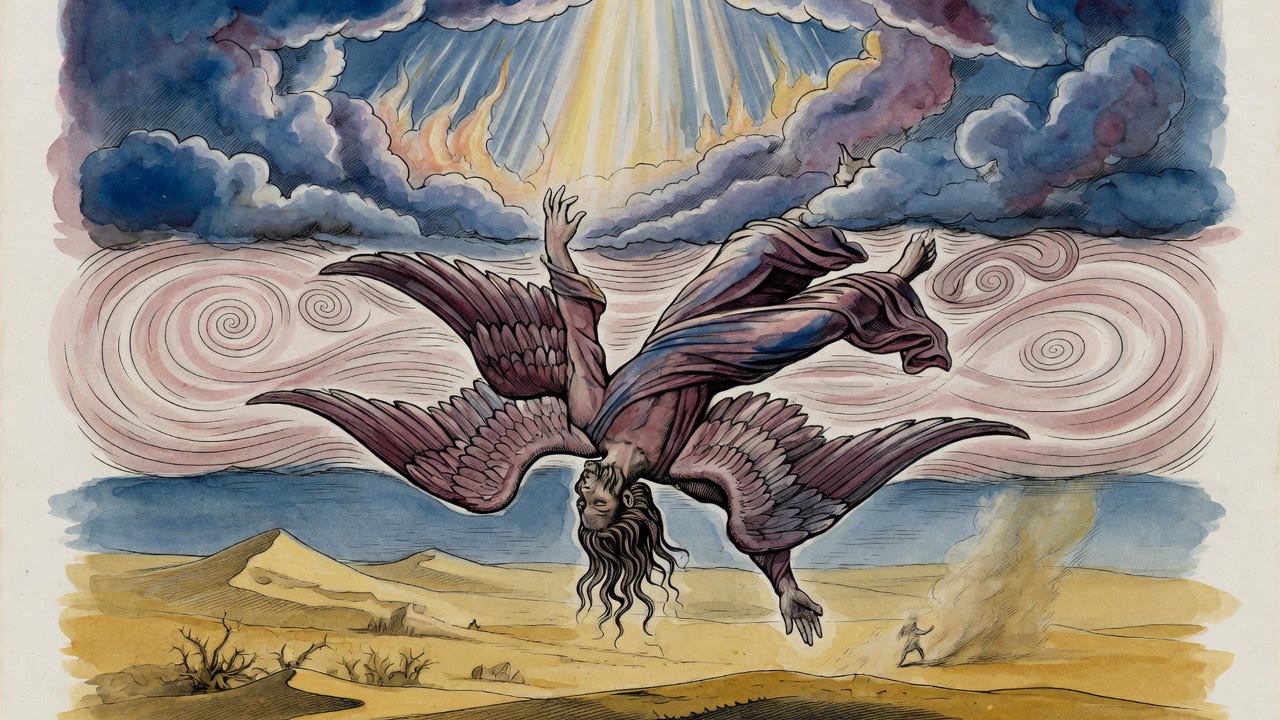
His sons dreamed prophetic dreams. One saw a great stone tablet covered in writing, and an angel descended to erase everything except one line with four words. The other saw a garden of trees, and an angel chopped them all down except one tree with three branches. Shemhazai interpreted both: the world would be destroyed, leaving only one man and his three sons. He comforted his children with a strange promise, their names would live forever, because whenever people lift heavy burdens, they groan "Heyya! Aheyya!" Shemhazai himself repented and hung suspended between heaven and earth, head downward, too ashamed to face God. Azael never repented. He became the Azazel of the Day of Atonement, the one onto whom Israel's sins were cast.

Full source