The Shekhinah Was a Hand, a Spring, and a Name
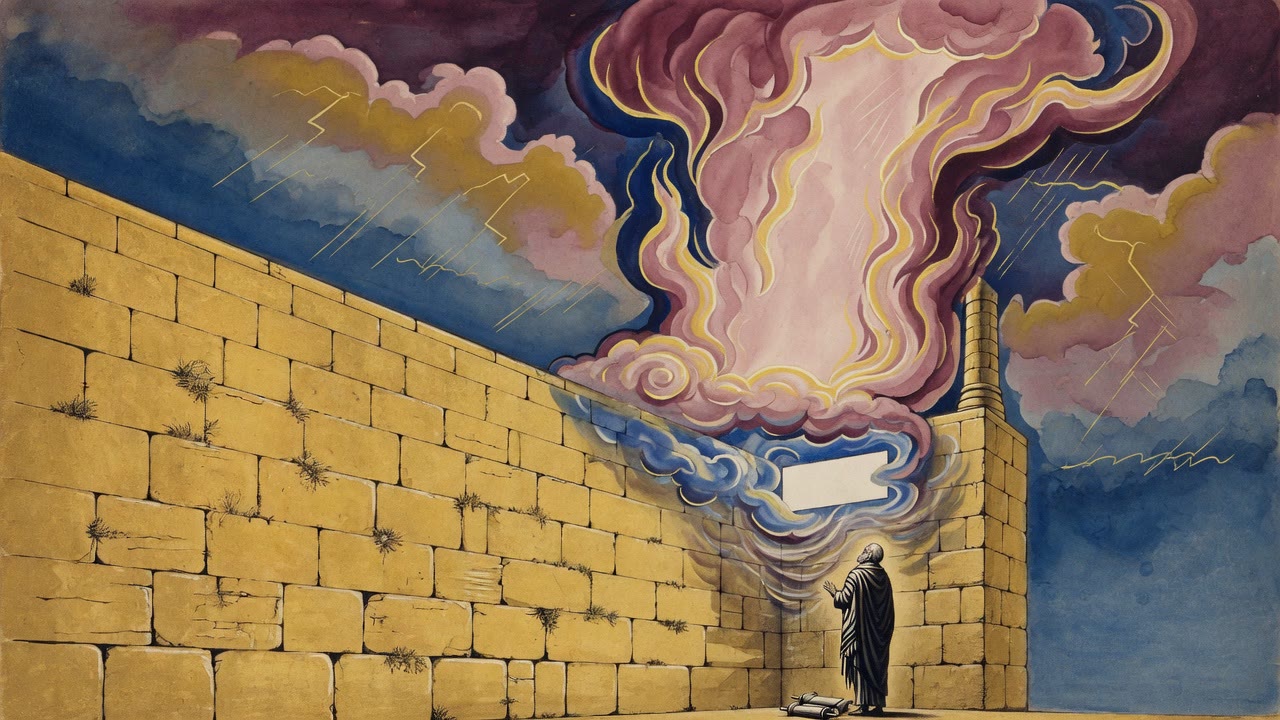
Israel had walked three days without water. At Marah the pool was bitter. Moses stood over it with a tree in his hand and a people at his back.
Table of Contents
Israel had walked three days without water. The skin at the throat pulled tight. Children cried and then stopped crying. At Marah they found a pool, and the pool was bitter. The people turned on Moses. He stood over the water with nothing in his hands yet, and a nation at his back that would drink or break.
 Click for full size
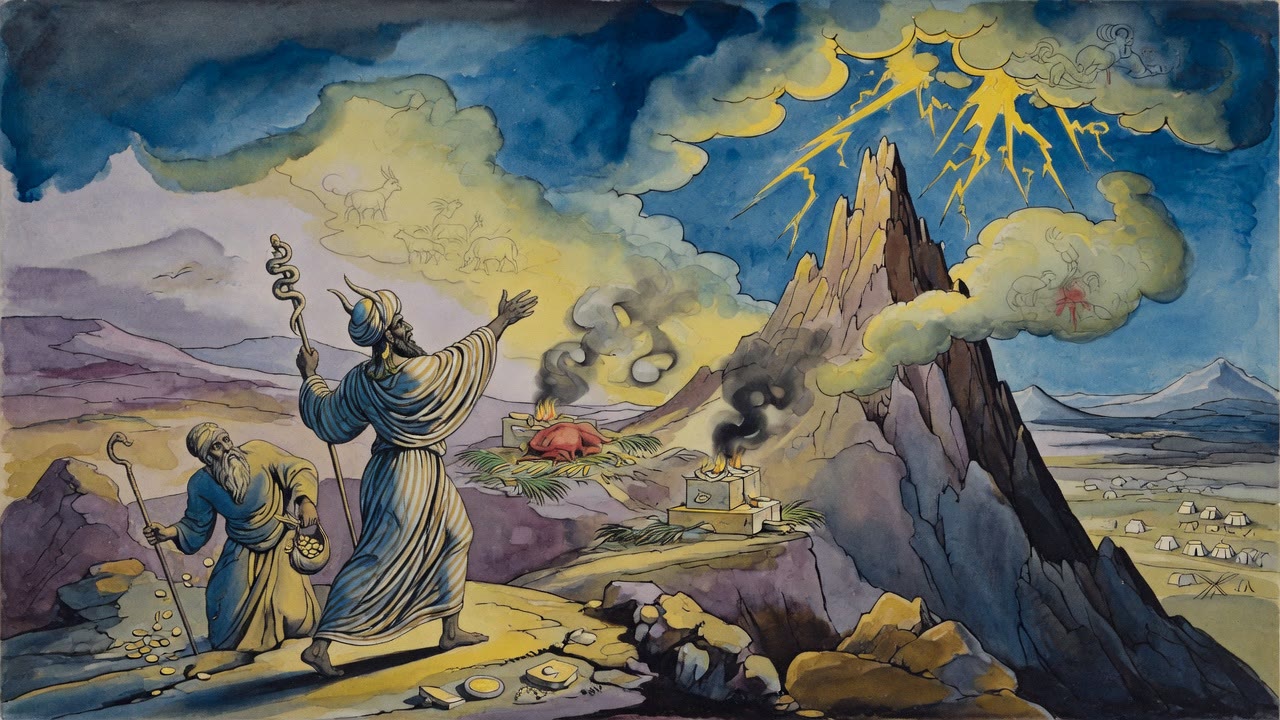
God showed him a tree. Moses took it. He lifted it. The people watched. He threw it in. Someone knelt and drank. The water ran sweet (Exodus 15:25).
The Tree Five Hundred Years Across
The tree was not a branch a man could snap over a knee. It spanned five hundred years of growth, rooted higher than any earthly remedy, a reach that had been growing toward this pool since before the world had water to make bitter. Moses did not stir a powder into the pool. He added a tree that had been waiting for Marah.
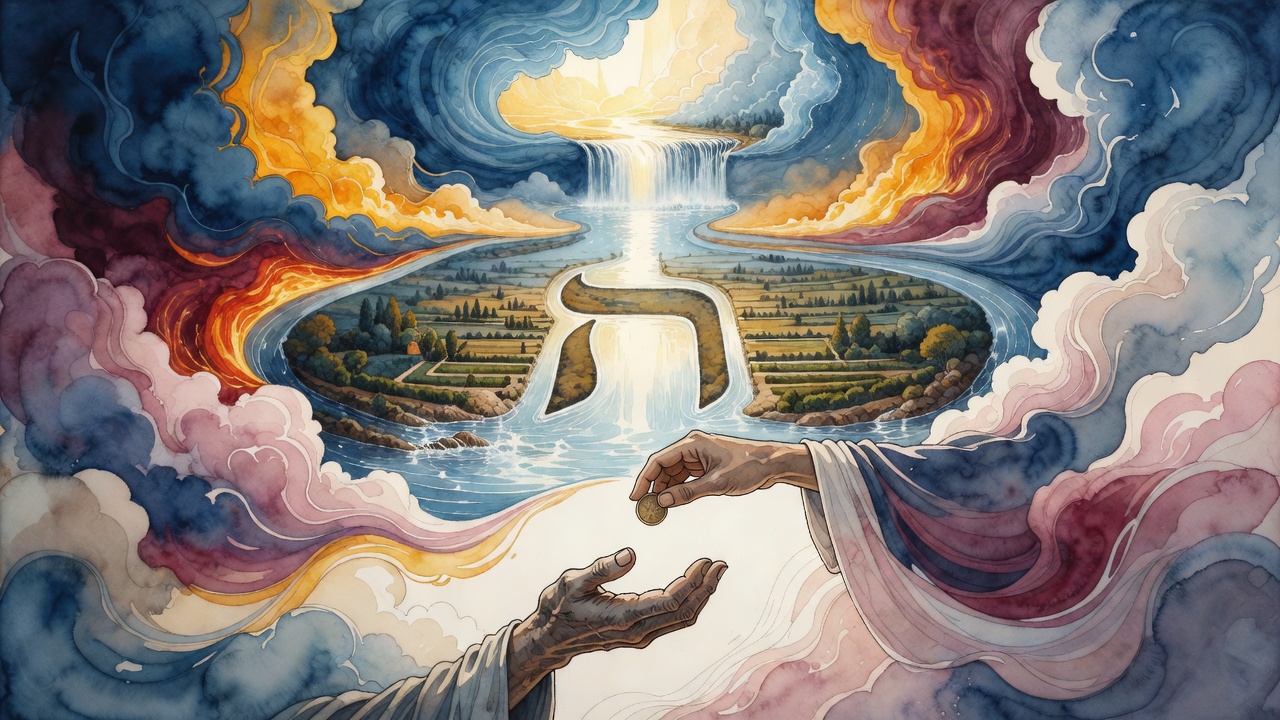
The bitterness was not only in the water. It was Egypt still in the mouth, the way a people can stand in front of a pool and still be unable to drink. The same word, marah, is the name a woman takes when her life has gone bitter (Ruth 1:20). The same closed throat. The Shekhinah (שכינה), God's indwelling presence, is a garden spring that never ceases. At Marah that spring had gone bitter. Moses threw the tree, and the spring ran again.
The Hand That Had to Open
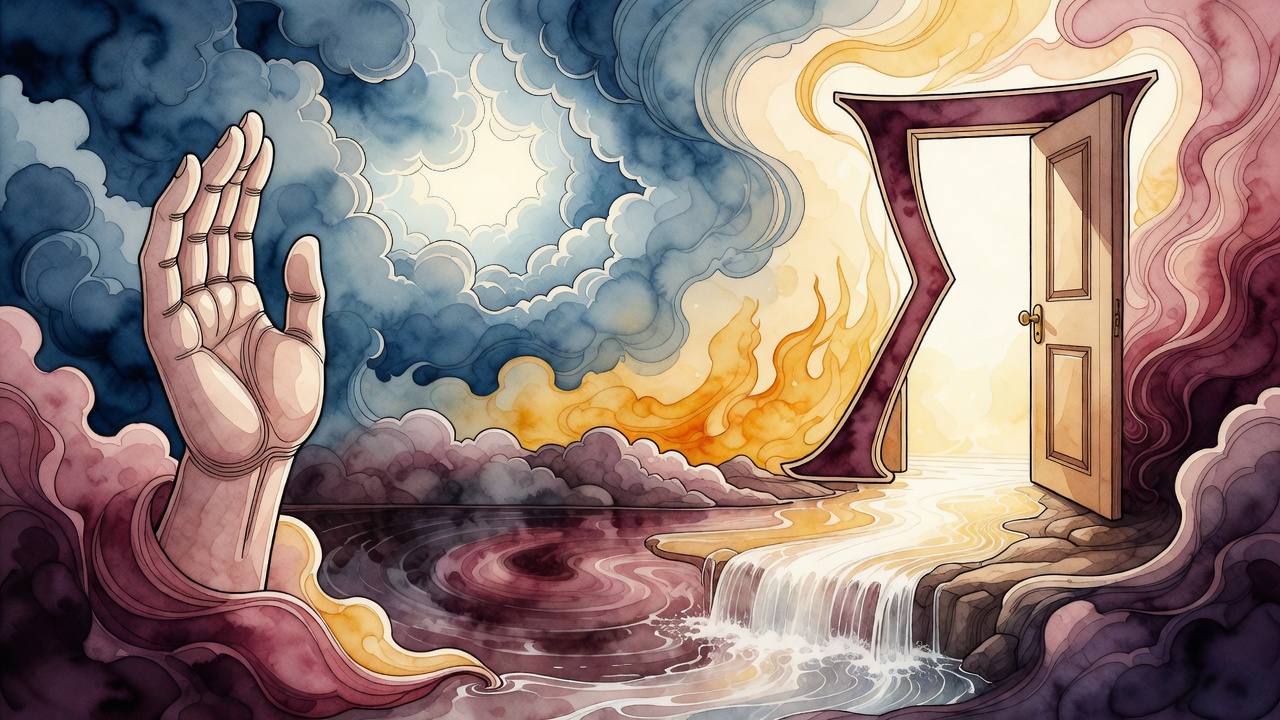
He counted without meaning to, the way a man counts when his arm is shaking. Thumb, two joints. Each of the four fingers, three. Fourteen. The Hebrew word for the hand he was using is yad (יד), and yad is fourteen. The tree was heavy. He opened the hand anyway and let the wood leave it.
What a person does with the hand is not a private event. Open the hand to give, and the channel opens. Close it against the poor, and something tightens above. Moses's throwing hand was the same hand that had to stay open after the water sweetened. A closed fist over a sweetened pool is how the bitterness comes back.
When the Name Left Her
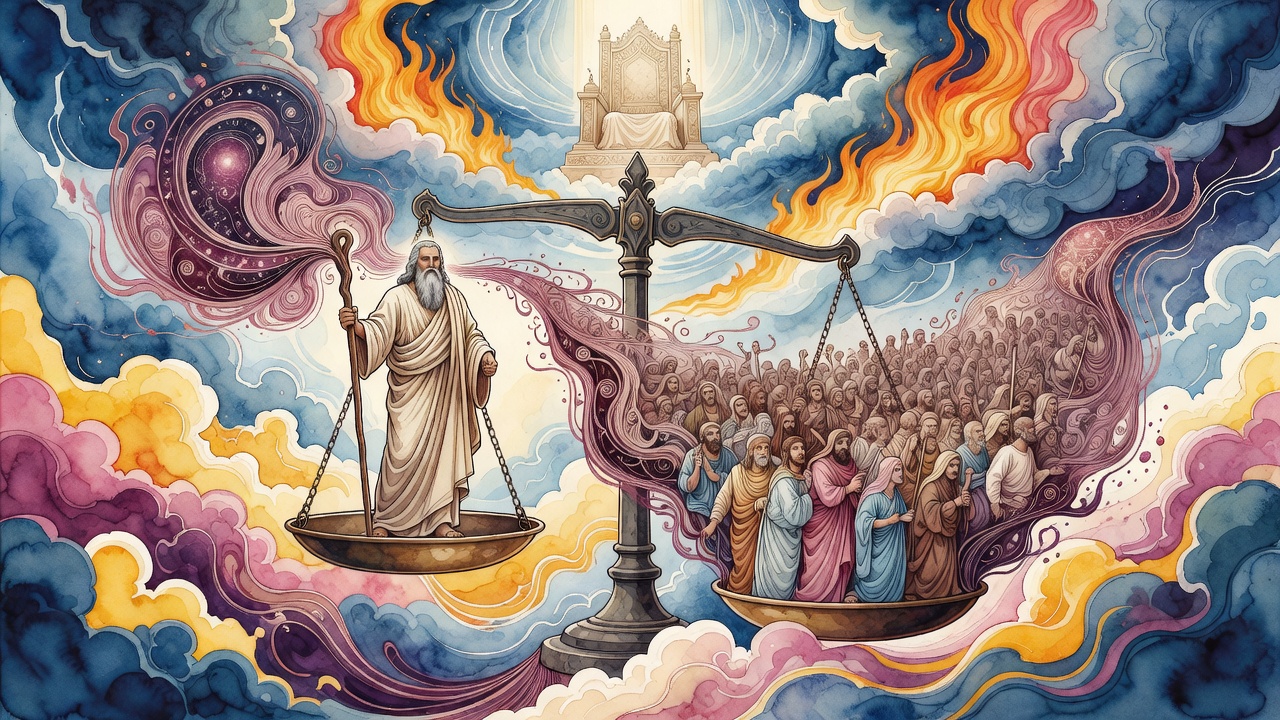
The four-letter Name of God and the Shekhinah stand to each other the way a seal stands to the wax it presses. The Name generates. The Shekhinah receives and carries what the Name generates into the world. Without the Name there is no source. Without the Shekhinah there is no spring into creation.
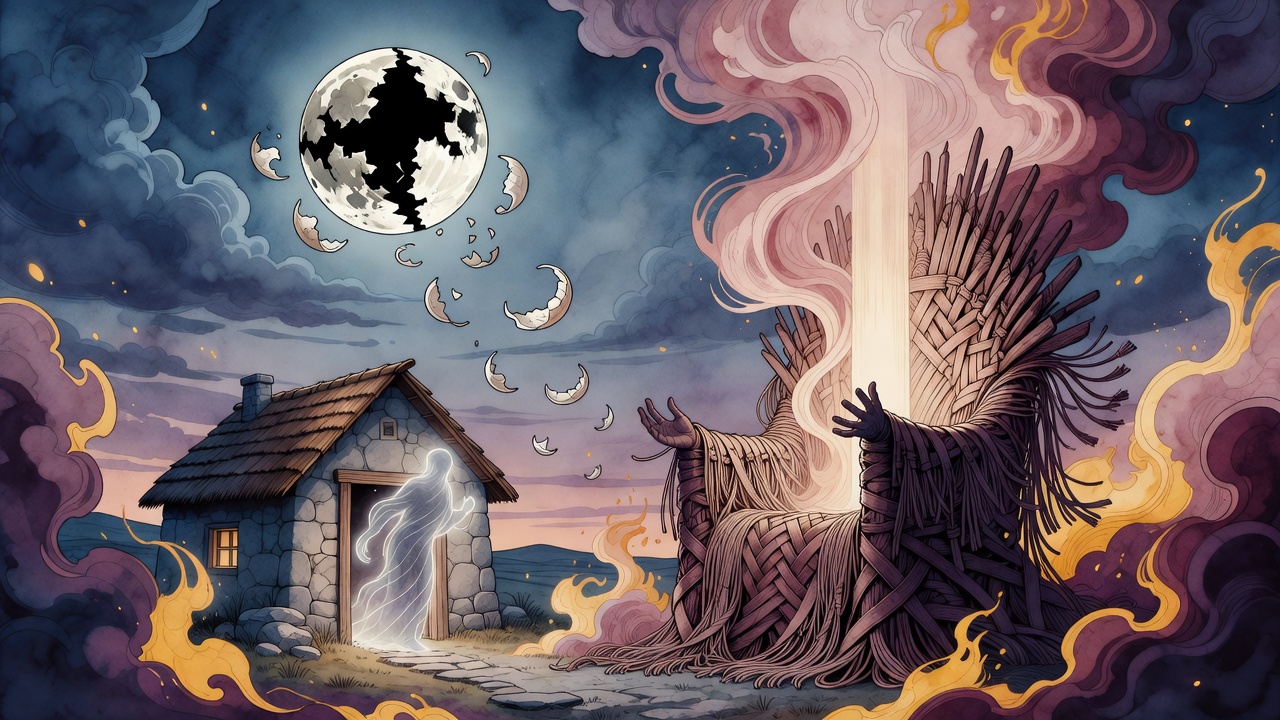
When the Name is without her, it is a consuming fire (Deuteronomy 4:24). The world burns. She says, "Do not look at me, for I am blackened" (Song of Songs 1:6). When they shine together, God says of the bow in the cloud, "I shall see it to remember the eternal covenant" (Genesis 9:16). Moses at Marah was not performing a trick with wood. He was throwing a tree into a spring whose Name had left her. The splash was a reunion. The sweetness was the Name coming home.
Noah had already learned the other face of that spring. When the flow from above does not reach dry land, the waters of the other side rise, and the Flood prevails upon the earth (Genesis 7:19). Noah sat inside that rising, sealed in wood, while the interrupted flow unmade the world. Moses, at a bitter pool in the wilderness, opened the channel so the spring would run sweet instead of drowning anyone.
The Door at the Edge of Camp
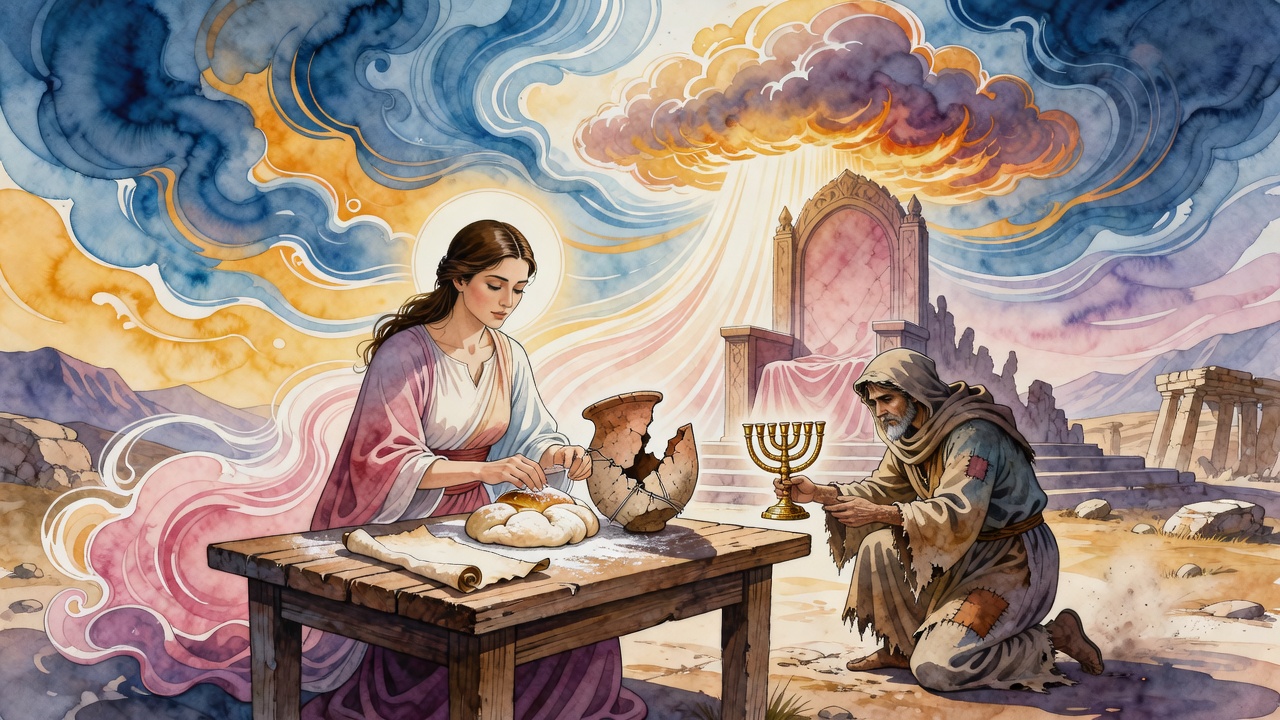
The letter dalet (ד) looks like an open door. It is also the letter of poverty, the poor person who stands at the threshold with nothing in the hand. The letter hangs at the edge of the Shekhinah the way the hungry hang at the edge of a camp, visible and easy to miss.
After the water sweetened, a man stood at the edge of Israel's camp with an empty palm. Moses had just opened a hand over Marah. The same motion was required here. The Shekhinah rests where dalet rests. She rests at the threshold, with the ones who have nothing to bring except their standing there. A closed hand at that door would sour the pool again. An open one keeps the spring running.
Moses threw a tree. He counted fourteen joints. He watched bitter water go sweet. The Name came back to the Shekhinah in a splash he could taste. The poor man at the door was the next test of the same hand.
← All myths