The Small Flame That Sent Moses Into God's Darkness
God gave the shepherd a fire that ate nothing, so the mountain would not frighten him. At the last threshold two angels had to carry him in.
Table of Contents
 Click for full size
The Fire That Ate Nothing
Moses had taken the flock out past the last of the grazing land, out to the back of the wilderness where there was nothing to graze and no reason to be. The place was a warning he could not read yet. The flock he was leading would be finished in that wilderness, and he would be gathered up with them and never cross out of it.
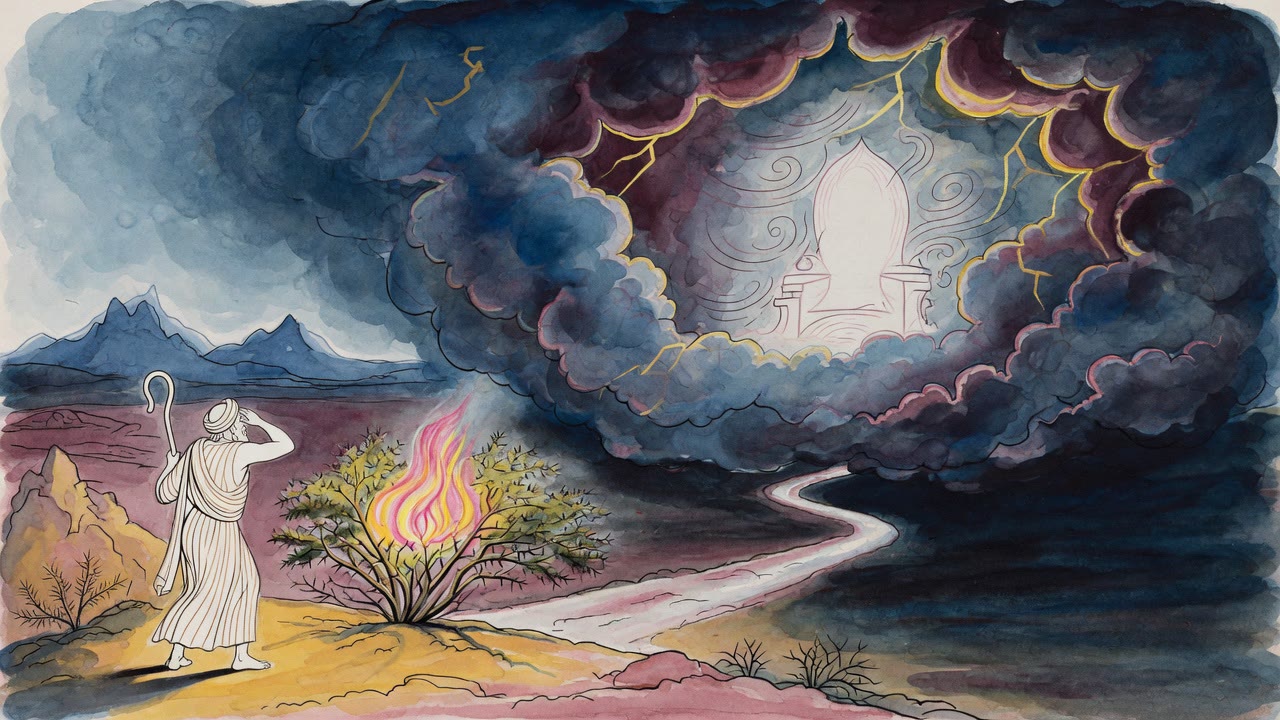
Something at the foot of a thornbush was burning. He stopped the flock and went over.
The flame stood in the middle of the branches and did not spread. The thorns kept their shape. The wood kept its color. There was no smoke and no smell of burning and no sound of anything catching. Moses walked in closer than a man should walk toward fire, and the fire let him, and nothing in the bush was any smaller than it had been.
The size of it was the point. God did not hand a man the whole thing at once. He put out one small flame at the edge of a quiet pasture and let a shepherd stand next to holy fire until his heart stopped hammering, so that on the day the entire mountain went up in front of him he would not turn and run with everyone else.
Then the voice came out of the bush and called his name, and told him to get the sandals off his feet, and Moses put his hands over his face because he would not look. That was the right instinct and it was rewarded later. It was also the first sign of what would happen at the end.
Six Hundred Thousand Stepped Back
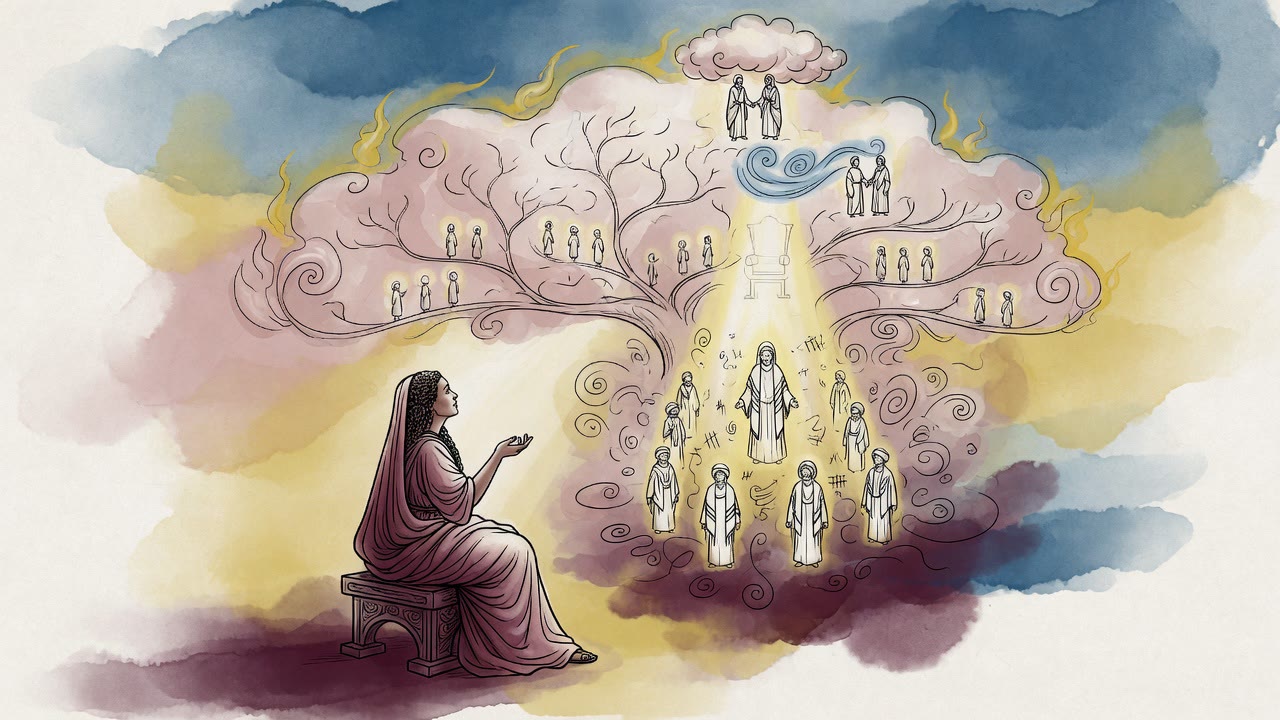
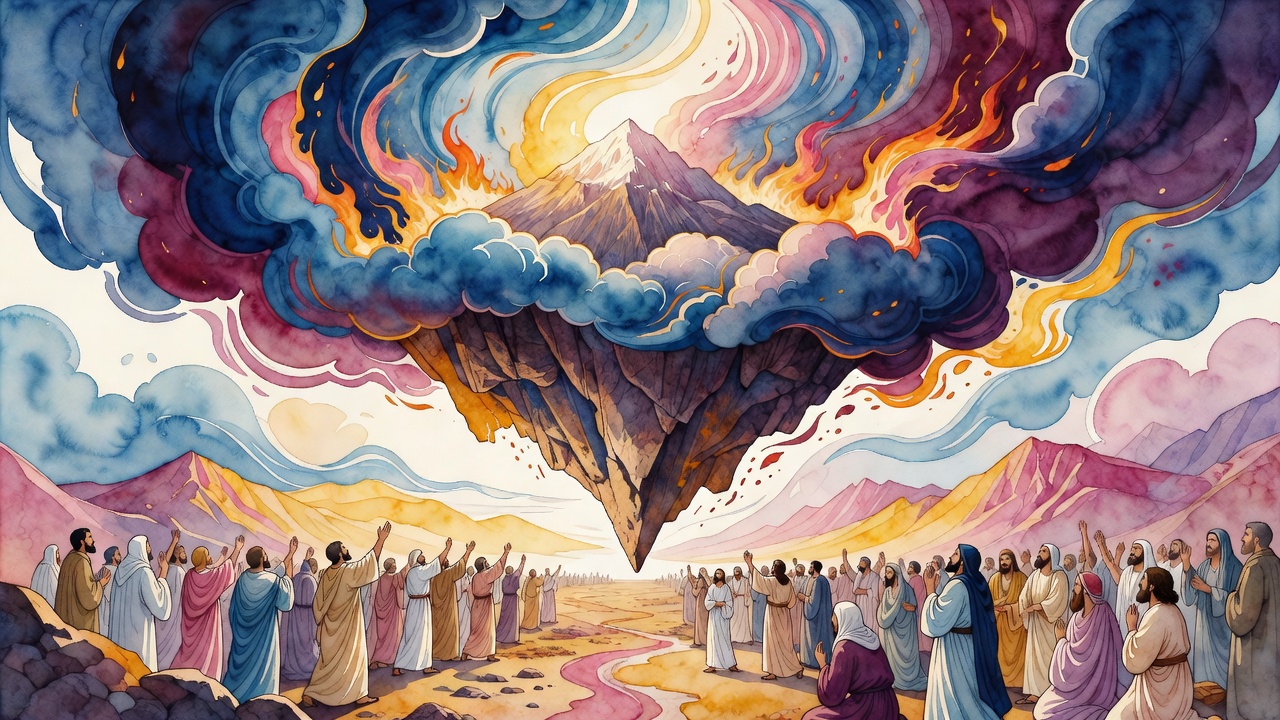
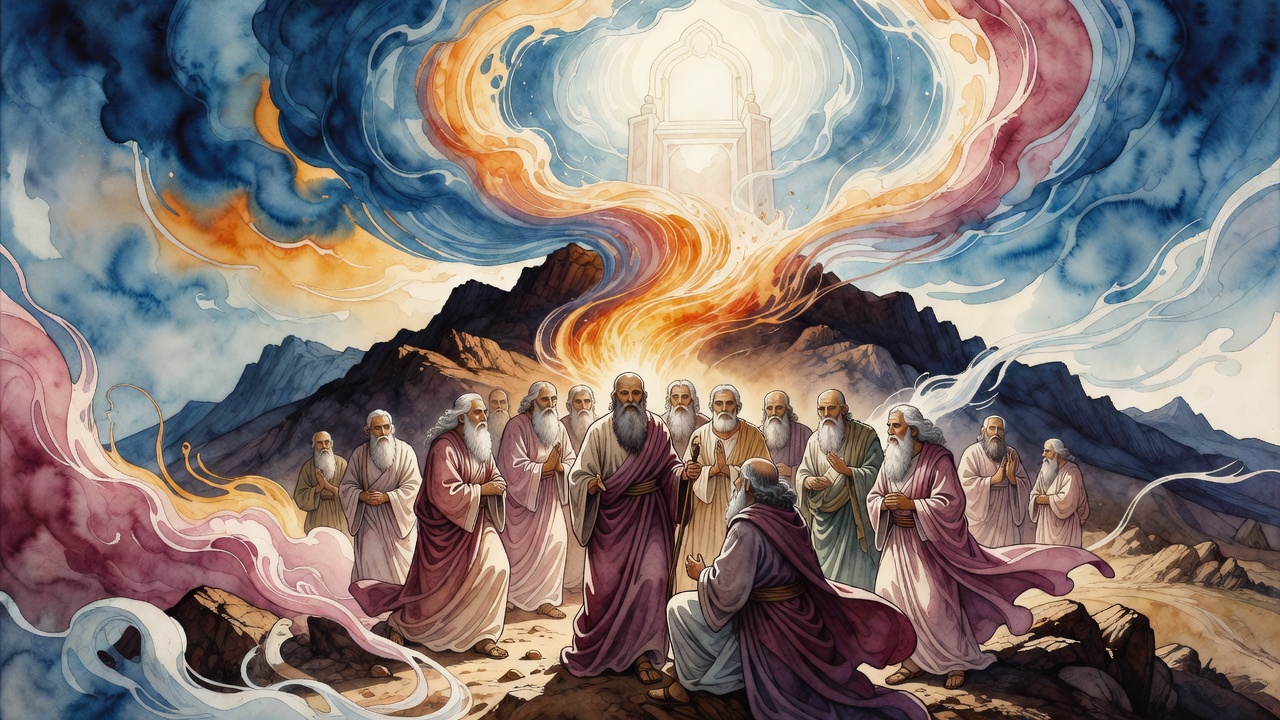
At the mountain there was no hiding the fire. It went up out of the summit into the middle of heaven, and the sound that came out of it was not a sound a throat makes. Israel stood at the base and took the ten words directly, and that was everything they had. One word more and the voice would have finished them where they stood.
So they went to Moses. "You speak with us," they said, "and we will listen."
It was not cowardice and Heaven did not treat it as cowardice. God had already intended to raise up prophets out of them in every generation, and they had reached for it first, out of their own instinct, before the offer came. Every prophet who has stood up in Israel since then is standing there because a terrified crowd at the foot of a burning mountain said the honest thing about its own limits, and Heaven said back to them, out loud, that they had spoken well.
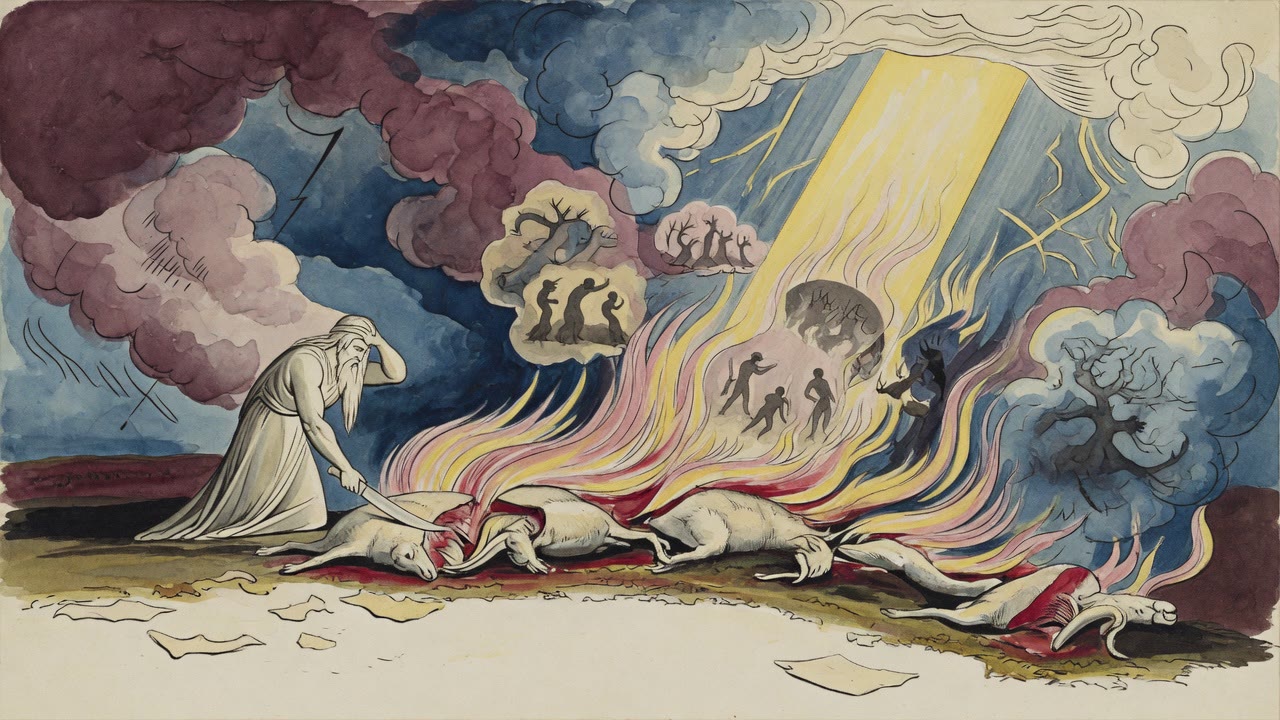
Something else happened at that mountain and did not last. For as long as they stood there, on condition, the angel of death had no authority over any of them. Then came the calf, and the condition broke, and they died like everyone else.
Moses Did Not Walk Into the Dark
The people fell back from the fire and stayed far off, and the way forward was left open, and it went up into the cloud on the summit where the dark was so thick it had weight.
He did not go.
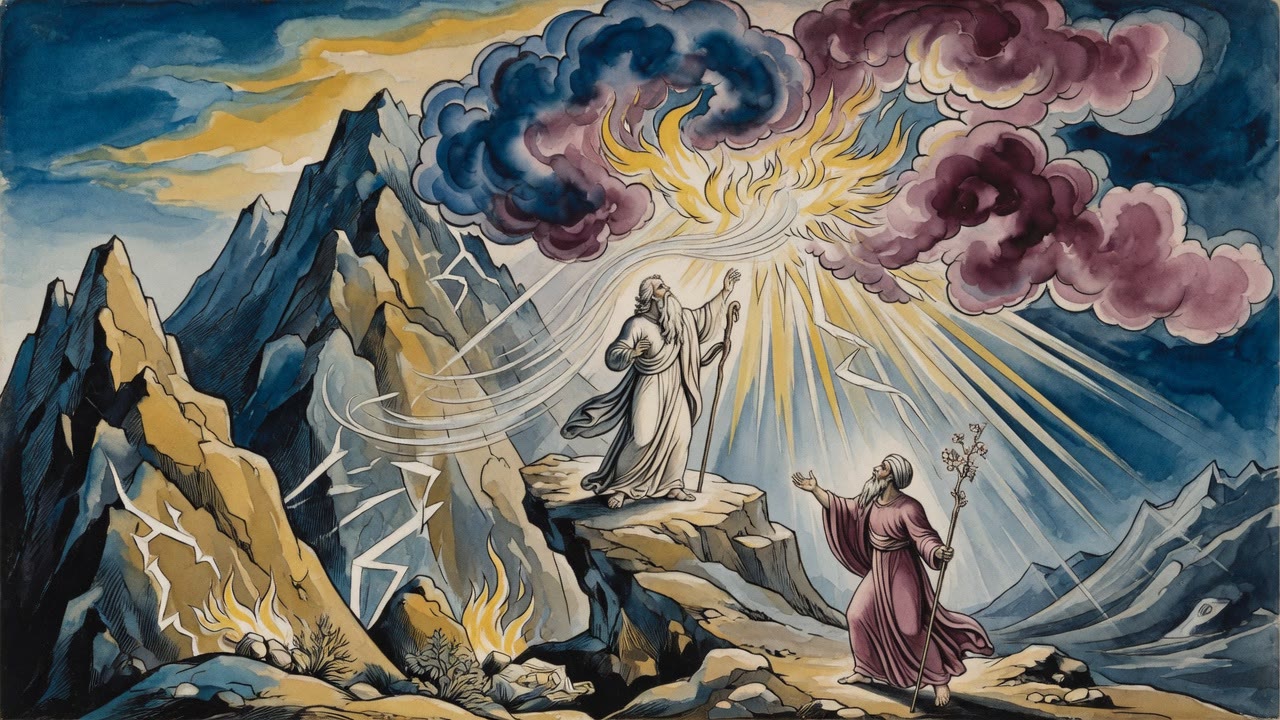
The man who had stood inside arm's reach of a burning bush without flinching stopped at the edge of that dark and would not put a foot in it. So God sent Michael and Gabriel down, and they came up on either side of him and took him by both hands, and Moses was brought to the thick darkness against his own will. He did not draw near. He was drawn near, one angel on each arm, up the last of the mountain.
The Room No Angel May Enter
The two of them could not follow him in. They had brought him to a boundary that was theirs and not his, and at that line the ministering angels stop. No seraph has ever been given permission past it. Whatever the dark on that summit was, it was closed to every creature made of fire and open to one man made of dirt.
They let go of his hands and he went the rest of the way alone, and the cloud took him, and he was in there with the LORD.
Solomon understood what the place was, centuries later, standing in a finished Temple with the priests backing out of it because the cloud had filled the house and they could not stay on their feet to serve. He said it out loud in front of the whole assembly. The LORD had chosen to live in thick darkness. Not in the fire on the mountain. In the black behind it.
The bush had taught Moses that fire does not have to consume. Nothing had taught him the other thing. At the last threshold he stopped like anyone would, and two angels who were forbidden to enter carried him to the doorway and put him through it and stood outside in the light.
← All myths