The Tower That Fell and the Brothers Who Held Each Other Up
Babel's builders announced their own ruin mid-construction. Bereshit Rabbah sets that failure against the quiet commerce pact of Zebulun and Issachar.
Table of Contents
 Click for full size
The Word That Sealed Their Doom
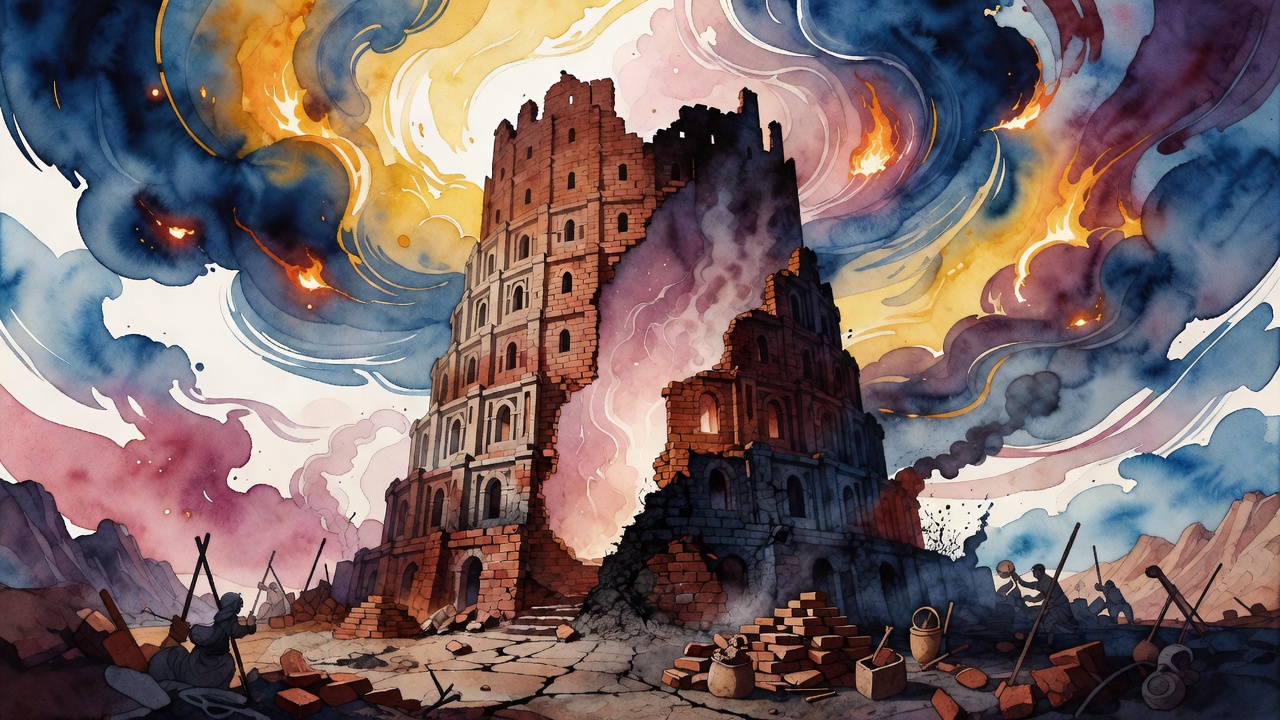
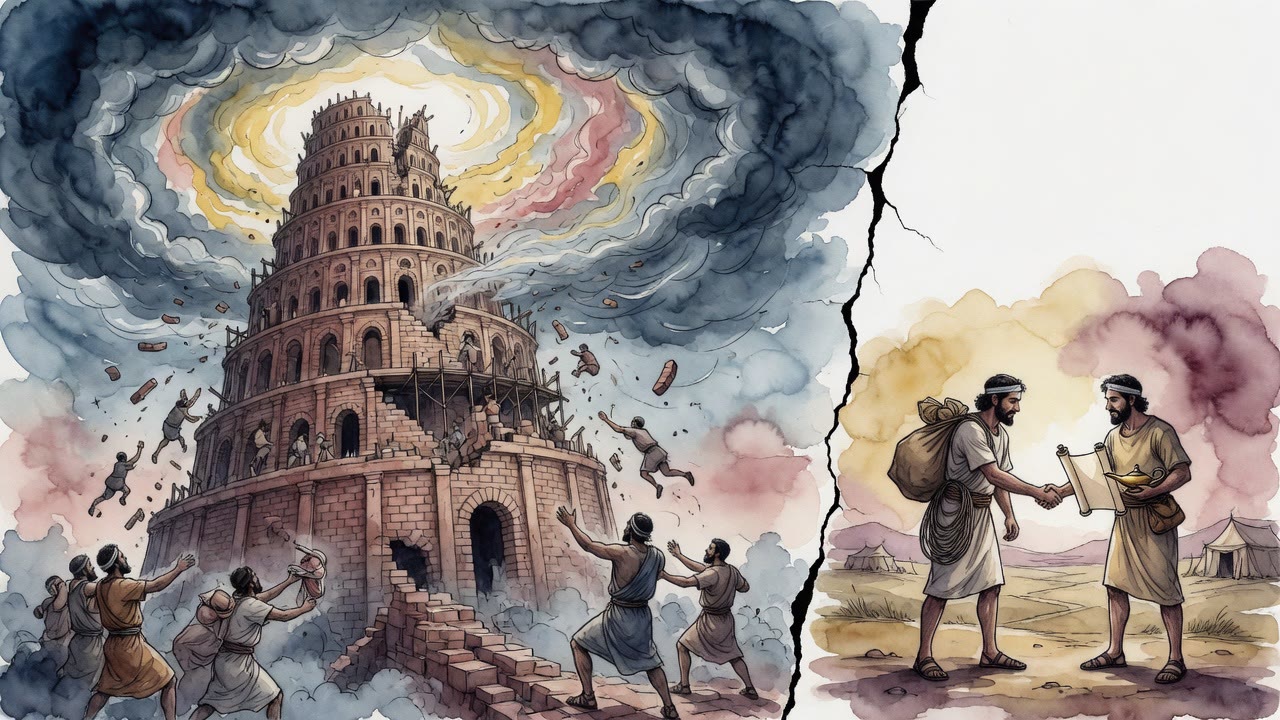
They were good at what they did. Rabbi Huna of Bereshit Rabbah said the builders of Babel were terrifyingly efficient. A worker who meant to lay one brick would lay two. A worker who meant to plaster two courses would plaster four. Mitzrayim was speaking to Kush across the scaffolding. Languages held. Hands moved in time. The project was running faster than the planners had designed.
And then the builders called out: venisrefa lisrefa. Let us burn the bricks thoroughly. Standard construction language. The instruction to fire the clay hot enough to hold.
Rabbi Berekhya heard something else underneath. The Hebrew sat one breath away from mishtarpa, the word for being eradicated. The builders had pronounced their own destruction in the same sentence they used to organize the work. They had no way of knowing it. The words that coordinated the project also carried, in the same consonants, the sentence of what would happen to them when the project ended.
What They Were Actually Building
The verse says the builders wanted to make a shem, a name, for themselves. Rabbi Yishmael refused the obvious reading. Shem in Exodus 23:13 refers to other gods, the kind you must not mention. The builders were not chasing fame. They were building a monument to idolatry, a tower dedicated to a name that should not have been spoken. The ambition was not merely architectural overreach. It was theological substitution, an attempt to place a human construction at the center of the world's orientation in place of God.
The dispersion that followed was not punishment for hubris in the familiar sense. It was the removal of a tool from people who had used coordination and shared language to pursue something that would destroy them from the inside. God scattered the languages not out of fear of what humans might build but to prevent the people themselves from completing what the word venisrefa had already predicted for them.
The Brothers Who Did Not Fall Apart
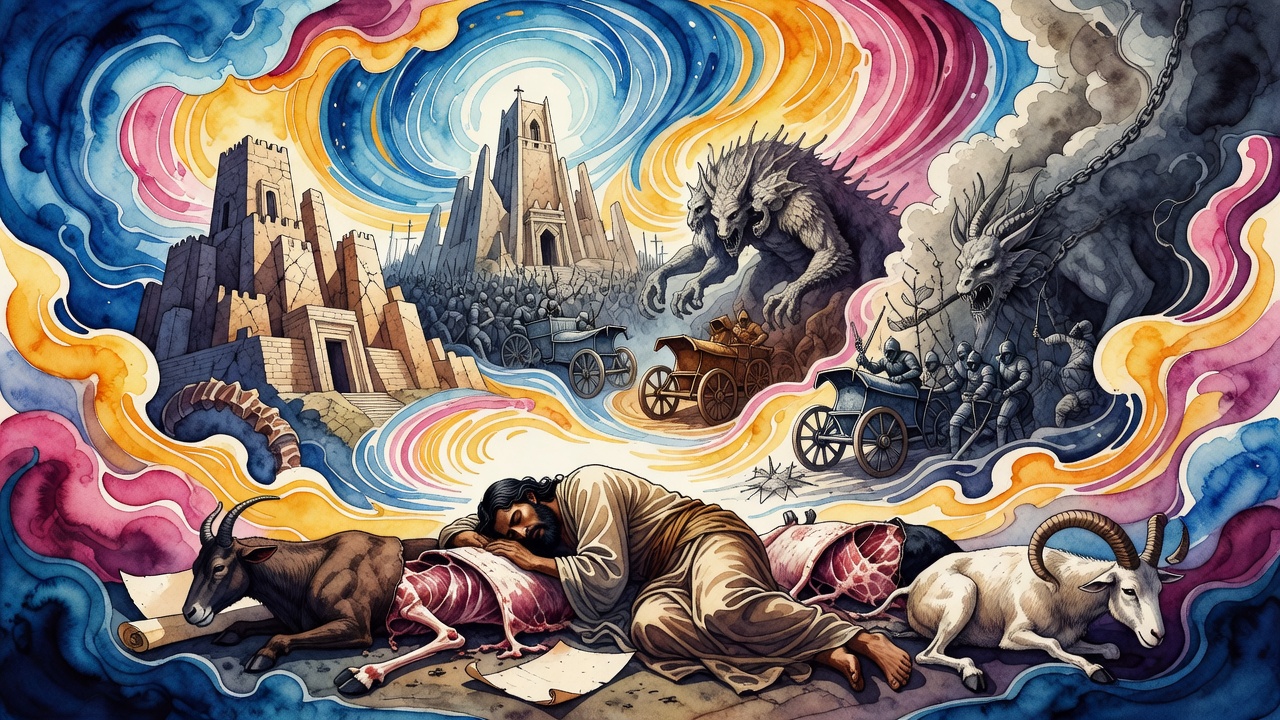
Bereshit Rabbah 99, reading Jacob's deathbed blessings in Genesis 49, set the collapse at Babel against a different model of human cooperation. Jacob blesses Zebulun before Issachar, though Issachar was born first. The reversal was not accidental. The rabbis said Zebulun would support Issachar, funding the trade that freed his brother for study. Issachar would make the legal decisions for the tribe and for the nation. Zebulun would keep the boats running and bring the commerce in. Neither could do what needed doing without the other.
The builders at Babel cooperated with extraordinary precision to build something that broke the world. The brothers Zebulun and Issachar cooperated with quiet fidelity to build something that held. The tower spoke its own name into the word for its bricks and fell. The brothers built a structure that required no monument because it ran on mutual support and did not need to announce itself.
The Empty Space After the Scattering
One more voice in the Babel passage, the section on what the tower builders left behind. They divided the earth by their dispersion, taking their technologies and their partial languages with them. The human capacity for coordinated work survived Babel, but it survived scattered. Every subsequent civilization had some piece of what Babel once had all at once. None of them ever had it whole.
Zebulun's ships carried goods to strangers. Issachar's judgments applied to a people who knew their own law. The cooperation that worked was smaller in scale than Babel's project but deeper in its foundation, built on obligation between brothers rather than efficiency between strangers. Babel fell because it was held together by nothing but capability. The tribes held because they were held together by something else.
← All myths