Babel's Tower Still Stands and Started a War
There was no stone on the plain of Shinar. They pulled bricks from the kiln so hot they stung. A name mattered more than the city under it.
Table of Contents
The first brick came out of the kiln so hot it bit the skin. The man who caught it did not drop it. He held on, grinned, and shouted for the next one.
 Click for full size
There was no stone on the plain of Shinar. No hard bone of the earth waiting to be cut. They had clay, straw, water, and ovens that never went cold. If mud could be ordered into rock, a city could be ordered into forever.
Brick Became Their Stone
They worked in rows. Men bent over the clay pits. Women hauled water until their shoulders locked. Children ran with straw stuck to their ankles. Smoke hung over the plain until the horizon itself looked cooked.
Each brick came out square. A found stone is never the same twice. A brick you can command. They held them up, counted them, slapped mortar between them, and the wall rose faster than hunger.
A man went up meaning to lay one brick and laid two. He meant to plaster two and plastered four. Success felt like proof. One language moved through every mouth. A shout from below was understood above. No one waited for a translator.
Mitzrayim Called to Kush
The call did not stay in one tent. Mitzrayim called to Kush. Far peoples answered as if the plain had become a single throat.
"Come," they said. "Let us make bricks, and burn them thoroughly." (Genesis 11:3)
They meant the kilns. They meant hardness. They meant a city that would not scatter. The same words, spoken in that heat, already carried another burning. Fire would not only harden the tower. Fire would answer it.
The ladder had a place for every nation. Every step of it pressed down on the earth as if the earth had agreed.
They Raised a Name for War
They wanted a name.
Not a blessing. A name built so large that heaven would have to notice it. "Come, let us build us a city, and a tower, with its top in the heavens, and let us make a name for us, lest we be dispersed upon the face of the entire earth" (Genesis 11:4).
Under the fear of scattering sat a harder wish. They wanted to carry war upward. The sky was not a roof to them. It was a frontier. The name they meant was not the Name of God. It was a name of their own, a shem (שם) they could point to and say, this is ours, the way other gods are named and mentioned.
At the higher levels men stopped looking down. The ovens looked like coals. Voices from below thinned to insects. They finished the tower. They did not finish the city. The fist was up. The streets below it were still half laid.
A Third Still Stands
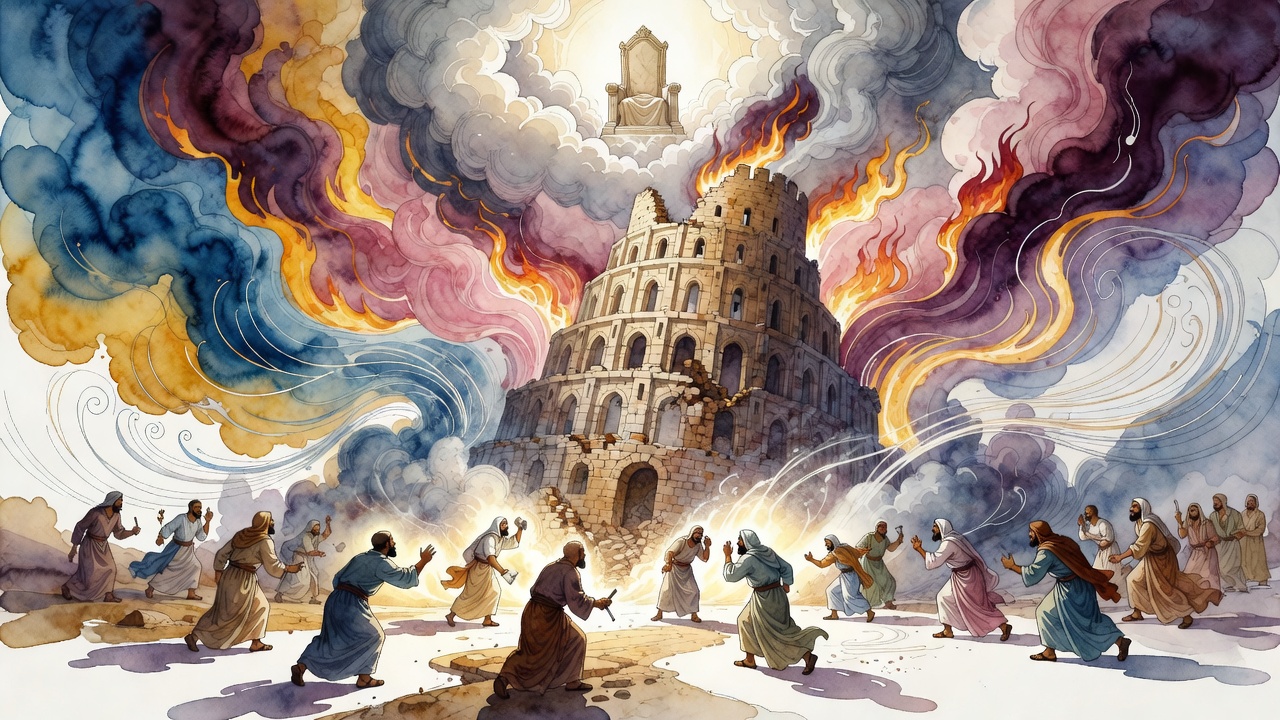
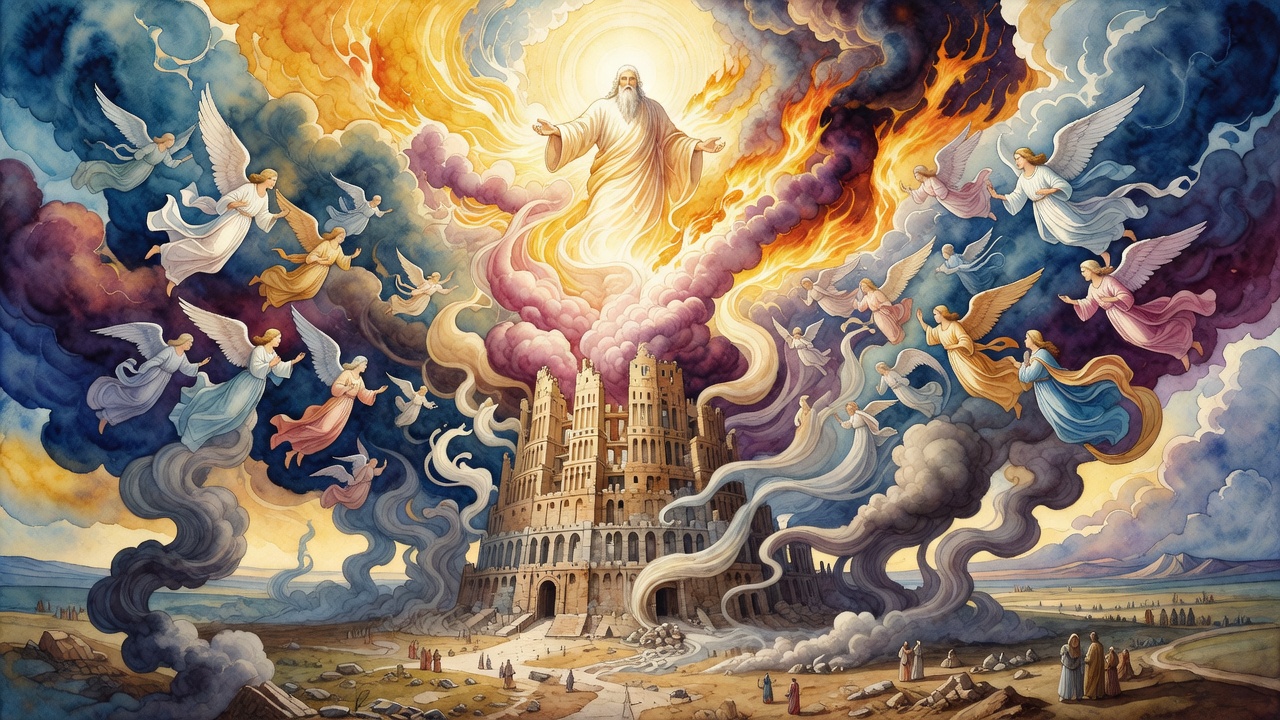
God descended, and the single body broke into mouths.
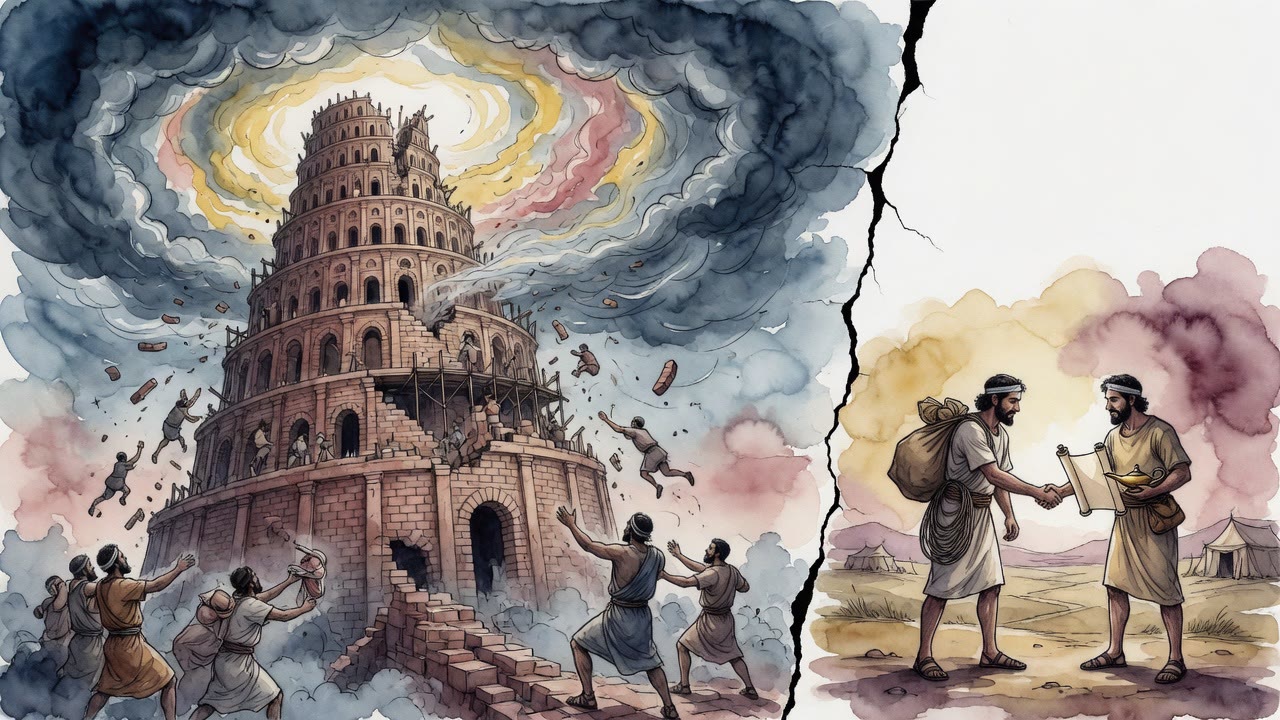
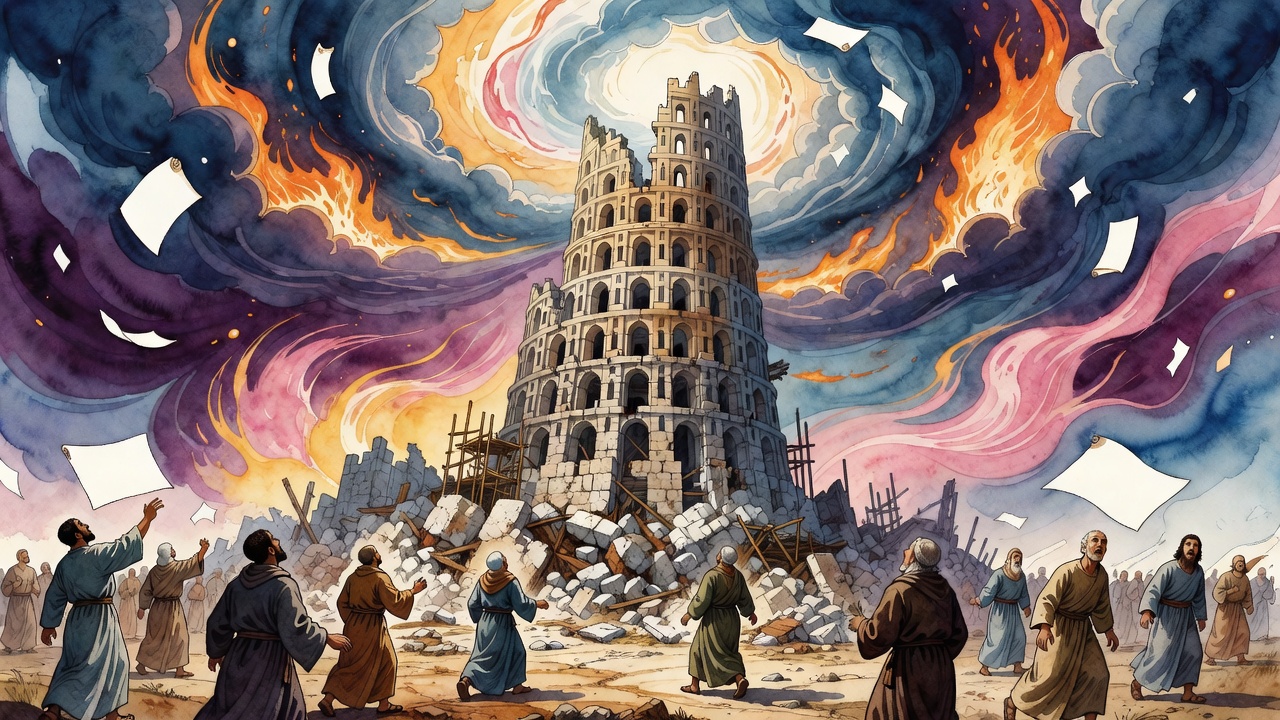
A man asked for mortar and received water. Another called for brick and was handed a tool. Commands turned to noise. The same hands that had passed clay reached for throats. They did not need to finish the city for the war to begin. Confusion was enough.
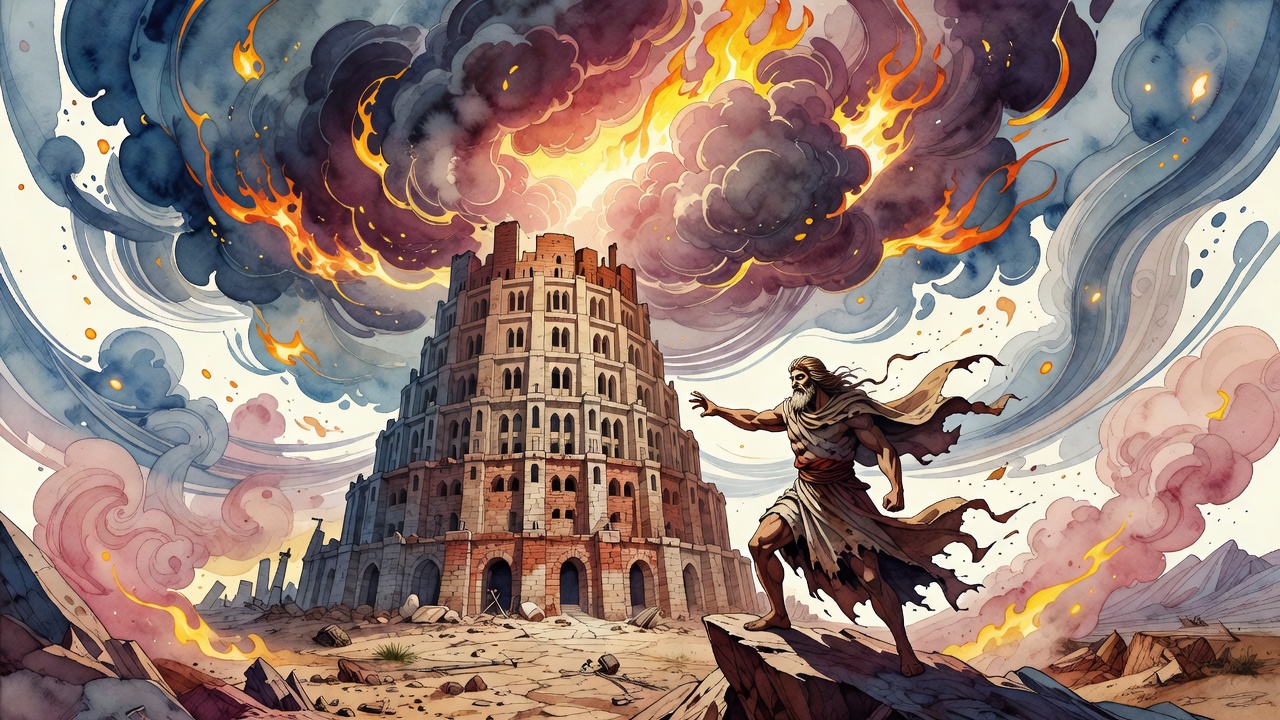
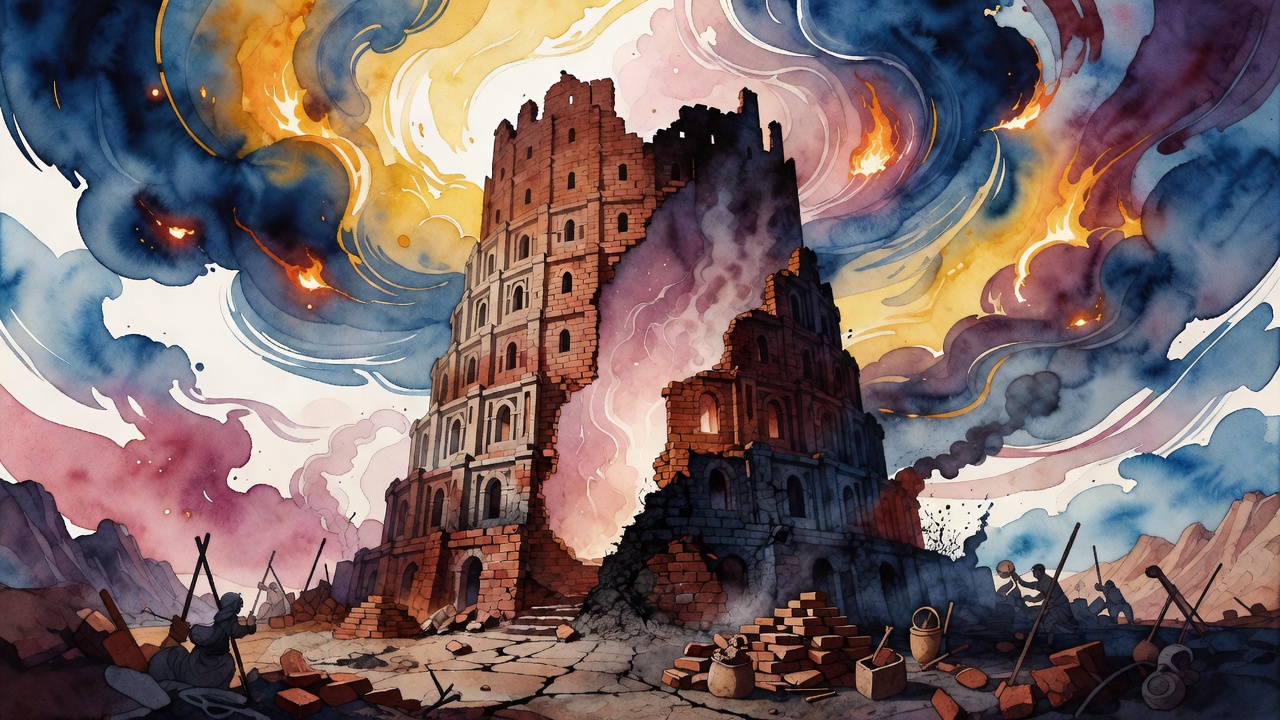
Then the building took the sentence into itself. One third burned. One third sank into the earth. One third remained standing, a scar that would not let the plain pretend nothing had happened.
The part that stood was terrible because it stood. Anyone who climbed near the top looked down and saw palm trees the size of grasshoppers. The air thinned what a man had meant to do. They ceased to build the city. The tower did not vanish.
The Fathers Left the Door Open
The builders scattered with broken speech in their mouths, but the quarrel did not scatter evenly. It lodged in families. Fathers handed children tools and grudges together.
They had tried to climb and could not. So the children learned to make war on earth instead. Doors the fathers opened stayed open. Later mouths would say, "Come, let us cut them off from being a nation, that the name of Israel may be no more in remembrance" (Psalms 83:5).
On the plain the ovens cooled. In distant places new words hardened. Mitzrayim no longer sounded like Kush. The standing third kept watch over the split, blackened by fire, rooted above a swallowed third, high enough to remember the first shout.
← All myths