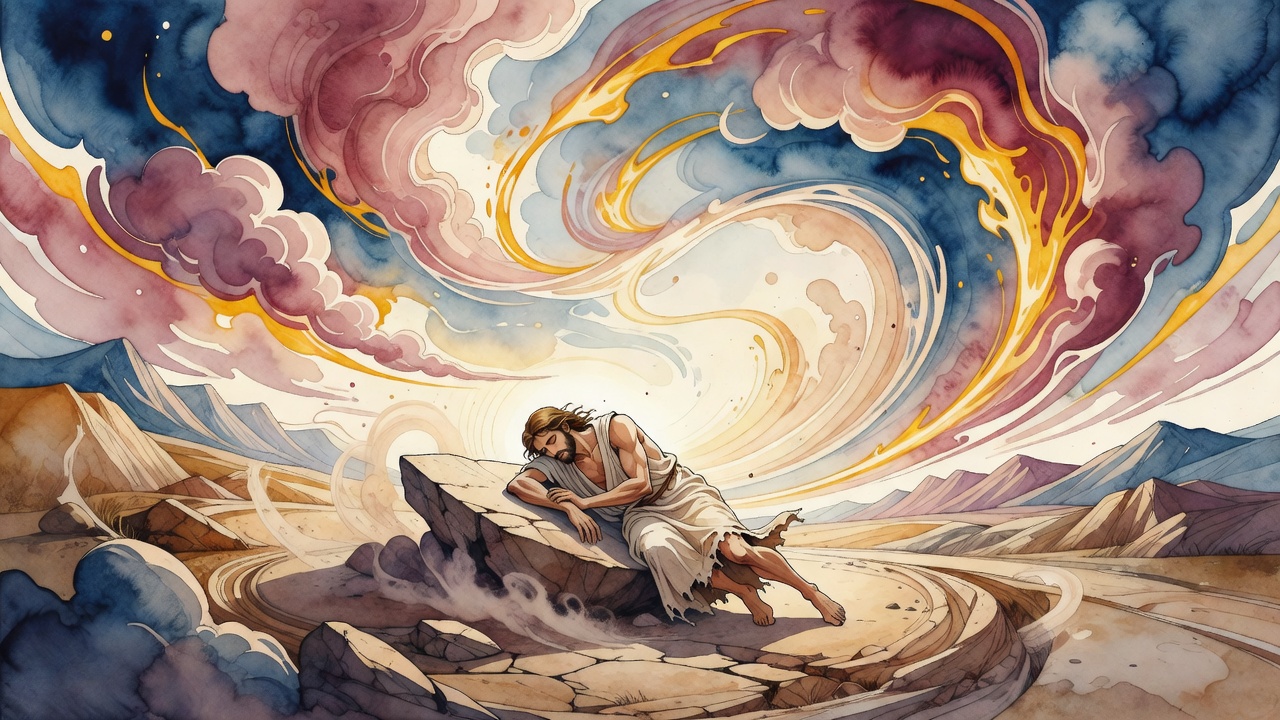
Three Men Who Stole Time From the Angel of Death
A rabbi burned death's scroll, Jacob stripped himself to survive, and Abraham made the angel weep. The doomed do not always die on schedule.
Table of Contents
 Click for full size
The List in the Synagogue
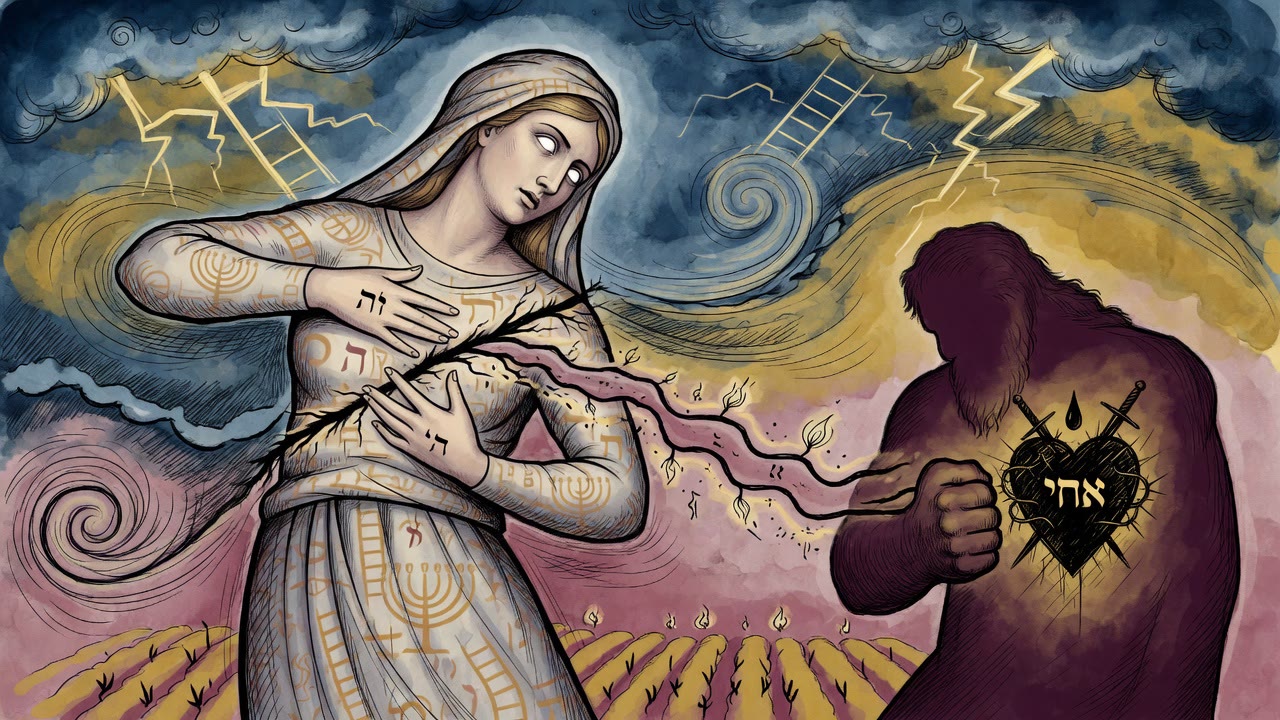
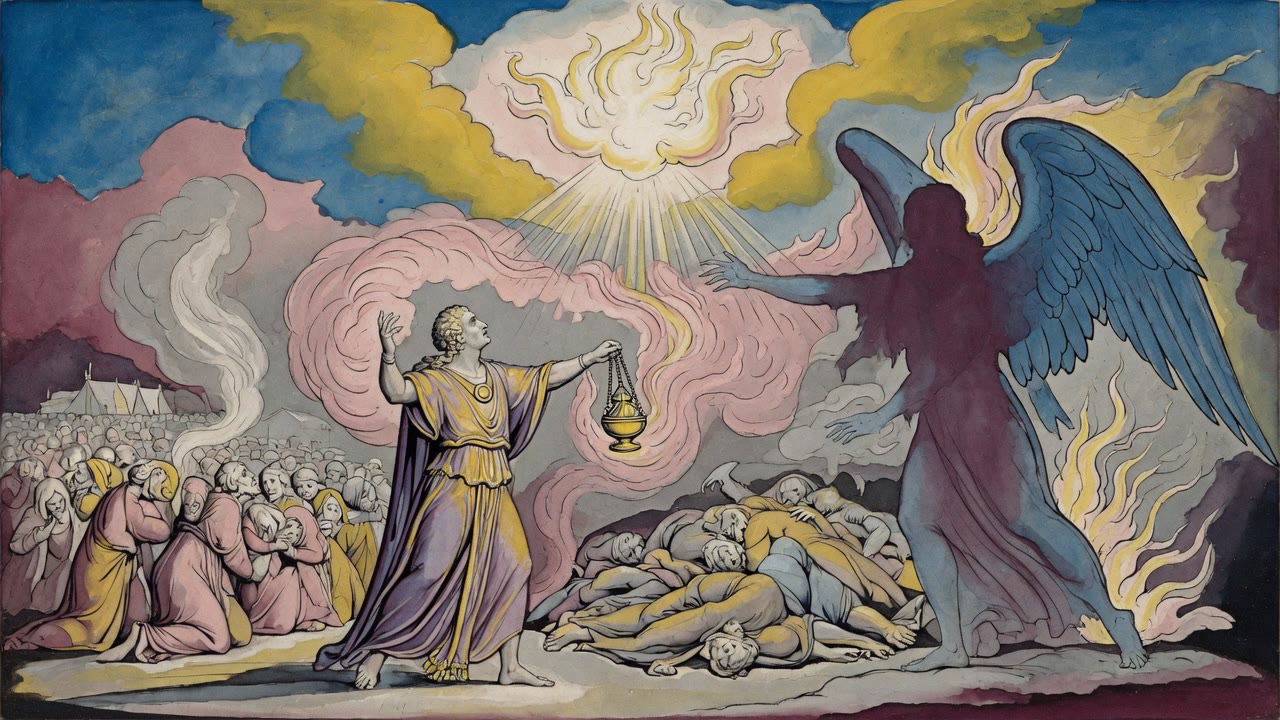
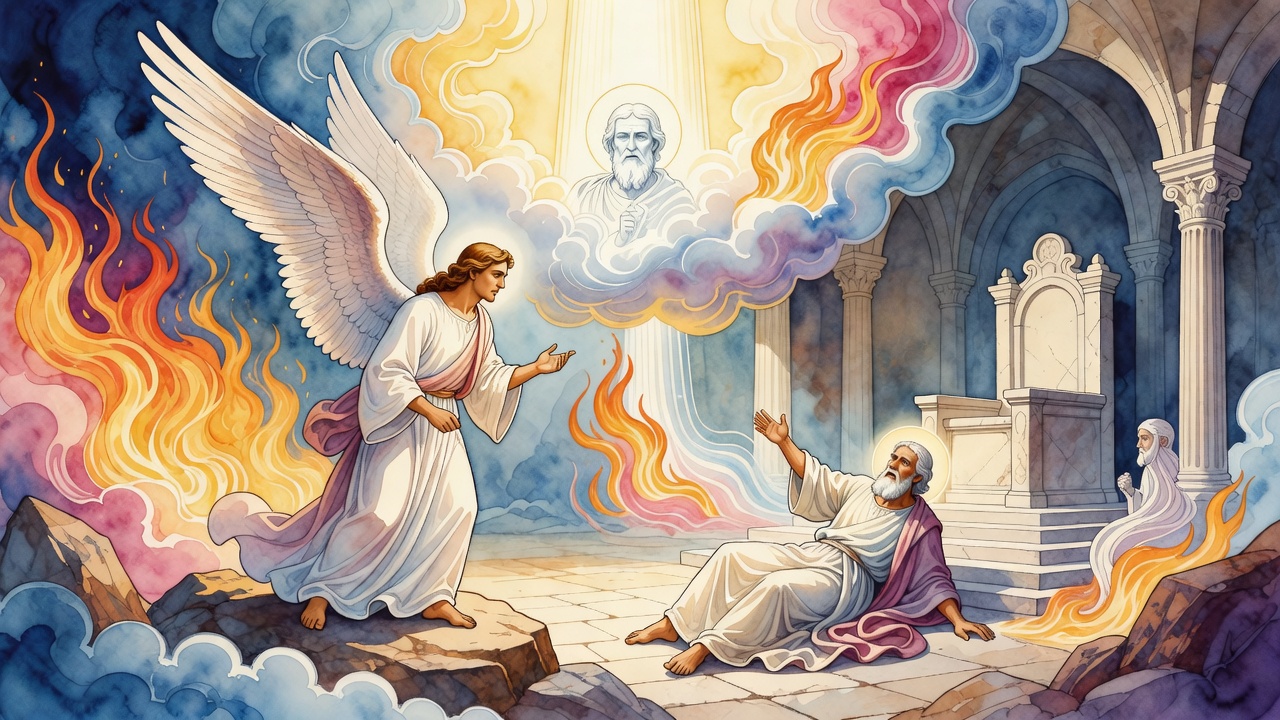
It was the eve of the High Holy Days in Prague, late at night, and Rabbi Loew noticed a light burning in the synagogue when the synagogue should have been dark. He went in. At the pulpit stood a figure sharpening a knife over a long scroll, and the scroll was covered in names. They were the names of everyone in the community marked to die in the coming plague.
The Scroll Fed to the Fire
Most men would have run. Rabbi Loew, whom legend credits with shaping the Golem from river clay, did the opposite. He lunged forward, tore the scroll from the hands of the angel, and ran home, where he fed it to the fire and watched every name curl to ash. The plague that followed was a shadow of what it should have been. Only those whose names survived on a charred scrap died. And even those deaths, Rabbi Loew decided, were acceptable, because a man who can look the angel of death in the face and take his paperwork away from him has not lost the encounter. He has only lost the final round.
The same hand reaches for the same scroll across the centuries. Again and again, the doomed do not die on the appointed day. They argue, they run, they burn the paperwork. Three of them did it better than anyone.
The Boy Who Understood the Arithmetic of Poverty
The second man who stole time from death was not a rabbi and not a giant. He was Jacob, fleeing his brother on a road outside Shechem, when a thirteen-year-old with a sword rode out of the trees with orders to kill him.
Eliphaz, son of Esau, had strict instructions. Find Jacob. Kill him. Take everything. He was a grandson of Abraham and he had absorbed enough of that household's training to feel the weight of what he was being asked to do. He had not yet done anything irreversible. Jacob saw this, and Jacob, who had always understood negotiation better than combat, made an offer.
If you take everything I have and leave me with nothing, Jacob said, you have accomplished your father's purpose. The Talmud taught what Jacob already knew: a poor man is considered as if dead. Strip me completely and I am, legally and morally, a dead man. You will have satisfied the terms of your father's order without shedding blood, and you will have kept your own hands clean.
Eliphaz took the deal. He stripped Jacob of everything, left him standing in the road with nothing, and rode back to his father. Jacob survived on a technicality that he had invented on the spot, which is the most Jewish possible way to survive.
The Man Who Made the Angel Weep
The third story is the oldest and the strangest. It does not appear in the canonical text but in the accumulated memory of a tradition that spent centuries imagining how Abraham faced the moment of his death.
When the Angel of Death came for Abraham, he came the way he always came: announced, expecting compliance. He had taken every other man and woman in the world. No one had ever turned him away for long. He arrived at Abraham's tent and stated his business.
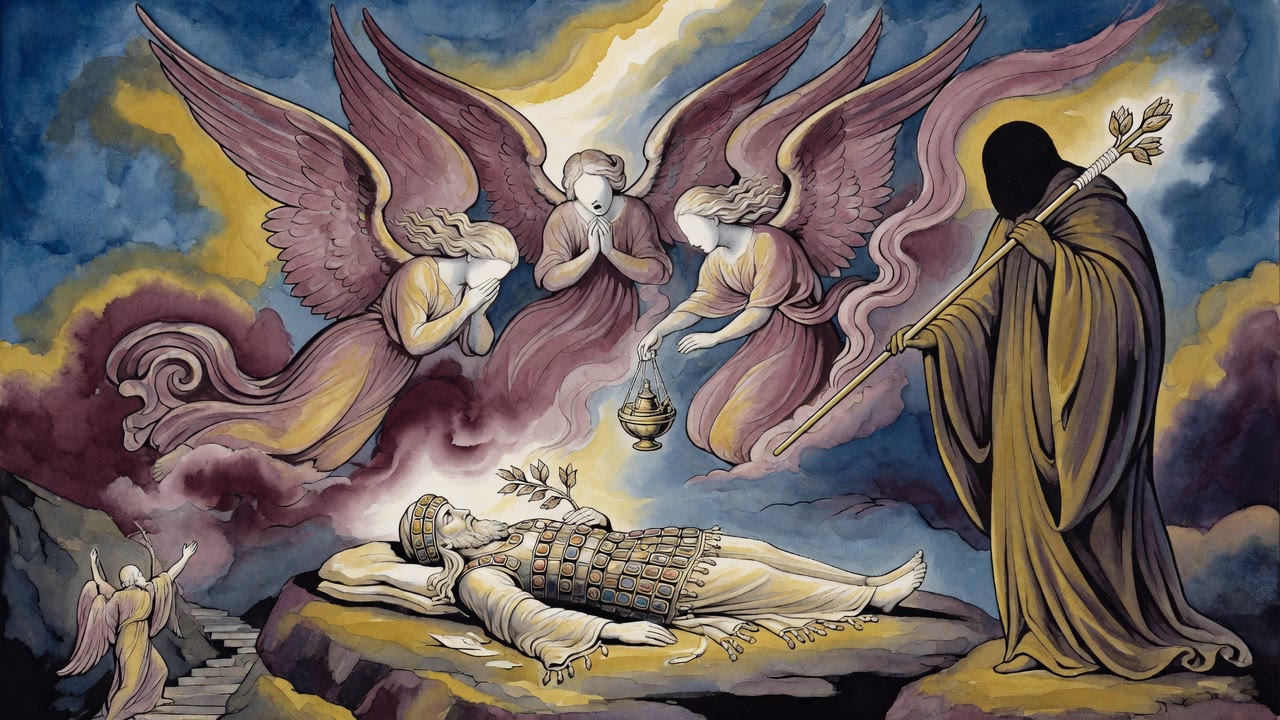
Abraham asked to see himself, to look at the glory of the angel's face. The angel showed him. What Abraham saw was so overwhelmingly beautiful and so suffused with the light of all the lives the angel had collected that Abraham began to weep. He wept for the souls. He wept for the beauty turned to service. He wept out of something that was not fear but was deeper than fear, a grief for the shape of what mortality required.
And the Angel of Death, who had never encountered anyone who responded to his appearance with compassion for him, wept back. The two of them stood there, patriarch and angel, weeping together, until the business at hand became almost beside the point. Death came. Abraham went. But the angel left with something he had not carried before, the specific weight of having been seen and mourned by the man he had come to collect.
← All myths