The Day Jacob Outran His Brother and Heaven
Stripped of everything by Esau's son, Jacob ran for his life, slept on a stone, and woke to find heaven had bent the whole land beneath him.
Table of Contents
 Click for full size
The Boy With a Sword on the Road
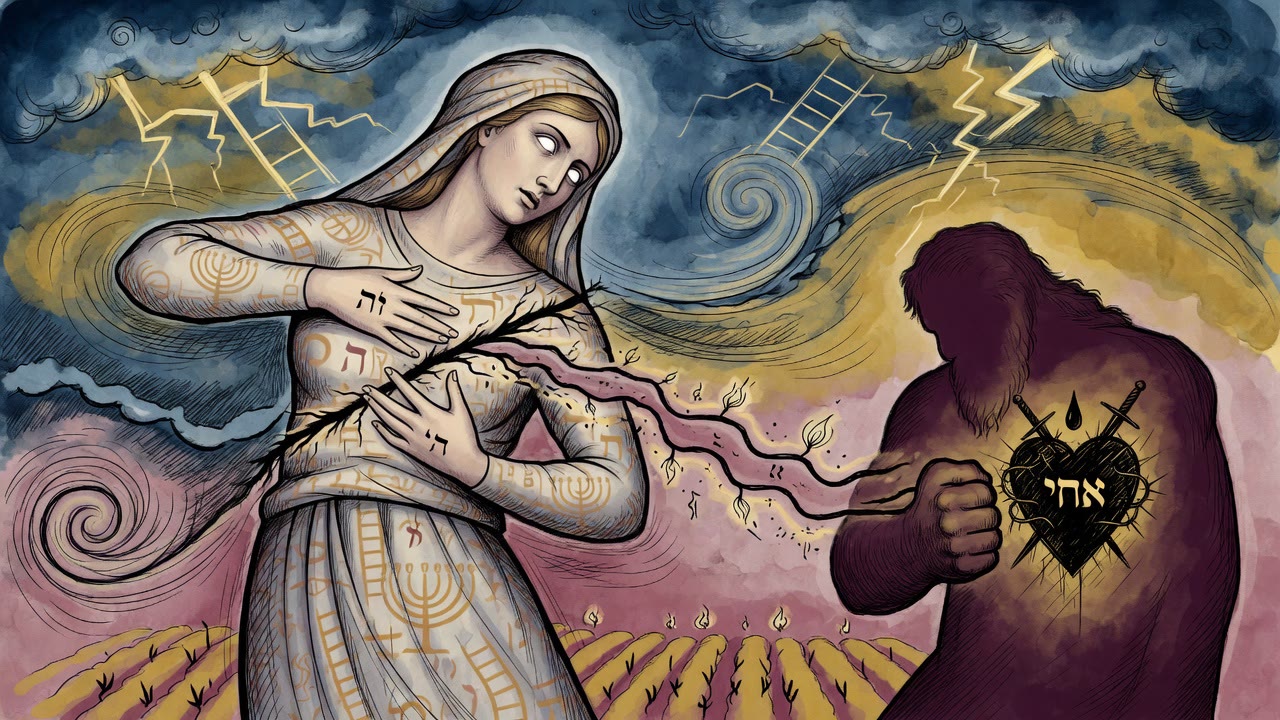
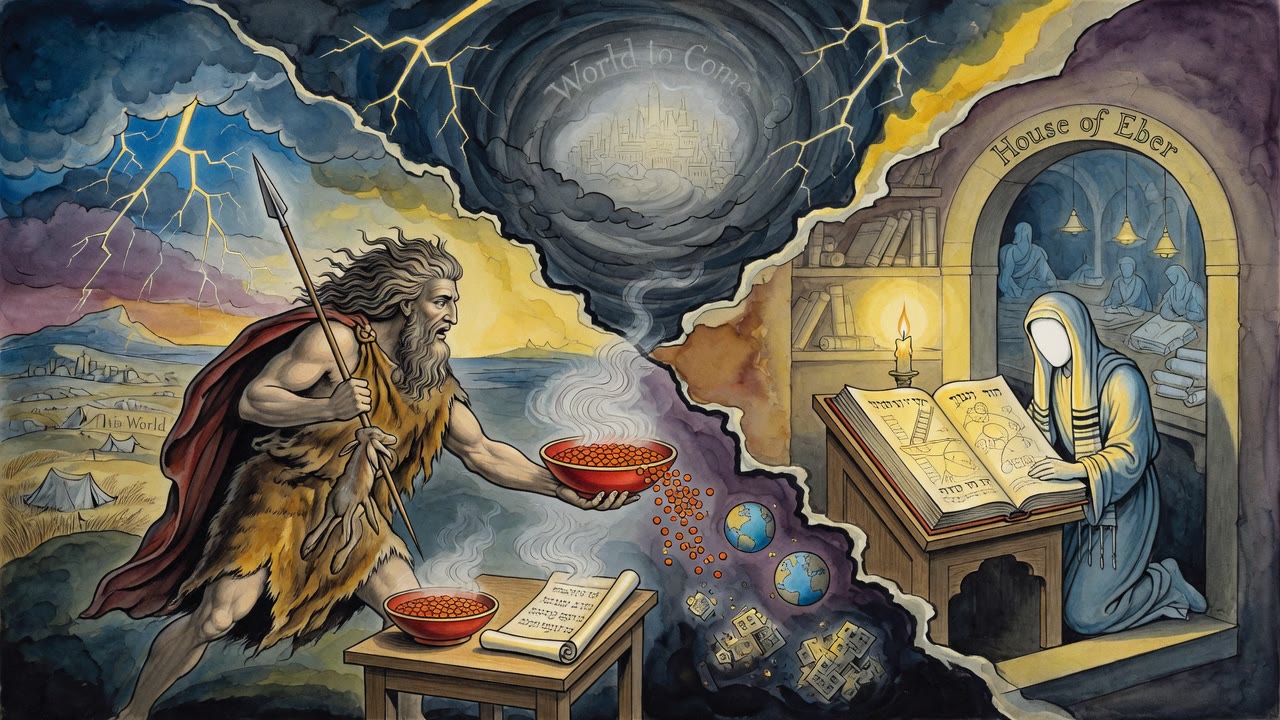
A thirteen-year-old stood in the road with his sword out and orders to kill his uncle. The boy was Eliphaz, son of Esau, and he had gathered ten of his mother's brothers and ridden out to finish the job his father had given him. Find Jacob. Kill him. Take everything he has.
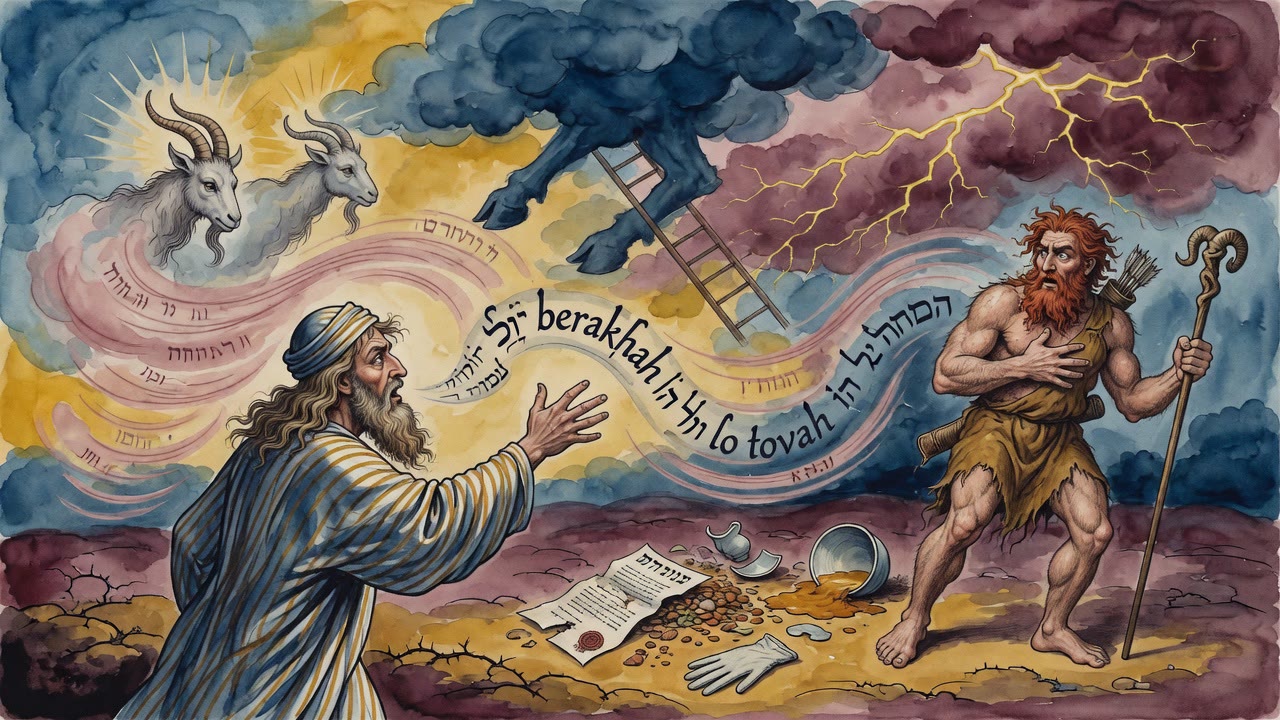
When Jacob saw them coming, he did not understand at first. He called out: "Why have you come against me with your swords?" Eliphaz answered the way a soldier answers when he has memorized his orders and is not interested in the question underneath the question. "My father commanded this. I will not turn aside from it."
So Jacob thought. He was on foot, alone, fleeing toward Haran with whatever he had taken from home. He had no army and no option that involved winning the fight. What he had was a piece of reasoning that he laid before Eliphaz with careful precision. "If you kill me," Jacob said, "you will have fulfilled your father's orders. But if you take everything I own and leave me with nothing, I am, in effect, as good as dead. Poverty is considered equivalent to death. Take what I have and spare my life, and you will have honored both the letter and the spirit of what Esau sent you to do."
Eliphaz was, whatever else he was, a grandson of Abraham. He had grown up hearing the stories. He took the argument. He stripped Jacob of every possession he carried, left him standing in the road with nothing, and rode away.
Running Through the Dark
Jacob walked to Haran. Barefoot, by most accounts, or close to it. He had nothing to eat and nothing to sleep under. He covered a distance that should have taken days in a single bound, because the land beneath his feet compressed itself at God's command, and what looked like ordinary ground was actually the whole territory of Canaan folding under his steps like a road being rolled up.
He was not aware of this. He was a man fleeing for his life through the night, carrying the blessings his brother wanted to kill him for and nothing else. He stopped when he ran out of daylight and found a stone for a pillow, because the flat rock was what was there.
What the Dream Opened
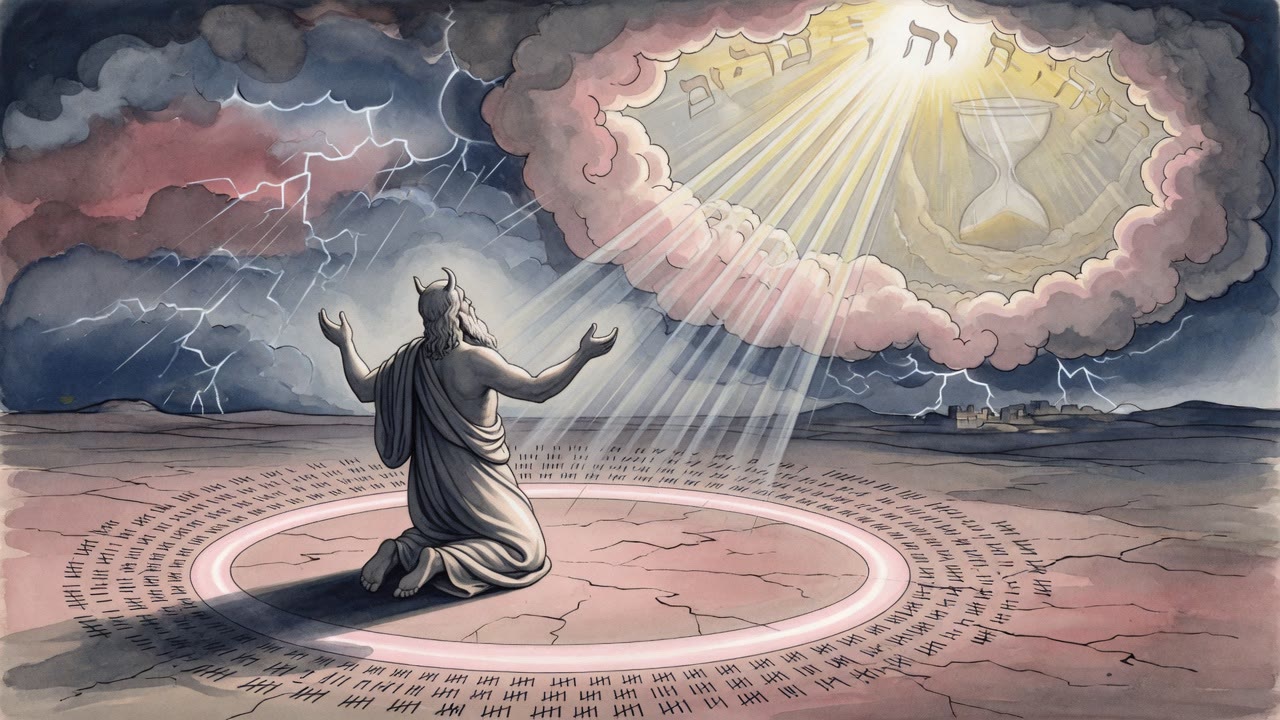
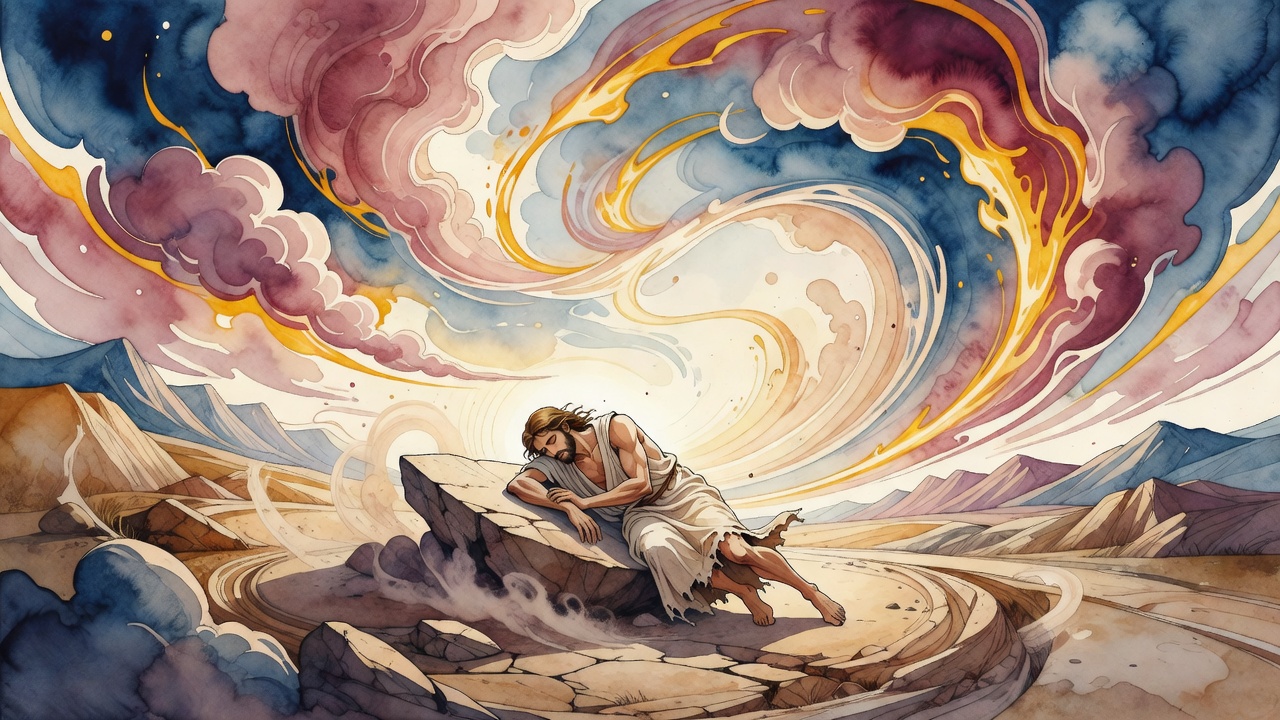
When the sun set and Jacob laid his head on the stone, he fell into a sleep unlike any he had ever had. A ladder stood on the earth and its top reached heaven, and the angels of God went up and came down on it. And God stood over him, not at the top of the ladder but directly above him, and spoke the covenant that had passed from Abraham to Isaac and now to this man alone on the ground with a stone for a pillow.
"The land you are lying on," God said, "I will give it to your descendants. They will spread in every direction. Every family of the ground will be blessed through you. And I am with you. I will guard you wherever you go. I will bring you back to this land. I will not leave you until I have done everything I have said."
Jacob woke up in the morning and the first thing he said was: "God was in this place, and I did not know it." He had been running through sacred ground in the dark and had not noticed until he stopped.
A Stone Made into a Pillar
He took the stone he had used as a pillow and stood it upright and poured oil on it and made it a monument. He named the place Beit El, the house of God, though it had been called Luz before. Then he made a vow. If God kept the promises He had just made, if He watched over him and fed him and clothed him and brought him home safely, then the God of his fathers would be his God, and this stone would be the house of God, and Jacob would give back a tenth of everything he received.
The sages noticed the conditionality of that vow. Jacob set terms. He did not simply accept the covenant laid over him while he slept. He negotiated from the ground up, the way his family had always negotiated, and he stood his stone in the road like a marker for a deal not yet completed.
← All myths