The One Spark Jacob Did Not Know He Carried
Jacob counted the warlords of Esau and went cold. God answered him with a single name, the boy who would burn them all to ash.
Table of Contents
 Click for full size
Jacob Counted the Armies and His Heart Dropped
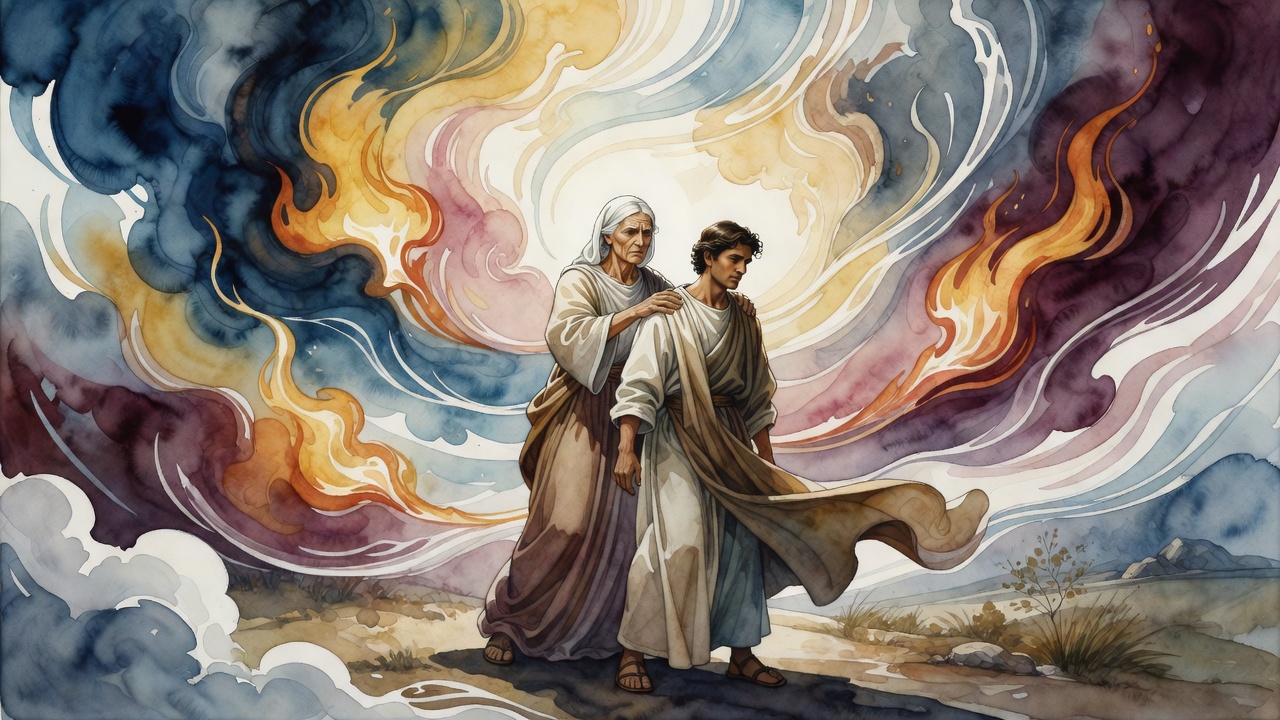
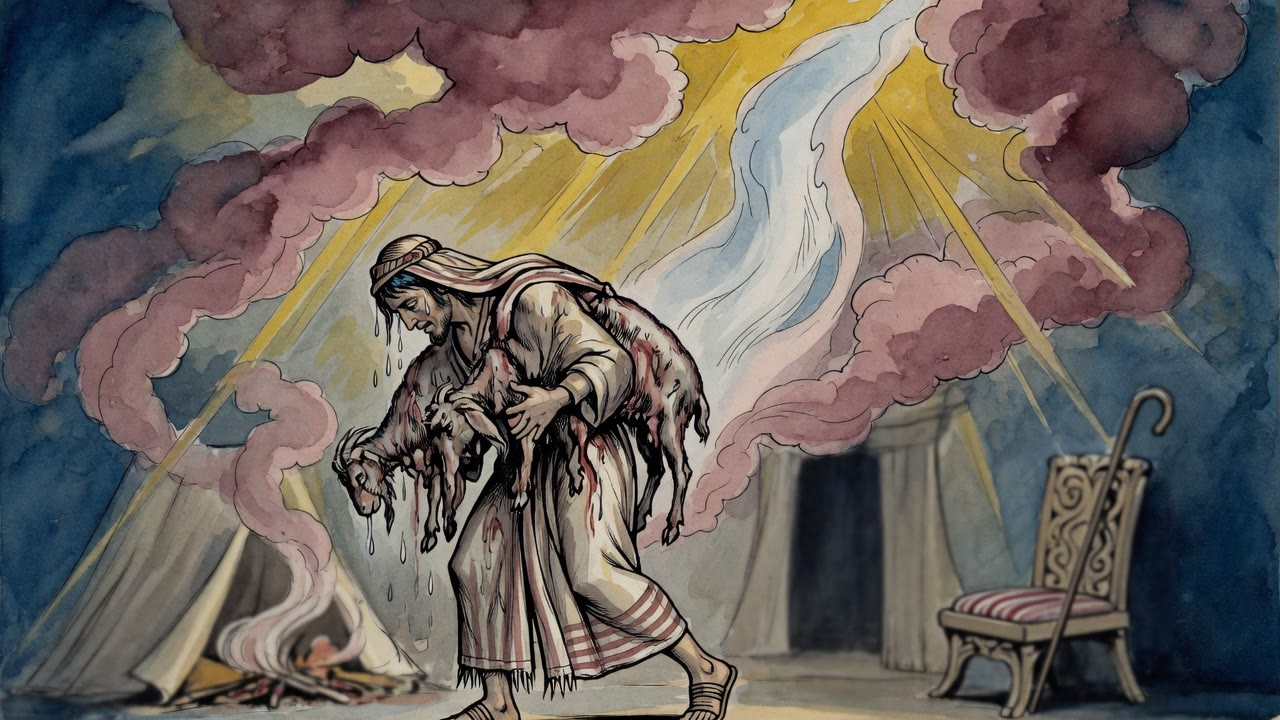
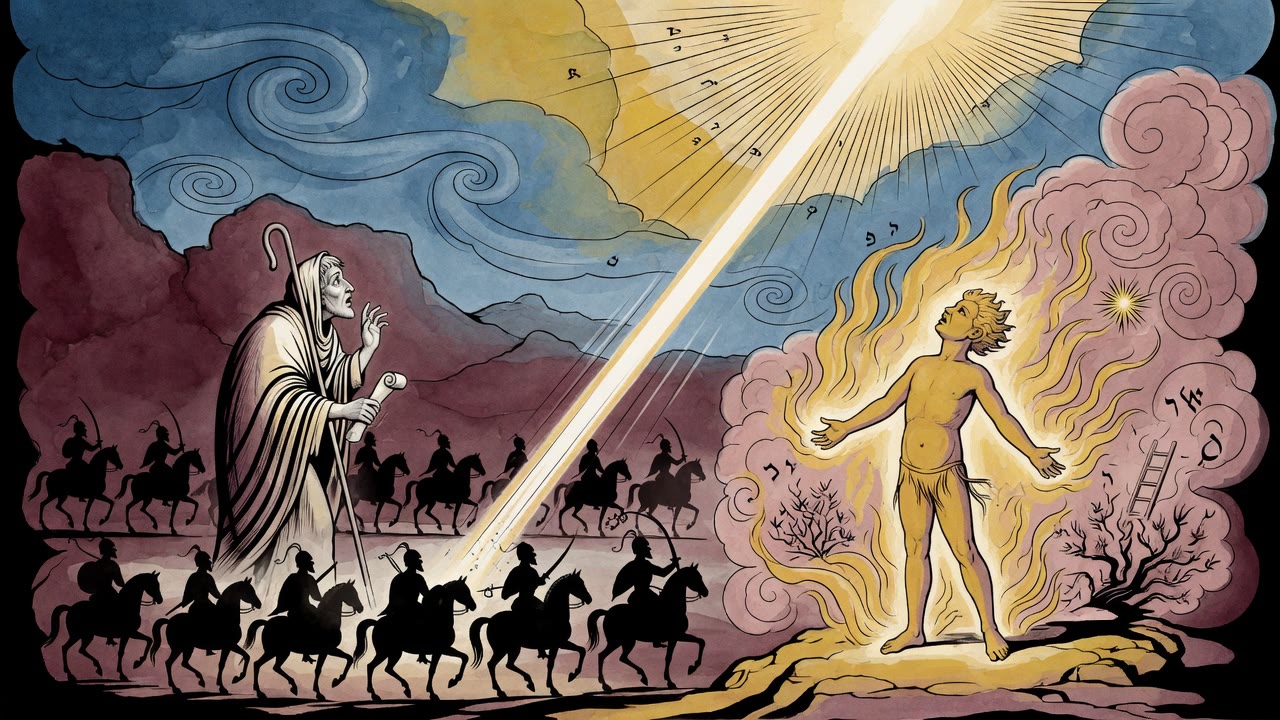
He lifted his eyes, and what he saw across the horizon made him go cold. The chiefs of Esau were ranged there, clan after clan, helmeted and armed, more fighting men than he could count. Against them: a handful of sons and a few hundred souls. The question that rose in him was not a tactical question. It was despair dressed as a question. Who can stand before these?
A teacher who loved him had a parable for that moment. Picture a goldsmith bent over his bench, lost in the heat of his work. His young apprentice looks up through the doorway and sees a caravan crawling past, camel after camel, each one piled so high with bundled straw that the road seems to vanish under the weight of it. The boy goes pale. Master, he says, who could ever stand against all of that?
The old man does not look up from his fire. Let one spark fly out of this furnace, he says, and it will burn every last bundle to nothing.
The Weapon Hidden in the Nursery
That was what Joseph was. A spark. Not an army, not a general, not a king yet. A dreaming boy in a coat his father gave him. But the sages who read the verse in Obadiah, the house of Jacob shall be fire and the house of Joseph a flame and the house of Esau for stubble, understood that Joseph was not merely Joseph. He was the guarantee built into the lineage.
Fire needs fuel. A flame alone is only flame. But stubble, dry and brittle, goes up in an instant when the spark finds it. The house of Esau was stubble. All its chiefs, all its armies, all its iron chariots, were bundled straw waiting for something small and hot enough to touch them.
That was what Jacob did not know when he stood on that hillside counting helmets. He was not counting correctly. He was counting what he could see, and what mattered was what was still a child in his own house.
What Joseph Carried
The sages built Joseph up from three foundations. He was a Torah scholar, studying with the same intensity his father had brought to twenty years in the schools of Shem and Ever. He was a prophet, not merely a dreamer but a man whose visions carried the weight of what was actually coming. And he was the sustainer of his brothers, the one who would bring food into Egypt when the whole world was starving.
These three things together made him something more than a son. They made him the link between what Jacob's house was and what Israel would become. Without the scholar, the lineage had no spine. Without the prophet, it had no foresight. Without the sustainer, it had no future at all because the brothers would have died in the famine.
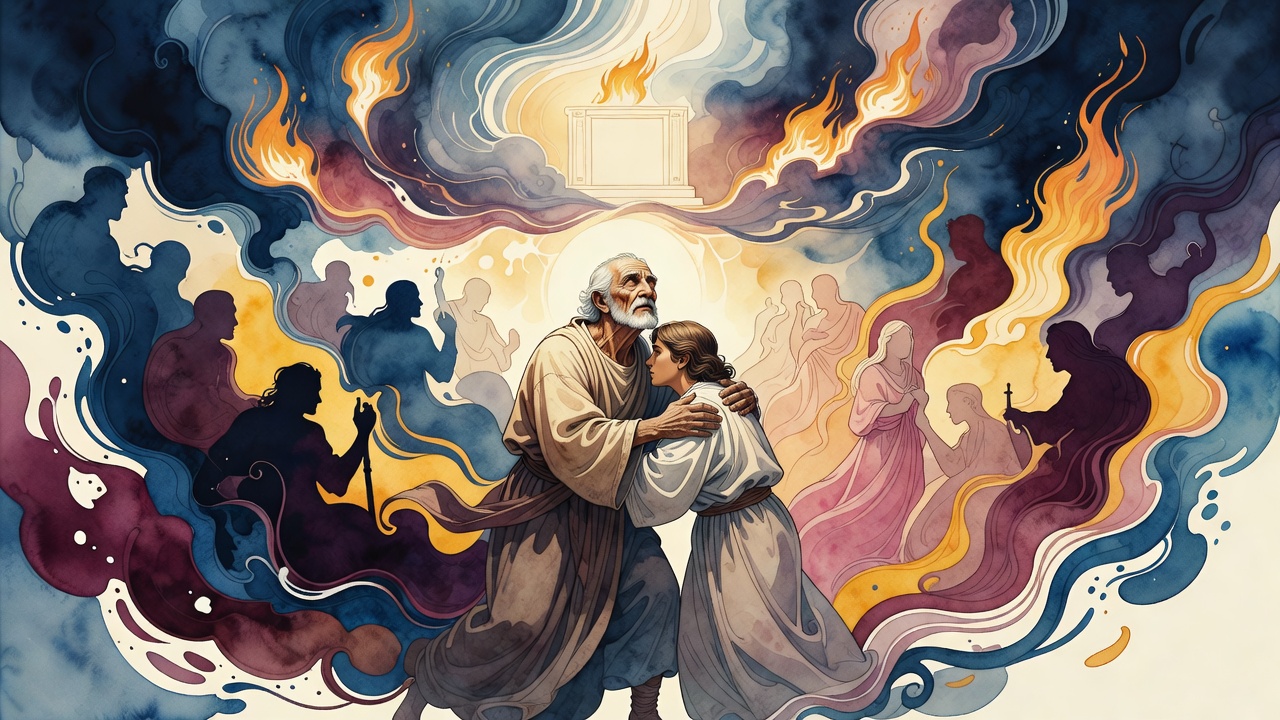
And underneath all three of them, running like a vein through stone, was the thing the sages named again and again: the Lord was with Joseph. In the pit, God was with him. In Potiphar's house, God was with him. In the prison where they threw him, God was with him. He could not be put anywhere that God was not already waiting for him there.
The Lord Was with Him in Every Room
The prison is where it shows most clearly. He was innocent. He was forgotten. He sat in an Egyptian dungeon while the man he had helped, the cupbearer he had given back his dream to, walked free into the court and never spoke his name for two full years. That silence would have broken most people. It did not break Joseph.
The sages asked why, and the answer they found was not about Joseph's temperament. It was about Presence. Everywhere Joseph was, the Shekhinah (God's presence dwelling in the world) came with him. Into the pit. Into the slave market. Into the prison. Wherever they moved him, the light moved with him. His master's house flourished because of it. His prison warden trusted him because of it. Eventually Pharaoh himself woke from two dreams he could not understand and needed the one man in Egypt who could read them.
Jacob standing on that hillside counting armies did not know what he had. The spark was already there. It had already survived the pit and the slave chains and the prison. Nothing Esau's house could send against it would be enough.
← All myths