When Enoch Found Angels Who Could Not Return
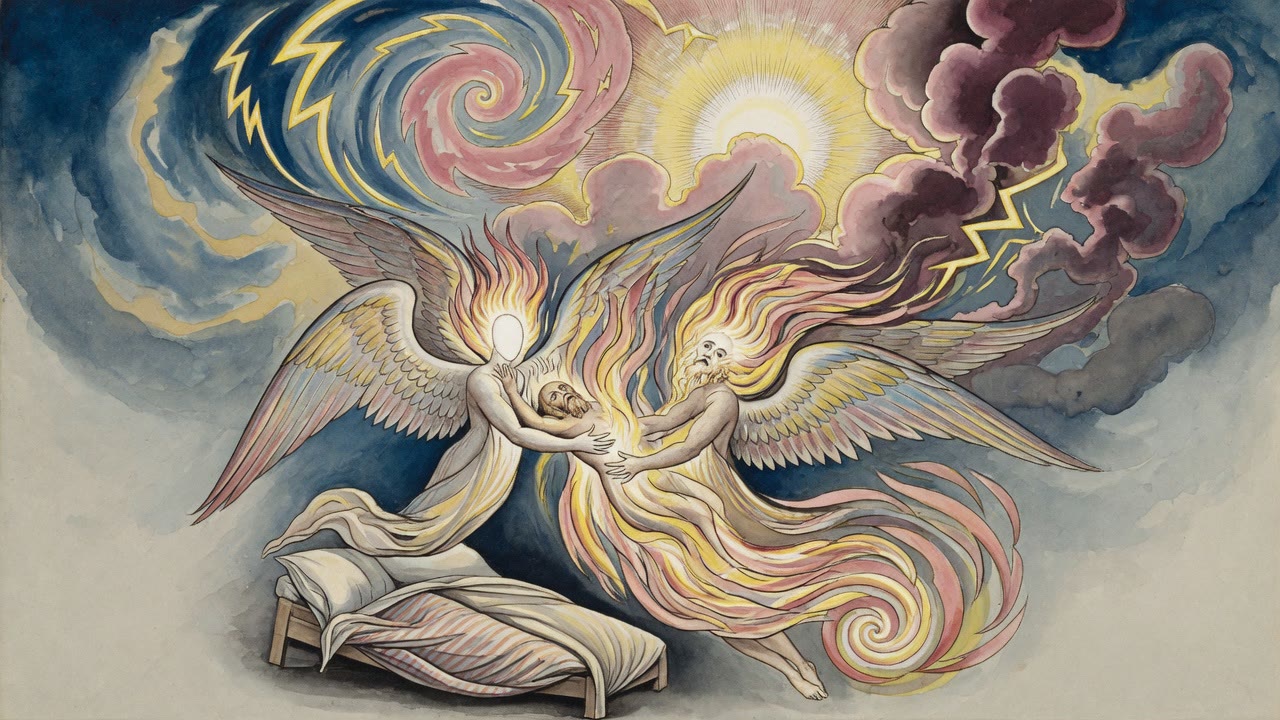
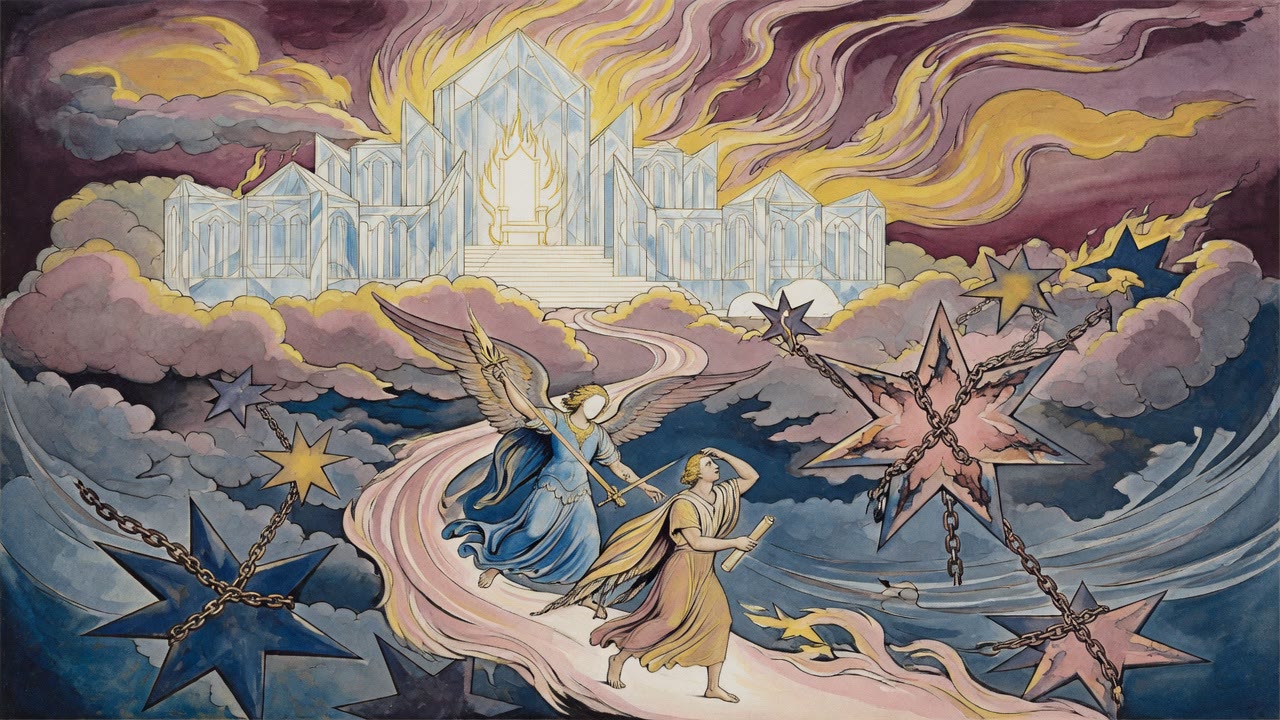
Enoch ascends through dark heavens, finds chained angels weeping in gloom, then silent Watchers stripped of light, still awaiting judgment.
Table of Contents
 Click for full size
The Second Heaven Was a Prison
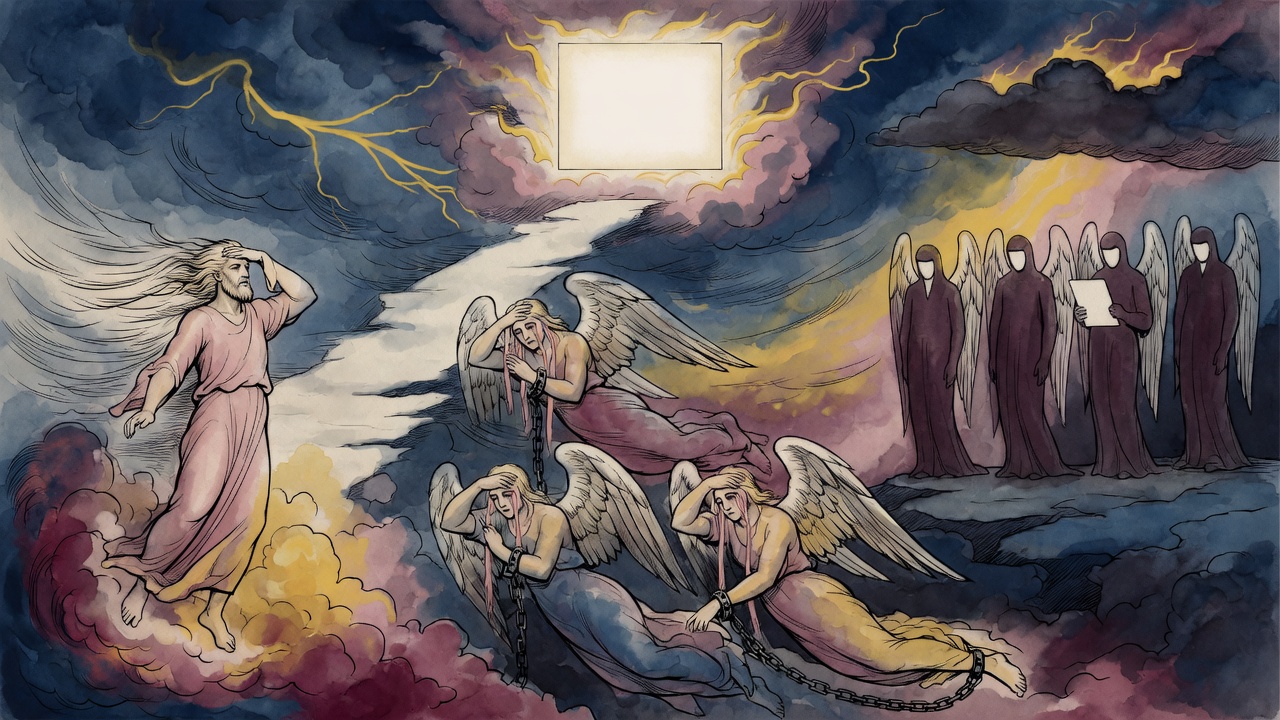
Enoch had already seen enough to know that heaven is not uniform. The first heaven had its own character and its own inhabitants. When his angelic guides brought him through to the second, the atmosphere changed immediately. The light that had been present in the first heaven was absent here. The second heaven was dark, heavy, and deliberately punitive.
He saw angels suspended in gloom. They were bound. Their faces were darker than the darkness around them. They were weeping without stopping, and their grief was not the kind that comes from having suffered something from outside. It was the grief of people who had made a specific choice and could no longer unmake it.
Enoch's natural reaction was to ask what had happened to them. The angels had left their position. They had abandoned the station to which they had been assigned in the order of creation. What exactly they had done is not fully specified in the text, but the consequence was clear: they could not go back. The place they had abandoned did not wait for them. When they left it, they left it permanently, and what remained was this: suspension in darkness, waiting for a judgment that had not yet come but was coming with absolute certainty.
The Angels Asked Enoch for Mercy
The chained angels saw Enoch and recognized what he was. He was a human being being transported through heaven, which meant he was in a category they could not imagine belonging to. They had been made for heaven. He had been made for earth, and here he was passing through their prison on his way to higher regions they could no longer reach.
They begged him to pray for them. This is the terrible reversal at the heart of the scene. Angels who were made to pray, who were made to stand in the presence of God and offer worship and carry out commands, were now asking a mortal man from the lower world to intercede on their behalf. They did not ask because they thought he had power. They asked because they had exhausted every other option.
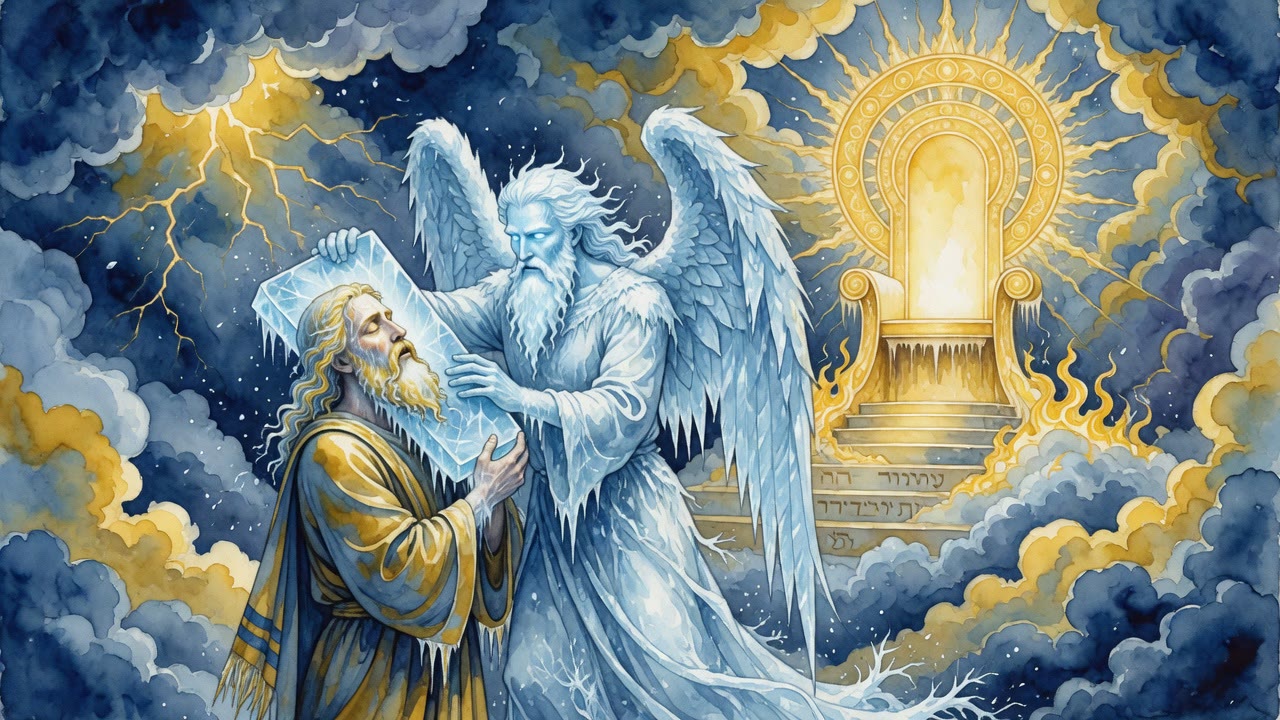
Enoch told them he could not help them. He was going upward through heaven, not yet having arrived anywhere, not yet having stood before God, not yet having received any authority at all. He was a traveler. He could not intercede for creatures of a higher order who had made a choice that no human could undo.
He wept when he said this. He wept because the situation called for grief rather than judgment. The angels had ruined themselves. They were in agony. Enoch was not able to help them. All of that was simultaneously true, and the weeping was the honest acknowledgment of what it felt like to stand in the presence of an irreversible catastrophe with nothing to offer.
The Fifth Heaven and the Silent Watchers
The ascent continued. In the fifth heaven, Enoch found the Watchers, called Grigori in the text, whose faces were withered and whose mouths were silent. They did not join the angelic song that moved through the other heavens. They stood apart from the service of God, neither worshipping nor being punished in the obvious way of the chained angels below. They were present and absent simultaneously, stripped of participation without being destroyed.
Enoch asked his angelic guides who these silent beings were and why they did not join the service. The answer was that these were the ones who had gone down to earth in the days of Jared and taken wives from among the daughters of men. The account in the earlier portions of Enoch literature is the familiar one: sons of God who looked at human women, found them beautiful, descended, and produced the Nephilim. The resulting violence and corruption had been one of the conditions leading to the flood.
Enoch addressed them. He encouraged them to join the service of God, to return to worship, to not stand outside the song when the song was still being sung. He was encouraging the Watchers not because he thought encouragement could restore what they had lost, but because the alternative was silence about a situation that could not be left in silence. He spoke into the withered faces because speaking was all that was left to do.
They heard him. They stood with him while the Levites sang below in the sixth heaven and the archangels sang above. For that time, the Watchers were present in the service rather than outside it. Whether this would affect their ultimate judgment the text does not say. Enoch continued his ascent.
Enoch Kept Ascending Past the Fallen
The ascent through heaven in 2 Enoch is not a sightseeing tour. Each level teaches something about the nature of the choices that lead to exile from one's proper place. The chained angels in the second heaven had left their station completely. The Watchers in the fifth heaven had crossed the boundary between heaven and earth and could not cross back. Both groups were living in the aftermath of decisions made in freedom, decisions that had seemed to offer something unavailable in their assigned positions, and both groups were now defined entirely by those decisions.
Enoch moved through both without being one of them. He was ascending rather than descending. He had been called upward rather than having pulled himself down through his own desire. The contrast is deliberate. The way to ascend is to be called. The way to fall is to choose your own route to what you want.
The human traveler walking through the ruins of angelic ambition is himself the argument against angelic ambition. Enoch arrived at each heaven as he was, which was mortal, bounded, dependent on his guides, weeping at what he found. He did not arrive as a glorious figure. He arrived as a person willing to make the journey exactly as it was offered, which is why the journey was offered to him.
← All myths