Why Solomon Had to Trap the King of Demons to Build the Temple
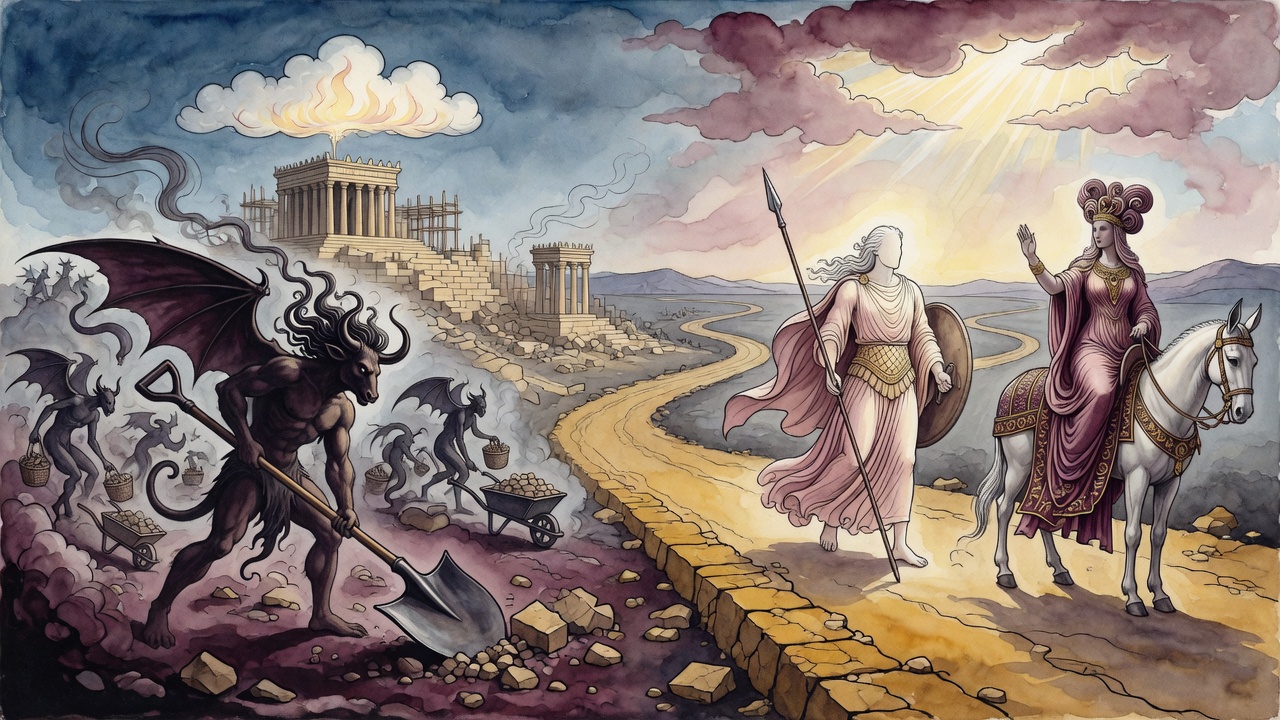
No iron could touch the Temple stones. Solomon needed a worm the size of a barley grain. The demon who knew its nest drank from one well.
Table of Contents
Solomon had the stones and the law and no tool he was allowed to use. No iron could touch the altar (1 Kings 6:7). Iron made swords. The house where God would dwell could not be cut by the metal that cut men. Every block for the First Temple had to split without a blade.
 Click for full size
The Worm That Split Stone
He asked the scholars. They remembered a creature made at twilight on the eve of the first Shabbat, before the world closed its ordinary rules. The Shamir. A worm no larger than a barley grain. It split rock the way a hot knife splits wax. Moses had used it to cut the stones of the high priest's breastplate. No one now held it. The last keeper was the wild rooster, the hoopoe. The last one who knew the nest was the king of the demons.
Solomon sent Benaiah his captain with a chain and a plan.
Wine in the Mountain Well
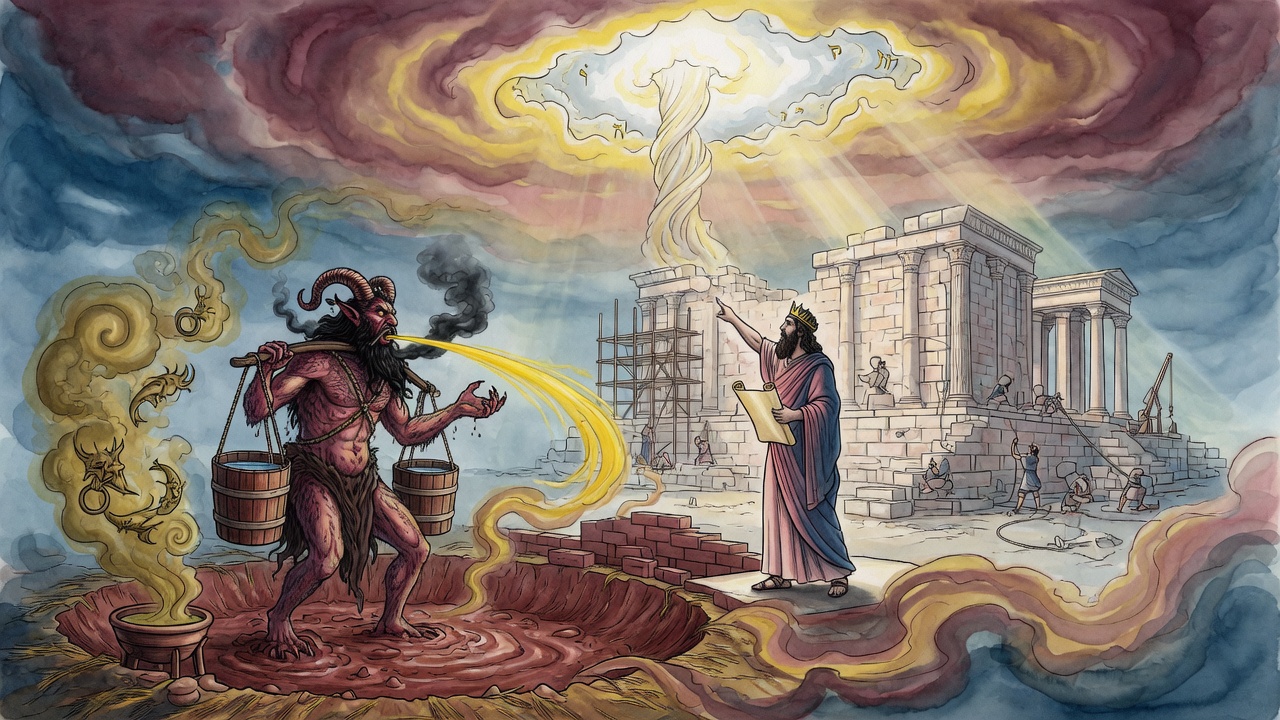
Ashmedai came to a certain well on a mountain to drink. Benaiah drained it. He poured wine in. When the demon king arrived and saw the wine, he knew a trap. He refused. Thirst outlasted caution. He drank. He slept.
Benaiah was waiting with a chain engraved with God's name, the one bond Ashmedai could not break. He bound the demon while the wine still held him. Ashmedai woke in iron that was not iron. He walked because the Name on the links said walk.
Straight Lines and a Widow's Palm
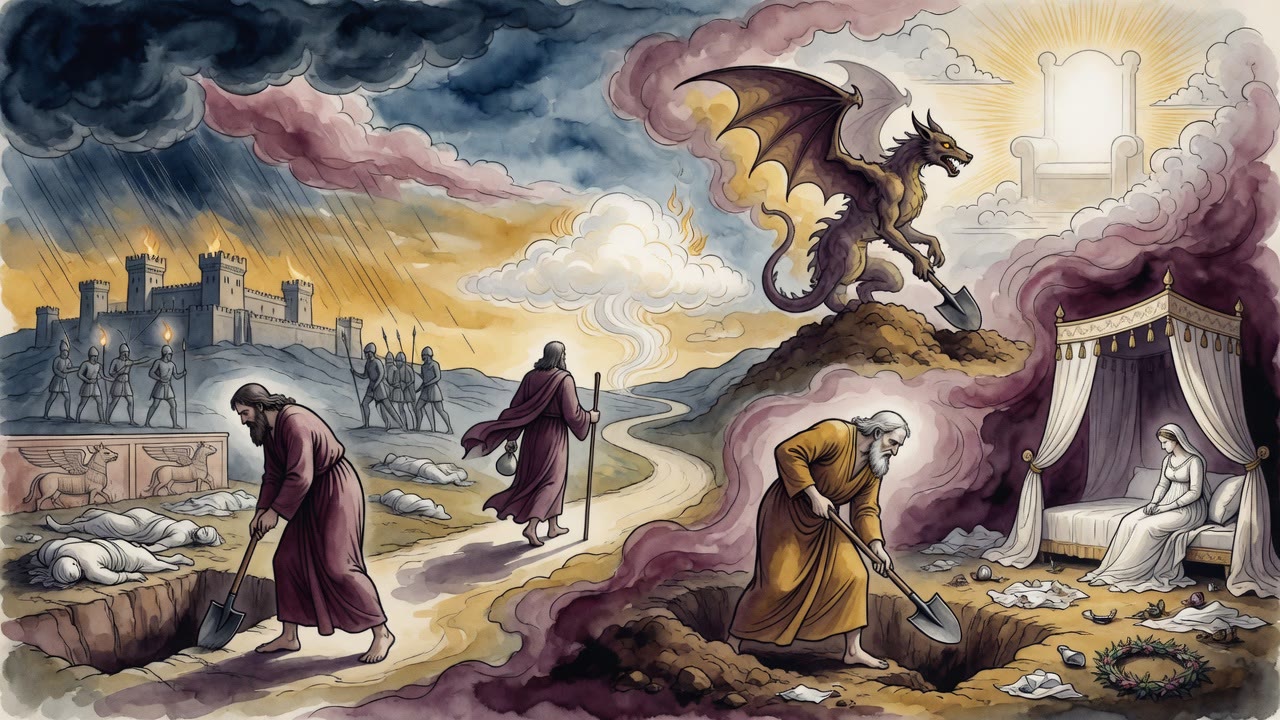
The road back to Jerusalem ran through Ashmedai's own geometry. He would not go around anything. He walked in straight lines and knocked over whatever stood in them. A palm tree a widow was weeping over, because a soothsayer had told her it shaded her house and would outlive her, came up by the roots when his path crossed it. A widow crying for a tree while the king of demons passed was, in his accounting, the wrong grief.
He saw a wedding and wept. He saw a man buying shoes meant to last years and laughed. Benaiah asked why. The groom would be dead in thirty days. The man buying years of leather had seven days left. Joy, to an eye that could see ahead, was already a funeral. Thrift was already a joke.
They reached the court. Solomon kept the chain on and asked for the Shamir. Ashmedai told him. The Prince of the Sea had entrusted it to the wild rooster, who kept it sealed under a wing.
The Rooster Dropped the Shamir
A man went and found the nest. He covered the mouth of it with glass and a sheet of lead and waited. The rooster came home. It could not lift the glass to reach the young. It brought the Shamir and set the worm on the glass to cut a way in. The watcher shouted. The rooster dropped the Shamir in fright. The man took it.
The rooster killed itself. A guardian who has lost a trust that size does not go on living.
The Temple rose. Stones opened under the Shamir without the sound of iron. The blocks sat against each other as if they had been born that way. For a while the king who had trapped a demon to build God's house still sat on his own throne.
Four Hundred Parasangs
After the work was done, Ashmedai was still in the court. Solomon, wiser than any man alive, asked to see what the demon's power actually was. He loosened the chain.
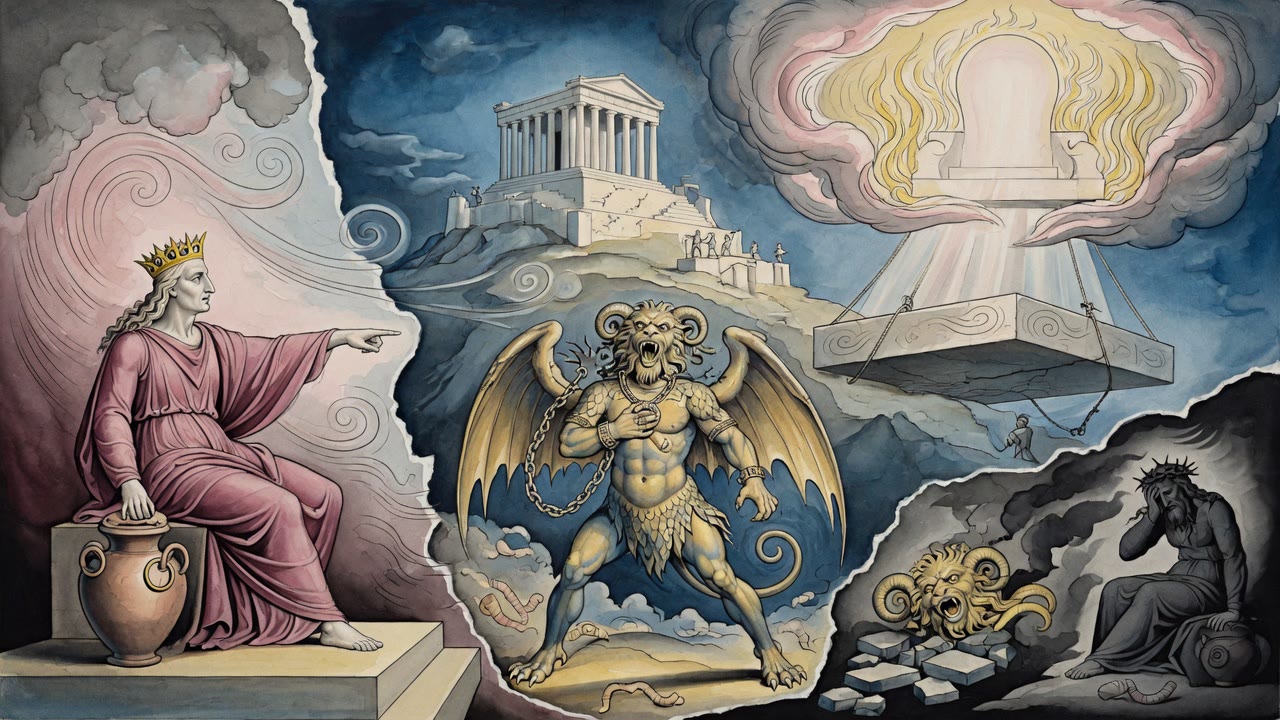
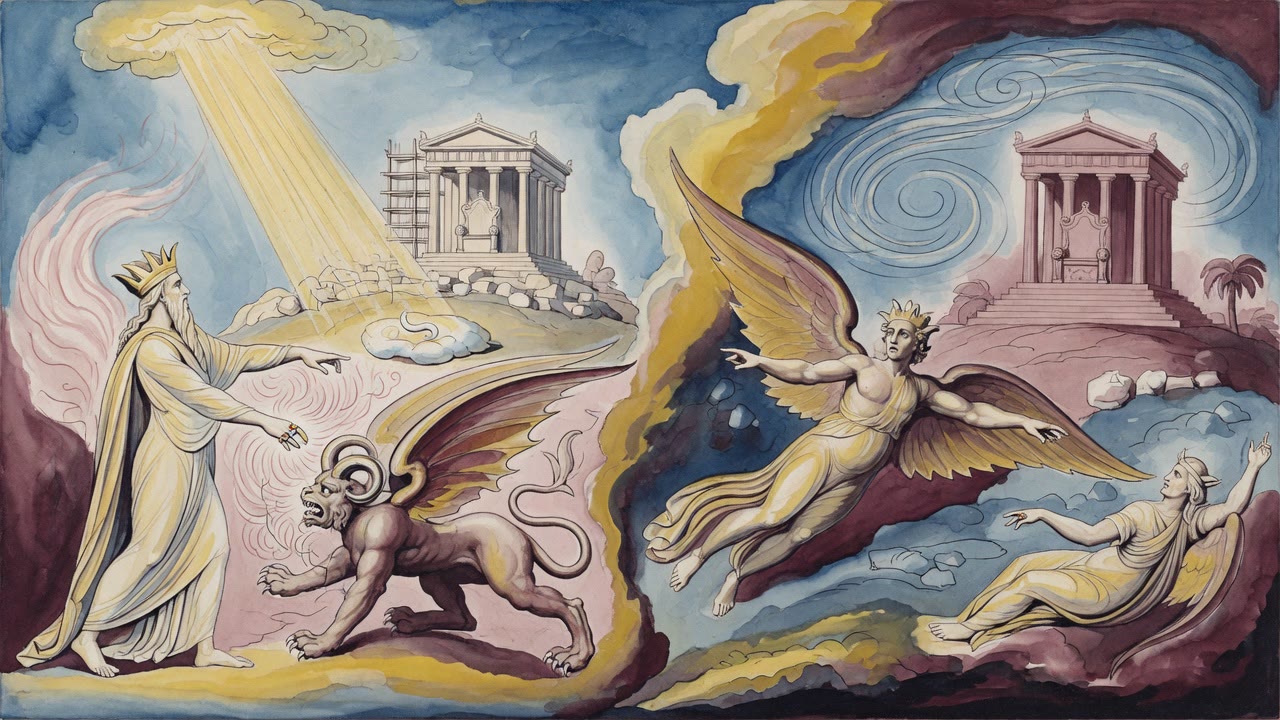
Ashmedai grew. One foot on earth, one foot on heaven, as tall as both together. He tore the king from the throne and threw him four hundred parasangs. Solomon landed in a country that did not know his face. The ring that bore God's name was gone. Ashmedai wore it. Ashmedai wore the king's face with it. The court spoke to a demon and called him Solomon.
The true king wandered and told anyone who would listen that he had ruled Jerusalem. No one believed a beggar with a memory of gold. Years went by. The ring came back. The throne came back. The Temple stood and would stand four centuries. The man who had needed a demon to cut holy stone had been cut by the same bargain, and thrown until the map ran out.
← All myths