Retold in our words. Read the original at the link below.Townsend 1989 translation of Midrash Tanhuma, S. Buber Recension · CC-BY
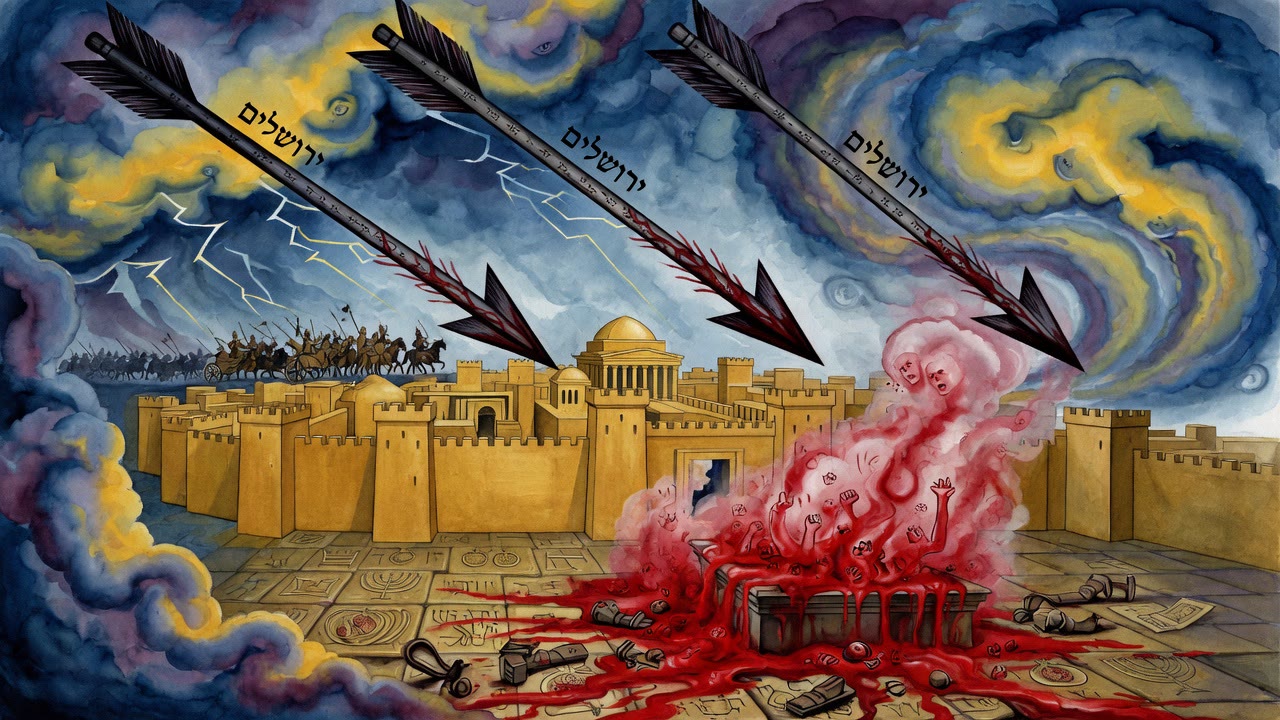
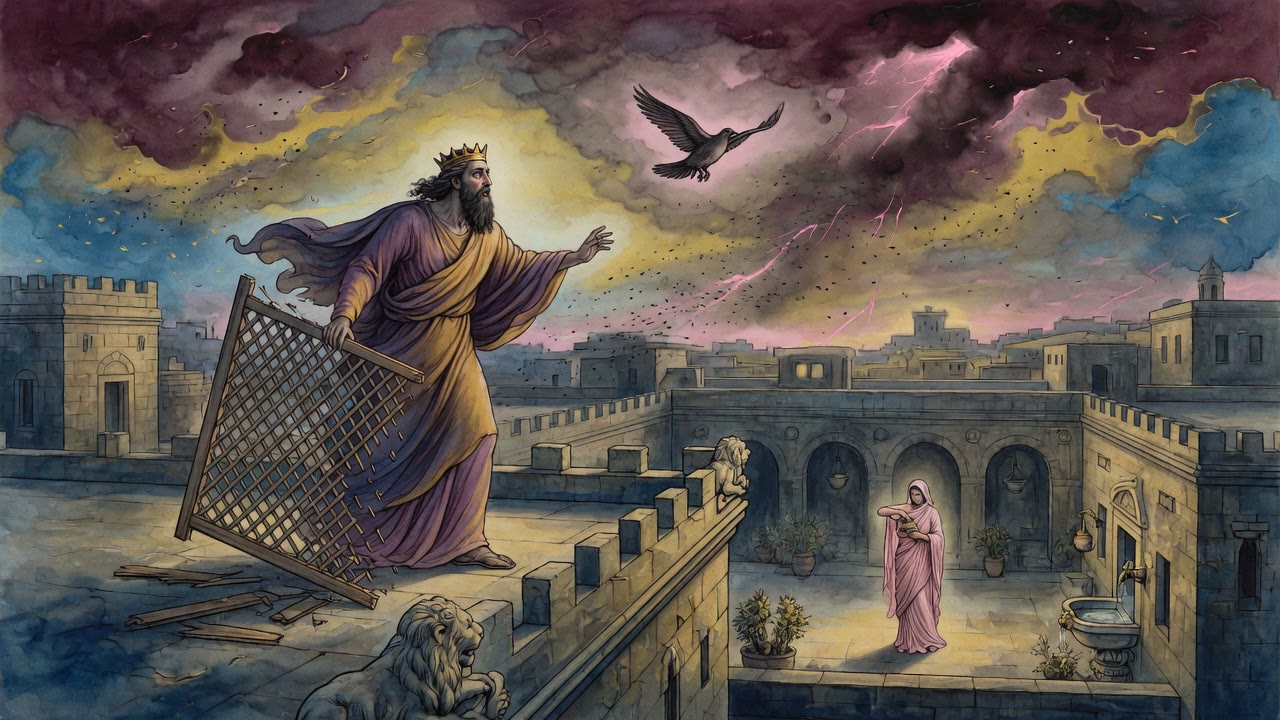
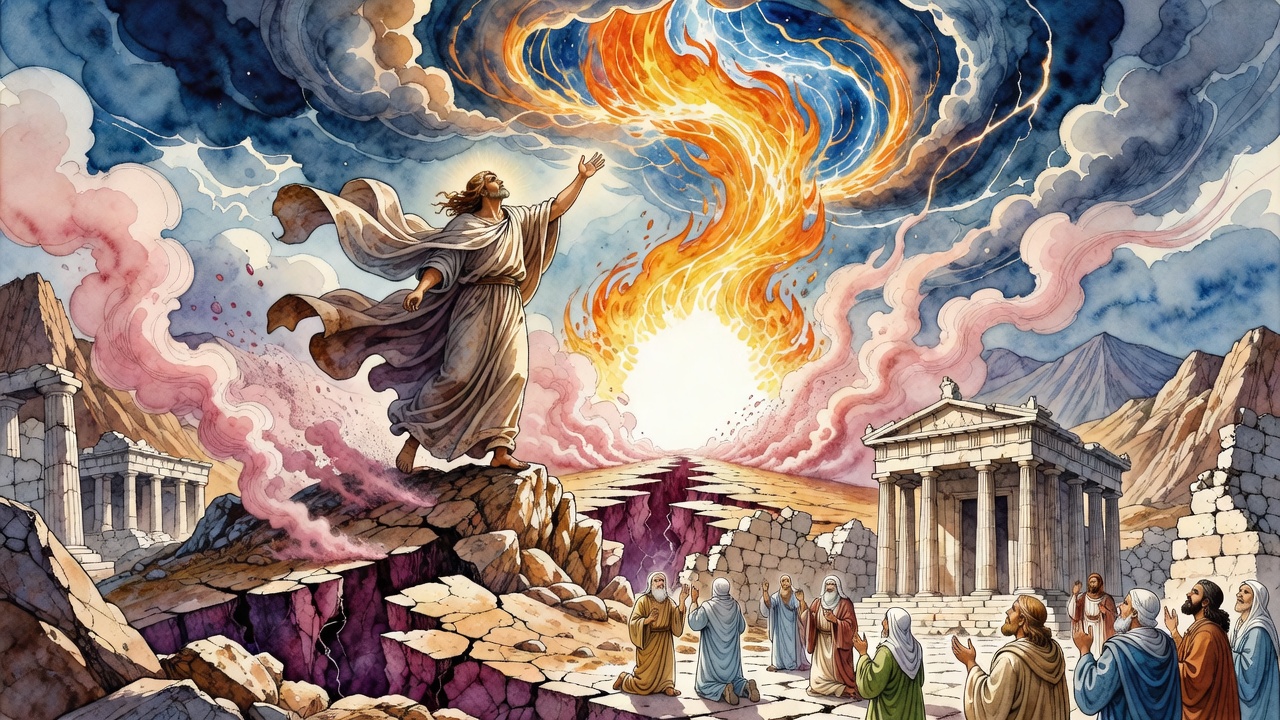
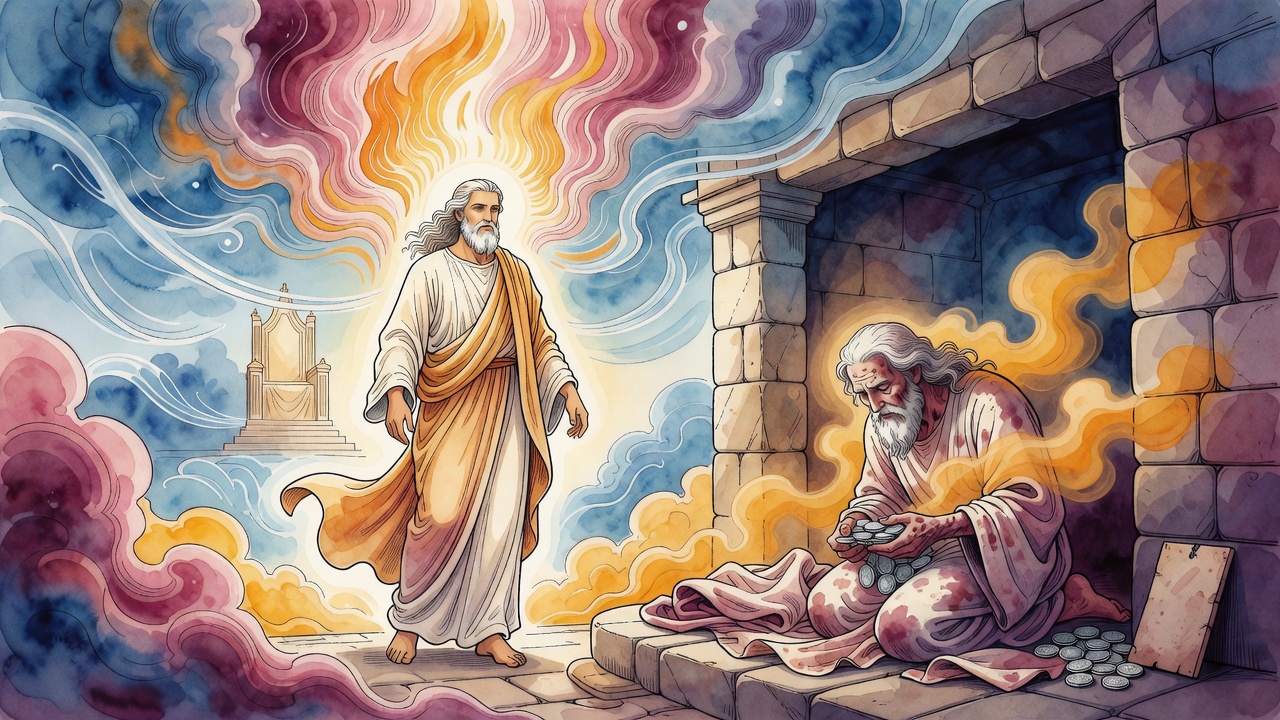
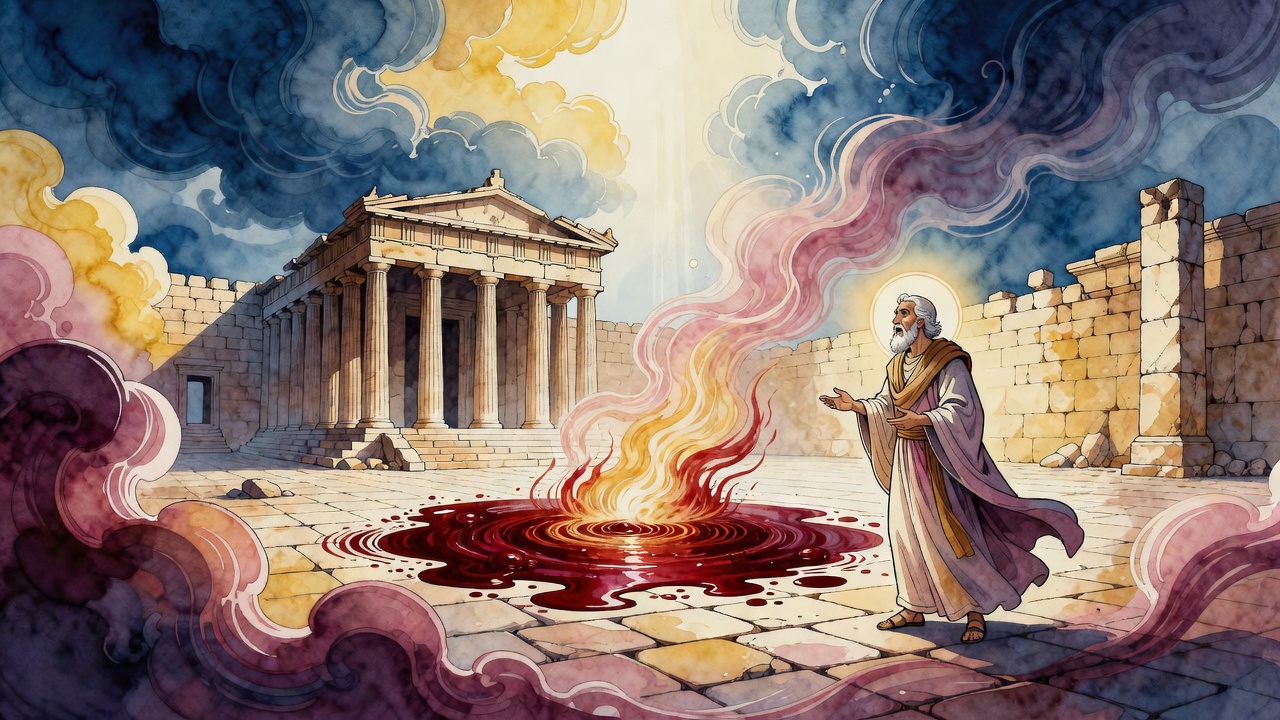
(Lev. 4:1–2:) “And the Lord spoke unto Moses, saying, … ‘When a soul sins [by mistake]….’” Let our master instruct us: Is it right for one to enter the Temple Mount with his staff or his money girdle? Thus have our masters taught (in Ber. 9:5): One may not enter the Temple Mount with his staff, his money girdle, or with dust on his feet, lest he treat it with disrespect – even in its destruction. The Holy One, blessed be He, said (in Lev. 26:2), “You shall keep My Sabbaths and reverence My sanctuary.” And what was the reason for comparing keeping the Sabbath with the sanctuary? Thus did R. Hiyya the Great teach: Just as keeping the Sabbath is forever so is reverence for the sanctuary forever. Now Solomon cried out (in Eccl. 3:16), “To the place of justice, thither [came] wickedness.” Solomon was observing how the wicked subverted justice in the sanctuary. Solomon said, “The place where the Sanhedrin (the supreme rabbinic court) sat to judge criminal law, civil law, decisions on scourgings, and decisions on clean and unclean, there they defiled it.” See what is written (in Jer. 39:3), “Then all the officers of the king of Babylon came and sat in the middle gate: Negral-sarezer, Samgar-nebo, Sarsechim the Rab-saris ….” (Lam. 5:18:) “Because of Mount Zion, which lies desolate, the jackals walk over it.” The Holy One, blessed be He, said to him, “You name those entering, but you do not name those leaving, (in Eccl. 3:16) ‘to the place of justice, thither [came] wickedness.’” (Lam. 2:20:) “Should priest and prophet be slain in the sanctuary of the Lord?” Here is the blood of Zechariah shed on the stones, as stated (in Ezek. 24:7), “For her blood was in her midst; she set it upon bare rock.” Another interpretation (of Eccl. 3:16), “to the place of justice, thither [came] wickedness”: This is the central gate in which the great Sanhedrin sat. “Thither [came] wickedness,” (in Lam. 2:9) “Her gates have sunk into the ground.” The Holy One, blessed be He, said (in Eccl. 3:16), “To the place of justice, thither [came] wickedness (rsh').” There was one place for the Righteous One of the world, the holy Temple, which was set apart for the Divine Presence. Then Manasseh wronged (rt. rsh') it, and brought an image into its midst.Another interpretation (of Eccl. 3:16), “to the place of justice.” The Holy One, blessed be He, said, “I created the soul, and it is delivered into My hand, as stated (in (Job 12:1)0), ‘In Whose hand is every living soul.’ And justice also is delivered into My hand, as stated (in Deut. 32:41), “My hand lays hold on justice.’ But I only delivered the soul next to judgment [in My hand] so that it might see what is fitting for it and not sin; yet it does sin. (Eccl. 3:16:) “Thither [came] wickedness”; “When a soul sins,” for the soul is placed next to judgment (Lev. 4:2:). That which Scripture stated (Prov. 19:2), “Also, a soul without knowledge is not good; and one who hastens with the feet is a sinner,” [is to say that] when someone sins, even by mistake, it is not a good sign for him. How so? There were two stores before him, one belonging to a stranger and one belonging to Israel. If he entered the one belonging to the stranger without knowing, it is not good. If he entered deliberately, he is called a sinner, as stated (in Prov. 19:2), “and one who hastens with the feet is a sinner.” Rav Isaac bar Samuel bar Martha said, “There were two ways before him, one long and one short. The short one was full of pebbles, but the long one did not have a pebble in it. He left the long one and went by the short one on the Sabbath. Concerning him it was stated (in Prov. 19:2), ‘and one who hastens with the feet is a sinner.’” Our masters have taught (in Avot. 4:2): One good deed/commandment (mitzvah) leads to another, and one transgression leads to another. A person should not worry about a sin which he commits by mistake, but rather that an opening has been made for him to sin [again], even deliberately. One should not rejoice over a good deed which comes to him (for fulfillment), but rather that many good deeds are going to come to him [as a result]. Therefore, if one has sinned by mistake, this is not a good sign, as stated, “Also, a soul without knowledge is not good.” How much the more so if he sins deliberately! About him it has been stated, “and one who hastens with the feet is a sinner.” So also (in Prov. 6:16-19), “Six things the Lord hates…: Haughty eyes, …. A heart plotting thoughts of deceit, feet quick to run to evil, […]” This refers to Ahab ben Kolaiah and Zedekiah ben Maaseiah (the false prophets of Jer. 29:21-23), who sinned in Jerusalem. And that was not enough for them, but after they had gone into exile in Babylon, they added to their sin. And what had they done in Jerusalem? They were false prophets. They did not forsake their trade in Babylon. Now they would pimp for each other. Ahab would go to visit [one of] the great ones in the kingdom and would say to him, “I am so-and-so, a prophet. The Holy One, blessed be He, has sent me to say something to your wife.” [So his interlocutor] would say to him, “Here she is before you. Go on in.” When he was alone with her, he would say to her, “The Holy One, blessed be He, wants to raise up prophets from you. Simply go, have intercourse with Zedekiah, and give birth to prophets from him.” So he would come and have intercourse with her. Then Zedekiah would similarly pimp for Ahab. And this was their trade for several years. Come and see how wicked they were: They gave themselves a reputation in Babylon for being great prophets. When some woman became pregnant and saw one of them, she would say to him, “If you are a prophet, what is in my womb? A male or a female?” He would say, “A male.” Then he would go to her neighbors and say, “So-and-so will bear a female.” If she bore a male, she would say, “So-and-so, the prophet, told me.” If it was a female, the neighbors would say, “Thus did so-and-so, the prophet, tell us; but he did not want to worry you.” Now they acted in this way until they came to Shemirah, the wife of Nebuchadnezzar. Zedekiah said to her, “The Holy One, blessed be He, has sent me to you. Simply go, have intercourse with Ahab, and give birth to prophets from him.” She said to him, “I may not do [this] without the agreement of my husband. Rather, let him come and let him inform us that he wants this thing.” She went to her husband and told [the matter] to Nebuchadnezzar. [So] he called for them and they both came. And he said to them, “Is this what you said to my wife?” They said, “Yes, as the Holy One, blessed be He, wants to raise prophets from her.” He said to them, “But have I not heard about your God that He hates licentiousness; and that as a result of that which Zimri breached sexual mores, twenty-four thousand [men] fell? And you tell me this? Perhaps He recanted? I don’t know if you are false prophets or true prophets, but I have already tested Hannaniah, Mishael and Azariah and I burned the fiery finance for them for seven days and threw them inside, and they came out alive and well. But for you, I will only burn it for one day and throw you inside. If you are saved from the furnace, I will know that you are certainly true prophets and we will do whatever you say, according to your testimony.” They said to him, “Hannaniah, Mishael and Azariah were three and we are two; and the miracle is [only] done for three.” He said to them, “Is there a third [person] like you?” They said, Yehosuha the High Priest,” thinking in their hearts that they would be saved by his merit. They brought Yehoshua the High Priest and threw him into the furnace with them. The two of them were burnt [to death], and Yehoshua the High Priest was saved, as stated (Zech. 3:2), “Is this not a brand pulled out of the fire?” (Jer. 29:22:) “And from Ahav and Zedekiah, a curse was taken for all of the exile of Judah in Babylon, saying, ‘May God make you like Zedekiah and Ahab, whom the king of Babylon consigned to the flames!‘“3 Who caused these wicked ones to be burned? It was because they ran with their feet towards abominations and sins. It is therefore stated (in Prov. 19:2), “and one who hastens with the feet is a sinner.” Nevertheless (ibid.) “Also, a soul without knowledge is not good.” Therefore, the Holy One, blessed be He, said to Moses, “Say unto Israel (in Lev. 4:2), ‘When a soul sins by mistake’” – the soul sins. The verse (Eccl. 3:16) says, “[….] to the place of justice (tsedeq), thither [came] wickedness.” The place is [the source of] the soul, which has been given out of righteousness (tsedeq), [i.e.] out of a place where there is no iniquity or sin. [When] it does sins, the verse (Lev. 4:2) cries out in surprise, “When a soul sins by mistake?” (Eccl. 3:16:) “To the place of justice (tsedeq), thither [came] wickedness.” To what is the matter comparable? To two people who sinned against the king. One was a country bumpkin, and one a person from the palace. [When] he saw that both of them had committed a single offense, he released the country bumpkin but rendered a [guilty] verdict against the person from the palace. His palace people said to him, “Both of them committed a single offense; [yet] you released the country bumpkin [and] gave a verdict against the person from the palace.” He said to them, “I released the country bumpkin because he did not know the laws of the kingdom, but the person from the palace is with me every day and knows what the laws of the kingdom are, and what verdict will be pronounced against one who sins towards me?” So also the body is a country bumpkin, (according to Gen. 2:7) “Then the Lord God formed the human out of dust from the ground.” But the soul is a palace person from above, (according to ibid. cont.) “and blew into his nostrils the breath of life.” Yet both of them sinned. Why? Because it impossible for the body to exist without the soul. Thus, if there is no soul, there is no body, and if there is no body, there is no soul. So both of them sinned, as stated (in Ezek. 18:20), “the soul that sins shall die.” Therefore the verse (Lev. 4:2) wonders, “When a soul sins by mistake against any of the Lord's commandments?” What is the significance of “by mistake (rt. shgg) [against any of the Lord's commandments]?” [It is] to teach you that when anyone sins by mistake, [it is as if] one transgresses [intentionally] against the Lord's commandments. And so it says (in Numb. 15:22), “And when you sin unintentionally (rt. shgg) and do not fulfill all these commandments….” So also David has said (in Ps. 19:13–14), “Who can discern mistakes? Cleanse me from hidden faults. Also restrain Your servant from willful sins…, and I shall be clean of great transgression,” [i.e.] from the great sin which I have committed. But if you do so act (according to Ps. 19:15), “Let the words of my mouth be acceptable.” From here you learn that everyone who sins, even by mistake, is called a sinner. Our masters have said, “A mistake in study is accounted as willful sin.” It is therefore written (in Lev. 4:2), “When a soul sins,” because it is from [man’s soul, which is from] above; and it is not written, "[when] a person (Adam)." In the world to come the Holy One, blessed be He, will bring in the soul and say to it, “Why have you transgressed against the commandments?” Then it will say, “The body transgressed against the commandments. From the day that I left it, have I ever sinned?” [Then] He will go back and say to the body, “For what reason did you transgress the commandments?” It will say to Him, “The soul sinned. Since the soul left me, have I ever sinned?” What will the Holy One, blessed be He, do? He will bring them both in and judge them as one. To what is the matter comparable? To a king who had an orchard in which were ripened grapes, figs and pomegranates. The king said (to himself), “If I post someone there who can see and walk, he will eat the ripening fruit for himself. He [therefore] posted two guards, one lame and one blind. They stayed and watched the orchard. They smelled the ripened fruit. The lame one said to the blind one, “I see lovely ripened fruit in the orchard. Come and give me a ride, so we can get them and eat them.” The lame one rode upon the back of the blind one, so that he got them, and they ate them. One day the king came. He sought the ripened fruit, but he did not find any. He said to the blind one, “Did you eat them?” He [answered], “Do I have any eyes?” He said to the lame one. “Have you eaten them?” He said, “Do I have any feet?” He [therefore] mounted the lame person on the blind person's back and judged them as one. So the Holy One, blessed be He, will take a soul and toss it into a body, as stated (in Ps. 50:4), “He summoned the heavens above,” i.e. the soul; “and the earth to judge His people,” i.e. the body.” David foresaw how the Holy One, blessed be He, would judge His creatures. [So] he began to seek mercy for his soul. He said, “Master of the world, when you judge Your creatures, do not judge me like them. [(Ps. 143:2), ‘And do not enter into judgment with Your servant, for no one living shall be justified before You.’ Rather act charitably with me, as stated (in Ps. 17:15), ‘As for me, I will behold Your face in charity.’” The Holy One, blessed be He, said, “In this world because the evil drive rules in you, you have sinned; but in the world to come I will root it out from you, as stated (in Ezek. 36:26), ‘I will remove the heart of stone from your flesh and give you a heart of flesh.’”

 Click for full size