484 related texts · Page 1 of 11
The story begins with the tribes of Reuben and Gad. As Israel was in the process of conquering and dividing the land, these tribes, as the midrash (rabbinic interpretive commentary...
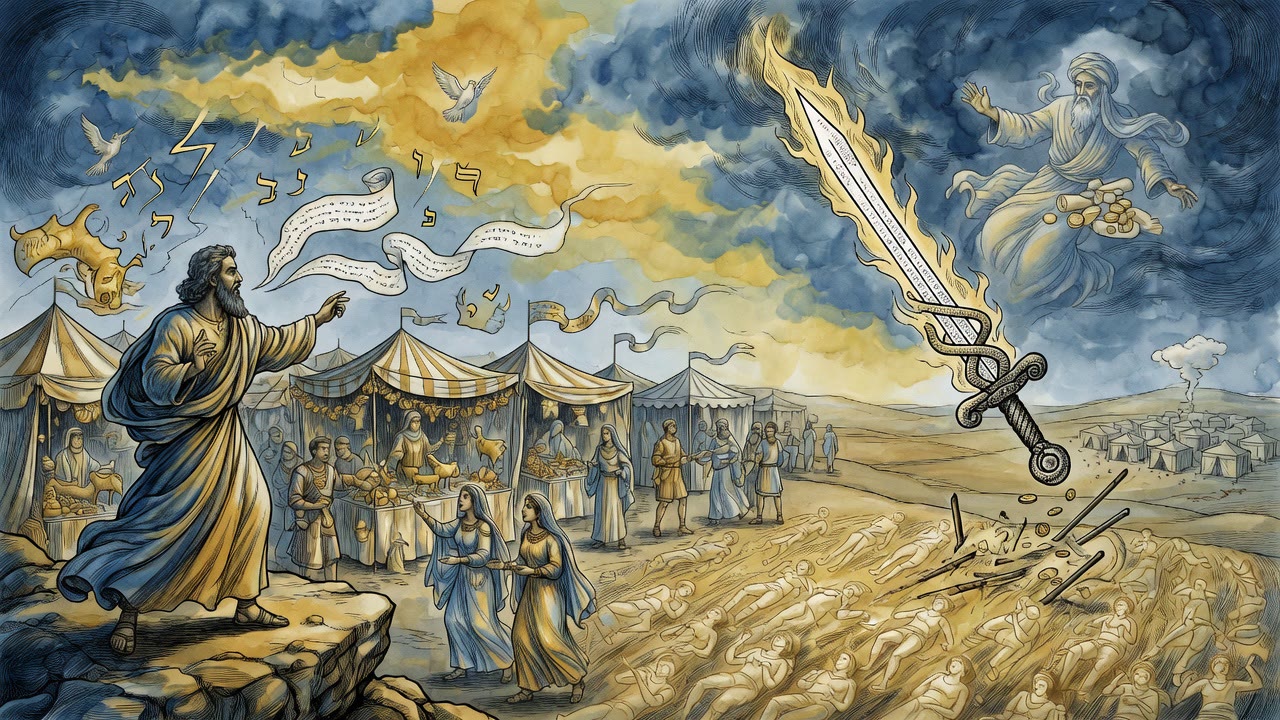
There's a fascinating little moment in the Torah that really highlights this human tendency, and it involves the tribes of Reuben and Gad. They come to Moses with a proposition. Th...
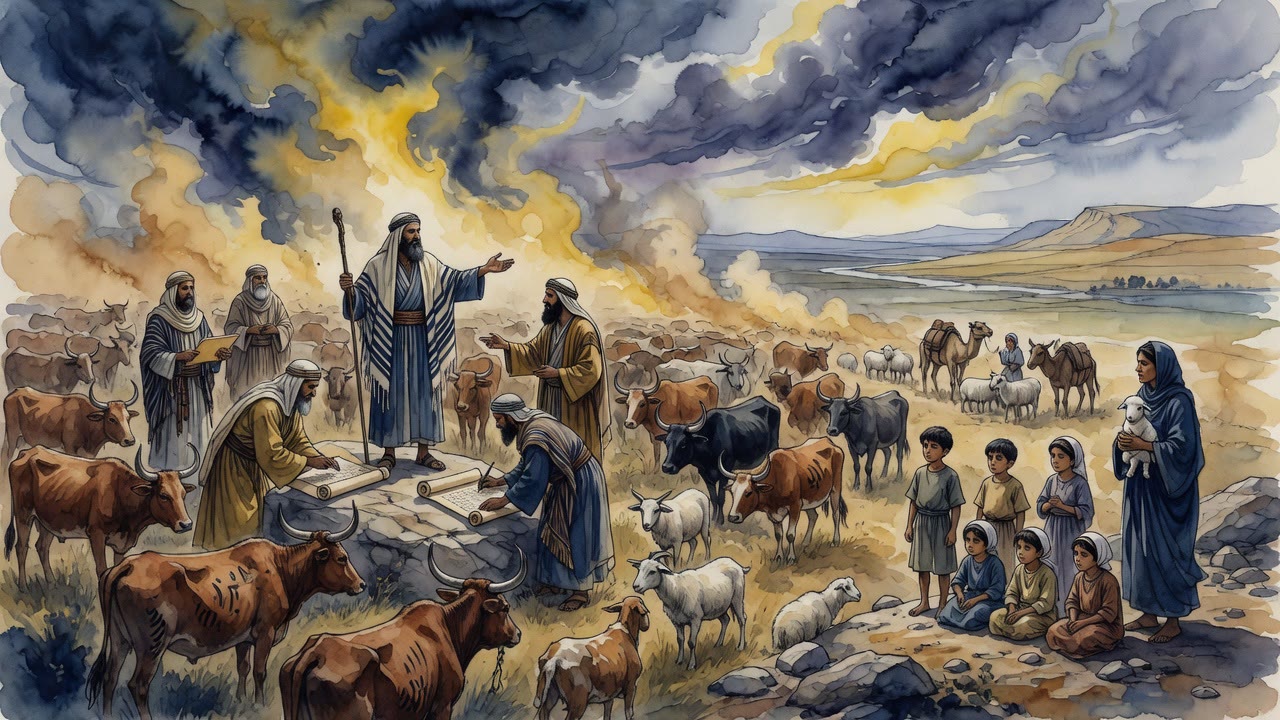
The tribes of Reuben and Gad had enormous herds, and when they saw the conquered territory east of the Jordan, they wanted to stay. The Targum's version of (Numbers 32) captures Mo...
The Torah, in the book of Numbers (30:2), grapples with this very idea: "Moses spoke to the heads of the tribes of the children of Israel, saying: This is the matter that the Lord ...
In the ancient world, and even described in the Torah, there was a system in place to offer refuge. We're talking about the cities of refuge, places of sanctuary for those who unin...
(Numb. 30:3:) “When someone makes a vow (neder) to the Lord.” Let our master instruct us: How are konamot (i.e., vows of abstinence) and vows (nedarim)? Thus have our masters taugh...
Today, we’re diving into a fascinating passage from Sifrei Bamidbar, specifically section 155, which grapples with the laws surrounding a woman's vows and the power her husband or ...
(Numb. 32:1:) “Now the Children of Reuben and the Children of Gad] had much livestock.” Let our master instruct us: How many good gifts were created in the world?14Numb. R. 22:7. T...
It’s a human experience, unfortunately, one that even touched the lives of the biblical figures we often hold up as paragons of virtue. Let’s turn to Gad, one of the twelve sons of...
Jewish tradition certainly thinks so. And when it comes to the Tribes of Israel, their names aren't just labels, they're prophecies, whispers of a future redemption woven into the ...
Our starting point? A little phrase from Sifrei Devarim 355: "He shall be desired of his brothers." Sounds intriguing. The text presents us with two distinct interpretations of thi...
The Hebrew Bible calls Moses "the man of God" (Deuteronomy 33:1). Targum Onkelos adds one word: "the prophet of God." Moses is not merely a man who belongs to God. He is a prophet—...
The ancient rabbis wrestled with this very idea, and they came up with a fascinating little lesson hidden within the stories of our ancestors. Bereshit Rabbah, that incredible coll...
It's a wild ride of interpretations, isn’t it? The passage opens with Jacob's words: "Reuben, you are my firstborn." Now, Rabbi [Yehuda HaNasi], the compiler of the Mishnah (the ea...
It’s not a typo, and it’s definitely not random! There’s a beautiful lesson tucked away in that apparent inconsistency. Rabbi Yehoshua of Sikhnin, quoting Rabbi Levi, offered a pow...
We often think of the priests, the Kohanim, but the story is so much richer than that. to a fascinating passage from Shir HaShirim Rabbah, the commentary on the Song of Songs, wher...
More than just architecture and gold, we're talking about the very names etched onto the High Priest's garments—each letter, each stone, imbued with meaning. Take the ephod, for in...
You return, weary but victorious, only to find… things aren't exactly as you left them. That's what happened to the two and a half tribes who ventured east of the Jordan River in t...
The book of Numbers, Bamidbar in Hebrew, recounts the Israelites' journey through the wilderness. In chapter 32, we encounter the tribes of Reuben and Gad. "The children of Reuben ...
It all comes down to the Sanhedrin, the ancient Jewish high court. The Shir HaShirim Rabbah, a Midrash (rabbinic interpretive commentary)ic commentary on the Song of Songs, offers ...
to a fascinating interpretation from Shir HaShirim Rabbah (Song of Songs Rabbah) that paints a vivid picture. The Rabbis, in their insightful way, connect verses from different par...
“The elders of the daughter of Zion sit on the ground, are silent. They have placed dust on their heads, have girded themselves with sackcloth. The virgins of Jerusalem have lowere...
When thou takest the sum of the children of Israel according to their number (Exod. 30:12).14Pesikta de Rav Kahana, Shekalim, p. 156. The Holy One, blessed be He, said to Moses: Ta...
Another interpretation (of Deut. 3:23), “I besought [the Lord].” This text is related (to Is. 30:19), “Indeed, O people in Zion, inhabitants of Jerusalem, you shall surely weep no ...
After the overwhelming experience of hearing God's voice at Sinai, the Israelites retreated. (Exodus 20:18) records: "And the people stood from afar." The Mekhilta specifies the di...
R. Yishmael says: Come and see the mercies of the One who spoke and brought the world into being, for flesh and blood. For a man acquires himself with money from the hands of Heave...
Reuben, firstborn son of Jacob and Leah, lay dying in the hundred and twenty-fifth year of his life. Two years had passed since Joseph fell asleep forever. Now Reuben's own sons ga...
Gad, ninth son of Jacob, born of Zilpah, spoke to his sons in the hundred and twenty-fifth year of his life. He had been valiant in keeping the flocks, guarding them at night. When...
Take the story of the offerings brought by the tribes of Israel in the desert. Each tribe, a unique thread in the tapestry of the nation, brought their own special gifts to the Mis...
The Torah portion V'Zot HaBerachah, "This is the blessing," gives us a glimpse into that raw, fervent side of prayer as Moses, in his final act, intercedes for the tribes of Israel...
Today, we're diving into a fascinating passage from Sifrei Bamidbar, a collection of legal interpretations on the Book of Numbers (Bamidbar). Specifically, we’re looking at (Number...
We've all been there. But what does Jewish law say about the power – and responsibility – of our words? This week, we're diving into a fascinating passage from Sifrei Bamidbar, a M...
In the book of Bamidbar, also known as Numbers, we find a fascinating discussion about vows, and particularly, the power a father and husband have to either uphold them or, to use ...
The Hebrew Bible says the Israelites camped by their tribal standards (Numbers 2:2). It never describes what was on them. The Targum Jonathan fills that silence with a riot of colo...
(Numb. 31:1-2:) “Then the Lord spoke, ‘Exact vengeance for the Children of Israel [on the Midianites].” Let our master instruct us: How many sustained blasts (teqi'ot) does one blo...
(Numb. 31:2:) “Exact vengeance [for the Children of Israel on the Midianites; afterward you shall be gathered unto your people].” R. Judah said, “If Moses had wanted to live for se...
Another interpretation (of Numb. 31:2:) “Exact vengeance for the Children of Israel.” This text is related (to Job 36:7), “He does not withdraw His eyes from a righteous person […]...
"And much cattle" (Numbers 32:1). This is [the meaning of] that which is stated by the verse (Ecclesiastes 10:2), "A wise man’s heart is to his right," that is Moshe; "but a fool’s...
Let’s delve into a fascinating corner of Jewish thought to explore just that. We're turning to the Book of Jubilees, a text considered apocryphal by some, but a treasure trove of i...
That feeling – that’s what I want to talk about today. Imagine a time of immense struggle. Your people are oppressed, your sacred places desecrated. Hope seems lost. Then, a voice ...
The Bible gives us glimpses, but the Book of Jasher, an ancient Hebrew text referenced in the Bible itself (Joshua 10:13, (2 Samuel 1:1)8), offers a more detailed narrative.. The c...
What would you say? Would you offer blessings, warnings, or maybe even a bit of both? That's what happened with Jacob, also known as Israel, as he lay dying in Egypt, surrounded by...
Today, we're going to delve into the final testament of Reuben, the eldest son. According to Legends of the Jews, a couple of years after Joseph's death, Reuben fell ill, sensing h...
According to Legends of the Jews, compiled by Ginzberg, in his 132nd year, Naphtali invited his children to a banquet. The next morning, he announced his impending death, which the...
Leah, found herself in a predicament. She had stopped bearing children, while her sister Rachel's handmaid, Bilhah, had already given Jacob two sons. According to Legends of the Je...
We often think about actions, the concrete things we do (or don't do). But what about those times when we meant to do something good, even if it didn't quite pan out? The Jewish tr...
Take, for example, the story of Joseph and his brothers. We know about the coat, the jealousy, the slavery in Egypt… but what about their lives outside of that central drama? Inter...
That’s the scene we find ourselves in, as we eavesdrop on the final moments between Jacob and his eldest son, Reuben. Jacob, on his deathbed, addresses Reuben. "Reuben, thou art my...