390 texts · Page 3 of 9
We know the story of Isaac, the son born in Abraham's old age, the one through whom the Jewish people would descend. But what about Ishmael, Abraham's firstborn? Was he forgotten? ...
Turns out, even he had to deal with pushy neighbors and the occasional diplomatic dance. After a twenty-six-year stay in Philistine lands, Abraham moved near Hebron. Can you imagin...
We find this story in Genesis 23, but the details really come alive in the rabbinic imagination, especially in Ginzberg's Legends of the Jews. So, Sarah has passed, and Abraham nee...
Well, according to Legends of the Jews, a year after Sarah's death, Abimelech also passed away, at the ripe old age of one hundred and ninety-three! Can you imagine living that lon...
Sometimes, the stories are wilder than you'd expect. Take Africa, for example. You might not think it, but some traditions trace the name all the way back to Abraham himself! Accor...
That’s the feeling I get sometimes when I read certain passages in Jewish lore. Take this little gem from Ginzberg’s Legends of the Jews. It's a tiny moment, a snapshot really, but...
The Torah hints at it in so many ways. Let's look at the story of Isaac and some very important wells. Isaac, as we know, was the son of Abraham, and he found himself in Gerar, a P...
We often think of the Biblical figures as these grand, larger-than-life heroes and villains. But sometimes, when you really dig into the stories, you find details that are just… sh...
He was marrying Mahalath, the daughter of Ishmael. What a guy. Thinking he could finally win over his parents, Isaac and Rebecca, by marrying within the family, a granddaughter of ...
It all starts when Rachel, upon hearing that Jacob, her cousin, has arrived, races home to tell her father, Laban. Sadly, the Torah tells us that Rachel’s mother had already passed...
Turns out, even biblical figures weren't immune to buyer's remorse. Let's rewind a bit. We know the story of Joseph. Sold into slavery by his jealous brothers. But who exactly did ...
It's easy to get lost in the big stories, the sweeping narratives, but sometimes the most fascinating details are tucked away in the smaller, more intimate moments. Take Zebulon, f...
We all know the broad strokes from the Torah: jealous brothers, a pit, some traders, and boom – he's in Potiphar's house. But the details… oh, the details are where the magic truly...
The ancient texts are filled with such accounts, stories that chill us to the bone and make us question the very nature of humanity. And when it comes to treachery, one group stand...
Like one minute you're celebrating, and the next... well, the next you're facing something truly terrifying? That's the feeling you get reading the words of Esther, as she pleads f...
Everyone in Mesopotamia worshipped the stars. The sun, the moon, the constellations—they were the gods of Chaldea, and no one questioned it. No one except Abraham. According to Jos...
Abraham didn't just go to Egypt to escape famine. According to Josephus, he went to debate the priests. When drought struck Canaan, Abraham heard that Egypt was prosperous and deci...
Three hundred and eighteen men against four armies. That's what Abraham brought to the battle—and he won. According to Josephus, the trouble started when the cities of Sodom fell u...
Sarah laughed when the angels told her she would bear a son. She was ninety years old. Abraham was a hundred. The idea was absurd—and yet Isaac was born, and his very name, Yitzcha...
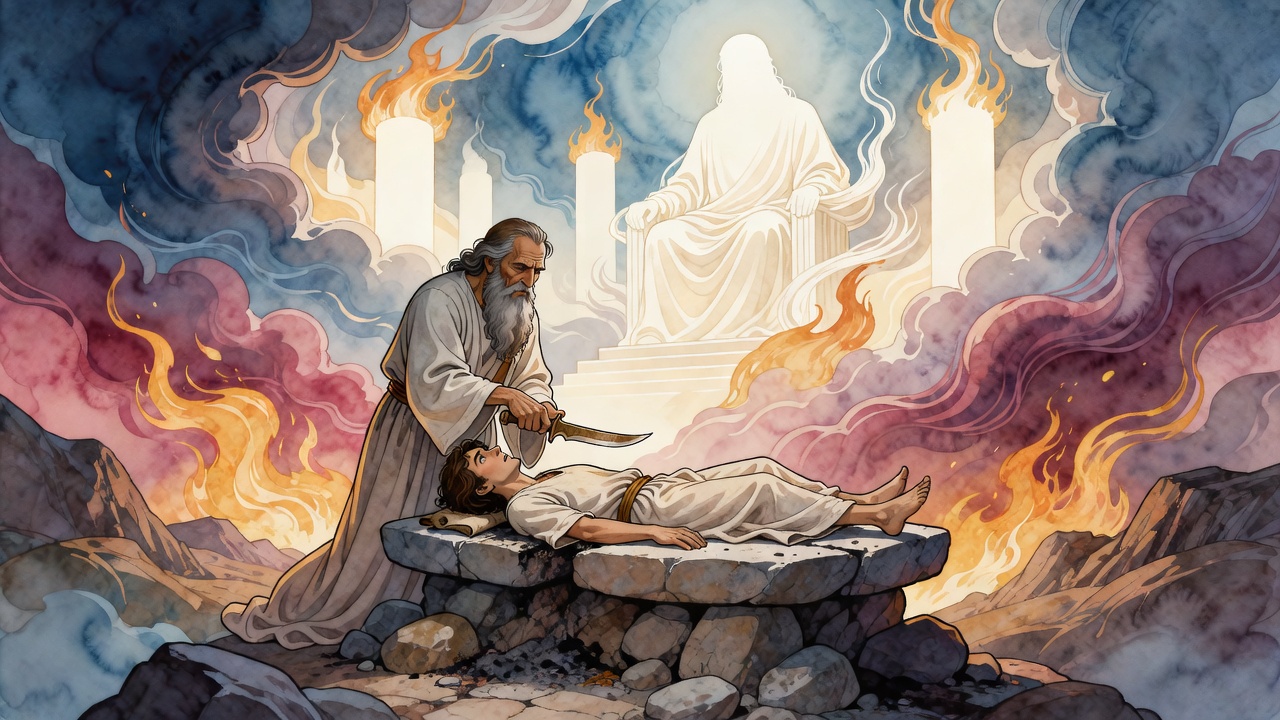
Isaac was twenty-five years old when his father took him up the mountain to die. He didn't resist. According to Josephus, this is what makes the Akedah (עקידה), the Binding of Isaa...
Four hundred shekels of silver. That was the price Abraham paid for a patch of dirt in Hebron—just enough ground to bury his wife. Sarah had died at one hundred and twenty-seven ye...
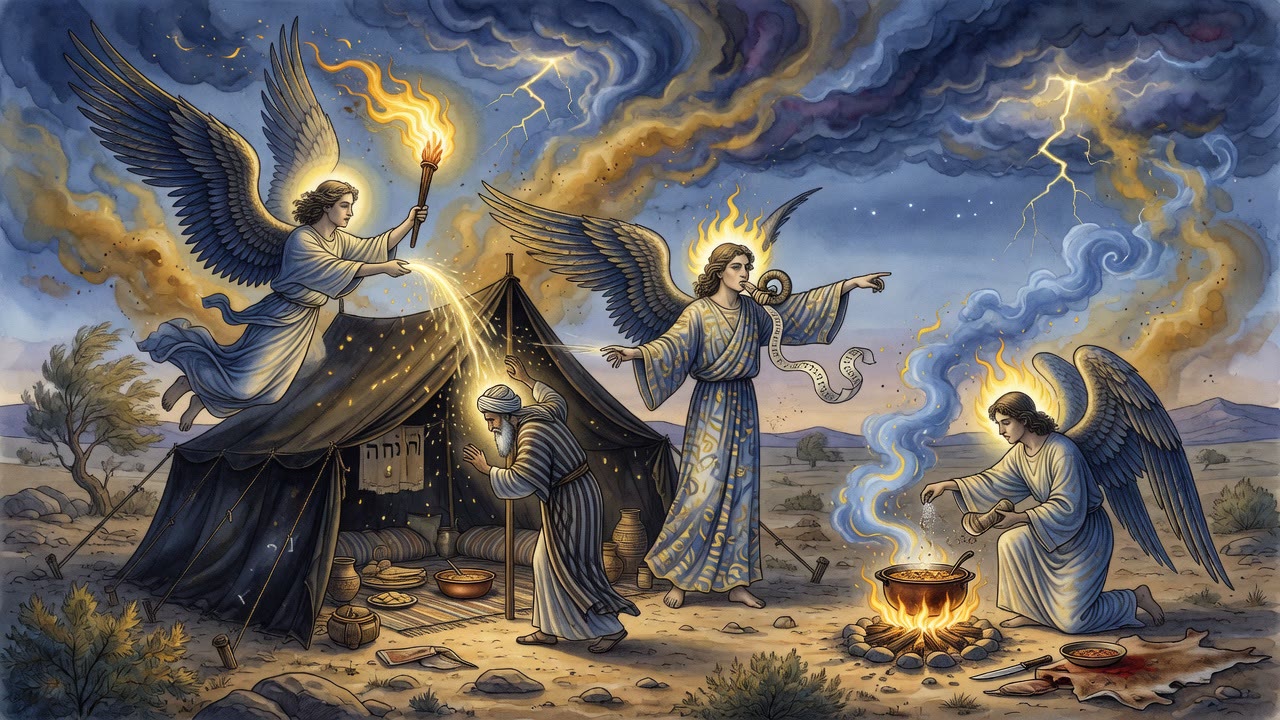
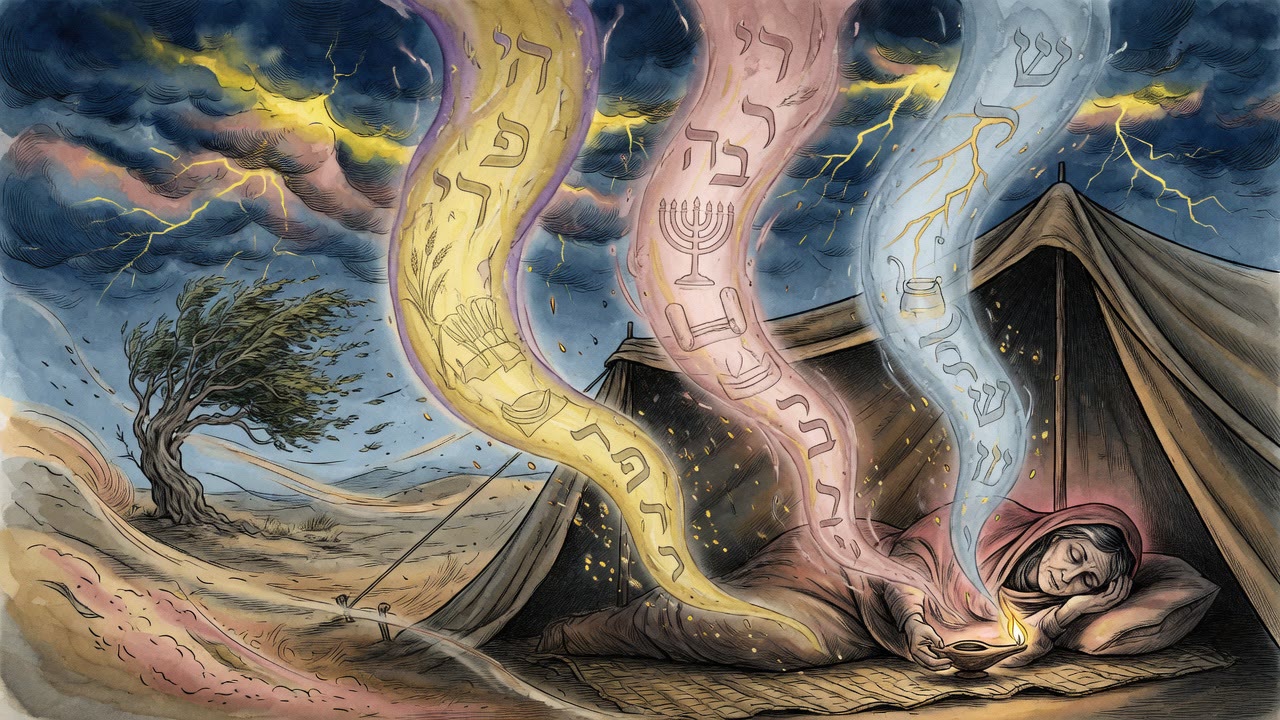
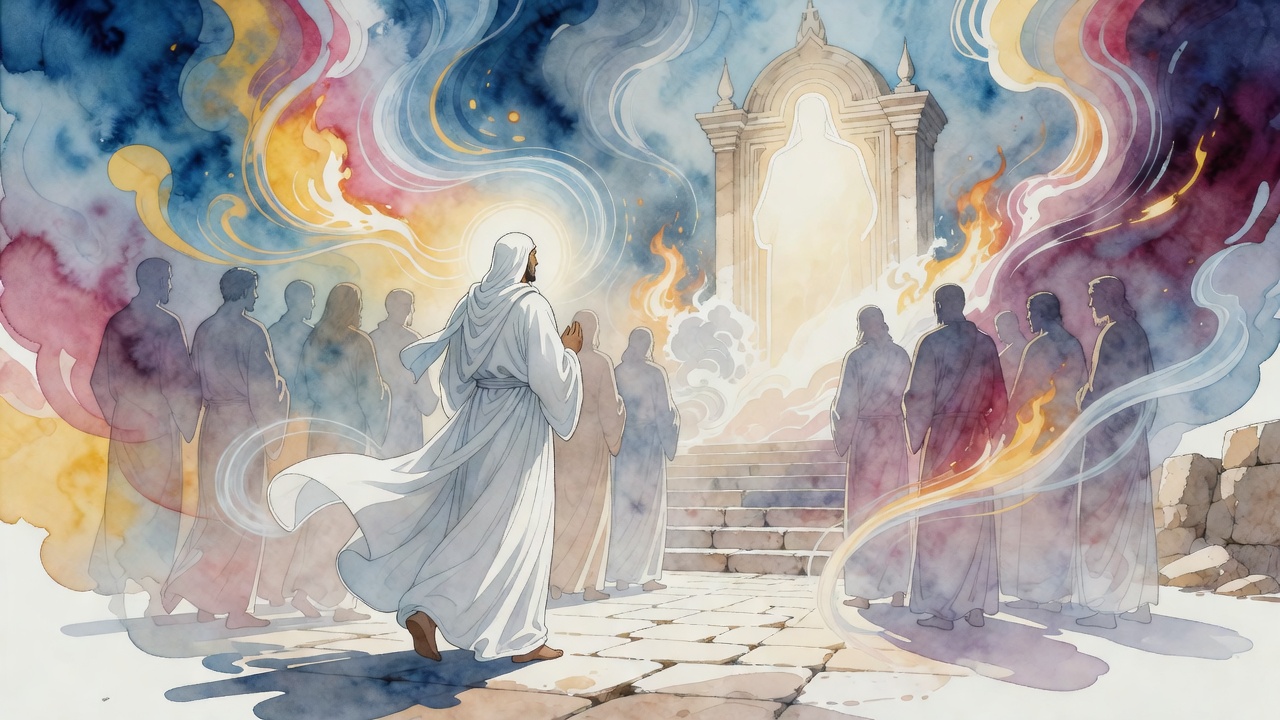
Jewish tradition grapples with this feeling in fascinating ways, especially when it comes to ritual purity, or taharah. One particularly intriguing story comes from Heikhalot (the ...
We pour our energy into the fleeting, the temporary. But what about the big questions? What if, just for a little while, we shifted our focus? What if we dared to ask ourselves: Wh...
It's a foundational text of Jewish mysticism, attributed traditionally to the patriarch Abraham himself, though scholars place its actual writing much later. Today, we’re going to ...
"These are the generations of Isaac, the son of Abraham; Abraham begot Isaac" (Genesis 25:19). The repetition seems redundant. If Isaac is the son of Abraham, we know Abraham begot...
The Torah lists the patriarchs in a specific order: Abraham, Isaac, and Jacob. In (Exodus 3:6), God introduces Himself to Moses at the burning bush as "the God of your father, the ...
"This month": Nissan. You say it is Nissan. But perhaps it was some other month of the year? It is written (Exodus 23:16) "And the festival of the ingathering (Succoth) at the end ...
What if a household was too small to eat an entire Passover lamb? The Torah addresses this in (Exodus 12:4): "Then he and his neighbor next to his house shall take it." Rabbi Akiva...
Rabbi Yishmael preserved a practical but fascinating rule about how the original Passover sacrifice worked in Egypt. The Paschal lamb was not a solo affair — families and neighbors...
(Ibid. 5) "seh": Included in "seh" is a goat and a sheep, viz. (Devarim 14:4) "the seh of the sheep and the seh of the goats." "unblemished": to exclude a blemished animal. "male":...
Rabbi Yishmael confronted a puzzle in (Deuteronomy 16:2), which says: "And you shall slaughter the Passover to your God — sheep and cattle." But the Passover offering is supposed t...
On the night that would change everything, God told the Israelites to paint blood on their doorframes. But where exactly? On the inside of the doorposts and lintel, or on the outsi...
The Torah says the Passover lamb must not be "cooked in water" (Exodus 12:9). Water is specified. But Rabbi Yishmael immediately sees the problem: what about wine? What about fruit...
Rabbi Akiva, the towering sage who reshaped all of rabbinic Judaism, offers his own answer to the question of why the Torah only mentions water when prohibiting the cooking of the ...
Rabbi Yishmael cuts through the debate about burning Passover leftovers with a characteristically logical argument. The other sages needed the repeated phrase "until morning" to es...
When God said "And I shall see the blood" regarding the Passover in Egypt, the Mekhilta offers a stunning alternative reading. The "blood" God would see was not the blood of the Pa...
Would you say that? There is a difference (between neveilah, [from which benefit may be derived] and chametz, [from which benefit may not be derived,], so that the resultant equati...
The Mekhilta continues its relentless cross-examination of Rabbi Yehudah's position that chametz must be destroyed specifically by burning. A new argument emerges — and a new count...
The Torah permits certain food preparation on festival days with the phrase "only what is to be eaten by all souls." The Mekhilta records a debate about exactly how far this permis...
The Mekhilta records Rabbi Yishmael's ruling on which types of dough qualify for the matzah obligation on Passover — and the answer is far more restrictive than one might expect. T...
The Torah describes the Israelites in Egypt dipping hyssop into blood "which is in the saf." The Mekhilta records Rabbi Yishmael's reading of this enigmatic word, and his interpret...
The Mekhilta traces one of the most elegant patterns in the Torah — a divine promise that spans decades before its fulfillment. The verse states (Genesis 21:1): "And the Lord did f...
The Mekhilta, the tannaitic midrash on Exodus, discovers a hidden connection between two events separated by centuries — the plague of the firstborn in Egypt and Abraham's nighttim...
The Mekhilta, the tannaitic midrash on Exodus, records a debate among three sages about the size of the "great multitude" (erev rav) that accompanied the Israelites out of Egypt. T...
When the Israelites finally left Egypt, they did not leave empty-handed. The Torah describes them departing with "flocks and herds, a great crush of cattle" — a staggering processi...
"let all of his males be circumcised": We are hereby apprised that (non) circumcision of his males prevents him from offering the Pesach (Passover). Whence do we derive the same fo...
The name of Yitzchak was not changed, for he was thus (originally) called by the Holy One Blessed be He. There are three who were named by the Holy One Blessed be He—Yitzchak, Shlo...
The Torah explicitly commands a blessing after eating — (Deuteronomy 8:10) states, "You shall eat and you shall be satisfied and you shall bless the Lord your God." But what about ...