390 texts · Page 5 of 9
And when R. Shimon and R. Yishmael were executed, R. Akiva said to his disciples: Prepare yourselves for calamity. For if good were destined to come in our generation, only R. Shim...
"And my wrath shall burn" — Rabbi Yishmael connected this phrase to a parallel verse in Deuteronomy through a gezeirah shavah, drawing devastating consequences for the affliction o...
(Exodus 22:24) begins: "Im you lend money to My people." The word "im" typically means "if" — suggesting optionality. But Rabbi Yishmael taught that this is one of the rare cases w...
R. Yishmael and R. Elazar b. Azaryah and R. Akiva were once walking on the road, with Levi Hasadar and R. Yishmael the son of R. Elazar b. Azaryah walking behind them, when this qu...
The Torah commands: "And the children of Israel shall keep the Sabbath, to observe the Sabbath for their generations" (Exodus 31:16). The Mekhilta DeRabbi Yishmael connects this ve...
They say he was so strikingly handsome, he resembled an angel. And his story, well, it begins a bit like a fairy tale. His parents, had longed for a child for many, many years. His...
The Midrash Tehillim, a fascinating collection of rabbinic interpretations on the Book of Psalms, wrestles with this very idea. Rabbi Yitzchak points to (Deuteronomy 33:27), which ...
We often think about the legal agreements, the ketubah, and the ceremony itself. But what about the party? The celebration? The text we're looking at is from Pirkei DeRabbi Eliezer...
Our sages certainly thought so, and they had some amazing stories to illustrate just that. to one, found in Pirkei DeRabbi Eliezer, specifically chapter 16. It tells of Eliezer, Ab...
Abraham knew that feeling. The story of the Tower of Babel – you know, that ambitious, maybe even arrogant, attempt to build a tower that would reach the heavens – it's more than j...
The Pirkei DeRabbi Eliezer, a fascinating ancient Jewish text that retells and expands upon biblical narratives, offers a compelling example through the story of Lot. We all know L...
Tradition tells us that Abraham faced not just a few challenges, but ten major trials throughout his life. Ten! Can you imagine? The Pirkei DeRabbi Eliezer, an early medieval colle...
His life was practically a masterclass in overcoming adversity. We often think of Abraham's trials, his nisyonot, as being primarily about faith – being asked to sacrifice Isaac, f...
We often think of trials as personal, internal struggles. But what happens when those trials come from the outside, from the world itself? to one chapter, chapter 27, of Pirkei DeR...
The patriarch Abraham experienced just such a moment, according to the ancient text, Pirkei DeRabbi Eliezer. Imagine the scene: Abraham, fresh from his encounter with the divine, i...
to a fascinating passage from Pirkei DeRabbi Eliezer, a non-canonical yet beloved collection of stories and interpretations of the Torah. Here, Rabbi Joshua offers a powerful insig...
The text starts by connecting the name of Ishmael’s son, Kedar, directly to the people known as the "sons of Kedar." It’s a seemingly straightforward connection. The verse cited fr...
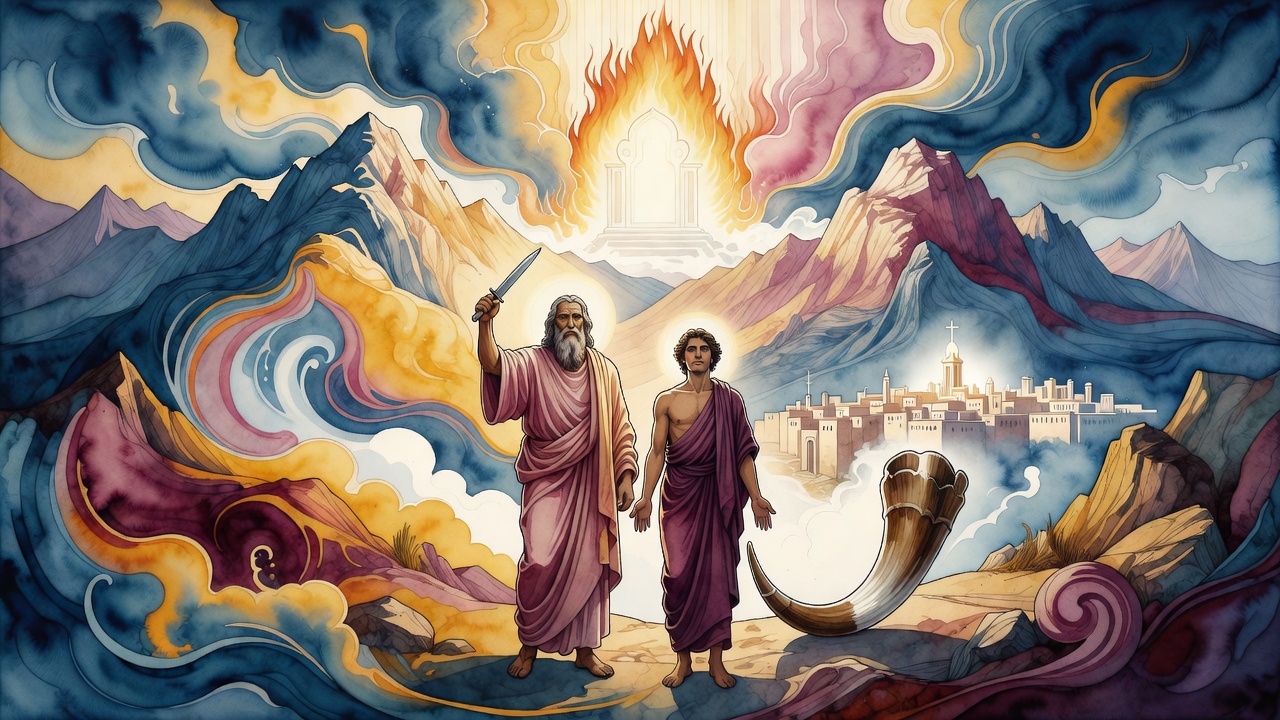
We're talking about Abraham, and the agonizing moment when he was commanded to sacrifice his son, Isaac. Now, we all know the basic story. But the beauty of Jewish tradition lies i...
We find this tale in Pirkei DeRabbi Eliezer, a fascinating collection of stories and interpretations from the early Middle Ages. It paints a vivid picture: Jacob arrives at a well....
Sometimes, it's not as straightforward as you might think. to a curious passage from Pirkei DeRabbi Eliezer, specifically chapter 36, and see what we can uncover about how our ance...
We know the story of their fraught relationship, the birthright, the blessing... but what about the inheritance? It's a question that takes us deep into the heart of sibling rivalr...
It's not as well-known as its older sibling, Seder Olam Rabbah, but it offers us a peek into rabbinic understandings of history. In this particular section, the text lays out the l...
Even something as seemingly straightforward as who inherits what can have fascinating, and sometimes surprising, origins in Jewish thought. to one such discussion from the Yalkut S...
We've all been there. But what if I told you there's a secret to unlocking a divine response? A way to have your prayers truly heard? It's all about the idea of God "lifting His co...
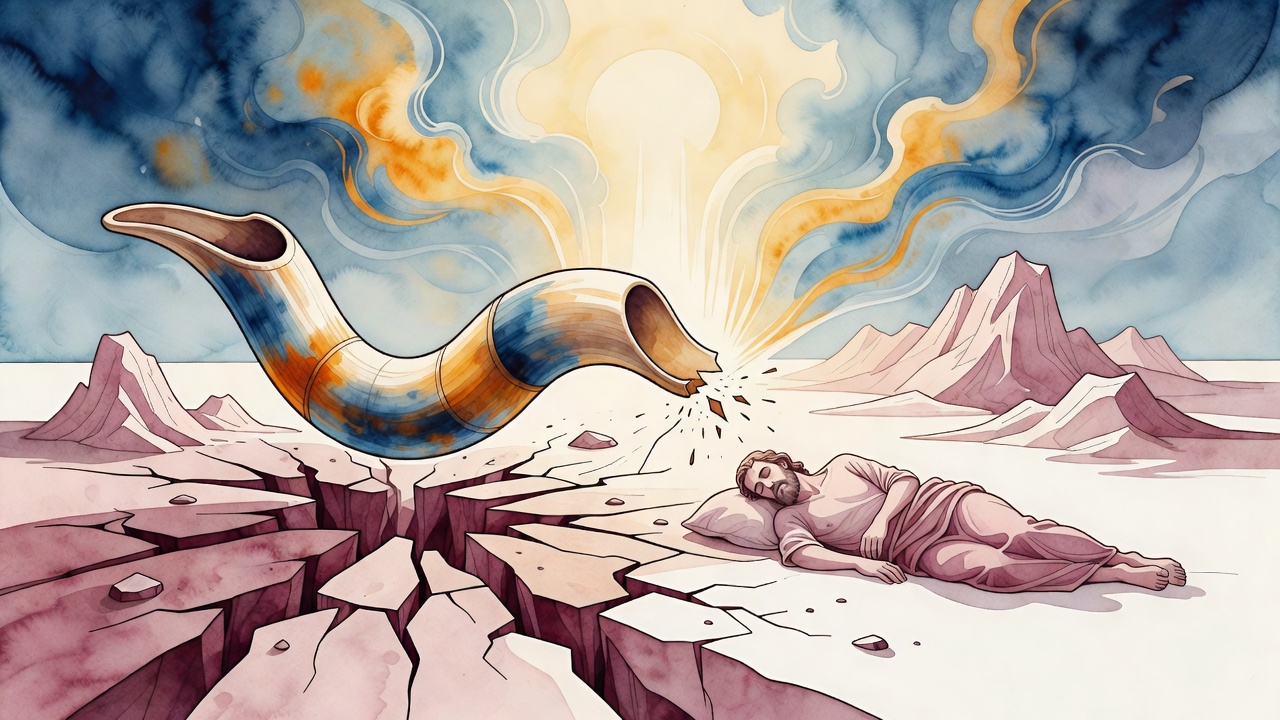
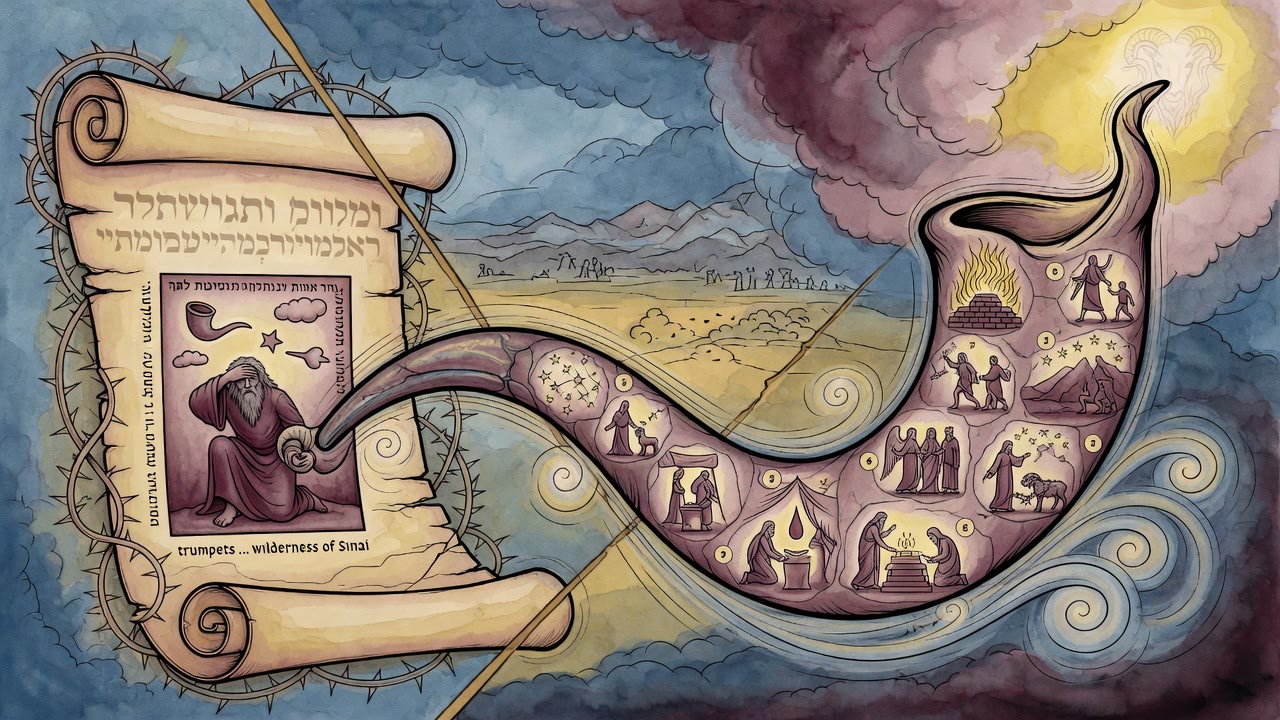
In Bamidbar (Numbers) 10:5-6, we read about the signals for the Israelites to move their camps during their desert wanderings. It says, "And when you blow a teruah, then there shal...
It paints a picture of the Israelites poised on the edge of the Promised Land, a moment brimming with both anticipation and uncertainty. In Devarim 1:7, we hear the call: "Turn and...
Rabbi Elazar ben Azaryah, meanwhile, is standing respectfully. They're together, learning, teaching, and sharing wisdom. It’s a scene straight out of the Talmud. But then, the time...
It's more than just a decoration; it's a powerful symbol, a constant reminder of God's presence and our commitment to Jewish values. But have you ever stopped to think about how we...
That’s exactly what the rabbis in Sifrei Devarim are wrestling with as they unpack (Deuteronomy 14:24-25). The verses deal with bringing your tithes to Jerusalem, but what if the j...
We're talking about building a roof, and the critical importance of preventing someone from falling. Sounds straightforward. But the Rabbis delved deep into the nuances of the vers...
We find ourselves in Sifrei Devarim, a legal midrash on the Book of Deuteronomy, specifically section 257. It's dealing with a particular verse about, well, going to the bathroom i...
And they found a powerful image for it in the Torah, specifically in the book of Devarim (Deuteronomy). Devarim 32:10 tells us that God "found him in a desert land." The Sifrei Dev...
SHAMMAI SAID: MAKE YOUR STUDY OF THE TORAH A FIXED HABIT; SAY LITTLE AND DO MUCH; AND RECEIVE ALL MEN WITH A CHEERFUL COUNTENANCE. MAKE YOUR STUDY OF THE TORAH A FIXED HABIT. What ...
The Hebrew Bible says God "came down" to see the Tower of Babel and confused humanity's language (Genesis 11:7). But the ancient Aramaic translators of Targum Jonathan told a radic...
When God blessed Abraham in (Genesis 12:3), the Hebrew says simply: "I will bless those who bless you, and whoever curses you I will curse." A universal promise. But the ancient Ar...
In (Genesis 13:10), Lot "lifted up his eyes and saw the whole plain of the Jordan, that it was well watered everywhere." A simple observation about good farmland. But the ancient A...
Genesis 14 is a war chapter—four kings against five, a battle in the Valley of Siddim, Lot taken captive, Abraham riding to the rescue. The Hebrew text is spare and military. But t...
Abraham had just defeated four kings and rescued his nephew. In (Genesis 15:1), God simply says "Fear not, Abram, I am your shield; your reward shall be very great." But the ancien...
The Hebrew Bible calls Hagar a "maidservant." The Targum Jonathan, an ancient Aramaic translation of the Torah composed in the land of Israel, calls her a daughter of Pharaoh. That...
Genesis 17 records the moment God commands Abraham to circumcise himself at ninety-nine years old. The Hebrew text says Abraham "fell on his face" when God spoke to him. It reads l...
The Hebrew Bible says three "men" appeared to Abraham at the oaks of Mamre (Genesis 18:2). The Targum Jonathan tells you exactly what they were and exactly why each one came. They ...
Abraham tells a foreign king that Sarah is his sister. Again. He already pulled this move with Pharaoh in Egypt (Genesis 12:13). Now in Gerar, he does it a second time—and the Targ...
The Hebrew Bible tells us God remembered Sarah and she bore a son. The ancient Aramaic translators wanted to know more. They added a detail the Torah left out: God performed a mira...
Sarah died at one hundred and twenty-seven years old. The Torah records the number. The Targum records the aftermath: Abraham came from "the mountain of worship"—Mount Moriah, wher...
Abraham married again after Sarah's death. The Torah calls his new wife Keturah. The Targum reveals her true identity in a single phrase: "She is Hagar, who had been bound to him f...
The Seder Olam reveals a pattern hidden in the calendar of sacred history: the most important events in Israel's story all cluster around one date — the fifteenth of Nisan. It bega...
When God appeared to Abram and commanded him to circumcise himself, the patriarch was already ninety-nine years old. According to the Yalkut Shimoni on Torah 80, God's words carrie...
The field that Abraham bought from the children of Chet etc --- R Tanchuma said: from the burial of Sarah to the burial of Abraham was 38 years...... it comes to teach you that all...