438 texts · Page 7 of 10
R. ‘Aḳiba said: A fence1The ‘fence’ is here taken in the sense of a safeguard or an aid to. With this paragraph, cf. Aboth 3:17. to honour is [the avoidance of] jesting,2That this ...
THERE WERE TEN GENERATIONS FROM NOAH TO ABRAHAM. What need is there for mankind to [know] this? It is to teach that all those generations were provoking Him, and there was not one ...
The Hebrew Bible says Noah planted a vineyard (Genesis 9:20). The Targum Jonathan says he "found a vine which the river had brought away from the garden of Eden." This single addit...
Genesis 14 is a war chapter—four kings against five, a battle in the Valley of Siddim, Lot taken captive, Abraham riding to the rescue. The Hebrew text is spare and military. But t...
Genesis 17 records the moment God commands Abraham to circumcise himself at ninety-nine years old. The Hebrew text says Abraham "fell on his face" when God spoke to him. It reads l...
The Hebrew Bible tells us God remembered Sarah and she bore a son. The ancient Aramaic translators wanted to know more. They added a detail the Torah left out: God performed a mira...
The Binding of Isaac is terrifying in the Torah. In the Targum, it is something else entirely. Isaac was not a passive child led to slaughter. He was thirty-six years old, and he v...
Abraham made his servant Eliezer swear an oath by placing his hand on the mark of circumcision. The Torah says "under my thigh." The Targum says exactly what it means: the section ...
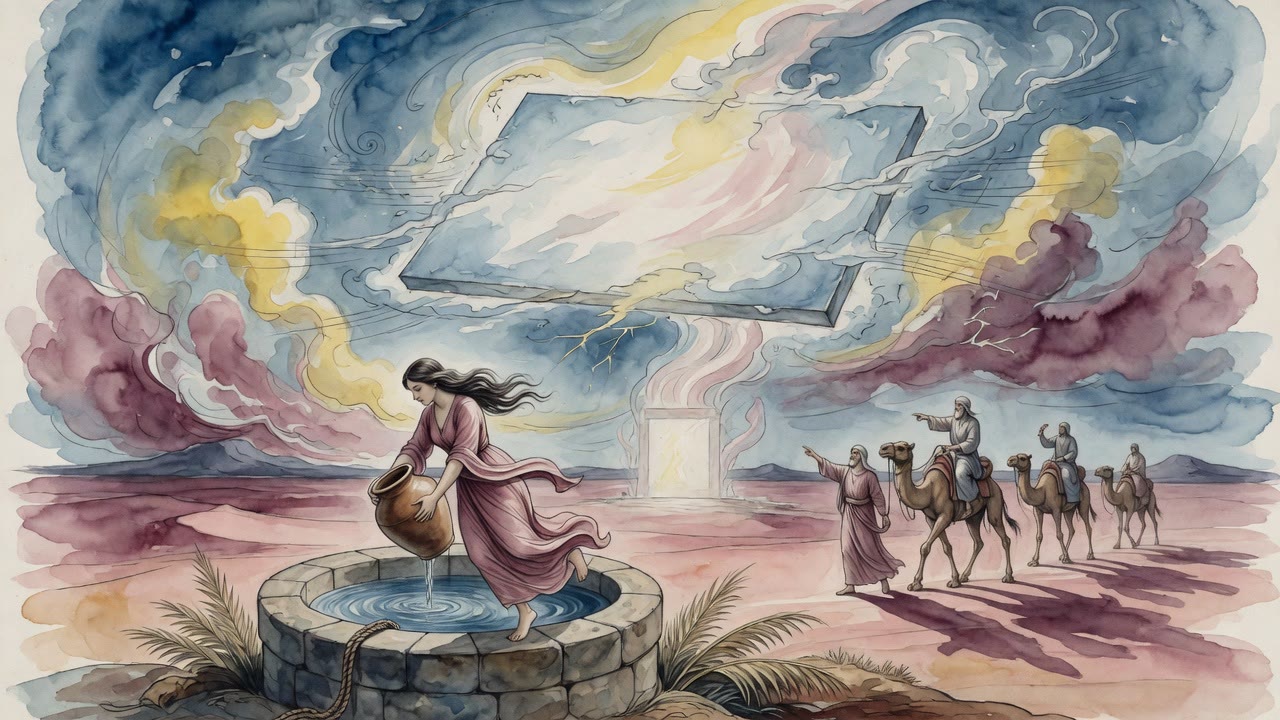
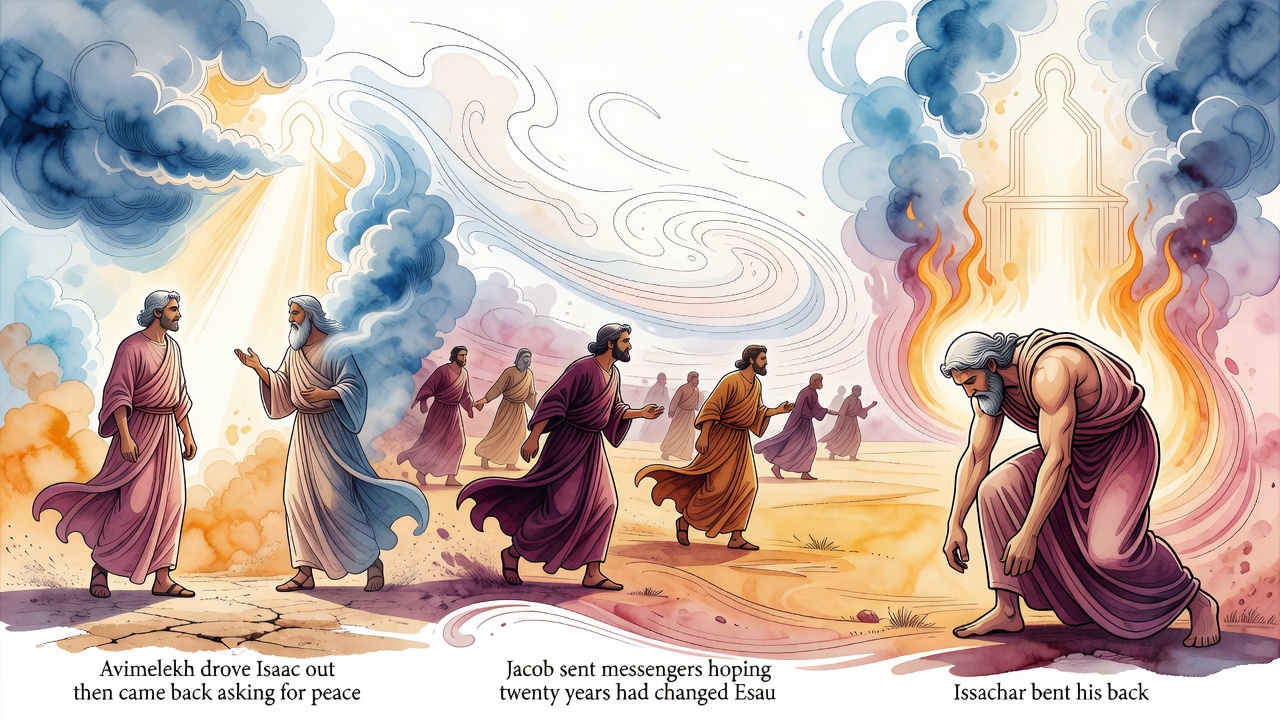
The Hebrew Bible tells a straightforward story about Isaac digging wells in Gerar and feuding with the Philistines over water rights (Genesis 26). The Targum Jonathan transforms it...
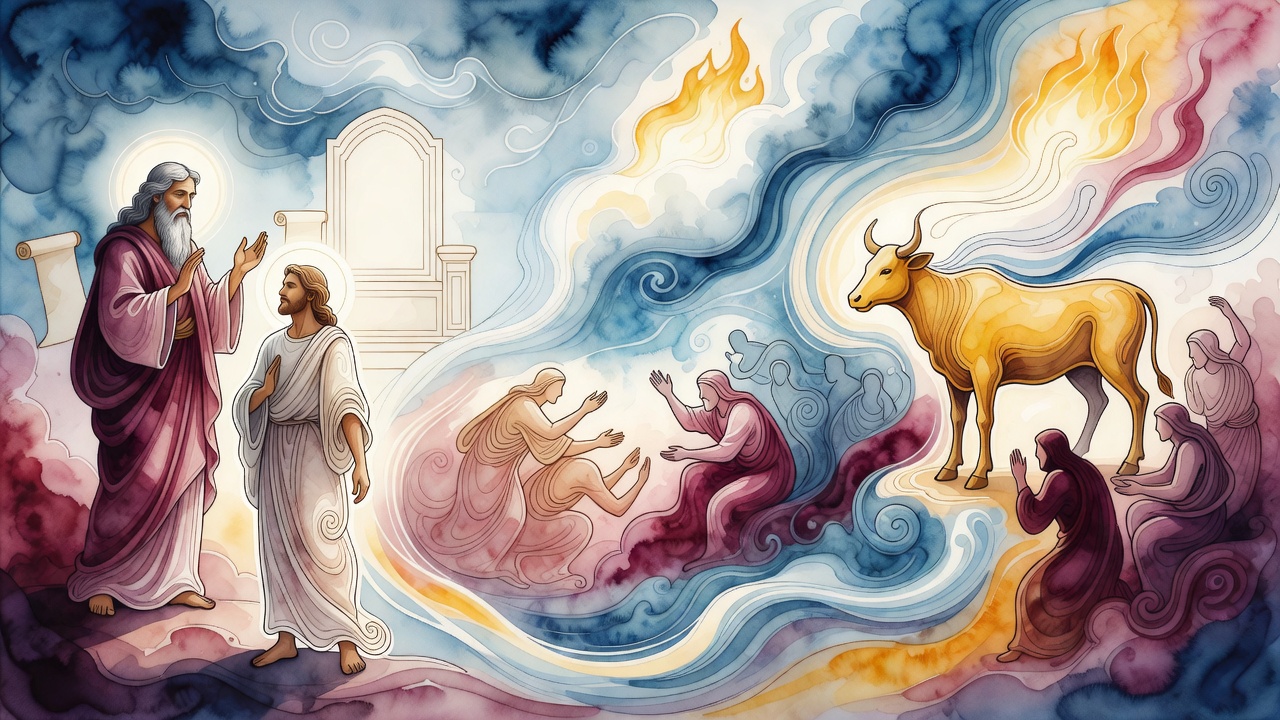
The standard Bible tells you Rachel stole her father's household gods when Jacob fled Laban's house. The Targum Jonathan, an ancient Aramaic translation from roughly the 1st-2nd ce...
The story of Dinah in Genesis 34 is already one of the most violent chapters in the Torah. The Targum Jonathan, the ancient Aramaic translation, does not soften it. Instead, it sha...
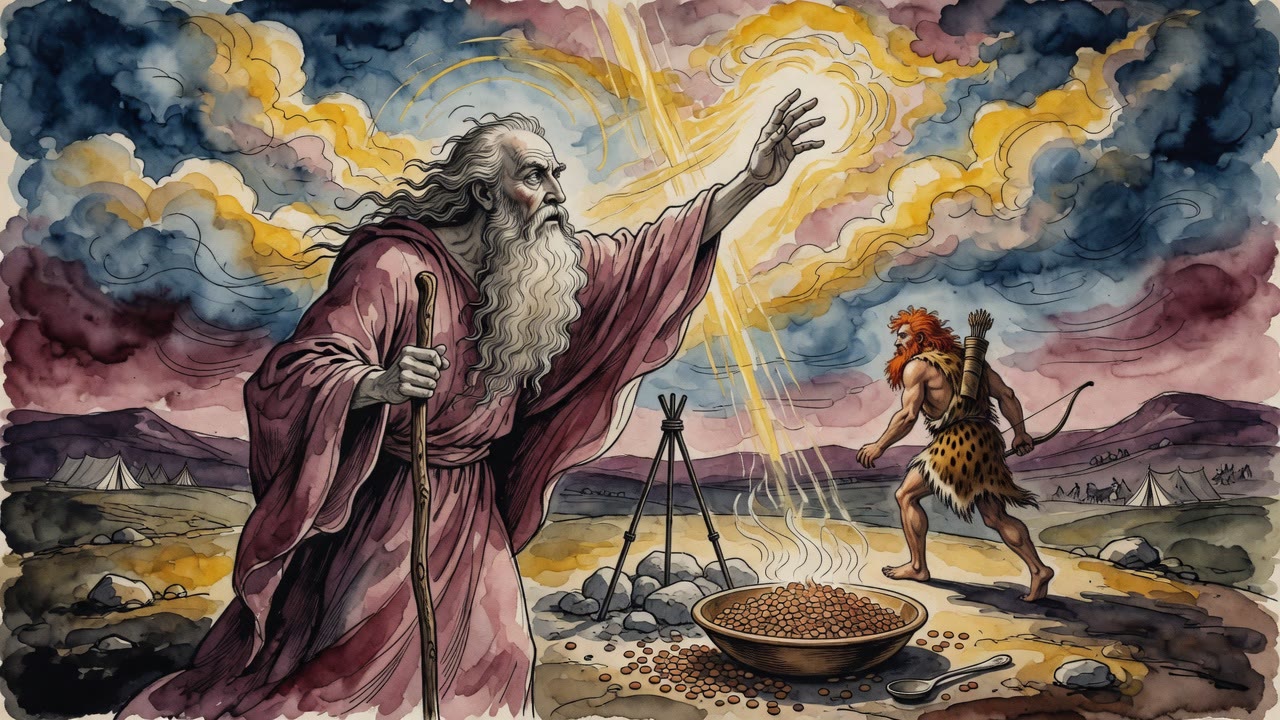
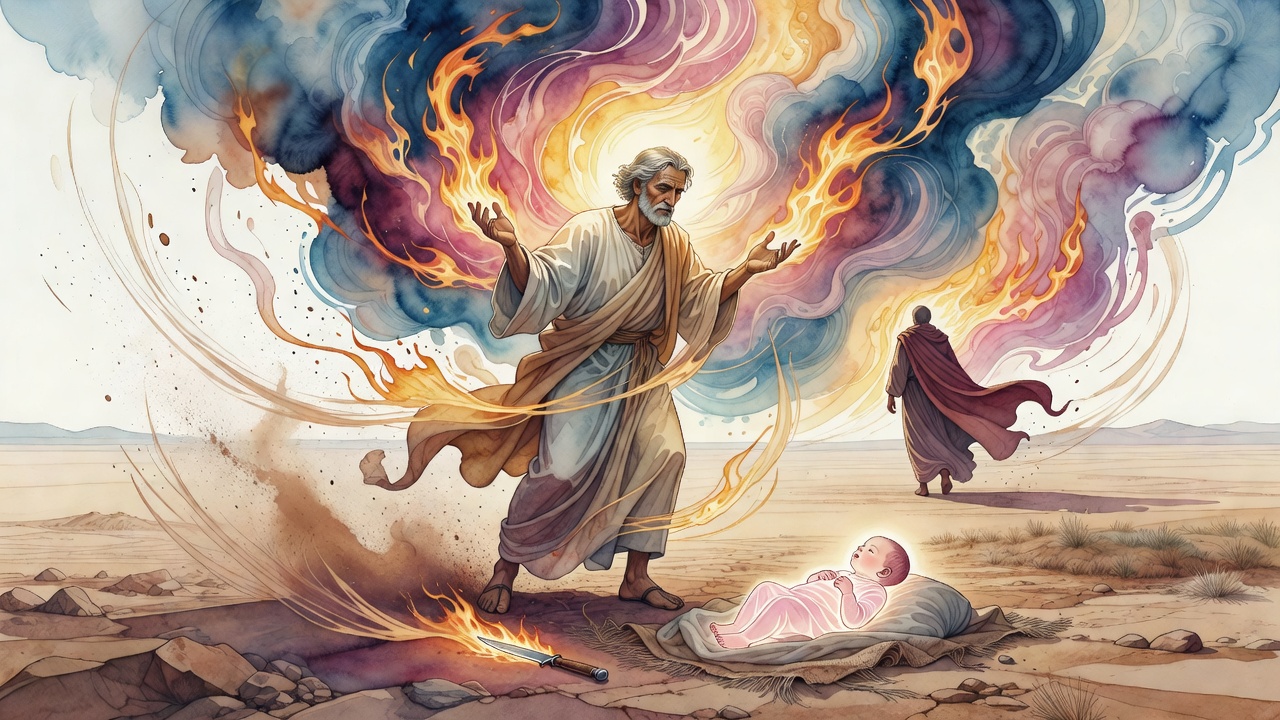
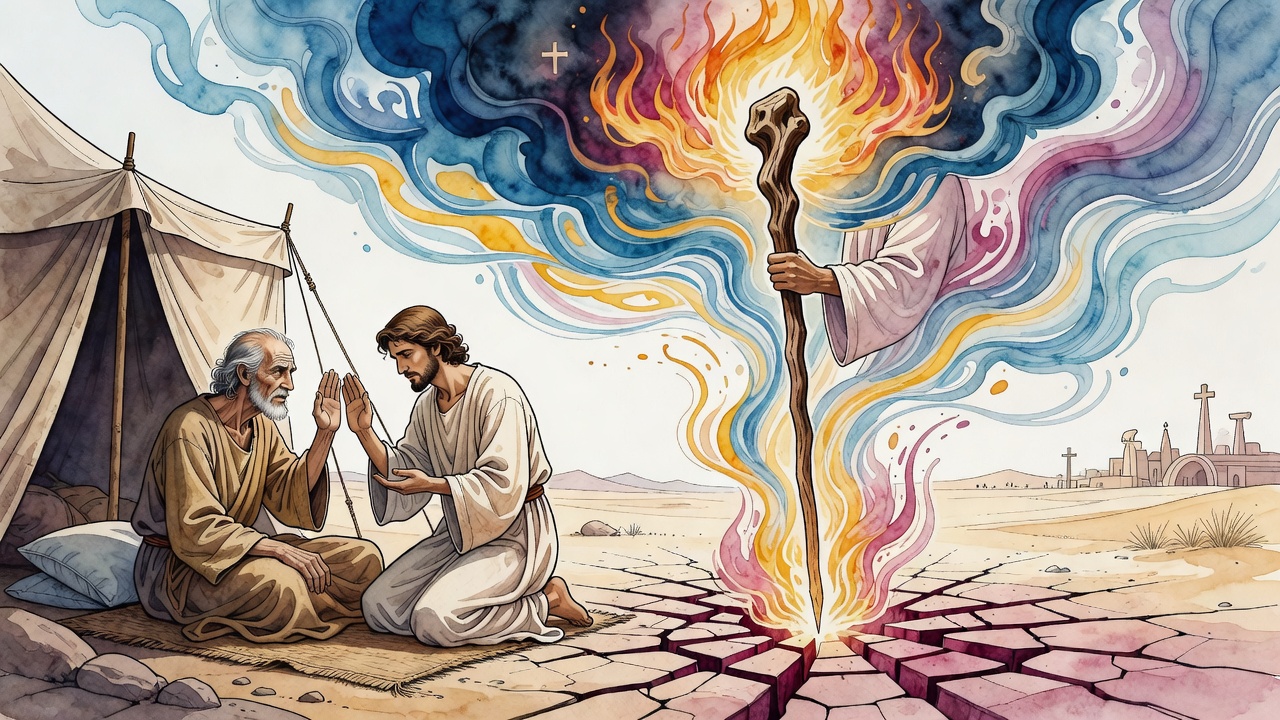
Exodus chapter 4 tells how Moses received miraculous signs to convince Israel of his mission. The Targum Jonathan transforms this chapter into something far stranger—especially whe...
The Passover story everyone knows has God striking down the Egyptian firstborn. The Targum Jonathan's version of (Exodus 12) is almost unrecognizably more detailed, packed with num...
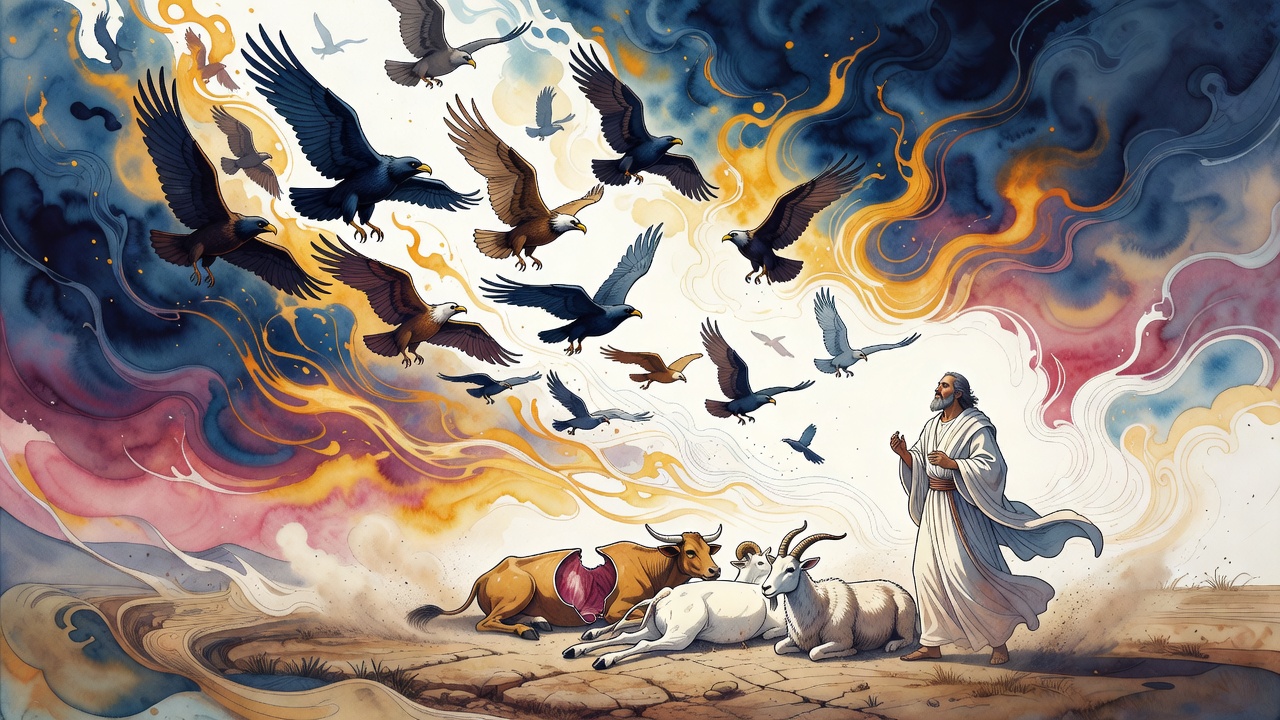
What happens when you cannot afford a lamb? Leviticus 5 introduces one of the most compassionate mechanisms in ancient law—a sliding scale for guilt offerings—and the Targum Jonath...
The punishment of the ten faithless spies in the Hebrew Bible is a single verse. The Targum Jonathan turns it into body horror: worms emerging from their navels and consuming their...
The place was called Shittim, and the Targum explains the name: it derives from shetutha, meaning foolishness and depravity. The Targum's version of (Numbers 25) describes Moabite ...
The Targum's version of (Numbers 30) adds specific ages to the Torah's vow laws, transforming abstract principles into concrete legal thresholds. A male becomes bound by his vows a...
The standard text of (Deuteronomy 1) opens with Moses speaking to Israel "beyond the Jordan." But the Targum Jonathan, an ancient Aramaic translation composed between the 1st and 4...
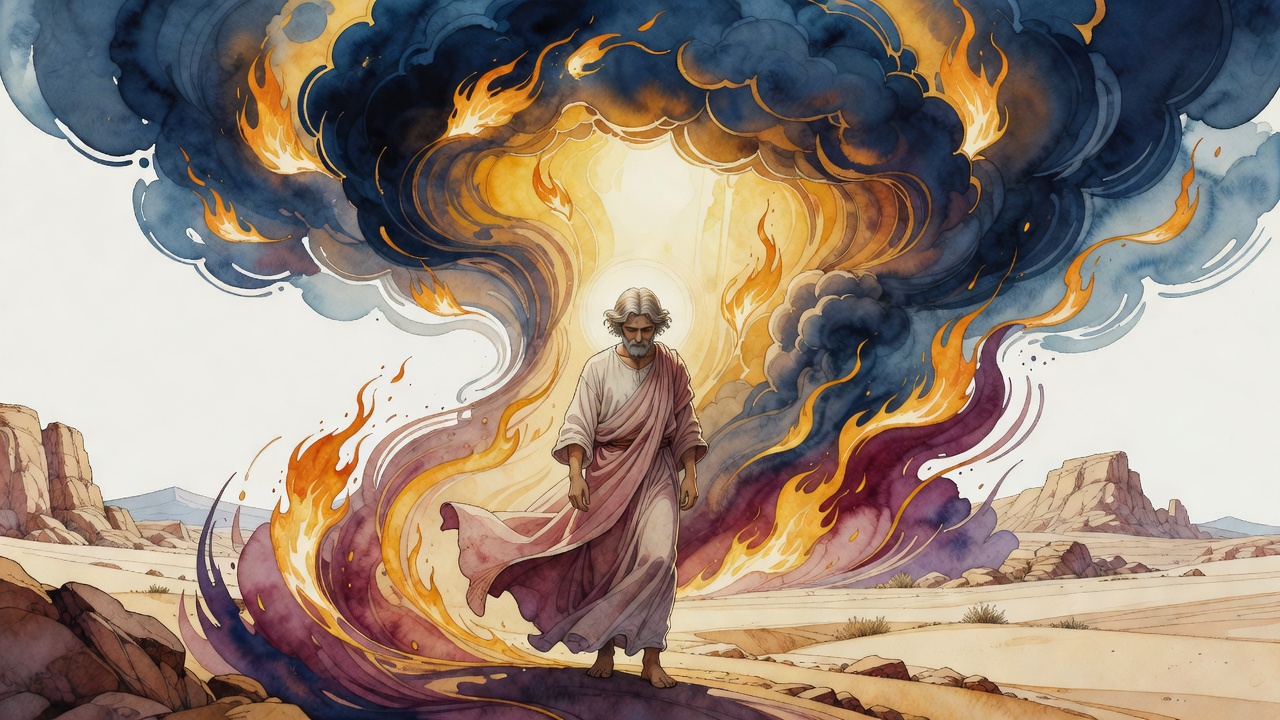
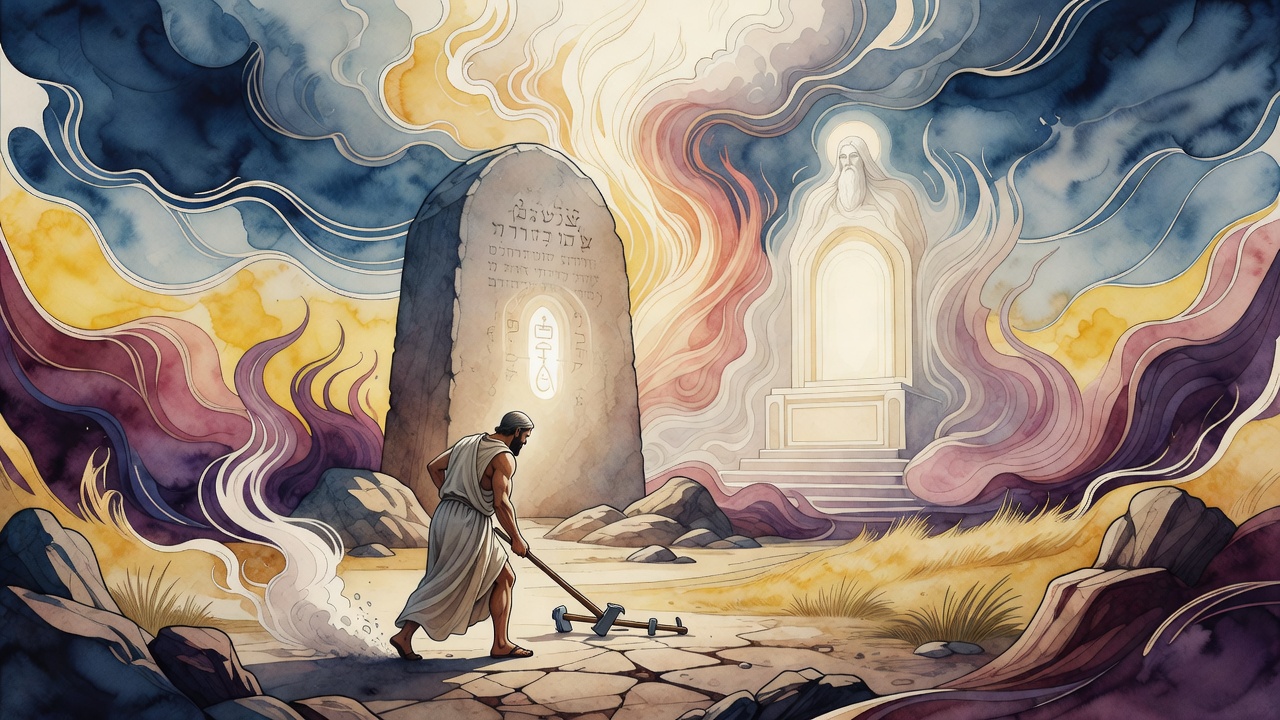
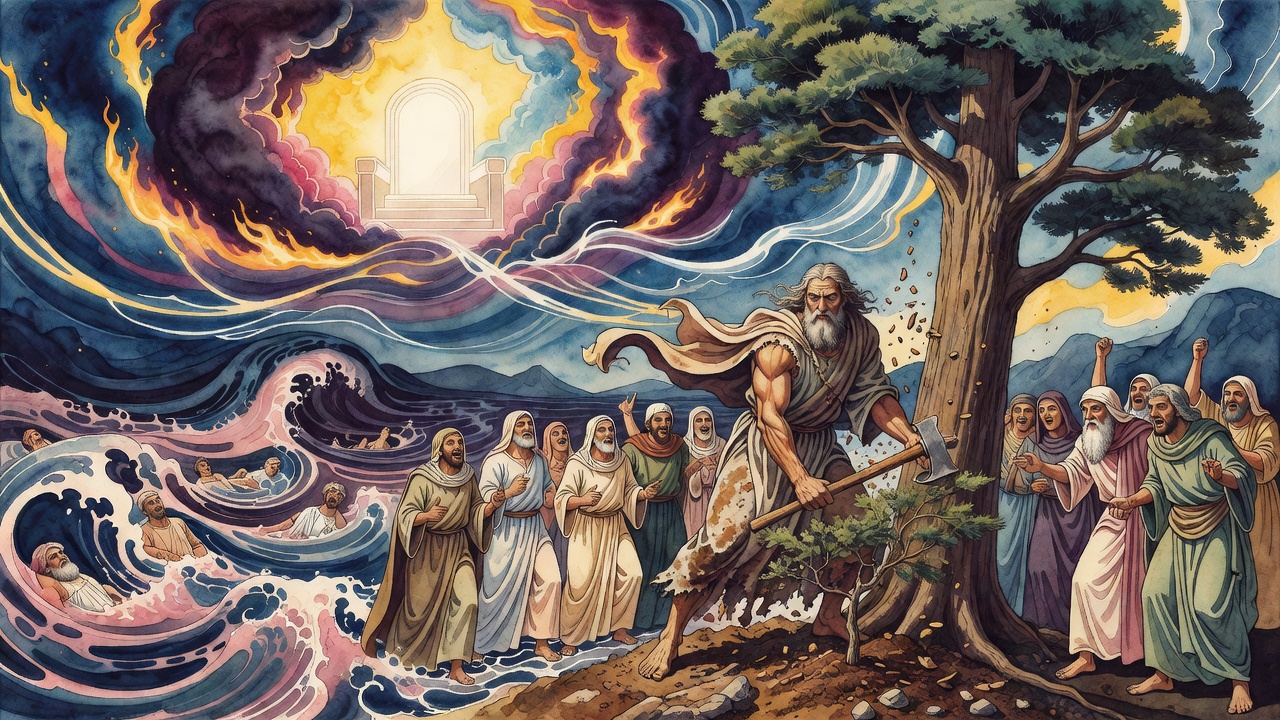
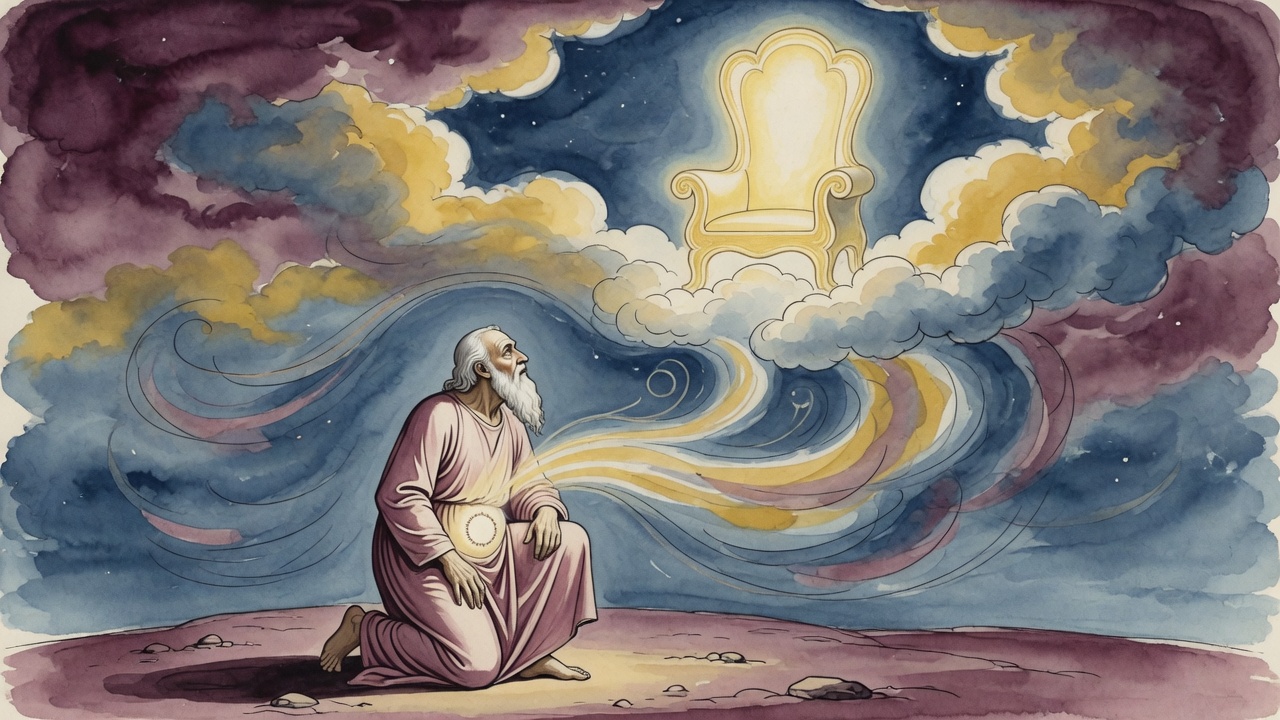
The Targum Jonathan on (Deuteronomy 4) transforms the Sinai revelation into something far more vivid than the Hebrew original. Where the Bible says God spoke from the fire, the Tar...
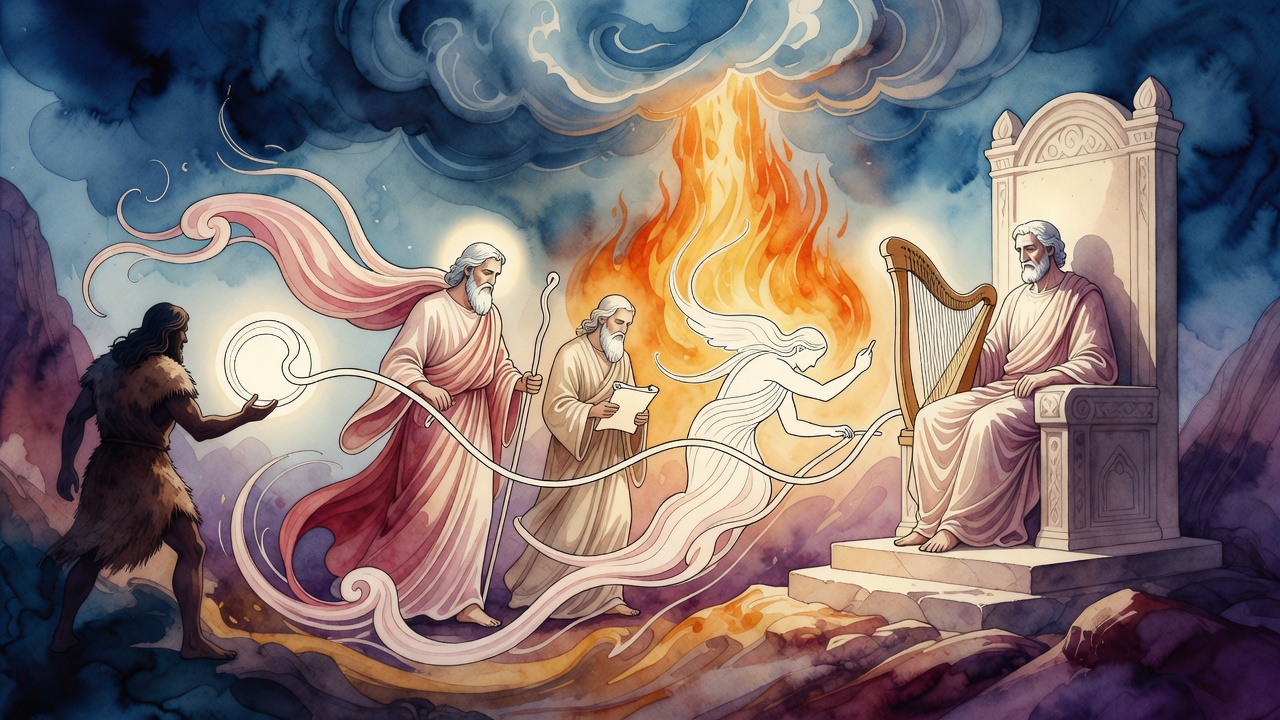
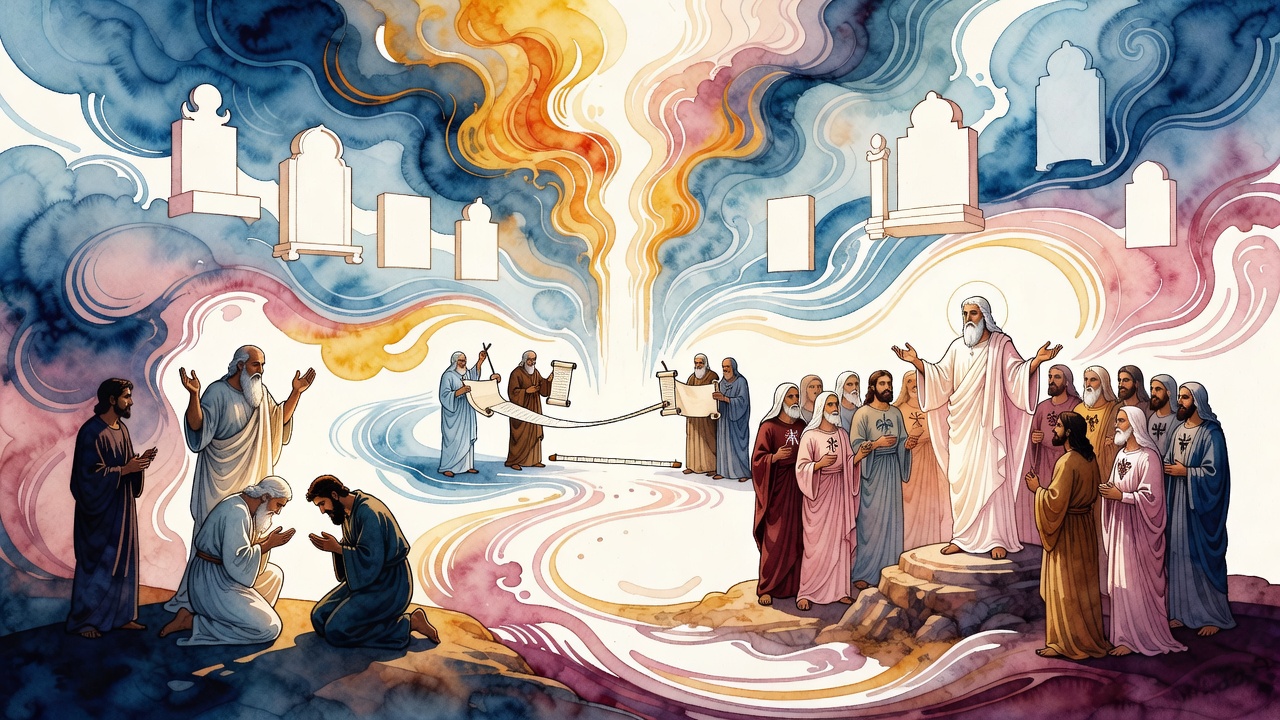
The Targum Jonathan on (Deuteronomy 5) does something extraordinary with the Ten Commandments. Where the Hebrew gives each commandment as a prohibition, the Targum expands every si...
The Targum Jonathan on (Deuteronomy 7) contains one of the most theologically radical statements in all of ancient Aramaic literature. God did not choose Israel because they were t...
The covenant at Moab in (Deuteronomy 29) is addressed to the Israelites standing there. Targum Jonathan expands the audience to infinity: "all the generations which have arisen fro...
The rabbis asked a strange question: why did King Solomon compare Israel to a walnut? Not a cedar, not a vine, not wheat — a walnut. Rabbi Yehoshua of Sichnan, speaking in the name...
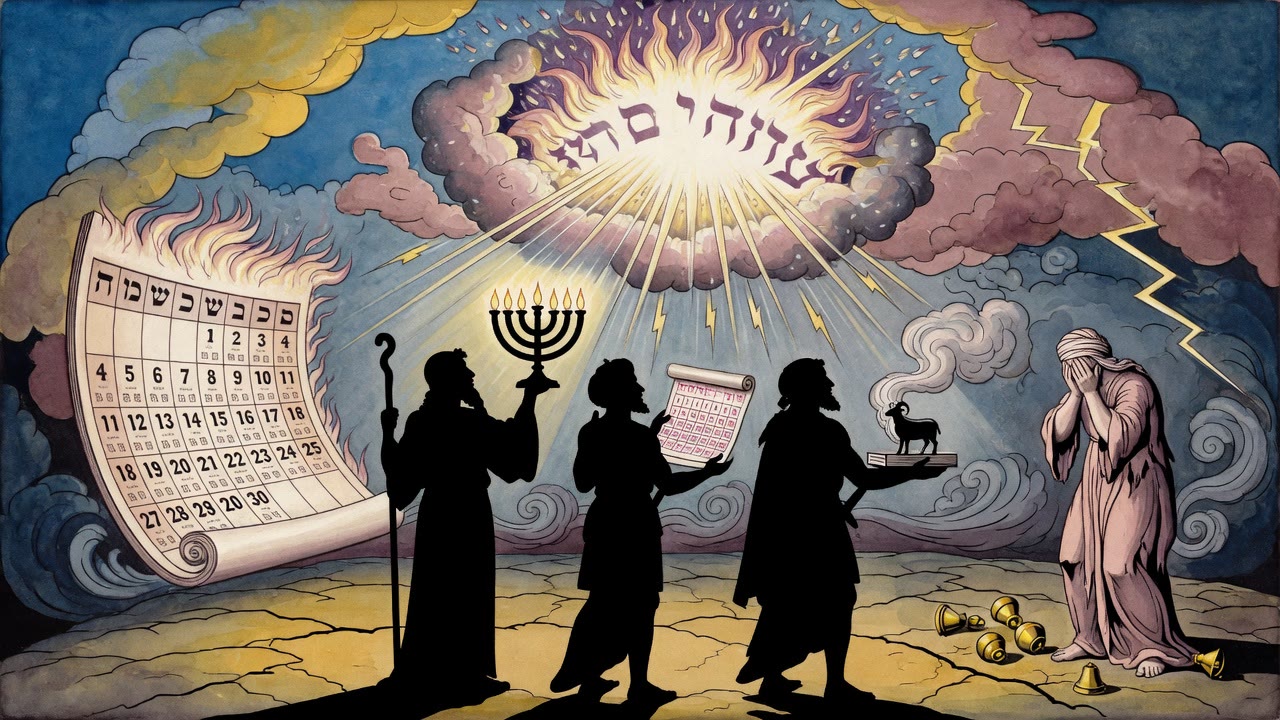
The Seder Olam reveals a pattern hidden in the calendar of sacred history: the most important events in Israel's story all cluster around one date — the fifteenth of Nisan. It bega...
When God appeared to Abram and commanded him to circumcise himself, the patriarch was already ninety-nine years old. According to the Yalkut Shimoni on Torah 80, God's words carrie...
Another Explanation "And first born of your children you shall redeem" (Exodus 13:13) Where [is this law sourced:] If his father did not redeem him, he should redeem himself. [We a...
The Hebrew Bible says God established a covenant with Noah, setting the rainbow as its sign (Genesis 9:12-17). Targum Onkelos renders every instance of "between Me and you" as "bet...
3 The Staff of Your Strength G-d shall send forth from Zion. Which staff is this? This is the staff of Jacob about which it is said: "Because with my staff I crossed this Jordan." ...
A Matrona asked R. Jose b. Halafta why the covenant of Abraham was not mentioned in the ten commandments and the reply was: "The proselyte mentioned therein implies to the covenant...
Rabbi Shimon ben Halafta was invited to a brit milah — the circumcision ceremony of a newborn child. He came, he prayed, and through the power of his prayer, the life of the infant...
A man entrusted a single dinar to a woman for safekeeping. She placed the coin in a jar of flour — a common hiding place in the ancient world — and promptly forgot about it. Days l...
When God gave the Ten Commandments at Mount Sinai, the sages taught that He did not speak them into a void. Each commandment was connected to the covenant God had already made with...
A woman was entrusted with a single dinar for safekeeping. She placed it in a jar of flour, forgot about it, and later unknowingly baked it into a loaf of bread. When a poor man ca...
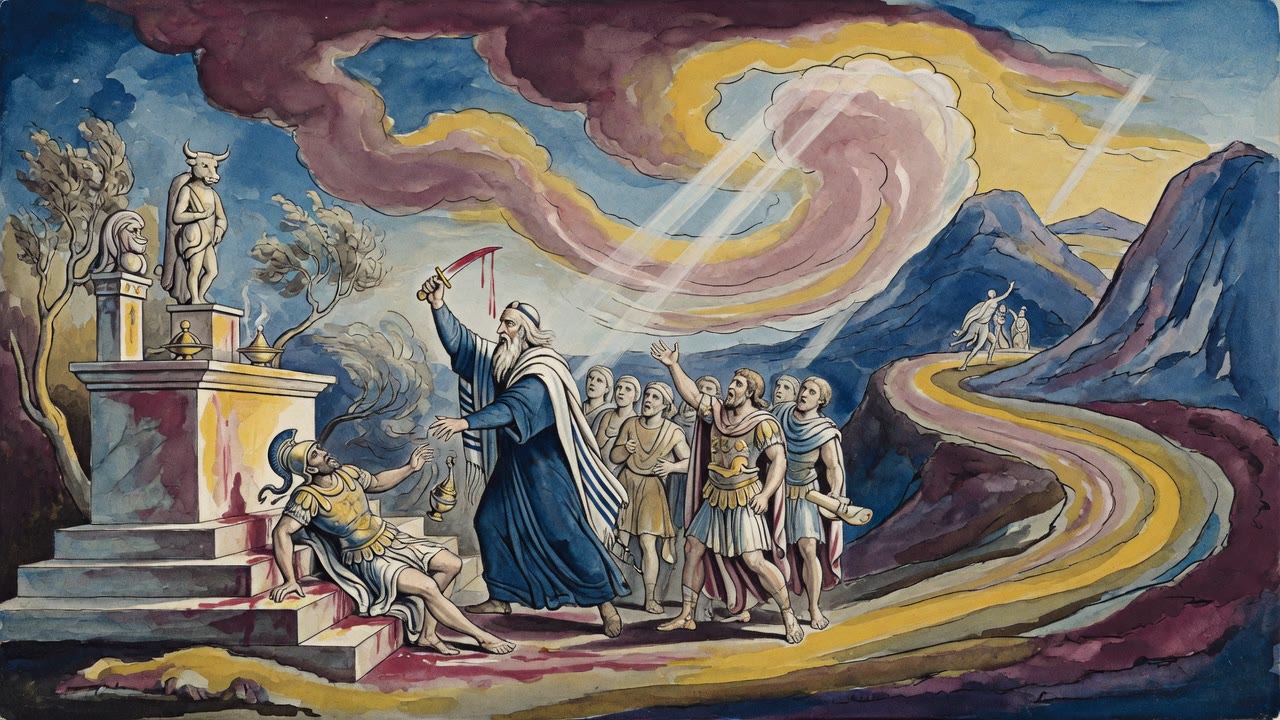
The great Moses himself had such an experience. As we read in (Exodus 4:24), on the road one night, Adonai—God—encountered Moses and sought to kill him. Talk about a plot twist! Wh...
Even in the Bible, the order in which things are presented can tell a whole story. Take the story of the spies sent by Moses to scout out the Land of Canaan, the Promised Land, bef...
When the Torah says, “Command the children of Israel, and say to them: For you are coming to the land of Canaan; this will be the land that will fall to you as an inheritance” (Num...
The Torah is full of promises, both of blessings and of curses. And sometimes, it seems like things don't quite line up. In Bamidbar Rabbah, a collection of rabbinic teachings on t...
Jewish tradition is full of these moments, and they often happen in the most unexpected ways. Today, we're diving into a fascinating passage from Bereshit Rabbah, a collection of r...
The ancients certainly did. Take clouds, for example. We see them drift across the sky, maybe bringing rain, maybe just shading the sun. But did you know that the rabbis saw in clo...
Turns out, even God has had those thoughts about humanity. We find a fascinating glimpse into this in Bereshit Rabbah, a collection of rabbinic interpretations on the Book of Genes...
Our ancestor, Abraham, knew that feeling well. God promised him descendants as numerous as the dust of the earth and an eternal inheritance of land. But what did that really mean? ...
We often think of the Torah as a clear-cut set of instructions, but sometimes, things get a little… complicated. Take the story of God's promise to Abraham in (Genesis 15:19-21). G...
It says, "Abram was ninety-nine years old, and the Lord appeared to Abram; He said to him: I am God Almighty; walk before Me, and be faultless.” Ninety-nine years old. It’s never t...
The scene: God, in (Genesis 17:1), reveals Himself to Abraham, saying "I am God Almighty [Shadai]." But what does Shadai really mean? The Rabbis, in Bereshit Rabbah 46, unpack this...
The sages of the Midrash (rabbinic interpretive commentary) explored this very human feeling when grappling with God's command to Abraham to be circumcised. In (Genesis 17:1), God ...
It's never accidental. Jewish tradition teaches us that repetitions often hold profound significance, echoing through generations. Take Abraham, for example, our patriarch. We find...
In Bereshit Rabbah, that foundational midrashic (rabbinic interpretive commentary) text, the rabbis unpack layers of meaning from even a single word. The verse uses the Hebrew word...
It's a fascinating, and sometimes complex, corner of Jewish law. Our guide for today is Bereshit Rabbah, a classic Midrashic (rabbinic interpretive commentary) text – meaning, a co...