King David

2,344 texts · Page 8 of 49

The shepherd king who slew Goliath, wrote the Psalms, and founded the dynasty from which the Messiah will come.

The Five Smooth Stones and the Seven Eyes of Malkhut

Kabbalah Kabbalah & Mysticism

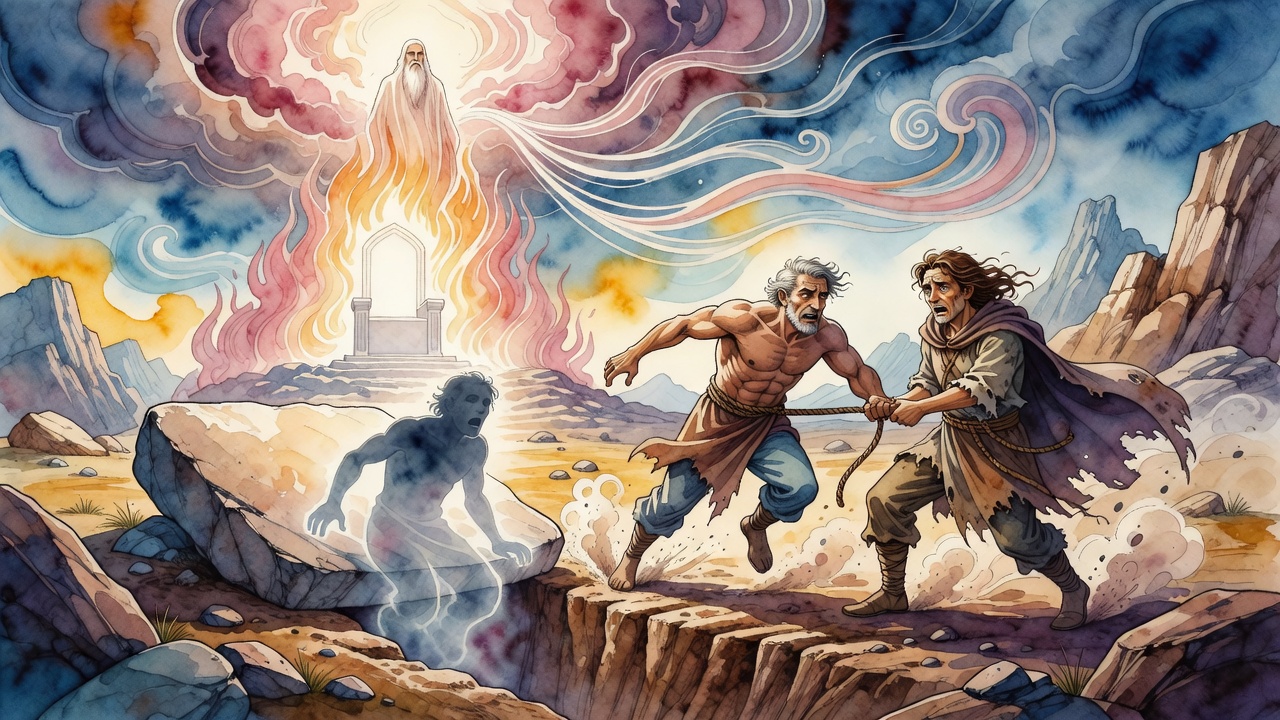
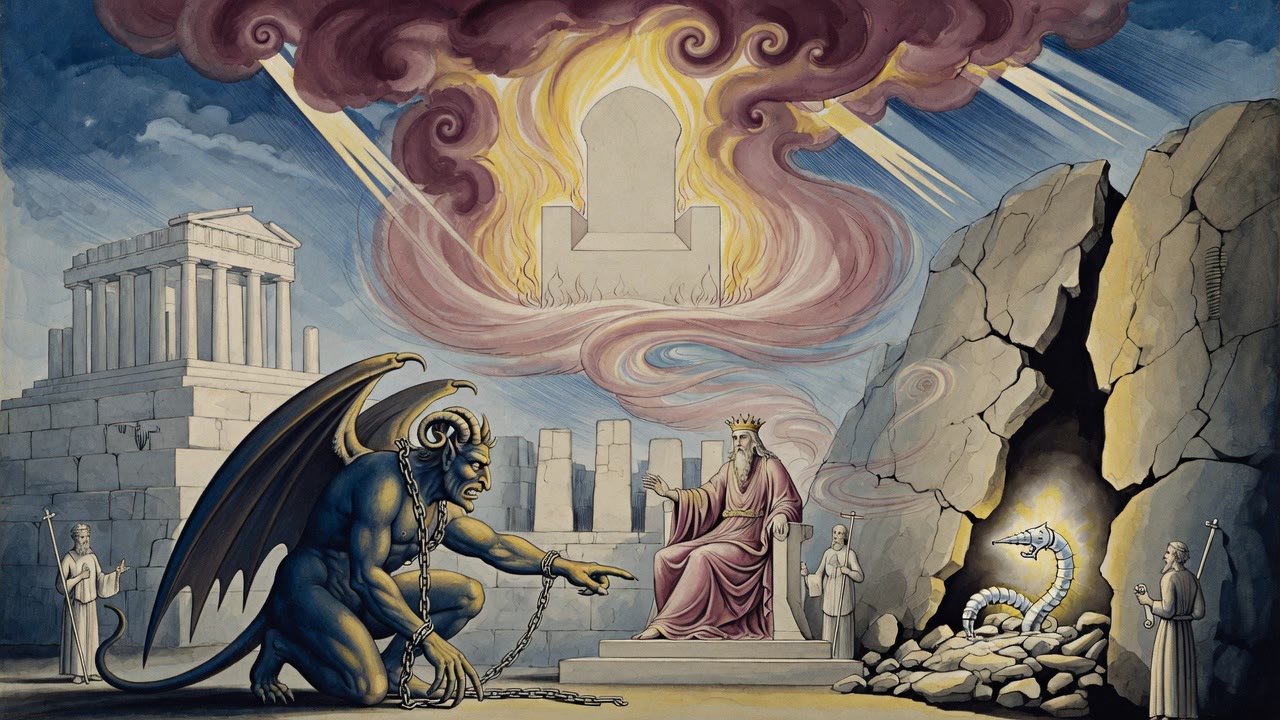
We remember the giant, the slingshot, the underdog victory. But what if there was more to those five smooth stones than met the eye? The Tikkunei (spiritual repair) Zohar, a profou...

David Faces Judgment

Kabbalah Kabbalah & Mysticism

The Torah tells us (Exodus 22:30) that if an offering is treifah, basically unfit, then "you shall throw it to the dog." Okay, makes sense. But the Tikkunei (spiritual repair) Zoha...

The Second Temple Offering and the Ox's Meaning

Kabbalah Kabbalah & Mysticism

Trust me, in the mystical world of Jewish thought, especially as revealed in the Tikkunei (spiritual repair) Zohar, it all weaves together in a surprisingly beautiful way. The Tikk...

Marah and the Lawgiver

Kabbalah Kabbalah & Mysticism

The Tikkunei (spiritual repair) Zohar, a mystical commentary on the Zohar, dives deep into this very idea, using the image of "husks" – kelipot (the shells of impurity) in Hebrew –...

Enter Holy Hosts to Witness the Bride Being Adorned

Kabbalah Kabbalah & Mysticism

That's the image Rabbi Shimon uses to open up a profound teaching in Tikkunei (spiritual repair) Zohar 288. He calls out: "Enter, holy hosts of above and of below, to witness the a...

The Divine Clothed in Chesed as Loving-Kindness

Kabbalah Kabbalah & Mysticism

Jewish mysticism, particularly through the lens of the Tikkunei (spiritual repair) Zohar, offers a breathtakingly beautiful answer. The Tikkunei Zohar, a later expansion on the cor...

Ezekiel's Four Faces Reflected in the Human Eye

Kabbalah Kabbalah & Mysticism

To a fascinating passage from the Tikkunei (spiritual repair) Zohar, specifically Tikkun 289, where the human eye becomes a microcosm of the divine. The Tikkunei Zohar, a later exp...

Eyes Illuminated by Torah Morning, Evening, and Afternoon

Kabbalah Kabbalah & Mysticism

The Tikkunei (spiritual repair) Zohar, a mystical commentary on the Zohar, that foundational text of Kabbalah, speaks to just that feeling. In section 289, it uses a beautiful imag...

Your Neck Is an Ivory Tower Pointing to Jerusalem

Kabbalah Kabbalah & Mysticism

Let’s look at one that’s always intrigued me: “Your neck is an ivory tower” from the Song of Songs (7:4). Sounds poetic, sure, but what does it mean? Well, the Tikkunei (spiritual ...

How Jews Used Torah Verses as Magical Spells

Kabbalah & Mysticism Kabbalah & Mysticism

The most widely practiced form of Jewish magic required no special training, no secret names, no angelic invocations. It required only a Bible. As Joshua Trachtenberg documented, m...

The Mystical Dance That Sanctifies the New Moon

Kabbalah & Mysticism Kabbalah & Mysticism

A Kabbalistic instruction for the blessing of the new moon — Kiddush Levanah — arranges the worshiper's body and words like a careful spell. The mystic is to meditate on the initia...

The name of Yitzchak was not changed, for he was thus

Mekhilta DeRabbi Yishmael Mekhilta DeRabbi Yishmael

The name of Yitzchak was not changed, for he was thus (originally) called by the Holy One Blessed be He. There are three who were named by the Holy One Blessed be He—Yitzchak, Shlo...

) "that G–d did not lead them ('nacham')

Mekhilta DeRabbi Yishmael Mekhilta DeRabbi Yishmael

The Hebrew word "nacham" appears in the Exodus narrative, and the Mekhilta pauses to clarify its meaning. While "nacham" can mean "to comfort" or "to regret" in other contexts, her...

And thus did David say to Goliath (I Samuel 17 — 45) "You

Mekhilta DeRabbi Yishmael Mekhilta DeRabbi Yishmael

The Mekhilta brings the confrontation between David and Goliath as the ultimate demonstration of prayer's superiority over physical weapons. David declared to the Philistine giant:...

Azaryah says — In the merit of their father Abraham I will

Mekhilta DeRabbi Yishmael Mekhilta DeRabbi Yishmael

Rabbi Elazar ben Azaryah taught that God split the Red Sea for the Israelites in the merit of their forefather Abraham. His proof comes from a sweeping passage in (Psalms 105:42-43...

Yehudah of Bortutha says — In the merit of the tribes I will

Mekhilta DeRabbi Yishmael Mekhilta DeRabbi Yishmael

Rabbi Eliezer ben Yehudah of Bortutha declared that God split the Red Sea in the merit of the twelve tribes of Israel. The tribal structure of the nation — not the faith of any sin...

Shimon of Kitron says — In the merit of the bones of Joseph

Mekhilta DeRabbi Yishmael Mekhilta DeRabbi Yishmael

The Mekhilta DeRabbi Yishmael preserves a remarkable teaching by Shimon of Kitron about why God split the Red Sea for Israel. The answer has nothing to do with Moses raising his st...

An analogy — A man was walking on the road leading his son

Mekhilta DeRabbi Yishmael Mekhilta DeRabbi Yishmael

An analogy: A man was walking on the road leading his son before him when robbers came to snare him, whereupon he took him and placed him behind him, when a wolf came to snatch him...

Nechemiah says — Because of the thunders on high, the pivots

Mekhilta DeRabbi Yishmael Mekhilta DeRabbi Yishmael

Rabbi Nechemiah painted a vivid picture of the chaos that engulfed the Egyptian army at the Red Sea. When God unleashed thunder from the heavens, the physical world below shattered...

Pappus expounded (Psalms 106 — 20) "And they exchanged their

Mekhilta DeRabbi Yishmael Mekhilta DeRabbi Yishmael

R. Pappus expounded (Psalms 106:20) "And they exchanged their glory for the image of an ox that feeds on grass": I might think, for the "ox" on high (i.e., Taurus); it is, therefor...

(Psalms 92 — 2-5) "It is good to praise the L–rd and so sing

Mekhilta DeRabbi Yishmael Mekhilta DeRabbi Yishmael

(Psalms 92:2-5) "It is good to praise the L–rd and so sing to Your exalted name. To proclaim in the morning Your lovingkindness, and Your faithfulness in the nights. With a ten-str...

I shall sing to the L–rd," who is rich"—(Devarim 10 — 19)

Mekhilta DeRabbi Yishmael Mekhilta DeRabbi Yishmael

The Mekhilta continues its meditation on the Song of the Sea by enumerating the reasons God is worthy of song. "I shall sing to the Lord," the Israelites declared — and one reason ...

I shall sing to the L–rd," who is comely, who is glorious

Mekhilta DeRabbi Yishmael Mekhilta DeRabbi Yishmael

"I shall sing to the L–rd," who is comely, who is glorious, who is exalted, whose like does not exist—(Psalms 89:7) "For who in the heavens can be compared to the L–rd, can be like...

Yossi says (Psalms 8 — 3) "From the mouths of olelim and

Mekhilta DeRabbi Yishmael Mekhilta DeRabbi Yishmael

Rabbi Yossi interprets a verse from Psalms that adds an astonishing dimension to the Song of the Sea. "From the mouths of olelim and yonkim You have founded strength" (Psalms 8:3)....

Variantly — "My strength" is "My stronghold," as it is

Mekhilta DeRabbi Yishmael Mekhilta DeRabbi Yishmael

The Song of the Sea, sung by Israel after crossing the Red Sea, contains the phrase "my strength." The Mekhilta offers an alternative reading that deepens the meaning considerably....

You are a trust, a help, and a support to all who enter the

Mekhilta DeRabbi Yishmael Mekhilta DeRabbi Yishmael

The Mekhilta preserves a beautiful declaration attributed to King David, addressed directly to God: "You are a trust, a help, and a support to all who enter the world — but to me m...

All the peoples of the world declare the praises of the

Mekhilta DeRabbi Yishmael Mekhilta DeRabbi Yishmael

King David makes a remarkable claim in the Mekhilta: every nation on earth praises God in its own way, but David's songs are more pleasing to God than all of theirs combined. This ...

3) "The L–rd is a man of war; the L–rd is His name

Mekhilta DeRabbi Yishmael Mekhilta DeRabbi Yishmael

"The Lord is a man of war; the Lord is His name" (Exodus 15:3). Rabbi Yehudah declares that this verse is extraordinarily rich — it illuminates truths that appear in many other pas...

There is a warrior in a province, accoutered in all the

Mekhilta DeRabbi Yishmael Mekhilta DeRabbi Yishmael

The Mekhilta offers a vivid parable to distinguish God's warrior nature from every human warrior. Consider, it says, a warrior in a province who is fully equipped with every weapon...

A king of flesh and blood, whilst at war, cannot supply all

Mekhilta DeRabbi Yishmael Mekhilta DeRabbi Yishmael

The Mekhilta presents another contrast between a mortal king at war and God. A king of flesh and blood, while engaged in battle, cannot supply all of his soldiers with what they ne...

the L–rd is His name" — It is with His name that He wars

Mekhilta DeRabbi Yishmael Mekhilta DeRabbi Yishmael

"the L–rd is His name": It is with His name that He wars, and He has no need of any of these (military) appurtenances. And thus did David say (I Samuel 17:95) "You come to me with ...

When Israel do His will, there is no sleep before Him, viz

Mekhilta DeRabbi Yishmael Mekhilta DeRabbi Yishmael

Does God sleep? The Mekhilta wrestles with this question through a startling paradox. When Israel does God's will, there is no sleep before Him. (Psalms 121:4) declares it plainly:...

It is not written "those who rise up against us," but

Mekhilta DeRabbi Yishmael Mekhilta DeRabbi Yishmael

It is not written "those who rise up against us," but "those who rise up against You," whereby we are apprised that all who rise up against Israel are rising up, as it were, agains...

It is not written "You have destroyed those (Exodus 15:7)

Mekhilta DeRabbi Yishmael Mekhilta DeRabbi Yishmael

The Mekhilta catches a subtle but crucial grammatical detail in (Exodus 15:7). The Song at the Sea does not say "You have destroyed those who rose up against You" — past tense, as ...

It is not written "You have sent forth Your wrath," but

Mekhilta DeRabbi Yishmael Mekhilta DeRabbi Yishmael

The Mekhilta identifies another future-tense verb in the Song at the Sea. It is not written "You have sent forth Your wrath" — as if God's anger were already spent — but "You will ...

And thus is it written (Psalms 2 — 1) "Why do the nations

Mekhilta DeRabbi Yishmael Mekhilta DeRabbi Yishmael

The Mekhilta de-Rabbi Ishmael invokes a pair of verses from Psalms to reveal something startling about how God responds to the nations that rage against Israel: He laughs. The firs...

Variantly — "Who is like You among the mighty, O L–rd" — Who

Mekhilta DeRabbi Yishmael Mekhilta DeRabbi Yishmael

The Song at the Sea asks: "Who is like You among the mighty, O Lord?" (Exodus 15:11). The Mekhilta DeRabbi Yishmael reads this question not as rhetorical flattery but as a genuine ...

Variantly — "Who is like You among the mighty" — Who is like

Mekhilta DeRabbi Yishmael Mekhilta DeRabbi Yishmael

The Mekhilta lifts the declaration "Who is like You among the mighty" out of the earthly realm and directs it upward — toward the angelic hosts who minister before God on high. "Wh...

Variantly — Who is like You among those whom others call

Mekhilta DeRabbi Yishmael Mekhilta DeRabbi Yishmael

Variantly: Who is like You among those whom others call "gods" and who are without substance, those of whom it is written (Psalms 115:5) "hey have a mouth but cannot speak, etc." B...

Variantly — "awesome in praise" — The measure of flesh and

Mekhilta DeRabbi Yishmael Mekhilta DeRabbi Yishmael

Variantly: "awesome in praise": The measure of flesh and blood—A man's awe is more upon those who are distant from him than upon those who are near him. Not so, the Holy One Blesse...

The measure of flesh and blood—When one man works for

Mekhilta DeRabbi Yishmael Mekhilta DeRabbi Yishmael

The measure of flesh and blood—When one man works for another—plowing with him, sowing with him, weeding with him, hoeing with him—the other gives him a single coin and he goes on ...

God Roofs the World with Water While Humans Use Stone

Mekhilta DeRabbi Yishmael Mekhilta DeRabbi Yishmael

The Mekhilta draws a vivid contrast between human construction and divine architecture. A human being builds a roof out of wood, earth, and stones, solid materials that resist grav...

The measure of flesh and blood—he cannot make a form from earth

Mekhilta DeRabbi Yishmael Mekhilta DeRabbi Yishmael

The Mekhilta draws a profound contrast between human ability and divine power through the act of creation from earth. A human craftsman cannot form a living figure from dirt. He ca...

"You inclined Your right hand—the earth (Exodus 15:12)

Mekhilta DeRabbi Yishmael Mekhilta DeRabbi Yishmael

(Exodus 15:12) declares: "You inclined Your right hand — the earth swallowed them up." The Mekhilta reads this verse not primarily as a description of the Egyptians' death, but as ...

Variantly — "You have guided them in Your strength"—in the

Mekhilta DeRabbi Yishmael Mekhilta DeRabbi Yishmael

The Mekhilta offers an alternate reading of "You have guided them in Your strength." Here, "strength" does not refer to the Torah. It refers to the kingdom of the house of David. G...

Yossi Haglili says — (Ibid

Mekhilta DeRabbi Yishmael Mekhilta DeRabbi Yishmael

Rabbi Yossi Haglili calculated the sheer scale of the quail that God sent to the Israelites, and the numbers are staggering. Drawing on (Numbers 11:31), which says the quail spread...

Others say — "And it was spread around the camp about a

Mekhilta DeRabbi Yishmael Mekhilta DeRabbi Yishmael

An alternative calculation in the Mekhilta DeRabbi Yishmael pushed the scale of the quail miracle even further. Where Rabbi Yossi Haglili estimated three parasangs per side, other ...

Yehudah says — When the manna descended for Israel, all of

Mekhilta DeRabbi Yishmael Mekhilta DeRabbi Yishmael

Issi ben Yehudah taught a remarkable detail about the manna that fell in the wilderness: when it descended for Israel, it was visible to all the nations of the earth. The peoples o...