289 texts · Page 4 of 7
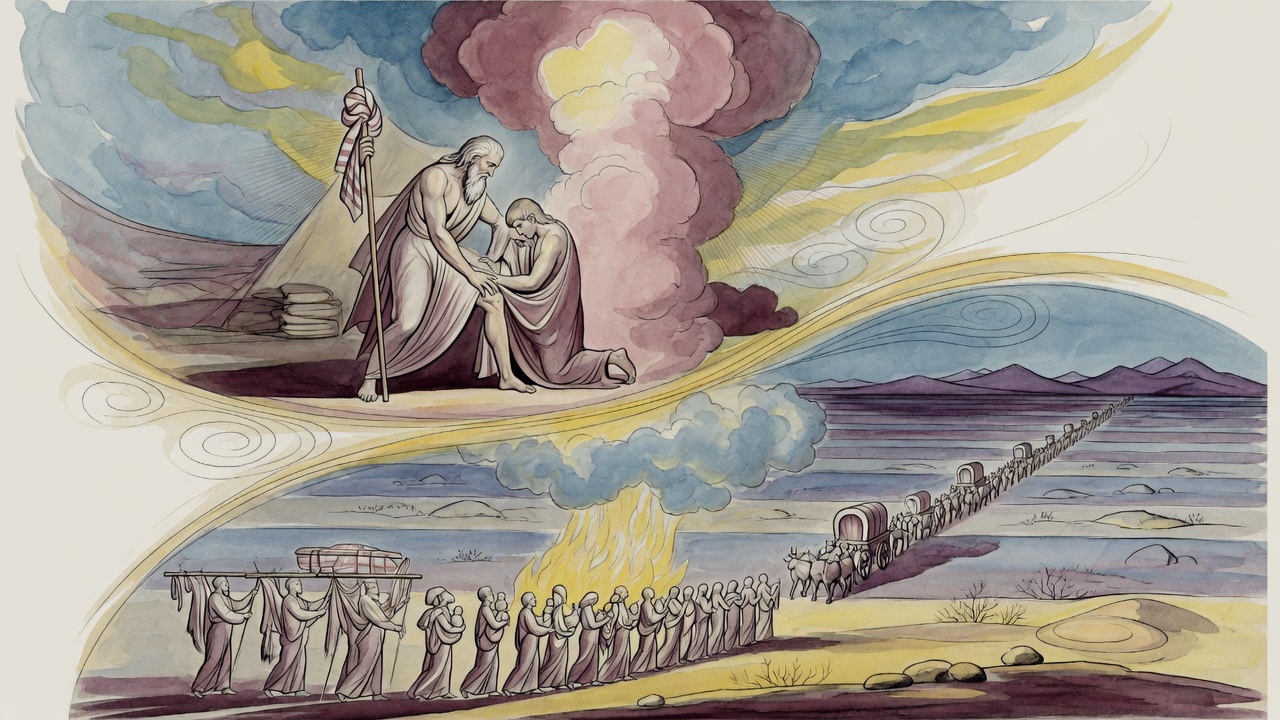
Jethro arrived at the Israelite camp and immediately noticed something troubling. His son-in-law Moses sat from morning until evening while the entire nation stood in a line before...
Yithro warned Moses with a vivid and frightening prophecy (Exodus 18:18): "You will languish." The Hebrew word used here prompted two different interpretations from the rabbis, and...
The Torah records that the Israelites left Egypt "in the first month" (Numbers 33:3). This establishes a clear date for the Exodus — the month of Nisan, the first month of the Jewi...
The Torah records the arrival at Sinai with a precise phrase (Exodus 19:1): "On this day they came to the desert of Sinai." The Mekhilta de-Rabbi Ishmael identifies the exact date ...
R. Yehudah ben Lakish offered a poignant interpretation of the verse (Exodus 2:25): "And God saw the children of Israel, and God knew." The verse seems simple enough — God observed...
Rabbi Eliezer transmits a teaching in the name of Abba Yossi ben Dormaskith that exposes one of the most unsettling truths about God's relationship with Israel. The verse says: "An...
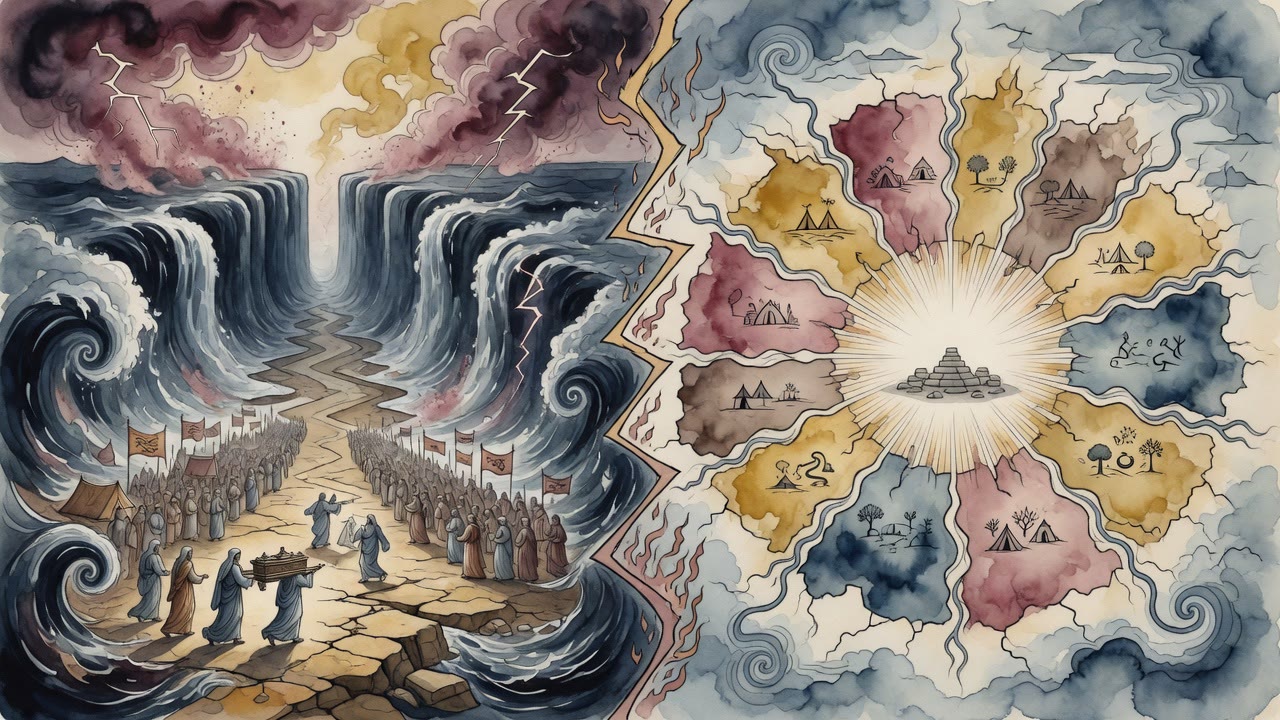
Throughout the book of Exodus, whenever the Israelites traveled, the Torah uses the plural form — "they journeyed," "they encamped" — because the people moved in discord and settle...
On the second day after the Israelites arrived at Sinai, Moses ascended the mountain to meet God (Exodus 19:3). The Mekhilta notes a crucial detail: God called out to Moses before ...
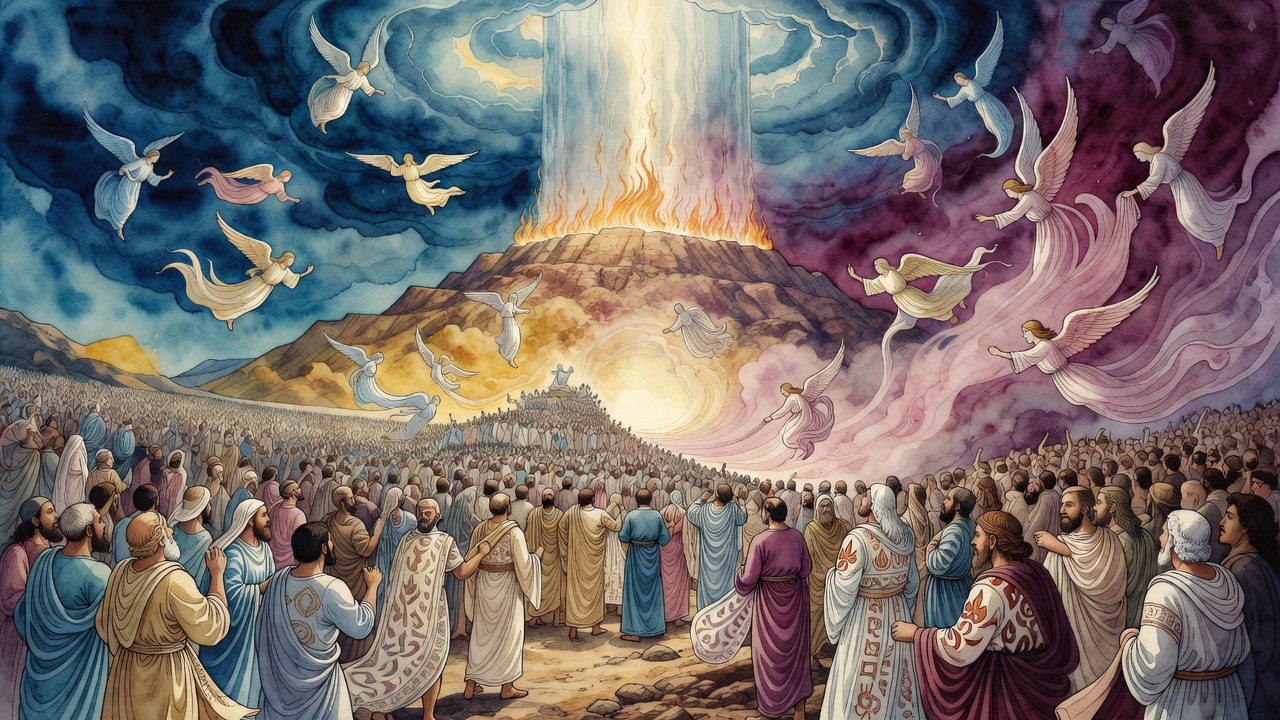
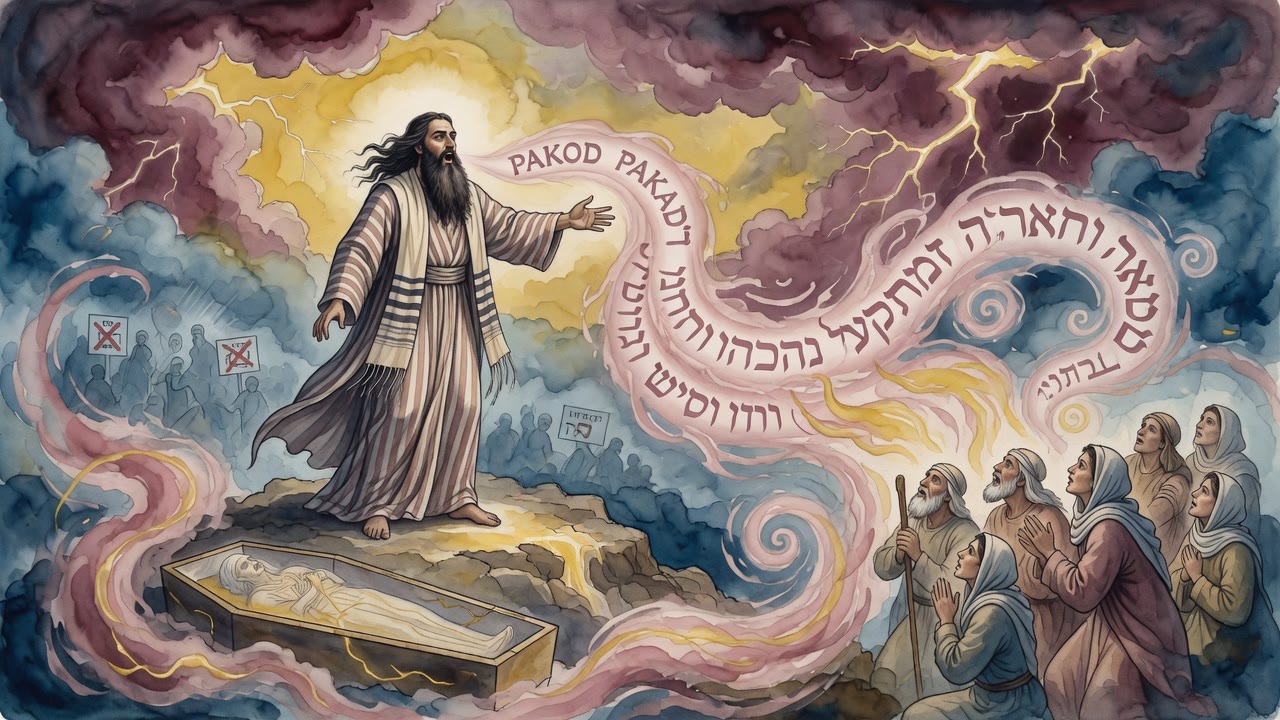
The Mekhilta DeRabbi Yishmael examines God's words to Moses in the days before the revelation at Sinai: "Behold, I shall come to you in the thickness of the cloud" (Exodus 19:9). T...
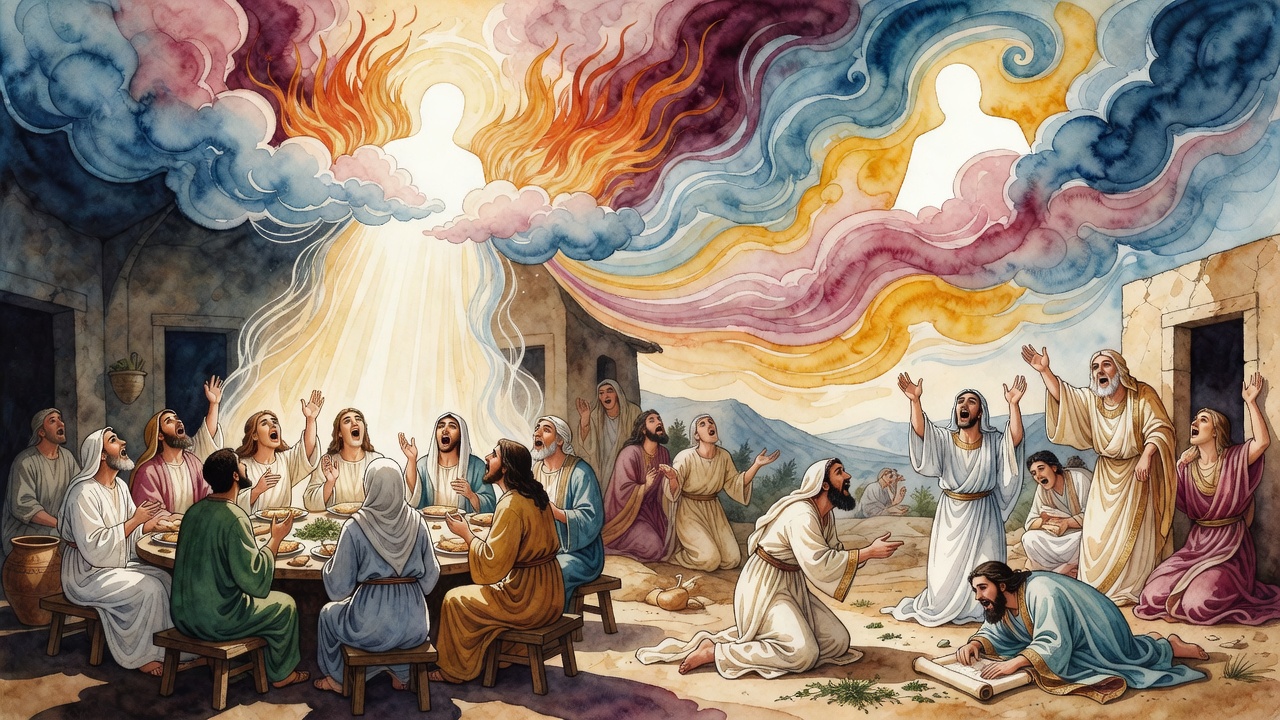
(Exodus 19:18) "And the whole of Mount Sinai smoked": I might think the place of the divine Presence alone; it is, therefore, written "the whole." "for the L–rd had come down upon ...
(Exodus 19:22) "And also the Cohanim, who draw near to the L–rd": We are hereby apprised that the Cohanim are not included in "the people" (above, 21). And thus is it written (Levi...
The Mekhilta unpacks a subtle but powerful argument that God makes to Israel. The verse reads: "As the deeds of the land of Egypt in which you dwelt you shall not do" (Leviticus 18...
(Ibid. 4) "You shall not make for yourself an idol (lit., "a carving")": I might think that he may not make one that projects but he may make one that is flat. It is, therefore, wr...
The Mekhilta DeRabbi Yishmael examines the Shabbat (the Sabbath) commandment's reference to "your man-servant and your maid-servant," asking a pointed question: which servants does...
Rebbi says: Beloved is the honoring of parents by Him who spoke and brought the world into being, His having equated their honor and fear to His honor, and their curse (i.e., their...
The Mekhilta DeRabbi Yishmael identifies a critical distinction in the commandment "You shall not steal." The eighth of the Ten Commandments is not about stealing property. It is a...
The Torah prohibits "gods of silver and gods of gold" (Exodus 20:20). But what exactly do these phrases add to the prohibition against idolatry? After all, the commandment against ...
"If you lend money to My people, the poor man with you" (Exodus 22:24). In Hebrew, the verse uses the word "im" — "if" — which normally introduces a conditional statement. If this ...
(Exodus 20:22) instructs: "Do not build them gazith." The Mekhilta explains that "gazith" means "gezuzoth" — hewn stones, specifically stones upon which iron tools have been used. ...
Why do the laws of adjudication — civil justice — take precedence over all the other commandments in the Torah? Rabbi Shimon gave a deceptively simple answer: because adjudication ...
(Exodus 21:2) "If you buy a Hebrew man-servant": Scripture here speaks of one sold by beth-din (to pay for what he has stolen), in which instance he serves both the father and the ...
Why is it written? It is deliberately superfluous to signal a gezeirah shavah (i.e., "identity"), viz.: It is written here (in Exodus) "Hebrew," and there (in Devarim) "Hebrew." Ju...
R. Eliezer says: This (inclusion) is not needed. If a Jew serves, how much more so a proselyte!—But perhaps (I would say) If a Jew serves six years, a proselyte should serve twelve...
(Exodus 21:3) introduces a condition for the Hebrew bondsman: "If alone he came, alone shall he go out." The Mekhilta uses this verse to determine whether a master is required or m...
The Torah addresses the case of a Hebrew servant whose master gives him a wife during his term of service. In (Exodus 21:4), the verse begins with the word "If" — "If his master gi...
(Exodus 21:7) "And if a man sells his daughter": Scripture speaks of a minor (under twelve). You say that it speaks of a minor, but perhaps it speaks of an adult!—Would you say tha...
The Torah states: "And if a man sells his daughter as a maid-servant" (Exodus 21:7). The Mekhilta draws a striking inference from this phrasing. A father may sell his daughter as a...
The Mekhilta addresses the legal status of a Hebrew maid-servant in relation to the laws of bodily injury. The general rule in Torah law is that a servant who loses an "organ promi...
The Torah states: "If one strikes a man and he dies, he is to be put to death" (Exodus 21:12). The Mekhilta explains why this verse is necessary when a similar law already appears ...
But still, let his blood be spilled from other limbs (and not through "the sword" [i.e., decapitation])! It is, therefore, written (in respect to eglah arufah [the "heifer of the b...
Issi ben Akiva noticed something peculiar about the cities of refuge described in the Torah. The verse says "then I shall make for you a place" — a place where an accidental killer...
The Mekhilta debates the physical dimensions of the refuge space that a person who killed accidentally was confined to. The previous passage established that even in the wilderness...
(Exodus 21:14) "And if a man be deliberate against his neighbor to kill him, etc.": What is the intent of this section? From (Leviticus 24:17) "And a man if he strike any soul of m...
The Torah declares: "And if one strikes his father and his mother, he shall be put to death" (Exodus 21:15). The Mekhilta explains why this verse is necessary when the Torah alread...
The Torah states: "And one who steals a man and sells him, and he is found in his hand, he shall be put to death" (Exodus 21:16). The Mekhilta asks what this verse adds, since kidn...
(Exodus 21:17) states: "And if one curses his father and his mother, he shall be put to death." The Mekhilta asks why this verse is needed at all, since (Leviticus 20:9) already sa...
(Exodus 21:18) introduces the laws of personal injury: "And if men quarrel." The Mekhilta asks why this section exists at all. The Torah already states in (Exodus 21:24) the princi...
This is one of three things in the Torah which R. Yishmael expounded metaphorically. Similarly, (Exodus 22:2) "If the sun shone upon him." Now is it upon him alone that the sun shi...
(Exodus 21:20) introduces the law of a master who strikes his bondservant: "And if a man strike his man-servant or his maid-servant." The Mekhilta explains why this verse is necess...
(Exodus 21:20) specifies that the master strikes his bondservant "with a rod." The Mekhilta asks: does this mean the master is liable regardless of what kind of rod he used? Even a...
The Torah addresses the case of a master who strikes his slave in (Exodus 21:21), using a phrase that puzzled the rabbis: "But if one day or two days." On the surface, this seems t...
(Exodus 21:22) introduces the case of men who fight and accidentally injure a pregnant bystander. The Mekhilta asks why this passage is necessary. From (Exodus 21:14) — "And if a m...
The Torah uses the word "punished" in (Exodus 21:22) when describing the penalty for a man who injures a pregnant woman during a fight. "Then he shall be punished" — but punished h...
(Exodus 21:25) "A burn for a burn": If you say (the meaning is that he burned him and spilled his blood, this is already subsumed in "a wound for a wound." If you say that he made ...
(Exodus 21:26) "And if a man strike the eye of his (Canaanite) man-servant": What is the intent of this? From (Leviticus 25:26) "Forever shall you have them serve you," I might thi...
The Torah states: "And if an ox gore a man or a woman and they die, the ox shall surely be stoned" (Exodus 21:28). The Mekhilta DeRabbi Yishmael asks: why does the Torah need this ...
(Exodus 21:28) states: "The ox shall be stoned and its flesh shall not be eaten." The Mekhilta asks: why is the prohibition against eating the flesh necessary? If the ox has been s...
(Exodus 21:29) introduces the mued — the habitual goring ox: "And if it were a goring ox." The Mekhilta explains that this verse exists to draw clear distinctions between the tam (...