157 myths · Page 3 of 6
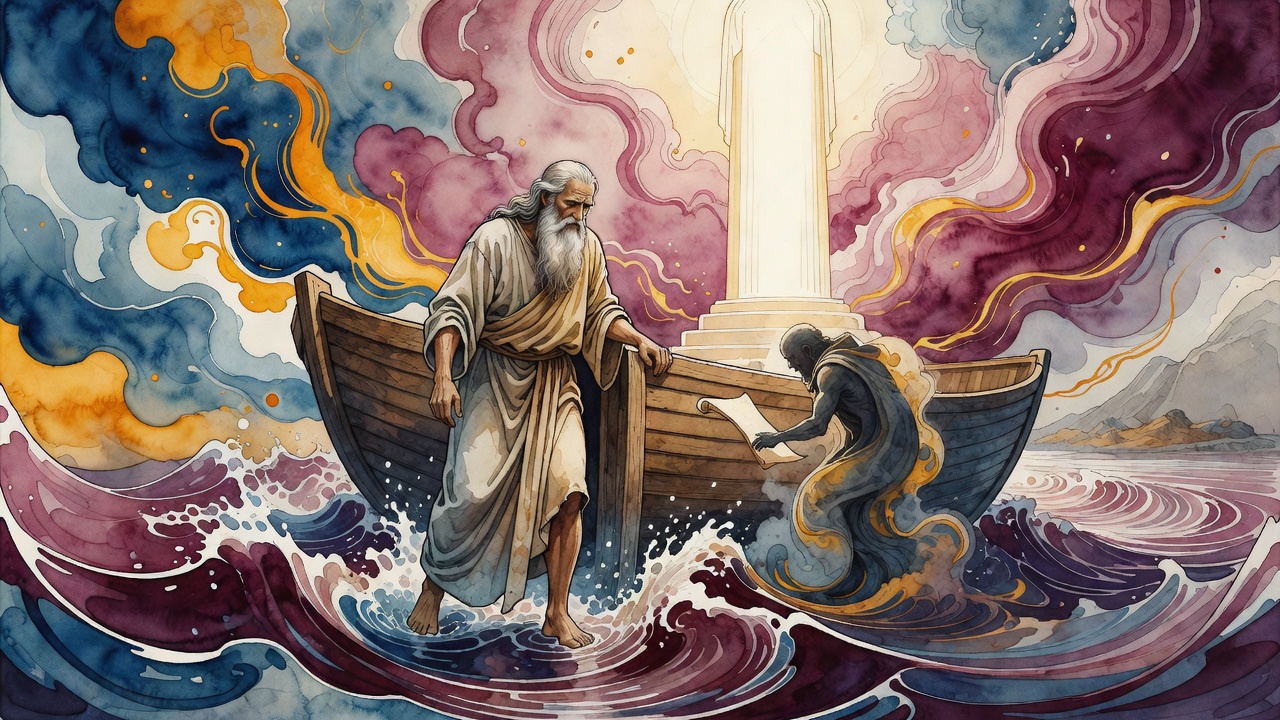
Rabbi Yohanan said Noah lacked faith and would not board until the flood reached his ankles, even as Falsehood waited at the door with a plan.
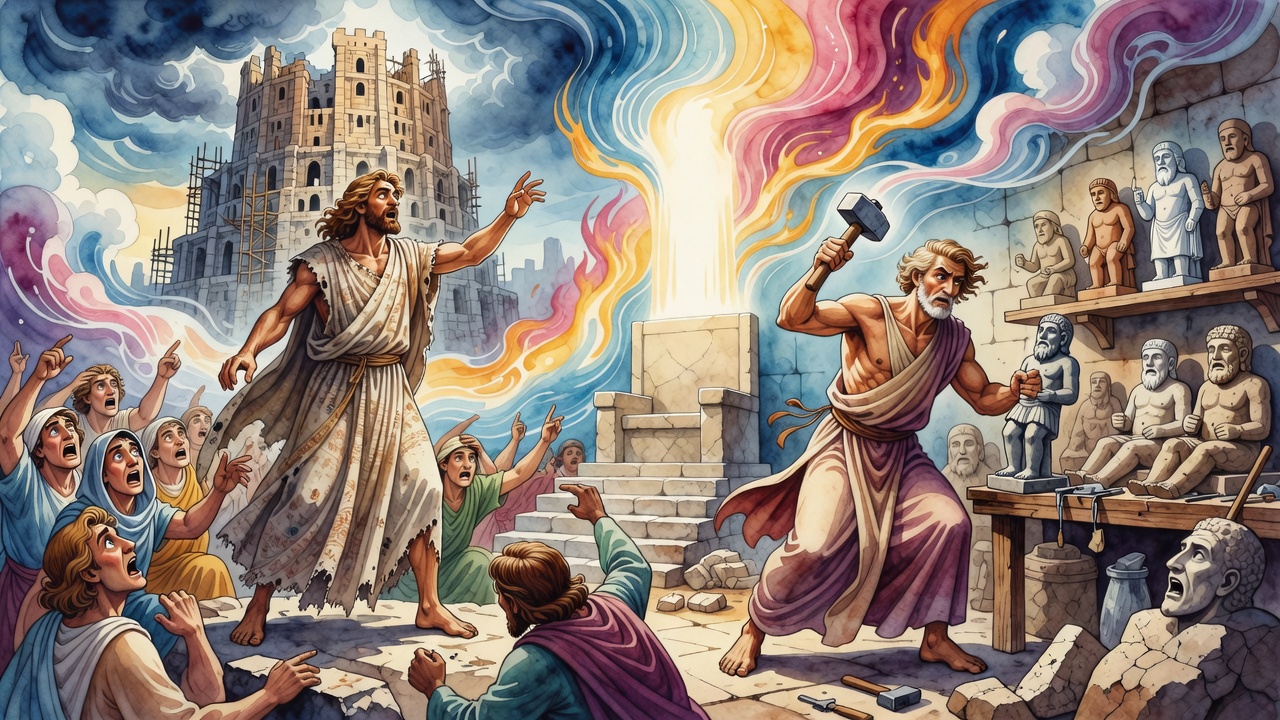
A brick fell off the tower and the whole work line sat down and wept. A man fell the same morning and nobody turned his head.
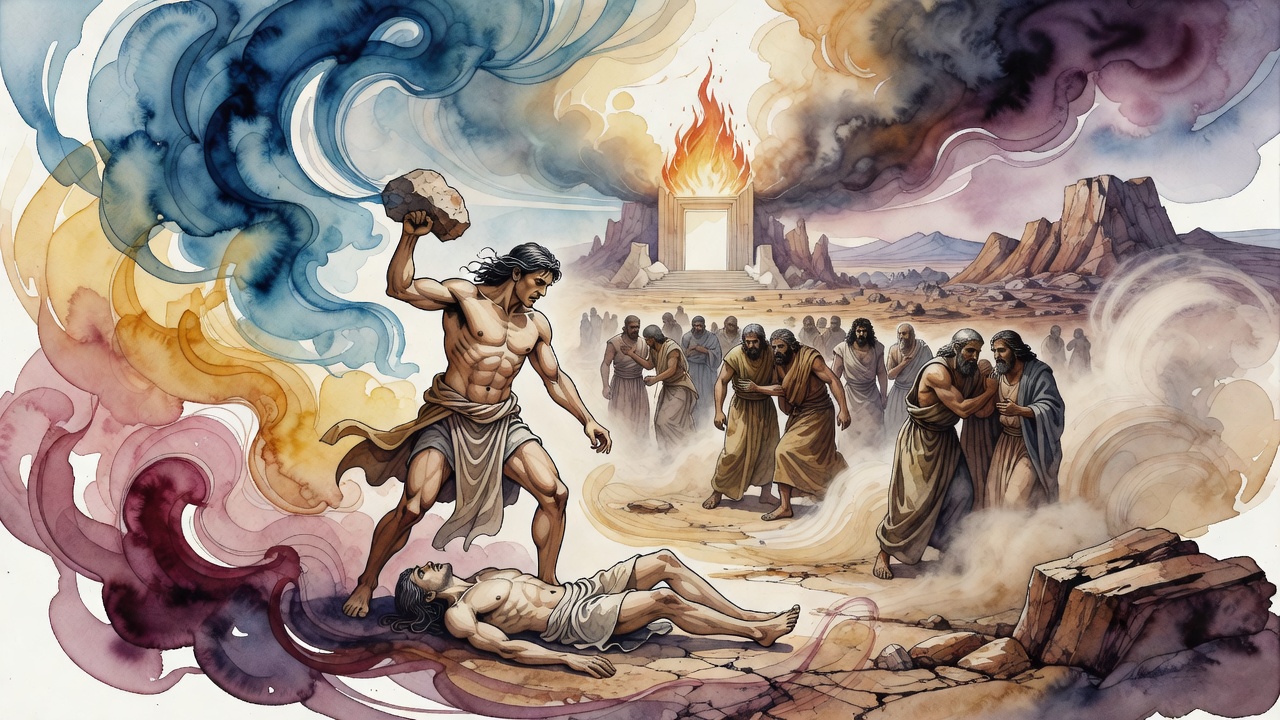
Abel had his brother pinned in the field and let him up. God did not count one death afterward. He counted every child Abel would never father.
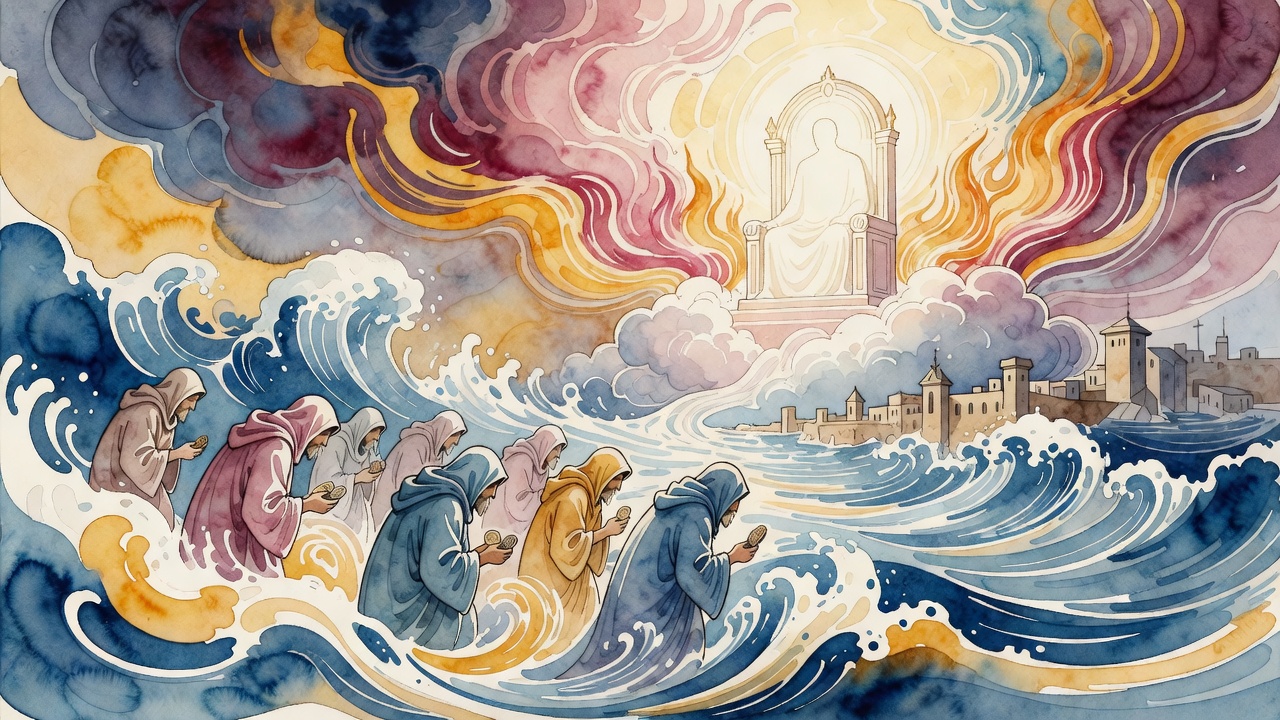
A man set down a basket of lupine beans in the market. Neighbors pinched it empty by dusk. No court would hear a case that small.
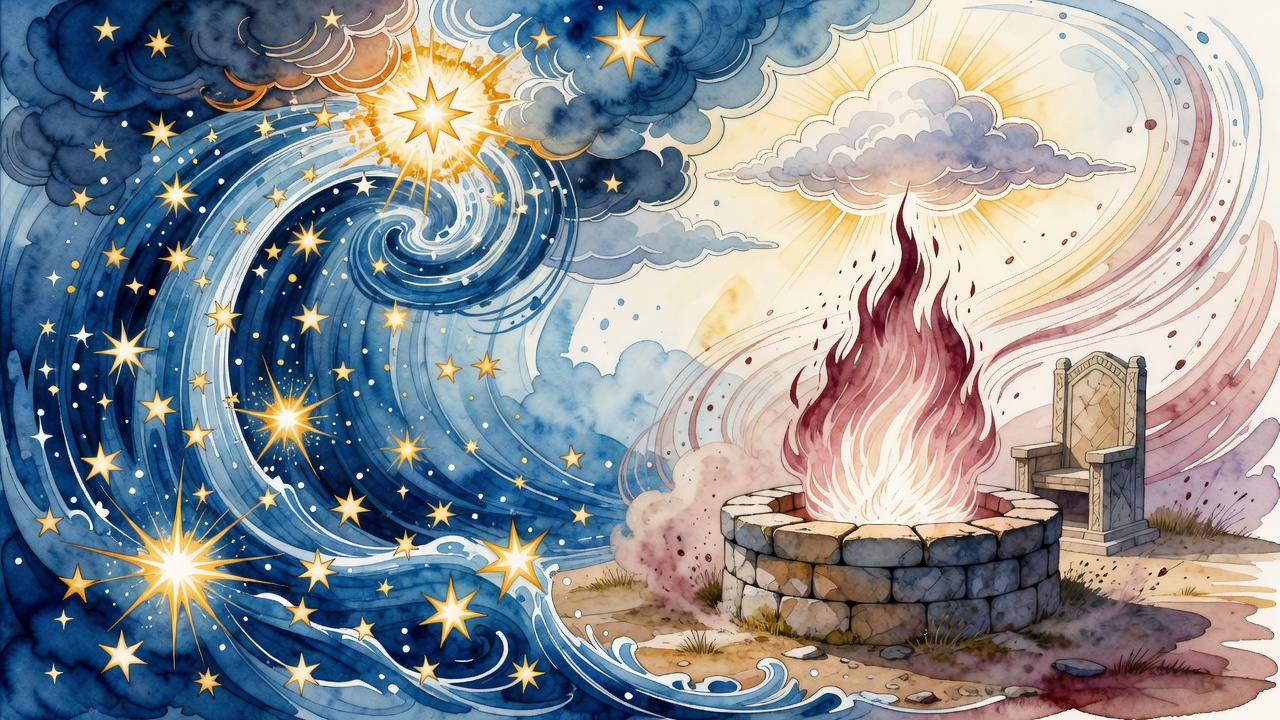
The same God who pulled stars from the sky to drown the world later swore an oath beside a well, and both acts bound heaven to earth.
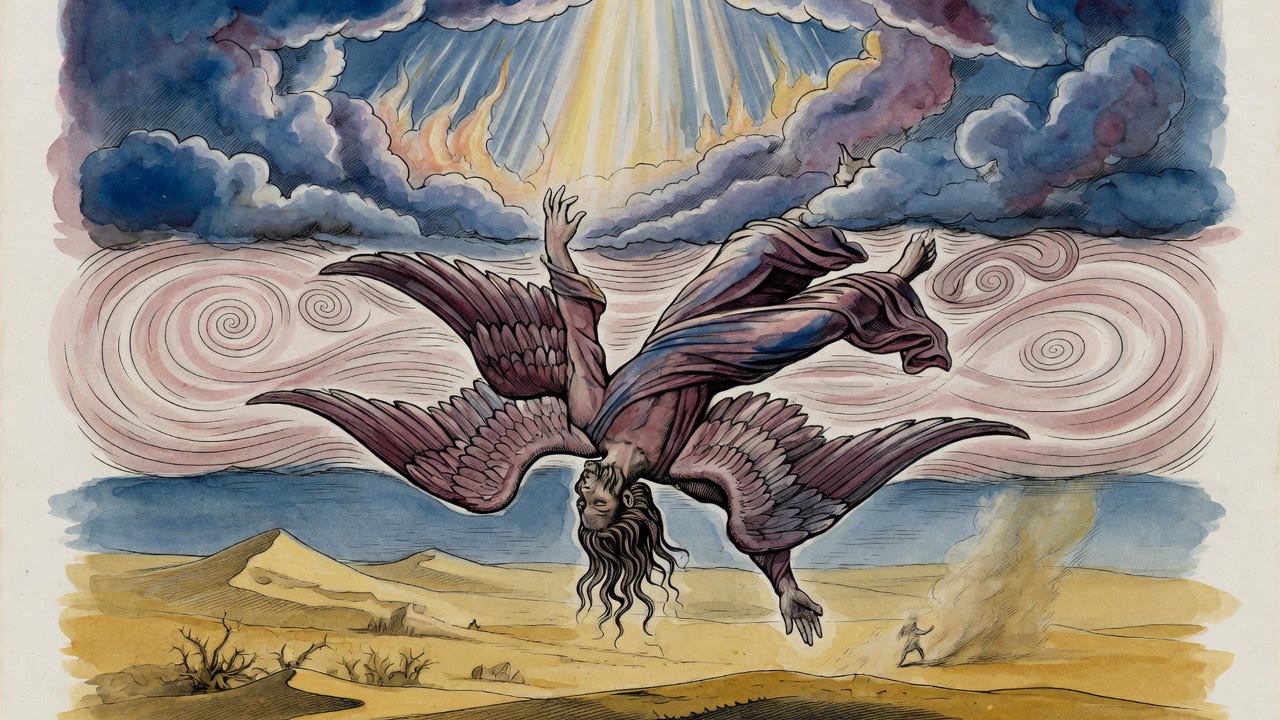
Shamchazai and Azael descended to prove angels could master the earth. One hangs in repentance between the worlds; the other became a name in the desert.
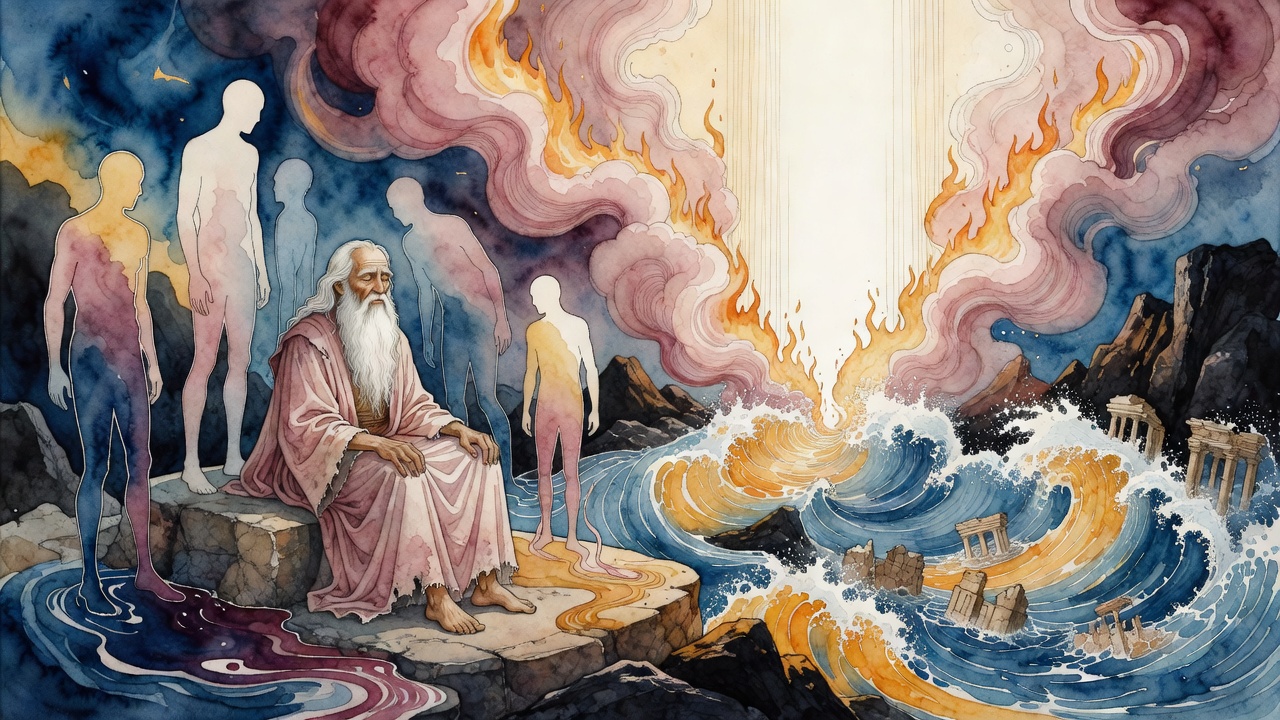
An old man dreams the centuries draining out of human bodies until a life of seventy years is called long, and a drowned world answers back.
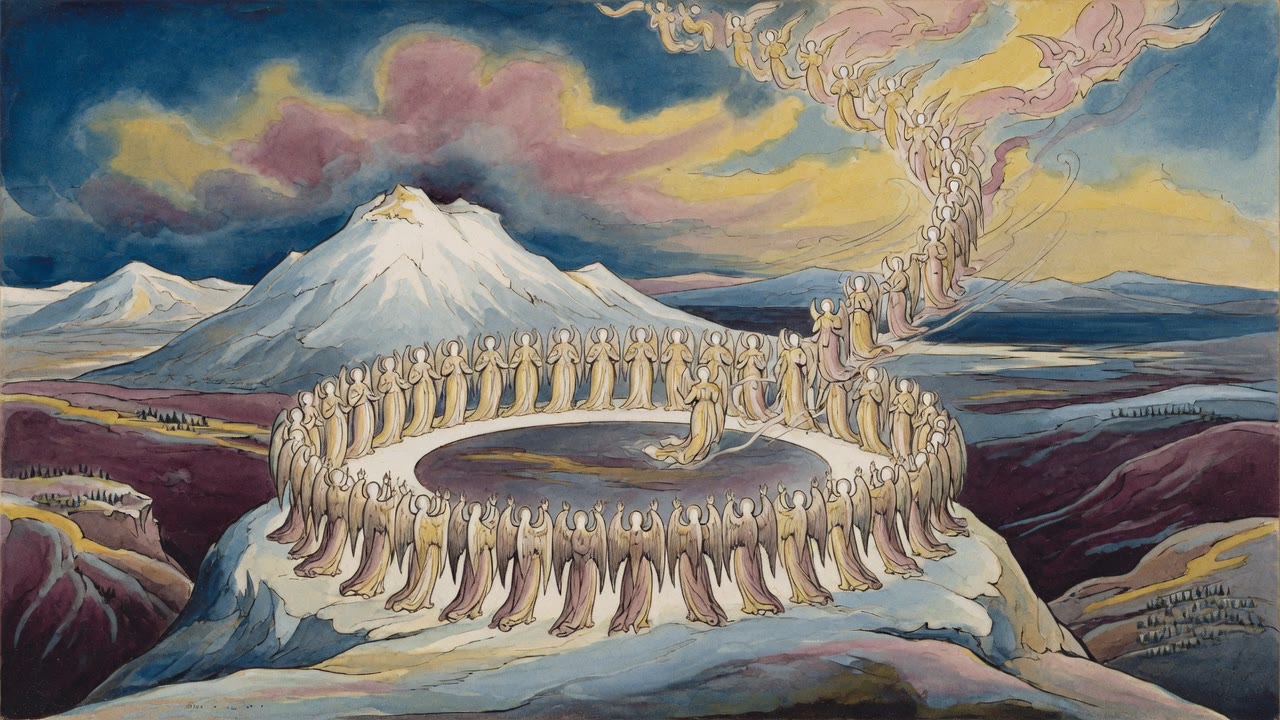
Two hundred angels swore an oath together on Mount Hermon. Azazel taught men to forge blades and women to paint their faces. Raphael buried him upside down.
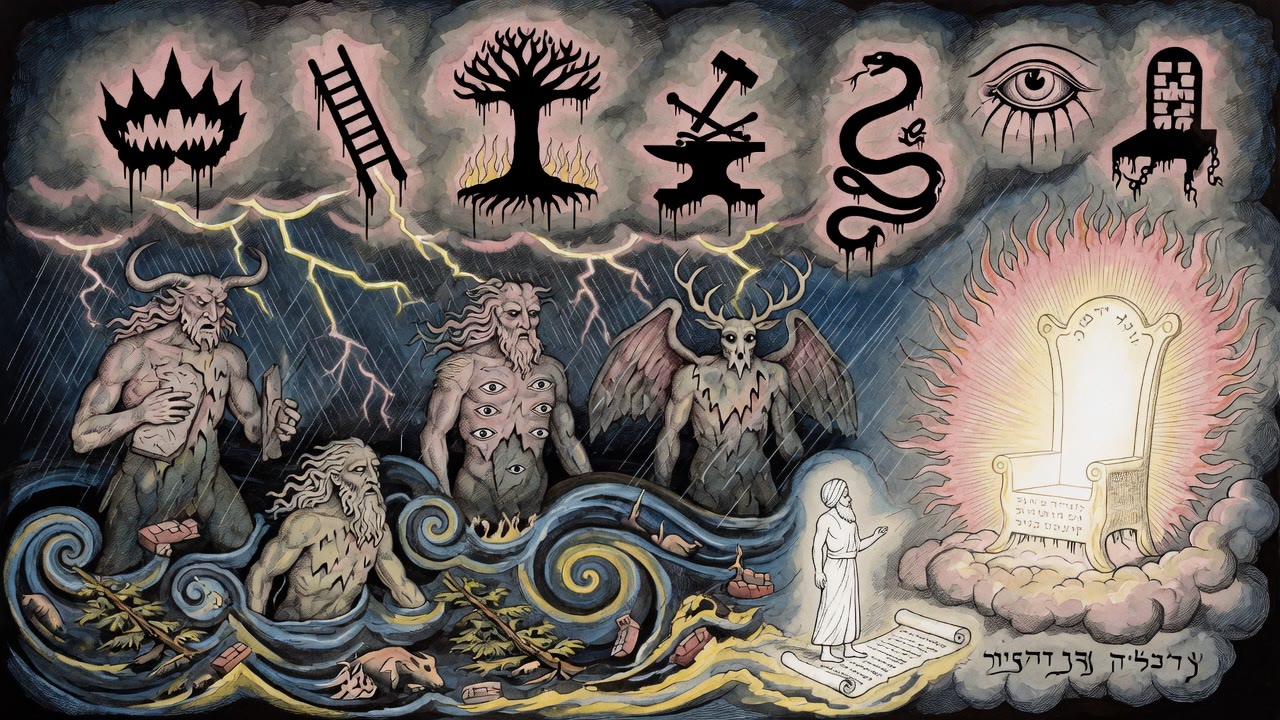
Before the waters rose, titans ruled a fertile earth. When the deep broke open, the giants jammed their feet into it and drowned defying God.
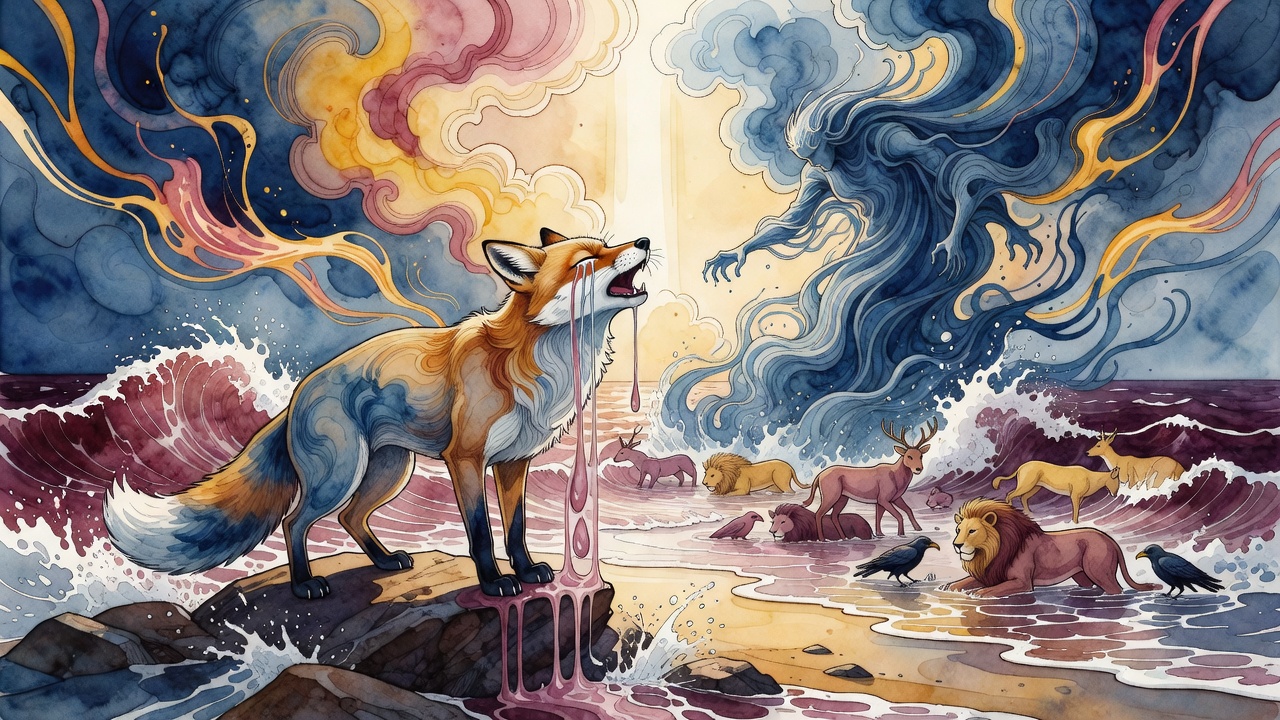
When the Angel of Death came to drown a pair of every beast, the fox alone refused to die, weeping over a mate he never had.
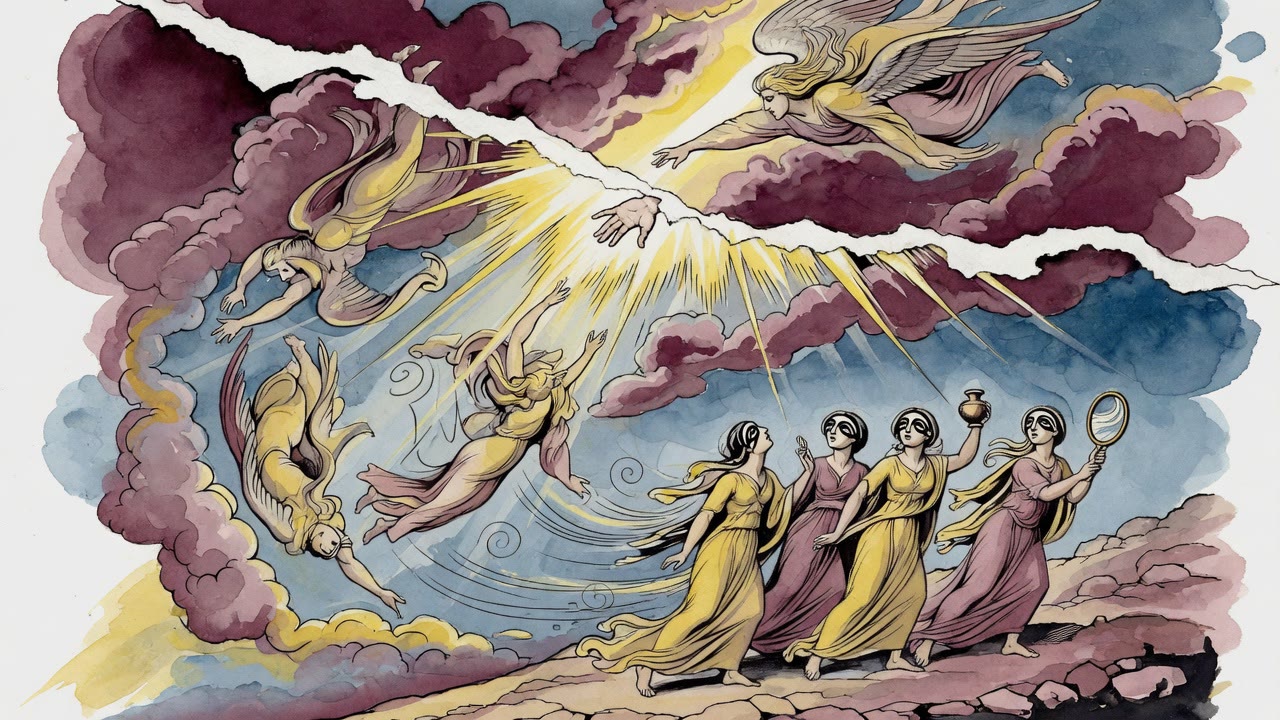
The women lined their eyes with kohl and walked to be seen, and the Watchers leaned over heaven's edge until they were no longer leaning but falling.
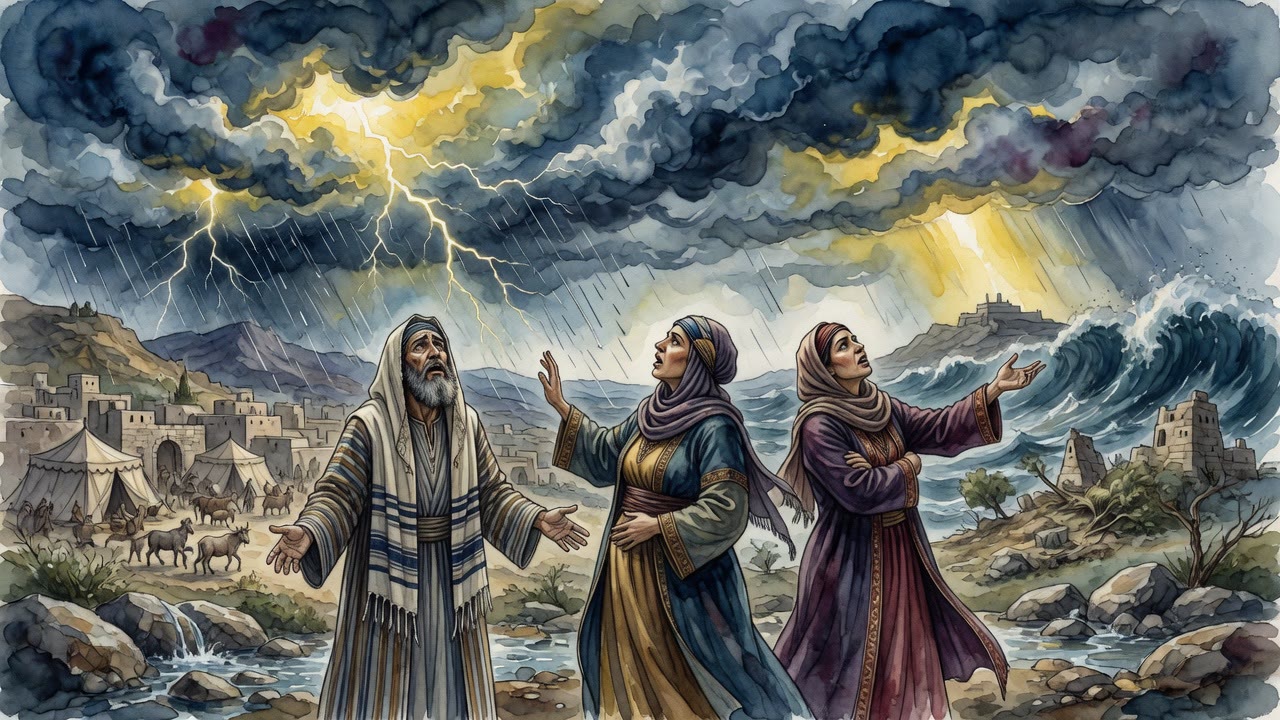
Lamech swore the boy in his arms would comfort a cursed world, but his wives had already decided no cradle was worth filling before the Flood.
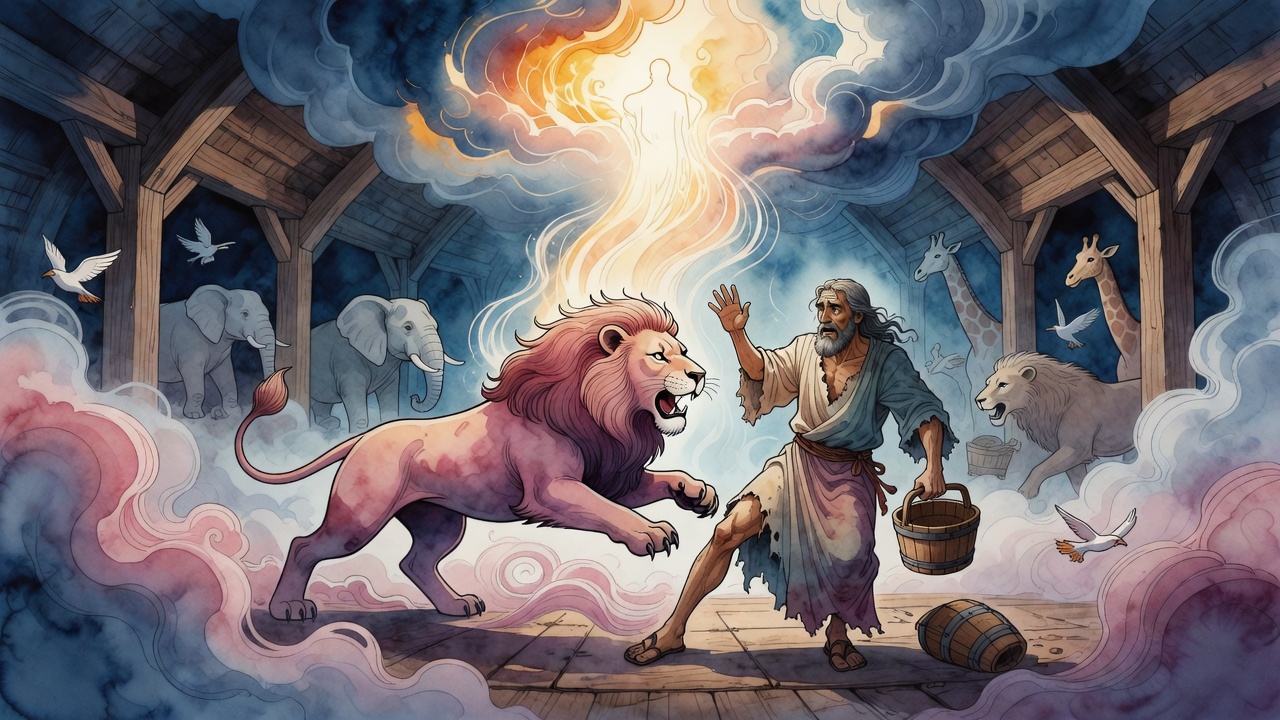
For twelve months Noah feeds every beast on its own clock, never sleeping, until the night he comes late and the lion mauls him in the dark.
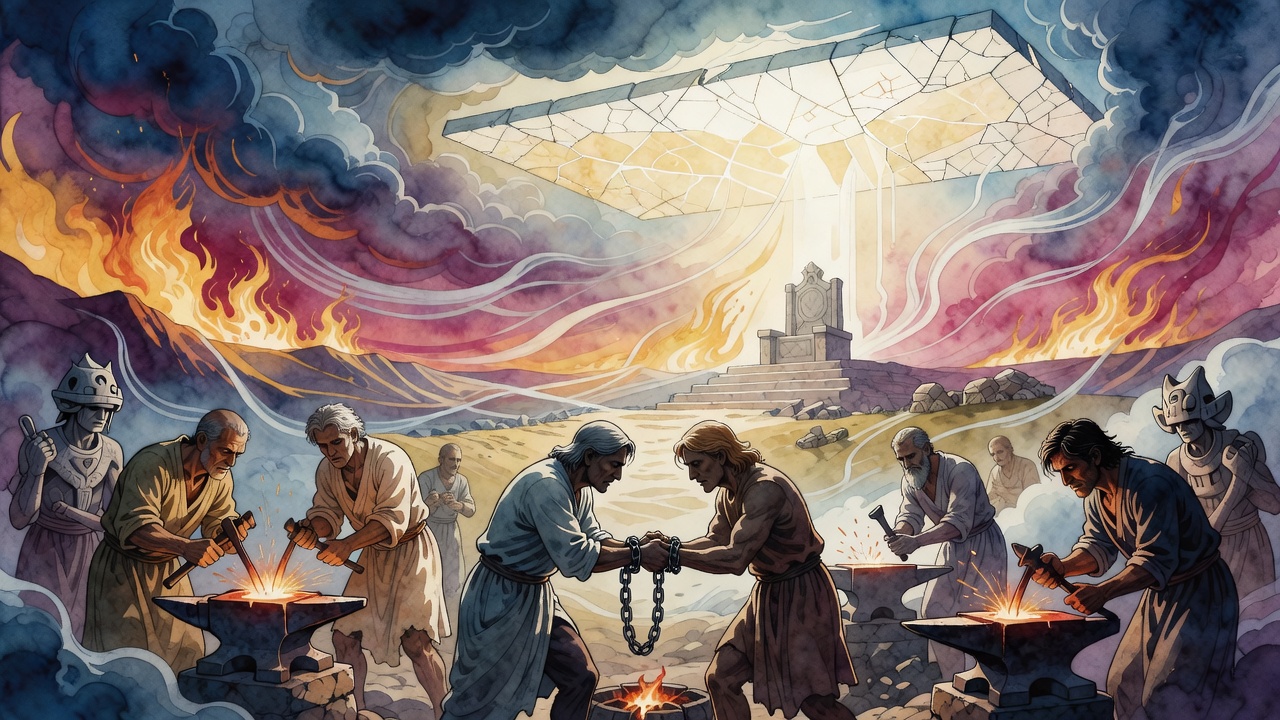
'Ur named his new city after himself so every passerby would speak it. In the same workshops men poured metal into molds and bowed to the faces they made.
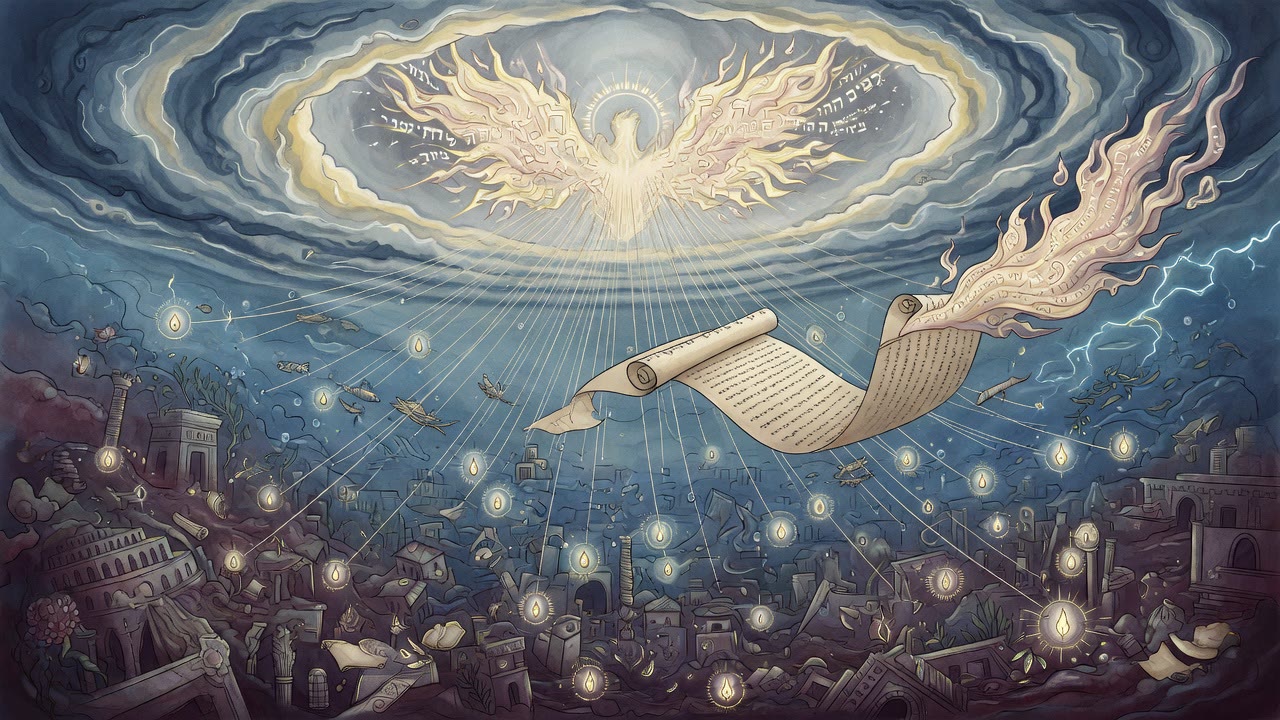
Noah outlived the rain by 350 years. Six centuries on, a census counted 714,100 men, the regrowth of a doomed world from a single felled tree.
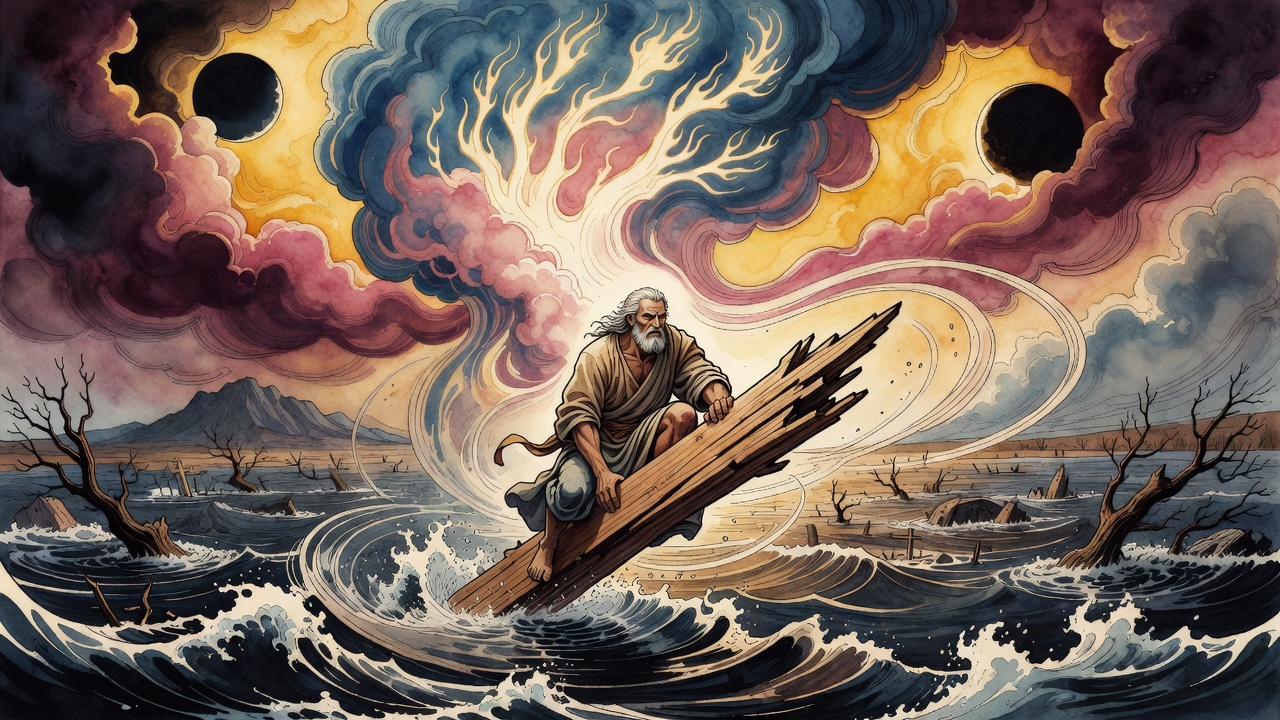
The sun and moon went dark for a year as the deep burst, and Noah rode a splinter of cedar across a drowned world toward Lubar.
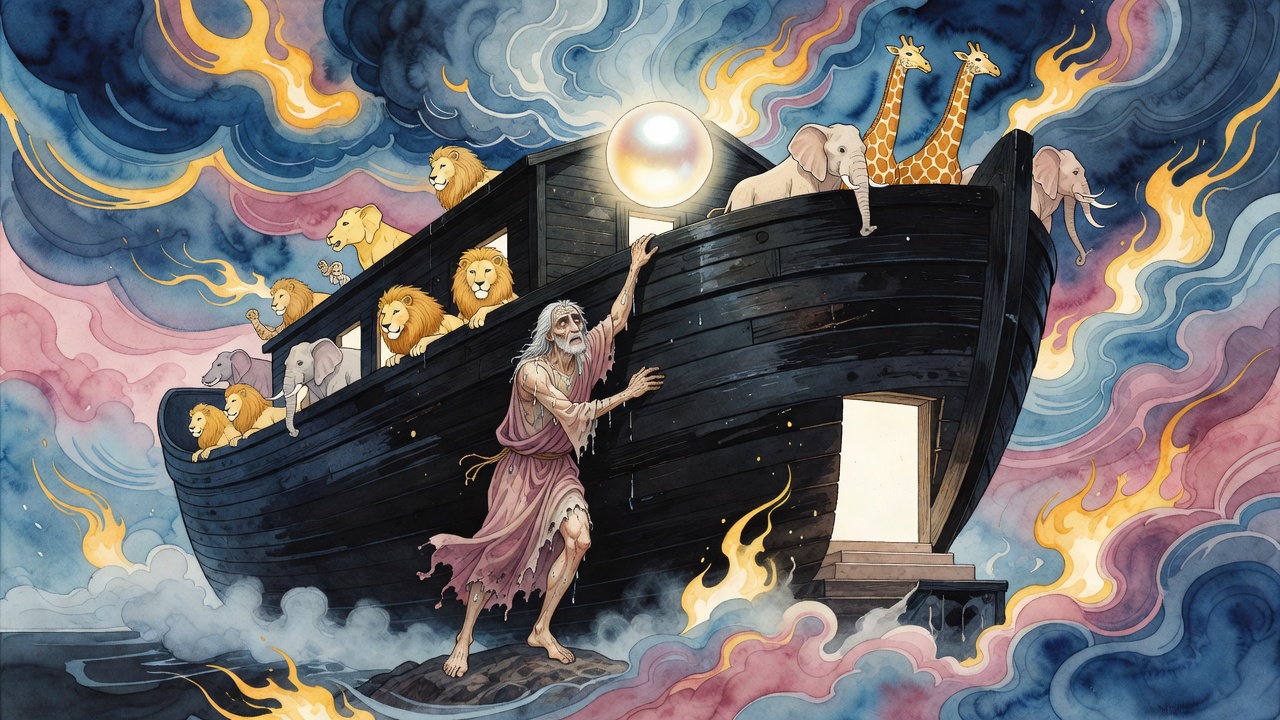
A single glowing pearl is Noah's only clock while he climbs a black ark for a year, feeding every beast on its own hour until the work nearly kills him.
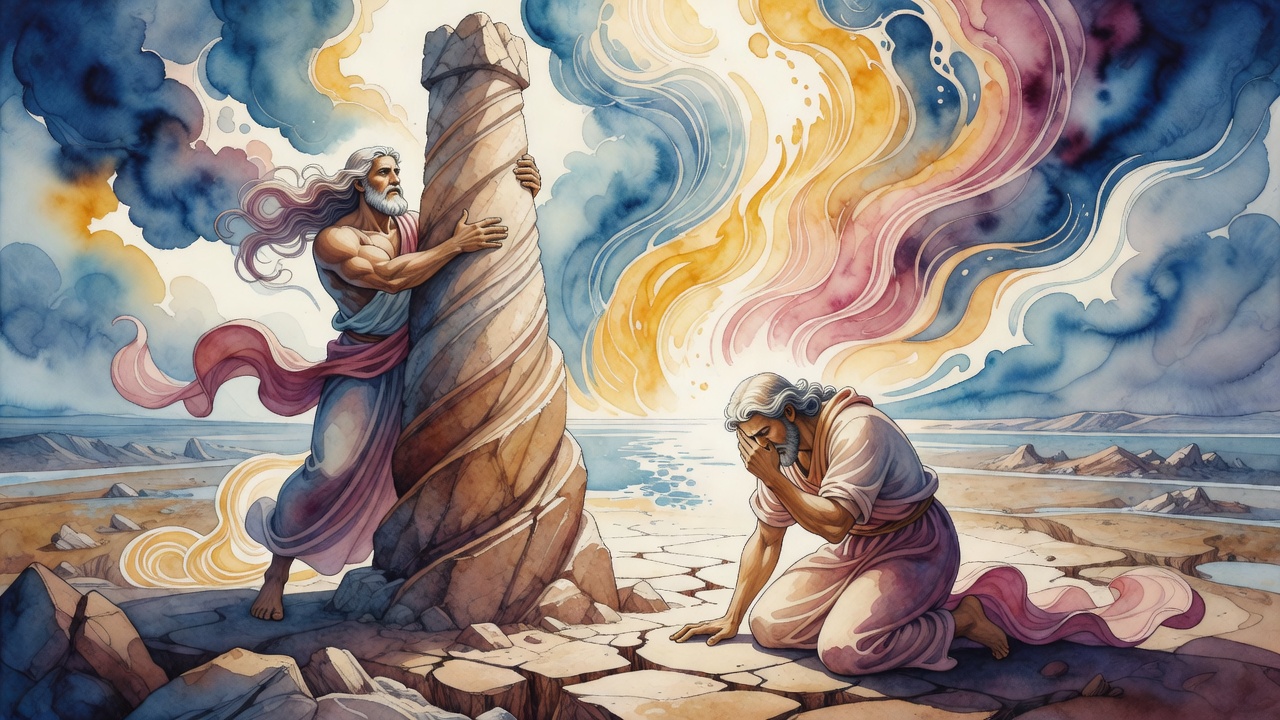
The flood left the earth blank, and the sons of the ark began writing on it, one prince raising a tower, one grandson earning a curse of his own.
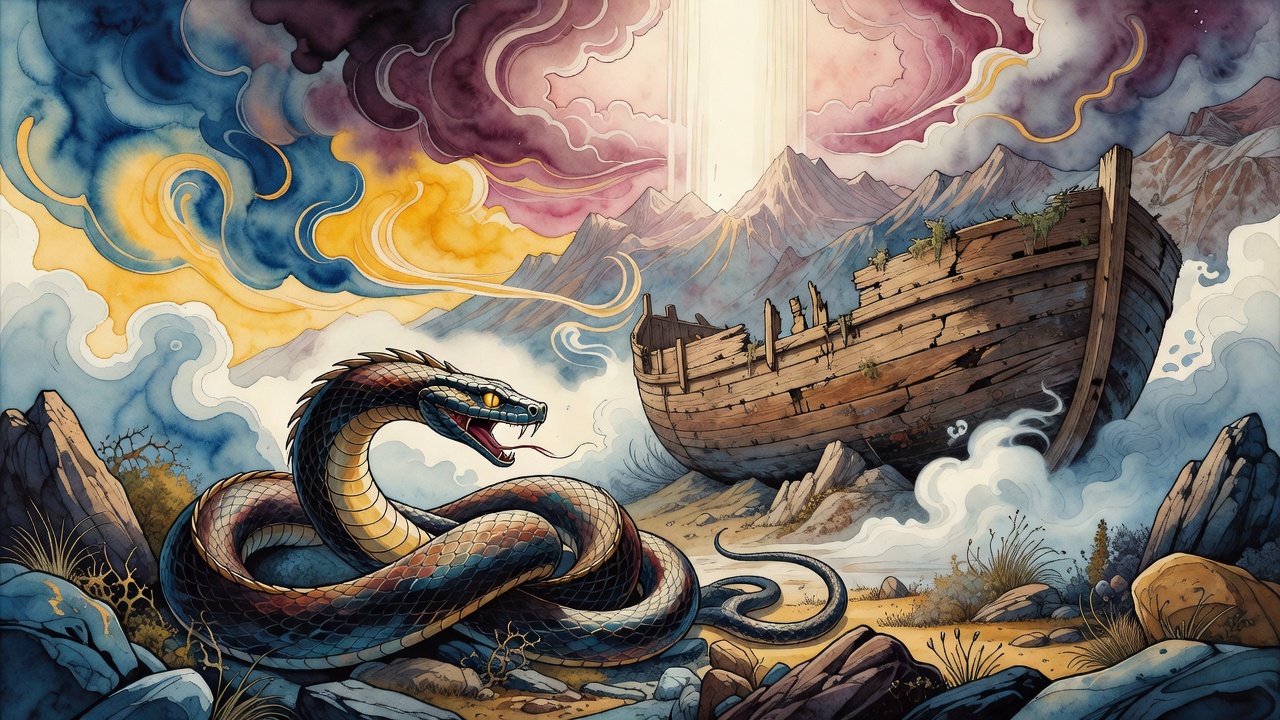
Every animal in the first garden shared one language, and the serpent used it. Long after, villagers in Armenia pried bitumen off the hull to wear as charms.
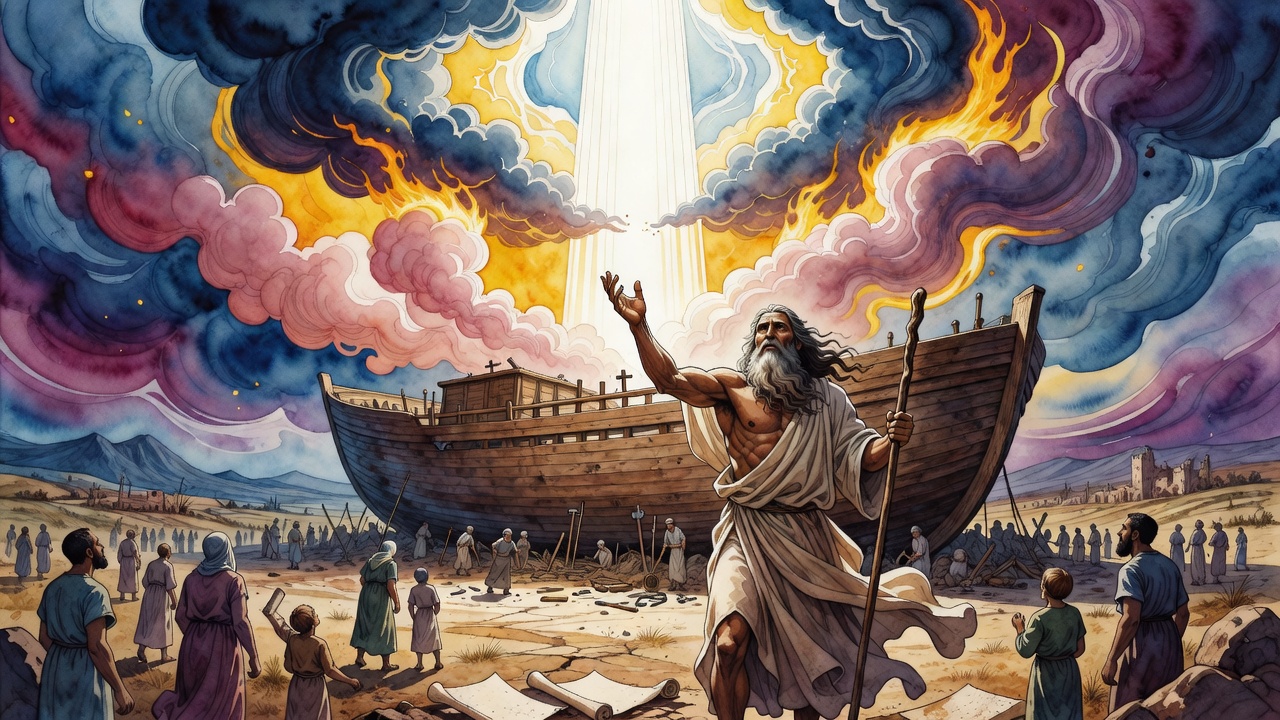
God showed Noah the blueprints himself, and the work took fifty-two years so a doomed generation might still turn while the floating city rose.
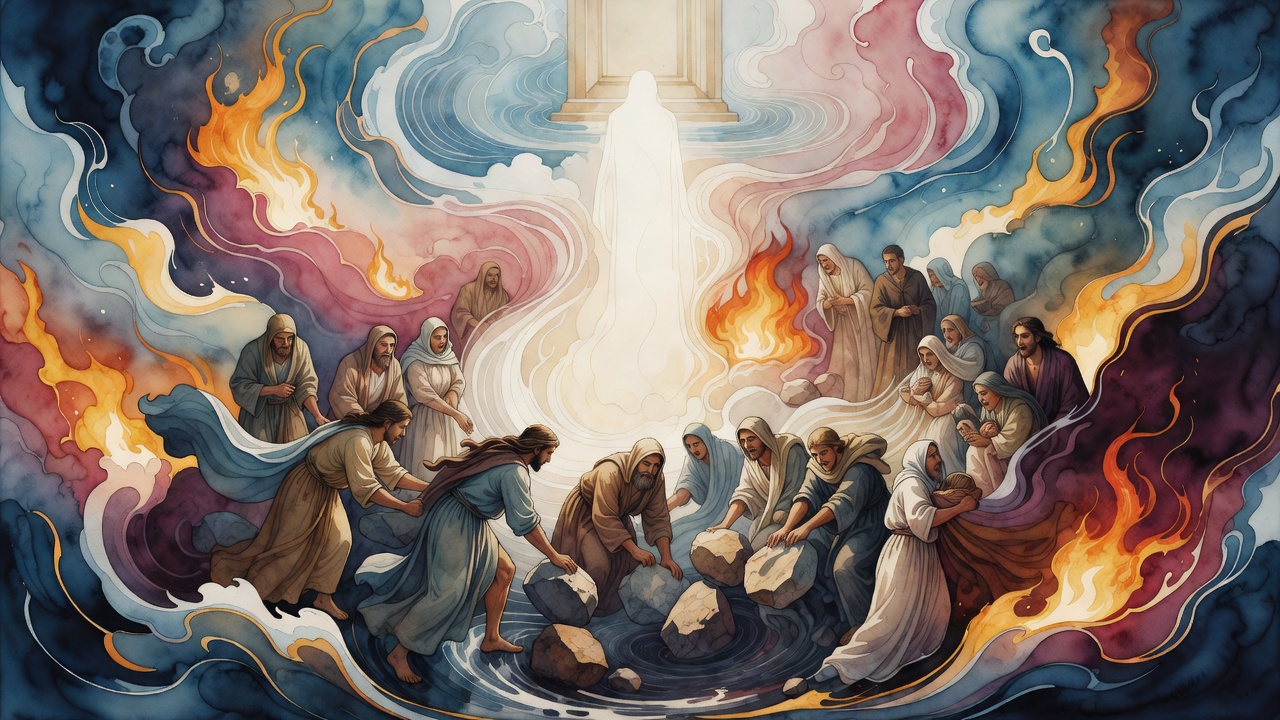
Abundance made them cruel. When the deep opened they stuffed infants into the geysers, tried to flip the ark, and met fire from above.
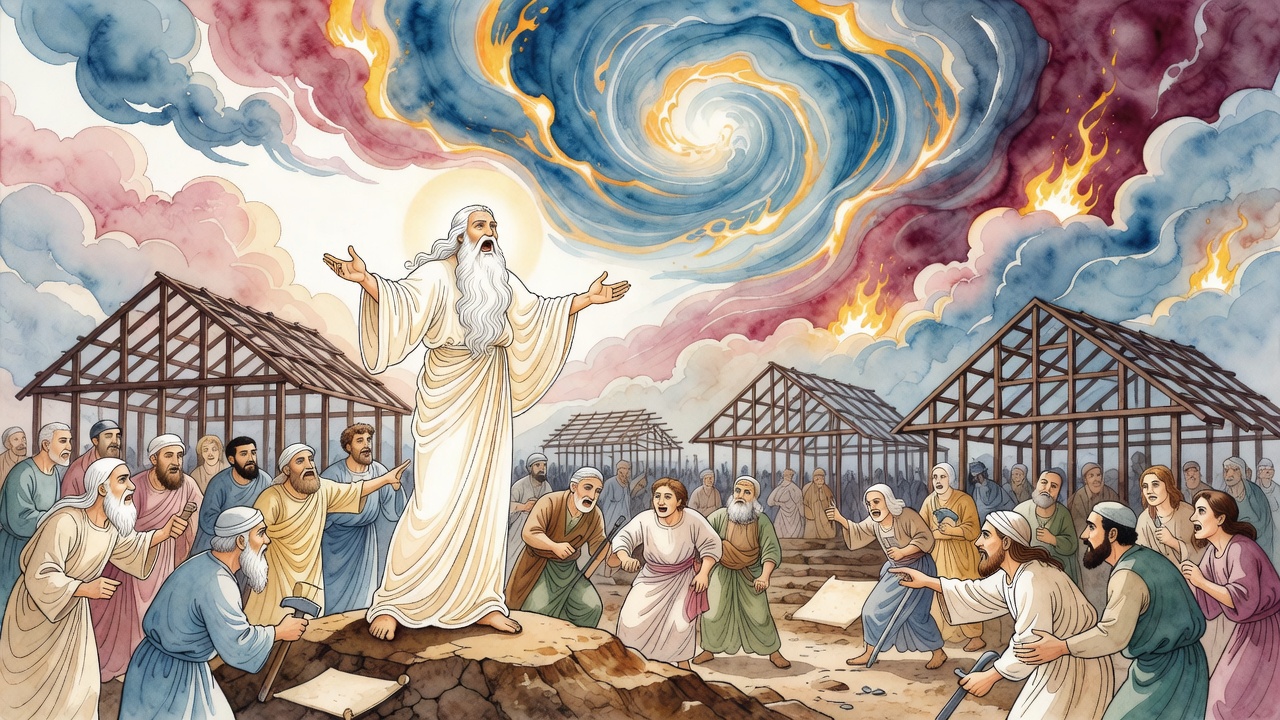
For one hundred twenty years Noah warned of water. The crowds mocked and boasted they would roof the earth with iron if fountains burst from below.
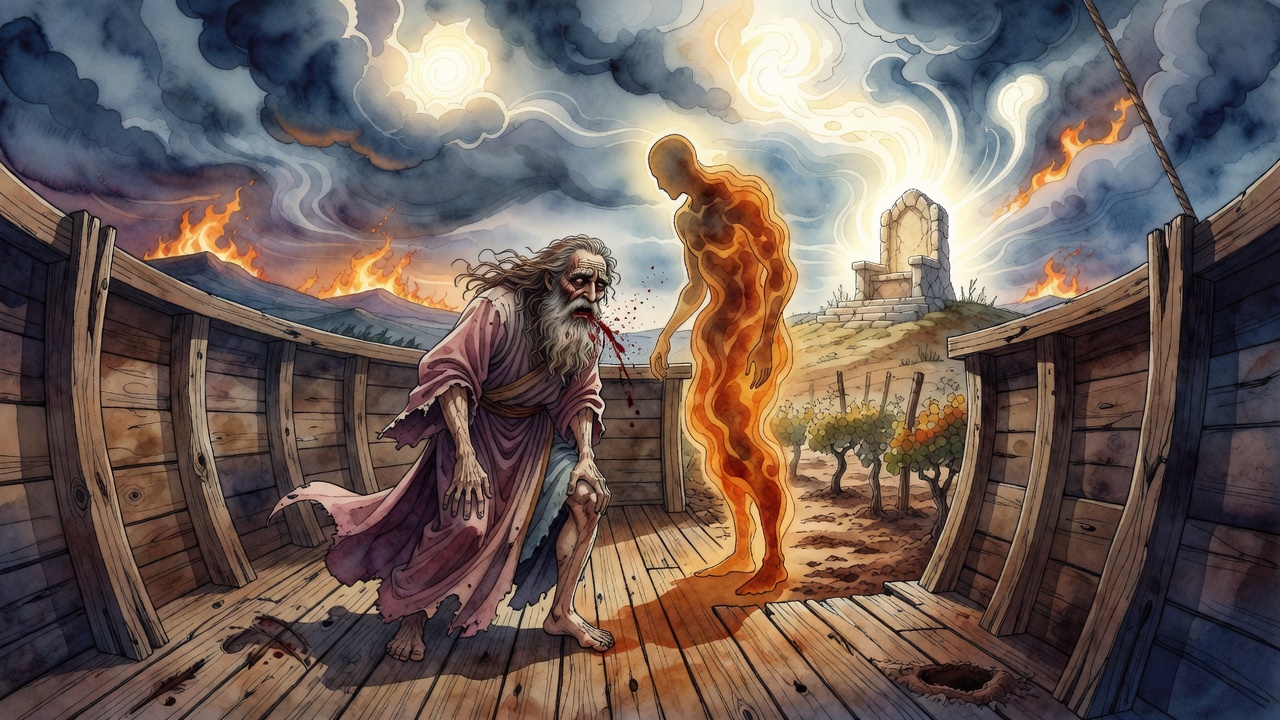
Twelve months without sleep, a lion's bite, and a prayer from the ark as prison. Noah left coughing blood, then partnered with Satan to plant a vineyard.
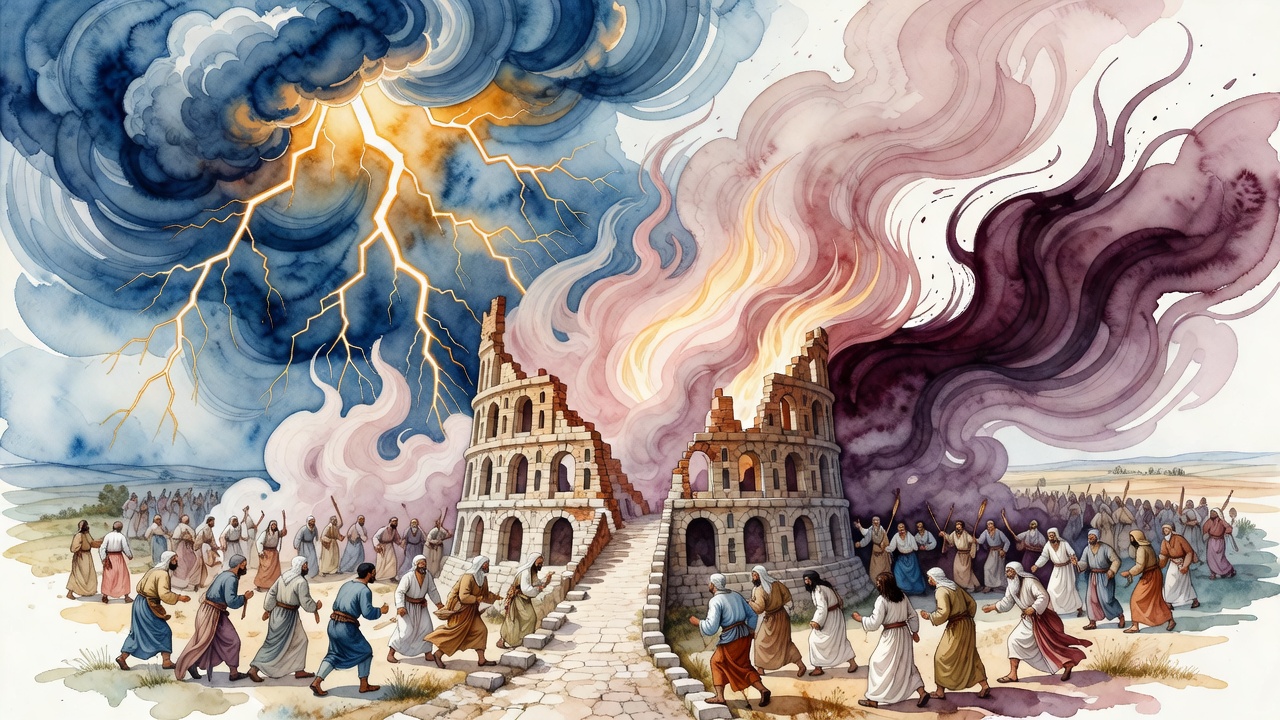
After the flood they still spoke with one mouth. On the plain of Shinar the crews split, and one of them brought axes for the sky.
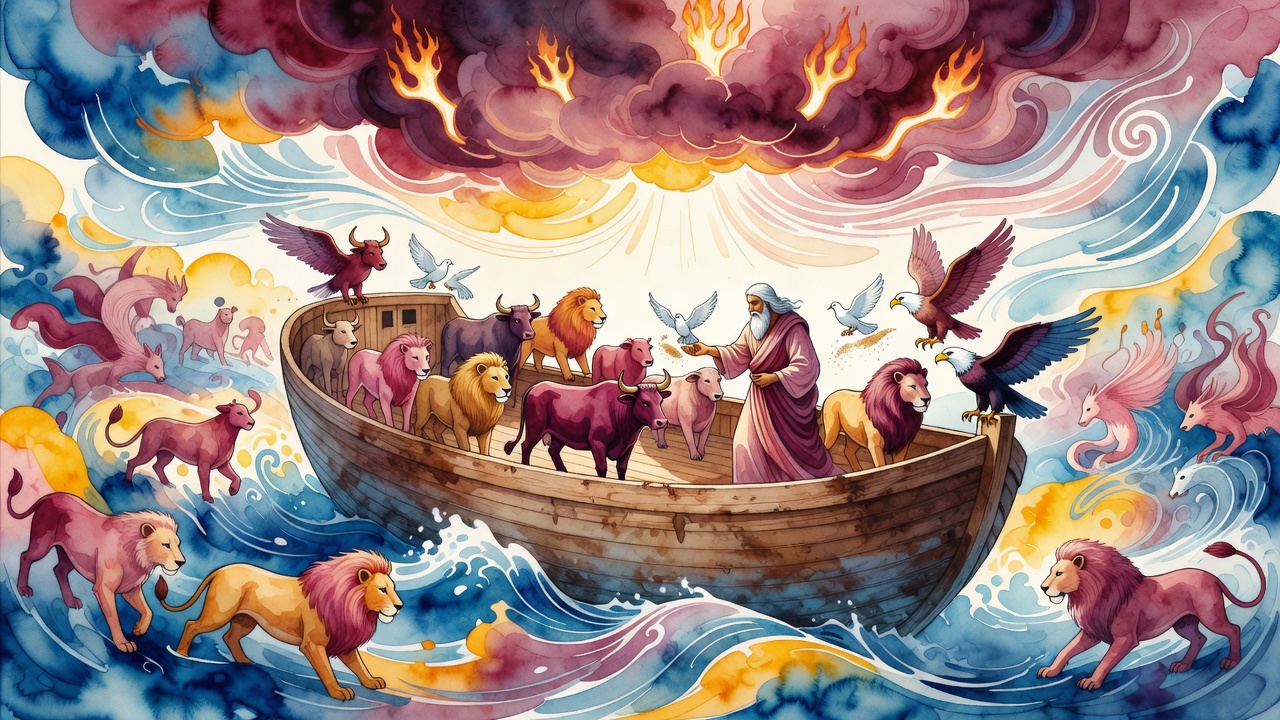
The neighbors asked what the cedar saplings were for. Noah told them the truth. They laughed, and he went on watering the trees.
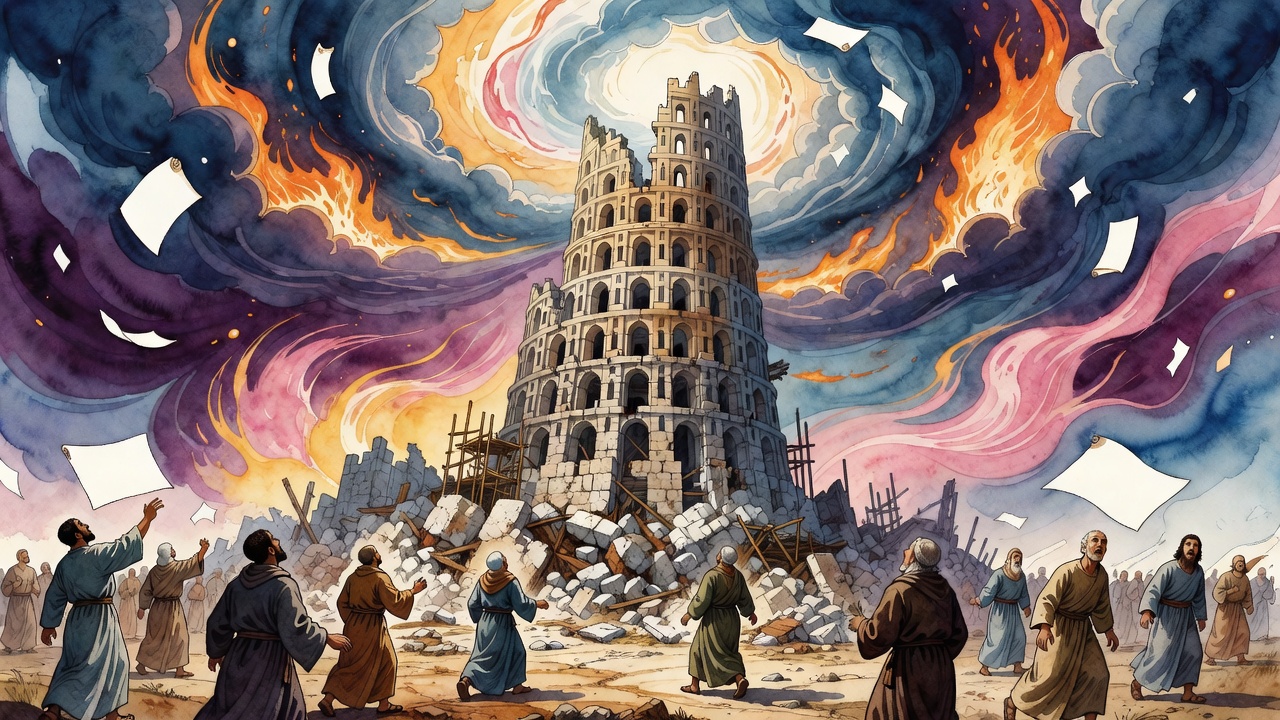
The tower was still climbing when speech broke. A man called for tar and was handed a tool he did not know how to use.
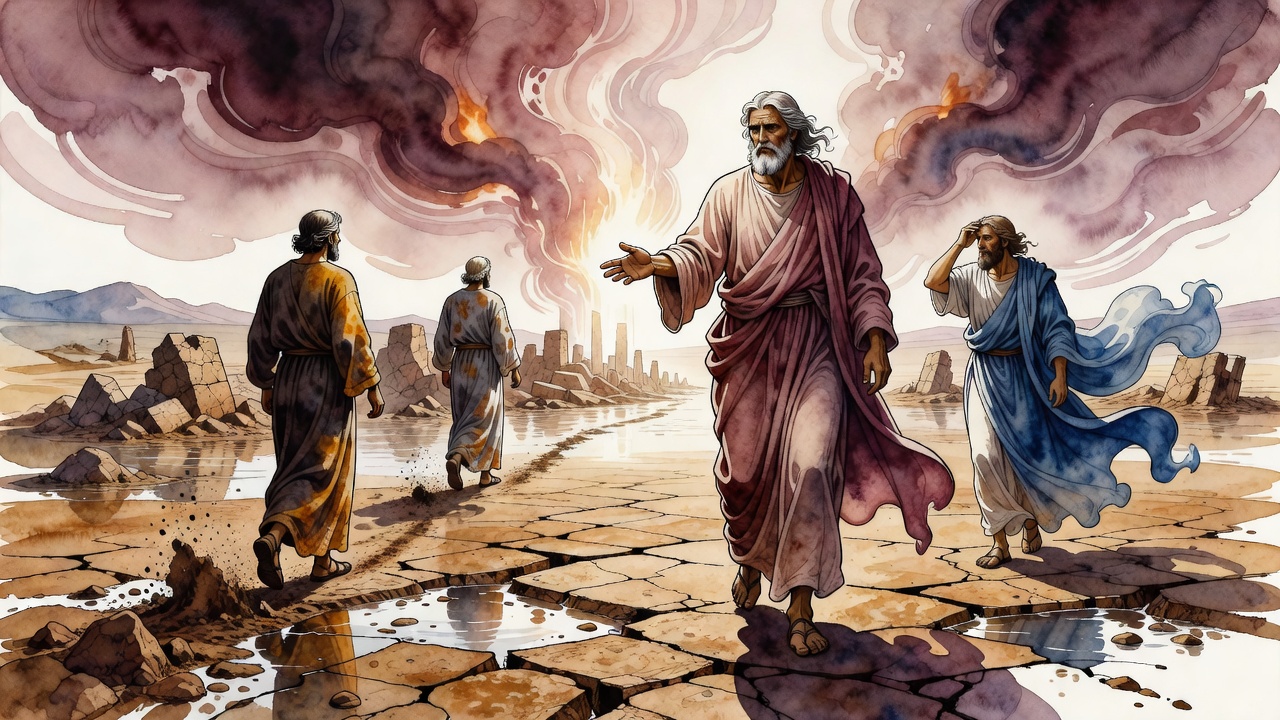
The mud still held the old world's bones. Noah looked at his sons. He told them they had already started walking toward ruin.
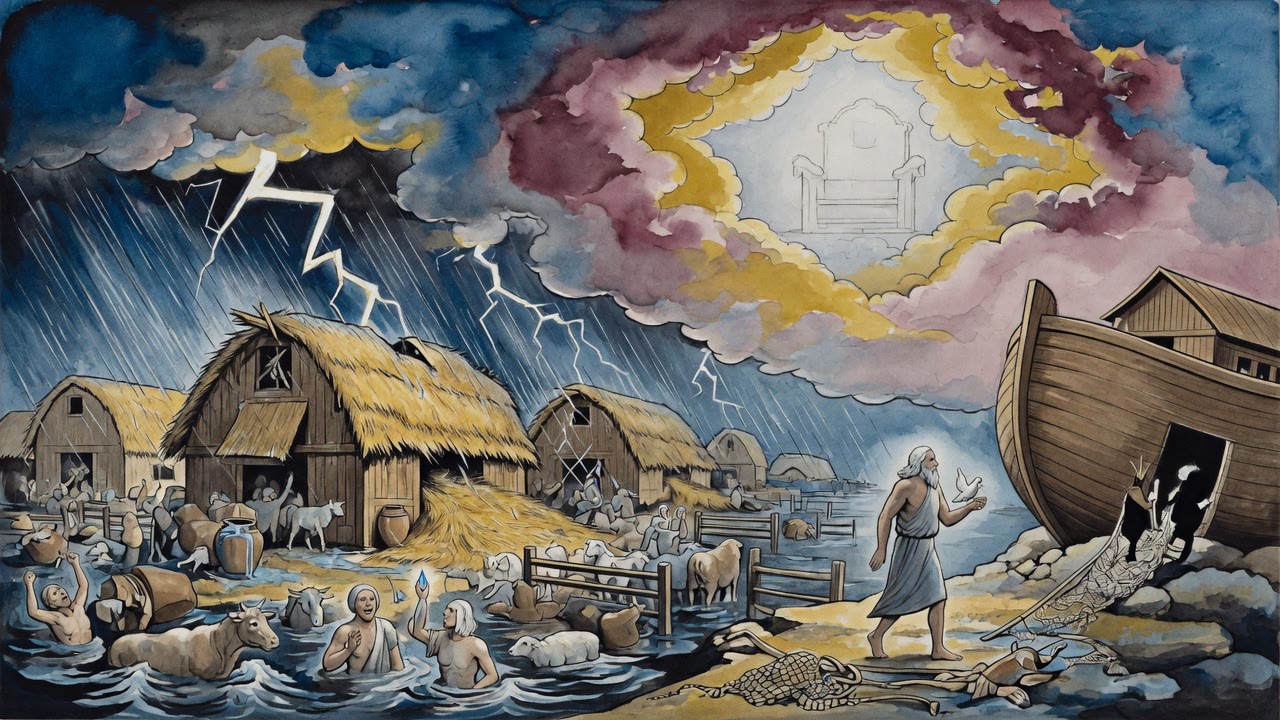
A mist came up and watered the whole earth by itself, so they asked heaven for one drop of rain and nothing else. Noah later said he was no better.
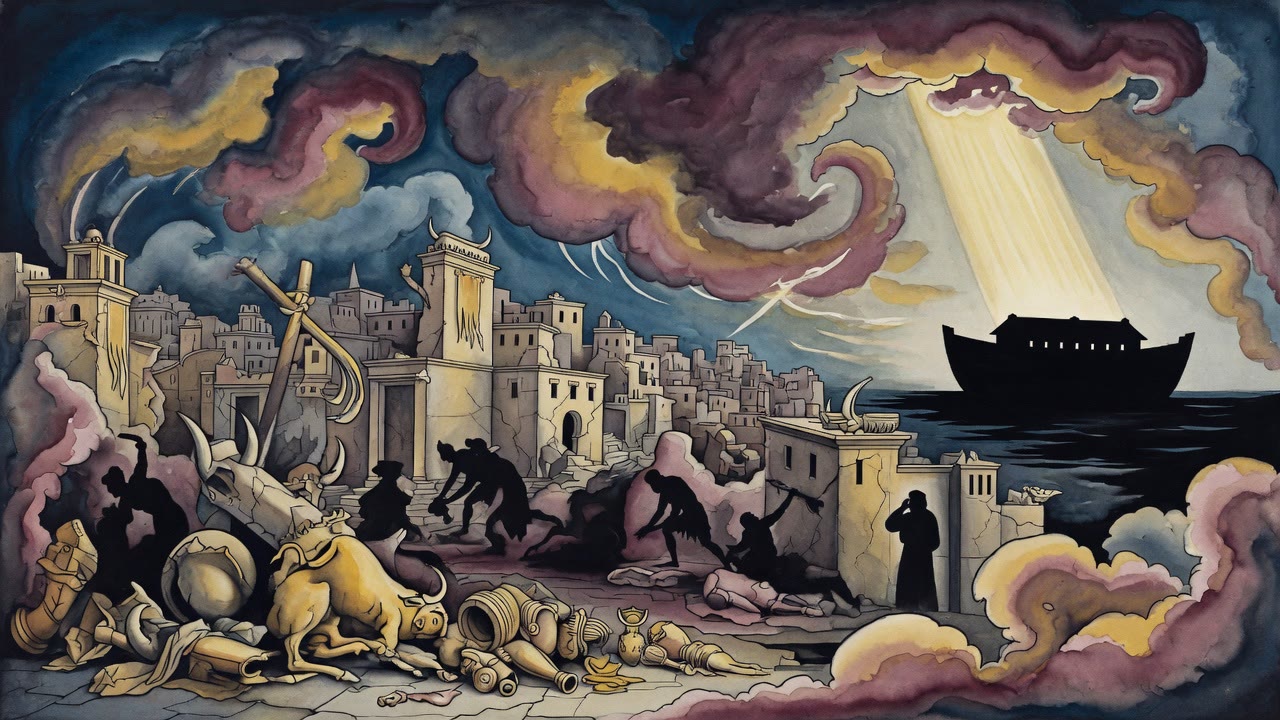
Before the rain, the earth filled with hamas. Rabbi Levi heard idolatry, bloodshed, and sexual ruin in one word, and only Noah found favor.
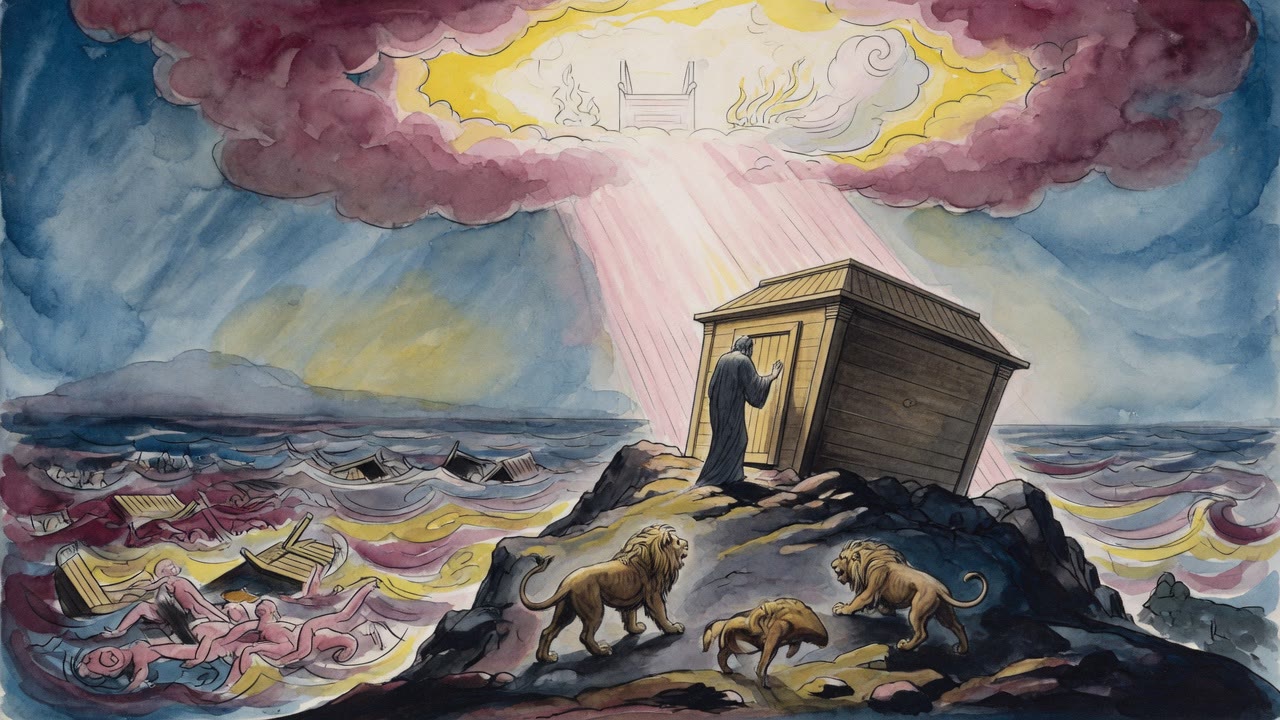
Each man went and got his son. They pressed the children into the springs as stoppers. The water came around them and kept coming.
