480 myths · Page 4 of 16
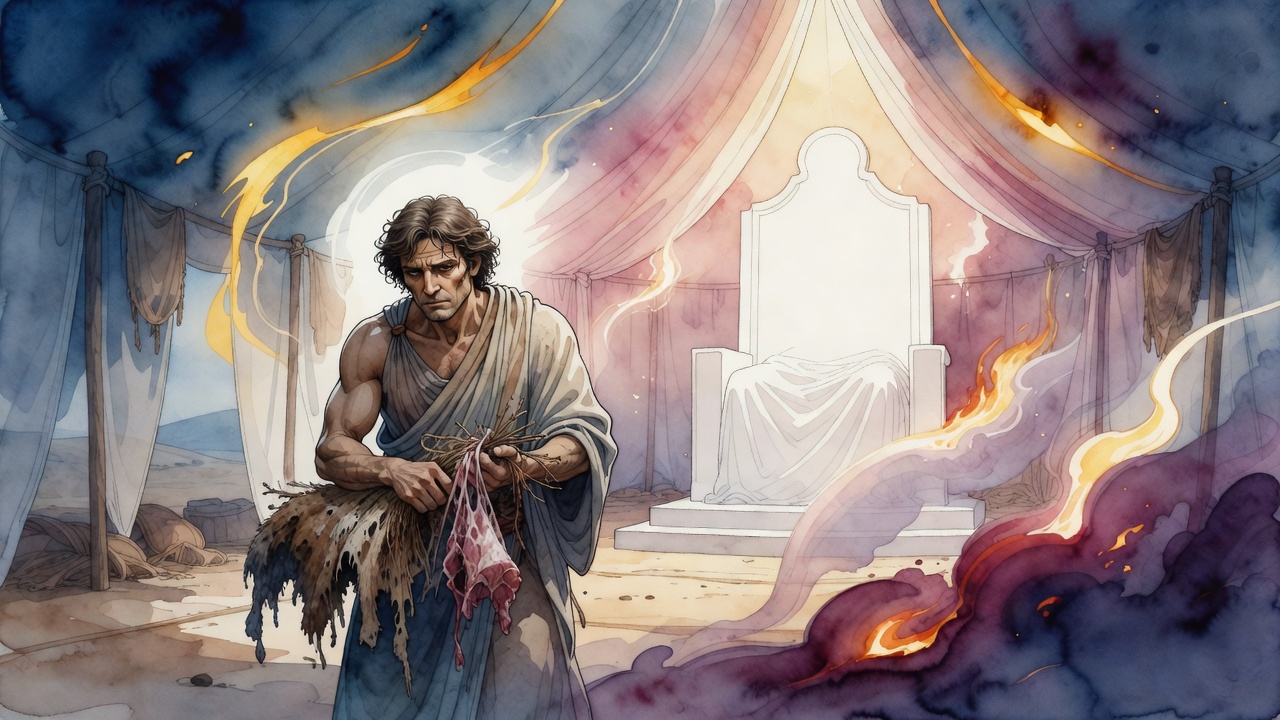
Esau came back four hours too late, carrying false venison and finding that Jacob had already taken the blessing meant for him.
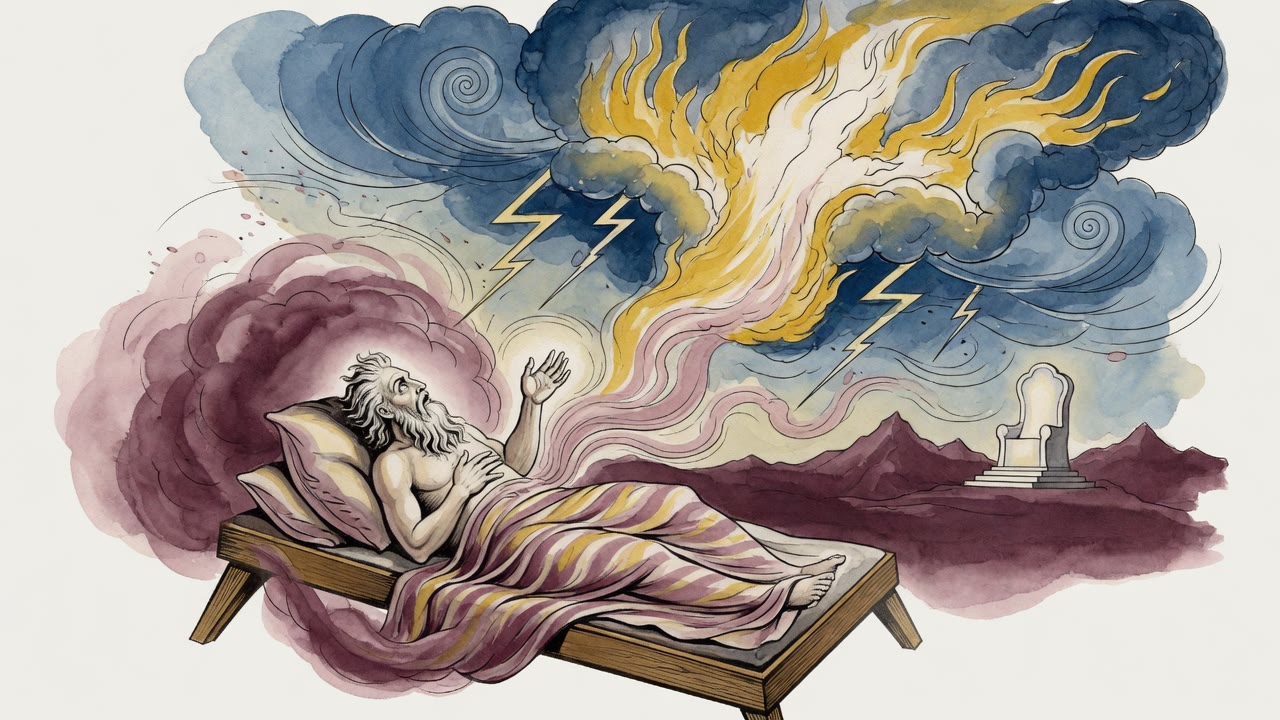
Before Jacob, a man could still be talking when death took him. He asked for a warning. The first fever came to his own bed.
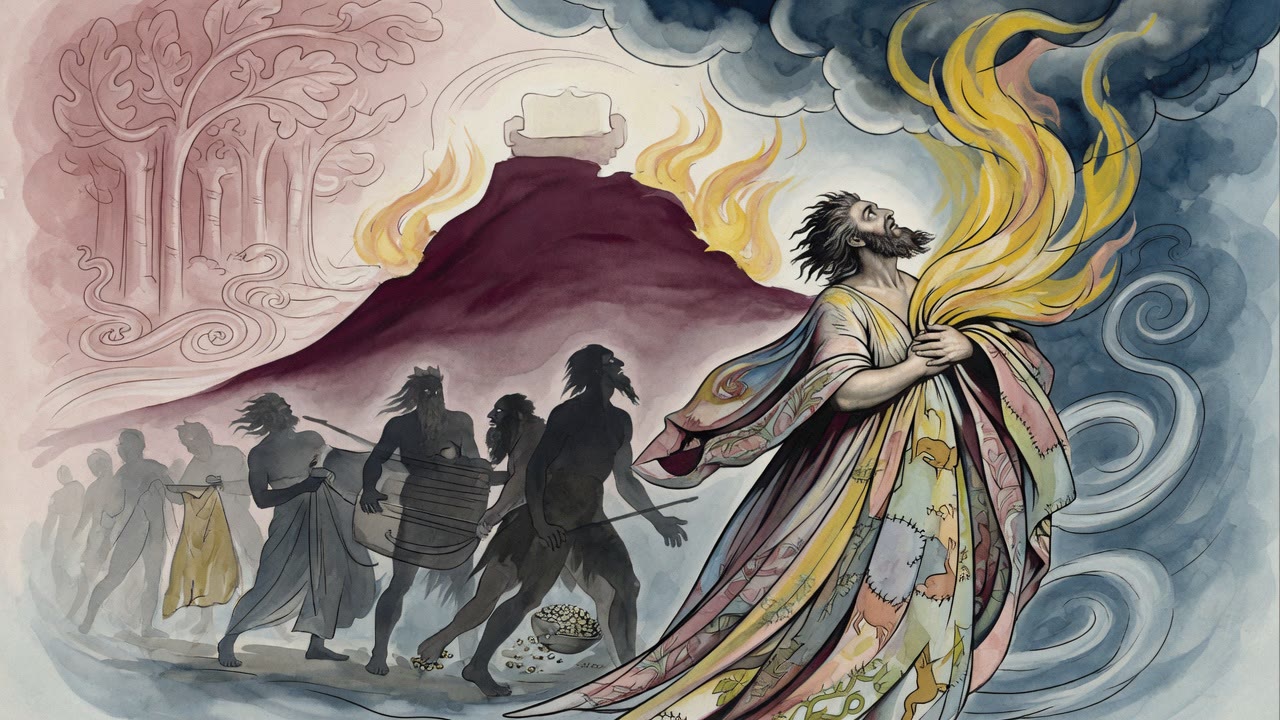
Esau sharpened murder into a plan, but Jacob carried Isaac's blessing into exile. Years later, Egypt rose to escort his coffin home.
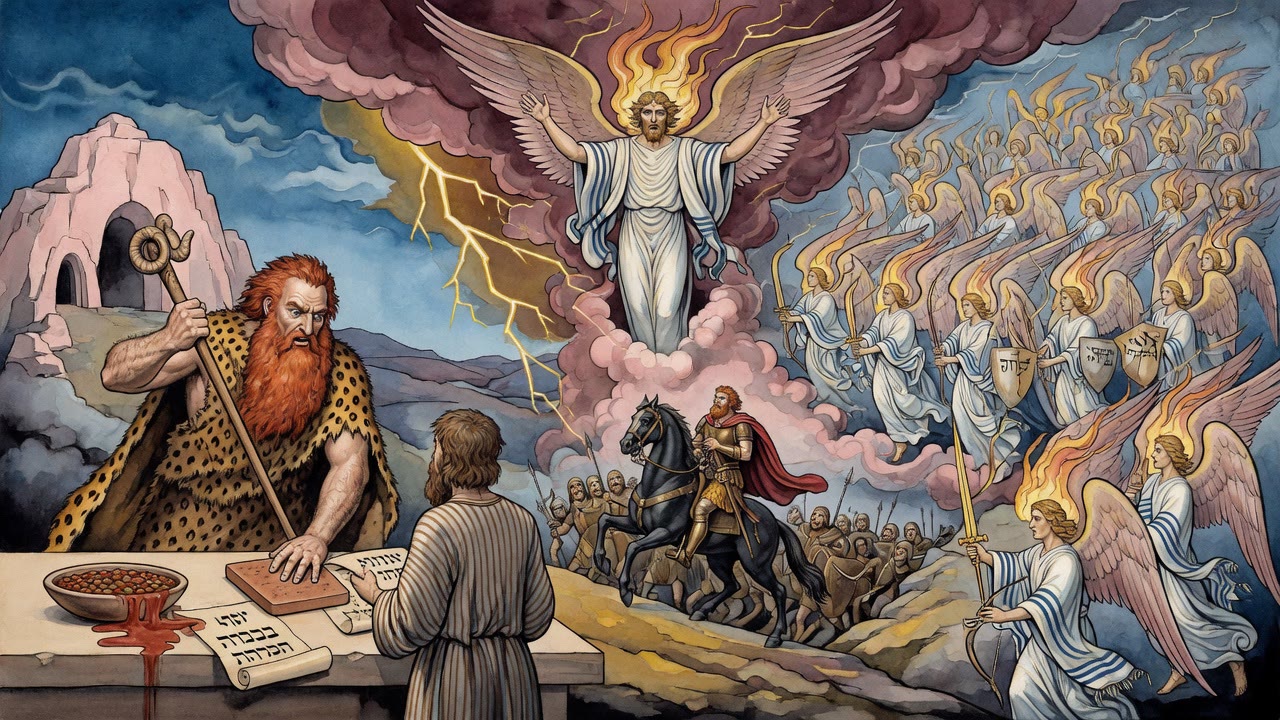
Esau signed away the birthright and Machpelah claim, then marched on Jacob years later and met forty thousand angelic warriors.
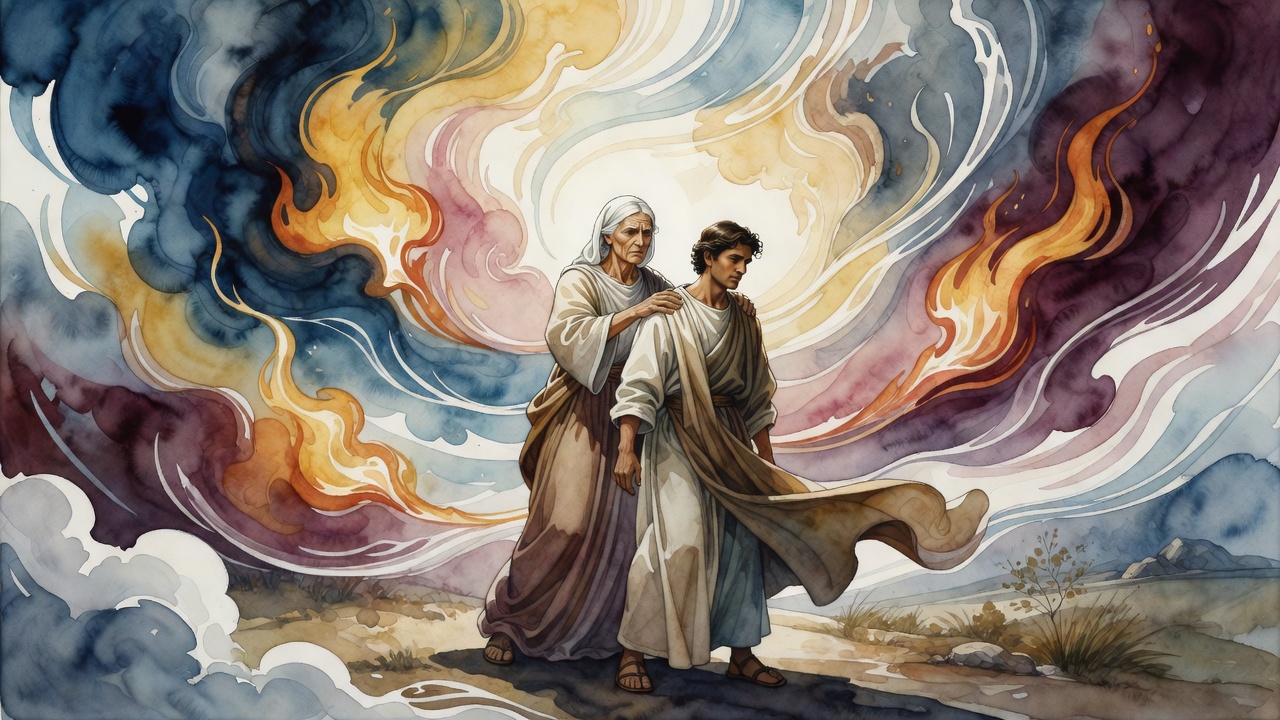
Rebekah laid hands on Jacob, dressed him in priestly garments, and sent him from Esau. Her warning became prophecy at Jacob's burial.
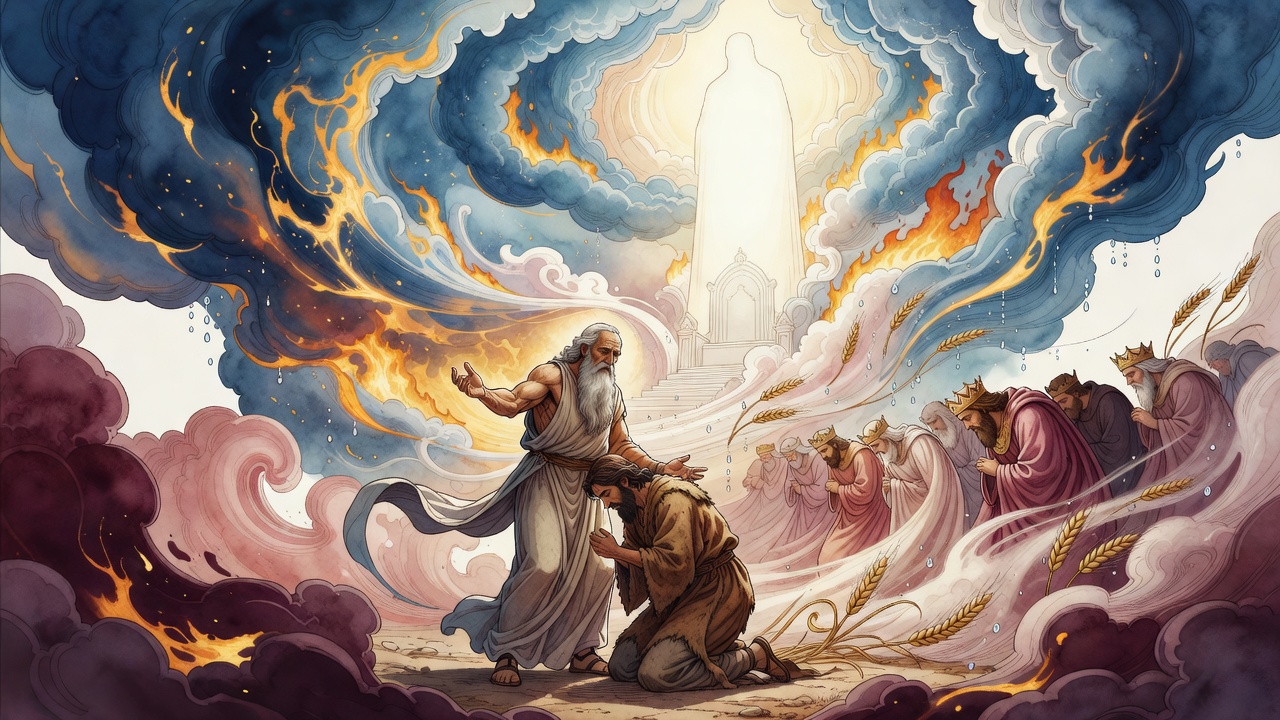
Blind Isaac felt goat hair and smelled the field. The voice was Jacob's. Later he blessed that same son with his eyes open.
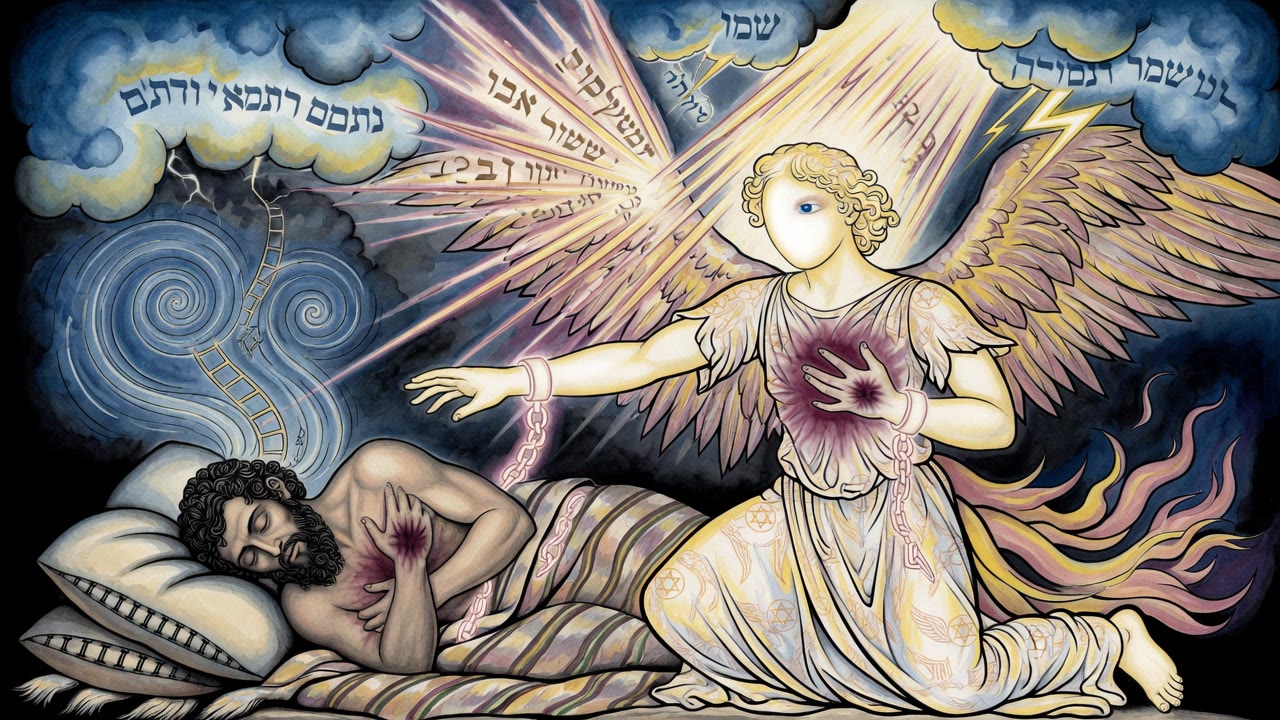
Uzza held the four hundred years like a signed bond. Michael stood in court with no answer, and Egypt's angel waited for the ruling.
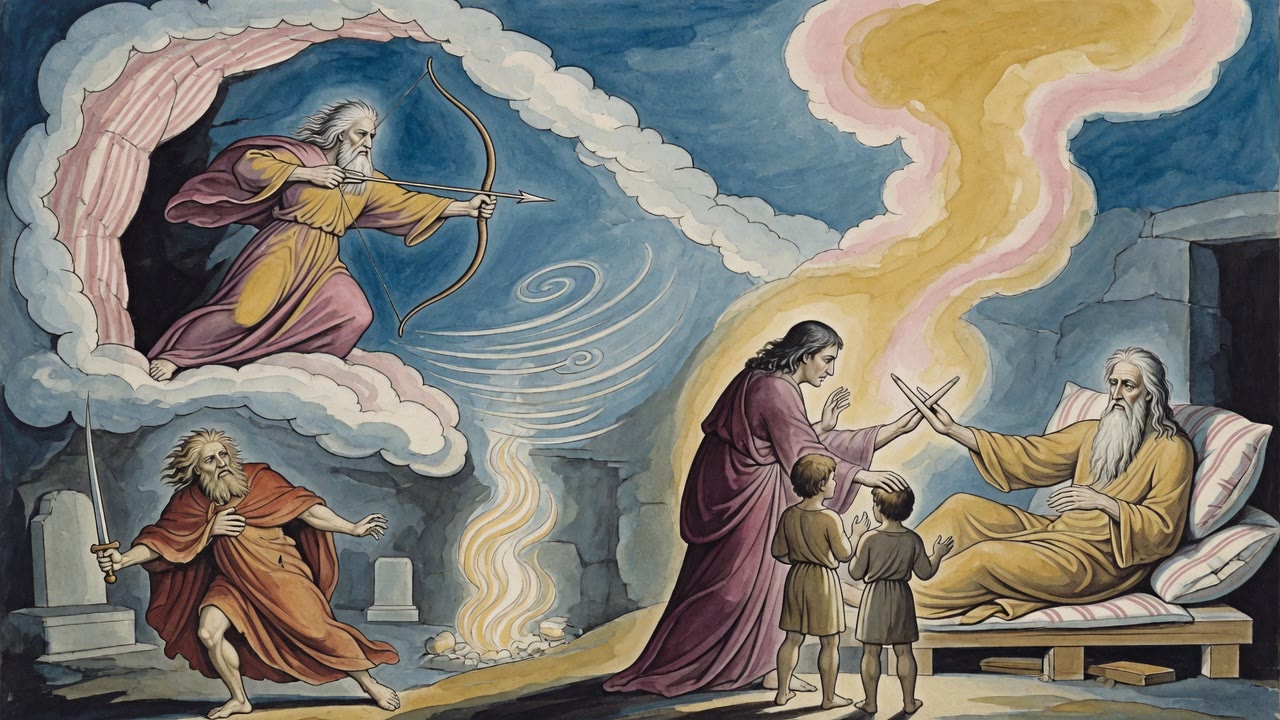
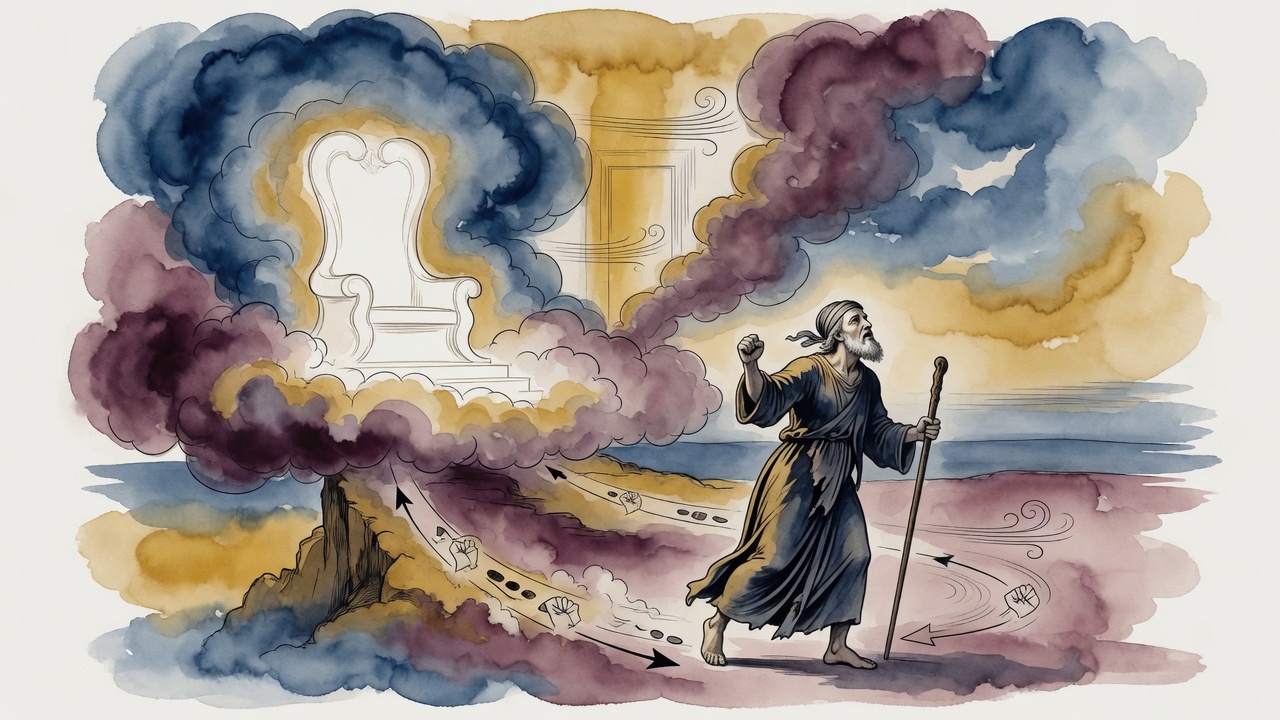
Joseph set the firstborn under the right hand. The old man crossed his wrists anyway. At the cave those same hands still knew a bow.
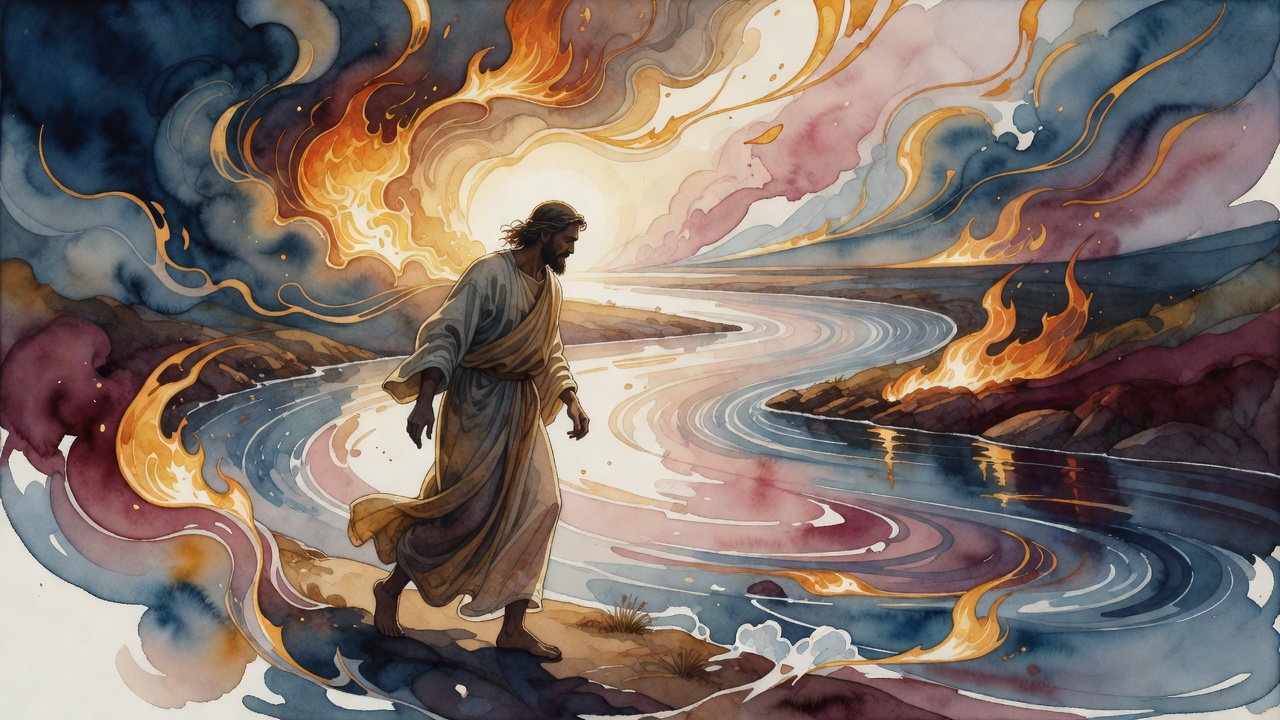
Jacob limped away from the ford of Jabbok, still called unblemished. The Zohar reads him against the red heifer: a wholeness that suffering cannot remove.
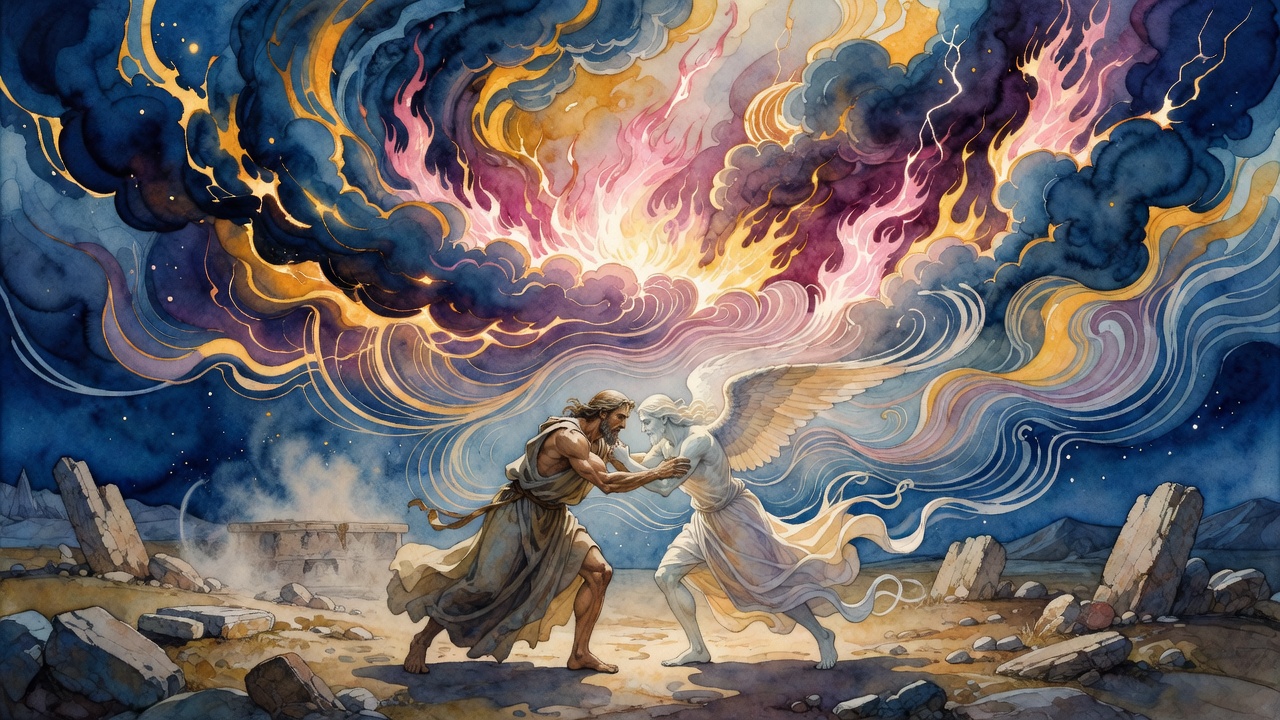
Jacob wrestles through the night over a forgotten tithe, a stolen blessing, and an angel whose first song waited since creation.
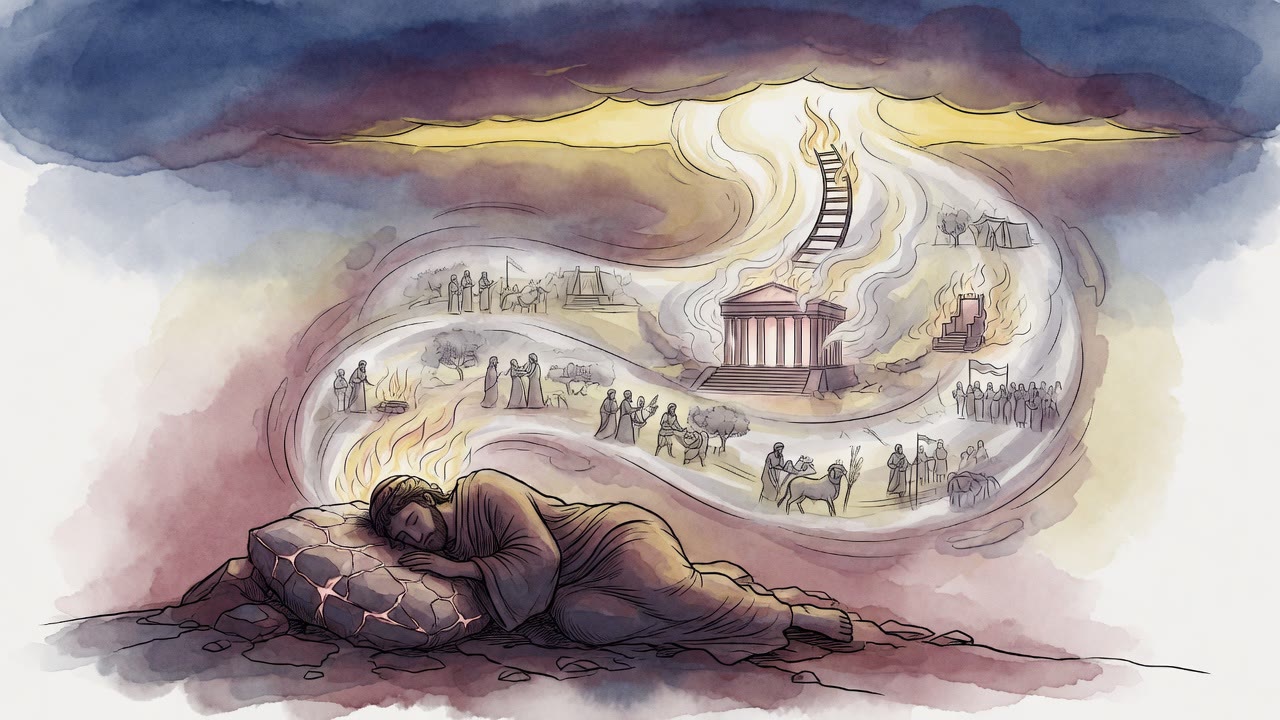
The sun dropped before its hour. Stones fought for his skull. God made them one pillow, and Jacob slept at a gate he had not asked for.
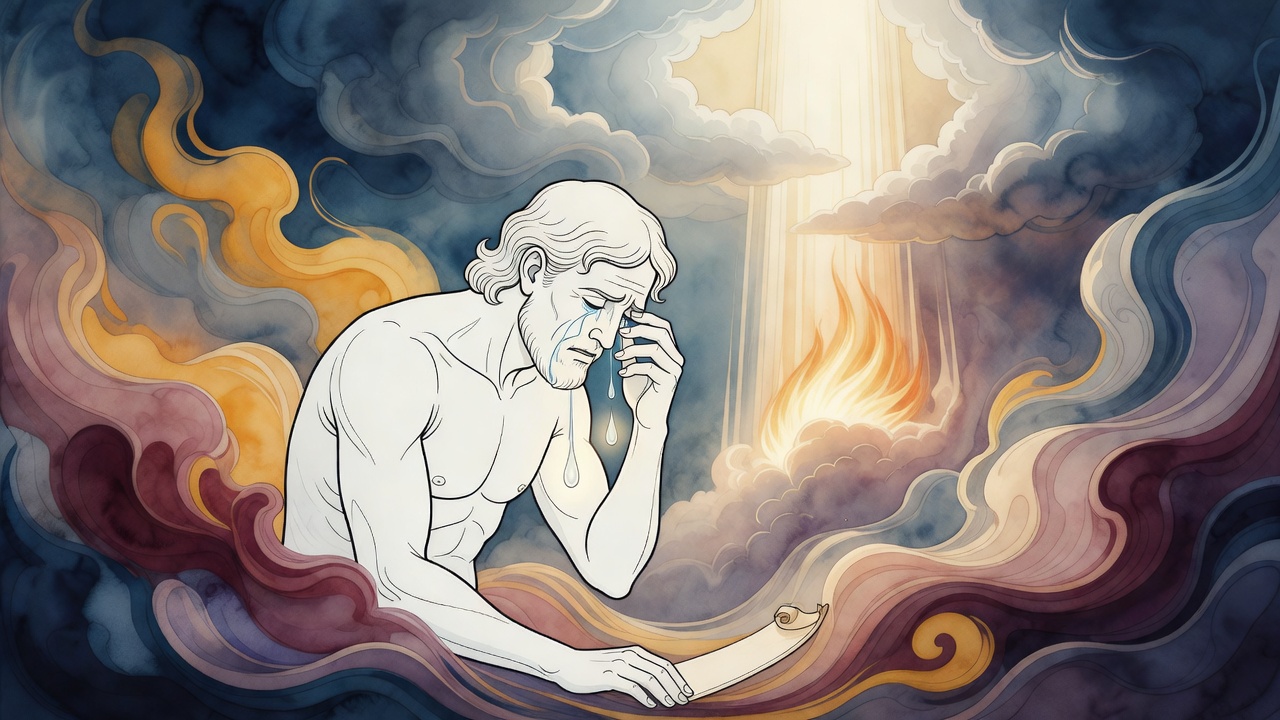
The meat had gone cold in Esau's hands. He cried for a blessing anyway. Heaven kept three tears and did not throw them out.
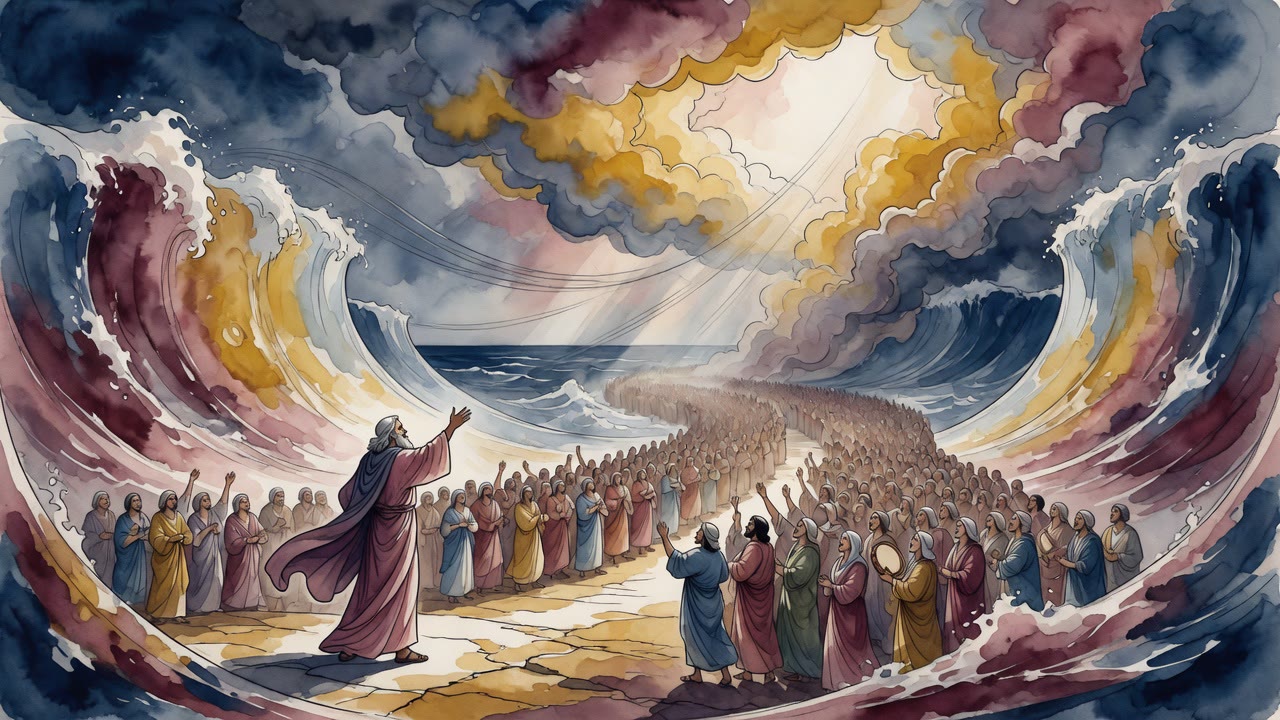
Laban tears across Gilead with supernatural speed, fast enough to catch Jacob and still unable to harm him once God's dream warning lands.
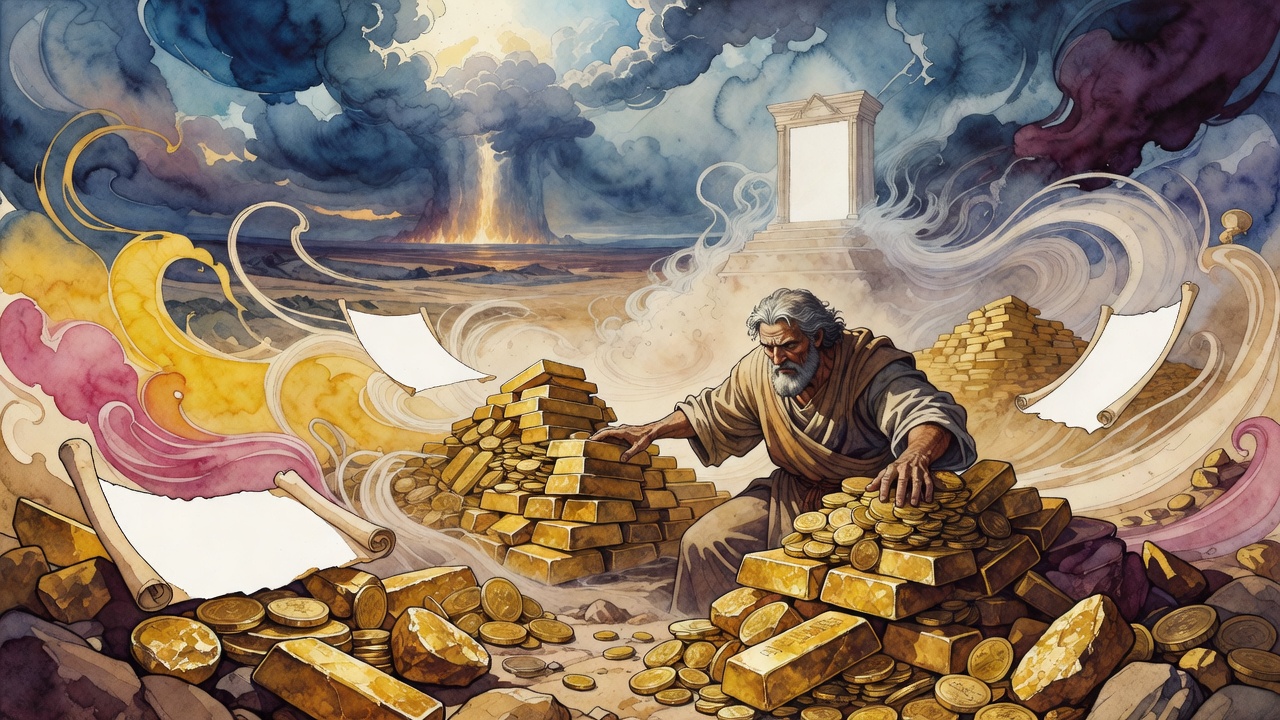
Jacob's mouth hit the dirt seven times. Esau's men watched with swords on their hips. The gold in the tents was already spoken for.
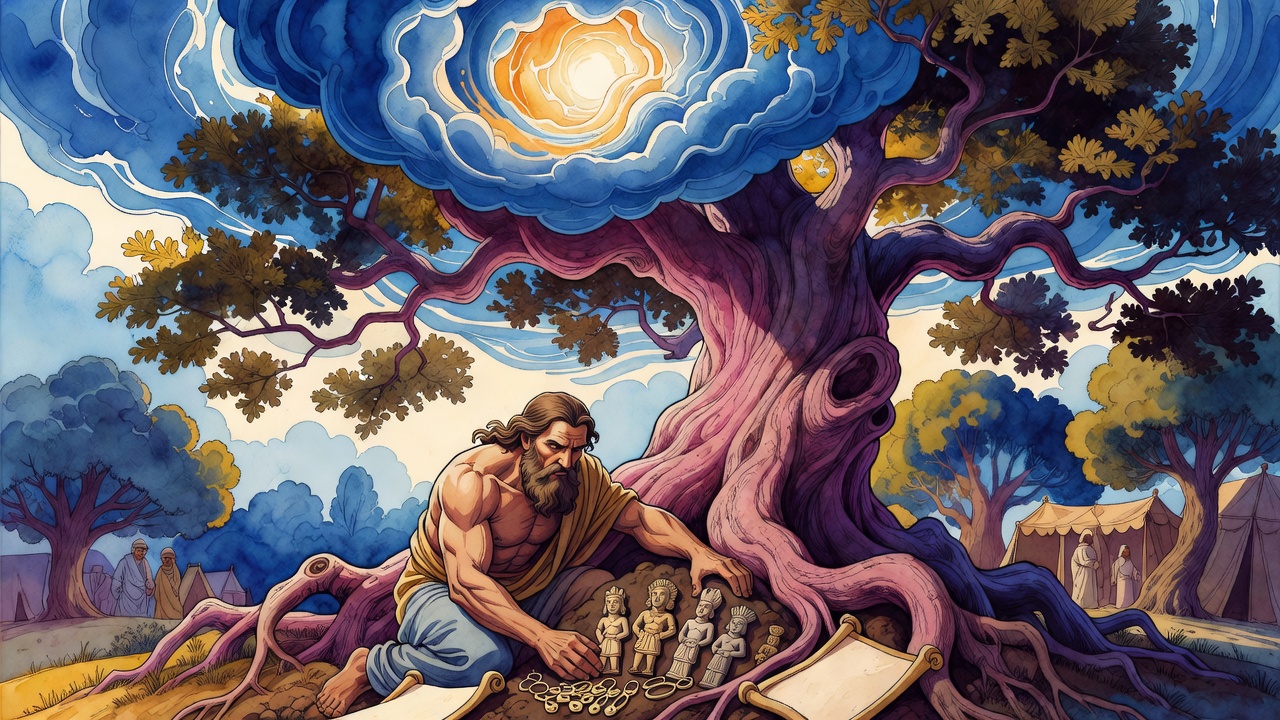
They were still bloody from Shechem. Jacob stopped the whole camp on the road. No one would walk toward Beth-El with a god in a sleeve.
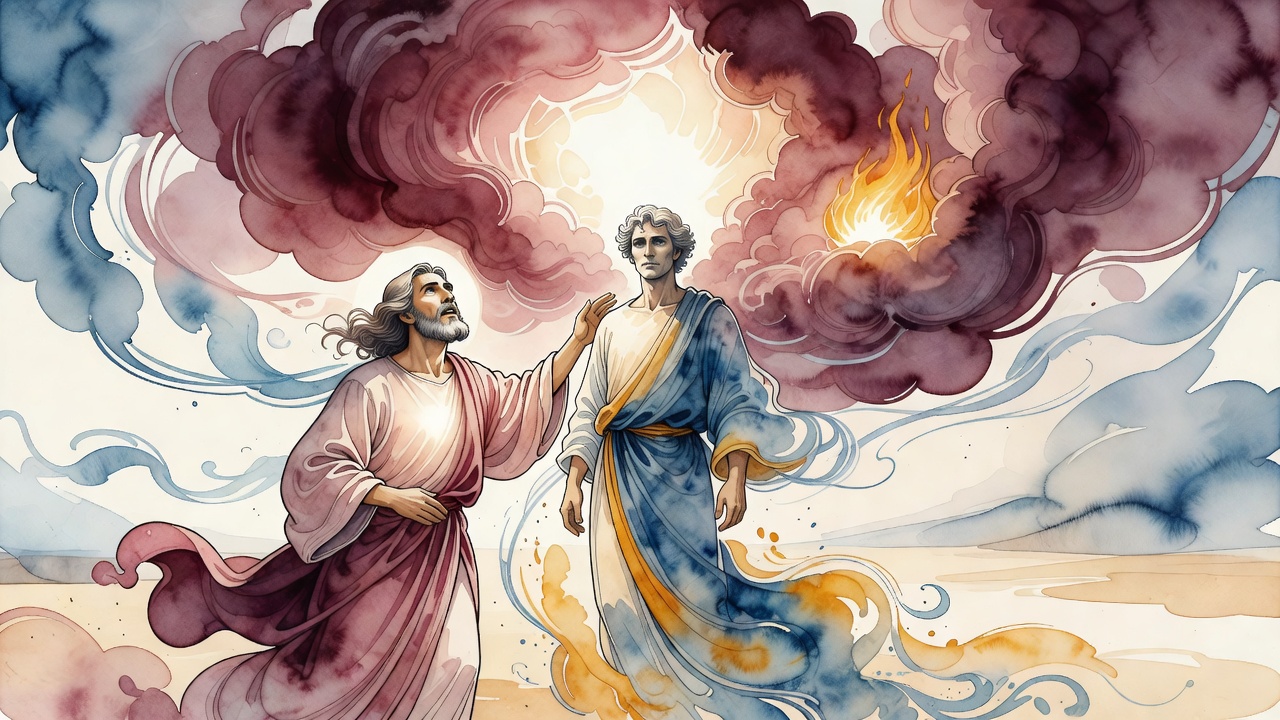
The last sacks were empty. Judah put his own life up for Benjamin, and Jacob still had to send the boy into Egypt. He prayed first.
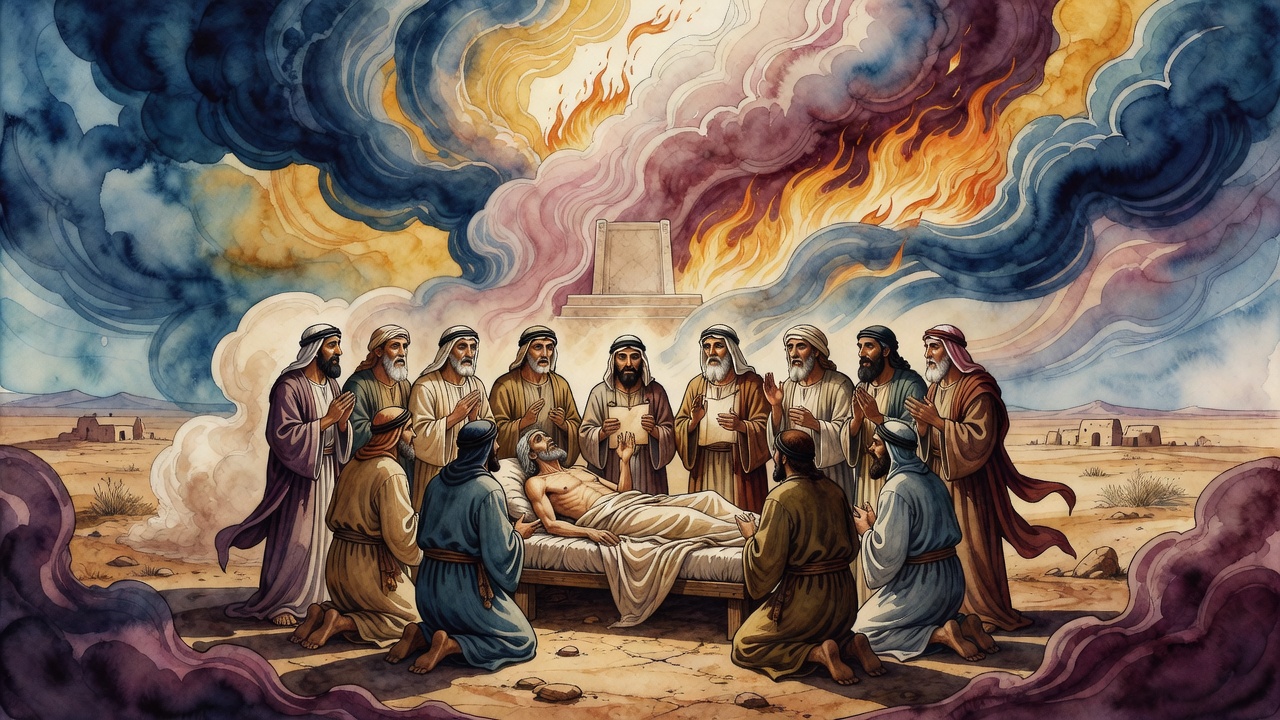
Will you bow down to another god when I am gone? All twelve sons answered in one voice: the Lord is our God, the Lord is one.
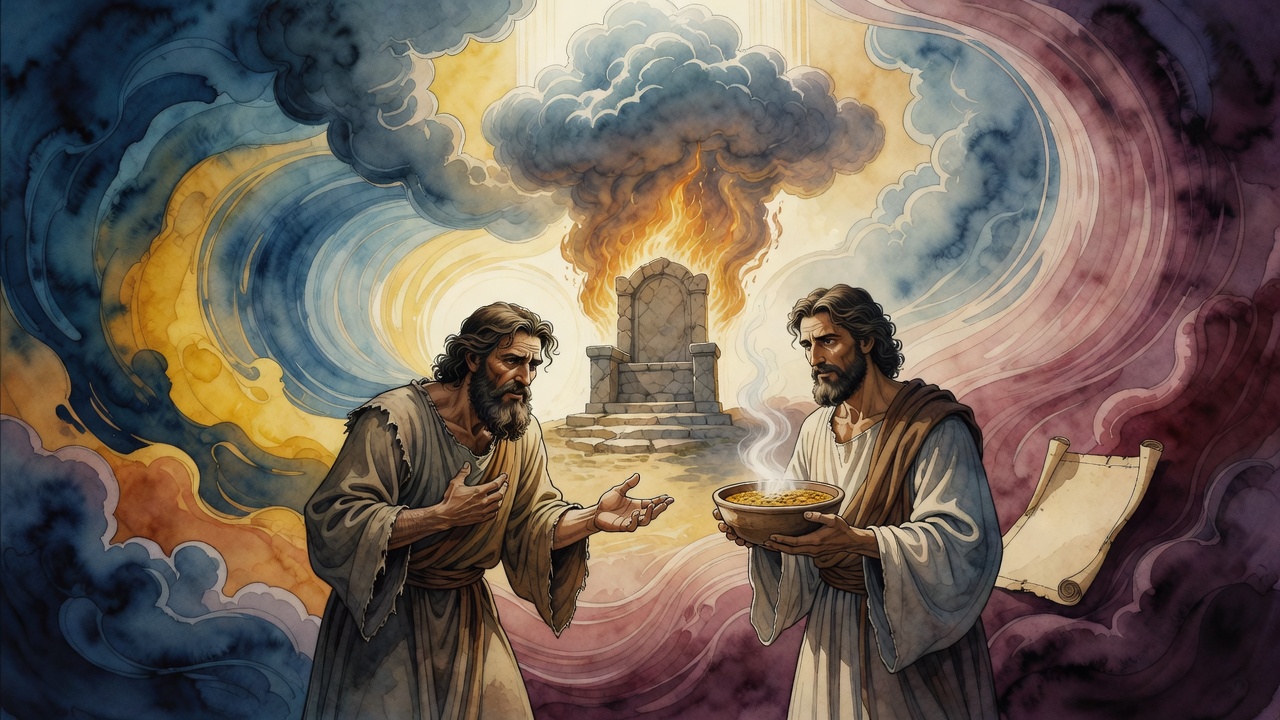
The soup was real. So was the hunger. But Jubilees and the Midrash say Esau traded away his burial place beside the patriarchs along with his inheritance.
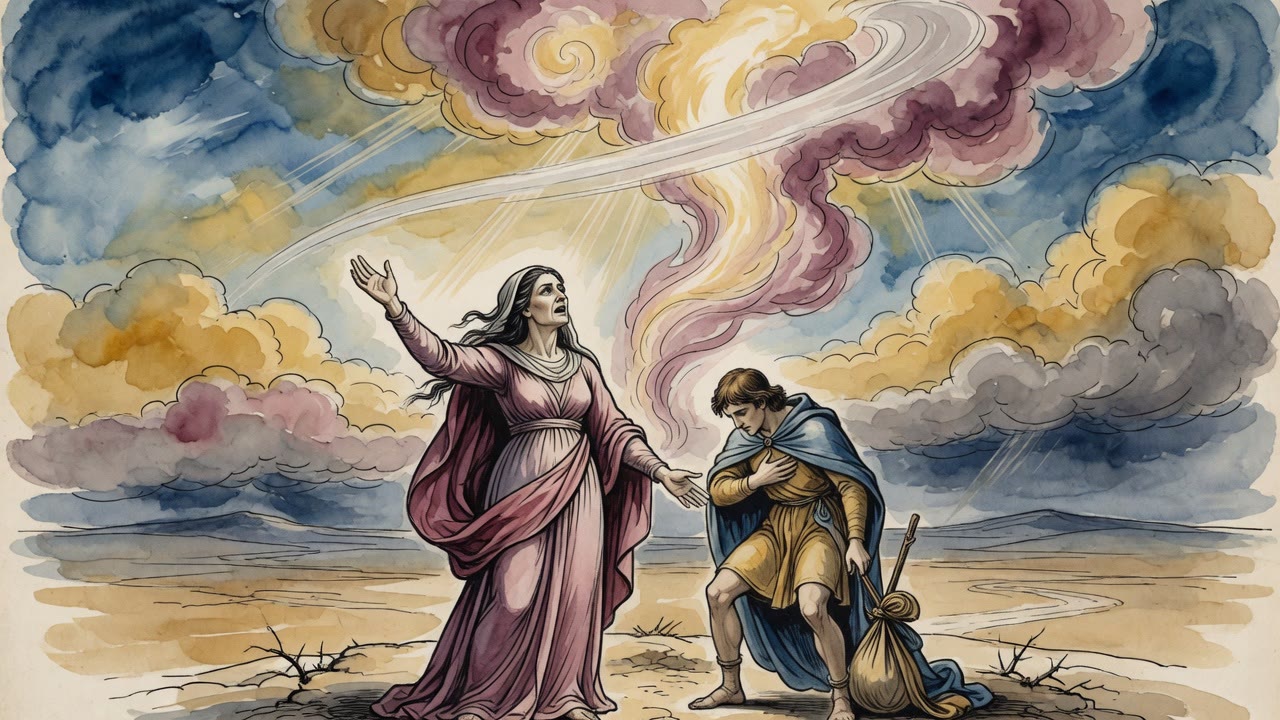
Esau's wives had made the tent bitter for years. Before Jacob left for Haran, his mother made him swear the words out loud, palms already opening.
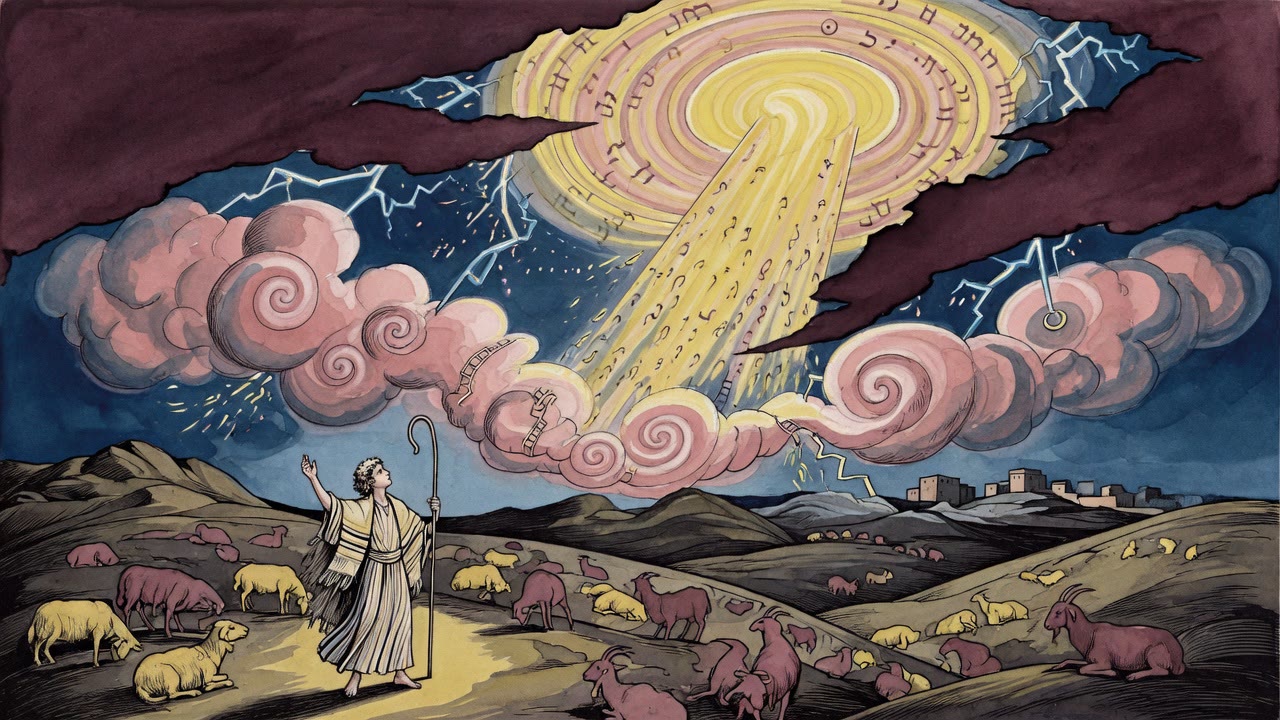
Abraham had been dead twenty years. In the dream he embraced his grandson and said he loved him with all his soul. Then he warned him about Laban.
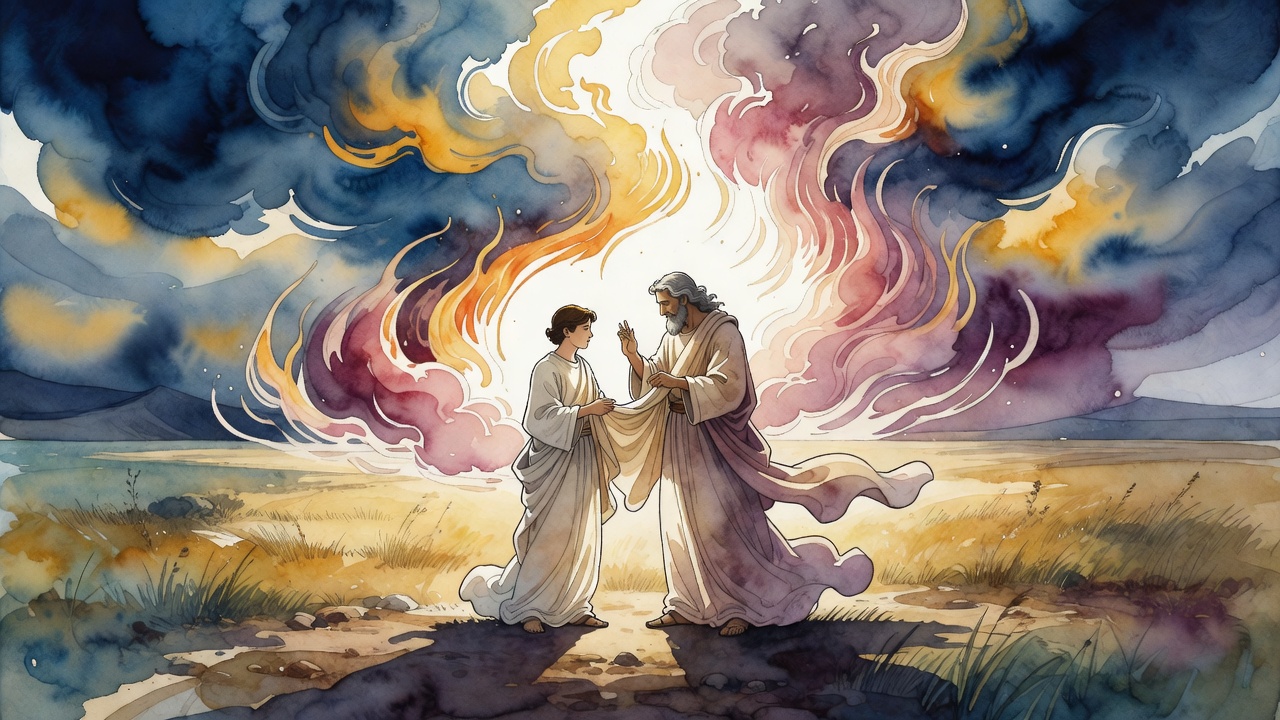
Levi was born at the new moon of the first month. Long before Sinai, his father Jacob dressed him in priestly garments and ordained him in a field.
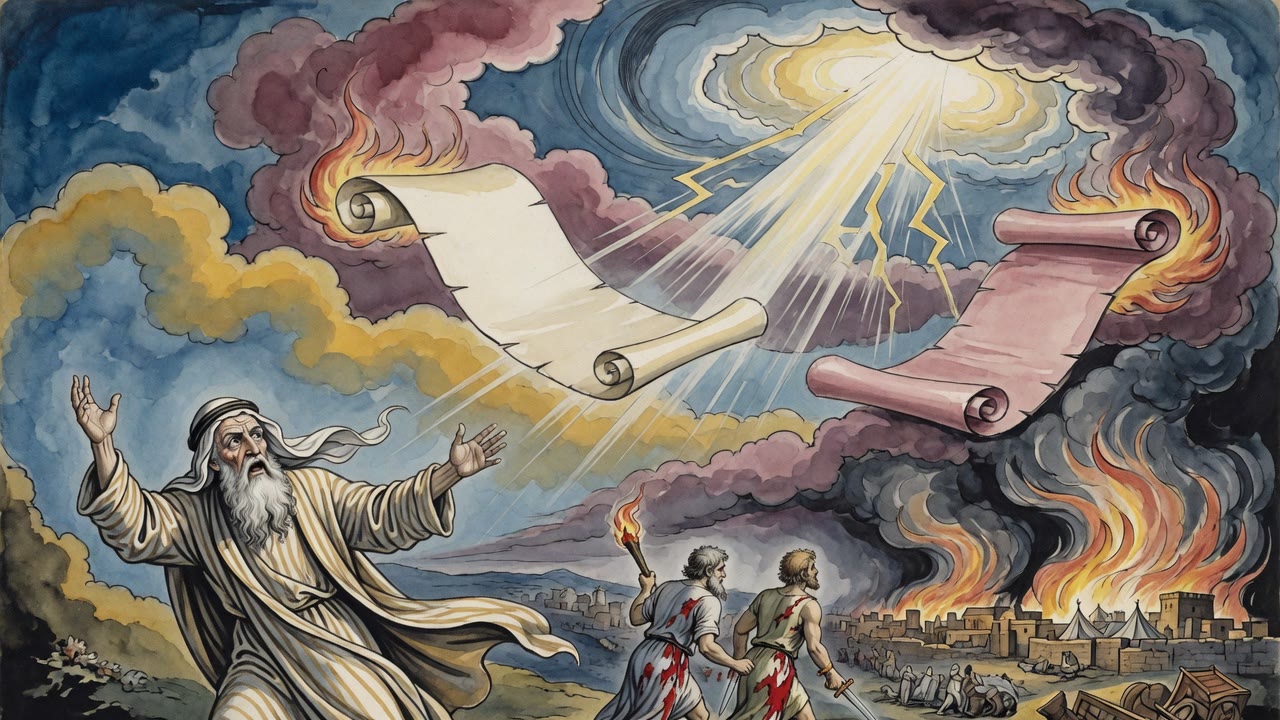
Jacob rebuked his sons for the slaughter at Shechem. A heavenly record reached a different verdict. Both accounts survived.
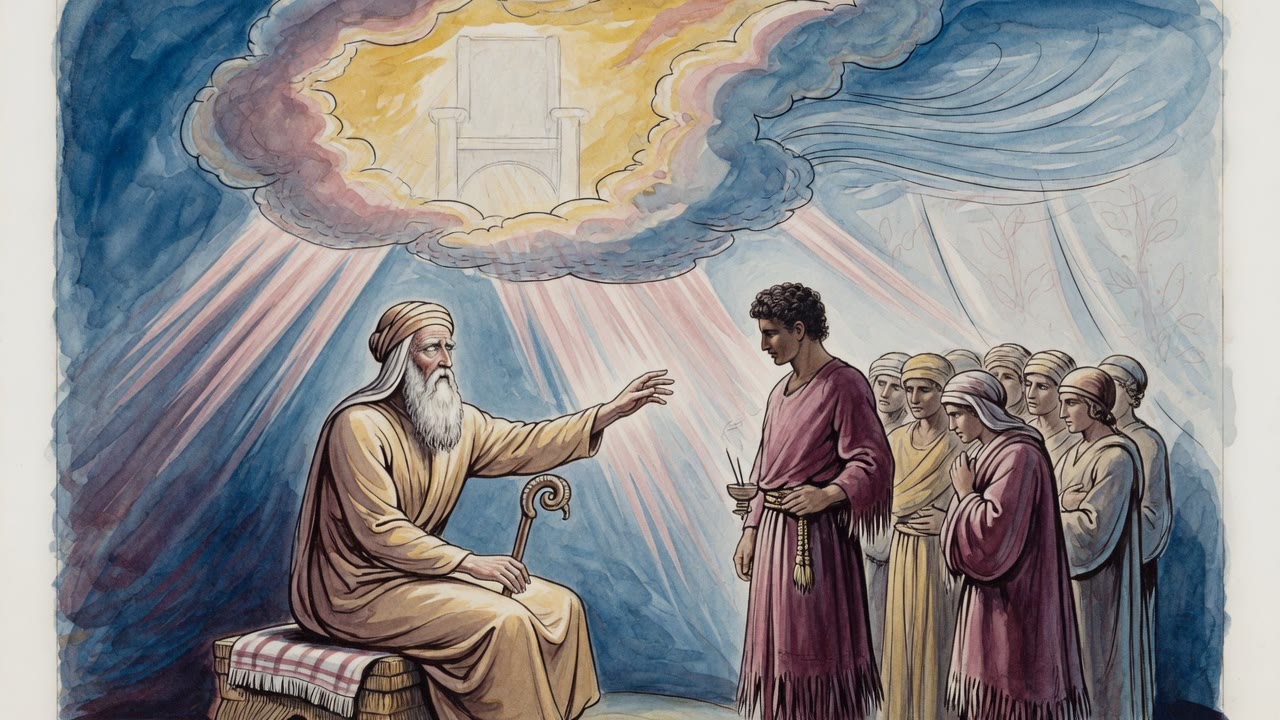
Isaac's eyes had been dark for years. Jacob kissed him, and the dimness lifted long enough to see two grandsons waiting.
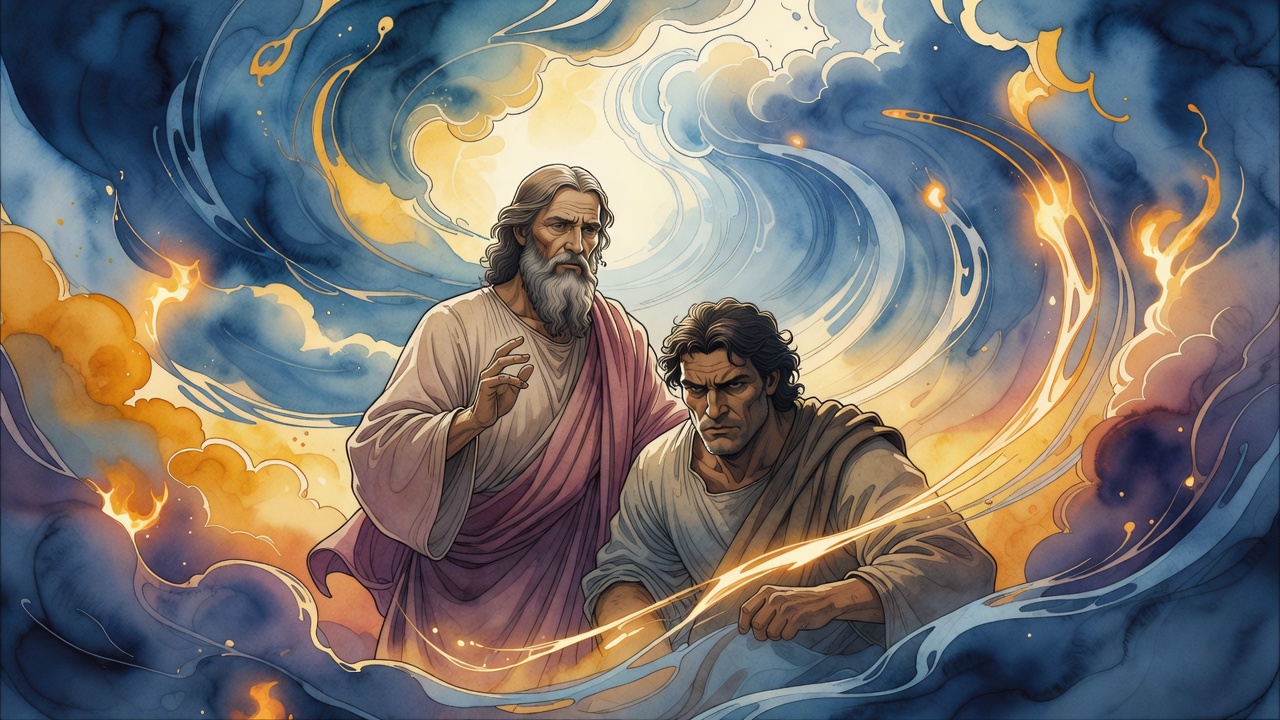
Judah told the men to burn Tamar. She sent him the seal he had left on the road. He said she was more righteous than he was.
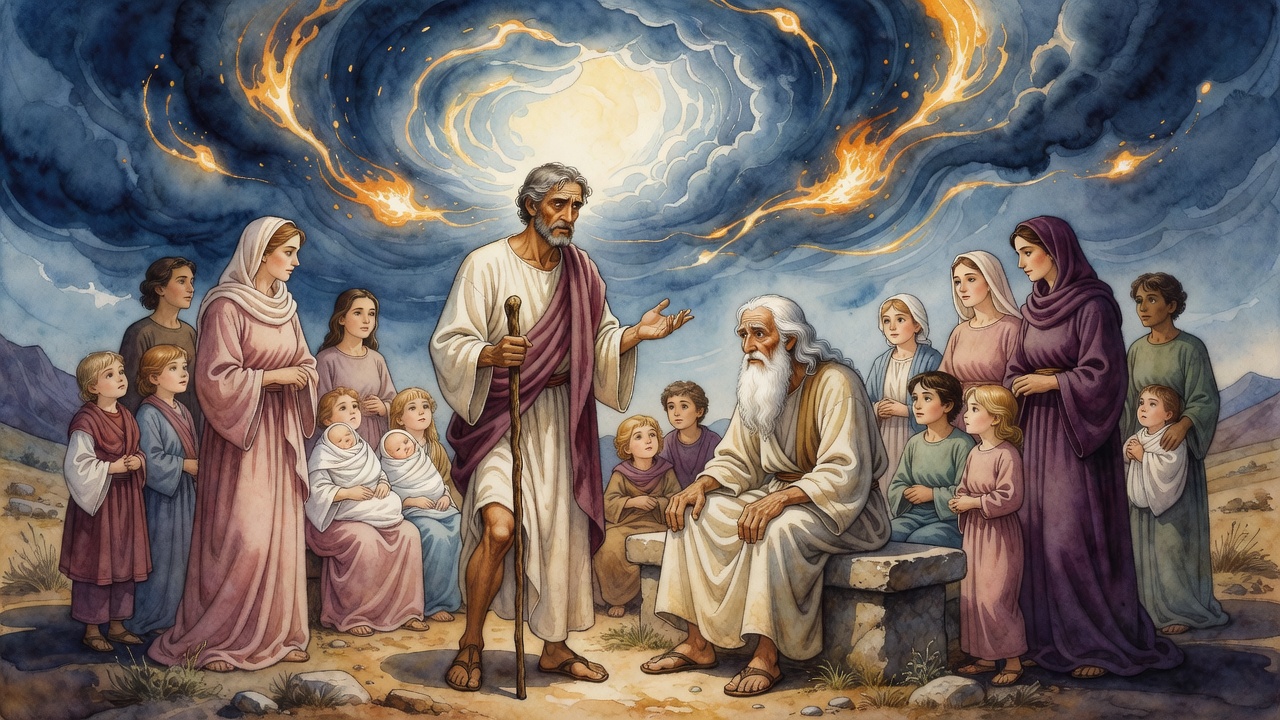
After twenty years apart, Jacob came back to Isaac with wives, children, and a limp. That night he told his father everything.
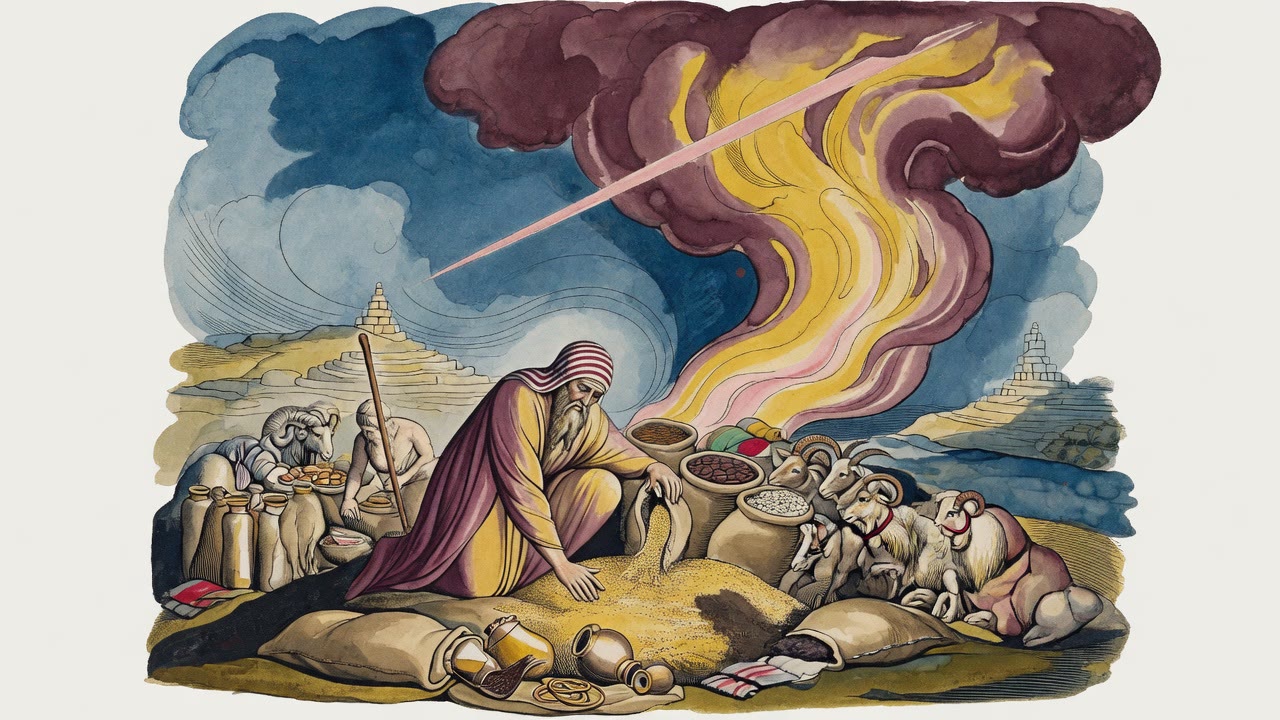
Levi stood at the altar while his father counted. Two oxen. Four rams. Four sheep. The vow from the stone at Bethel had come due.
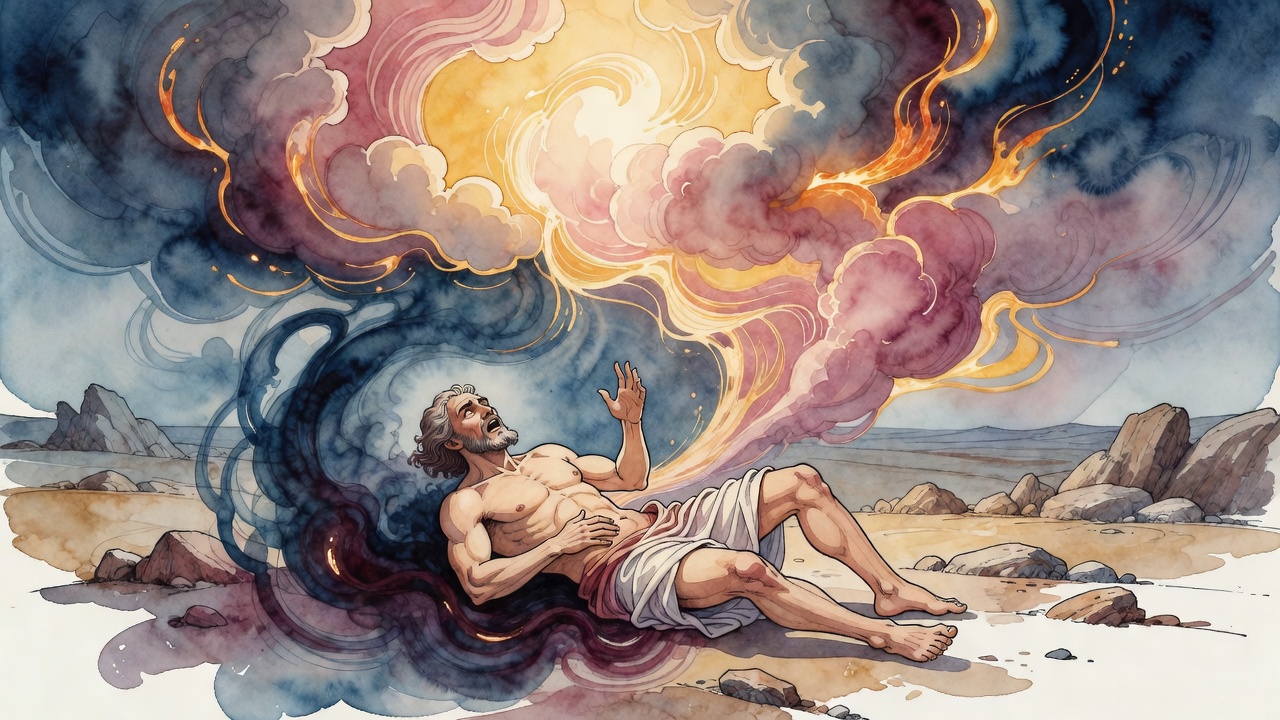
The firstborn was thirty years old when he committed the act. God struck him with a plague in his loins. Jacob's prayer saved his life.
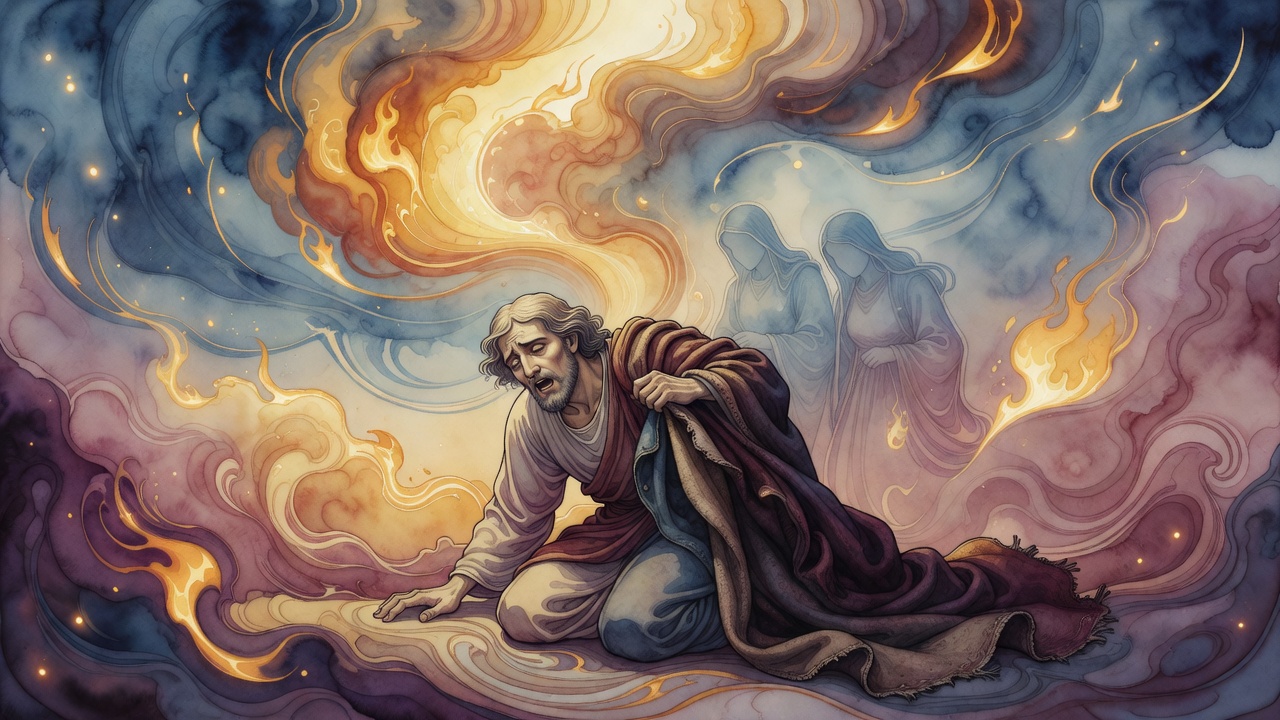
When the coat arrived, Jacob broke. Bilhah died the same day. Dinah followed. Jacob's grief outlasted all three because Joseph was still alive.
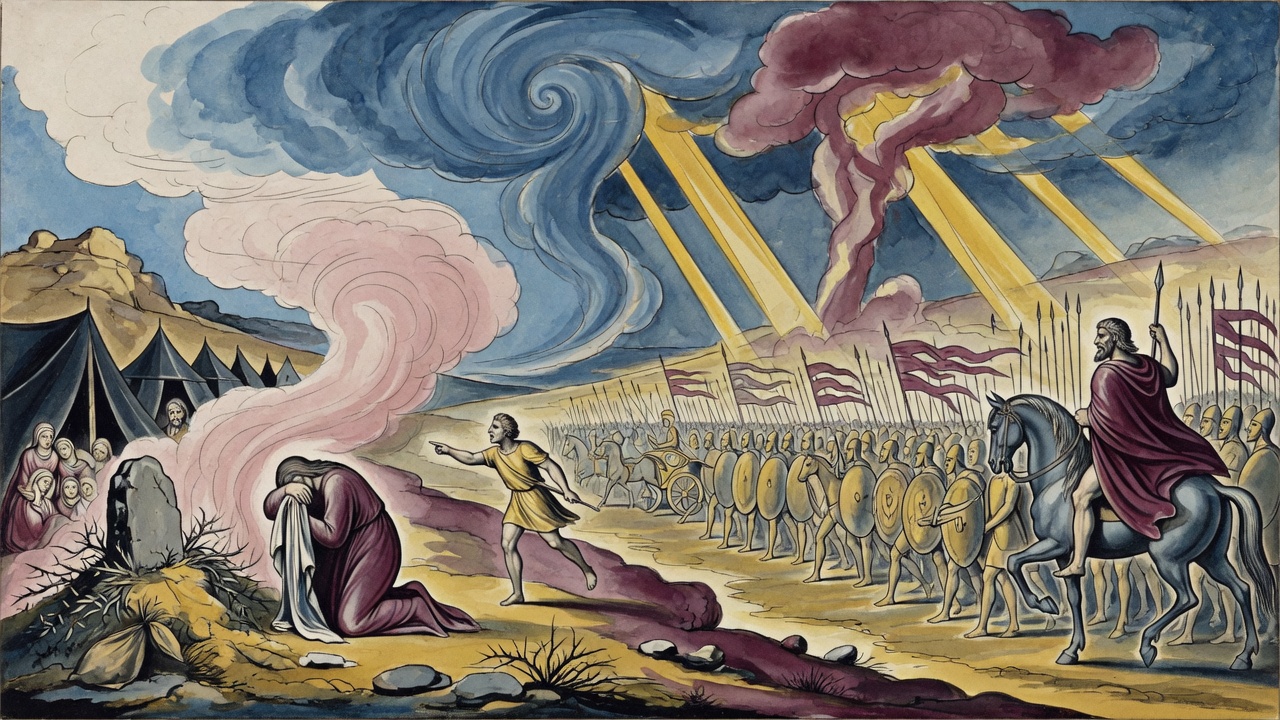
Jacob's wife had just died when the men of Hebron sent warning. His brother was coming with four thousand soldiers, and the timing was deliberate.
He stood under Jacob's tower with four thousand men. He did not ask for land. He said brotherhood would come when wolves kept peace with lambs.
