Abba Hilkiah Prayed for Rain and His Wife's Cloud Came First
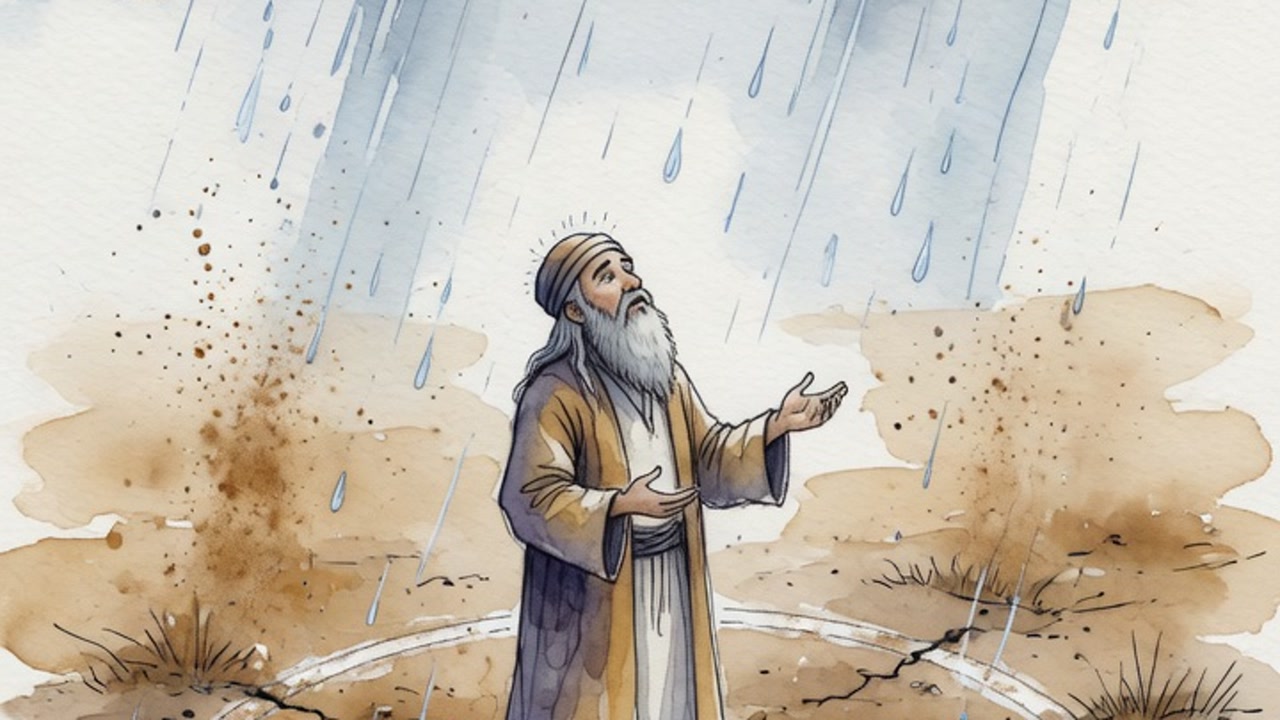
Two scholars walked out to a field to beg a man for rain. He would not return their greeting, so they followed him home to find out why.
Table of Contents
 Click for full size
The Greeting He Did Not Return
The two scholars found Abba Hilkiah bent over a hoe in another man's field, and when they wished him peace he did not lift his head.
They had walked a long way for that silence. The rain had failed. Cisterns were green at the bottom, the wells were dropping, and the sages of the generation had prayed and prayed and the sky had stayed shut over them like a lid. Then somebody remembered whose grandson was living out past the town. Choni ha-Me'aggel had once scratched a ring in the dust and told heaven he would not step out of it until the rain came, and heaven had given in. If the gift ran in the blood, it ran here.
So they stood in the furrows and waited. He went on digging. He did not ask their names or their errand, and when the light started to go he shouldered his bundle of firewood and set off home. They followed him. Nobody had invited them.
Everything He Did on the Road Home Was Wrong
He carried the wood on one bare shoulder. His cloak he carried folded on the other, which no working man does, because the use of a spare garment on a road is to sling your load in it and save your skin.
He walked the dry road barefoot. At the river he stopped, sat down, and put his shoes on to wade across. On the far bank he took them off again. Through a stretch of thorn scrub he gathered his clothes up above his knees and let the branches rake him, and blood came up in lines on his shins, and he kept walking.
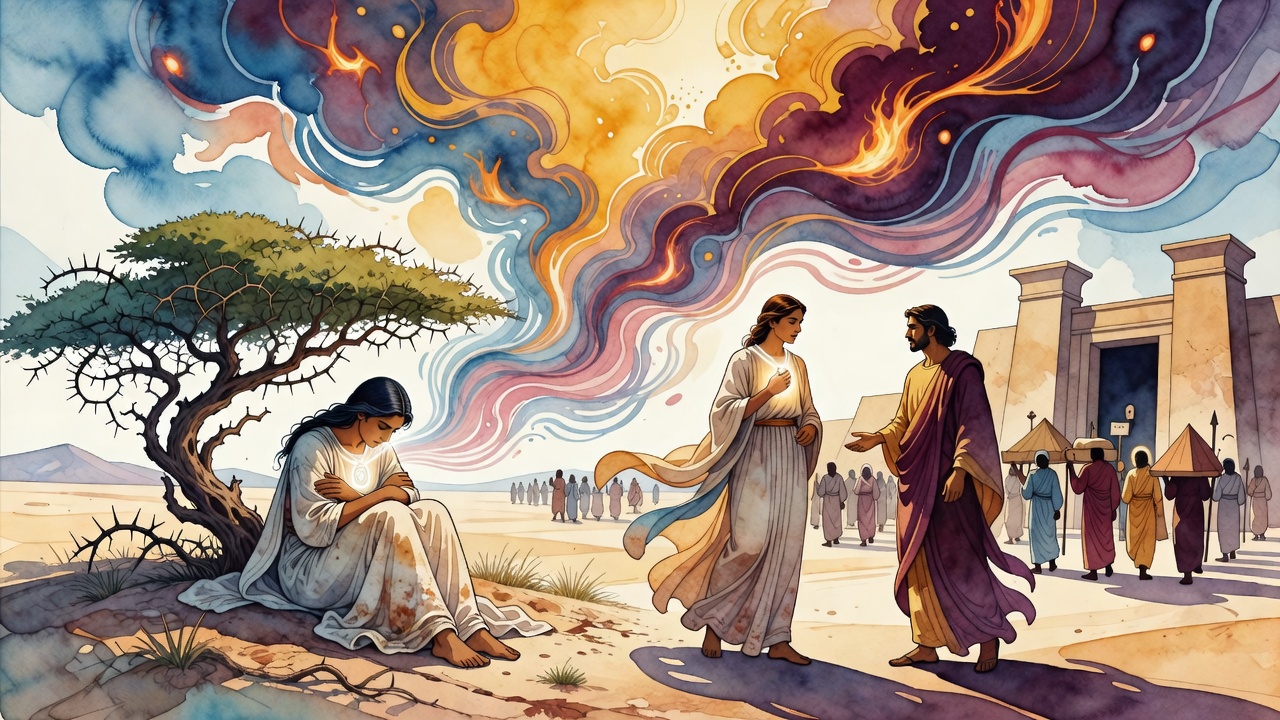
At the edge of the village his wife came out to meet him dressed the way a woman dresses for a wedding. She went into the house. He went in after her. The scholars stood in the doorway a while before anyone moved aside for them.
He sat down to bread and did not say come and eat. He broke the loaf and put one piece in front of the older boy and two in front of the younger. Then he leaned across to his wife and said something with his hand near his mouth, and neither guest caught a word of it. He stood up. "Come up to the roof with me," he said to her.
Two Corners of One Roof
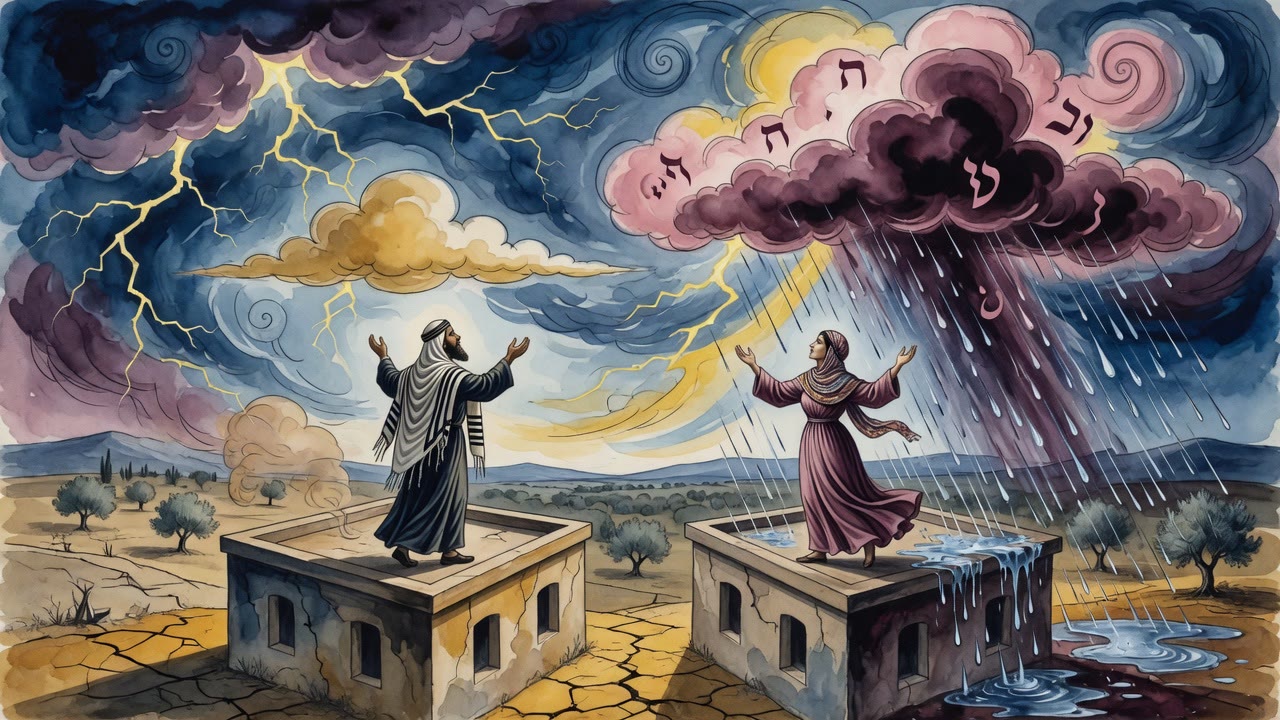
He took one corner. She took the other. They stood apart with the whole flat roof between them and prayed, and the two men below tipped their heads back and watched.
The cloud came up over her corner. Her prayer brought it, and not his.
It gathered on her side of the sky and spread out from there, and by the time the pair of them reached the bottom of the stairs the rain was falling on the roof they had just left.
He did not wait to be asked anything. "It is not needed now," he said. They told him the rain had come through his merit and his prayer. He let that pass without agreeing to it. Then he answered every question the two of them had carried up the road behind him, without one of them ever being spoken aloud.
He Answered Before They Asked
The greeting in the field. He was hired by the day, and the hours belonged to the man paying for them. A word of courtesy would have been spent out of another man's purse.
The wood on the bare shoulder. The cloak was borrowed. He had been lent it to wear, not to haul firewood in.
The shoes at the river. On the road he could see what he was stepping on. In the water he could not.
The clothes lifted through the thorns. A scratch closes by itself. A tear in cloth needs a man who wants paying.
His wife at the edge of the village, dressed like that, for a husband coming home filthy off a field. So that his eyes would have somewhere to rest and would not go looking on the road.
The meal. There had not been enough bread on that table for four grown men, and an invitation he could not honor would have bought him their thanks for nothing.
The two pieces for the younger boy. The older one was in the house all day and could reach the food himself. The younger had been at school since morning and came home hungry. He was feeding need, not age.
Why the Cloud Came Up Over Her Corner
He left that one for last.
When a poor man knocked at the door and Abba Hilkiah was the one who opened it, the man got a coin. He then had to carry the coin somewhere, find someone selling, buy, walk home, and cook, and only then eat. When the same man knocked while Abba Hilkiah was out digging in somebody's field, the wife opened the door and put bread in his hands, and he ate standing there.
Her giving landed. His had to travel first. Her merit was the greater, he said, and he said it in front of two visiting scholars and his own two sons.
The rain went on falling. The delegation had come out for the grandson of the most famous rainmaker in the country, and it went home having watched the sky open over the corner of the roof where Abba Hilkiah's wife was standing.
← All myths