Abner the Giant Who Could Not Outrun His Mother's Dark Trade
A young shepherd named David woke in Saul's camp wedged between the giant's feet like a stone between boulders. Abner shifted, and the gap opened.
Table of Contents
Abner stood a head and shoulders above the tallest man in Saul's army, and the ground seemed to remember his weight. Men said a wall six ells thick, near nine feet of stone, could be shoved aside more easily than one of his feet could be lifted. When he walked the camp at dusk, soldiers stepped wide of him the way a man steps wide of a falling tree.
 Click for full size
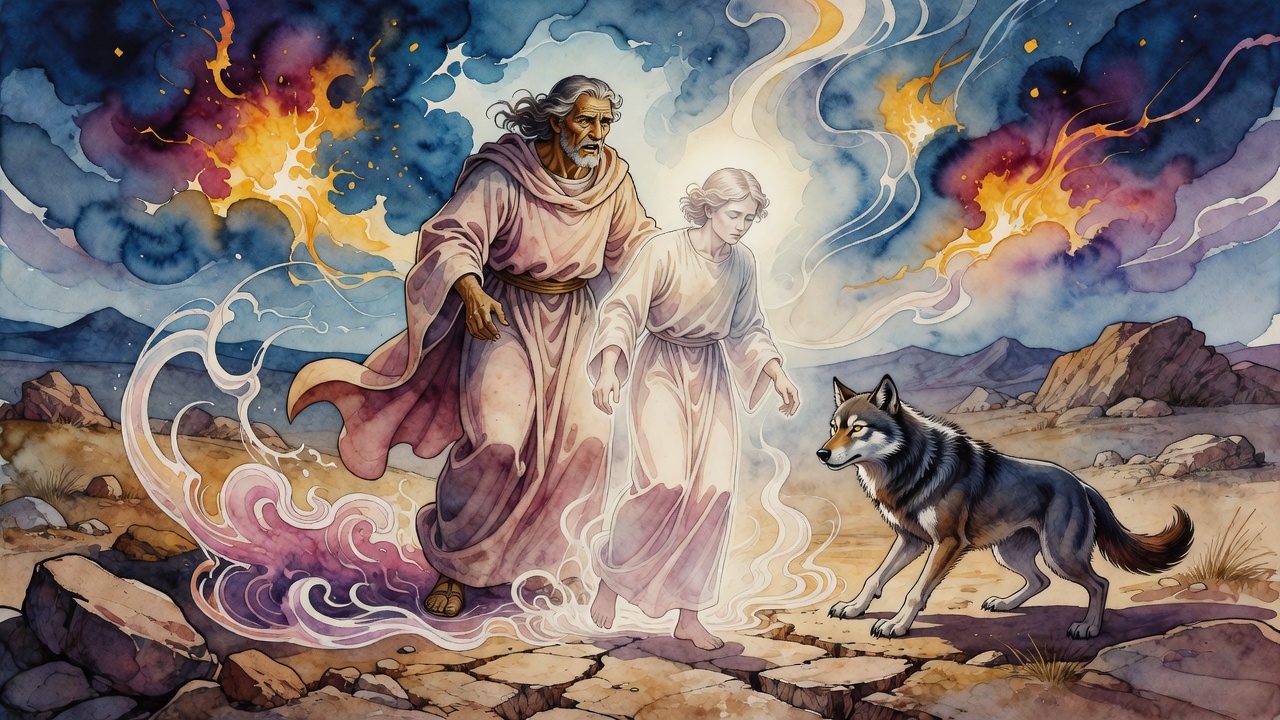
One night a young shepherd named David crept into the sleeping camp and lay down to rest, and woke to find himself wedged between Abner's two feet like a stone caught between boulders. The giant rolled in his sleep. Had he rolled the other way, there would have been no king of Israel, no psalms, no city on the hill. Abner shifted, the gap opened, and David crawled out into the dark with his heart slamming against his ribs.
The Lion in the Law Who Held Up a Doomed House
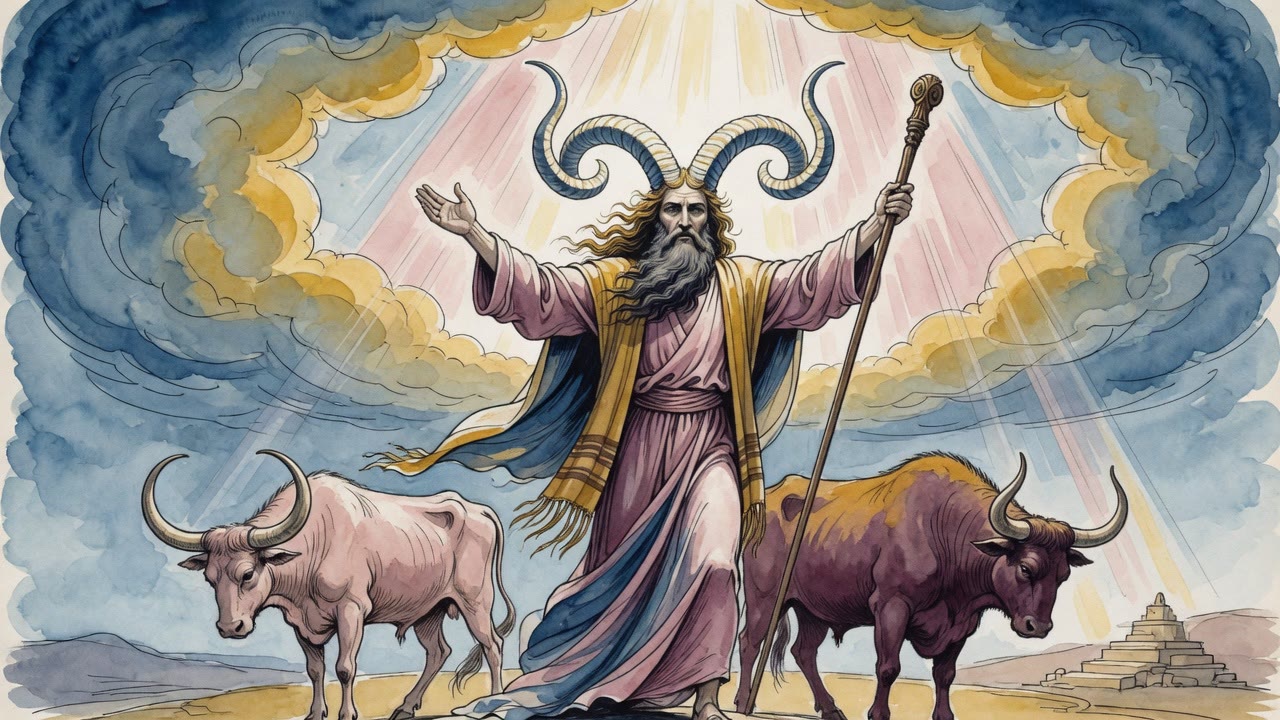
The sages called Abner a tzaddik, a righteous man, a lion in the law, a scholar as fierce in argument as he was in war. When Saul went mad and ordered the priests of Nob put to the sword, it was Abner who folded his arms and refused to draw his blade against holy men. He would not kill them. That much he had in him.
But refusing was not the same as stopping it, and the killing went on without him. A man who could move the earth with his hands had simply looked away while the priests fell, and the looking-away clung to him after.
He served the house of Saul long past reason. When David was anointed and the kingdom slid toward him, Abner planted himself behind Saul's son Ish-bosheth and held the throne up with his own arms for two and a half years. An old promise drove him. Heaven had sworn two kings to the tribe of Benjamin, and Abner was a Benjamite, and he meant to see that promise paid out to the last coin, even while he knew in his bones that God had already chosen the shepherd from Bethlehem.
The Witch of En-Dor and the Son She Bore
The strength came from somewhere. The legend names the place. Abner's mother was the witch of En-Dor, the necromancer who called the dead up out of the ground, and her son carried the dark of that house in his giant frame.
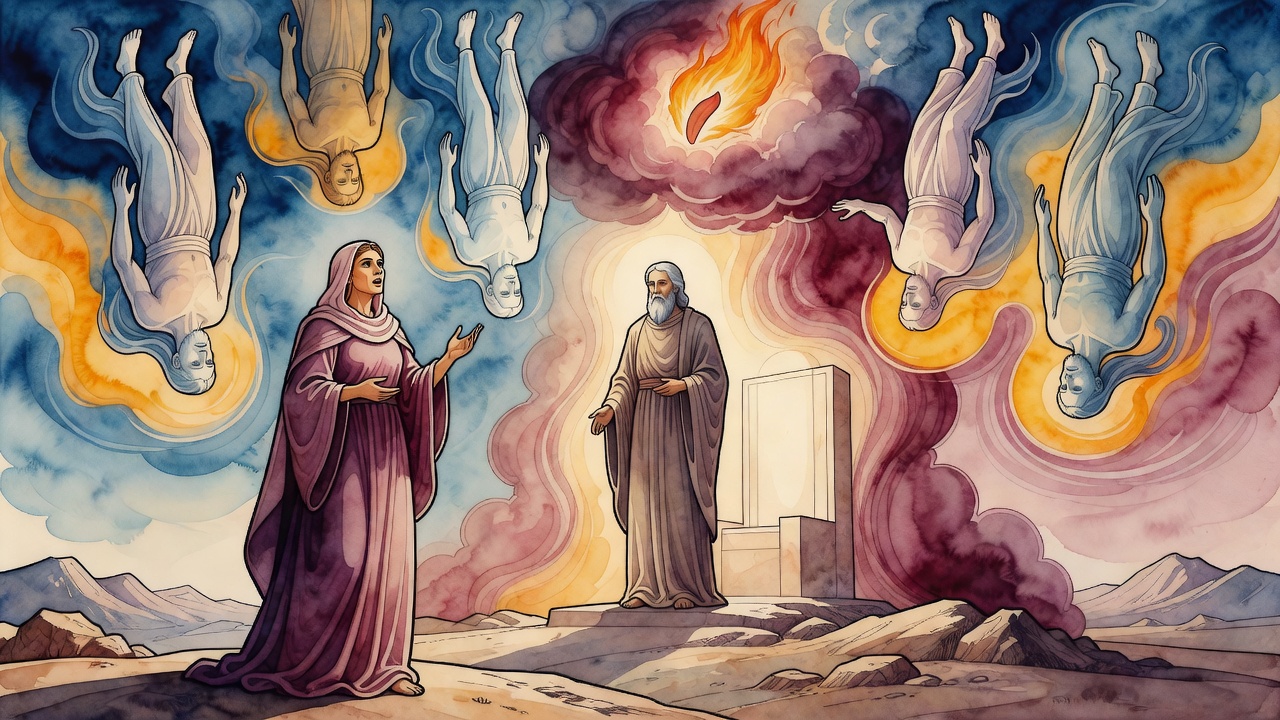
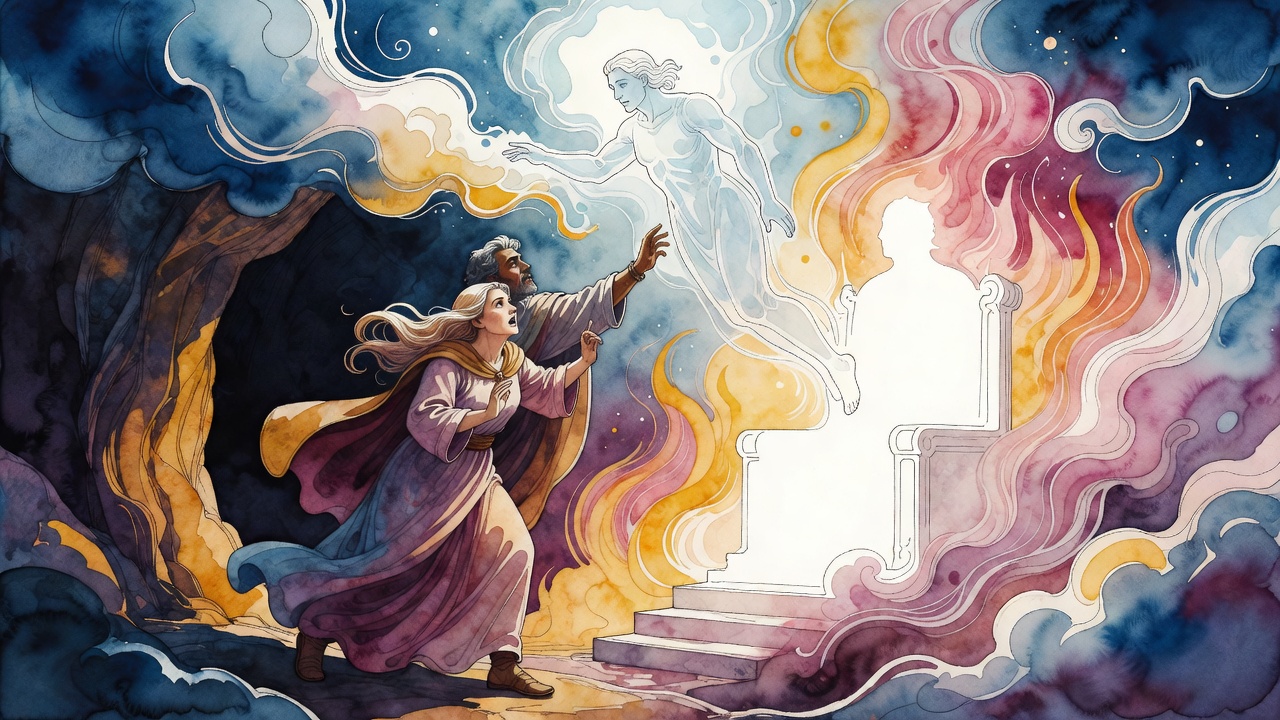
When Saul lost the prophet Samuel and heaven went silent on him, it was Abner who walked at the king's side into the witch's house, the king in disguise, two captains flanking him in the candlelight. The woman bent over her summoning. A spirit raised by such art comes up head downward, feet in the air, upended like a thing dragged backward through a door. But the figure that rose for Saul stood upright, the way a spirit only rises for a king, and the witch screamed, because in that instant she knew exactly whose face she was looking at.
Samuel came up angry. "Was it not enough for thee to enkindle the wrath of thy Creator by calling up the dead," he said, "must thou need change me into an idol?" Then he gave the verdict plain. The kingdom would be torn from Saul and handed to David. Saul begged for a different word, the softer one he remembered. "When we dwelt together, I was in the world of lies," the dead prophet answered. "Now I abide in the world of truth." By tomorrow's dark Saul would be dead on the mountain, and Abner stood in that room and heard his king sentenced, the witch's craft doing the sentencing, his mother's trade closing over the dynasty he had spent his whole strength to hold.
The Court Held Over a Dead Brother
Long before that night, on a battlefield, a runner had chased him. Asahel, brother of Joab, swift past nature, a man who could sprint across a field of standing wheat without bending a single stalk. He came for Abner's life and would not be waved off. Abner called over his shoulder for the boy to turn back. The boy kept coming. So the giant drove the butt of his spear backward under the fifth rib, and the swiftest man in Israel stopped running forever.
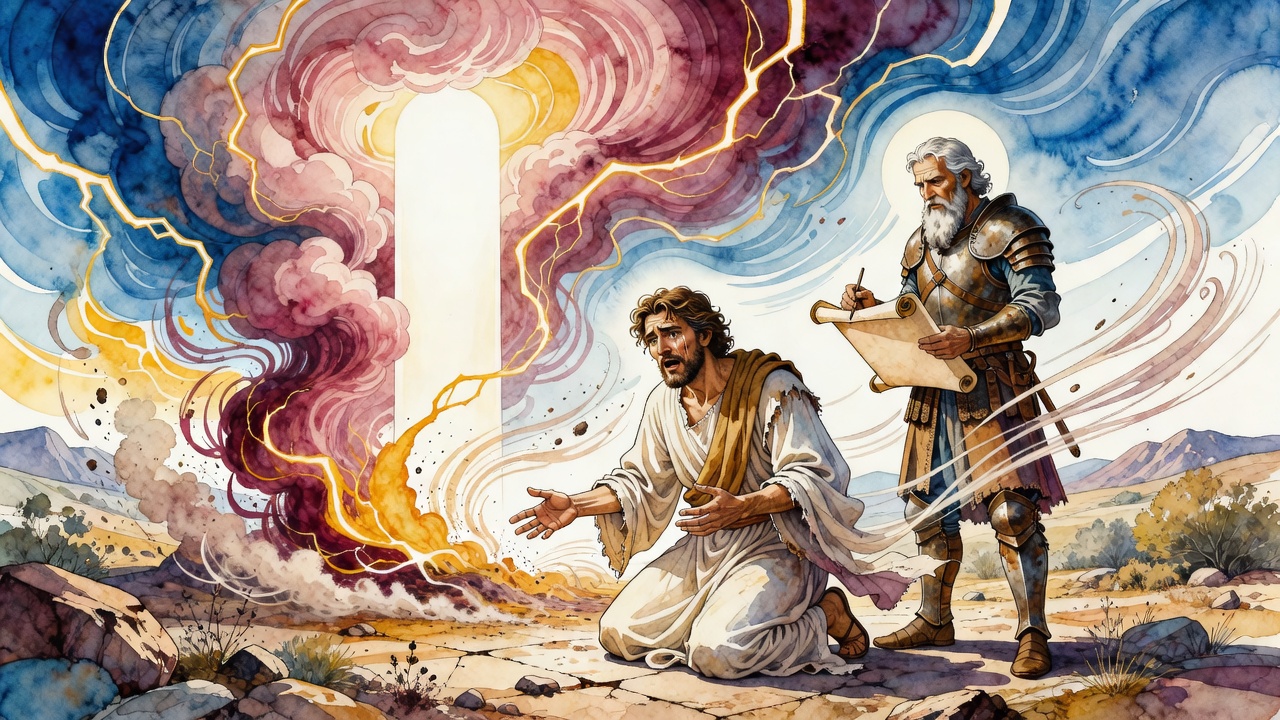
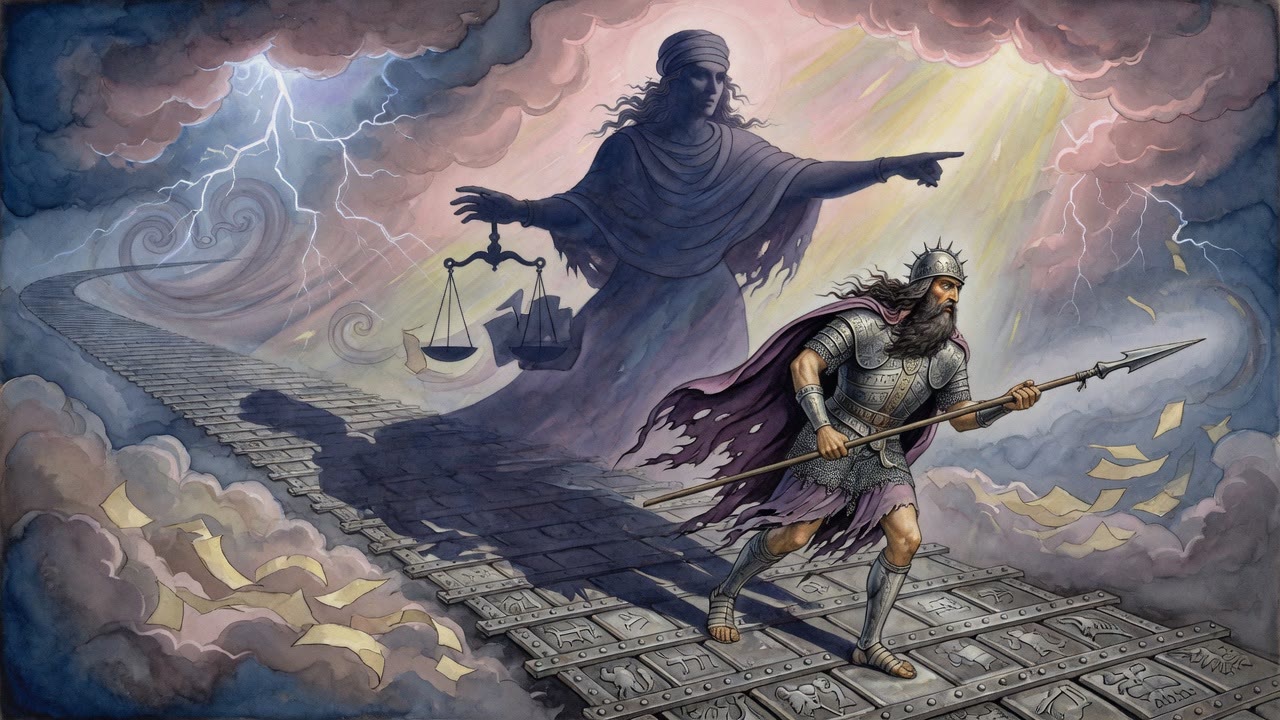
Years on, Joab caught up with the killer of his brother and held a kind of court over him before he struck. "If thou wast able to strike him under the fifth rib," Joab pressed, "couldst thou not have made him harmless with a lesser wound and saved his life?" Abner swore he could not have, that a giant's blow does not come in halves, that the speed and the rage left no room for a gentler aim. Joab did not believe him. The question hung there unanswered, and then Joab put the iron in.
The Strongest Hands in Israel Let Go
Mortally struck, Abner still had the strength to take his killer with him. He seized Joab and crushed him together the way a hand crushes a ball of yarn, and the watching people went cold, because if Abner finished Joab the Philistines would fall on a leaderless Israel by morning.
"What can I do," Abner cried out over the man folding in his grip, "he was about to extinguish my light!" The people pressed in around the two warriors and begged him. "Commit thy cause to the true Judge." Leave the verdict to Heaven. Let go.
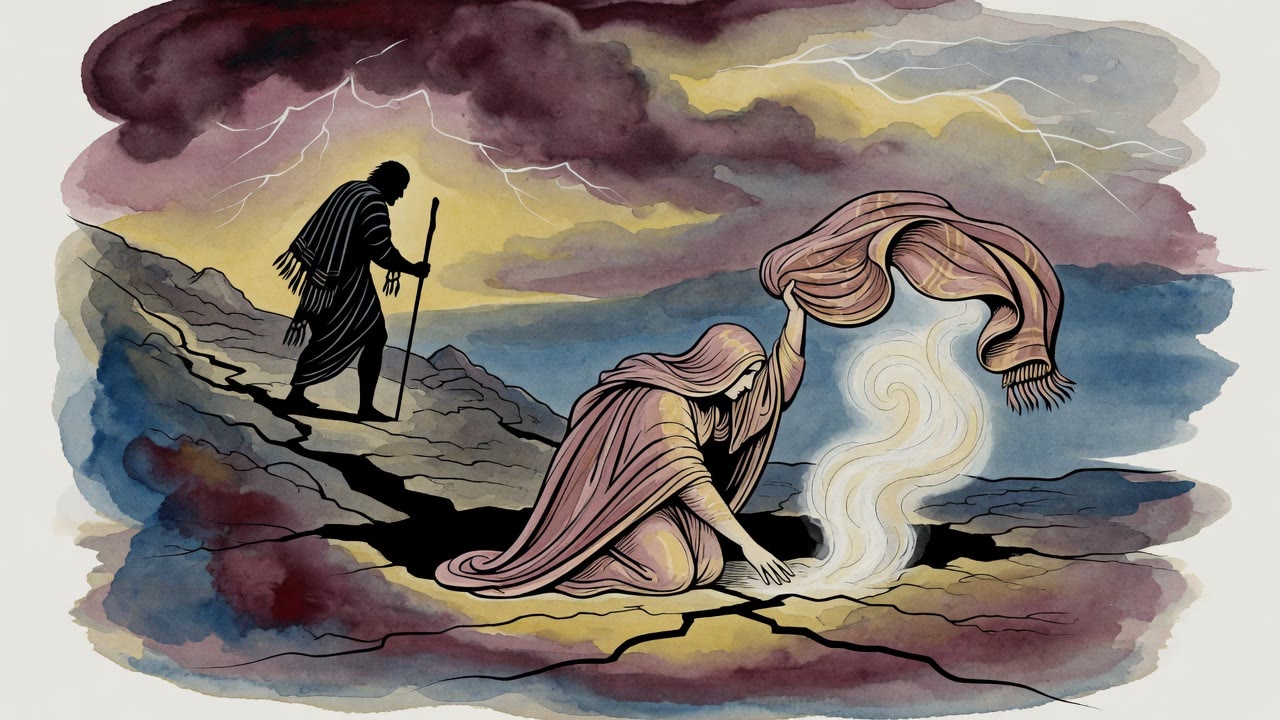
Abner had bragged once that if he could only find a place to grip the earth, he could shake the whole world loose. Now his fingers held the one man he most wanted to break, and the crowd asked him to surrender that too. He opened his hands. Joab dropped free, gasping, alive. And the instant the giant let go, the giant fell dead, the judgment going against him in the same breath.
The strongest man in Israel had moved walls with his feet and crushed iron with his grip and held a doomed throne aloft for years past its time. He could not pull free of his mother's house. The witch's craft had sentenced the king he served, and the dead brother had sentenced him, and the true Judge had the last word over a body that no living man could budge.
← All myths