5 min read

Abram Armed His Household to Pull Lot From War

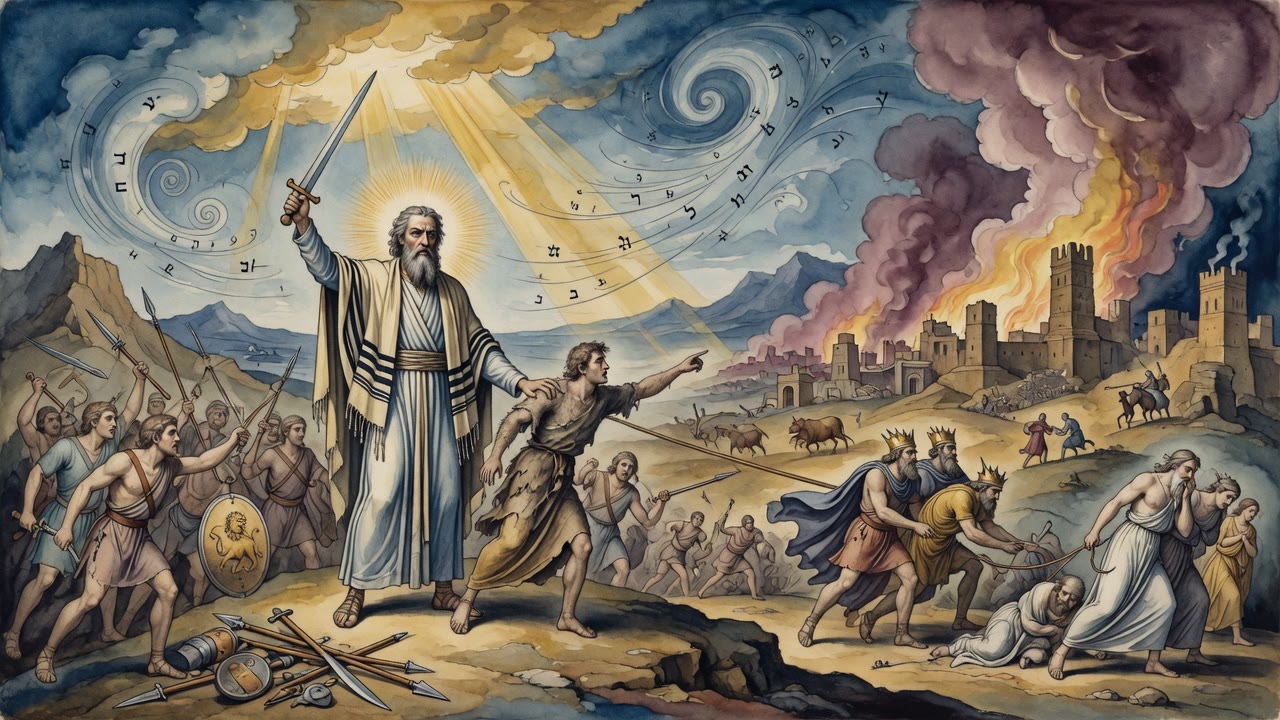
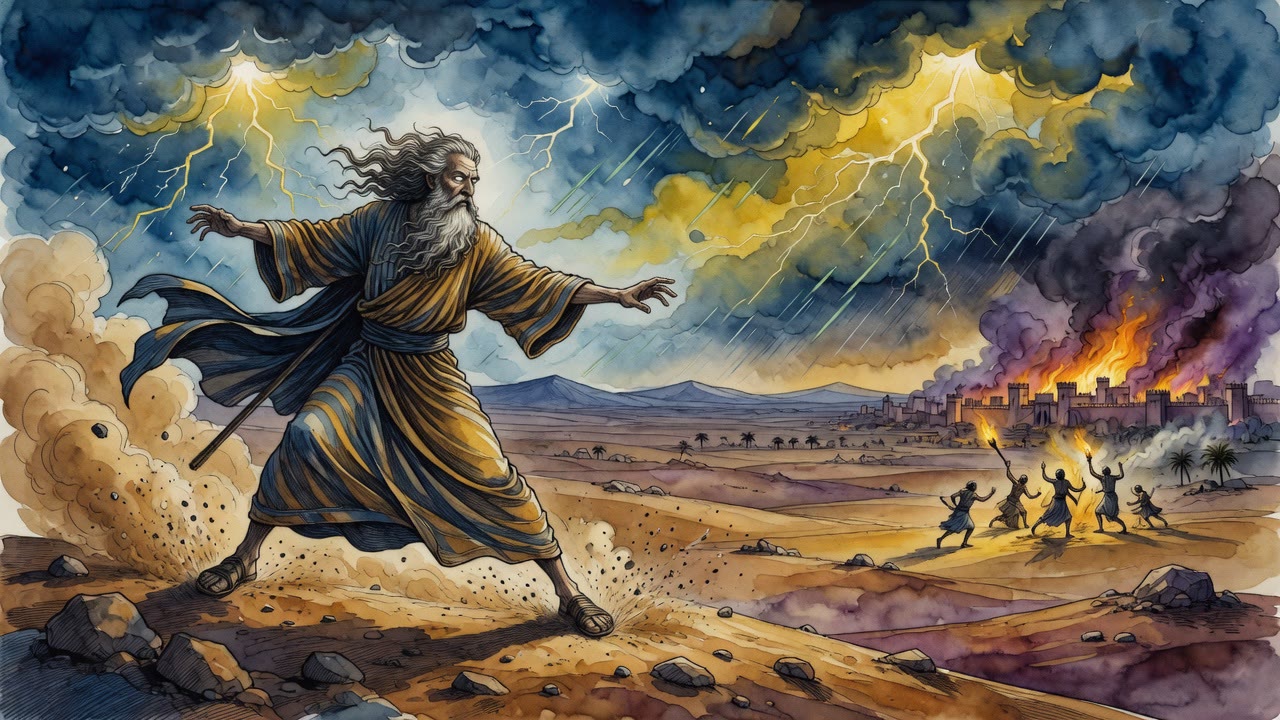
Chedorlaomer's kings crushed Gomorrah and dragged Lot from Sodom. One escapee reached Abram, who armed his servants and ran north.

Curated by Arthur · Told by Maggid ·
Table of Contents
  1. The Man Who Got Out of the Vale
  2. Two Days to Hebron
  3. Four Words at the Tent Door
  4. Counting the Men Who Ate His Bread
  5. North
Abram Armed His Household to Pull Lot From War Click for full size

The Man Who Got Out of the Vale

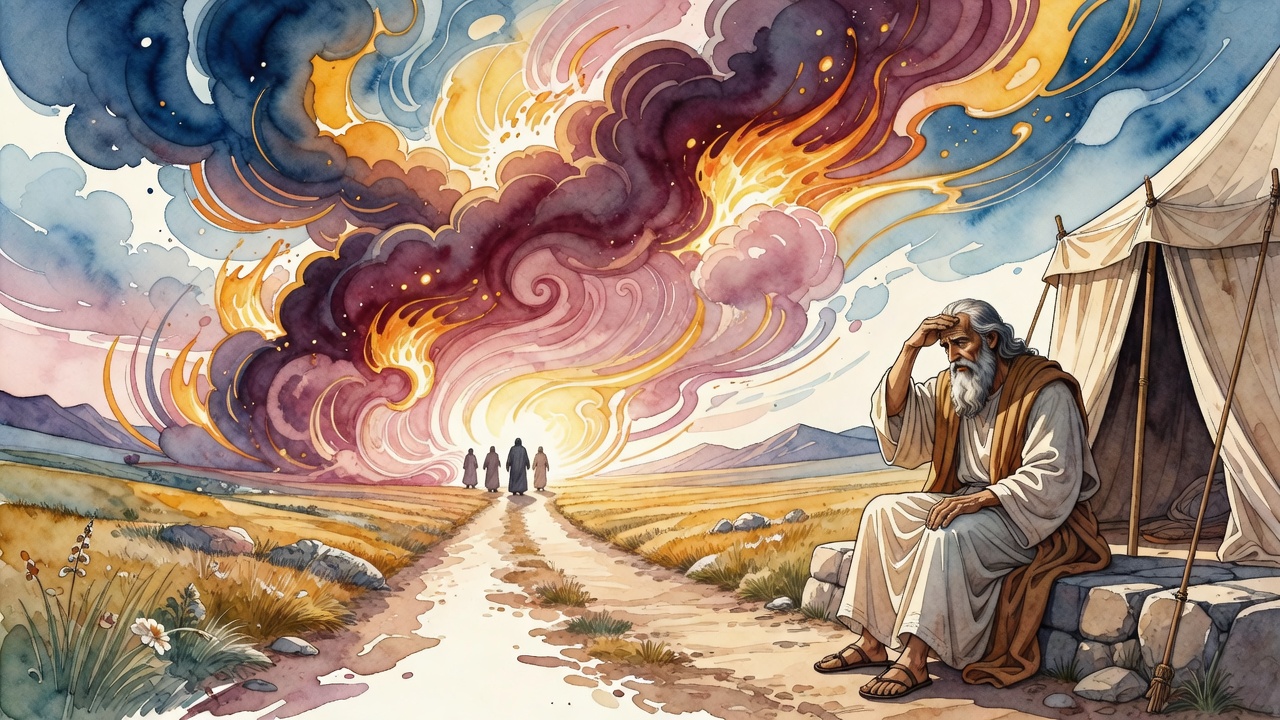
He was face down among the salt pits of the vale of Siddim while the four kings finished the work, and he stayed there long after the noise moved off, because men who stand up early in a field like that do not stand up twice. The king of Gomorrah was dead. The king of Sodom had run. What was left in the vale was wounded and would not be leaving.

When he did get up, the column was already forming on the north road. Chedorlaomer of Elam had brought Amraphel of Shinar with him, and Arioch of Ellasar, and Tidal king of nations, and they had not come for a border. They had come for inventory. Sodom went into the column, and Admah, and Zeboim, people and grain and cattle and cloth, all of it roped and counted and pointed north.

He knew one face in that line. Lot, Abram's brother's son, who had looked at the whole plain years ago and picked the green part of it, and who had pitched his tents toward Sodom because the water was good there. The green part was now a road, and Lot was walking up it with his hands tied and his household walking behind him.

Two Days to Hebron

He went south instead of north, which took some deciding, since south was away from everyone he knew.

The arithmetic was simple enough once he did it. Sodom's king was hiding. Gomorrah's king was in the salt. The cities of the plain had no one left standing who could raise a hand for anybody, so nobody in that whole valley was going to answer four kings on behalf of a captive. There was exactly one man in the country who might, and he was not a king at all. He was a foreigner camped in the oaks at Mamre with herds and servants and altars, and he was Lot's kin, and kin was the only claim anyone had left to make.

So the man ran to Hebron with a mouth full of dust and one sentence he had been shaping the whole way.

Four Words at the Tent Door

He said it standing up, because he did not trust himself to get up again if he sat. "Your brother's son has been taken captive."

Abram did not answer at once. He asked which road, and how many, and how long ago, and then he stopped asking, and for a moment there was nothing in his face at all. The old man was doing the same arithmetic the runner had done on the way, and coming out at the same place. Four kings had just emptied the cities of the plain in an afternoon. There was no army between here and Damascus that had any interest in a man from Sodom. Then Abram turned toward the tents and started naming men.

That was the whole of the deliberation. It took about as long as it takes to fill a cup.

Counting the Men Who Ate His Bread

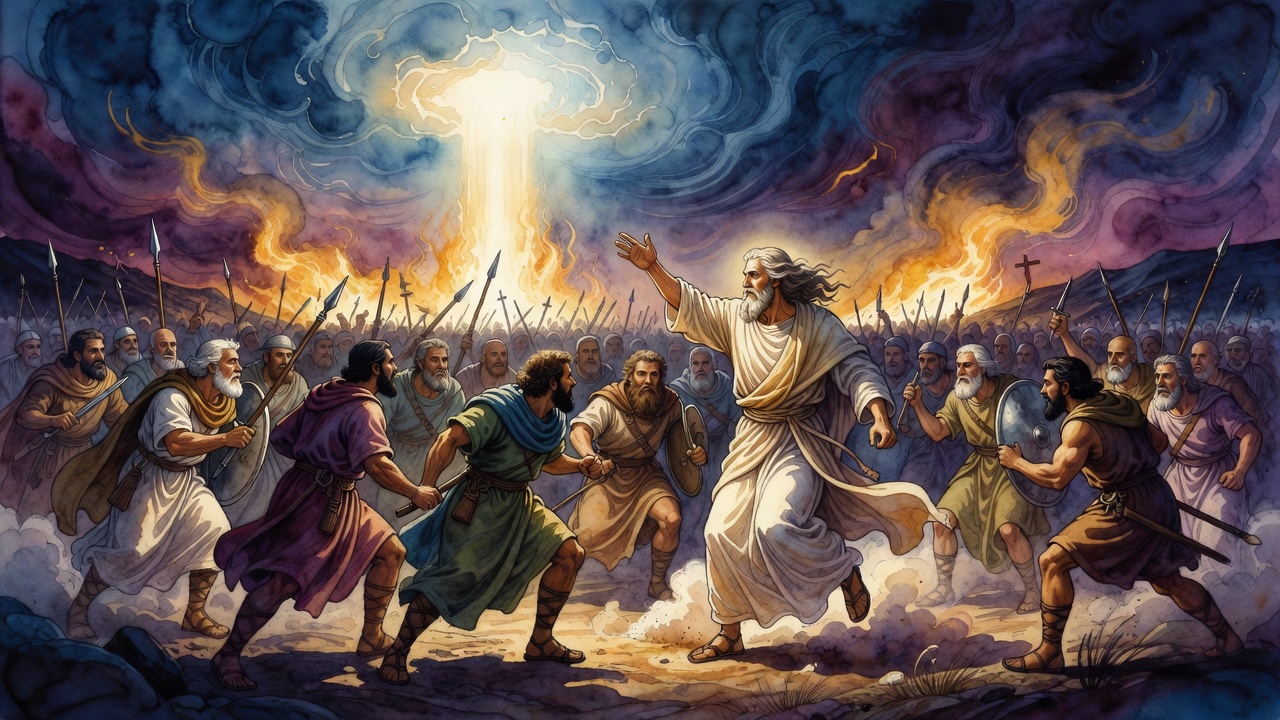
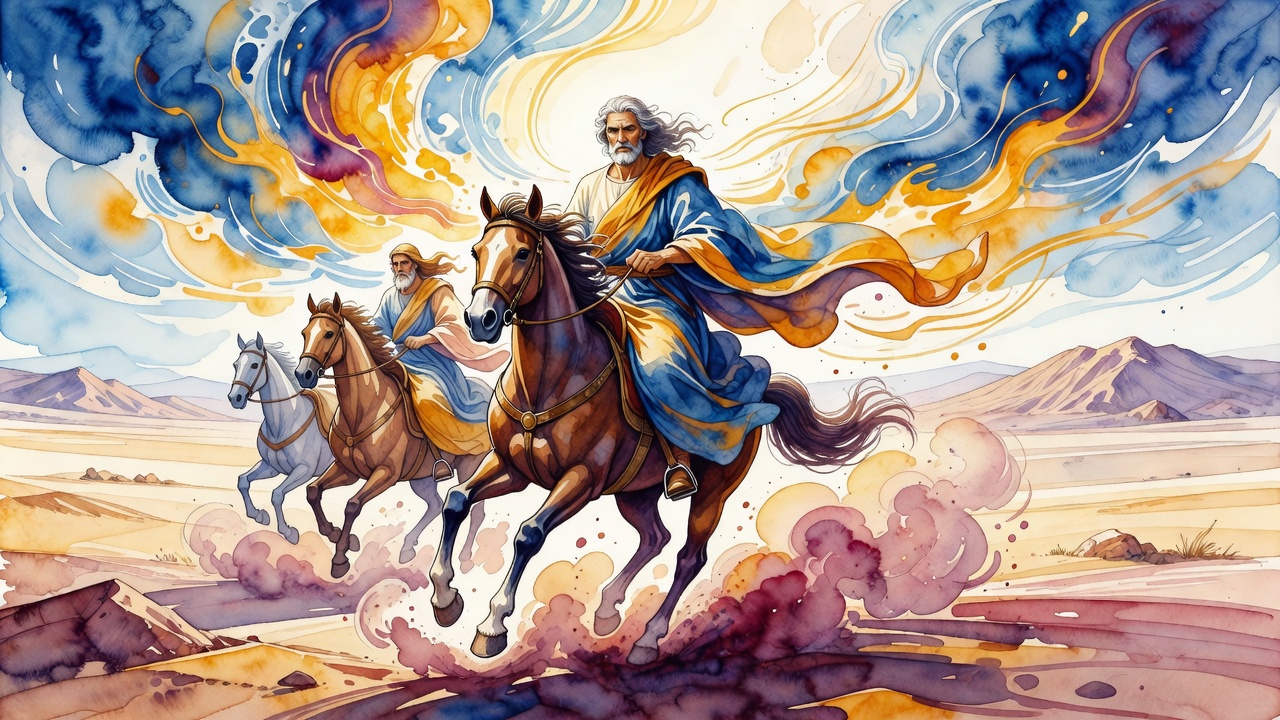
They were not soldiers. They were three hundred and eighteen men born in his own house, herdsmen and drivers and water carriers who had spent their lives moving animals between wells, and now they were being handed spears and told to catch a victorious army before it reached Dan.

Abram armed them himself, since there was nobody else to do it, and the counting went faster than the arming. Every man in that camp had eaten his bread. That was the entire basis of the thing. No treaty required it, no city had asked for it, and no god had spoken about it that morning. His brother's son was in a rope line going north, so the household went north.

Mamre and Eshkol and Aner came with their men, because they were confederate with Abram and their word held. It still was not an army. It was a camp with weapons, moving fast, hoping to reach a column that thought nothing behind it was worth looking back at.

North

They went out before the heat, and the dust of them hung over the Hebron road for a long while after the last man had passed.

The runner did not go with them. Somebody put water in his hands and he sat down against a tent post in the shade of Mamre's oaks and drank it slowly, and watched the column he had summoned move off in the direction he had spent two days running away from.


← All myths
From the tradition

Sources

3 sources

The texts behind this telling. Some cards carry a translation of the source; others are our own retelling of it, and each card says which. Every card links out to the original.

Book of Jubilees 13:28Book of Jubilees

Retold in our words. Read the original at the link below.Sefaria Community Translation · CC-BY

Book of Jubilees turns to Kingdom of Chedorlaomer.

The scene opens with a list of kings – Chedorlaomer of Elam, Amraphel of Shinar, Arioch of Ellasar, and Tidal of Goyim. Quite the formidable alliance, wouldn't you say? They descend upon the cities of the plain, and things get ugly fast. According to Jubilees, these kings utterly crushed the King of Gomorrah, with the King of Sodom fleeing. The battlefield was the Valley of Siddim, near the Salt Sea – what we know today as the Dead Sea. It was a slaughter.

It wasn't just a military campaign. It was also a kidnapping. The victorious kings took the cities of Sodom, Admah, and Zeboim captive. And among those carted off was Lot, Abram's nephew. Lot, who had chosen to settle near the wicked city of Sodom (Genesis 13:10-13), now faced the consequences of his choices.

The Book of Jubilees emphasizes the speed with which news traveled in those days. One who had escaped the carnage managed to reach Abram and break the news: "Your brother's son has been taken captive!"

Abram, mind you, wasn't just some desert sheikh. He was a man of principle, a man of faith. As the story continues in Genesis 14, we see Abram immediately arming his household servants, preparing for a daring rescue mission.

What’s interesting here is how Jubilees frames this event. It's not just a geopolitical conflict. It’s a personal one, driven by family loyalty and a sense of justice. Abram’s response isn't just about rescuing Lot; it’s about upholding a moral code, about standing against injustice.

This small passage in Jubilees sets the stage for a thrilling tale of courage and divine intervention.

Full source
Book of Jubilees 24:1Book of Jubilees

Retold in our words. Read the original at the link below.Sefaria Community Translation · CC-BY

Book of Jubilees turns to Trial of Moses of Abraham.

That's the image that leaps out at us from the Book of Jubilees. In chapter 24, we find God speaking directly to Moses, not just dictating laws, but instructing him to record these very words. "Write down these words," God commands, "for thus are they written, and they record (them) on the heavenly tables for a testimony for the generations for ever." A testimony for the generations forever. This isn't just about the here and now. It's about etching these truths into the very fabric of existence, ensuring their survival beyond human memory. It speaks of a divine record-keeping, a cosmic ledger if you will. What a powerful thought!

What happens next? Well, we shift gears. "And it came to pass after the death of Abraham, that the Lord blessed Isaac his son.."

See how seamlessly the narrative flows? We're moving from the grand, cosmic scale of heavenly tablets to the intensely personal story of inheritance and blessing. Abraham, the patriarch, is gone. His legacy now rests on Isaac's shoulders.

What does it mean to be blessed, after such a profound loss? How does one even begin to step into the shoes of a legend like Abraham? The text doesn't spell it out, but the implication is clear: the story continues. Life goes on, even after the giants have passed. And the blessings? They endure.

The Book of Jubilees, also known as Little Genesis or Lesser Genesis, is considered one of the pseudepigraphal books of the Hebrew Bible, meaning its authorship is falsely attributed. Although it isn't part of the canonical Hebrew Bible, it's valued for the light it sheds on how Jews understood and expanded upon biblical narratives during the Second Temple period. This book is considered canon by both the Ethiopian Orthodox Church and Eritrean Orthodox Church.

It retells the stories from Genesis and the first part of Exodus but divides time into "jubilees" – periods of 49 years, or seven cycles of seven years (Shmita). The author gives precise dates of events that are only generally mentioned in the Bible.

And that, in a nutshell, is where this chapter begins. It's a transition. A passing of the torch. From divine inscription to earthly inheritance. From the age of Abraham to the era of Isaac. What legacy will we leave etched, not just in stone, but perhaps even on those elusive heavenly tablets?

Full source
Book of Jubilees 1:17Book of Jubilees

Retold in our words. Read the original at the link below.Sefaria Community Translation · CC-BY

The Book of Jubilees, a text that gives us a unique retelling of the Torah, certainly seems to think so. It’s a book overflowing with warnings and rebukes, a call to remember the covenant and avoid straying from the path.

In this passage, we hear God lamenting what will happen, the future He sees unfolding. He's outlining what will happen if the Israelites forget Him.

He begins by listing the things most precious to Him, the things He has set aside as sacred: "My sabbaths, and My holy place which I have hallowed for Myself in their midst, and My tabernacle, and My sanctuary, which I have hallowed for Myself in the midst of the land, that I should set My name upon it, and that it should dwell (there). God wanting to dwell among His people, to have a place, a name, a shared sacred space.

Then… the tone shifts.

The Book of Jubilees tells us that they will fall astray, and “they will make to themselves high places and groves and graven images, and they will worship, each his own (graven image), so as to go astray, and they will sacrifice their children to demons, and to all the works of the error of their hearts."

The tragedy here isn't just about worshipping idols. It's about the why. It's about straying from the path, about losing sight of the values and principles that define them. It’s about the ultimate betrayal, even going so far as to sacrifice their own children to demonic entities - a horrifying act born of the "error of their hearts."

And God, in His infinite mercy and, perhaps, a touch of despair, doesn’t just let them wander into the darkness. "And I will send witnesses unto them, that I may witness against them, but they will not hear, and will slay the witnesses also..." He will send witnesses. Prophets, teachers, guides. People to point them back to the light. But tragically, the Book of Jubilees predicts they will reject these messengers, even kill them.

But it's also a powerful reminder. The Book of Jubilees isn’t just a historical account; it's a warning. A plea to remember, to listen, to choose the path of righteousness. Are we heeding the lessons of the past, or are we doomed to repeat them?

Full source