Absalom's Elaborate Conspiracy Against King David
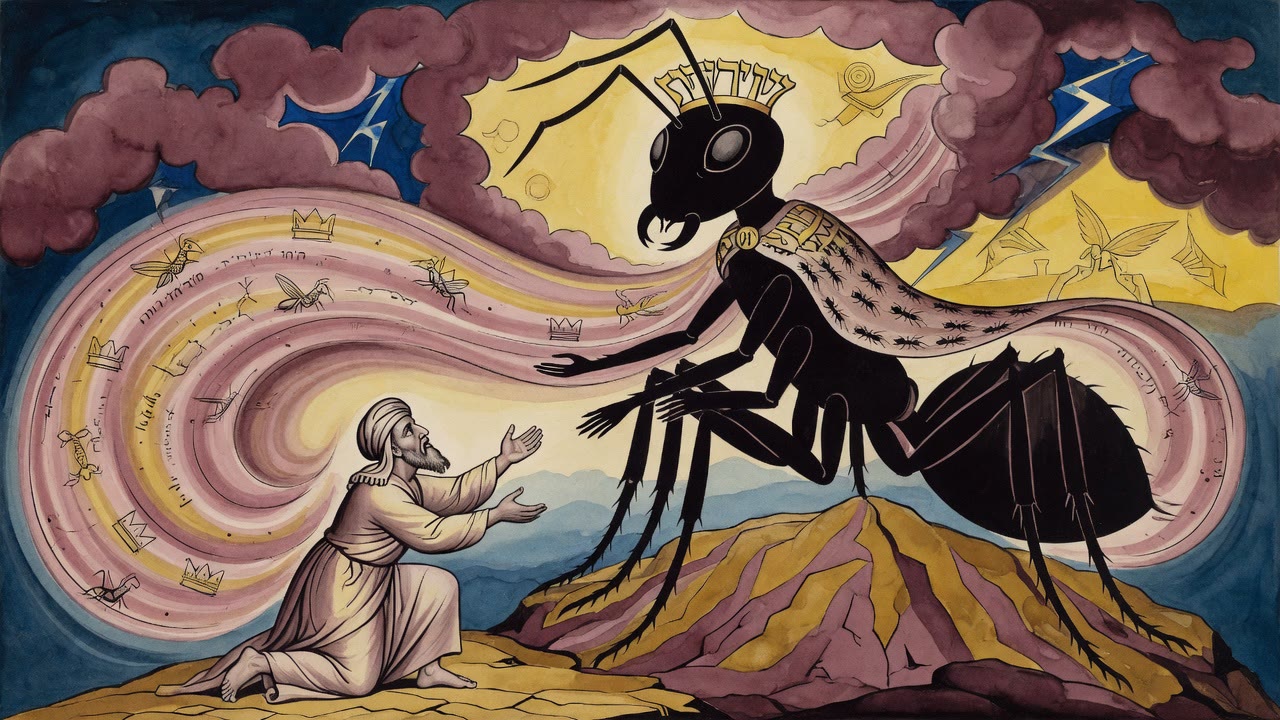
Absalom spent years building his plot against his father. It began not with weapons but with a letter bearing the king's own seal.
Table of Contents
 Click for full size
The Letter With the Royal Seal
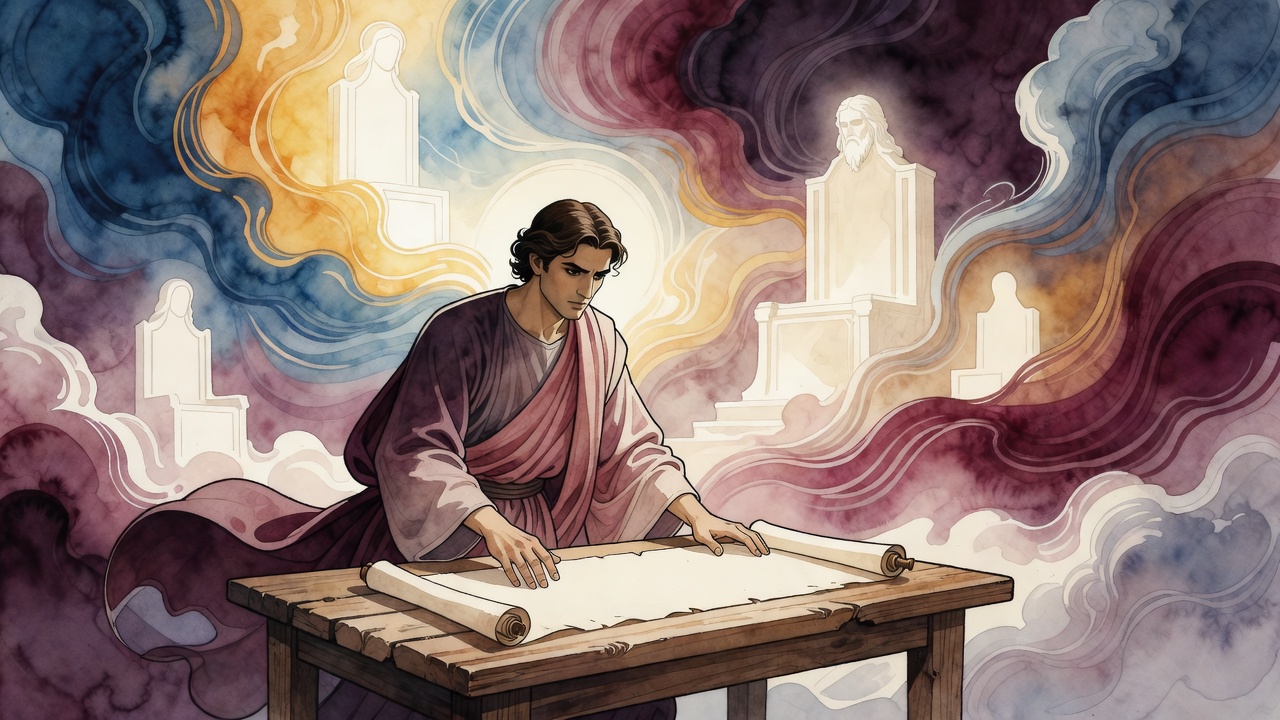
Absalom was patient in a way that made him dangerous. He did not rush. He watched his father's kingdom for years, studying its pressure points, identifying where the weight of David's rule sat unevenly, where grievances had accumulated without resolution. He watched, and he planned, and before he moved a single soldier he obtained something more powerful than any army.
A letter from David himself. Signed. Sealed. Authorizing Absalom to travel through the kingdom and select two elders from every town to join his retinue. The exact circumstances of how he obtained it, whether by persuasion, deception, or the ordinary administrative requests of a prince, the tradition does not fully clarify. But the effect was absolute. Every door in Israel opened before him. Every local elder greeted him not merely as a prince but as the king's chosen representative, traveling with his father's explicit backing.
It was a weapon without a blade.
Four Years of Open Flattery
The tradition records that Absalom stood at the gate of the city, the place where legal disputes were resolved and where the business of ordinary people met the machinery of the kingdom. He intercepted those who were coming to bring their cases before David. He listened to each one with complete attention, asked what tribe they were from, engaged them as individuals rather than as petitioners. Then he told them: "your case is good, your claim is just, but there is no one authorized by the king to hear it properly."
"If only I were judge," he said, "I would give every man justice."
He said this to everyone. He said it for four years. He was a man of extraordinary physical beauty, the tradition emphasizes this, noting that from the crown of his head to the sole of his foot there was no blemish in him, and he deployed that beauty as a political instrument, embracing the petitioners who came to bow to him, refusing to let them prostrate themselves before a prince, insisting on personal contact. He stole the hearts of Israel one handshake at a time.
The Moment David Left Jerusalem
When the revolt began in earnest, when Absalom's network had been built and the signal was given, David made a calculation. He had survived Saul. He had survived the wilderness. He had rebuilt himself from zero more than once. What he could not do was defend Jerusalem from inside its walls if the cost of doing so meant the city itself was destroyed in the fighting. He chose to leave.
He walked out of Jerusalem barefoot, his head covered, weeping. His servants and his household with him, and the priests carrying the Ark, and the people of his house following down the road to the wilderness. He turned to the priests and told them to take the Ark back. If God wished him to return, he would return. If not, he spread his hands. Whatever God decided would be correct.
This is, the tradition notes, precisely what Saul had never been able to do. David had the capacity to set down his own survival preference and defer to God's judgment. It is the act of a man who had been writing psalms for decades and actually believed what he was writing.
Ahithophel's Counsel and Why It Failed
Absalom's chief strategist was Ahithophel, whose advice the tradition compares to inquiring directly of God, so reliable was his judgment, so precise his read of every situation. Ahithophel told Absalom what to do to make the rebellion irreversible and to press the military advantage before David could regroup.
But Hushai, David's loyal counselor who had gone over to Absalom as a mole, was there too. And Hushai's counsel, deliberately inferior from a strategic standpoint but more flattering to Absalom's vanity, was the one Absalom chose. The tradition sees God's hand in Absalom's choice. When a ruler's judgment has already been impaired by pride, even a good advisor cannot save him from himself.
David escaped. Absalom's army went to the wrong place at the wrong time. The revolt collapsed from the inside.
← All myths