Parshat Bereshit4 min read

Adam Descended From Heaven Carrying Fire and Light

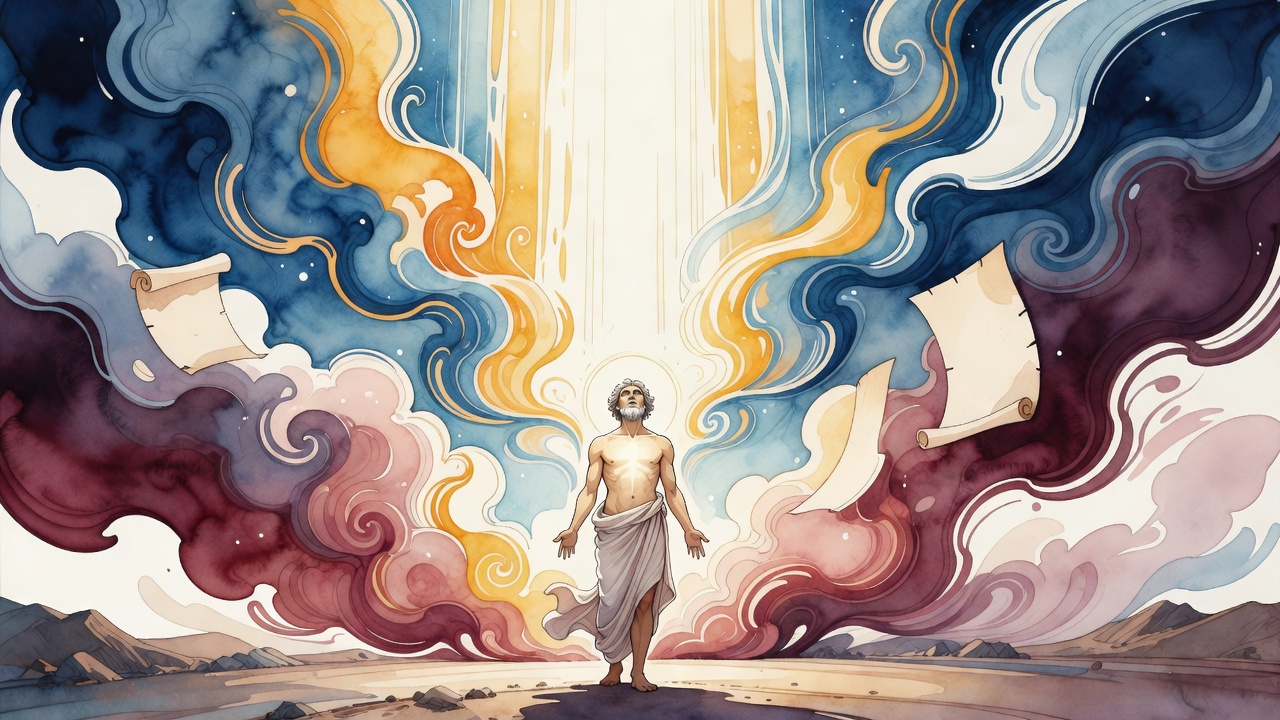
Before Adam walked the earth, an older tradition says he dwelt in heaven. When he came down, the sky blazed. He brought fire and light with him.
Curated by Arthur · Told by Maggid ·
Table of Contents
  1. Before the Dust
  2. The Sky Blazing
  3. The Light He Carried
  4. Adam as Something Between

Before the Dust

The common image is familiar: God forms Adam from the dust of the ground, breathes life into his nostrils, and sets him in the garden. Dust to life to garden. The origin is terrestrial. The material is the most ordinary substance on earth.

An older tradition reaches further back. Before Adam was made from dust, or before that making was complete, he existed in heaven. Not as an idea or a plan but as a presence, a being who dwelled in the celestial realm before descending. When he came down, he did not arrive empty-handed.

The Sky Blazing

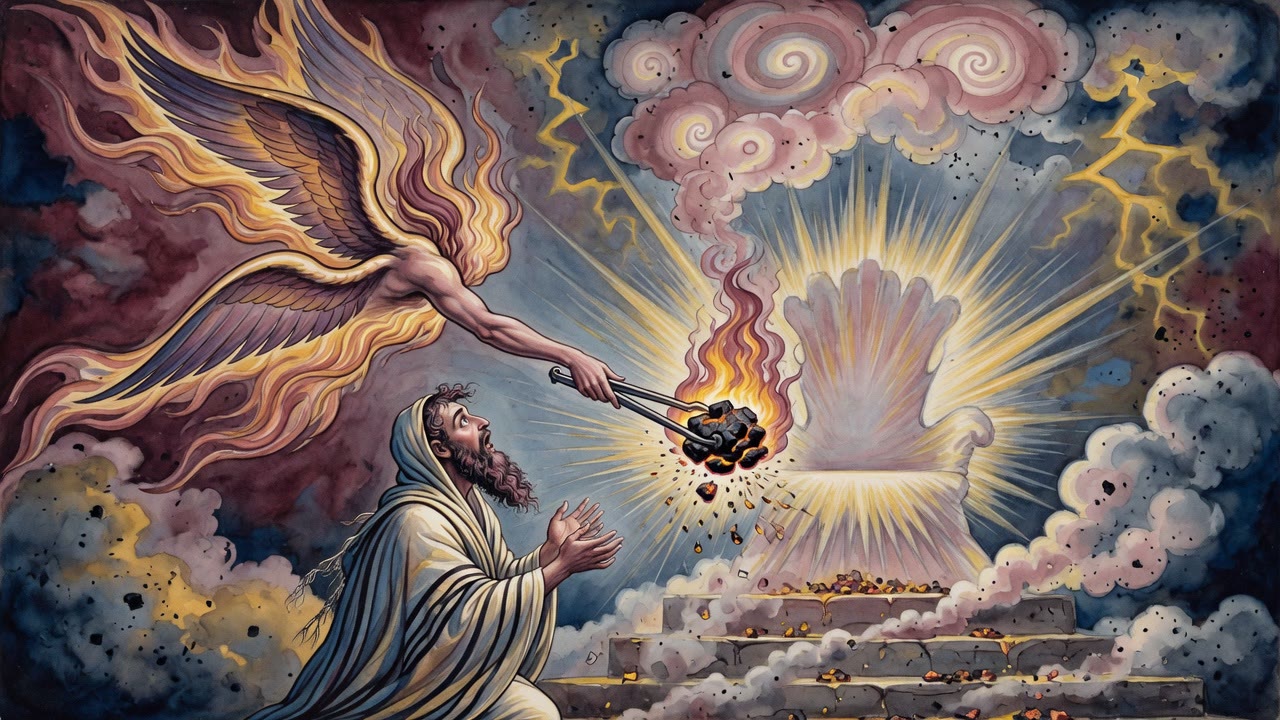
The Orchot Chaim, a 14th-century legal-aggadic collection compiled by Rabbi Aaron HaKohen of Lunel, records that Adam brought fire and light down with him from heaven. When he descended, the whole sky blazed, as if the world were about to be consumed. The descent was not quiet. It was not a simple placement of a human being onto a prepared surface. It was an event that marked the atmosphere.

In that moment, God sealed fire with a decree. Not the flame of destruction but the word of divine speech, as Jeremiah described it: "My word is like fire" (Jeremiah 23:29). The fire Adam carried down was connected to something in the structure of divine language. He did not steal it. It came with him as part of what he was.

The Light He Carried

The light is more complicated. The Se'udat Gan Eden tradition, preserved in Beit ha-Midrash, offered several possibilities for how Adam brought light to earth. The light of the first day of creation, which was different from the light of the sun and moon created on the fourth day, was the primordial light through which a person could see from one end of the world to the other. That light was hidden after Adam's sin, reserved for the righteous in the world to come.

But before the hiding, Adam carried it. He was the vessel through which the original, unrestricted light made its way from the celestial source to the earthly world. Whether through his body, his eyes, or some other mechanism the texts describe differently, Adam was the conduit. The earth received light through him before it received light through the sun.

Adam as Something Between

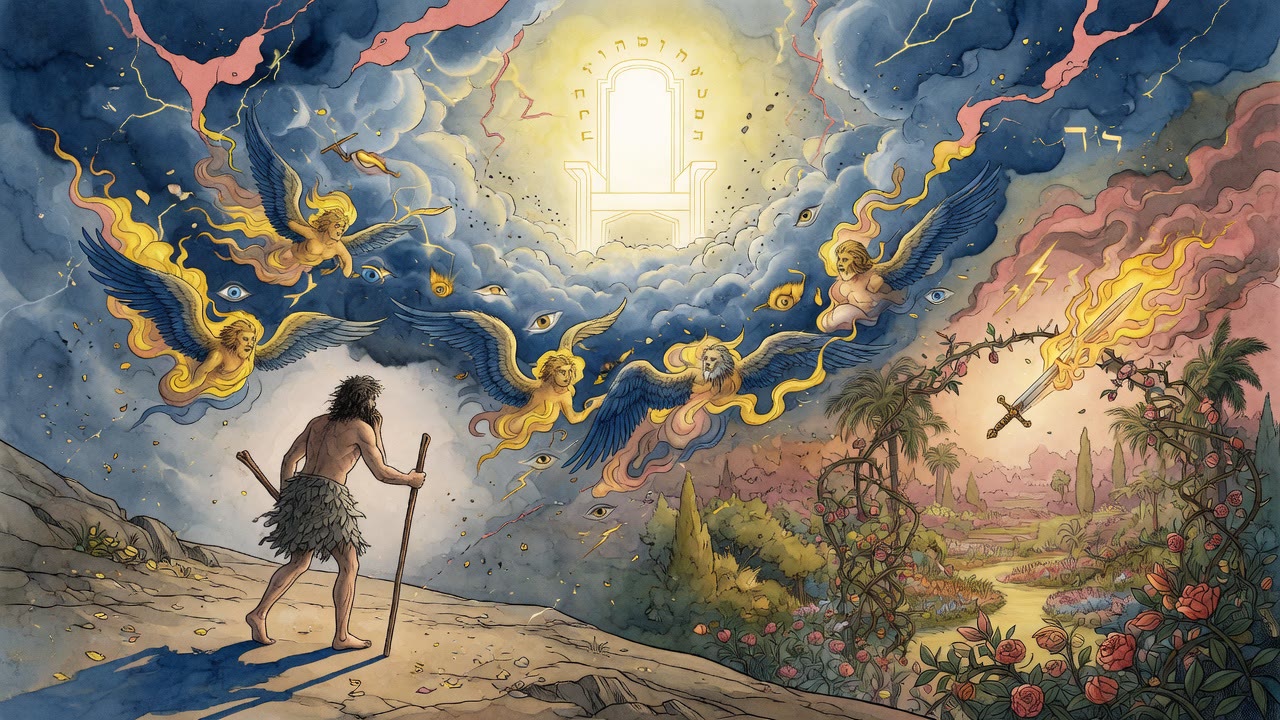
The tradition in 2 Enoch and related texts goes further. God fashioned Adam from both invisible and visible substances, a blend of the earthly and the divine. The plan was not merely to make a human being but to make something that stood at the junction between what was above and what was below. An angel made of dust. A celestial being made of earth.

This Adam is not a diminished version of what he was supposed to be. He is exactly what he was supposed to be: the figure who bridges the two realms by containing both. When he descends, the fire and light come with him because they belong to the part of him that was heaven. The ground receives him, and through him receives what it could not have generated on its own.


← All myths
From the tradition

Sources

2 sources

The texts this telling draws on, in full. Open a card to read inline, or expand it for a wider, quieter read.

Orhot Hayim 1:68cOrchot Chaim

Some traditions suggest that Adam, the first human, wasn't just made on Earth, but actually brought something vital to Earth – fire and light themselves!

Before Adam existed as a mortal being, some say he lived in heaven. And according to Orhot Hayim, he brought not only fire but also light down with him. When he descended, the whole sky blazed, like the world was about to be consumed! In that moment, God, it is said, relinquished some control of fire, sealing it with a decree. As (Jeremiah 23:29) tells us, "My word is like fire."

So, it's like God shared a part of Himself, His very word, through Adam.

What about the light? How did Adam bring that down? The Se'udat Gan Eden (the Garden of Eden, paradise) in Beit ha-Midrash (rabbinic interpretive commentary) offers a few possibilities. Some say the light radiated from Adam's fingernails, shining brighter than the sun! Can you picture that? Fingernails reflecting enough light to illuminate the world.. it's a powerful image. It almost feels like a reference to the Havdalah (the ceremony marking the end of Shabbat (the Sabbath)) ceremony, when we look at our fingernails in the candlelight as we transition from Shabbat to the rest of the week.

Others suggest Adam used the four winds to carry the light. Still others say he used enchanted stones. And here's where it gets really interesting. These weren't just any stones. According to Midrash Konen in Beit ha-Midrash, one was the stone of darkness, and the other, the stone of dimness, as it is said in (Job 28:3), "The stones of thick darkness and the shadow of death." Adam brought light into the world using darkness and death. It's a mystery, how exactly, but it speaks to the idea that creation often comes from chaos, from the void.

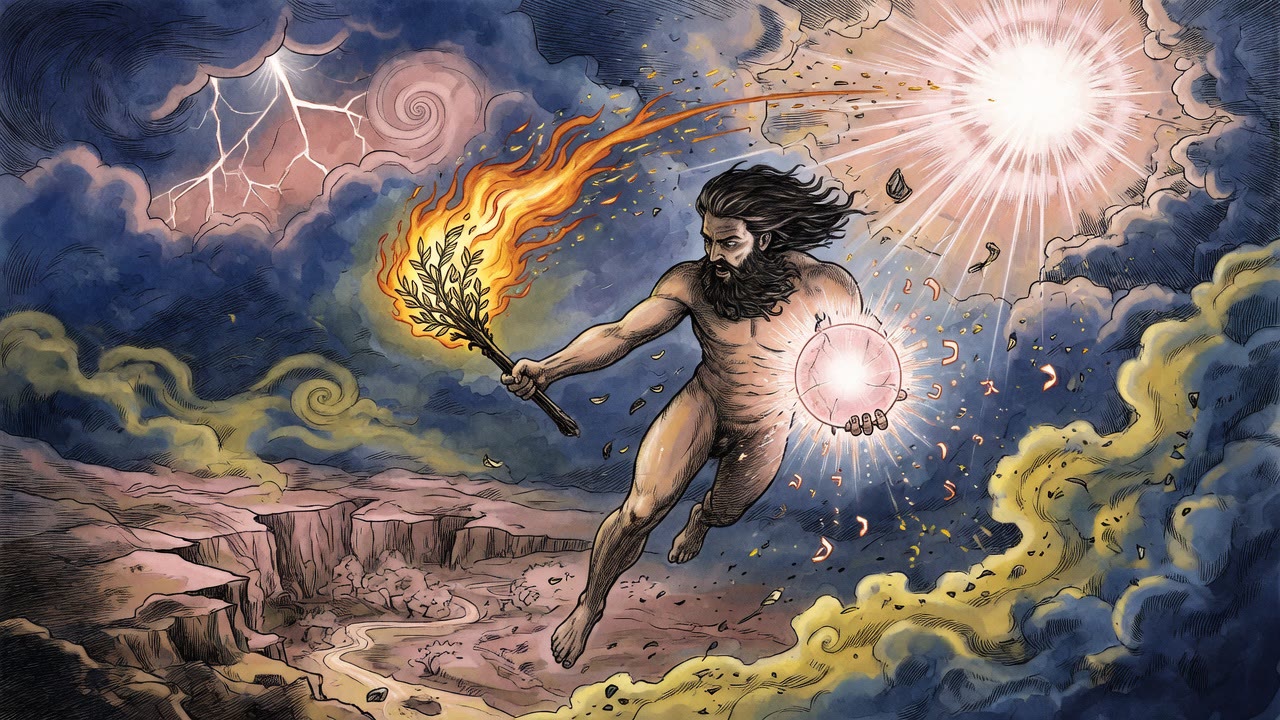
Now, this story has some parallels to the ancient story of Prometheus, who stole fire from the gods and gave it to humanity. As Robert Graves explains in The ancient stories, Prometheus lit a torch at the sun and gave mankind a glowing coal. Similarly, this version of Adam's story, as Rabbi Schwartz points out in Tree of Souls, positions him almost as a divine figure, a bringer of essential elements to the world. Bringing light is certainly a God-like act, echoing the very first words of Creation: "Let there be light!" (Genesis 1:3).

Was Adam's act of bringing fire and light an act of rebellion, like Prometheus's? Perhaps. Some interpret it as another version of the Fall. Instead of eating the forbidden fruit, the cosmic Adam took fire and light from heaven. This interpretation is supported by (Genesis 3:22): "Behold, the man has become like one of us, knowing good and bad." In this context, Adam's sin and the forces that it released into the world are parallel to stealing the fire and light of heaven.

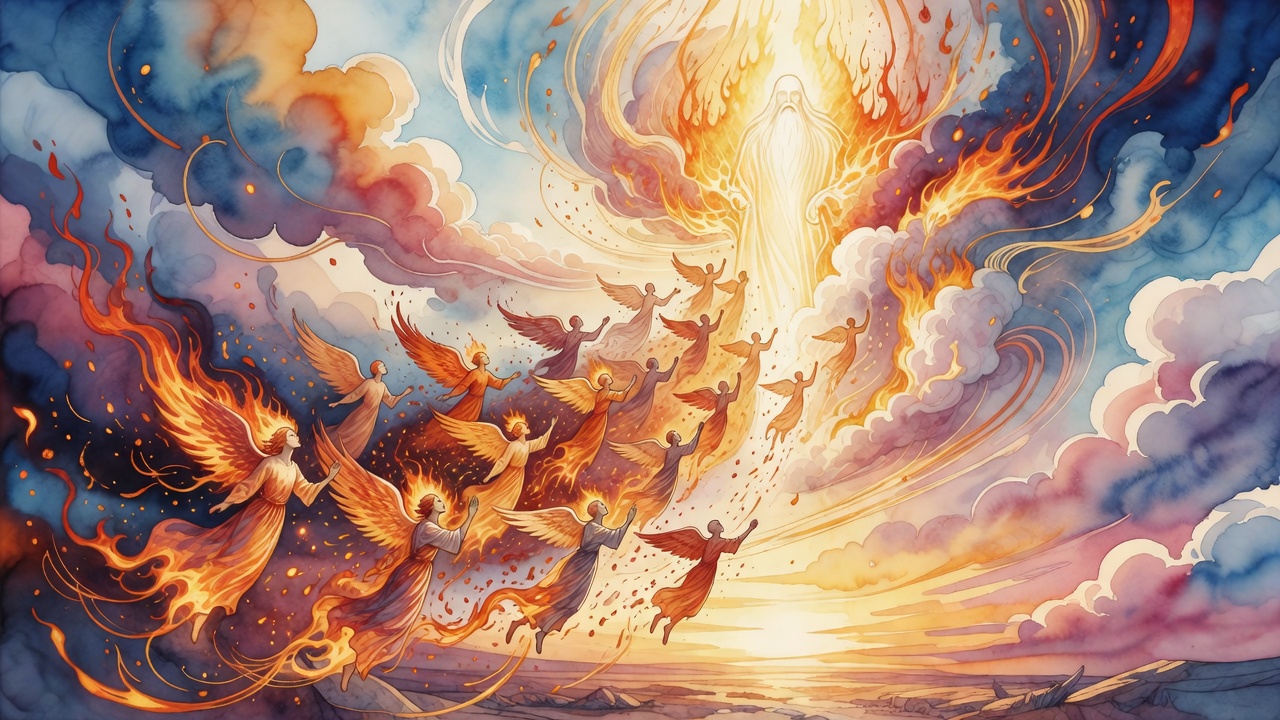
There's even another, lesser-known Jewish myth that echoes this theme, found in interpretations of Genesis 6, concerning the "sons of God" and the "daughters of men." This story is read as an account of angels who descended to earth, promising God to be righteous, but instead, they were seduced by the beauty of human women. They, too, were attempting to bring something down from the heavens, but with far different results.

So, what does it all mean? Perhaps this story of Adam isn't just about the literal origins of fire and light. Maybe it's about the human potential to bring divine qualities into the world, even if it comes with a cost. It reminds us that even in darkness, there's the possibility of light, and that creation and innovation can sometimes stem from unexpected, even seemingly negative, sources.

Full source
2 Enoch 30:8-112 Enoch

Adam is often remembered as simply the first man, made of dust. But some ancient traditions paint a far more…celestial picture. A picture of Adam as an angel.

Before you picture Adam with feathered wings, look more closely.

In certain Jewish mystical texts, God didn’t just whip up Adam from the earth and call it a day. Oh no. He fashioned Adam from both invisible and visible substances, a blend of the earthly and the divine. And what was the plan? To make him an angel! Not just any angel, but one second in power to God, a being privy to divine wisdom. We find this idea in texts like 2 Enoch, where Adam is explicitly described as an angel. Adam, the first human, as an angelic being, sharing in God’s wisdom. It's a far cry from the simple image readers often have.

It doesn't stop there. This angelic Adam was also destined to be a king. A great and glorious king who would reign on earth. The texts emphasize that nothing on earth could compare to him, not among any of the creatures that already existed. He was unique, special. The top of the heap.

And here's where it gets even more interesting. God assigned Adam four special stars and even gave him Paradise itself! Can you imagine? God handed over the keys to the Garden of Eden and commanded Adam to gaze into the heavens, to observe the angels.

Why?

Perhaps to remind him of his own elevated status, his origins, his potential. Perhaps to show him the divine order of things. Or maybe, just maybe, to give him something to aspire to.

This idea of a heavenly Adam isn't unique. We see similar themes with other figures in Jewish tradition, like Enoch and Jacob, who are sometimes portrayed as exalted angels, beings who share in God's creative power. Schwartz in Tree of Souls notes that there was a similar tradition that elevated Adam to such heights.

This concept of Adam as an angel connects to broader themes in Jewish mystical thought, which often explored the idea of humanity’s divine spark inhabiting a material world. This resonates with the image of Adam as a being of light and wisdom, placed in the Garden.

So, what does it all mean? Why this emphasis on Adam's angelic nature? Perhaps it's a way of highlighting the immense potential within humanity. The idea that we are not just creatures of dust, but also beings with a connection to the divine. A spark of the celestial within us all.

Next time you think of Adam, remember this other story. The story of Adam the angel, the king, the one who gazed at the stars. Remember that, according to some, that potential still lives within us.

Full source