Parshat Bereshit5 min read

Adam Names Seth to Stand for Murdered Abel

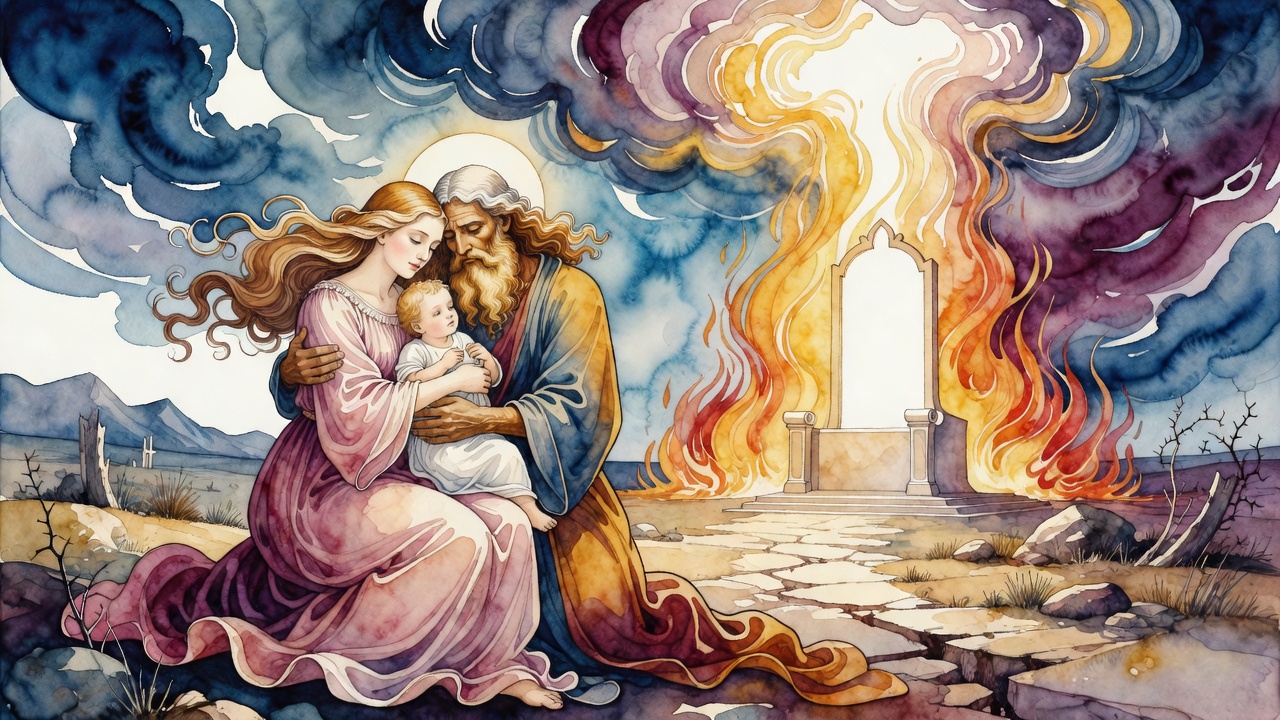
After Cain's murder, Adam and Eve cling closer, and at one hundred thirty years Eve names Seth another seed in Abel's place.

Curated by Arthur · Told by Maggid ·
Table of Contents
  1. A House That Still Smelled of Blood
  2. Further Desire After Loss
  3. One Hundred Thirty Years and a Name
  4. Why Abel Must Be Spoken at the Naming
  5. The Seed That Must Outrun the Spade
Adam Names Seth to Stand for Murdered Abel Click for full size

A House That Still Smelled of Blood

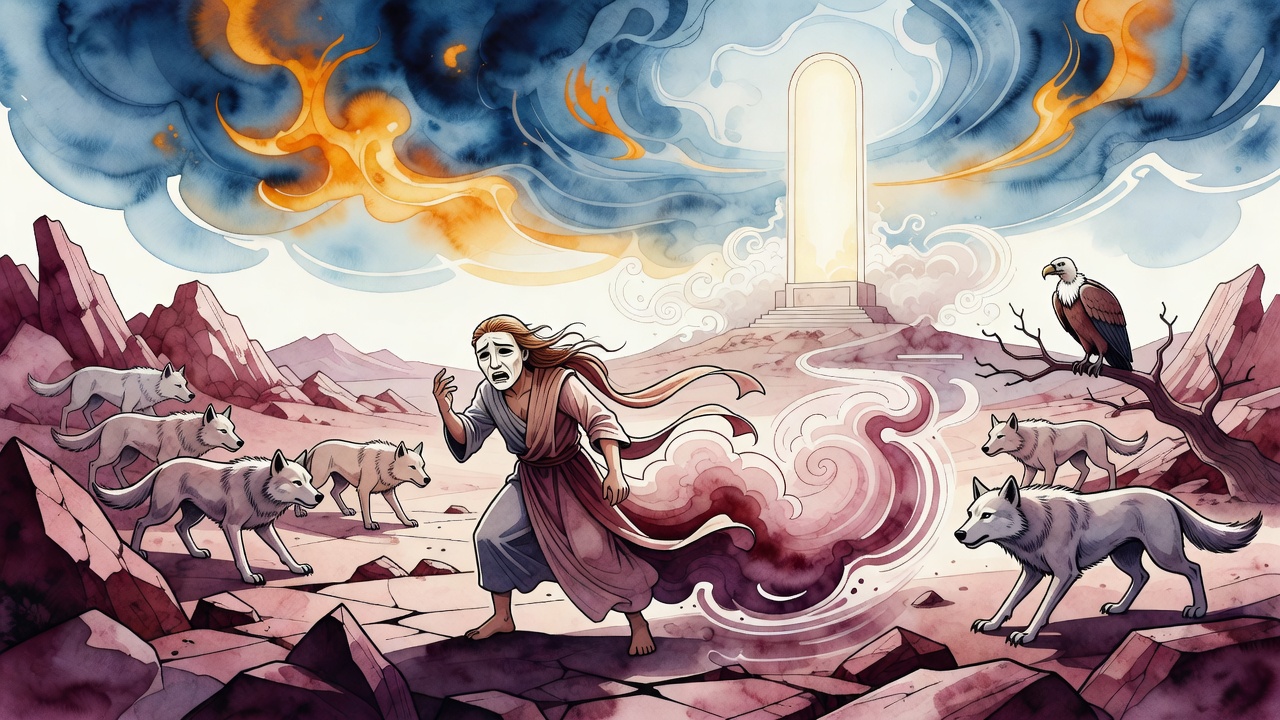
The field where Abel fell did not forget him. Adam and Eve walked a world that had learned murder from their firstborn. Soil took blood. Heaven took a cry. The third person in the family story was absence with a name.

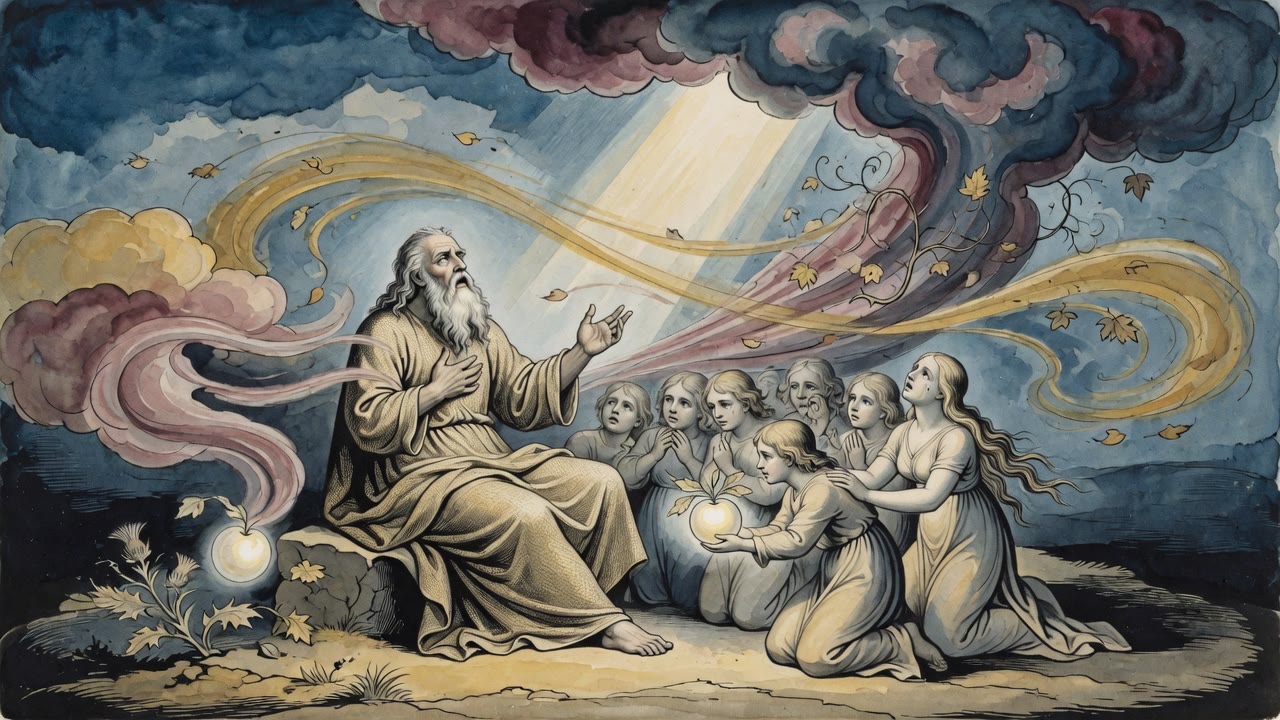
When Seth finally arrived, Adam's mouth did not invent a light saying. "God has raised up for me another seed in the place of Abel whom Cain slew" (Genesis 4:25). The birth announcement carried a corpse. Joy arrived wearing mourning clothes and refused to take them off.

The Midrash of Philo hears the weight in that introduction. Why name the murder at the cradle? Because Seth was not a casual addition. He was a patch sewn over a tear that still showed. Adam refused to let the new child erase the old violence by silence.

Further Desire After Loss

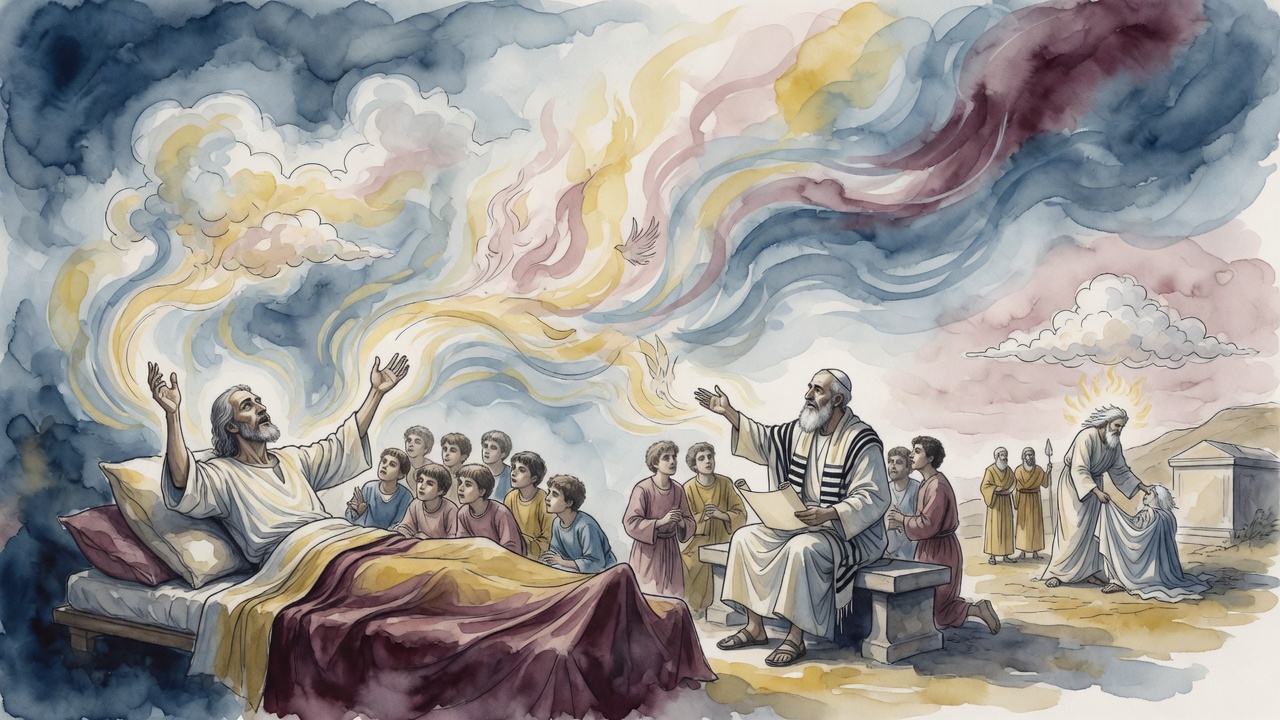
Bereshit Rabbah lingers on the word "further" in the intimacy that led to Seth. Rabbi Abba bar Yudan in the name of Rabbi Aha said Adam's desire for Eve intensified. Before, he wanted her when he saw her. After Abel, the wanting did not wait for sight. Loss made the bond constant, like sailors who remember the shore even when the shore is gone.

Grief did not only hollow them. It pressed them together. The first couple learned that a murdered son can either scatter a marriage or fuse it into something harder and more awake. The midrash chooses fusion. The body that buried Abel still reached for Eve as if touch were a vote against the emptiness Cain had opened.

Cain was still alive somewhere east of the story, marked and wandering. His parents did not wait for him to become a safe memory before they risked another child. Nights still broke on the sound of an empty place at the fire. Days still offered tools that had known Abel's hands. The decision to conceive again was not amnesia. It was defiance of the silence Cain had tried to make final.

Eve touched her belly later with a name already waiting. Adam walked the field's edge and would not look long at the soil. Between them, a third son was becoming an answer shaped like a question: who will pray if the murdered one cannot?

One Hundred Thirty Years and a Name

The Book of Jasher counts the years. In the hundred and thirtieth year of Adam's life, Seth was born "in his likeness and in his image." Eve's voice matched Adam's theology. "Because God has appointed me another seed in the place of Abel, for Cain has slain him."

Likeness and image here are not flattery. They are continuity. The murdered brother's line of worship would not die with him if another son could carry the face of the father forward. Seth's birth is succession under trauma, not a soft reset of Eden's early mornings.

Later Seth fathered Enosh, and in that time the sons of men multiplied and began to afflict their hearts by transgressing and rebelling. Idol service rose in the same generation-stream that had just received a child named as replacement. Men carved shapes and bowed. The world did not pause its corruption to honor the cradle.

Seth's line would be remembered as the line that still called on the Name even while neighbors learned new rebellions. The birth that patched Abel's absence did not freeze history into piety. It only kept a path open through a thickening crowd of idols and noise.

Why Abel Must Be Spoken at the Naming

Adam could have said only that God gave a son. He said Abel and Cain in the same breath as Seth. The sentence is a ledger. Credit: a new seed. Debit: a slain brother and a killer brother. The household of the first humans refused amnesia as a parenting style.

Philo's midrashic line presses the "why this introduction" until it yields a wound that still speaks. Seth's identity begins as a place-holder for the dead. That is harsh. It is also honest. Children born after catastrophe often inherit names that point backward before they point forward.

Eve's parallel wording in Jasher and Genesis locks the mother and father into one theology. God appoints. Cain slays. Abel remains the measure of what was lost. Seth walks into that triangle with open eyes he does not yet have.

The Seed That Must Outrun the Spade

Outside, men were already learning rebellion that would one day need a flood. Inside Adam's tent, a baby slept under a sentence of replacement. The myth does not pretend the child fixed the murder. It pretends only that God refused to let the murder have the last word on the human line.

Adam held a son and still saw Abel. Eve named a son and still accused Cain. Between those two gazes, Seth grew. The world that would later number years from creation already carried, in year one hundred thirty, a family that measured time by who was missing.

Another seed. Not a better story. A continued one. The field kept its stain. The name kept its honesty. And the first parents, closer than before, taught the next generation that love after violence does not mean forgetting the dead.


← All myths
From the tradition

Sources

3 sources

The texts behind this telling. Some cards carry a translation of the source; others are our own retelling of it, and each card says which. Every card links out to the original.

The Midrash of Philo 25:1The Midrash of Philo

Retold in our words. Read the original at the link below.The Works of Philo Judaeus, trans. C. D. Yonge, London, H. G. Bohn, 1854-1890 · Public Domain

The ones you read and think, "Okay, that happened... but why is it there?" (Genesis 4:25) is one of those lines. "God has raised up for me another seed in the place of Abel whom Cain slew." Adam says this after Seth is born. Seems straightforward. Abel’s gone, Seth replaces him. Case closed.

The rabbis of the Midrash (rabbinic interpretive commentary)… they weren't satisfied with "case closed." They saw these verses as tiny keys, each capable of unlocking vast chambers of meaning.

The Midrash of Philo, a collection of interpretations attributed to the Jewish philosopher Philo of Alexandria, who lived in the first century, asks a simple, yet profound question: Why this introduction? Why does Adam specifically mention Abel's murder when introducing Seth? Adam's words are heavy with loss and recognition. He's not just celebrating a new son; he's acknowledging a profound wound in the fabric of existence. The loss of Abel. The violence of Cain. The hope, fragile as it is, invested in Seth.

What does it tell us about Adam's state of mind? He’s not just a father rejoicing in a new child. He’s a father haunted. The shadow of fratricide hangs over everything. Every joy is tinged with the memory of unspeakable sorrow.

This verse, through the lens of Midrash, becomes a powerful reminder. A reminder that even in the face of unimaginable tragedy, hope – another seed – can still emerge. It speaks to the resilience of the human spirit, the enduring power of faith, and the knowledge that even after the worst has happened, life, in its own way, continues. Maybe not as it was. But it continues nonetheless.

Remember the layers of meaning that can be uncovered with a little curiosity and a willingness to delve deeper. After all, that's what the beauty of the Midrash is all about.

Full source
Bereshit Rabbah 23:5Bereshit Rabbah

Retold in our words. Read the original at the link below.The Sefaria Midrash Rabbah, 2022 · CC-BY

Take the story of Adam and Eve after the tragic loss of Abel. We read in (Genesis 4:25), "Adam was further intimate with his wife and she gave birth to a son, and she called his name Seth: As God has provided me with another offspring in place of Abel, as Cain killed him."

Bereshit Rabbah, that incredible collection of rabbinic interpretations of Genesis, doesn't just read the words; it unpacks them, layer by layer. The rabbis see something significant in the word "further." It suggests, according to Rabbi Abba bar Yudan in the name of Rabbi Aḥa, that Adam's desire for Eve intensified. Before, he only desired her when he saw her, but now, that desire was constant, unwavering. Isn't that a fascinating insight into the evolving relationship between the first man and woman after experiencing such profound loss? It’s even likened to seafarers, who, no matter how far they roam, always remember their homes and long to return.

What about the name Seth (Shet)? Eve says, "As God has provided [shat] me with another offspring." Rabbi Tanhuma, quoting Rabbi Shmuel, takes this a step further. He suggests that Eve was looking ahead, envisioning an offspring who would come "from a different place." Who could that be? None other than the Messianic King. The Messiah, like all mankind, will descend from Seth, and he will set up the foundations (mashtit) for a new world.

You might be asking, what does "from a different place" mean? Well, the Messiah, through David, traces his lineage back to Ruth the Moabitess. She was not of Jewish descent, highlighting the inclusive nature of the messianic promise.

But the interpretation doesn't stop there. The text continues, "In place of Abel, as Cain killed him." The rabbis, with their characteristic interpretive creativity, find another layer of meaning. It’s suggested that because of the sin of killing Abel, Cain himself was, in a sense, "killed." It’s a subtle point, but powerful. The Midrash (rabbinic interpretive commentary) uses the analogy of two adjacent trees; when one falls, it brings the other down with it. So, "in place of Abel, as Cain killed him" can be understood as – due to the sin of killing Abel, Cain was also "killed."

What does this all mean? It's a reminder that even in the face of unimaginable tragedy, there is hope for renewal, for a future, and for the eventual arrival of a figure who will usher in a new world. And it's evidence of the power of rabbinic interpretation, which finds layers of meaning and connection in even the most familiar stories. It shows us that the Torah isn't just a book of laws and stories; it's a living document, constantly revealing new insights and offering timeless wisdom.

Full source
Jasher 2Book of Jasher

Retold in our words. Read the original at the link below.The Book of Jasher, J. H. Parry edition (1887) · Public Domain

The Book of Jasher, an ancient text referenced in the Bible itself (Joshua 10:13 and (2 Samuel 1:1)8), offers some pretty fascinating, and sometimes unsettling, glimpses..

The chapter opens with a sense of renewal. After the tragedy of Abel's death, Adam and Eve have another son, Seth. It's in the hundred and thirtieth year of Adam's life, according to Jasher, when Seth is born, "in his likeness and in his image." Eve proclaims, "Because God has appointed me another seed in the place of Abel, for Cain has slain him."

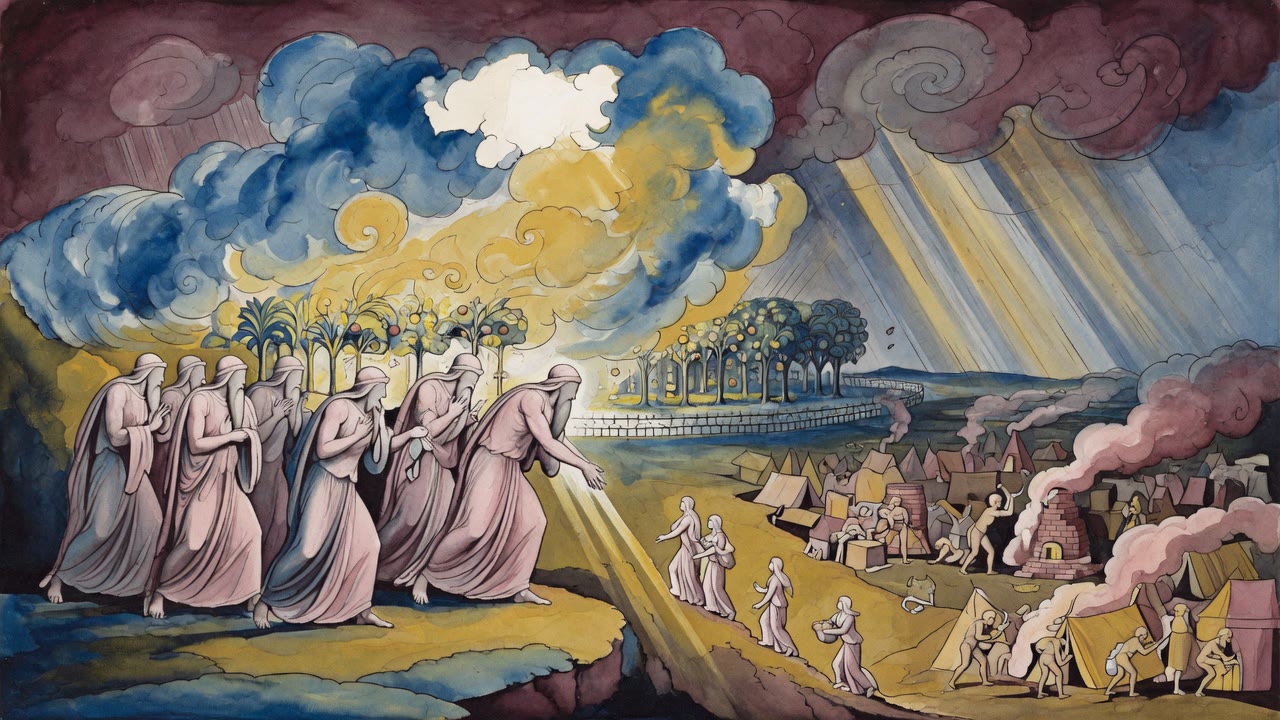
Seth, in turn, has a son named Enosh. We read that "in that time the sons of men began to multiply, and to afflict their souls and hearts by transgressing and rebelling against God." It wasn't just a few bad apples; the text emphasizes that the "sons of men continued to rebel."

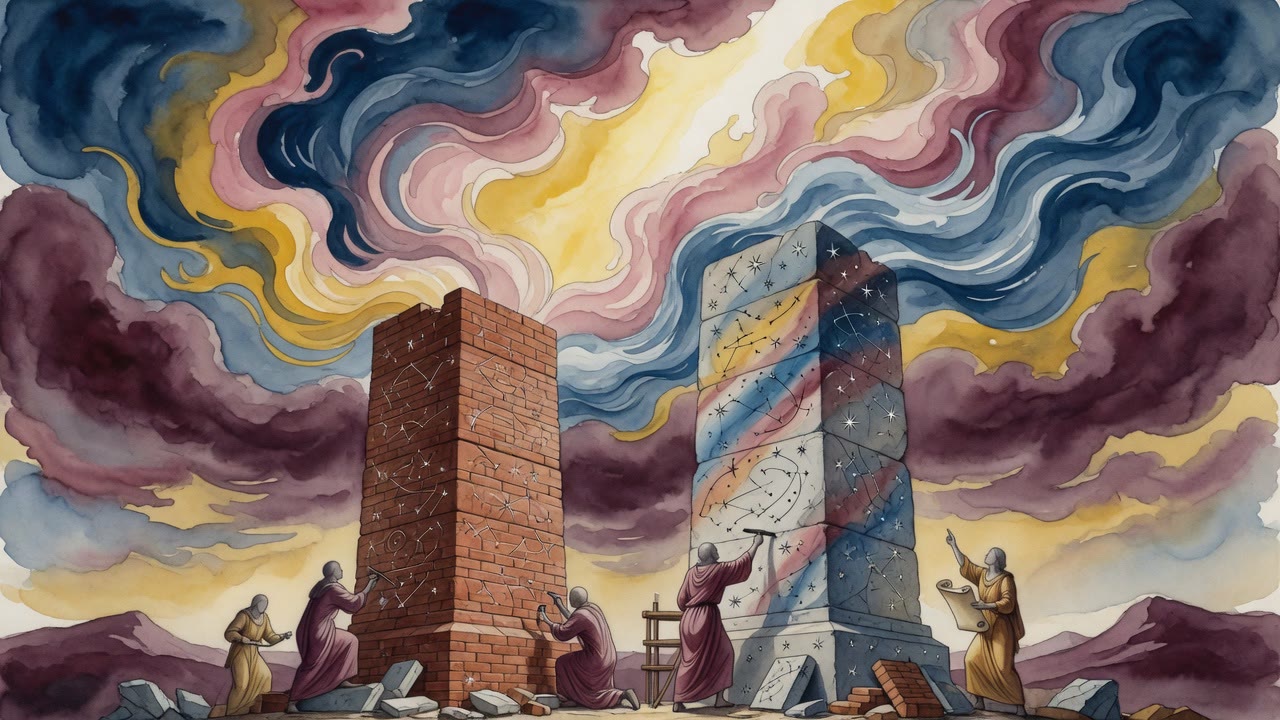
In Jasher, this rebellion manifested in idol worship. "And the sons of men went and they served other gods, and they forgot the Lord who had created them in the earth." They crafted images of brass, iron, wood, and stone, bowing down to them. It's a stark picture of humanity straying from its original connection with the Divine.

The consequences were severe. The Lord brought forth a devastating flood, not the great deluge we typically associate with Noah, but a localized one caused by the river Gihon overflowing. This earlier flood destroyed a third of the earth! Yet, even this catastrophe wasn't enough to turn people from their wicked ways. "Notwithstanding this," Jasher tells us, "the sons of men did not turn from their evil ways."

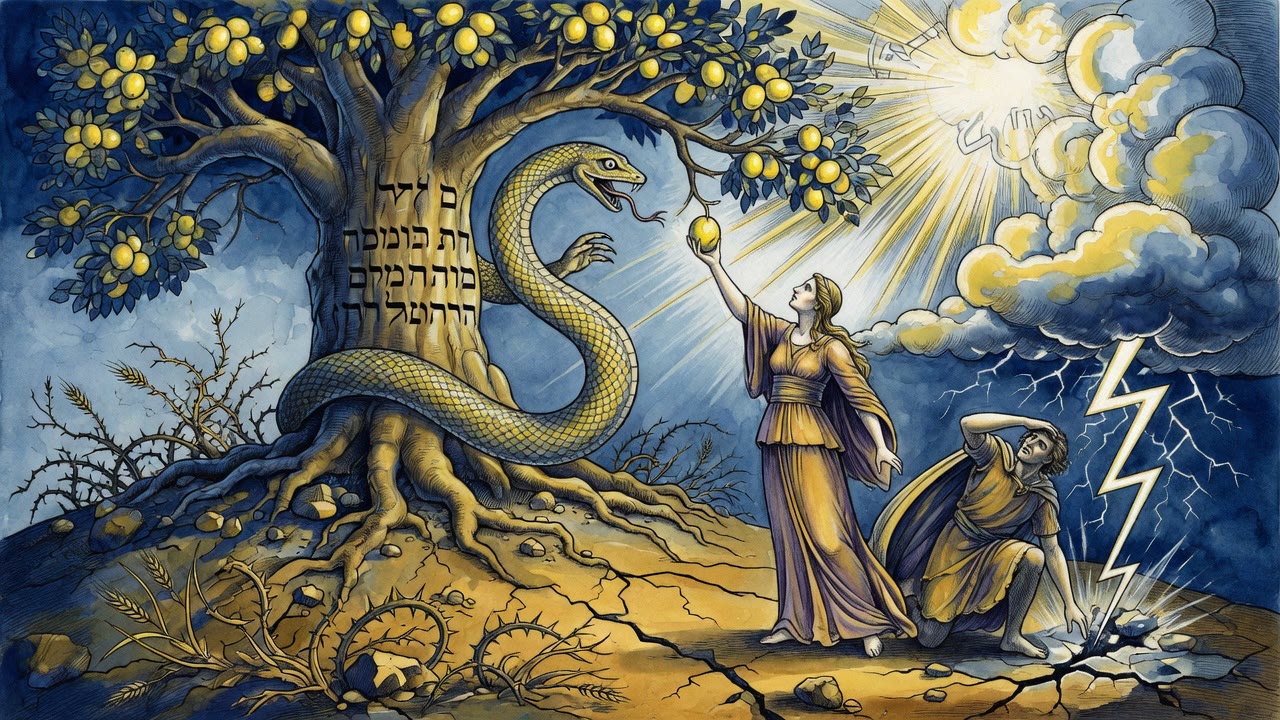
Things get even worse. The land itself seems to suffer. "In those days there was neither sowing nor reaping in the earth; and there was no food for the sons of men and the famine was very great in those days." The seeds they sowed yielded only thorns and thistles, a grim echo of the curse placed upon the earth after Adam's sin.

Amidst this widespread corruption, a glimmer of hope appears in the form of Cainan, the son of Enosh. At forty years old, he becomes wise and knowledgeable, reigning over all the sons of men and leading them toward wisdom. Jasher paints him as a kind of prophet, someone who "knew by his wisdom that God would destroy the sons of men for having sinned upon earth, and that the Lord would in the latter days bring upon them the waters of the flood." He even writes down prophecies on stone tablets and places them in his treasures! What were these prophecies? The text doesn't say exactly, but the implication is clear: he foresaw the coming destruction.

Cainan manages to turn some people back to the service of God. But the overall picture remains bleak, and soon we're introduced to another key figure: Lamech. He marries two daughters of Cainan, Adah and Zillah. The story then veers into some pretty disturbing territory.

We learn that people began to defy God's commandment to "be fruitful and multiply." Some men, wanting their wives to maintain their figures, forced them to drink potions that would make them barren. The text is particularly harsh on this practice: "And the child-bearing women appeared abominable in the sight of their husbands as widows, whilst their husbands lived, for to the barren ones only they were attached."

Zillah, initially barren, eventually gives birth to Tubal Cain. And here, the narrative takes a truly shocking turn.

Lamech, now old and blind, is led by his son Tubal Cain into the field. Mistaking Cain (yes, that Cain, Adam's son!) for an animal, Tubal Cain directs Lamech to shoot him with an arrow. Lamech does so, killing Cain. When they discover their mistake, Lamech is overcome with grief and, in his distress, accidentally kills Tubal Cain as well!

The wives of Lamech, horrified by his actions, turn against him. They separate from him and refuse to listen to his pleas. Lamech then tries to convince them it was an accident and they eventually return to him, with the advice of their father Adam, though they bear no more children.

The chapter concludes with a brief mention of Mahlallel, the son of Cainan, and his son Jared, who fathers Enoch. And so, the story continues, leading us closer to the time of the great flood and the story of Noah.

What are we to make of all this? The Book of Jasher's Chapter 2 presents a world spiraling out of control, a world where humanity has lost its way and faces dire consequences. It's a cautionary tale about the dangers of straying from one's spiritual path and the importance of remembering our connection to something greater than ourselves. It also raises fascinating questions about free will, divine judgment, and the enduring power of prophecy.

Full source