Antiochus Built His Case in Gold and Ran From One Word
He let the silence stretch before he spoke. Gold at every collar. A people in Jerusalem who would not sacrifice to his gods.
Table of Contents
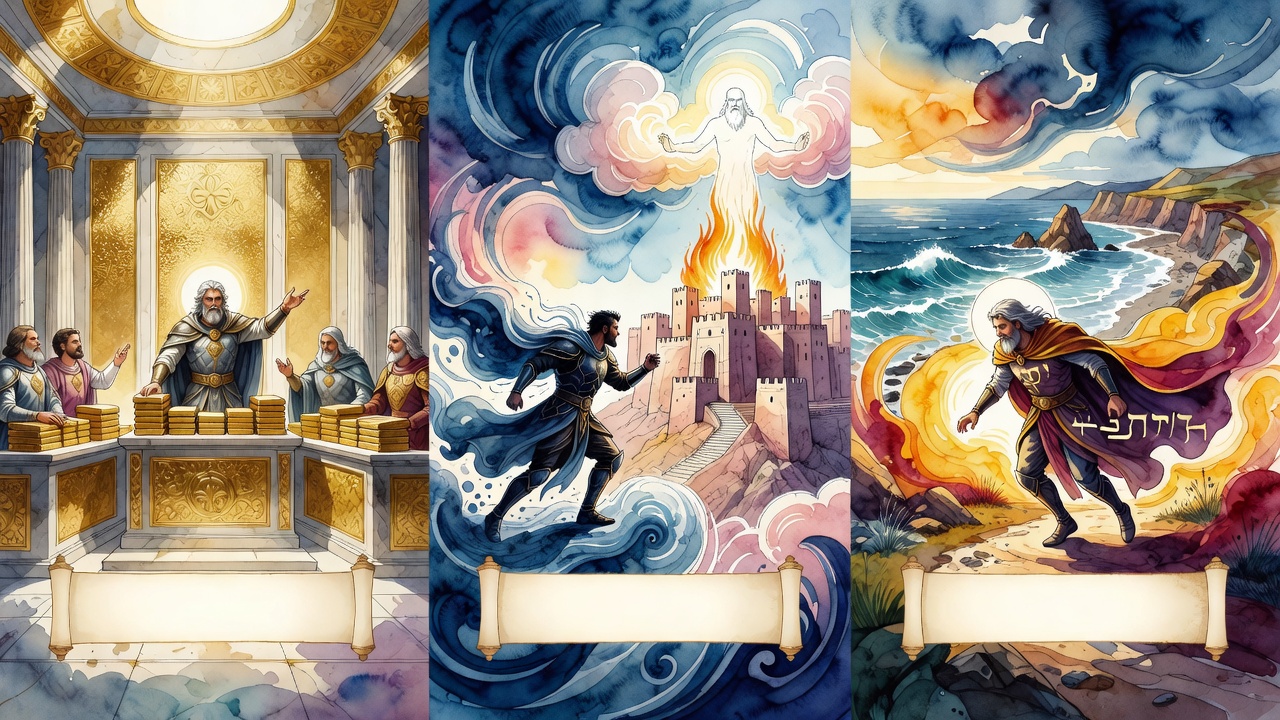
The council chamber smelled of oil and cold stone, and Antiochus let the silence stretch before he spoke. His officers waited along the walls, gold at their collars, eyes fixed on the king who had risen on the coastland of the Great Sea like no ruler since Alexander. He had built a city on a river and stamped his own name on it, Antioch. His viceroy Bagris had built another beside it and named it for himself. Two cities carrying two names, and still the king's face was dark.
 Click for full size
The King Names the Splinter
"Surely you know," he began, "that there is a Jewish people in our midst in Jerusalem."
He said it the way a man names a splinter under the skin. They were here, in his territory, in the city he meant to own. The charges came one after another, flat and certain. "They do not sacrifice to our gods, our laws they do not keep, and they neglect the laws of the king, to follow their own."
To Antiochus the Jews were not merely strange. They were a refusal walking around in his streets, rejecting his altars, his statutes, his face. Then he reached the thing that frightened him, and his voice dropped into it. "And further, they look forward to a day of destruction of kings and rulers. They say, 'When will our king rule over us, and we shall govern land and sea, and all the world will be our dominion.'"
He let that hang. A people who waited for a king who was not him. A people who spoke of ruling sea and land while they sacrificed in a temple he did not control. "It is not to the glory of the kingdom," he said, "to suffer them on the face of the earth."
No one argued. It was the twenty-third year of his reign, the two hundred and thirteenth year after the rebuilding of the Temple, and the king had decided. The splinter would come out.
Bagris Holds Zion in His Fist
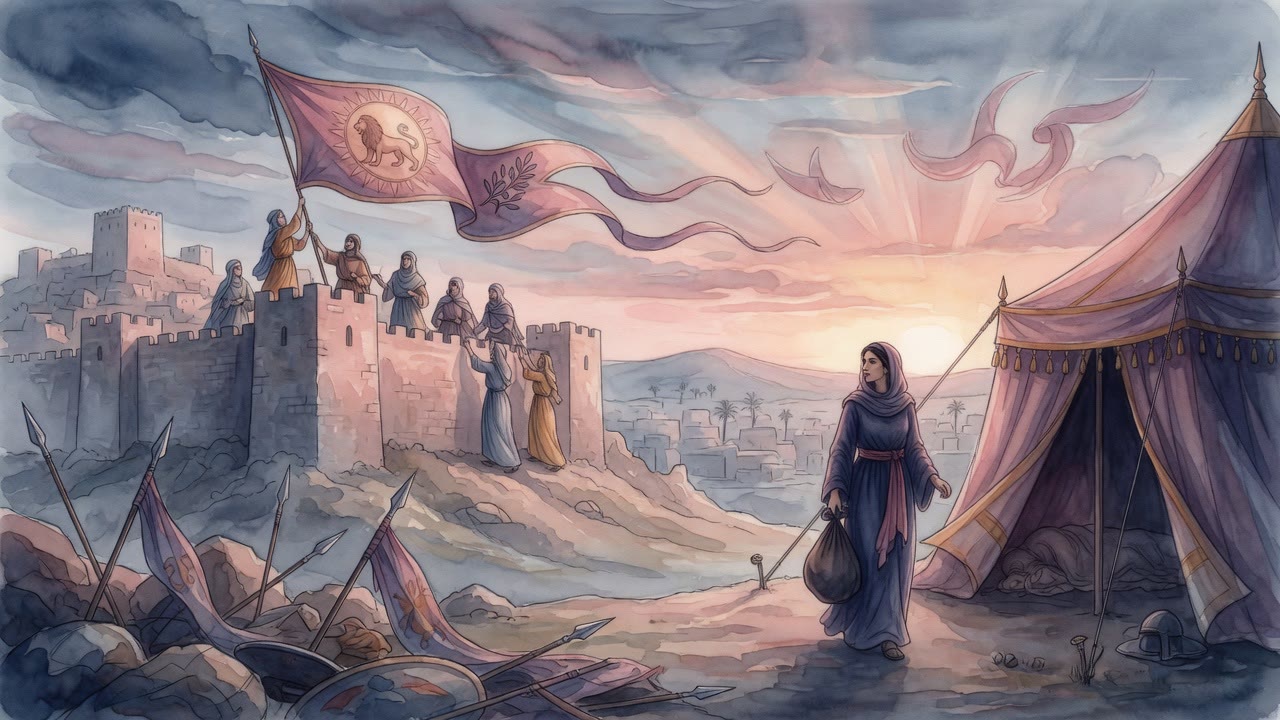
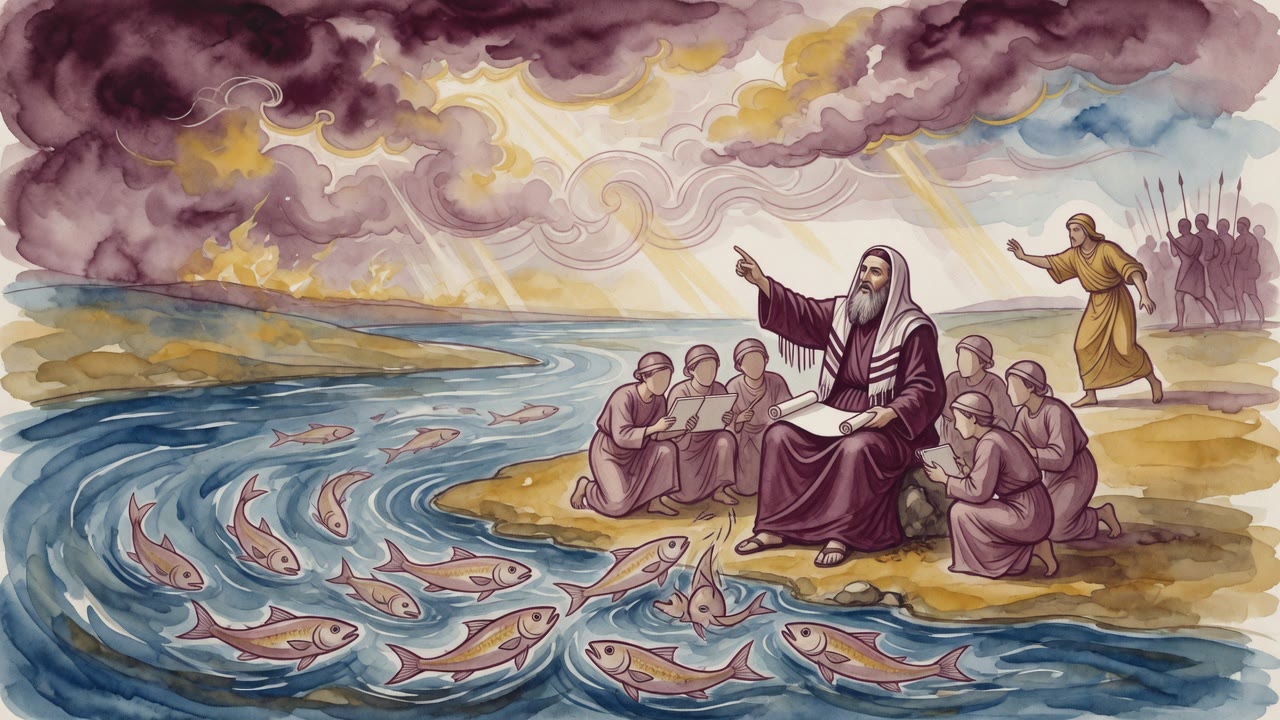
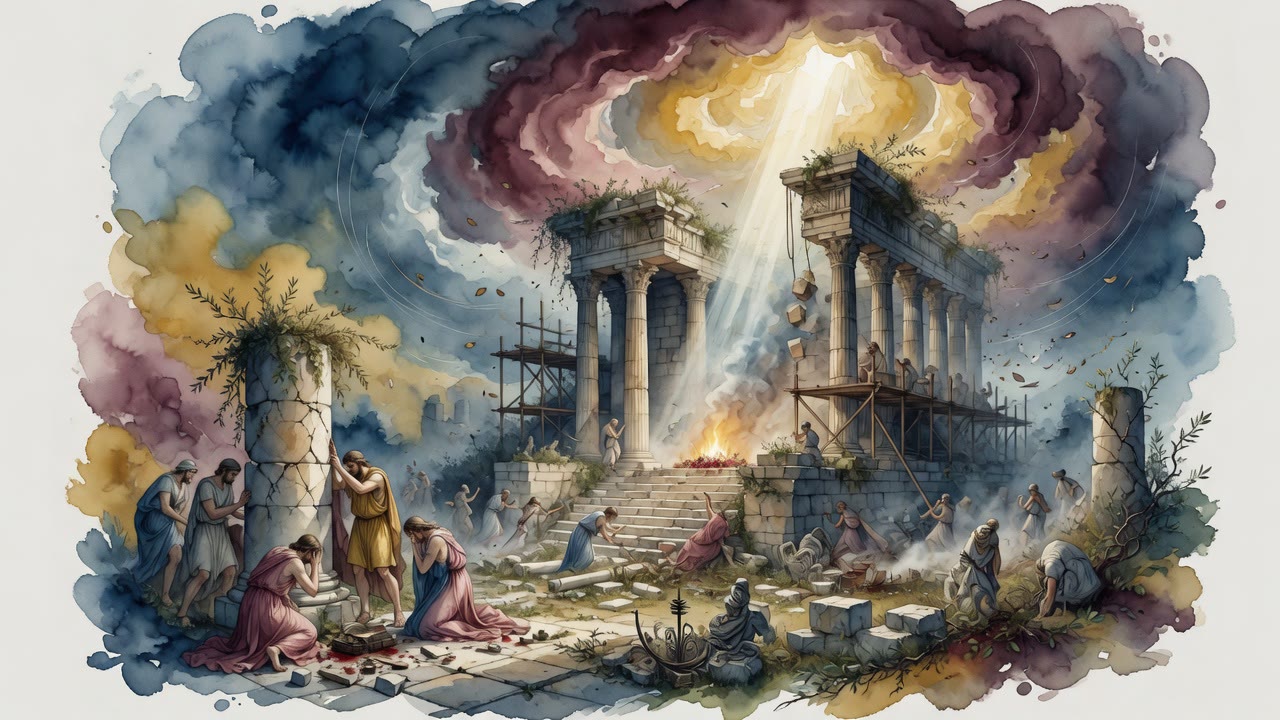
He went up against Jerusalem with the weight of an empire behind him. The Temple that had stood since the return from exile became a prize, and the king took it the way he took everything, by force and by decree. Sacrifice to the God of Israel stopped. Idols stood where they had no right to stand. When the king turned back toward his own cities, he left the work to the one man built for it.
He installed Bagris in Zion. The viceroy with a city named after himself now held the holy city in his fist, and his orders were plain. Strip the faith out of the people. Make them sacrifice. Make them bow. Make them break the Sabbath and the new moon and the covenant of the flesh. Whatever would not bend, burn it.
A Woman Leapt After Her Son
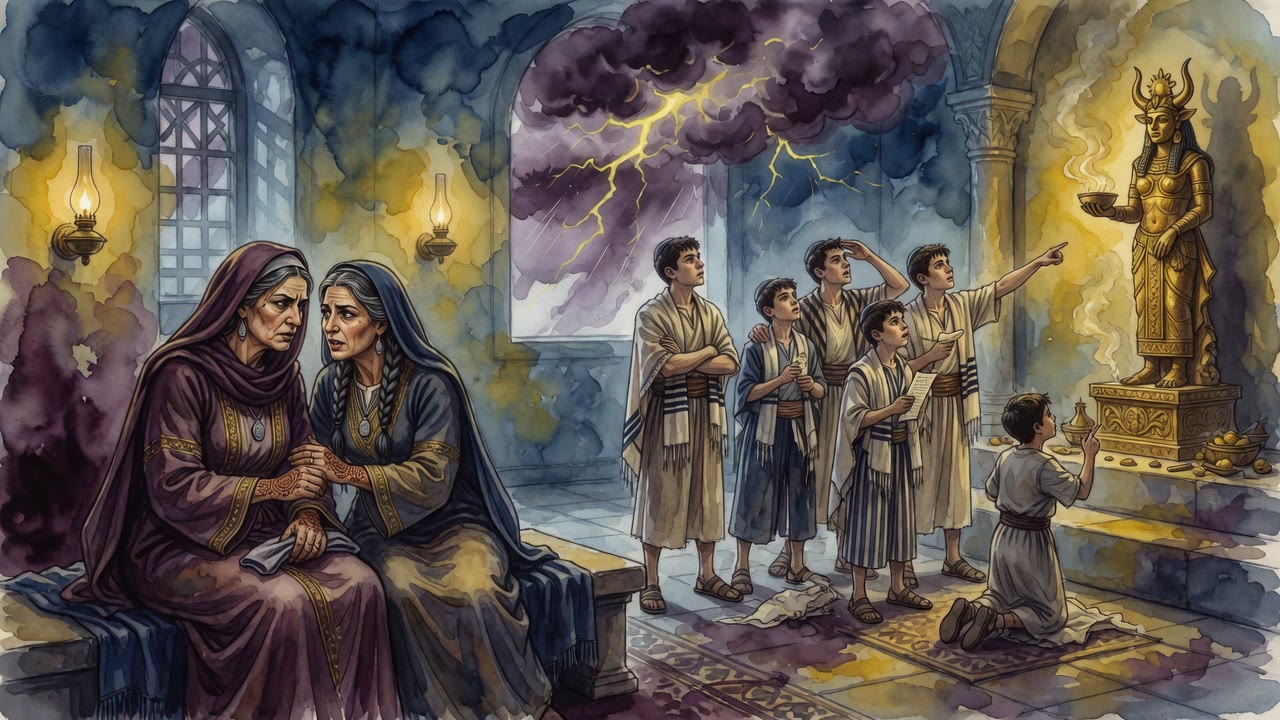
A woman stood before Bagris with her son in her arms while he pressed her to give it all up. Abandon the God of her fathers. Abandon the rites. Live.
She did not lower her eyes. "You plan to destroy the covenant that has been made with us," she cried out to him, "the covenant of our forefathers. Sabbath and the new moon and circumcision we will not abandon, neither we nor our children's children."
Then she turned from the official entirely. She cast her son to the ground and leaped down after him, and the two of them died together rather than be handed over to the altar. Others did the same across the city, choosing death over the breaking of the covenant, sanctifying the Name with their own bodies. Bagris counted the dead and did not understand what he was counting.
The ones who could not fight back chose to hide. "Come, let us withdraw into a cave," they said one to another, "lest here we be compelled to desecrate the Sabbath." They went down into the dark with their children to keep one day holy where no soldier could see them. It was the smallest possible defiance, a people refusing to light a fire and refusing to break a law, hidden underground. Their plan was betrayed to Bagris. There was no cave dark enough.
Elazar Went Under the Elephant
The faithful did not stay underground forever. When the fighting came into the open, a man named Elazar threw himself at the war elephants, the towering beasts the king's army drove into battle, and brought one down on top of himself.
After the battle the Israelites searched for him. They found him sunk in the dung beneath the dead elephant, gone, swallowed by the very thing he had killed. They pulled their victory out of the muck. They burned and struck and hung their enemies. They took Bagris, the man who had led a people astray, and burned him. The viceroy with a city named after himself ended as ash in the city he had tried to empty of Jews.
The Coasts Called Him the Coward
Word reached the king. His general dead. His army broken. His decrees turned back on him. Antiochus did not gather another host. He went down to a boat and fled to a distant land.
Everywhere he came ashore the people rose against him and threw the same word at his back. "The Coward." The conqueror who had stood in a gold-collared chamber and called a whole people unworthy of the face of the earth ran from coast to coast wearing a name he could not outrun.
The chamber still had its gold. The cities still carried the two names. The word that followed him did not care about either.
← All myths