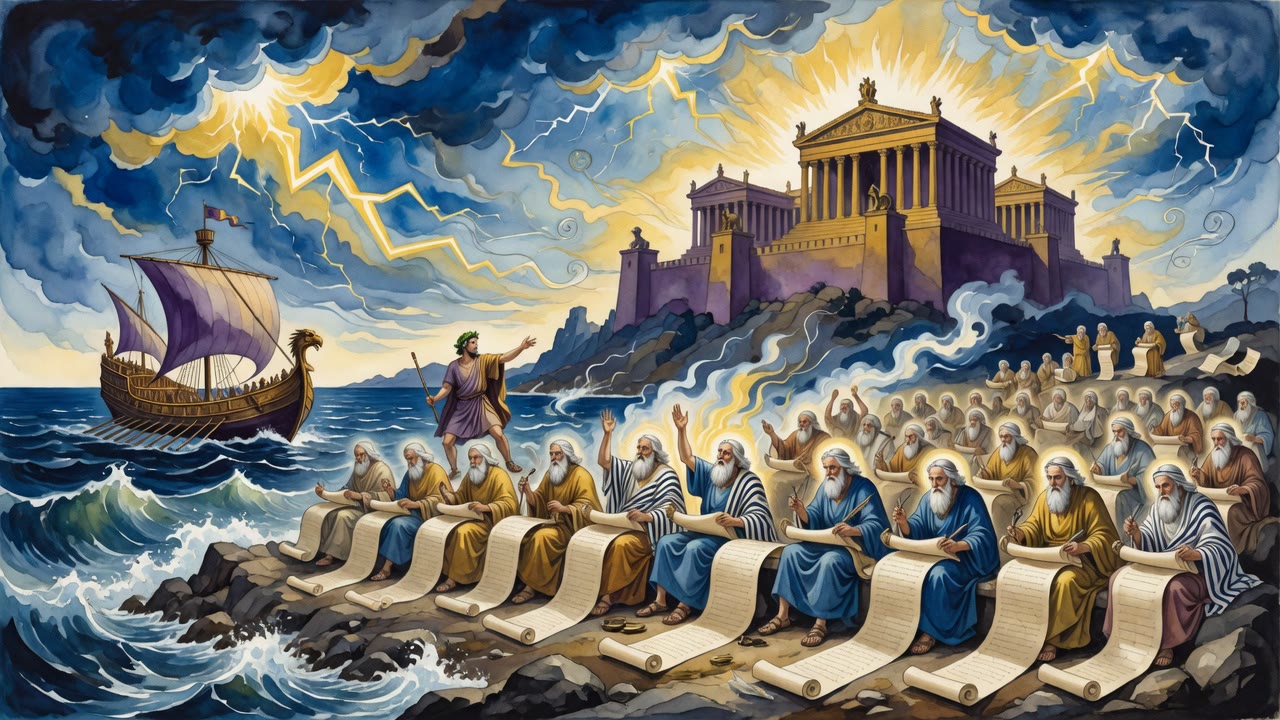
Aristeas Prayed Until Ptolemy Freed the Captives
A hundred thousand Jews sat in Egyptian irons. Aristeas would not ask for their books until the king paid to free them.
Table of Contents
Aristeas wanted the Judean books in Greek for the royal library. He would not treat the request as a scholar's errand. First he looked at the bodies.
 Click for full size
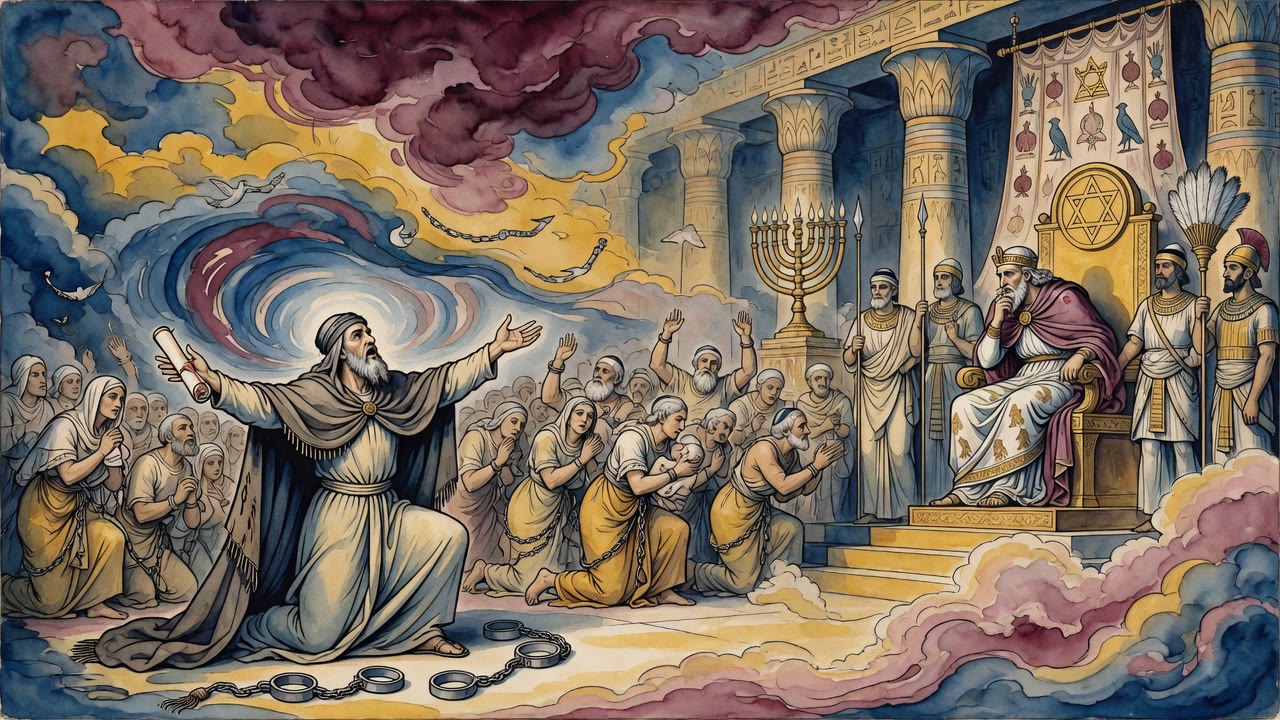
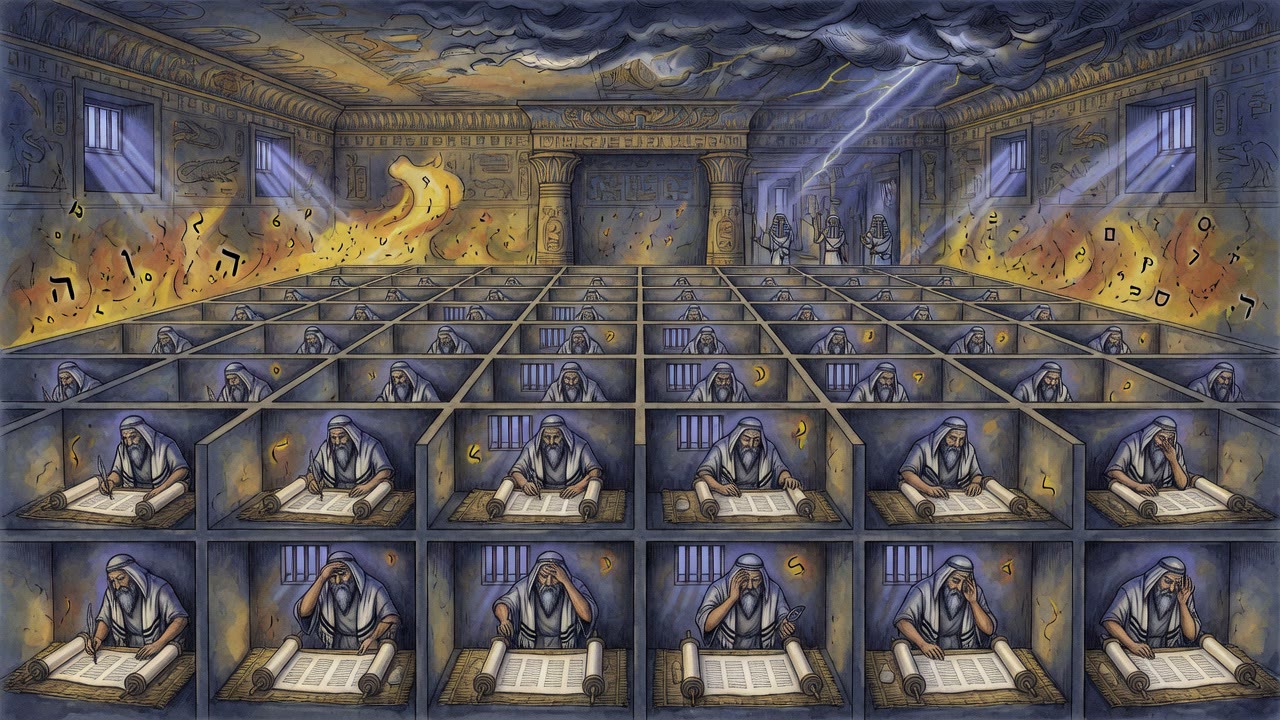
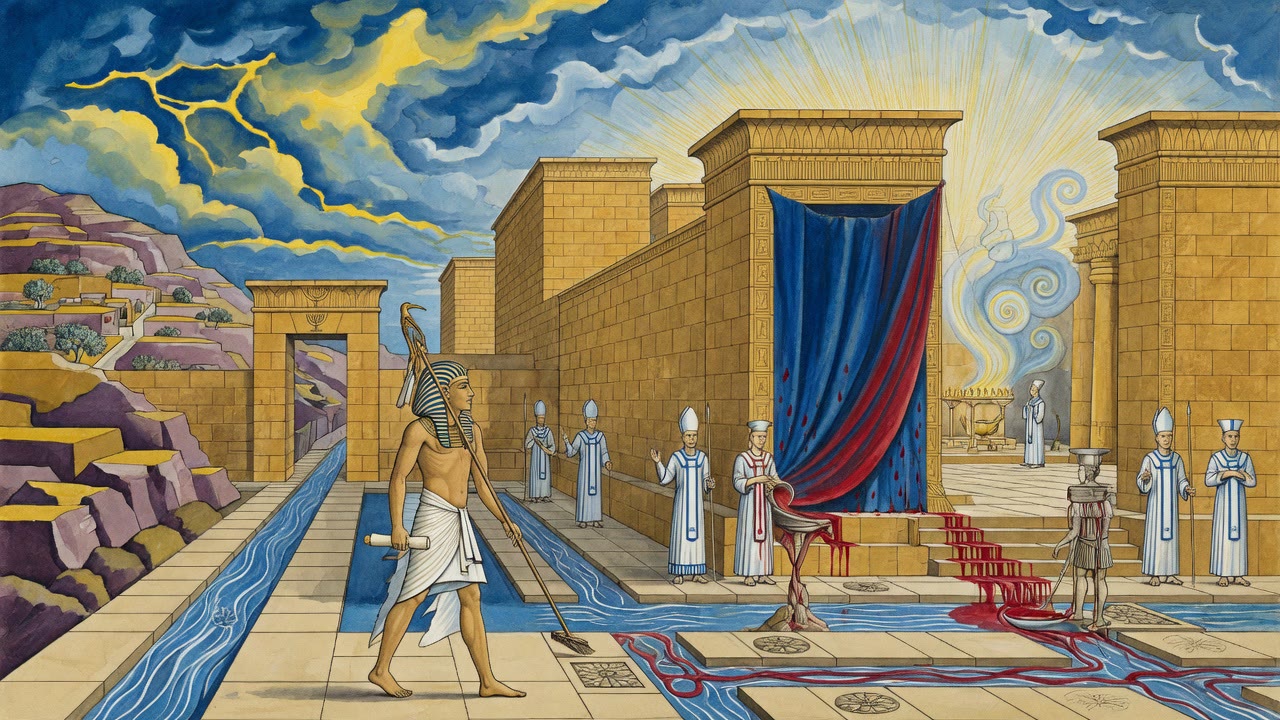
When Ptolemy's father had broken Coele-Syria and Phoenicia, he dragged Jews into Egypt by the tens of thousands. The count runs no less than a hundred thousand. Some filled garrisons. Many filled slave markets. Alexandria's glory sat on Hebrew backs.
A Hundred Thousand in Irons
Before he pressed Sosibius of Tarentum and Andreas, chief of the bodyguard, again for the translation, Aristeas made the captives the gate. Free them, then speak of scrolls.
A library that wanted Israel's Torah while keeping Israel's children in irons would be a joke with blood in it. He had laid the demand often. This time he would not let the books skip the queue.
He walked the city and saw the garrisons. He saw the markets. He counted what a royal bookshelf would cost if the cost were paid in living people, and he would not pay it.
He Prayed Before He Spoke
He prayed that God would bend the king's mind toward liberty for all the captives. The human race, he said, is God's creation and moves under God's sway. With many prayers he asked the One who rules the heart to constrain the king toward the grant.
He hoped hard because he believed that pure motives in the work of righteousness draw Heaven into the outcome. He did not walk into the hall on charm alone. He had already laid the petition in a higher chamber.
Then he spoke. Ptolemy raised his head, looked at him with a cheerful face, and asked. The words that reached the king arrived already weighted with that private siege on Heaven.
Twenty Drachmae a Head
The decree went out with the bluntness of money. All who held Jewish captives from the father's campaigns in Syria, Phoenicia, and Judea, and any brought later or found already in the land, must free them at once. Twenty drachmae per head as ransom. Soldiers would take it as a gift on top of wages. Others would be paid from the king's treasury.
Freedom that costs the crown is harder to reverse with a shrug. Vast multitudes stepped out of bondage because a courtier refused to separate books from bodies. God empowered the king to save them.
The translation still waited. The people no longer did.
Owners counted twenty drachmae into their palms. Soldiers pocketed bonus coin. Families found each other in streets that had treated them as cargo. A man felt the iron leave his wrist and stood there a moment as if the air had changed weight. Somewhere behind the noise, scribes still prepared for a labor of versions. The first thing that moved was not a pen. It was a chain coming off.
The King Who Would Not Sit Still
When the envoys of the high priest finally approached for the work of the books, Ptolemy broke his own calendar of dignity. Ordinary petitioners waited five days. Envoys from great cities might wait thirty. He dismissed other officials and walked about until the Judean men entered so he could welcome them at once.
The court stared. He counted their master worthy of a haste kings rarely show. His feet kept moving on the floor. He would not sit while they were still in the corridor.
A monarch who had paid for captives now burned minutes waiting for translators. The library project had become a relationship with a living people.
Scrolls After the Chains Fell
Aristeas wrote to his brother of Jewish matters learned from Egypt's most learned priests, hungry to pass on what builds the mind. The first course was not philosophy. It was open gates for people who had been cargo.
Later nights of banquet questions would polish the legend of Jewish sages before a throne. The envoys who skipped the five-day wait walked into a court already altered by a payment. Free the hundred thousand. Pay the owners. Then ask for holy text.
The king pacing for translators was a man who had already spent coin on lives. Haste for books followed justice for bodies, and Greek met Hebrew over parchment without the stink of a library built on unlifted chains.
← All myths