Seventy-Two Elders Washed Hands and Finished Torah
Aristeas asked why they rinsed before praying. Every activity is done by the hands, one elder said. They went home with two talents of gold each.
Table of Contents
Aristeas had been carrying the same request around the palace for months, and he had learned to read the exact instant a courtier's face closed against it.
 Click for full size
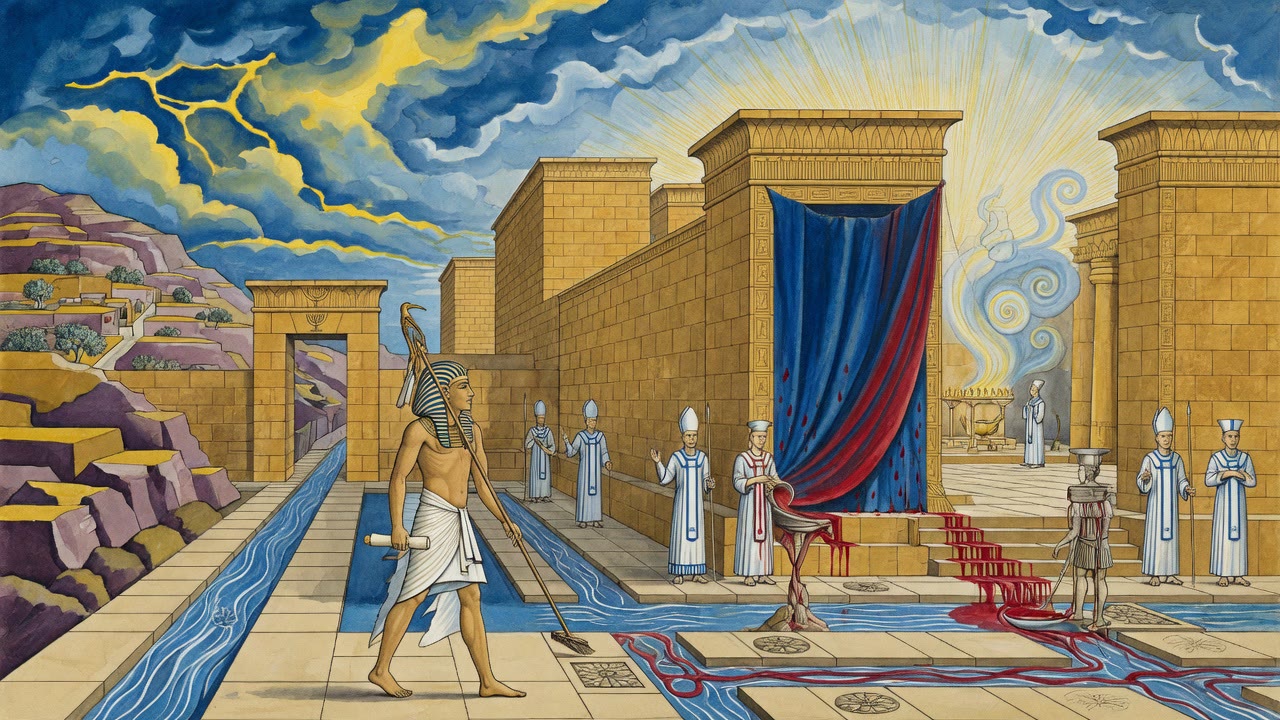
The request was simple enough. The king's father had gone through Coele-Syria and Phoenicia with fire, terrorizing the country into submission, and when he came home he brought people with him. A hundred thousand out of Judea alone, some transported, some made slaves outright, all of them still in Egypt and still counted as property. Aristeas wanted them let go. He had put it to Sosibius of Tarentum and he had put it to Andreas, who commanded the bodyguard, and both men had been sympathetic in the way that costs a man nothing.
So he stopped asking, and waited for the king to want something.
The Gap in the Library
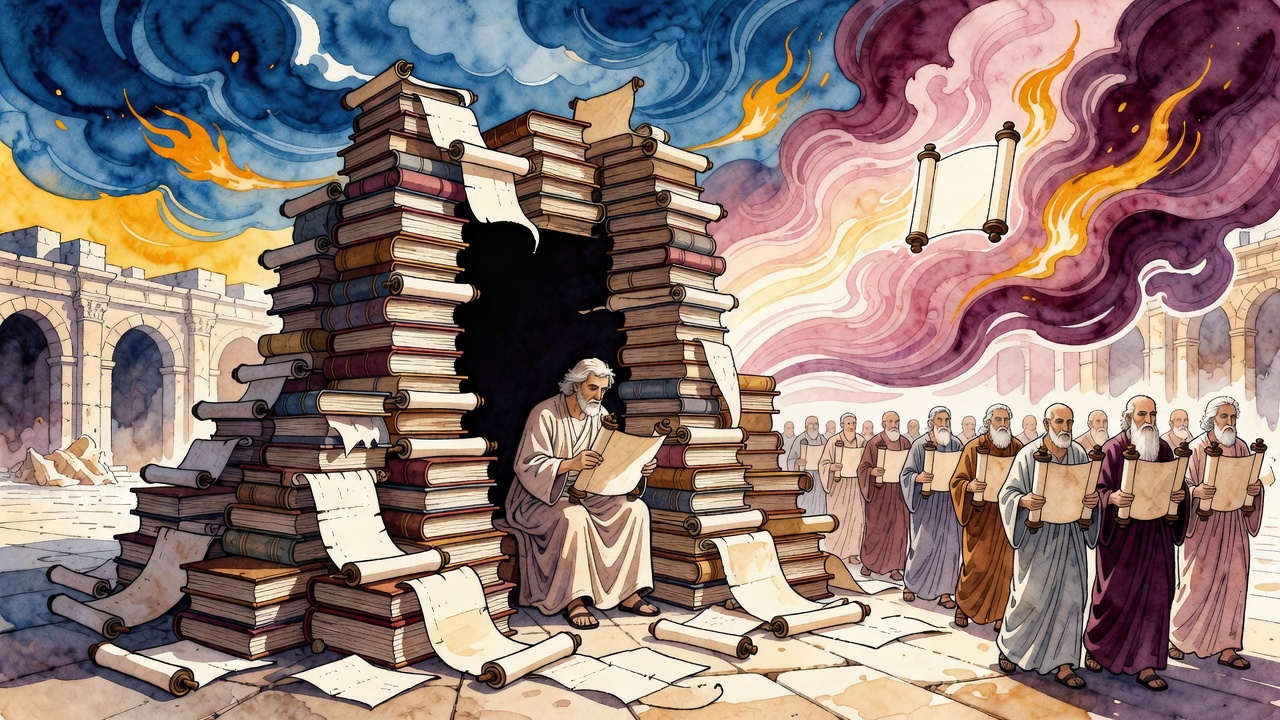
Ptolemy wanted books. He asked Demetrius of Phalerum how many were on the shelves now, and Demetrius said more than two hundred thousand, and that he meant to reach five hundred thousand, and then he named a hole in the collection. The laws of the Jews were worth transcribing, he said. They deserved a place in the library.
The king asked what was stopping him. Demetrius said the books would have to be translated first, since in Judea they use an alphabet of their own, the way the Egyptians have their own letters, and they speak a dialect that everyone assumes is Syriac and is not, it is something else entirely.
Aristeas was standing in the room when that was said, and he heard the whole shape of it arrive at once. A king who is about to write a polite letter to a high priest in Jerusalem is a king who can be brought to see that a hundred thousand slaves are an embarrassment to the correspondence. He pressed the demand again that week, at the right hour, to the right man, and this time it did not die in a corridor. The letter went south to the high priest. Seventy-two elders came north to the coast. The captives were let go on written orders, because a librarian had a gap on a shelf.
Why No Greek Had Touched It
At table the king asked Demetrius why no historian and no poet had ever so much as mentioned these books, if they were as old and as good as he claimed. Demetrius said it was because the law is sacred and comes from God, and because some of the men who set out to handle it had been struck for it and had abandoned the attempt.
He named Theopompus. The historian had wanted to work a few incidents out of the older and unreliable Greek versions of the law into his own history, and for more than thirty days he was out of his mind. When he had come back to himself enough to form a question, he begged God to tell him why it had happened, and the answer arrived in a dream. He had wanted sacred matter for a book out of idle curiosity, to hand around to men who had no business with it. If he let it alone his health would return. He let it alone.
Aristeas heard that story over wine, in a palace, in the same season he had used those books as a lever.
The Question About the Hands
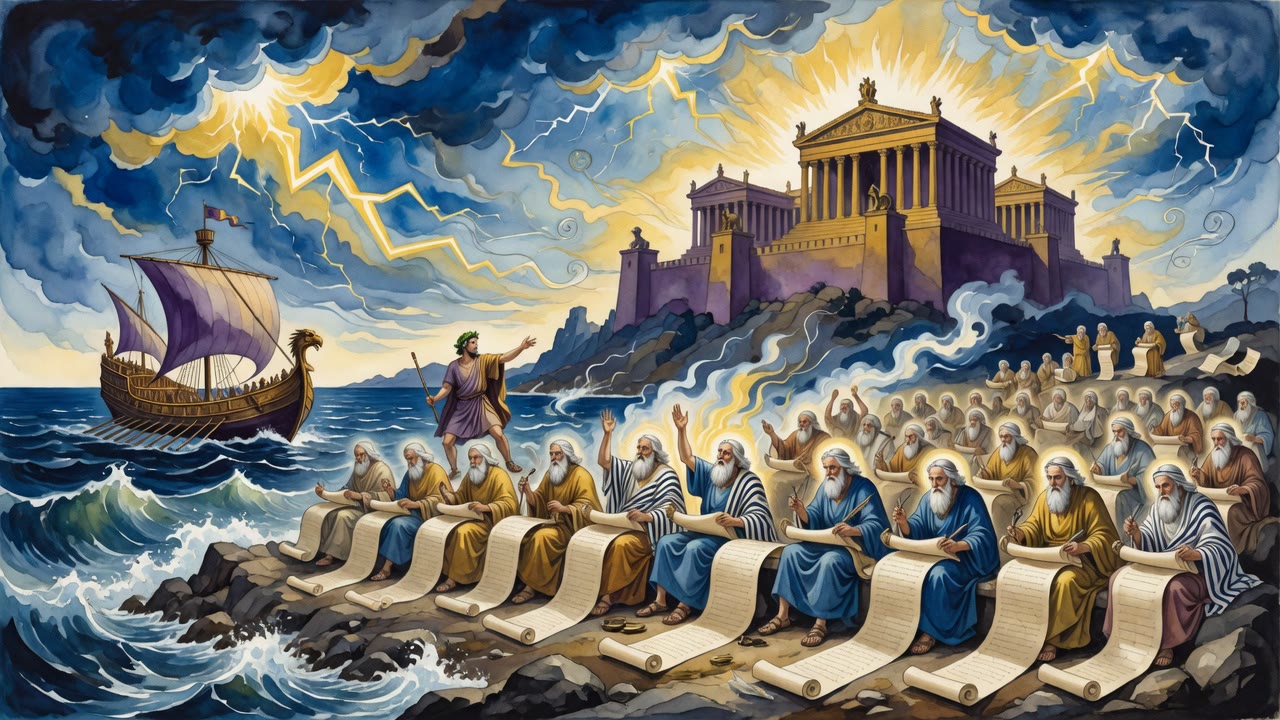
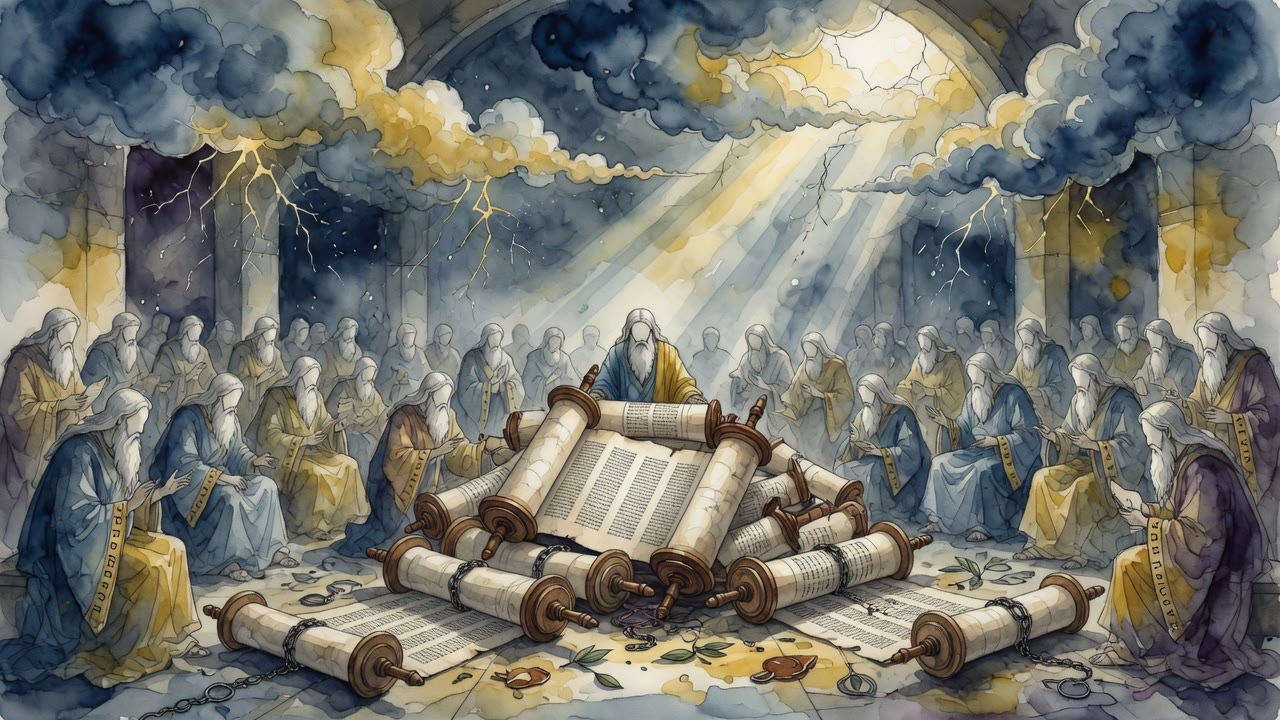
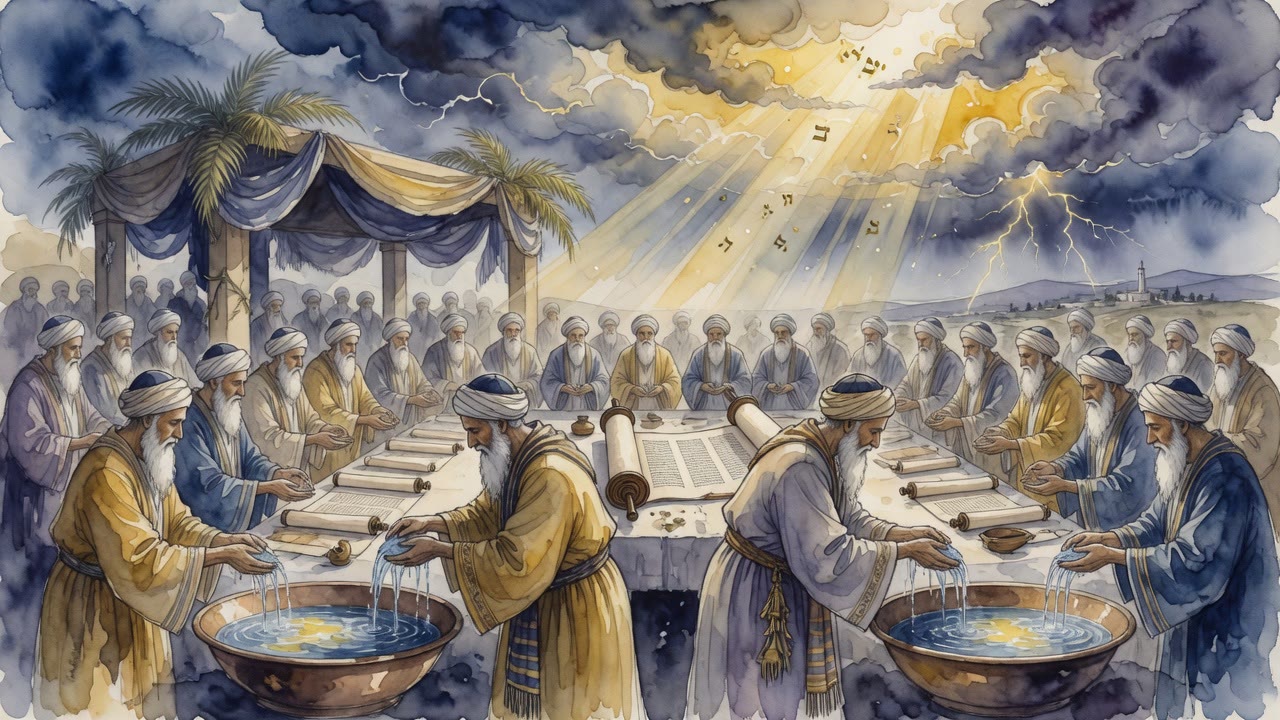
The elders worked on the island in a room picked for its quiet and its light, and they met there every day of it. Aristeas went out to watch far more often than his duties required. Before they prayed, each man washed his hands, and then he prayed, and then he sat down to the columns.
He asked one of them why. He expected the answer he usually got when he asked a priest about a gesture, which is a reason so old that nobody remembers it and everybody performs it.
The elder said that every form of activity is worked by means of the hands, so washing them was a token that the man had done no evil that day. He said it the way a person says something obvious and then goes back to work, which is what he did. Aristeas stayed where he was in the bright room, with his own hands hanging at the ends of his arms, and did the arithmetic he had been putting off. He had gotten a hundred thousand people out of slavery by making their Torah interesting to a man who collects books. It had worked, and he had been quietly proud of how well it worked, and here was an old man from Judea rinsing his knuckles before he would let himself speak, on the grounds that a hand remembers what it has been doing.
Two Talents of Gold Each
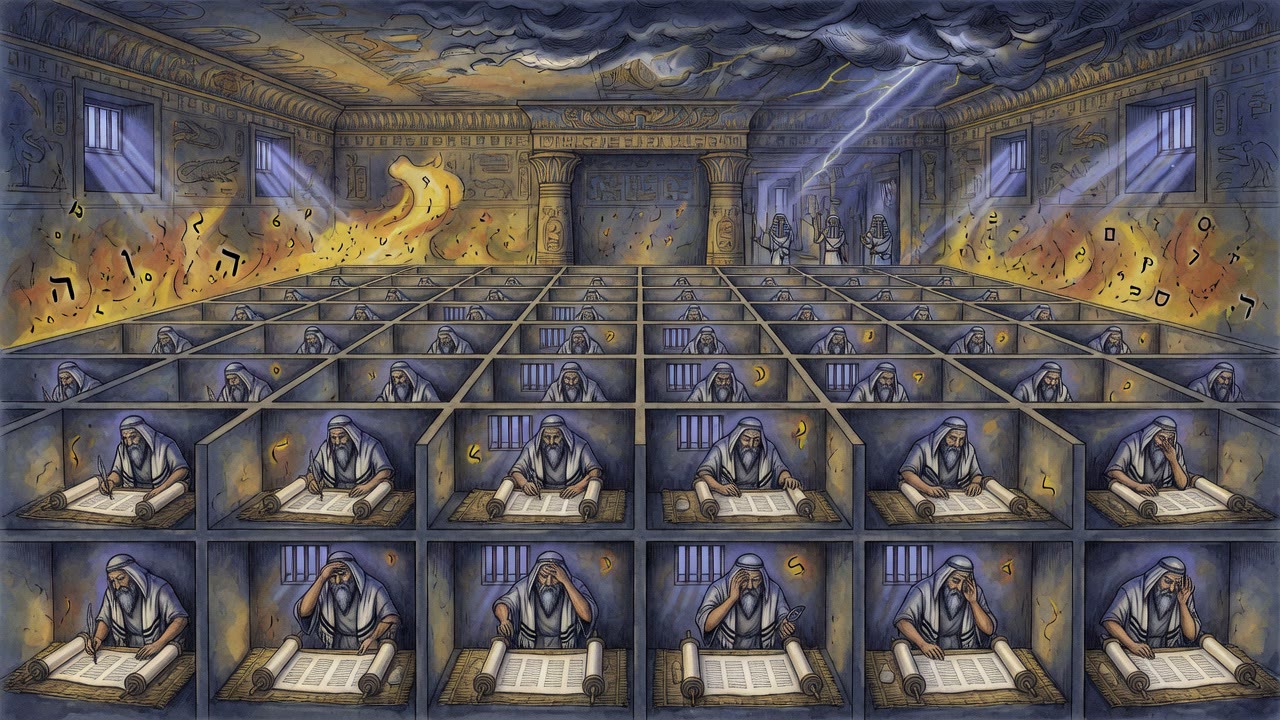
The work closed in seventy-two days. Nobody had planned the number and nobody had been counting toward it, though it came out even as if it had been arranged on purpose, and Aristeas wrote it down without deciding what to make of it.
Ptolemy sent them home lavishly, because he had what he wanted and because he wanted them to come back. Three robes of the finest sort for each man. Two talents of gold apiece. A sideboard weighing a talent, and all the furniture for three couches. He told them to visit him often, and said that when they returned he would treat them as friends and the gifts would be better than these.
They loaded it onto the ships and went. Somewhere in the same city the freed families were also going, on worse roads and later, carrying nothing that weighed a talent. Aristeas watched the harbor from the quay and kept catching himself looking at his hands, which had done one good thing and were still only hands, and would want washing again in the morning like anyone else's.
← All myths