Seventy-Two Elders Locked Alone with Greek Torah
King Ptolemy seals each sage in a room to force a Greek Torah, and God places the same careful changes in every mind at once.
Table of Contents
 Click for full size
Seventy-Two Doors Close
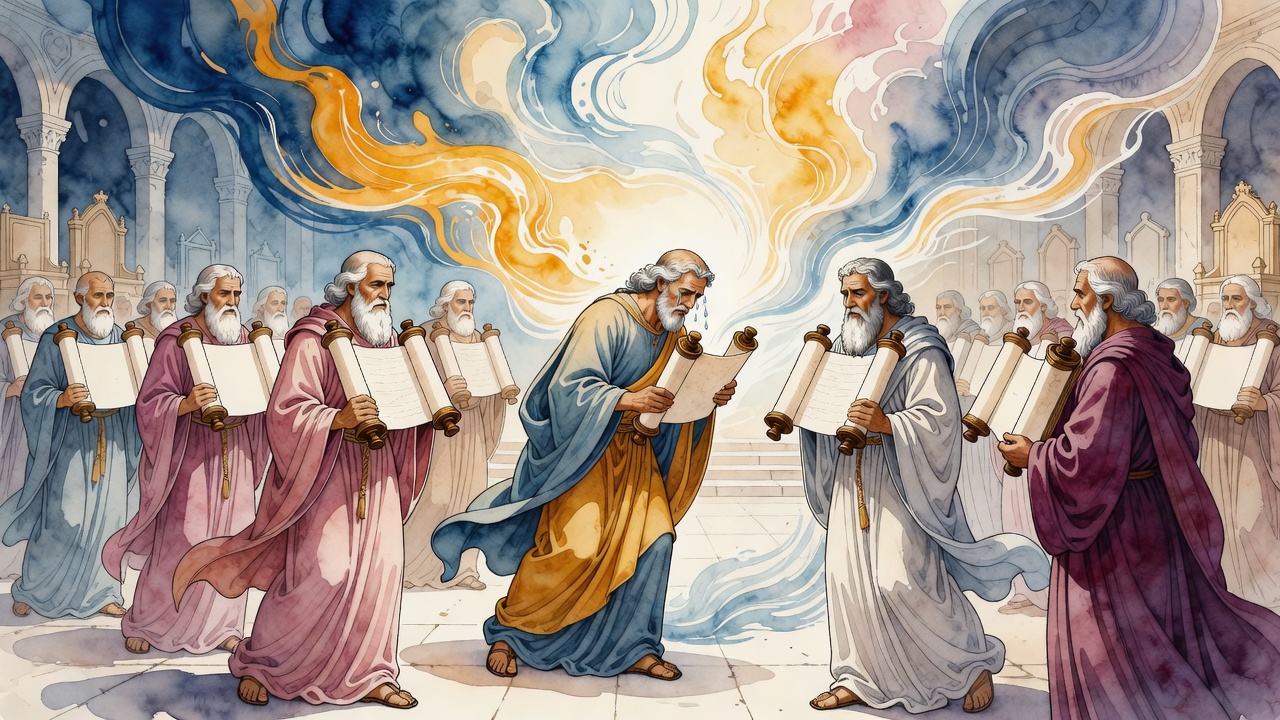
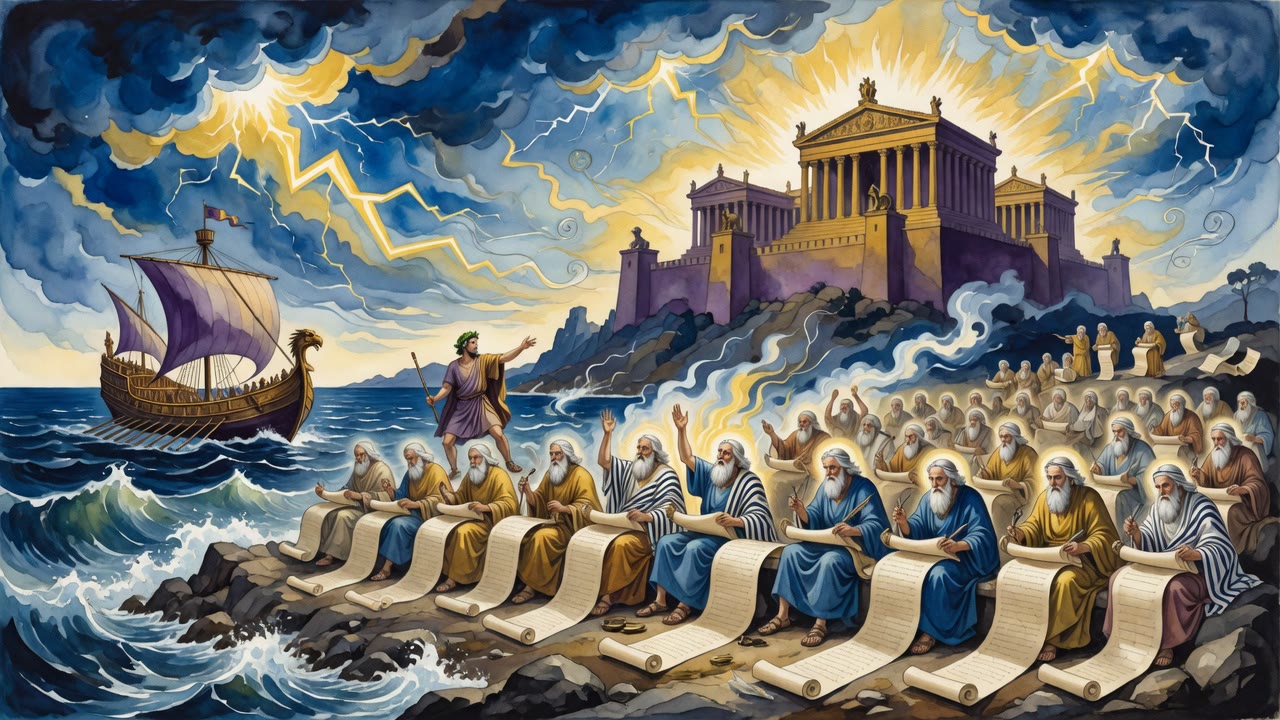
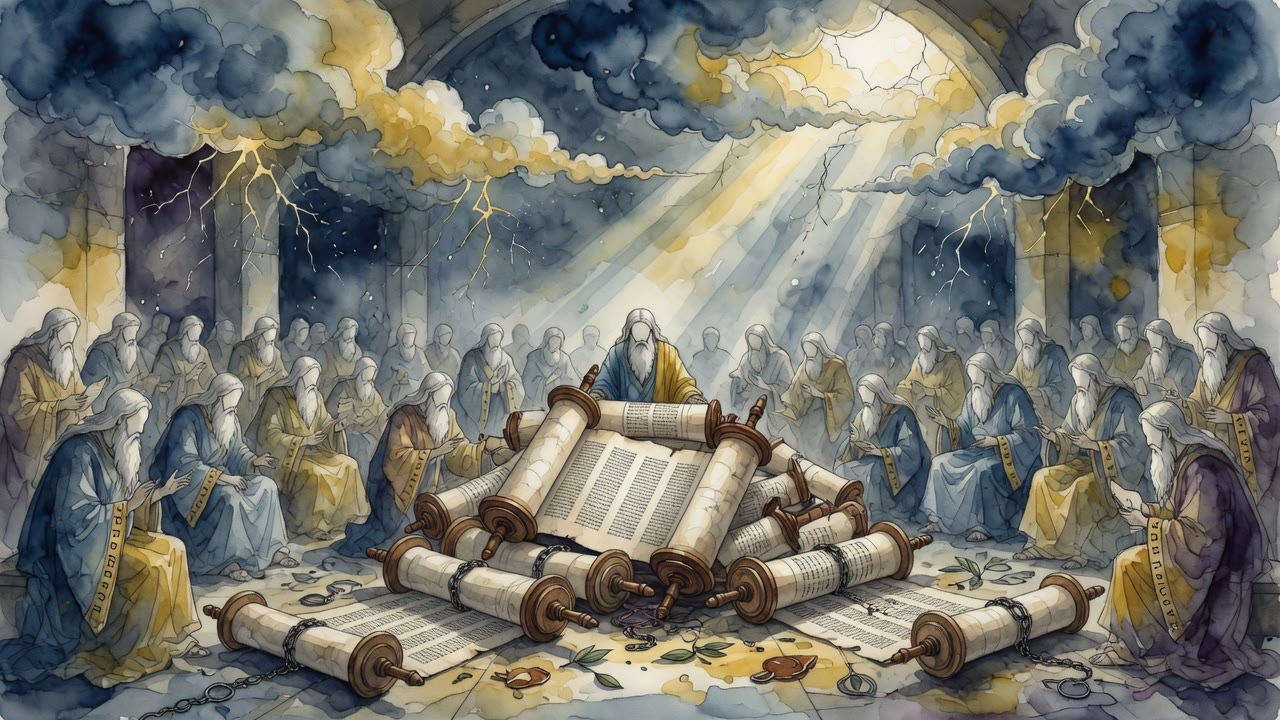
King Ptolemy of Egypt did not ask for a reading. He asked for a copy he could own in Greek, and he arranged the work the way a king arranges a test. Seventy-two Jewish elders were led into separate rooms. Locks turned. Oil lamps were lit. Scrolls of Hebrew waited on tables that smelled of new wood and old power.
No elder could hear another. That was the point. If the translations matched, the king would call it miracle or genius or both. If they differed, he would call it fraud.
In one room an old man touched the first line of Genesis and felt his mouth go dry. In another room a younger sage already feared what hostile readers would do with a plural verb. The walls did not care. The walls only kept secrets from one another. A guard outside hummed a Greek song about wine. Inside, the air tasted of ink and threat.
The Same Changes in Every Mind
A miracle occurred. Every elder, working alone, produced the same translation, including the same deliberate changes. The changes were not errors. They were strategy under pressure.
Where the Torah begins, "In the beginning God created" (Genesis 1:1), they wrote "God created in the beginning," rearranging the words so no one could claim a being called "In the beginning" made God. Where the Torah says, "Let us make man" (Genesis 1:26), they wrote, "I shall make man," cutting the plural that might be twisted toward many gods.
God placed identical thoughts into seventy-two minds at once. The lock on each door became, for a night, a chamber of the same care. The king wanted Greek. Heaven wanted the Name unharmed.
One sage paused over a line and almost wrote the plain plural. His hand stopped as if another hand had covered it. In the next room the same stop happened at the same line. Sweat darkened the edge of a sleeve. The pen moved again, identical to its neighbors it could not see.
Names That Carry Weight
Elsewhere the teachers of Alexandria would insist that the Torah chooses divine names on purpose. Acts of kindness, creation, and renewal lean on the name Elohim, the Creator's beneficent face. Judgment and hard decree lean on the name of the LORD, the kingly authority that will not be mocked. Balance is the point. Mercy and justice are not accidents of style.
In Ptolemy's rooms that old care for names became emergency craft. A word out of place in Greek could become a weapon in a court that did not love Israel. The elders did not invent a new Torah. They guarded the one they had, letter by letter, under a foreign roof.
A parent can be both loving and firm. The Torah's names already teach that double face. Under a king's lock, the same care becomes a shield. The elders translated kindness where kindness belonged and authority where authority belonged, and they refused to hand a hostile reader a plural he could worship as many powers.
A Day Like the Calf
The sages regarded the event with deep ambivalence. The miraculous unanimity proved guidance. The translation of Torah into Greek was compared to the day the Golden Calf was made, a necessary concession that still diminished something sacred. Torah in Hebrew was alive. Torah in translation was a shadow, accurate and incomplete.
Some rabbis taught that the day of the translation was as grievous for Israel as the day the Calf was built. What is gained in accessibility is lost in depth. The elders knew both truths while their pens moved. They wrote because a king commanded. They altered because a people could be misread into danger.
When the doors opened, seventy-two scrolls said the same careful Greek. Ptolemy smiled. Somewhere in Jerusalem a scribe who still wrote in the older script would have felt the ground shift under the letters themselves. Accessibility is not free. The price is paid in the thickness of the word.
Writing It Again for Yourself
Long before and long after, the law pressed another demand: a person shall write for himself the mishneh of this Torah, not merely adorn himself with an ancestor's scroll. The whole Torah must be written, and even the script of writing has known change, from older Hebrew forms toward the Ashuri letters associated with the age of Ezra.
Ptolemy's project was a forced writing under lock. Ezra's age was a restoration of writing under return. Between them stands the same stubborn claim: Torah is not a decoration you borrow. It is a text you take responsibility for, even when the letters move and the language shifts.
The elders left their rooms with ink on their fingers and a grief they could not put in the king's report. Outside, Greek Alexandria hummed. Inside the new scrolls, the Name still stood first. One elder looked back at his closed door and wondered which was heavier, the miracle of agreement or the day it resembled the Calf.
← All myths