5 min read

Ptolemy Could Not Receive Torah While Jews Wore Chains in His Kingdom

A Jewish courtier tells Ptolemy that asking for the Torah while owning Jewish slaves is a contradiction no library can absorb. The king pays to free them.

Curated by Arthur · Told by Maggid ·
Table of Contents
  1. The Library Wanted What the Prison Was Holding
  2. Six Hundred and Sixty Talents
  3. Seventy-Two Elders From Jerusalem
  4. A King Who Asked the Right Questions

The Library Wanted What the Prison Was Holding

Ptolemy's library in Alexandria wanted everything. It sent agents across the known world to find books that had not yet been copied. When the question of the Hebrew Law came up, the librarian Demetrius proposed acquiring it. The king agreed. An embassy would go to Jerusalem, request the text, and bring back scholars capable of producing a Greek translation.

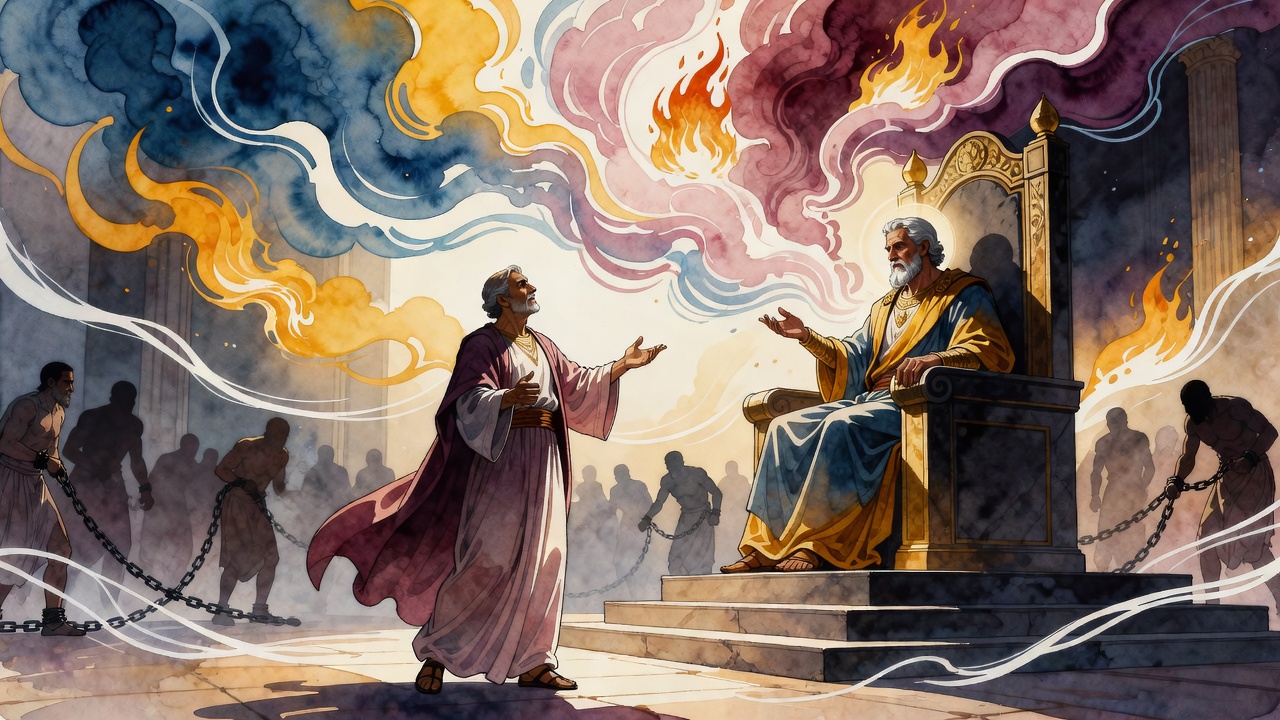
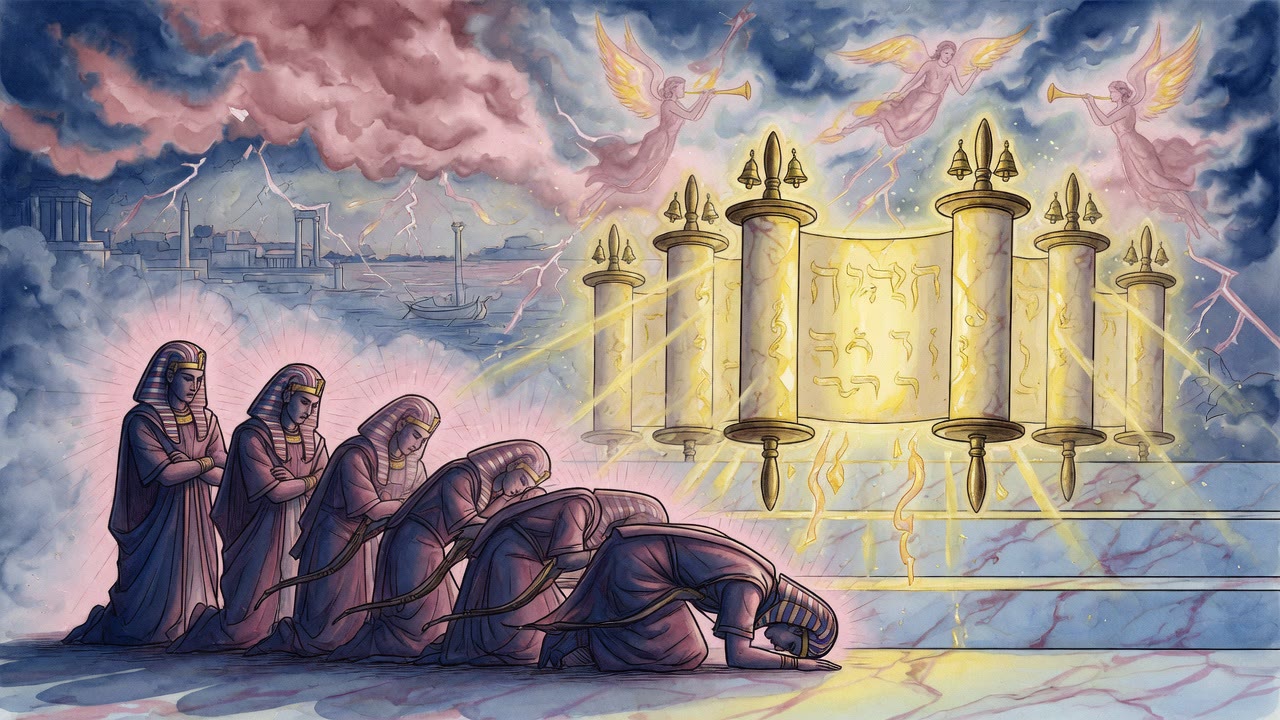
Before the embassy could be prepared, Aristeas put a problem in front of the king that the library's appetite had overlooked. The law they wanted to translate belonged to the Jewish people. A significant portion of the Jewish people was currently in bondage in Egypt, held as slaves by Ptolemy's own subjects, taken as captives in his father's campaigns. What justification, Aristeas asked, can we offer Jerusalem for our embassy while vast numbers of those same people remain in bondage here?

Torah was not a collectible object that could be separated from the people it belonged to. A king who wanted the law of Moses for his shelves would first need to address what was happening to the people of Moses in the streets below those shelves.

Six Hundred and Sixty Talents

Ptolemy understood the argument. Within seven days, he issued a decree authorizing the release of all Jewish slaves in his kingdom. The price was fixed at twenty talents per person. For infants at the breast, who would be freed together with their mothers, the same price applied. The king did not negotiate down. He instructed that the calculation be carried out in the most comprehensive way.

The final sum came to more than six hundred and sixty talents. An enormous expenditure. The king paid it.

Then he ordered Demetrius to prepare the memorandum for the translation. The library's acquisition of the Torah could now proceed because the people of the Torah were no longer property. The scrolls and the humans who carried the tradition they described had been addressed in the right order.

Seventy-Two Elders From Jerusalem

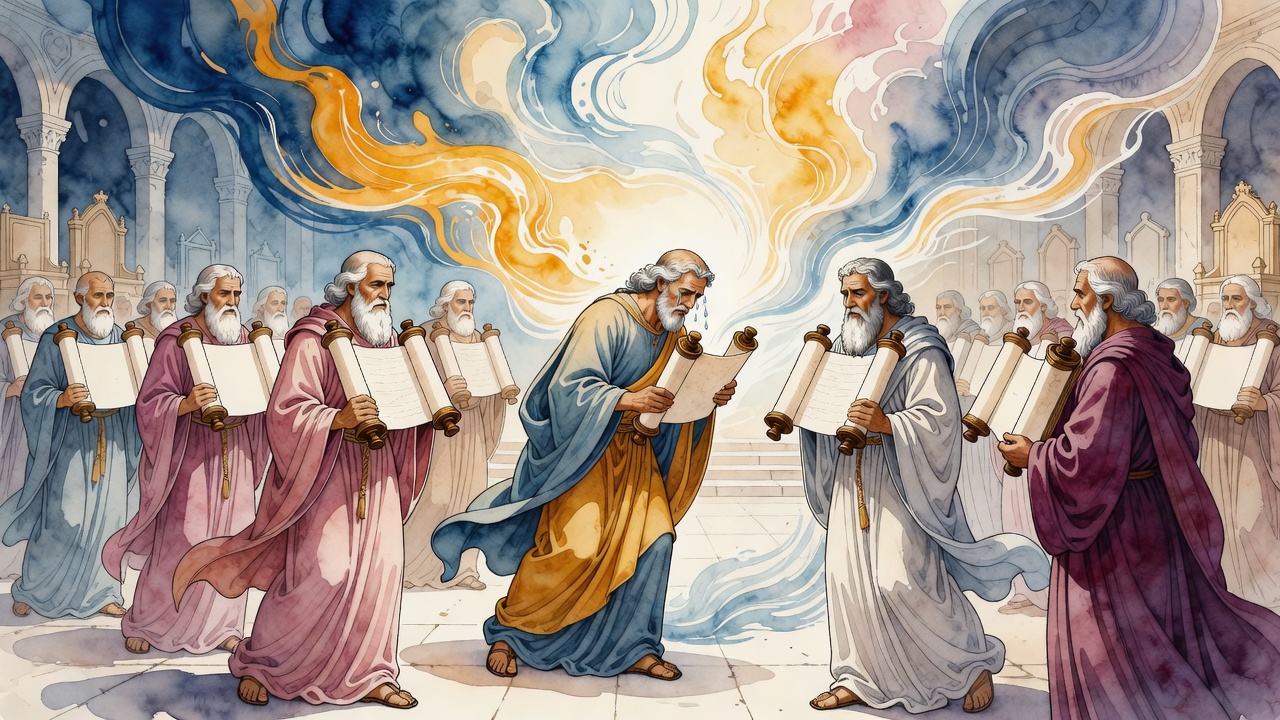
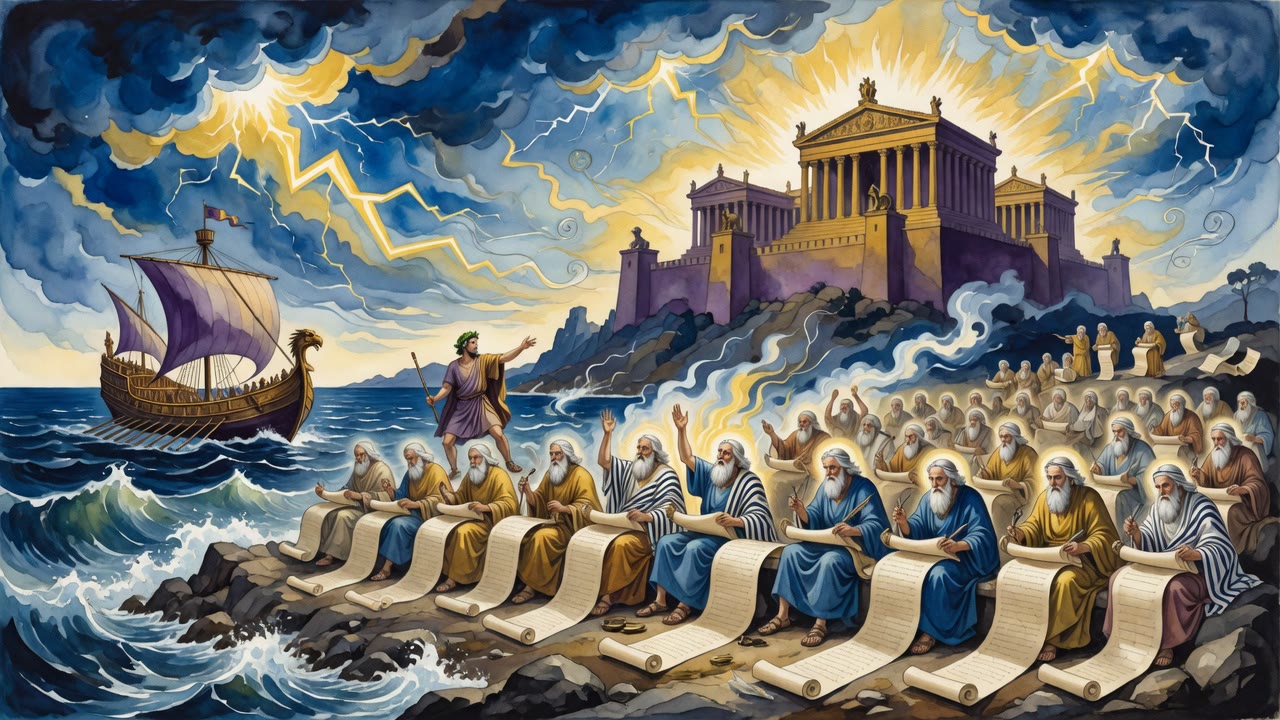
The High Priest in Jerusalem chose six elders from each of the twelve tribes, seventy-two in total. Each was both a scholar of the law and fluent in Greek. They came with a letter from the High Priest to the king, naming each man and reminding Ptolemy that once the translation was complete, the scholars should be safely returned. The list of names the Letter of Aristeas preserves covers all twelve tribes, six names from each.

In Alexandria, the court official Nicanor arranged their reception. Special provision was made for their dietary requirements. The king had standing orders for this: however many cities had specific customs around eating and drinking, their visitors were to be accommodated according to those customs, so that no discomfort would trouble the enjoyment of their visit. The Jewish scholars' halakhic requirements were no different from the requirements of any other group with specific practices. The court accommodated them without discussion.

A King Who Asked the Right Questions

The Letter of Aristeas records a banquet at which Ptolemy questioned the seventy-two scholars over seven days. The questions were not about Jewish law. They were about governance, wisdom, and virtue: What keeps a kingdom safe? What maintains gratitude? What is the foundation of justice?

Each scholar answered from the assumption that God inspires right judgment in those who seek it. The king who asked these questions was hearing Jewish wisdom applied to Hellenistic political philosophy. He received the answers with courtesy and was told repeatedly that his own good qualities were a sign of divine favor.

The dialogue is diplomatic and carefully designed, but it encodes something real: a Jewish author was insisting that the wisdom tradition of Israel had answers to the questions that exercised Hellenistic courts, and that those answers did not require abandoning Jewish categories to enter the conversation.


← All myths
From the tradition

Sources

9 sources

The texts this telling draws on, in full. Open a card to read inline, or expand it for a wider, quieter read.

Letter of Aristeas 1:16Letter of Aristeas

Since the law which we wish not only to transcribe but also to translate belongs to the whole Jewish race, what justification shall we be able to find for our embassy while such vast numbers of them remain in a state of slavery in your kingdom? In the perfection and wealth of your clemency release those who are held in such miserable bondage, since as I have been at pains to discover, the God who gave them their law is the God who maintains your kingdom.

They worship the same God - the Lord and Creator of the Universe, as all other men, as we ourselves, O king, though we call him by different names, such as Zeus or Dis. This name was very appropriately bestowed upon him by our first ancestors, in order to signify that He through whom all things are endowed with life and come into being, is necessarily the ruler and lord of the Universe. Set all mankind an example of magnanimity by releasing those who are held in bondage.'

Full source
Letter of Aristeas 1:28Letter of Aristeas

The matter was decided and the decree ratified within seven days. The grant for the redemption amounted to more than six hundred and sixty talents; for many infants at the breast were emancipated together with their mothers. When the question was raised whether the sum of twenty talents was to be paid for these, the king ordered that it should be done, and thus he carried out his decision in the most comprehensive way.

When this had been done, he ordered Demetrius to draw up a memorial with regard to the transcription of the Jewish books. For all affairs of state used to be carried out by means of decrees and with the most painstaking accuracy by these Egyptian kings, and nothing was done in a slipshod or haphazard fashion. And so I have inserted copies of the memorial and the letters, the number of the presents sent and the nature of each, since every one of them excelled in magnificence and technical skill. The following is a copy of the memorial.

Full source
Letter of Aristeas 1:47Letter of Aristeas

In the presence of all the people I selected six elders from each tribe, good men and true, and I have sent them to you with a copy of our law. It will be a kindness, O righteous king, if you will give instruction that as soon as the translation of the law is completed, the men shall be restored again to us in safety. Farewell.'

The following are the names of the elders: Of the first tribe, Joseph, Ezekiah, Zachariah, John, Ezekiah, Elisha. Of the second tribe, Judas, Simon, Samuel, Adaeus, Mattathias, Eschlemias. Of the third tribe, Nehemiah, Joseph, Theodosius, Baseas, Ornias, Dakis.

Full source
Letter of Aristeas 1:182Letter of Aristeas

Nicanor summoned the lord high steward, Dorotheus, who was the special officer appointed to look after the Jews, and commanded him to make the necessary preparation for each one. For this arrangement had been made by the king and it is an arrangement which you see maintained to-day. For as many cities (as) have (special) customs in the matter of drinking, eating, and reclining, have special officers appointed to look after their requirements. And whenever they come to visit the kings, preparations are made in accordance with their own customs, in order that there may be no discomfort to disturb the enjoyment of their visit. The same precaution was taken in the case of the Jewish envoys.

Full source
Letter of Aristeas 1:272Letter of Aristeas

The king said that he had answered wisely, and asked another, What is it that keeps a kingdom safe? And he replied to the question, 'Care and forethought that no evil may be wrought by those who are placed in a position of authority over the people, and this you always do by the help of God who inspires you with grave judgement '.

The king spoke words of encouragement to him, and asked another, What is it that maintains gratitude and honour? And he replied, 'Virtue, for it is the creator of good deeds, and by it evil is destroyed, even as you exhibit nobility of character towards all by the gift which God bestows upon you.'

Full source
Letter of Aristeas 1:317Letter of Aristeas

I have heard, too, from the lips of Theodektes, one of the tragic poets, that when he was about to adapt some of the incidents recorded in the book for one of his plays, he was affected with cataract in both his eyes. And when he perceived the reason why the misfortune had befallen him, he prayed to God for many days and was afterwards restored.

And after the king, as I have already said, had received the explanation of Demetrius on this point, he did homage and ordered that great care should be taken of the books, and that they should be sacredly guarded.

Full source
Letter of Aristeas 1:37Letter of Aristeas

I have set at liberty more than a hundred thousand captives, paying their owners the appropriate market price for them, and if ever evil has been done to your people through the passions of the mob, I have made them reparation. The motive which prompted my action has been the desire to act piously and render unto the supreme God a thank offering for maintaining my kingdom in peace and great glory in all the world. Moreover those of your people who were in the prime of life I have drafted into my army, and those who were fit to be attached to my person and worthy of the confidence of the court, I have established in official positions.

Full source
Letter of Aristeas 1:39Letter of Aristeas

Since I am anxious to show my gratitude to these men and to the Jews throughout the world and to the generations yet to come, I have determined that your law shall be translated from the Hebrew tongue which is in use amongst you into the Greek language, that these books may be added to the other royal books in my library.

It will be a kindness on your part and a regard for my zeal if you will select six elders from each of your tribes, men of noble life and skilled in your law and able to interpret it, that in questions of dispute we may be able to discover the verdict in which the majority agree, for the investigation is of the highest possible importance. I hope to win great renown by the accomplishment of this work.

Full source
Letter of Aristeas 1:20Letter of Aristeas

Extremely pleased with these arguments he gave orders that an addition should be made to the wages of the soldiers by the amount of the redemption money that twenty drachmae should be paid to the owners for every slave, that a public order should be issued and that registers of the captives should be attached to it. He showed the greatest enthusiasm in the business, for it was God who had brought our purpose to fulfilment in its entirety and constrained him to redeem not only those who had come into Egypt with the army of his father but any who had come before that time or had been subsequently brought into the kingdom. It was pointed out to him that the ransom money would exceed four hundred talents.

Full source