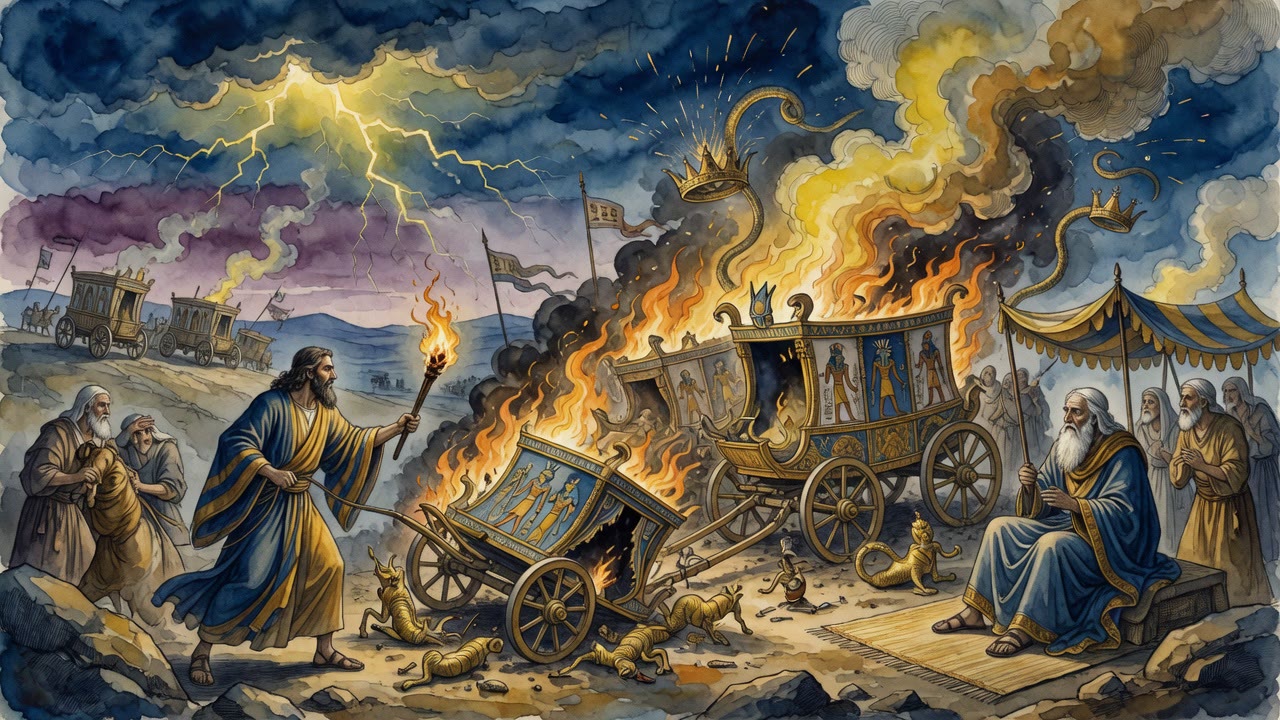
Joseph Proved He Was Joseph by Speaking Hebrew
Joseph cleared the room, looked at eleven men from Canaan, and opened his mouth in a language no Egyptian viceroy should have known.
Table of Contents
The viceroy of Egypt said: everybody out.
 Click for full size
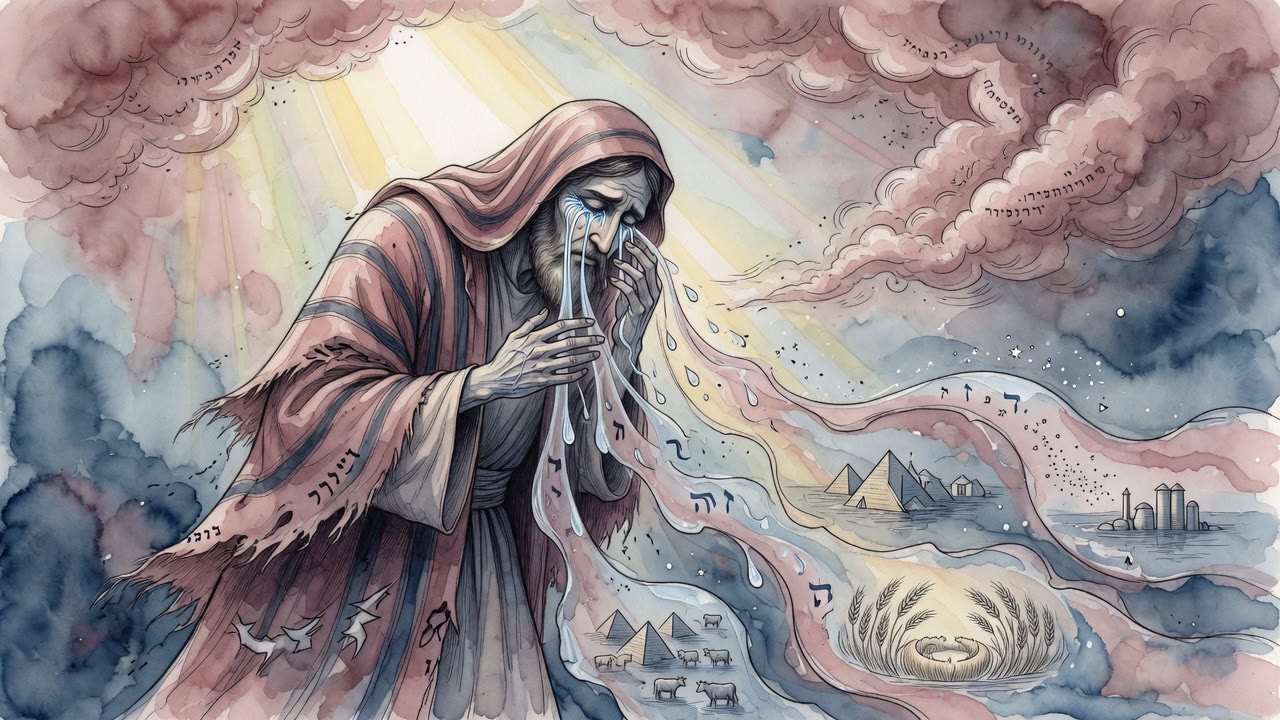
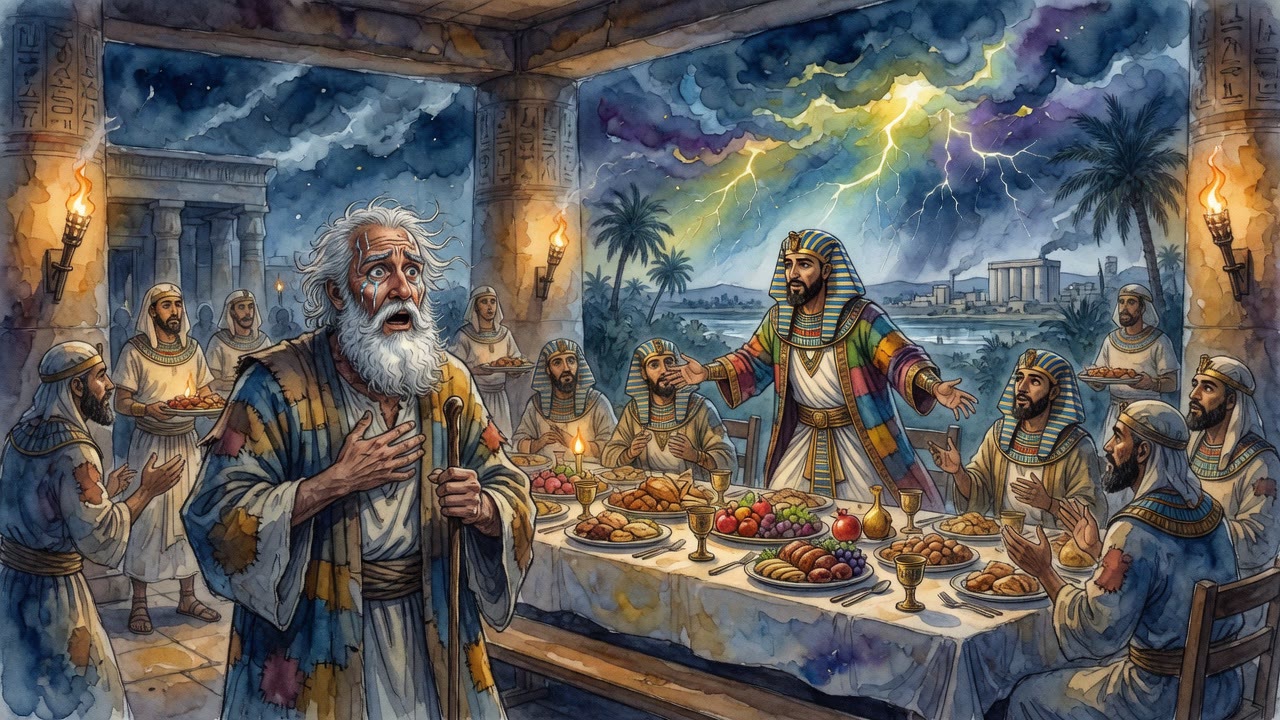
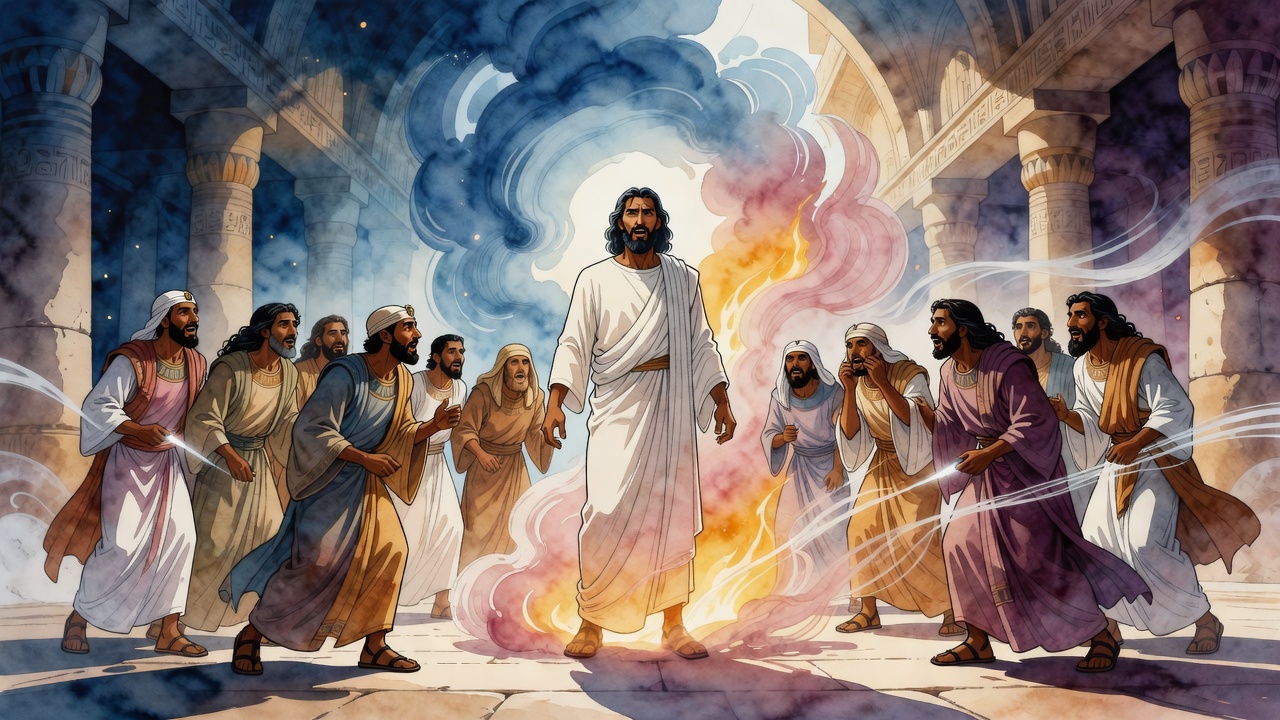
His stewards obeyed. His guards obeyed. The translators who had been relaying every word between the grain administrator and these foreign men from Canaan stepped back and filed through the doors. When the last of them was gone and the great hall stood empty except for eleven dusty travelers and one official in Egyptian linen, Joseph wept so hard the royal house heard it through the walls.
Then he spoke. Not in Egyptian. In the language his father Jacob had taught him in the hills of Canaan before he was seventeen years old.
The Language of the House of Holiness
The word he used first was his own name. Ani Yosef. I am Joseph.
He followed it with a question: is my father still alive?
What made the moment decisive was not the declaration but the tongue it came in. The Aramaic interpretive tradition records what the Hebrew text leaves implicit: Joseph told his brothers that his mouth was speaking to them in the lishon beit quodsha, the language of the house of holiness. He was not simply announcing himself. He was offering the one proof no Egyptian official could have fabricated. A viceroy born in Memphis, trained in the court, raised on the Nile, could dress in fine linen and wear a gold ring and bear an Egyptian name. He could not speak Hebrew to a family from Canaan with the ease of a man who had prayed in it as a boy.
Joseph had carried that language through twenty-two years of Egypt. He had a new name, Zaphenath-paneah, a name Pharaoh's court used and his servants used and the grain ledgers used. He had an Egyptian wife, two sons with Egyptian names, a wardrobe, a seal ring, a chariot. By every outward measure, he had been absorbed. But when the room was cleared and he needed to prove himself to the only people on earth who mattered, he reached for the thing Egypt had never been able to take from him.
The language was the credential (Genesis 45:12).
The Brothers Could Not Answer
They were terrified. Not moved, not overjoyed. Terrified.
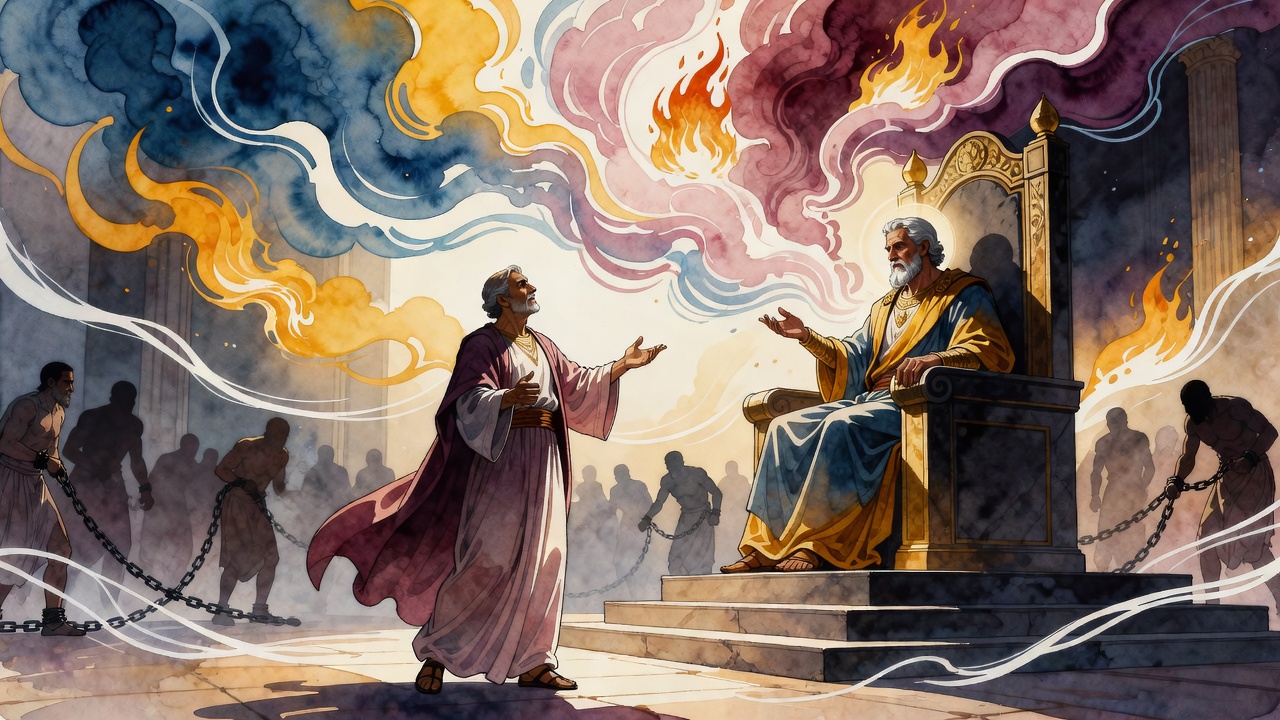
His brothers could not answer him a word, and that silence carries its own weight. They had just watched the most powerful official in Egypt, the man who controlled their food supply, who had accused them of espionage, who had held their brother Simeon as surety for months, who had just returned their youngest brother Benjamin to them after staging a theft to manufacture a pretext for enslavement, suddenly weep like a child and speak their father's language. The arithmetic of what this meant arrived all at once. The seventeen-year-old boy they had thrown into a pit in Dothan, then sold to a passing caravan for twenty pieces of silver, was standing in front of them as second only to Pharaoh.
Joseph had been in their hands once. Now they were entirely in his.
Come Near and Look at My Mouth
He did not let their terror hold. He told them to come close to him. He repeated himself: I am Joseph your brother, whom you sold into Egypt (Genesis 45:4).
He named what they had done. He did not soften it. And then he did something unexpected with it.
He told them not to be distressed. Not because what they did was minor, but because the calculation above it was larger than any of them had seen. God had sent him ahead of them, not them. He had arrived in Egypt as a slave so that when the famine came he would be in position to preserve them, to keep alive a remnant, to carry a family through a catastrophe that was already old news in heaven when his brothers were still arguing about what to do with him beside that pit in Canaan.
The logic stripped the brothers of their guilt and their agency at the same time. Five years of famine remained. The place God had assigned to Joseph was exactly where he stood (Genesis 45:7).
Two Brothers Weeping for What They Saw
When Joseph embraced Benjamin, he wept on his neck. Benjamin wept on Joseph's neck. The embrace is in the plain text. What each of them saw is not.
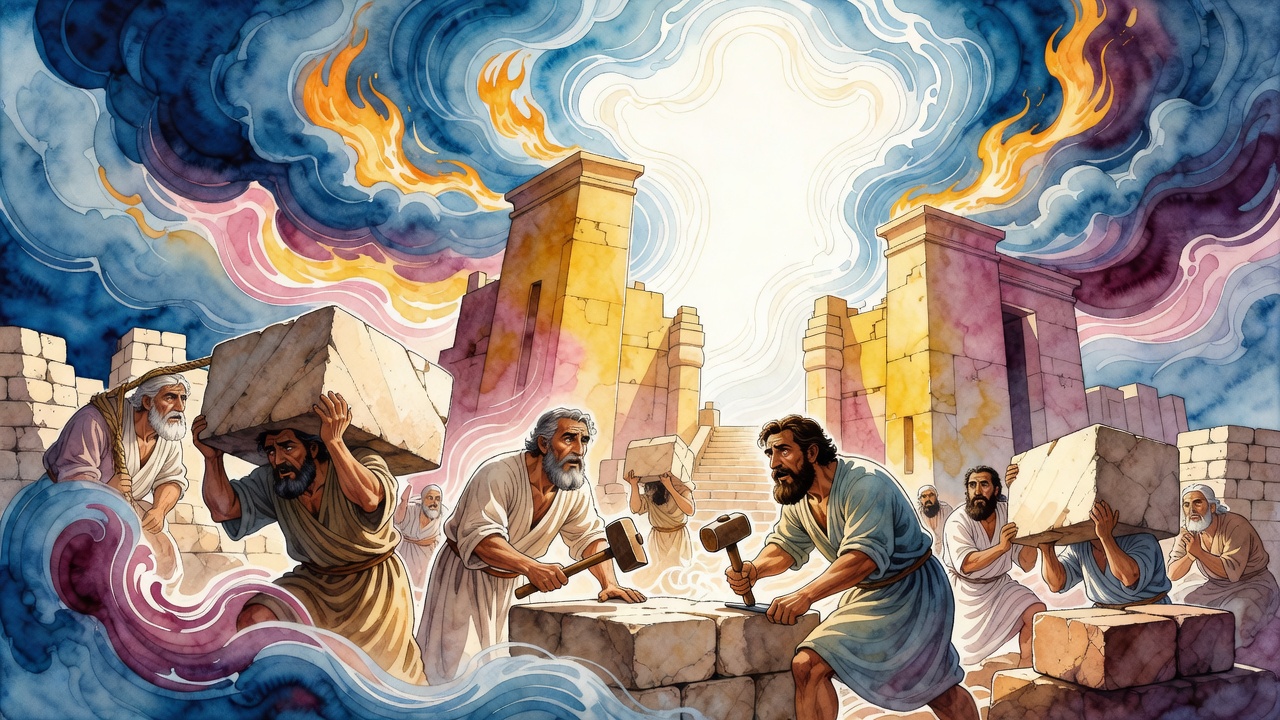
The Aramaic tradition adds the vision: Joseph wept because he foresaw that the house of holiness would be built in Benjamin's portion of the land and be destroyed. Twice. Benjamin wept because he foresaw the tabernacle of Shiloh standing in Joseph's portion and being destroyed. Each brother wept for the other's future catastrophe, the one he himself would not live to witness, the sanctuary that would rise in his brother's territory and burn.
The reunion that should have been pure relief was full of grief that reached centuries forward. When Joseph kissed all his brothers and wept again, he wept for the bondage coming for his people's sons.
The men in the hall were weeping in a language the Egyptian court outside could not understand. That was the whole scene: eleven men from Canaan and one viceroy of Egypt, sealed in a room, speaking Hebrew to each other while the world outside waited and heard nothing but crying without cause.
Back in Canaan, when the brothers found their father Jacob and told him Joseph was alive, he did not believe them at first. Then he saw the wagons Joseph had sent. The spirit of prophecy that had left Jacob on the day Joseph disappeared, absent for twenty-two years, returned to rest on him again.
← All myths