5 min read

Seventy Elders Write Torah for a Greek King

Demetrius told the king the Jewish law books were missing from the great library. A royal summons followed, then a voyage and a careful translation.

Curated by Arthur · Told by Maggid ·
Table of Contents
  1. A Gap on the Royal Shelves
  2. Elders on the Water
  3. Children Before Banquets
  4. Choice in Two Languages
  5. Ink That Must Not Flatter a King
Seventy Elders Write Torah for a Greek King Click for full size

A Gap on the Royal Shelves

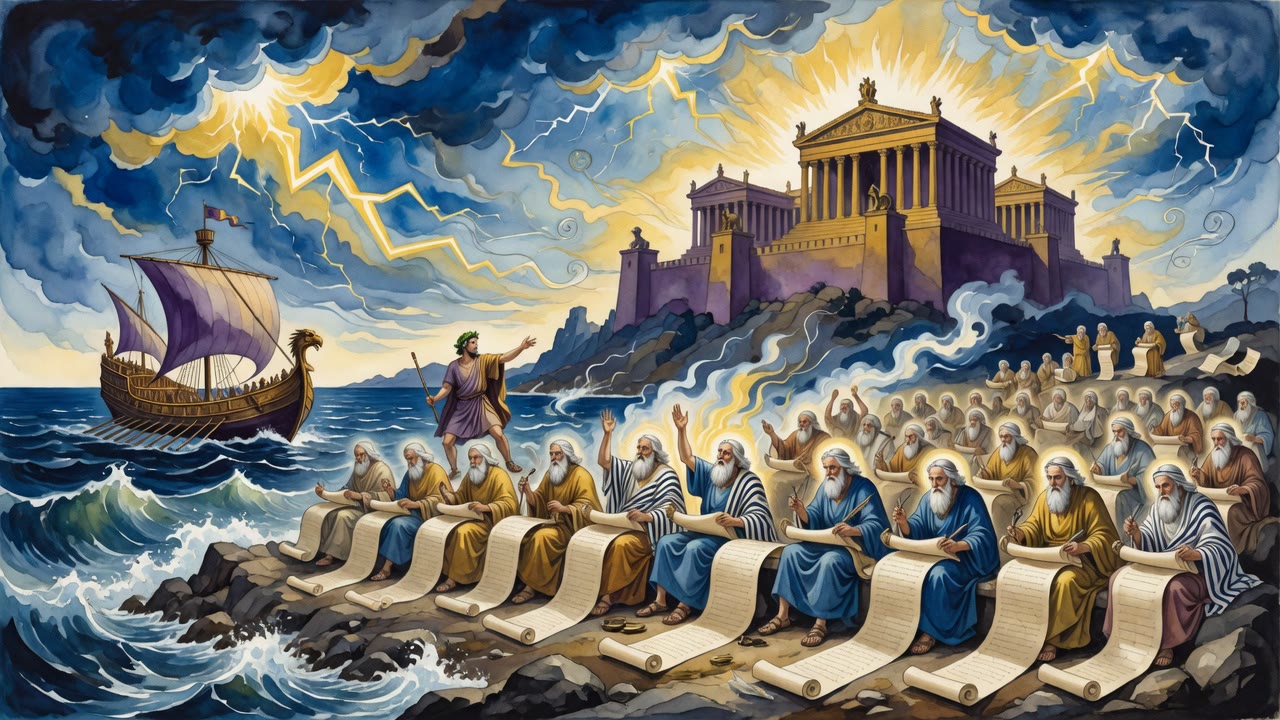
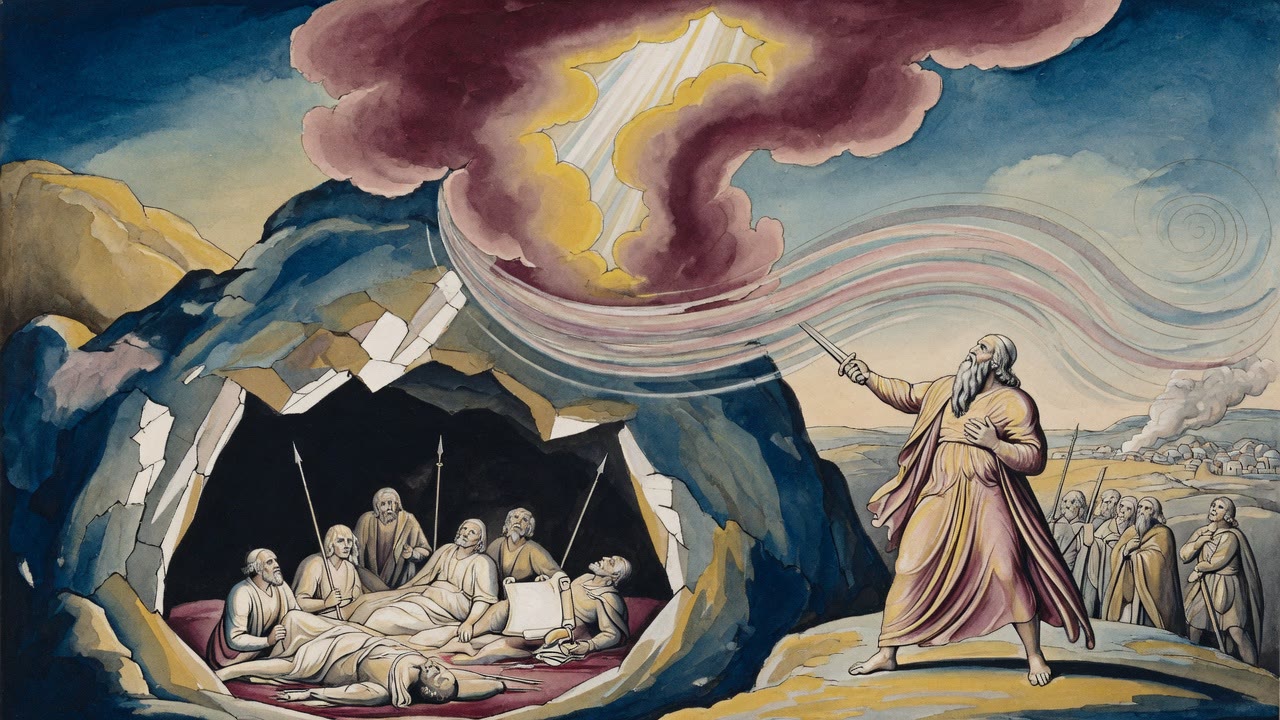
Demetrius of Phalerum stood before the king with a report that was also a hunger. The great library was nearly complete. Defective scrolls had been repaired. Missing volumes had been hunted across harbors from the Black Sea to the edge of India. One absence still shamed the shelves. The books of the law of the Jews were not there. They were written in Hebrew letters, he said, and the versions floating in Greek markets were careless, never guarded by a king's care.

The king listened as men listen when prestige and curiosity share a table. A people whose law could not be read in the language of the court was a people half invisible. He ordered messengers. He ordered gifts of gold and purple. He ordered a request that sounded like honor and felt like command. The librarian's gap became a state project.

In the palace corridors, clerks whispered about a nation that claimed its God had spoken a law for every hour of life. The king wanted that law on his shelves the way he wanted rare stones in his treasury.

Elders on the Water

From Jerusalem came elders, counted in the old telling by sevens upon sevens, men who carried the text in memory as much as in parchment. The voyage put salt on their beards. Storms tested the seams of the ship. Alexandria rose white and loud when they finally docked, a city of warehouses, gods, and arguments. They were housed, fed, questioned by officials who wanted to know if Jews could drink wine with Greeks and still keep their law intact.

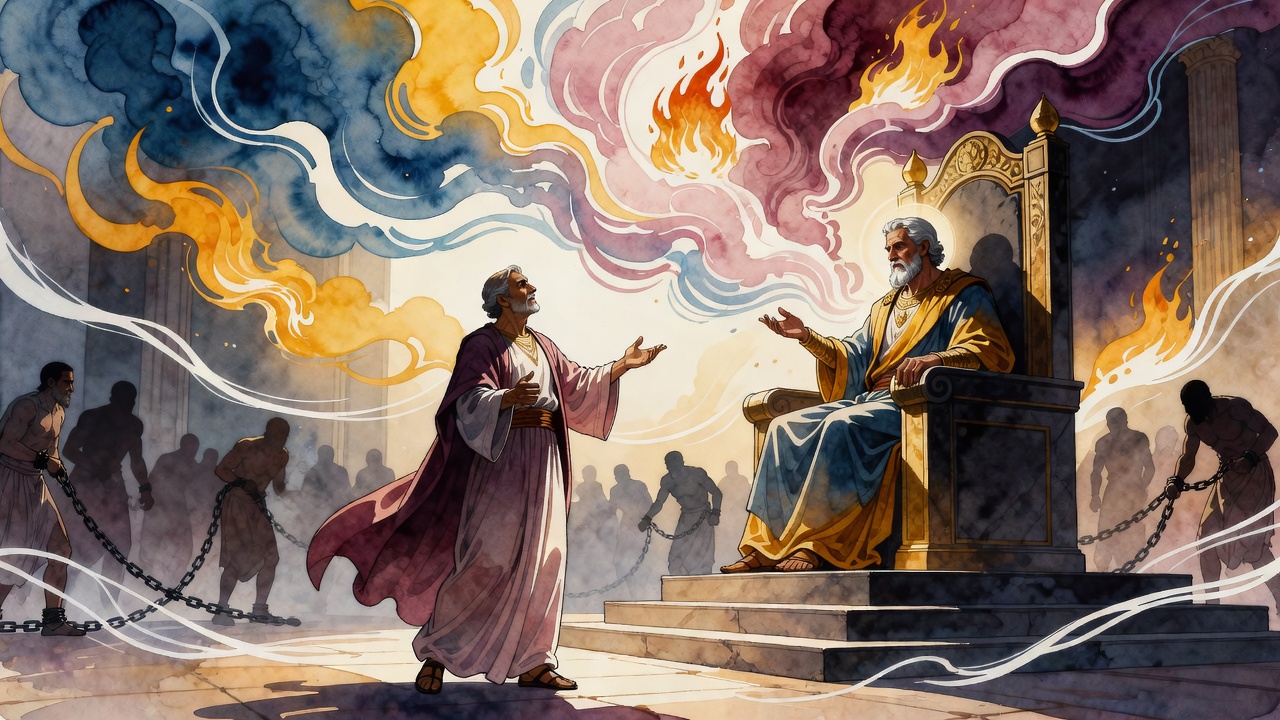
The work began in rooms where the only sound that mattered was the scrape of reed on sheet and the low argument over a single verb. Translation is never neutral. Every choice is a small judgment. Fire and water, life and death, sit before a people as before a single soul. Ben Sira had already said it in another century's wisdom: stretch out your hand to which you choose. A translator chooses too. He can blunt a command into politeness or keep the edge that cuts the will.

Some nights an elder woke sure he had softened a word too far. Some mornings he put the edge back.

Children Before Banquets

Josephus, writing later for Roman ears, would insist that Jewish strength is not measured in birth festivals and drinking contests. It is measured in how early a child is fed the deeds of the ancestors and the shape of the law. Nourished in the laws from infancy, he says, so ignorance cannot pretend to be an excuse. A library without Torah is a palace without its charter. A people without childhood teaching is a people rehearsing collapse.

The elders in Alexandria were doing both works at once. They were filling a foreign shelf, and they were proving that their children at home already lived inside the text the king now wanted to own. The Greek letters that left their hands were not a toy for collectors. They were a fence around memory in a world that preferred spectacle to study.

When court officials asked what made Jews different, the elders did not point to banquets. They pointed to boys who could recite the commandments before they could lift a sword.

Choice in Two Languages

When the work was done, the king had what Demetrius asked for: the law present, guarded, no longer a rumor on the docks. The Jews had something harder to name. Their teaching could now be misread by strangers and also found by them. Free will does not vanish when language changes. Death and life still stand before a person. The commandment still waits for a hand to stretch toward fire or water.

Demetrius closed his memorial with the satisfaction of a librarian who hates empty shelves. The elders closed their cases with the knowledge that once a scroll leaves home, every reader becomes a kind of judge. The king gained a book. Israel kept the choice the book demands.

On the voyage home, salt returned to their beards. Behind them, in a city of many gods, a single law sat in Greek on wood and ink, waiting for hands that might obey or refuse.

Ink That Must Not Flatter a King

One afternoon a court officer suggested a softer rendering of a hard commandment, something that would sit more easily beside Greek custom. An elder set down his reed. The room waited. He did not shout. He simply returned to the Hebrew and kept the edge. The officer smiled the thin smile of men who prefer libraries to obedience, and left.

That moment is the whole risk of the project. A king can own a scroll and still refuse the choice it demands. Ben Sira's fire and water still wait outside the library doors. Josephus's children still need to be fed law before they are fed spectacle. Translation multiplies readers. It does not multiply consent.

When the elders boarded for home, a copy stayed in Alexandria like a seed planted in foreign soil. Some seeds grow into study. Some grow into argument. All of them force a hand to stretch toward life or death in a language the ancestors did not speak.


← All myths
From the tradition

Sources

3 sources

The texts behind this telling. Some cards carry a translation of the source; others are our own retelling of it, and each card says which. Every card links out to the original.

Letter of Aristeas 1:30Letter of Aristeas

Retold in our words. Read the original at the link below.The Letter of Aristeas, Clarendon Press (1913) · CC-BY

The Memorial of Demetrius to the great king. 'Since you have given me instructions, O king, that the books which are needed to complete your library should be collected together, and that those which are defective should be repaired, I have devoted myself with the utmost care to the fulfilment of your wishes, and I now have the following proposal to lay before you.

The books of the law of the Jews (with some few others) are absent from the library. They are written in the Hebrew characters and language and have been carelessly interpreted, and do not represent the original text as I am informed by those who know; for they have never had a king's care to protect them.

Full source
Against Apion 25:1Against Apion

Retold in our words. Read the original at the link below.Against Apion, trans. William Whiston · Public Domain

He argues that the strength of a community isn't found in fleeting celebrations or momentary pleasures, but in the consistent, dedicated education of its children. for a second.

Josephus points out a fascinating contrast. Many cultures, even back then, placed great emphasis on festivals surrounding births, often involving – let's be honest – excessive drinking. But Jewish law, the Halakha, takes a different path. According to Josephus, it doesn't forbid joy, but it prioritizes something far more profound: the immediate and unwavering commitment to education.

Why is this so important? Because, Josephus explains, the law commands us to raise our children in learning, to immerse them in the laws, and to familiarize them with the deeds of their ancestors. The goal? That they might emulate those positive traits, imbibe the wisdom of generations, and be "nourished up in the laws from their infancy."

Not just passively teaching, but actively nourishing the next generation with the very essence of the tradition.

And the purpose isn't just rote memorization. It's about preventing transgression, about removing any "pretense for their ignorance" of the law. It's about building a foundation of understanding so solid that it guides their actions throughout their lives. So, education isn't just about knowledge, it’s about building moral character.

Josephus's words offer a timeless reminder. A society's future isn't built on fleeting moments of celebration. It is built on the consistent, dedicated effort to educate its children, to imbue them with the values and wisdom that will sustain them – and the community – for generations to come. What kind of foundation are we building today?

Full source
Ben Sira 15:18Ben Sira

Retold in our words. Read the original at the link below.The Wisdom of Ben Sira, Cambridge University Press (1899) · CC-BY

Ben Sira, also known as Ecclesiasticus, is a book of wisdom literature, a collection of ethical teachings and practical advice. It's not part of the Hebrew Bible as defined by rabbinic tradition, but it’s considered canonical in some some traditions, and it offers incredible insights into Jewish thought during the Second Temple period.

Chapter 15? It's all about choice.

"For God created man from the beginning," Ben Sira tells us, "and put him into the hand of him that would spoil him; and gave him into the hand of his inclination." Now, that first line might seem a little…harsh. Who is this "him that would spoil him?" Some interpretations suggest this refers to the yetzer hara, the "evil inclination" within us. It's that little voice whispering temptations, urging us to take the easy way out, to indulge in desires that might not be good for us. God, it seems, knowingly placed us in a situation where we would face temptation.

Here's the crucial part: "If thou choose, thou mayest keep the commandment; and it is understanding to do his will. If thou trust in him, thou shalt even live." We have the power to choose. We are not simply victims of our inclinations. We can choose to follow God's will, to embrace understanding, and to live a life of meaning. "Fire and water are poured out before thee: Upon whichsoever thou choosest stretch forth thy hands." Ben Sira presents us with stark choices, elemental forces. Fire can purify, but it can also destroy. Water can sustain life, but it can also drown. The choice is ours. We decide what we embrace, what we allow to shape us.

And the consequences are significant. "Death and life are before a man: That which he shall choose shall be given him." This isn't just about physical life and death. It's about the quality of our lives, the kind of people we become. Do we choose a path that leads to spiritual fulfillment, to connection with something larger than ourselves? Or do we choose a path of selfishness and destruction?

Ben Sira reminds us of the immensity of God's wisdom: "The wisdom of the Lord aboundeth: He is mighty in power, and beholdeth all." God sees our choices, understands the struggles we face. But He doesn't force us. He gives us the freedom to choose, the responsibility to shape our own destinies.

So, what do you choose? What path will you walk? Ben Sira suggests that the power, and the consequences, are truly in your hands. To realize that we are not just passengers on this journey, but active participants, constantly making choices that define who we are. And maybe, just maybe, that's the most beautiful and terrifying gift of all.

Full source