5 min read

Elephants Turned Back on Physco's Own Ranks

Ptolemy Physco drove Jews toward drunken elephants in Alexandria. The beasts wheeled on his own ranks while envoys sought allies.

Curated by Arthur · Told by Maggid ·
Table of Contents
  1. Generals Trusted With a Kingdom
  2. What a King Should Want
  3. Letters to Sparta and to Rome
  4. Three Courts, One Pressure
  5. After the Dust Settled
  6. Clemency Against the Arena

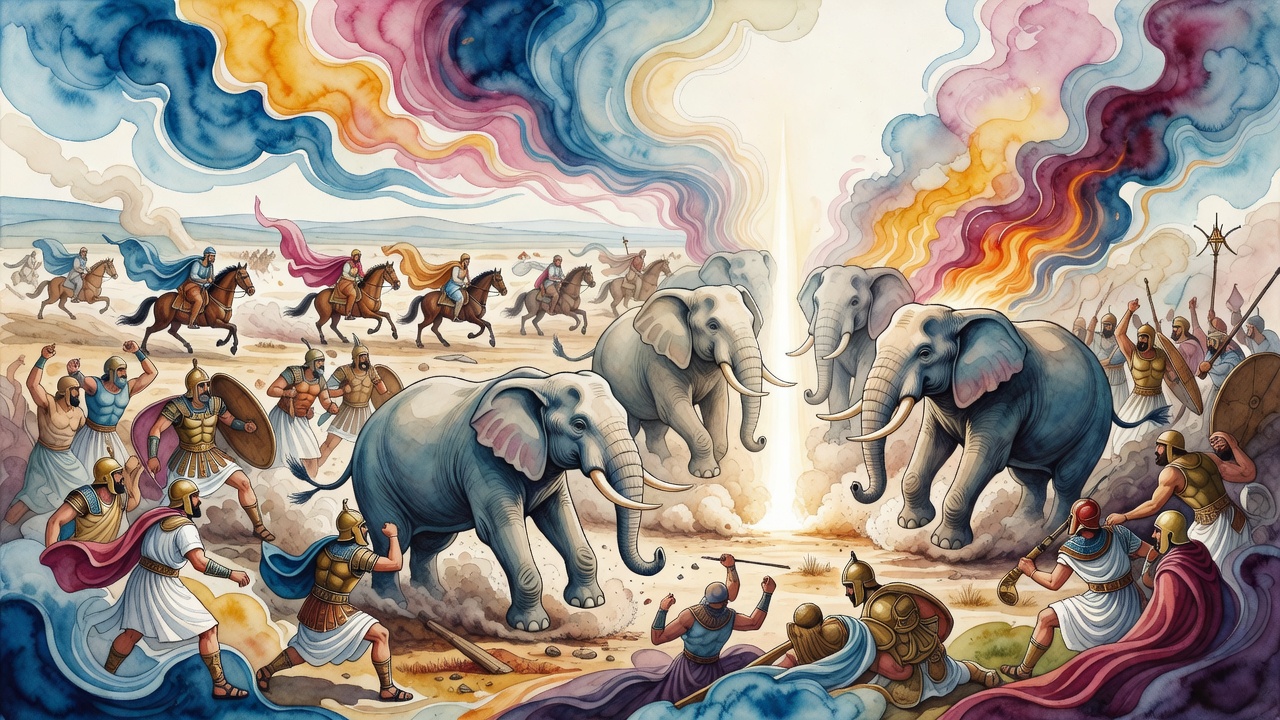
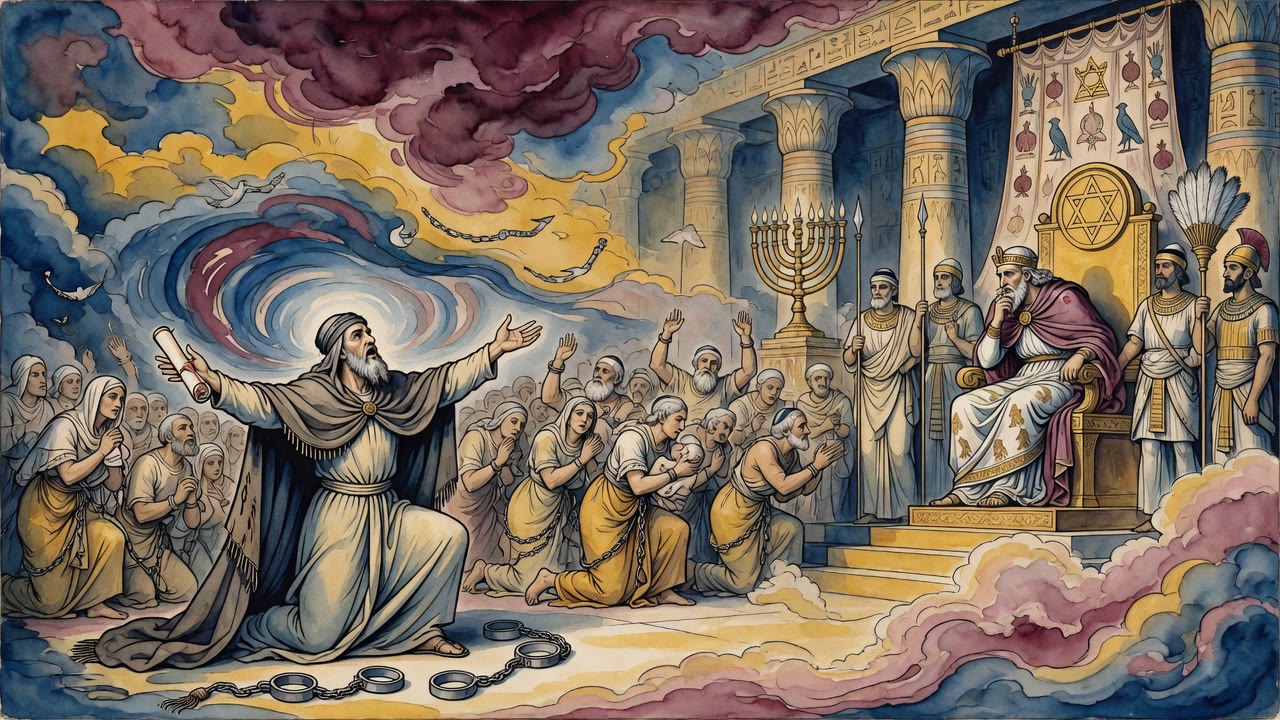
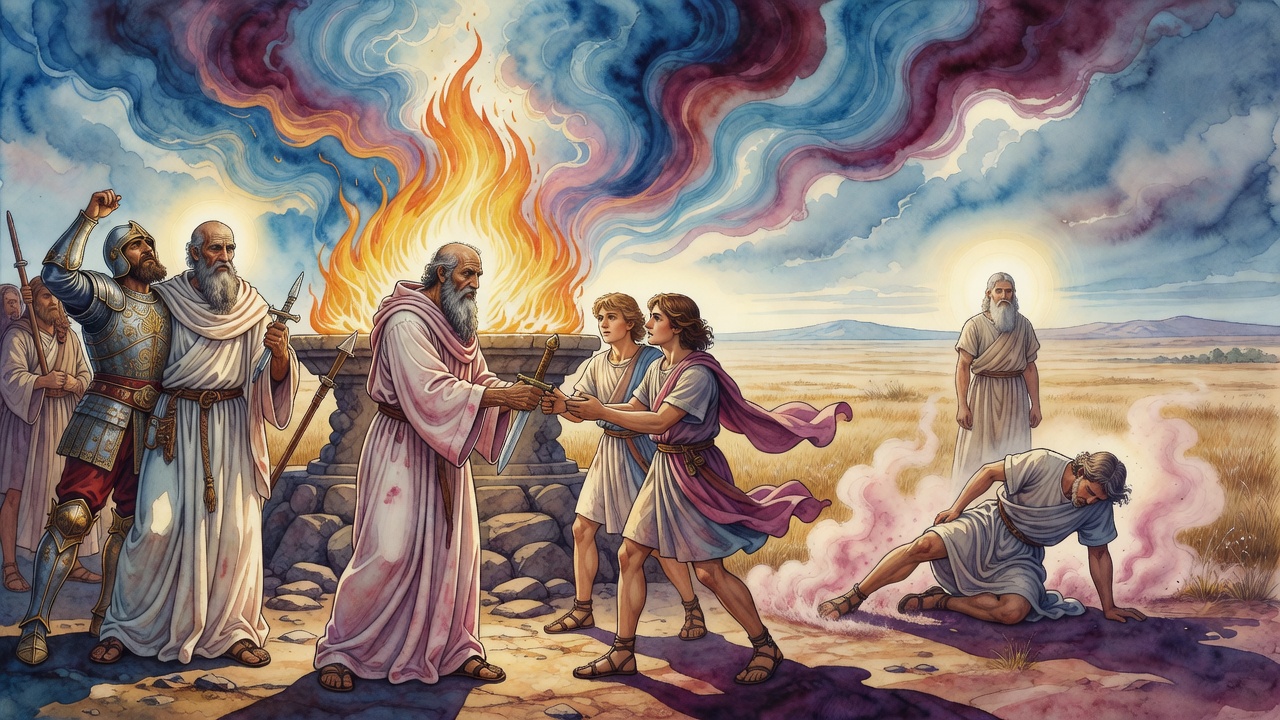
The elephants were drunk and the crowd was meant to die under them. Ptolemy Physco had rounded up the Jews of Alexandria in a fit of rage, intending trampling as theater and sentence at once. Chains scraped. Children cried against their mothers' sides. Then the animals turned. Instead of crushing the prisoners, they wheeled on Physco's own men. The king saw a vision that broke his plan. A concubine begged him to stop the slaughter. The community later kept a day for the delivery, a scar turned into a calendar mark.

Elephants Turned Back on Physco's Own Ranks Click for full size

Josephus told the story against Apion, who preferred a thinner, uglier history of the same city.

Generals Trusted With a Kingdom

Apion mocked the place of Jews beside Macedonian crowns. Josephus answered with names. Ptolemy III Euergetes, after conquering Syria, did not thank Egyptian gods first. He came to Jerusalem and offered sacrifices to God according to Jewish law. Ptolemy Philometor and his wife Cleopatra entrusted their kingdom to Jewish generals, Onias and Dositheus. When civil war threatened Alexandria, those generals held the line. Apion sneered. Josephus said he should have thanked them for a city still standing.

Onias brought an army when a Roman ambassador watched and Physco tried to seize the realm from Cleopatra and her sons. Loyalty to the trust looked like interference to enemies of the Jews. To Josephus it looked like the only honest reading of an oath.

What a King Should Want

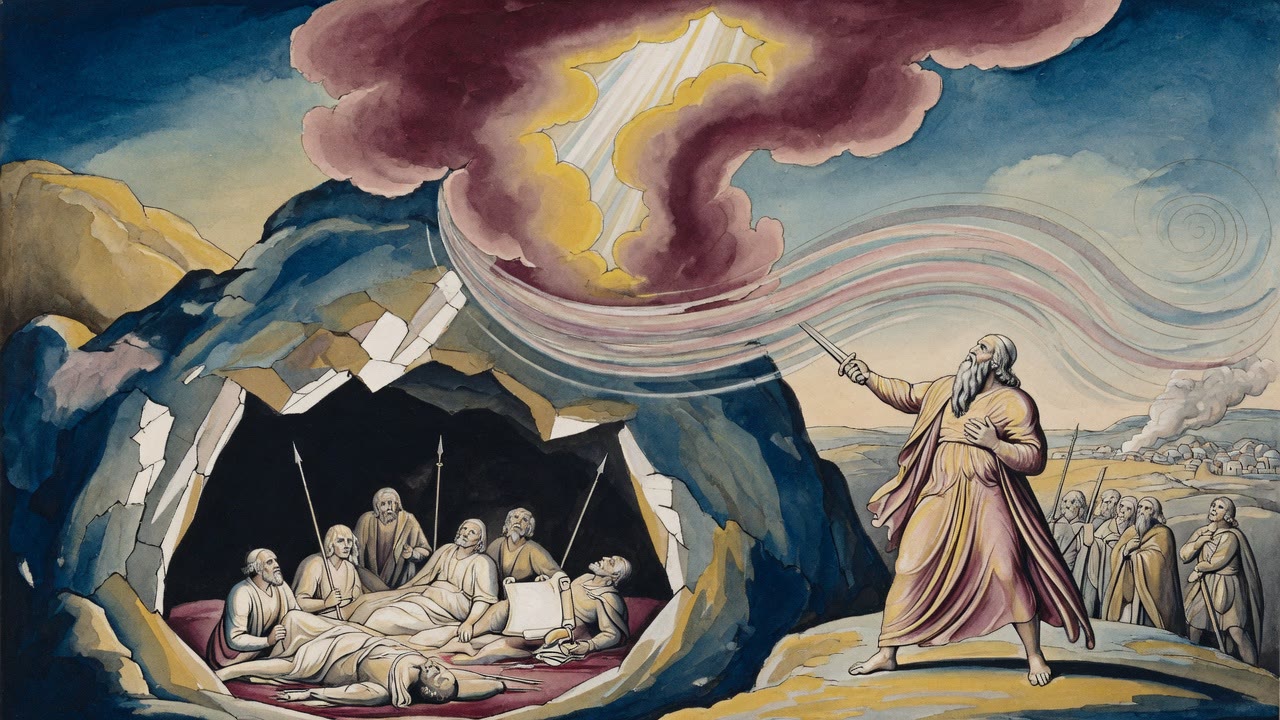
Far from the elephant yard, another court conversation set the measure of rule. In the Letter of Aristeas a counselor told a great king he was great not for glory and wealth alone but for clemency and philanthropy, gifts from God. The king praised him and asked the last of the company what the greatest achievement in ruling an empire might be. The answer came clean: that subjects dwell in peace, and that justice be administered speedily in disputes.

Peace and quick justice. Not drunken beasts as policy. Not a minister's talent of silver for leave to kill. The counsel sits in judgment on Physco without naming him. Any throne that needs elephants to teach obedience has already failed the test Aristeas records.

Letters to Sparta and to Rome

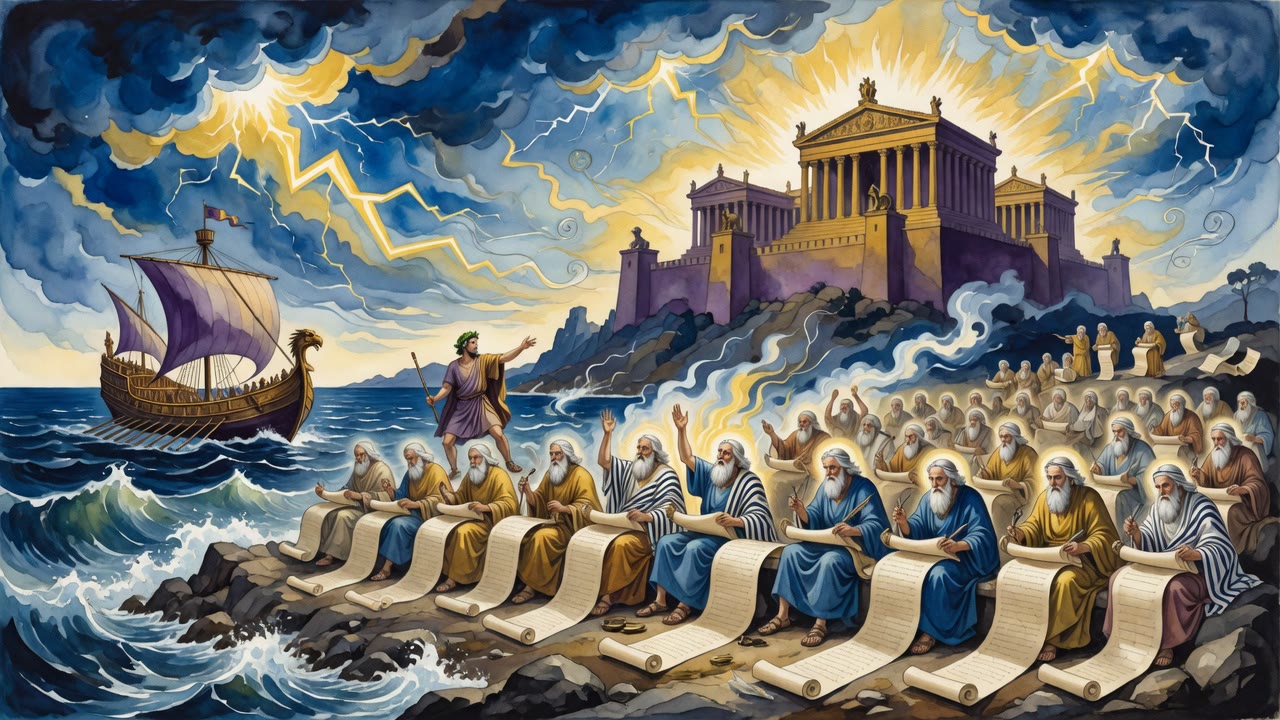
In Judea, Jonathan the High Priest fought more than open battles. He sent letters to the Lacedemonians and to other places to renew friendship and secure help. Envoys walked toward Rome itself, into the Senate's hearing, to renew an old league: Jonathan and the people of the Jews asked that friendship be restored as in former time. The Romans answered with letters to governors everywhere, ordering safe conduct for travelers toward the land of Judea. The seal of a republic became a shield on the road.

Alliance was not surrender of Torah. It was a people refusing to face every empire alone while memory of older pacts still had legal breath.

Three Courts, One Pressure

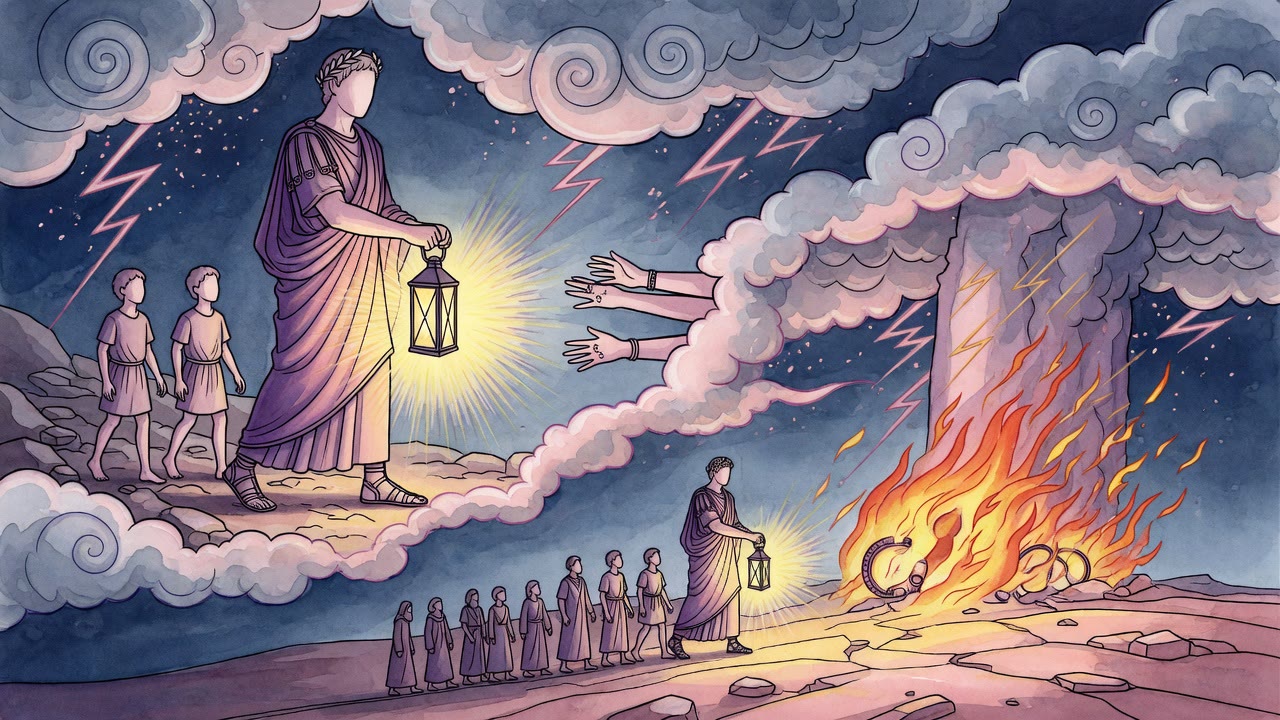
Alexandria under Physco, the symposium of Aristeas, Jonathan's dispatches: each is a court under pressure. One answers with animals and a miracle that shames the king. One answers with a definition of greatness that sidelined gold. One answers with ink, ships, and foreign signatures that keep a small nation from isolation.

Apion wanted Jews remembered as parasites on royal houses. Josephus answered with generals who saved a capital and a God who would not let elephants finish a tyrant's joke. Aristeas wanted kings measured by the peace of their streets. Maccabees wanted friends who could open roads when war closed them.

After the Dust Settled

In Alexandria they kept the day the beasts turned. In Judea they kept copies of letters. In a Greek-speaking Jewish imagination they kept the question of what a ruler is for. The trampling that did not happen remains louder than many battles that did. A people that survives by miracle, counsel, and alliance still has to choose, in every generation, which of the three it will neglect first.

Clemency Against the Arena

Set Aristeas's answer beside the elephant yard and the contrast sharpens until it cuts. Greatest achievement: subjects in peace, justice swift in dispute. Physco chose spectacle and terror. The beasts refused the script. Onias chose the messy loyalty of defending a queen and her sons when a rival wanted the throne easy. Jonathan chose ships and sealed letters when isolation would have been a quieter kind of death. None of these choices is soft. Clemency is not the absence of force. It is force yoked to a purpose that can still be named without shame in a synagogue or a senate.

Apion's insults tried to make Jewish nearness to power look like theft. Josephus answered with a city saved, a Temple honored by a foreign victor, and animals that would not finish a tyrant's joke. The record stands whether later mouths like it or not.


← All myths

From the tradition

Sources

3 sources

The texts behind this telling. Some cards carry a translation of the source; others are our own retelling of it, and each card says which. Every card links out to the original.

Against Apion 5:1Against Apion

Retold in our words. Read the original at the link below.Against Apion, trans. William Whiston · Public Domain

The Jewish people have faced that challenge for centuries, and in his work Against Apion, Josephus steps up to the plate to set the record straight against a particularly virulent detractor named… well, Apion.

Apion seems to have had a real talent for twisting facts and spreading misinformation. Josephus tackles these accusations head-on, and in this particular passage, he's dealing with Apion's claims about Jewish interactions with the Macedonian kings and, especially, Cleopatra.

Apion, in his ignorance, apparently downplayed the positive relationships that existed. Josephus reminds us that Ptolemy III Euergetes, after conquering Syria, didn't offer thanks to Egyptian gods. Instead, he came to Jerusalem and offered sacrifices to God according to Jewish law. That’s quite a statement of respect and recognition, wouldn’t you say?

What about Ptolemy Philometer and his wife Cleopatra? They entrusted their entire kingdom to Jewish generals, Onias and Dositheus. Apion mocks these men, but Josephus argues he should be thanking them! These Jewish generals actually saved Alexandria from ruin during a civil war.

Apion even criticizes Onias for bringing an army to Alexandria when Thorruns, the Roman ambassador, was present. But Josephus defends Onias's actions, explaining that Ptolemy Physco was trying to unjustly seize the kingdom from Cleopatra and her sons. Onias was simply honoring the trust the royal family had placed in him.

Now, here’s where it gets really interesting. Josephus recounts a miraculous event, seemingly validated by historical accounts. Ptolemy Physco, in a fit of rage, rounded up the Jews of Alexandria, intending to have them trampled by drunken elephants. But, according to Josephus, God intervened! The elephants turned on Physco’s own people instead. Physco then had a vision and was begged by his concubine to stop the slaughter. The Alexandrian Jews commemorated this deliverance with a special day of celebration. Apion, however, still tried to spin it as Jewish aggression!

Josephus doesn't hold back when discussing Cleopatra, the last queen of Alexandria. He points out the hypocrisy of Apion blaming the Jews for her ingratitude when Cleopatra was known for her "injustice and wicked practices." She murdered family members, desecrated tombs, and betrayed benefactors. Josephus emphasizes how she even betrayed Antony, leading to his downfall. And, in a chilling detail, Josephus claims that when Caesar conquered Alexandria, Cleopatra considered killing the Jews to try and salvage her situation. What a horrifying thought!

Josephus then raises a rhetorical question: can the Jewish people not boast of anything simply because Cleopatra supposedly didn't distribute wheat to them during a famine? He appeals to the record – to Caesar, the Senate, and the letters of Augustus Caesar – to demonstrate Jewish loyalty and service to Rome. He challenges Apion to examine the evidence from Alexander and the Ptolemies, the decrees of the Senate, and the words of the Roman emperors themselves.

He concludes by highlighting that the Jews were entrusted with the custody of the river, a responsibility the kings deemed them worthy of.

Josephus’s defense is passionate and detailed, and it reveals the depth of anti-Jewish sentiment prevalent at the time. It also reminds us that history is often a battleground where truth and falsehood clash. It's up to us to examine the evidence, question the narratives, and strive to understand the complexities of the past. And perhaps, most importantly, to recognize the echoes of these ancient battles in the challenges we face today.

Full source
Letter of Aristeas 1:291Letter of Aristeas

Retold in our words. Read the original at the link below.The Letter of Aristeas, Clarendon Press (1913) · CC-BY

But, as I have said, a good nature which has been properly trained is capable of ruling, and you are a great king, not so much because you excel in the glory of your rule and your wealth but rather because you have surpassed all men in clemency and philanthropy, thanks to God who has endowed you with these qualities.'

The king spent some time in praising this man and then asked the last of all, What is the greatest achievement in ruling an empire? And he replied, 'That the subjects should continually dwell in a state of peace, and that justice should be speedily administered in cases of dispute.

Full source
The Book of Maccabees I 12:6The Book of Maccabees I

Retold in our words. Read the original at the link below.Sefaria Community Translation · CC-BY

Our story unfolds in 1 Maccabees 12, a fascinating glimpse into the political maneuvering of Jonathan the High Priest. Remember him? He was one of the key figures in the Maccabean revolt against the Seleucid Empire.

So, what's happening here? Well, Jonathan, ever the savvy leader, isn’t just focused on battles. He understands the importance of allies. And he's reaching out. The verse reads, "He sent letters also to the Lacedemonians, and to other places, for the same purpose." (1 Maccabees 12). What was that purpose? To solidify friendships and secure assistance.

The Lacedemonians are the Spartans - known for their fierce warriors and disciplined society. Why them? Well, some scholars believe there might have been a sense of shared heritage, a distant kinship perhaps, or simply a strategic alignment of interests.

That's not all. The narrative then shifts to a delegation sent to Rome itself! These Jewish envoys, making their way to the heart of the Roman Republic, to the Senate, no less! Their message was simple, yet powerful: "Jonathan the high priest, and the people of the Jews, sent us unto you, to the end ye should renew the friendship, which ye had with them, and league, as in former time." (1 Maccabees 12). They were appealing to a history of positive relations, seeking to rekindle an old flame of alliance.

And the Romans? They responded favorably. “Upon this the Romans gave them letters unto the governors of every place that they should bring them into the land of Judea peaceably.” (1 Maccabees 12). They provided safe passage, a guarantee of protection for those traveling to Judea. That was no small thing. It meant the Roman seal of approval.

Finally, we get a hint of the contents of Jonathan's letter to the Lacedemonians. The text ends with, "And this is the copy of the letters which Jonathan wrote to the Lacedemonians" (1 Maccabees 12). Unfortunately, the letter itself is not included in this particular section. But it sets the stage for the next part of the story, where the details of that communication, and the basis for that alliance, are revealed.

What does it all mean? This passage emphasizes the importance of diplomacy and alliance-building, even in times of conflict. As relevant today as it was millennia ago.

Full source