5 min read

Apion Attacked the Temple and Lost the Case

Josephus had a simple reply. Egyptian priests avoid pork and get circumcised too. Then he told how Apion died after his own circumcision.

Curated by Arthur · Told by Maggid ·
Table of Contents
  1. Citizens Who Would Not Bow to the City's Gods
  2. Animals, Pork, and a Blade That Cut Both Ways
  3. Three Fronts of One Smear
  4. A Defense That Outlived the Accuser
  5. What the Case Left Standing
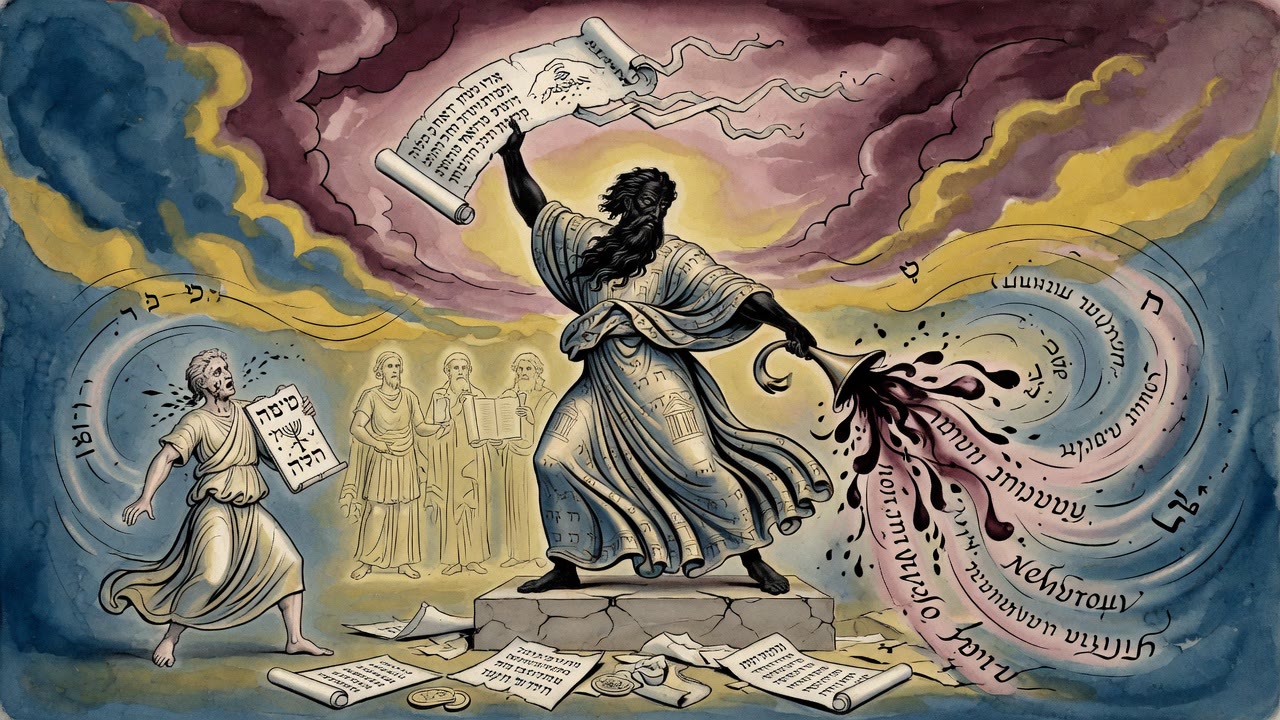
Apion Attacked the Temple and Lost the Case Click for full size

Citizens Who Would Not Bow to the City's Gods

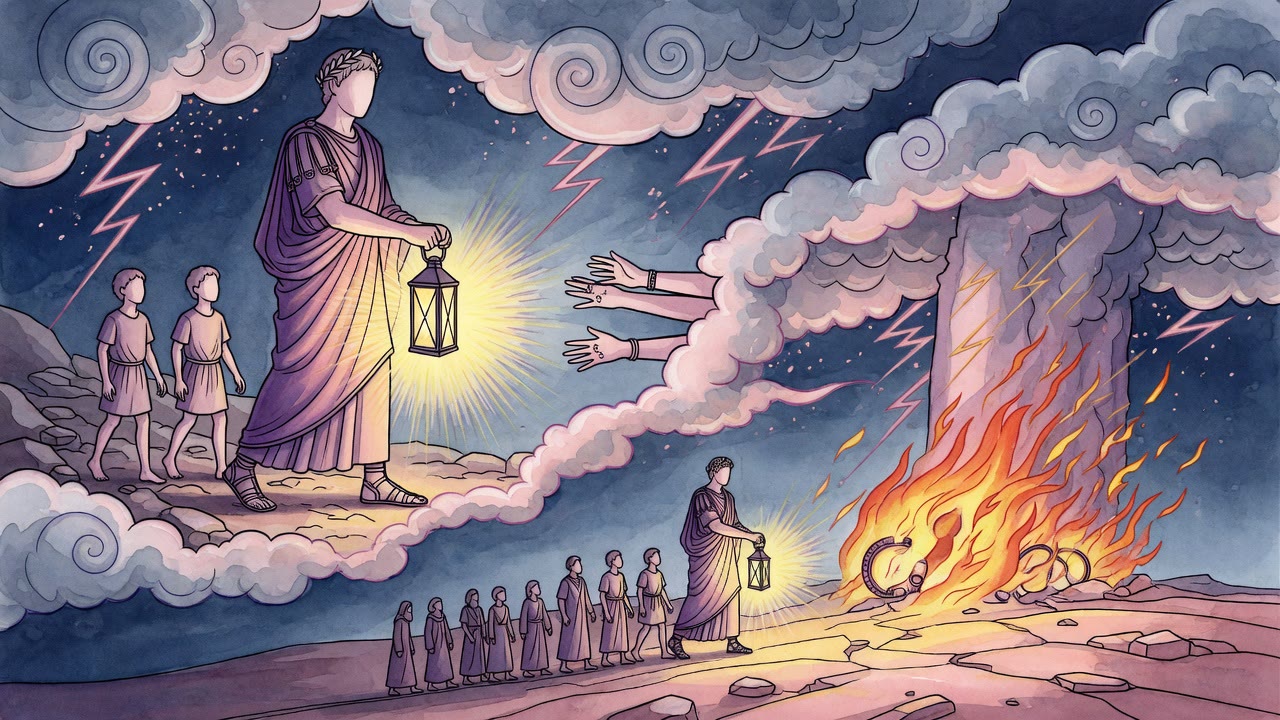
Apion asked a question meant to sting. If the Jews are citizens of Alexandria, why do they not worship the same gods as everyone else? Josephus answered by turning the mirror. Egyptians could not agree among themselves about their own cults. Why, then, should a people with ancient laws be forced into one mold? Difference was not sedition. It was continuity under a law older than the quarrel of the street.

Apion called the Jews troublemakers. Josephus flipped the charge. Before Egyptian influence thickened in the city, he said, the Jews kept their customs in peace. Unrest grew with manners he named evil, and with men who claimed citizenship late while calling long-settled Jews foreigners. The accuser's party, not the synagogue, stirred the market and the alley.

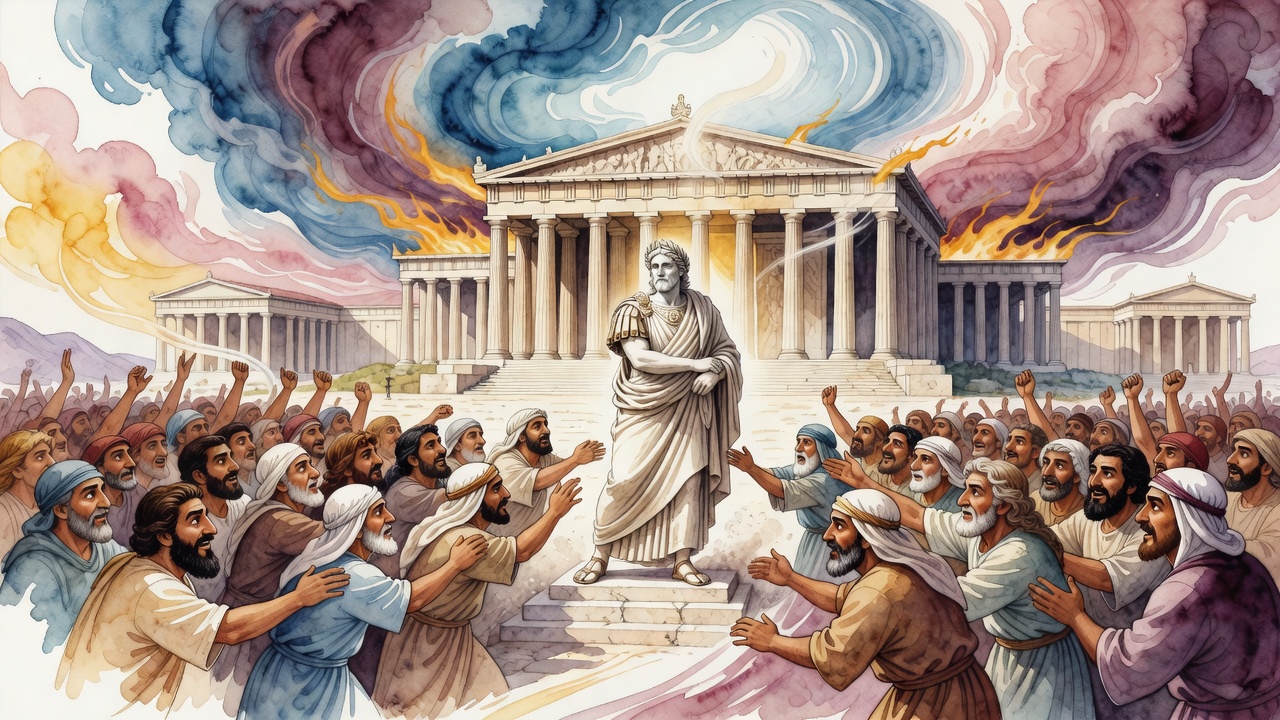
Then came the statue complaint. Jews erect no images for emperors. Josephus answered that Rome, at its better wisdom, does not force nations to break their own laws. Coerced honor is worthless. Jewish law forbids images, not from contempt of Caesar, but from reverence for God, who takes no animal form and no carved face. Daily sacrifices for the emperors, he insisted, were offered willingly, a perpetual testimony of respect without idolatry. Loyalty without a statue was still loyalty.

Animals, Pork, and a Blade That Cut Both Ways

Apion also mocked animal sacrifice, abstinence from pork, and circumcision. Josephus almost laughed at the first charge. Greeks and Macedonians poured out hecatombs. Objecting to sacrifice marked Apion as an Egyptian who treated beasts as sacred. If the whole world followed that custom, Josephus said, beasts would overrun the earth and humans would thin away. The slam was rough and deliberate, meant to show that the critic's so-called wisdom would empty cities of people and fill them with sacred livestock.

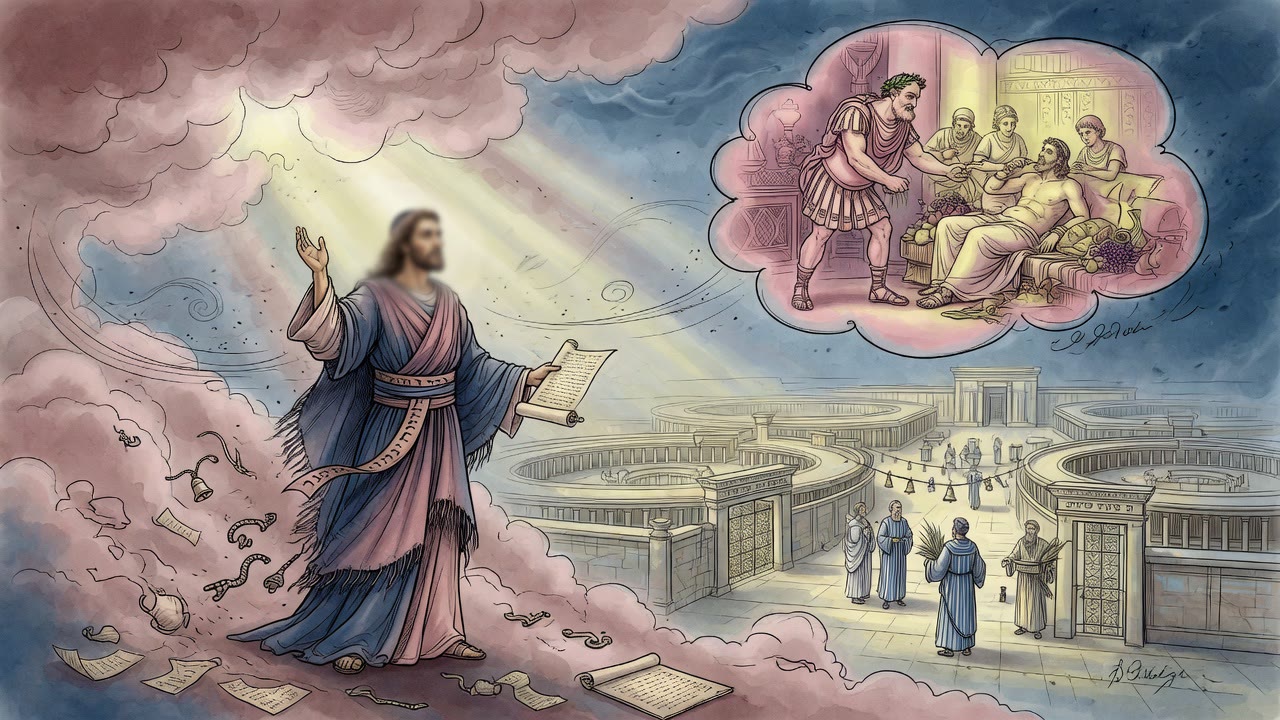
On pork and circumcision he was sharper still. Egyptian priests, the so-called wisest of Egypt, practiced both. Herodotus had written that others learned circumcision from similar custom. Why should an Egyptian attack what his own holy men kept? Josephus pressed the hypocrisy until it bled. He claimed Apion himself was circumcised for an ulcer that turned gangrenous and killed him. Whether every detail of that death is theater, the legal point stands: a man who deserts his own laws has no standing to lie about another's.

Three Fronts of One Smear

Josephus sorted Apion's mess into three campaigns. First, the Exodus twisted into filth. Second, the Jews of Alexandria painted as aliens in their own streets. Third, the purifications and legal rites of the Temple treated as superstition. He had already answered Manetho and Chaereomon with Phoenician, Chaldean, Egyptian, and Greek witnesses. Apion recycled the old noise and added scurrility. Tiberius had called him the drum of the world. Josephus still answered so silence would not look like surrender to a crowd that prefers heat to proof.

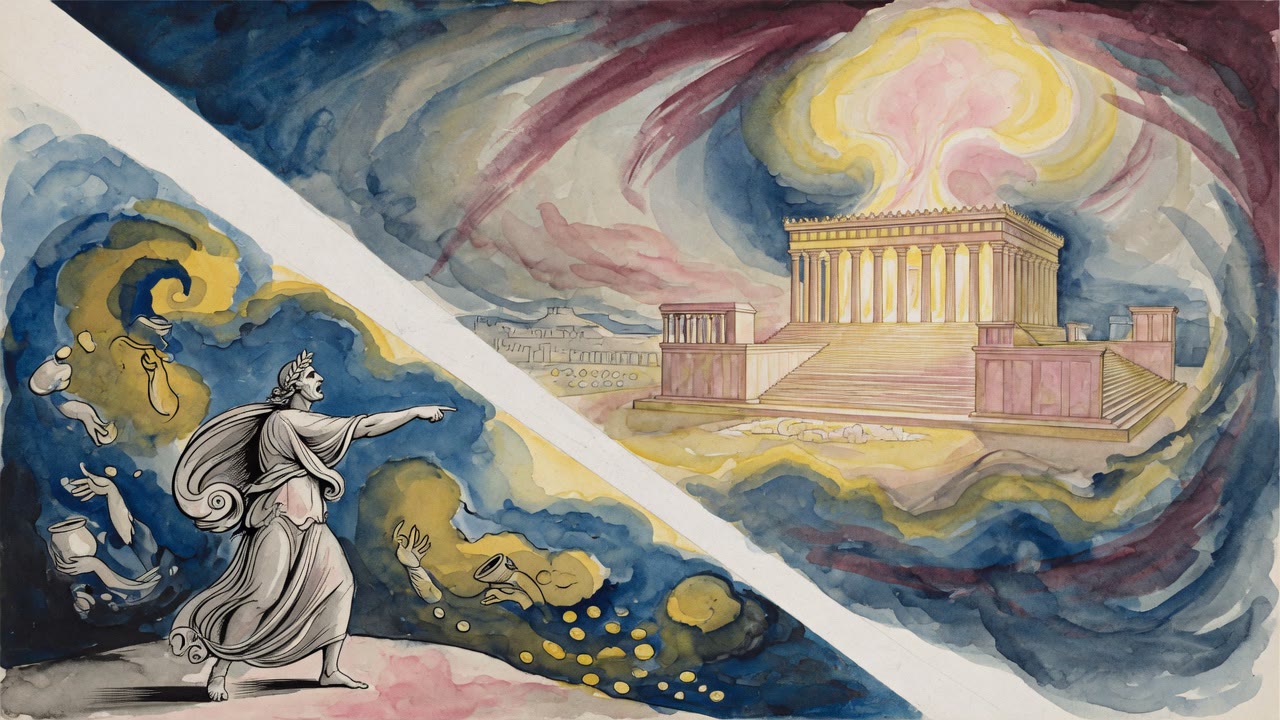
The Temple, in this fight, was not a private chapel. It was the public proof that Jewish worship could honor Rome with sacrifice while refusing the image that Jewish law forbids. Loyalty without idolatry was the line Josephus drew in blood and ink, and he would not let a grammarian smudge it for sport.

A Defense That Outlived the Accuser

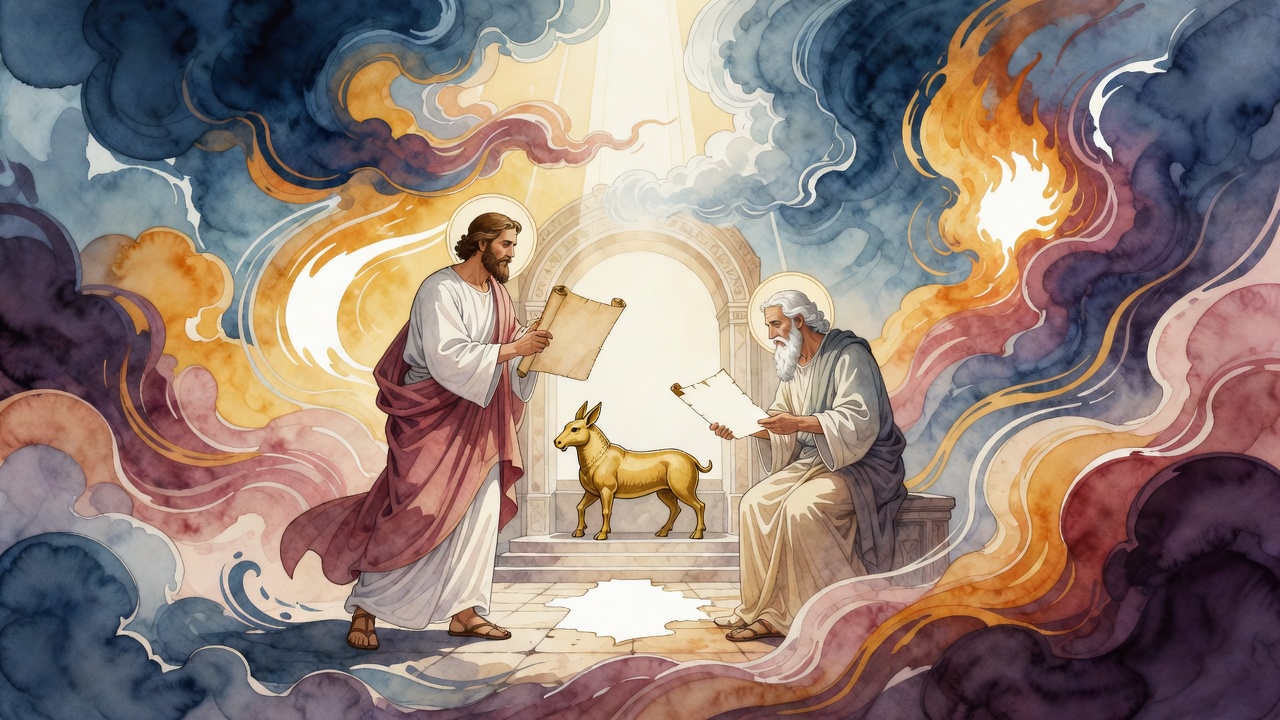
Against Apion is larger than one loud man. Book one answers Greek skepticism toward the Antiquities and critics such as Agatharchides, Manetho, Chaereomon, and Lysimachus. Jerome, reading the work, marveled that a man trained in sacred learning could cite profane authors as if he had emptied the Greek libraries. Manasseh ben Israel later held the two books high enough to translate them into Hebrew. The defense of worship and rite sits inside that larger war for memory.

Josephus wrote after the fall of the Temple, a captive who had learned Greek in Rome so the empire could hear him. He presented war history to Vespasian and Titus and sold copies to Jewish readers fluent in Greek. Accuracy was his armor. Against Apion he used the same armor for ritual: common practice where common, unique law where unique, and hypocrisy named without mercy. The drum of the world met a historian who had stood in both camps and refused to let noise become law.

What the Case Left Standing

Alexandrian citizenship without Alexandrian gods. Sacrifice for Caesar without a statue of Caesar. Circumcision and dietary fence without apology to a critic who could not keep his own house clean. Josephus did not ask Apion for kindness. He asked for consistency and found none.

The case ends with the Temple still invisible to those who wanted a scandal, and still clear to those who heard the daily offerings for Rome. A people that will not carve God will still pray for an emperor. That sentence is the victory Apion could not overturn, and it still stands whenever someone demands that Jewish law dissolve into the city's fashion.


← All myths
From the tradition

Sources

4 sources

The texts behind this telling. Some cards carry a translation of the source; others are our own retelling of it, and each card says which. Every card links out to the original.

Against Apion 6:1Against Apion

Retold in our words. Read the original at the link below.Against Apion, trans. William Whiston · Public Domain

The historian Josephus, in his work Against Apion, tackles these accusations head-on. Apion, a Graeco-Egyptian intellectual, throws a real zinger: "If the Jews are citizens of Alexandria, why don't they worship the same gods as everyone else?"

Josephus's response is sharp and insightful. He basically says, "Look who's talking!" He points out the Egyptians themselves were constantly at odds over their own religious beliefs. "If you Egyptians can't agree among yourselves," Josephus asks, "why are you surprised that a group with their own ancient laws and customs wants to maintain them?" It's a fair point. Why should everyone be forced into a single mold?

Apion doesn't stop there. He accuses the Jews of being troublemakers, instigators of sedition. But Josephus flips the script. He argues that the real source of unrest were people like Apion himself! He claims that before the Egyptians became so numerous and influential, the Jews were left in peace to observe their traditions. It was when Egyptian influence grew, with their "evil manners," that the problems started. According to Josephus, these Egyptians hadn't even been granted citizenship in due time, yet they called those with long-held privileges foreigners.

Then comes another accusation: the Jews don't erect images to honor the emperors. Scandalous! But Josephus defends this practice, too. He argues that the Romans, in their wisdom, don't force people to violate their own laws and customs. They value genuine respect, not coerced obedience. It's about respecting the diversity within the empire.

Josephus explains that Jewish law, given by our legislator, forbids the making of images. It's not a sign of disrespect to the emperor, but a principle rooted in our understanding of God, who transcends any physical representation. As Josephus promises to prove later, this prohibition extended to all animal creations, let alone God.

However, Josephus is emphatic that this doesn't mean Jews don't honor worthy individuals. In fact, they offer sacrifices for the emperors daily, a unique honor reserved only for them. He says, "we willingly testify our respect to our emperors, and to the people of Rome; we also offer perpetual sacrifices for them."

What's fascinating here is the balancing act Josephus is trying to achieve. He's defending Jewish distinctiveness while simultaneously affirming loyalty to the Roman Empire. He is showing that one does not negate the other. You can be true to your own traditions and still be a good citizen.

Josephus's defense resonates even today. How do we navigate a world that often pressures us to conform? How do we maintain our unique identities while contributing to the larger society? Perhaps the answer lies in the same principle Josephus highlights: mutual respect. Acknowledging and valuing differences, rather than demanding uniformity. It's a powerful message, and one that continues to challenge us centuries later.

Full source
Against Apion 13:1Against Apion

Retold in our words. Read the original at the link below.Against Apion, trans. William Whiston · Public Domain

Apion, see, had a laundry list of complaints against the Jews. Josephus, in his work Against Apion, takes each one head-on. And in this particular section, Apion throws a few zingers: that Jews sacrifice animals, abstain from pork, and, well, that whole circumcision thing?

Josephus’s response is pretty epic. About the animal sacrifices, he's basically like, "Dude, everyone sacrifices animals! What are you even talking about?" It was a common practice back then, a way to connect with the divine. But Josephus cleverly suggests that Apion’s objection to it marks him as a true Egyptian. Why? Because if he were Greek or Macedonian, he'd be cool with it; they were known for sacrificing entire hecatombs (that's a hundred oxen!) to the gods.

Then comes the slam. Josephus argues that if everyone followed the Egyptian custom of not sacrificing animals (because they were considered sacred), the world would be overrun with wild beasts and devoid of humans! It’s a bit of hyperbole, sure, but the point is clear: Apion is criticizing something that’s not only common but, in Josephus's eyes, essential.

The pork thing? The circumcision? Josephus points out that even the Egyptian priests – the supposed wisest and most pious of Egyptians – practiced circumcision and abstained from pork. Herodotus even said that other men had learned to be circumcised, so it was not just the custom of the Jews. So why is Apion, an Egyptian, attacking these practices?

Here's where it gets a little… pointed. Josephus suggests that Apion is getting his just desserts for criticizing his own country’s laws. Why? Because, according to Josephus, Apion himself was circumcised due to a nasty ulcer, and when it didn’t heal and turned gangrenous, he died a horrible death. Ouch.

Whether that’s entirely true, who knows? But Josephus’s larger point is powerful: people should respect their own religious laws and not trash the laws of others. He accuses Apion of hypocrisy, of deserting his own traditions while lying about Jewish ones.

Josephus uses Apion's criticisms as an opportunity to defend Jewish practices, to show their rationality and their place within a larger cultural context. And sometimes, those accusations say more about the accuser than they do about the accused.

Full source
Against Apion 1:1Against Apion

Retold in our words. Read the original at the link below.Against Apion, trans. William Whiston · Public Domain

His response? A powerful and passionate defense of the Jewish people, a work we know as Against Apion.

The title Against Apion is a bit misleading, at least for this first book. It's not solely focused on refuting Apion's specific accusations. Instead, it's a broader argument against the prevailing Greek skepticism towards Josephus's earlier work, the 20 volumes of Antiquities of the Jews. He's taking on the likes of Agatharchides, Manetho, Cheremon (excommunication), and Lysimachus – all figures who cast doubt on the antiquity and significance of the Jewish nation.

Think of it like this: Josephus had already laid out the history, but now he felt compelled to defend its truth and validity against a wave of disbelief.

Why is this work so important? Well, Jerome, upon reading Against Apion, was astounded. He marveled at how someone "instructed in sacred learning" could so expertly cite "profane authors," as if he had devoured all the Greek libraries (Epist. 8. ad Magnum). Imagine that – a scholar equally versed in Jewish tradition and Greek philosophy!

And it wasn't just Jerome who recognized the book's value. Manasseh ben Israel, a learned Jew himself, held these two books in such high esteem that he translated them into Hebrew. We know this from his own catalog of works, which is quite evidence of their enduring power.

For a long time, scholars have debated the precise time and place of its writing. The general consensus was sometime after Josephus completed his Antiquities, placing it after 93 CE. Rome was assumed to be the location, mirroring where he likely wrote his earlier works.

But, here's a twist. Some scholars suggest that the book wasn't written in Rome at all, but back in Judea, and even later than previously thought – after the third year of Trajan's reign, or around 100 CE. This idea stems from clues within the text itself, suggesting a perspective rooted more firmly in Judean soil.

So, what does it all mean? It means Against Apion is more than just a historical defense. It's evidence of the enduring strength and resilience of the Jewish people, a passionate rebuttal against those who sought to diminish their story. It's a reminder that defending your heritage, your history, is a timeless and necessary act. And it's a powerful read, even today, offering a glimpse into the intellectual and cultural battles of the ancient world.

Full source
Against Apion 1:1Against Apion

Retold in our words. Read the original at the link below.Against Apion, trans. William Whiston · Public Domain

Remember that feeling when someone tells you something so outrageous, so demonstrably false, that you almost don't want to dignify it with a response? But then you realize, silence might be taken as agreement? That’s kind of where we are with Flavius Josephus and his treatise, Against Apion.

In the previous book, dedicated to the esteemed Epaphroditus, Josephus tells us he established the antiquity of the Jewish people and the truth of their history using sources from the Phoenicians, Chaldeans, and Egyptians, even bringing in Greek writers as witnesses. He also refuted the claims of Manetho and Cheremon (excommunication), among others, who were critical of the Jews. Now, he turns his attention to the remaining detractors.

There's one particular critic giving him pause: Apion, the grammarian. Josephus even admits he debated whether or not to even bother responding. Why? Because Apion’s accusations largely echo those that had already been refuted. Some of his additions are, in Josephus's words, "very frigid and contemptible." And frankly, much of what Apion wrote was just plain scurrilous. Josephus doesn't mince words, calling him unlearned, morally bankrupt, and nothing more than a mountebank – a charlatan. Apparently, Tiberius even nicknamed him Cymbalum Mundi, "the drum of the world," a fitting title for someone so loud and full of hot air!

So, why engage at all? Josephus recognizes a frustrating truth: many people are swayed more by sensationalism than by carefully reasoned arguments. They enjoy tearing others down and hate to hear them praised. So, Josephus feels compelled to address Apion's accusations, lest his silence be misinterpreted. He wants to expose the critic's own failings, turning the tables and subjecting him to the same contempt he sought to inflict.

But even diving into Apion’s work is a challenge. Josephus describes it as a confusing mess of falsehoods. Still, he identifies three main areas of attack. First, Apion rehashes familiar criticisms of the Exodus story, the departure of the Jewish people from Egypt. Second, he targets the Jews living in Alexandria. And third, he attacks the sacred purifications and legal rites practiced in the Beit Hamikdash (בית המקדש), the Holy Temple.

How these ancient prejudices continue to resurface, generation after generation, often cloaked in new forms but rooted in the same old biases. Josephus’ decision to confront Apion, even reluctantly, reminds us of the importance of challenging misinformation, even when it seems absurd, and of standing up for truth and justice in the face of baseless attacks.

Full source