Josephus Shreds the Oath Against the Greeks
Apion told Rome the Jews had sworn to hate Greeks. Converts were already walking through Jewish doors. The oath could not be true.
Table of Contents
 Click for full size
The Pamphlet Reached Rome
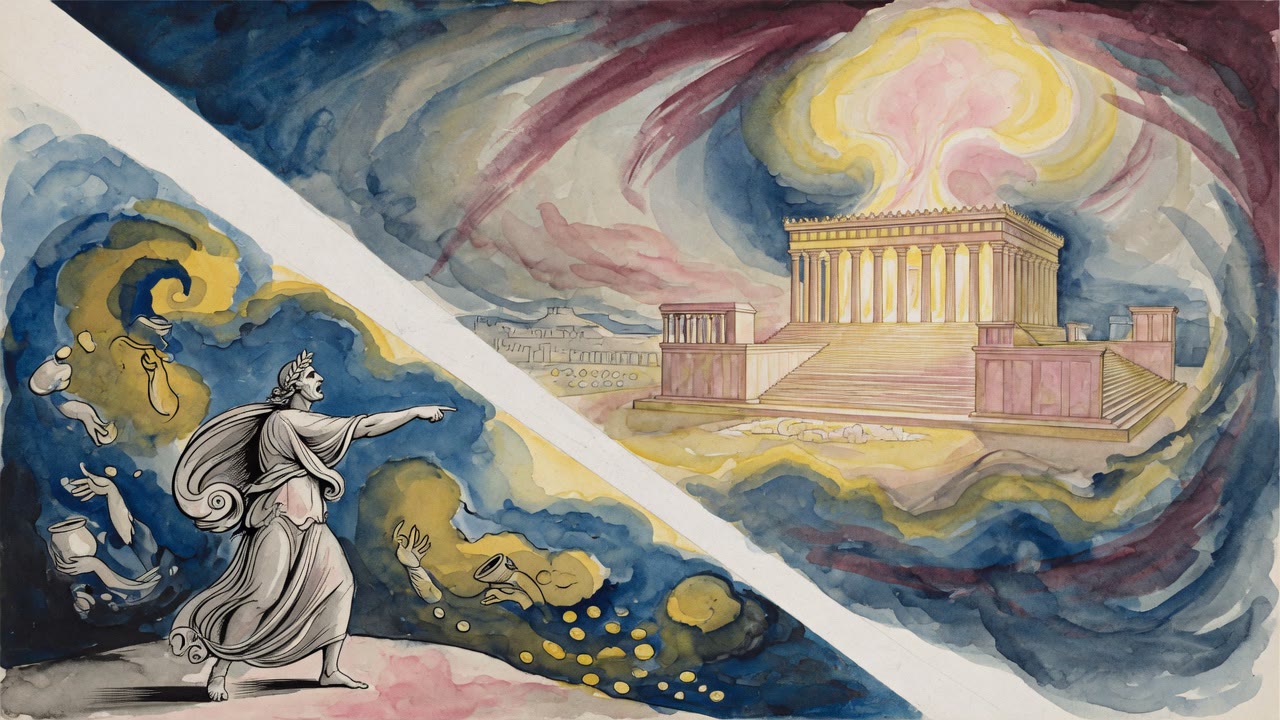
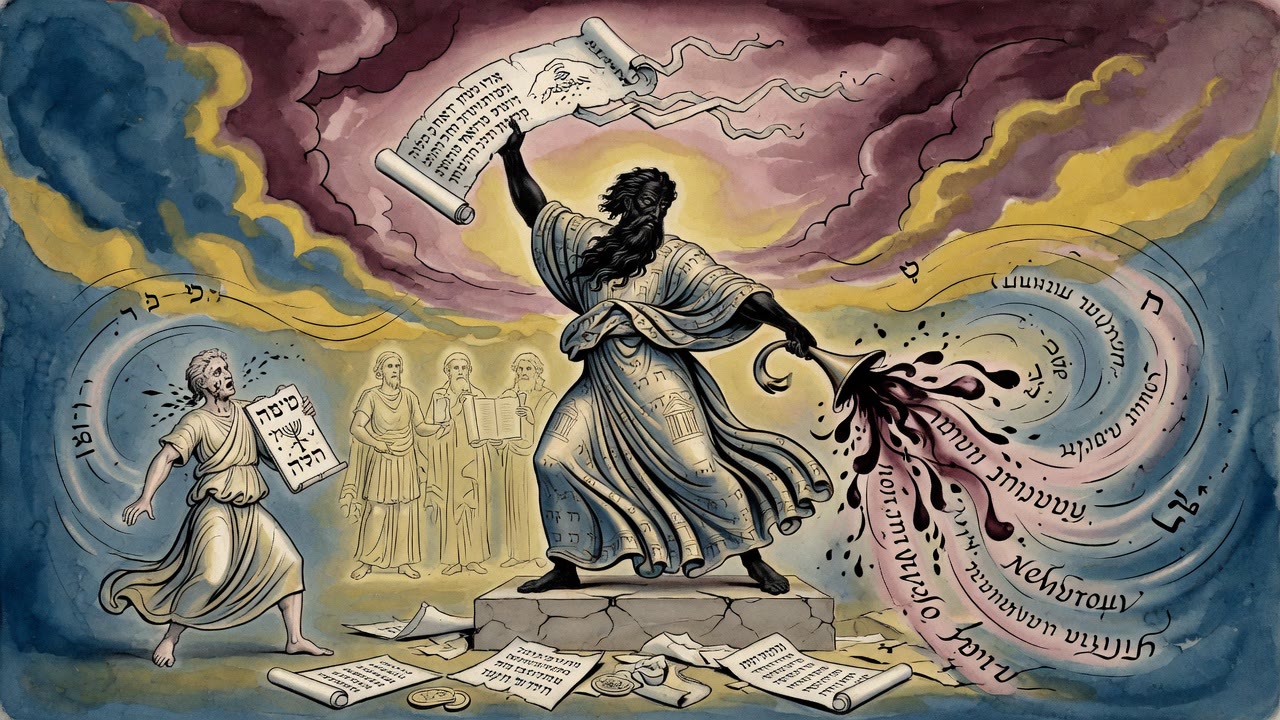
Apion said Jews swear by the Maker of heaven, earth, and sea to bear no good will to any foreigner, and especially to none of the Greeks. The claim had already traveled farther than most armies. It arrived in Rome as if it were a fact a synagogue had always kept in a cellar.
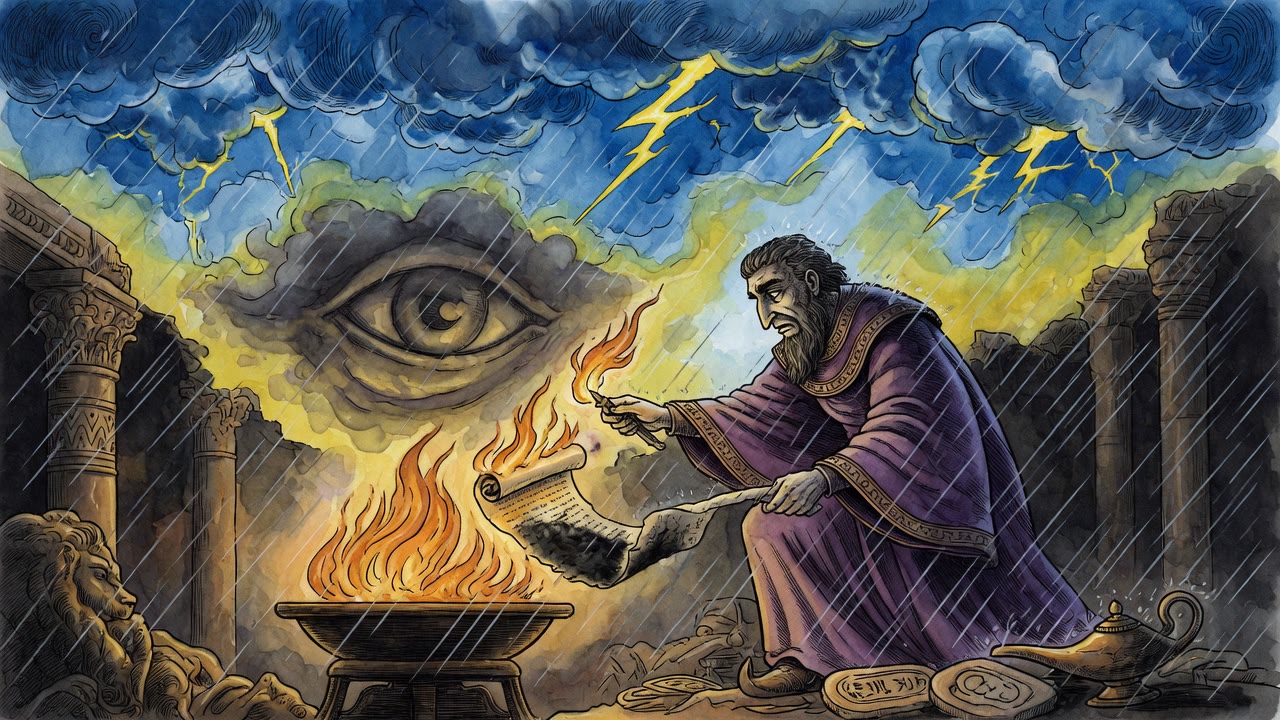
Josephus read it and began to cut. Jerusalem had already fallen. He had seen the Temple burn. Defeat in war is one grief. Defeat in the archive, where a people is redescribed as congenital haters, is another. He fought the second with the weapons left to him: Greek prose, Roman readers, and a memory of Alexandrian rights older than Apion's spite.
Ink hit the page like a rebuttal in a courtroom where the jury was the Mediterranean world. He would not let a forged vow become the last word on who Jews were.
The Oath Named the Wrong Enemy
If a writer invents a hateful vow, he argued, at least make it fit the other inventions in the same pamphlet. Apion's own twisted tale said the Jews were driven out of Egypt. Then why would their secret oath target Greeks rather than Egyptians? Hatred designed for one enemy had been pasted onto another for the sake of a Greek audience's pride.
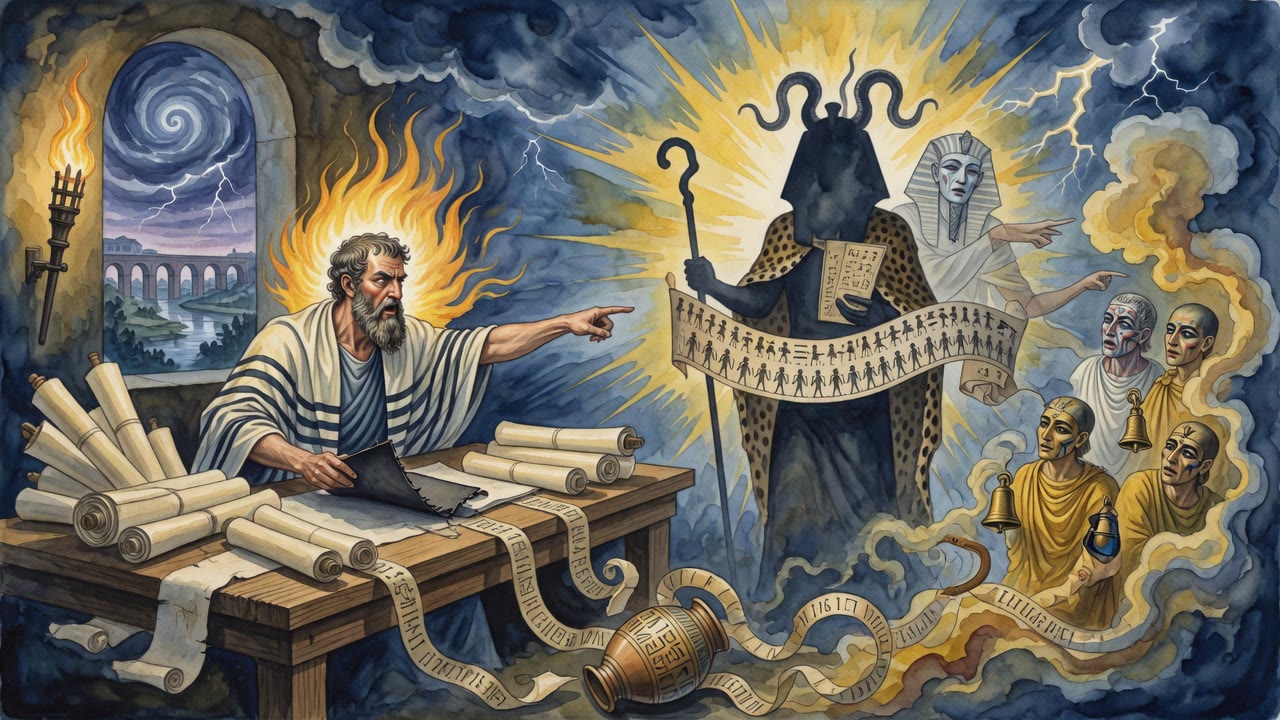
The slander could not keep its characters straight. There was no native, eternal enmity between Jews and Greeks written into Jewish law. Josephus pressed the absurdity until it squealed. Nobody had ever heard this oath in a court or a house of study. Apion was the only one who had "heard" it, because he made it up.
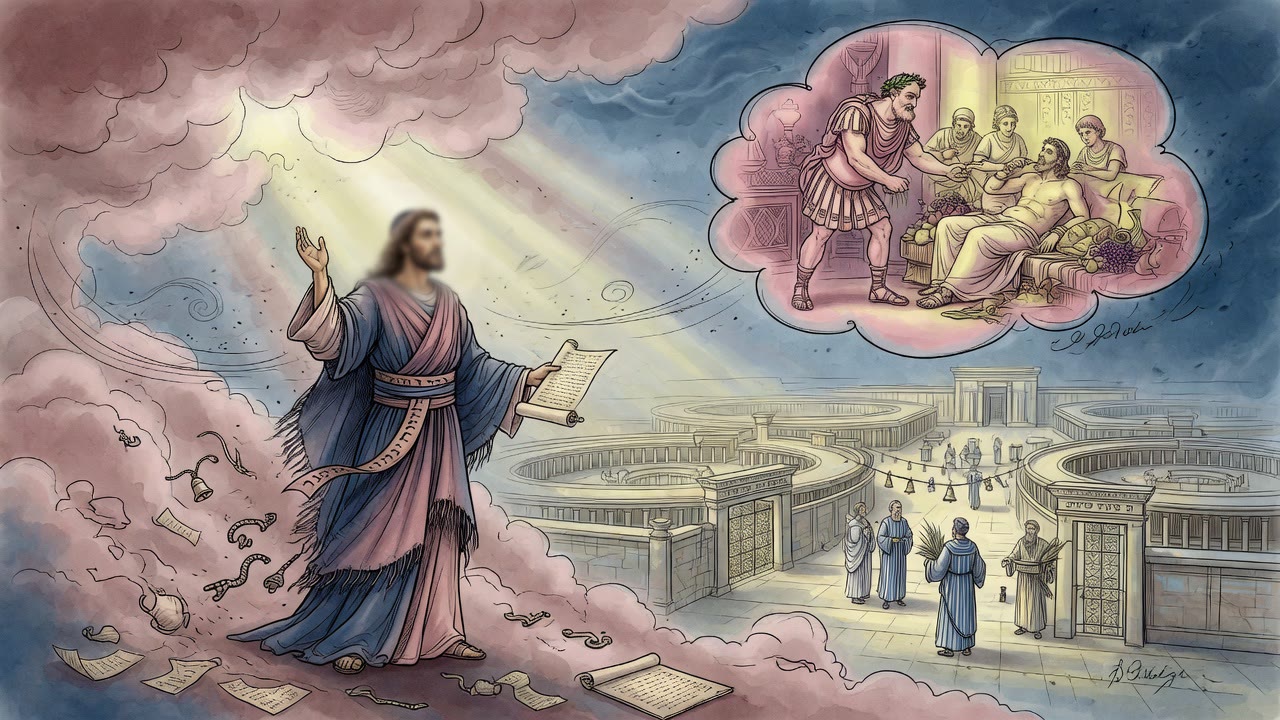
He imagined, for the jury, a forged oath recited in a cellar. Then he held beside it the open fact of Greeks at Jewish doors asking for the law's yoke. The two pictures cannot both be true. He forced the contradiction into the open.
Converts at the Door
Greeks had converted to Judaism. Some lacked the strength to keep the whole discipline and fell away. The attraction itself disproved a people sworn from the cradle to hate every Hellene on sight. A community sworn to hate foreigners does not keep a door that Greeks walk through toward covenant.
Josephus named the phenomenon without romance. Some stayed. Some left. The movement existed. That was enough to break Apion's oath like cheap pottery.
In the streets of Alexandria, Jewish and Greek lives already tangled in trade, argument, festival noise, and the occasional riot. Complexity is harder to weaponize than a forged vow. Josephus chose complexity and called it truth.
Houses by the Dashing Waves
Apion had also sneered at the Jews of Alexandria for living near the tempestuous sea, as if salt air were a disgrace. "They came out of Syria, and inhabited near the tempestuous sea, and were in the neighborhood of the dashing of the waves." Josephus turned the poetry of insult into a real estate argument and won it.
Everyone knew the quarter by the water was prime ground. Alexander himself, founder of the city, had granted Jews land and rights equal to the Macedonians. They were even called Macedonians in civic speech, a name of acceptance, not of squatters clinging to a reef. Would Apion have preferred them in Necropolis, the city of the dead?
Had Apion read the epistles of Alexander, or those of Ptolemy the son of Lagus, or the pillar still standing at Alexandria that records the privileges Julius Caesar bestowed upon the Jews? If he knew those records and wrote against them, he was wicked. If he knew nothing of them, he was ignorant. A founder-king's grant outranks a pamphleteer's sneer. A people with a deed does not need to steal shoreline in the night.
Histories Written Yesterday
Josephus's larger war was not only personal. He argued that Greek historians often lacked firm ancient records, then filled the gaps with eloquence, flattery of kings, fantastical spice, or the critic's pose that finds fault to look wise. Almost all that concerns the Greeks happened not long ago, he said. One may say it is of yesterday only. Their cities, their arts, their laws. The writing down of histories came last.
The Egyptians, the Chaldeans, and the Phoenicians kept memorials of the most ancient traditions. Their history was esteemed sacred and put into public tables. The land of the Grecians had suffered ten thousand destructions that blotted out former actions. They were always beginning a new way of living and supposing themselves the origin of their new state. Letters they now use they learned late, and even Homer is not as old as they wish.
Against that fog he set Jewish care for lineage, priesthood lists, and the stubborn memory of a people that writes its origins as obligation, not as entertainment. The absurd oath was one more Greek-facing fiction that preferred a sharp story to a checkable one.
When the scroll of Against Apion left his desk, the invented oath still had admirers. Lies travel light. But the counter-case traveled too: a people not founded on a curse against Greece, a shoreline grant from Alexander, a historian willing to spend his Roman years defending the record of those who still prayed toward Jerusalem. He laid the pen down hard. Not every Roman believed him. Enough of the counter-case survived that Apion's oath did not get to stand alone as if it were Torah from Sinai.
← All myths