Josephus Unmasks Osarsiph the False Moses
Manetho wrote that eighty thousand lepers were driven out of Egypt. Josephus read the story in Rome and pulled it apart, question by question.
Table of Contents
Someone moved first, before any source name entered the room.
 Click for full size
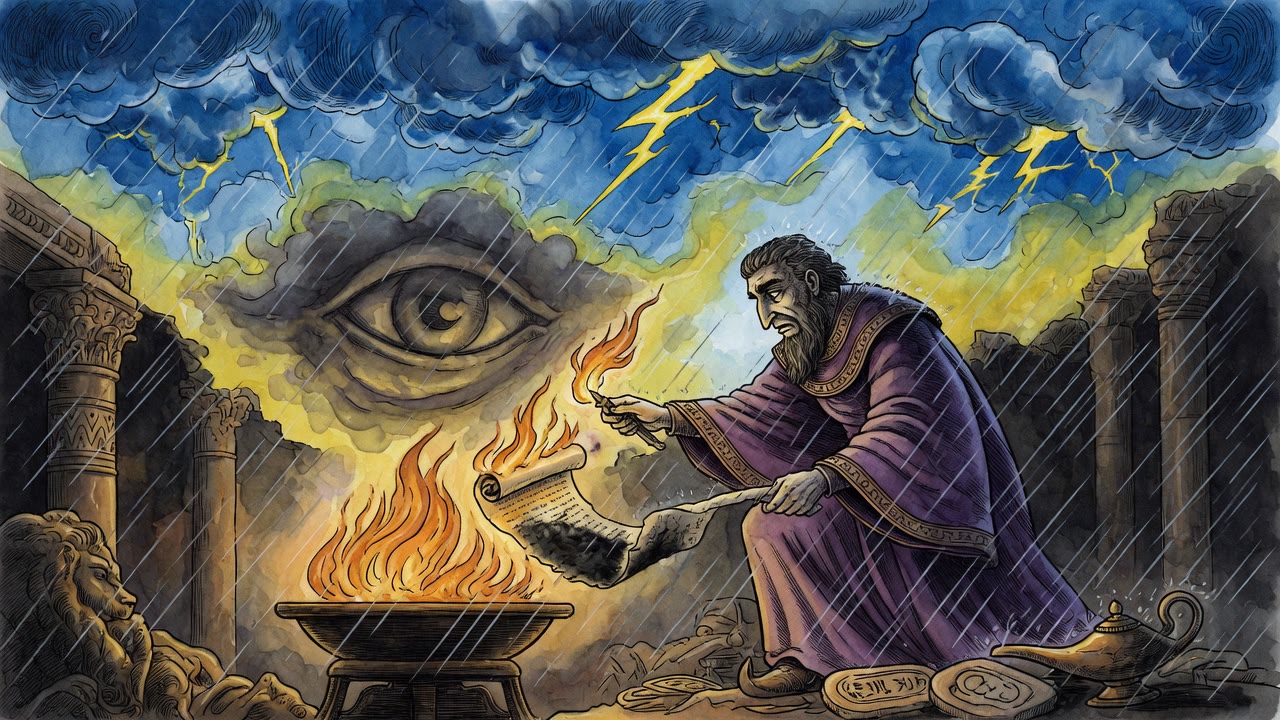
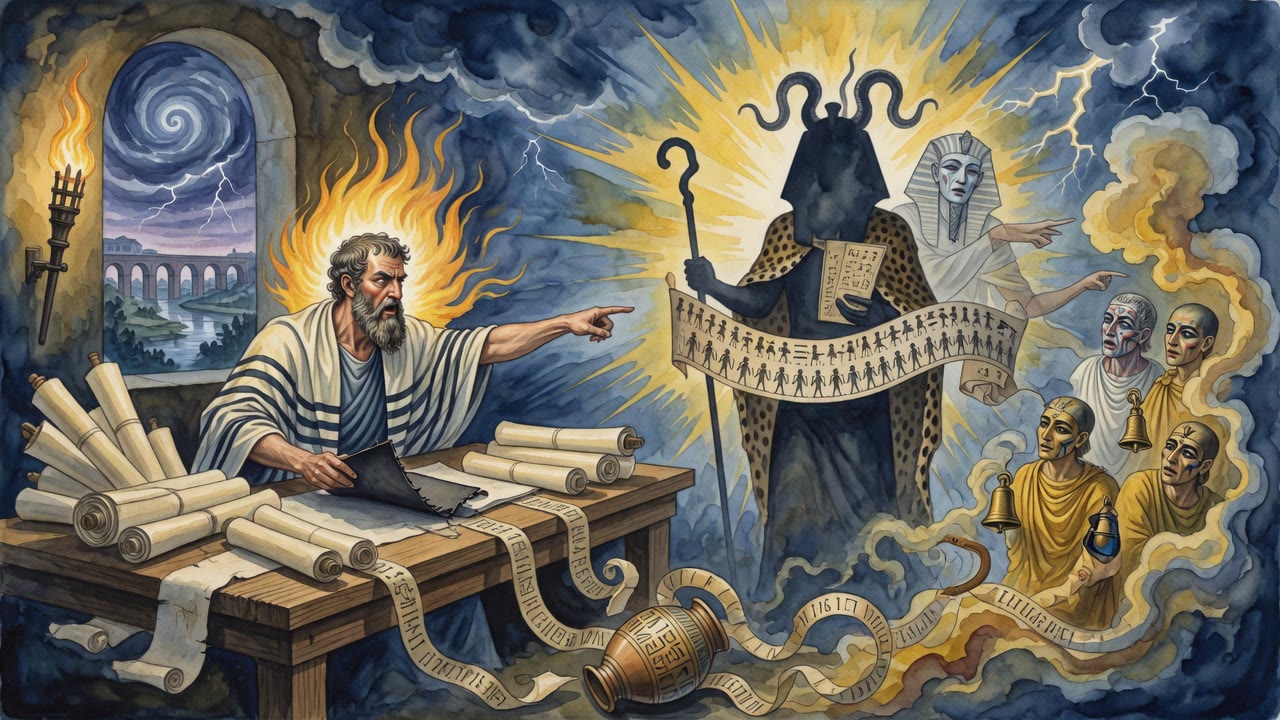
Josephus sat with Manetho's pages open and felt the old heat climb his neck. The Egyptian priest had already admitted that the shepherds left Egypt centuries earlier, settled in Judea, and built Jerusalem. Then, as if the timeline bored him, Manetho invented a second exit and poured leprosy over it.
Josephus did not write for pleasure. He wrote because silence would be read as agreement, and agreement would leave his people named as a disease.
The King Who Wanted to See the Gods
Manetho begins with a king named Amenophis who "desired to see the gods." Josephus stops him there. Which gods? The ox and the crocodile already stood in their temples. If Amenophis meant the heavenly ones, what made him think a purge of sick bodies would haul them down into sight? Had another king already seen them, and if so, why invent a new trick?
A prophet steps in, Amenophis son of Papis, wise enough, Manetho claims, to partake of a divine nature. The prophet tells the king to clear Egypt of lepers and other impure people. Eighty thousand are rounded up in a single sweep and driven east of the Nile into the quarries. Josephus presses the absurdity without raising his voice. How does a kingdom gather eighty thousand maimed bodies in one day? Why send them to labor if the order was expulsion? A king short of workers is not a king purging a land.
The prophet then kills himself, leaving a written prediction of thirteen years of disaster. Josephus asks the question the fiction cannot survive. If the man foresaw the gods' anger, how did he miss his own death? What fear could be worse than the blade he turned on himself?
Avaris Chooses a Priest
After long misery in the quarries, the king grants the outcasts the empty city of Avaris, once the shepherds' stronghold, a place Manetho ties to Typhon. Inside the walls they swear obedience to a priest of Heliopolis named Osarsiph. He forbids the worship of Egyptian gods. He orders the sacred animals killed and eaten. He walls the city and prepares war.
Then the name changes. Osarsiph, Manetho says, is called Moses.
Josephus holds that sentence like a bone that will not set. Moses, in the history Josephus defends, leads a people out of bondage under the will of the one God, not a leper army bent on roasting temple animals. Manetho has stolen the name and nailed it to a priest who invents laws against Egypt out of spite.
Osarsiph sends to Jerusalem. Two hundred thousand shepherds answer, hungry for Avaris and the old country. Amenophis marches three hundred thousand, then turns without a fight, gathers Apis and the other sacred beasts, and flees into Ethiopia with his five-year-old son sent ahead to safety. For thirteen years the invaders, in Manetho's telling, burn cities, force priests to slaughter holy animals, and strip the land bare. Amenophis returns with a great army and drives them to the edge of Syria.
Cheremon Tells It Wrong in a Second Mouth
Another Egyptian voice, Cheremon, tries the same libel with different furniture. Isis appears to Amenophis in a dream and blames him for a demolished temple. A sacred scribe named Phritiphantes advises a purge of polluted men. The count jumps to two hundred fifty thousand. Moses and Joseph march out together as scribes renamed Tisithen and Peteseph, meet three hundred eighty thousand abandoned men near Pelusium, and storm Egypt while Amenophis flees to Ethiopia and a son is born in a cave.
Josephus sets the two scrolls side by side until the ink itself confesses. Manetho says the king wanted to see the gods. Cheremon says Isis sent a dream. Manetho names Amenophis the seer. Cheremon names Phritiphantes. Manetho counts eighty thousand. Cheremon counts two hundred fifty thousand. Manetho sends the outcasts to quarries and Avaris before war. Cheremon has them wander out and bump into an army no one can identify. Cheremon even drives Joseph out with Moses, though Joseph died nearly one hundred seventy years earlier, four generations before the man of the Exodus.
"They agree exceedingly well," Josephus writes, and the sarcasm is a blade laid flat on the table.
The Real Moses on the Page
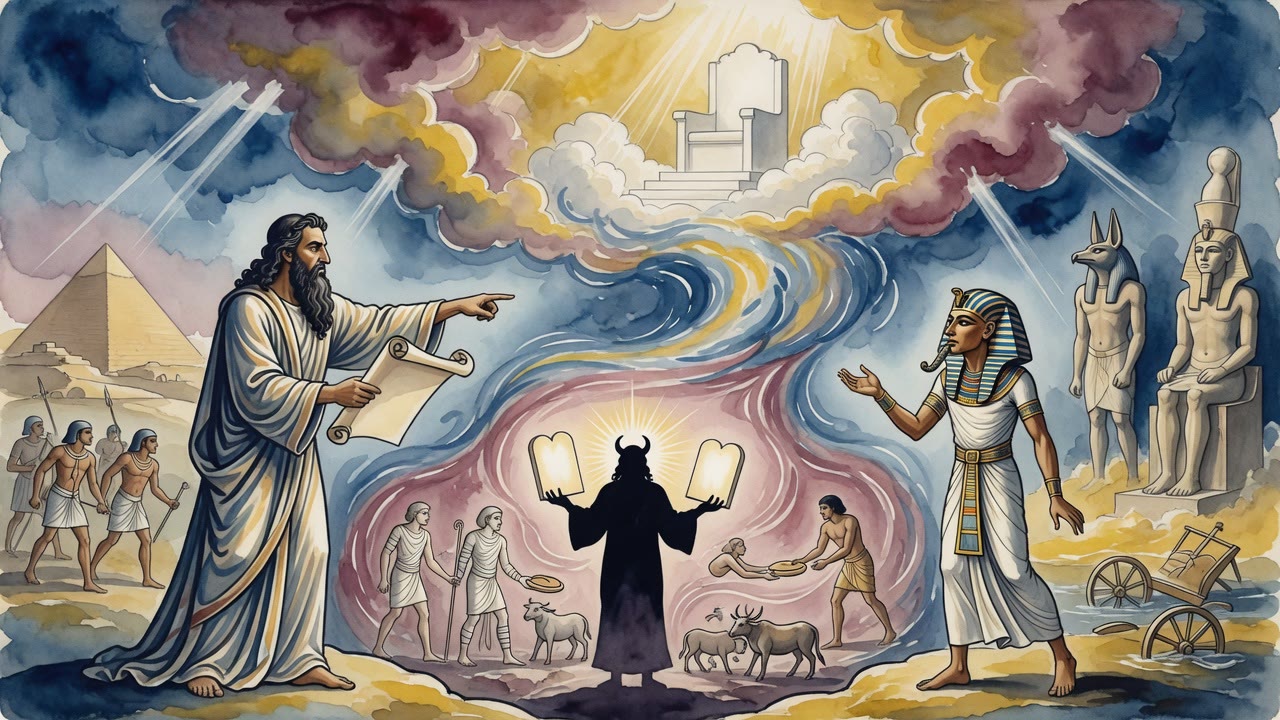
Against that inventiveness Josephus sets the Moses he will not surrender. When the people left Egypt, Moses led them through waterless sand, fought enemies, and guarded households. He did not seize a tyranny. He bound himself to piety and to the people's survival. He persuaded himself, and then them, that he moved under God's eye, so that the fear of heaven would keep hands clean when no human judge was watching.
Other nations dress their lawgivers in borrowed dreams. Josephus will not let a Heliopolitan priest in a leper camp wear Moses' name for free. The laws of Israel, he insists, are not a revolt against Egyptian barnyard gods. They are older, stricter, and aimed at a people that still dies in arenas rather than curse its own books.
Josephus closes the section with the work still unfinished. Apion and the rest still wait. But Osarsiph has already been stripped. The false Moses lies on the floor of the argument like a mask without a face.
← All myths