5 min read

Apion Fattened a Greek for His Temple Lie

Apion claimed Jews fattened a Greek in a Temple cell for yearly murder, and Josephus answered with courts, purity, and law on Jewish hearts.

Curated by Arthur · Told by Maggid ·
Table of Contents
  1. A Table in a Secret Chamber
  2. Questions That Tear the Story Open
  3. Four Courts and One Day for the High Priest
  4. Law Written on the Heart
  5. Voluntary Lie Against Living Memory
Apion Fattened a Greek for His Temple Lie Click for full size

A Table in a Secret Chamber

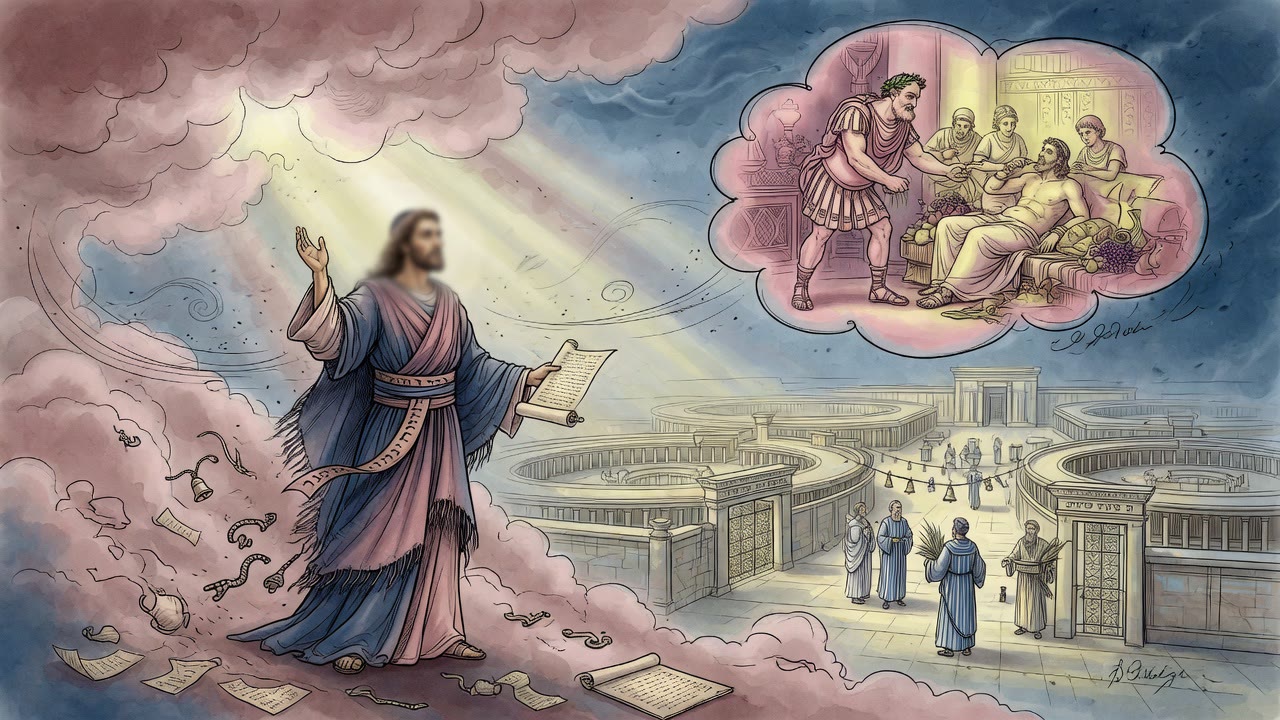
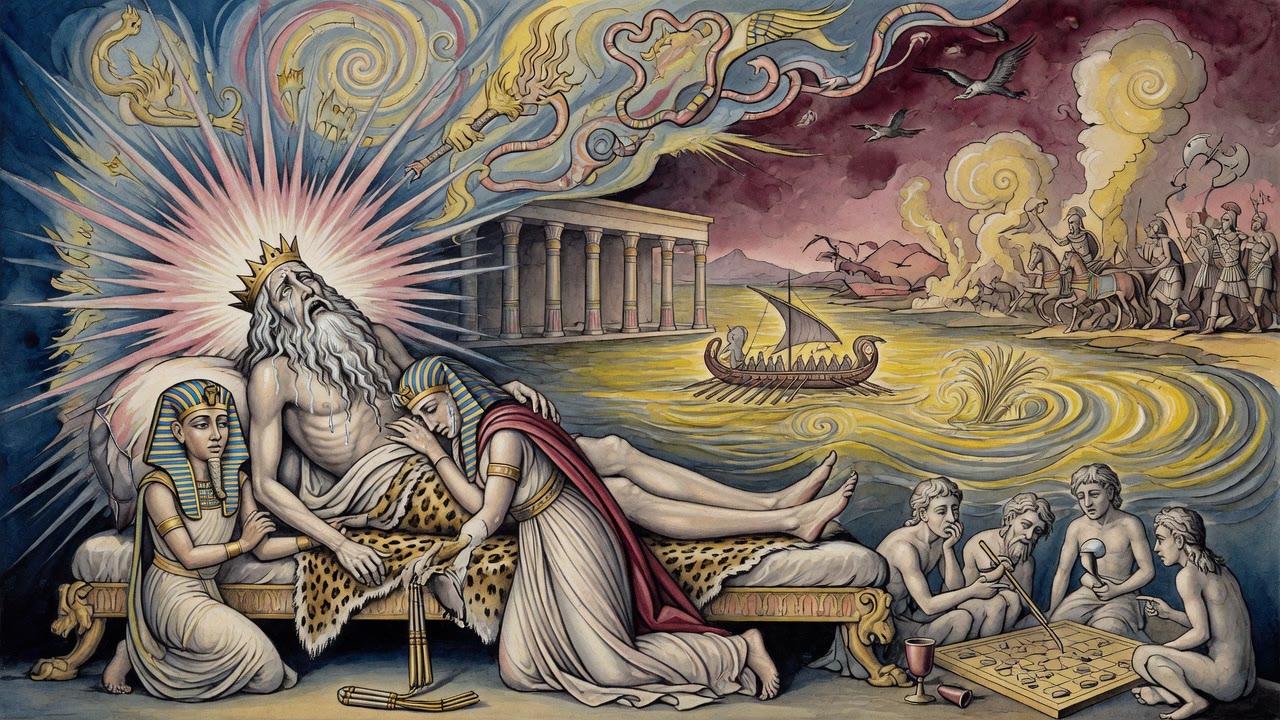
Apion needed a story ugly enough to excuse a king's greed. He said that when Antiochus forced his way into the Temple in Jerusalem, he found a hidden room and a Greek man living in luxury at a laden table. The man, Apion claimed, was being fattened for a yearly rite. The Jews would kill a Greek, taste his entrails, and swear hatred against every Hellene. The captive begged Antiochus for rescue. The tale was theater dressed as history.

Josephus refused the laugh that such nonsense invites. He was angry. Apion, he said, was more eager to defend a sacrilegious king than to tell the truth. Plunder of the Temple needed a moral costume, and a cannibal plot was the costume. Even if the fantasy were granted for a breath, it would not justify Antiochus. Theft dressed as rescue is still theft.

Questions That Tear the Story Open

Josephus pressed the mechanics until they snapped. How could the whole people gather for one secret meal? How could one man's entrails feed a nation? Why did Antiochus never parade his rescued Greek through the cities of the Greeks as a living trophy? A king who had broken open a blood cult would have advertised the miracle. Silence after "rescue" is not the behavior of a savior. It is the behavior of a man inventing a chamber that never stood.

Anonymous slanderers of Judaism worked the same shop. They piled rumor on rumor until a Roman dinner guest could feel righteous while he mocked a people whose books he had never opened. Josephus treated those voices as a class: spite without archive, volume without plan, charges that collapse when anyone asks who, when, and where the knife was kept.

Four Courts and One Day for the High Priest

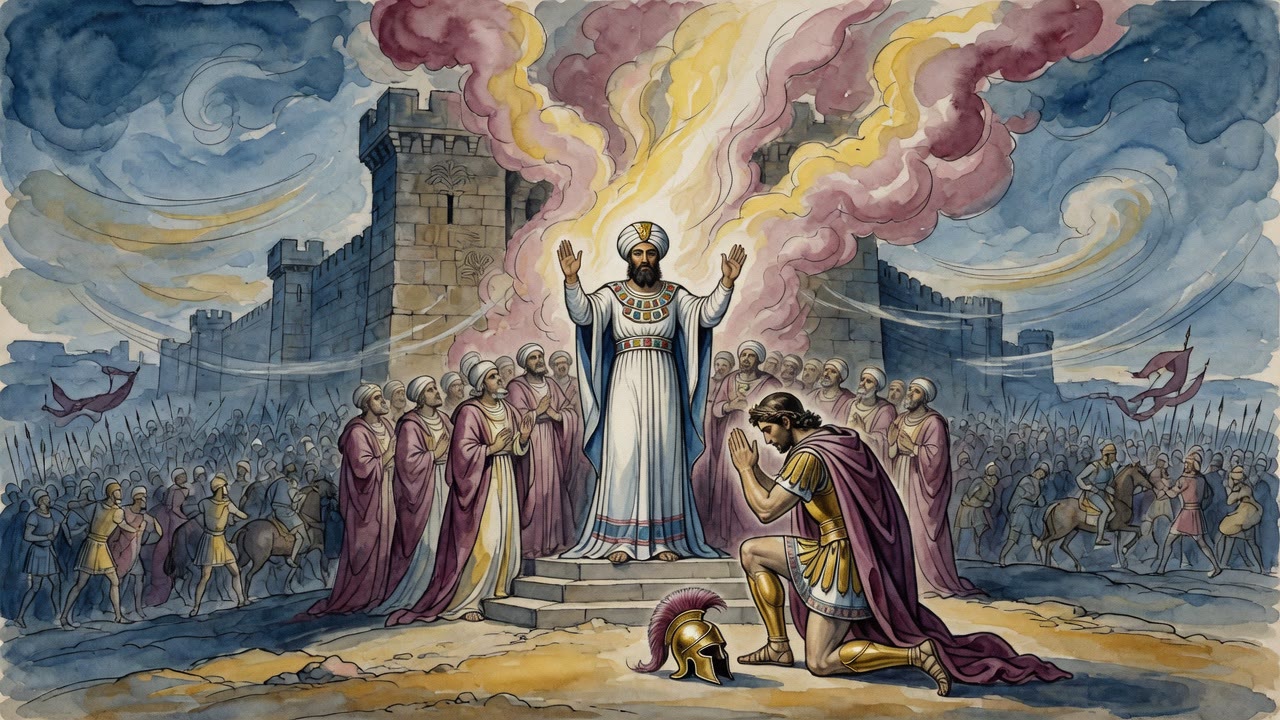
Against the secret chamber Josephus set the real architecture. The Temple had graded courts. Outermost space received even foreigners. Then a court for Jewish women, then for Jewish men, then for priests. The Holy of Holies opened only to the High Priest, and only on Yom Kippur. "All such as ever saw the construction of our temple, of what nature it was, know well enough how the purity of it was never to be profaned."

Priests entered at fixed times, in fixed garments, for fixed work. Inside stood what the law allowed: incense altar, table of shewbread, censer, candlestick. No fattening table. No guest suite for a Greek meal. Anyone who had walked the courts knew the lie by geometry. Purity was not a mood. It was a map that left no room for a hidden banquet of blood.

Law Written on the Heart

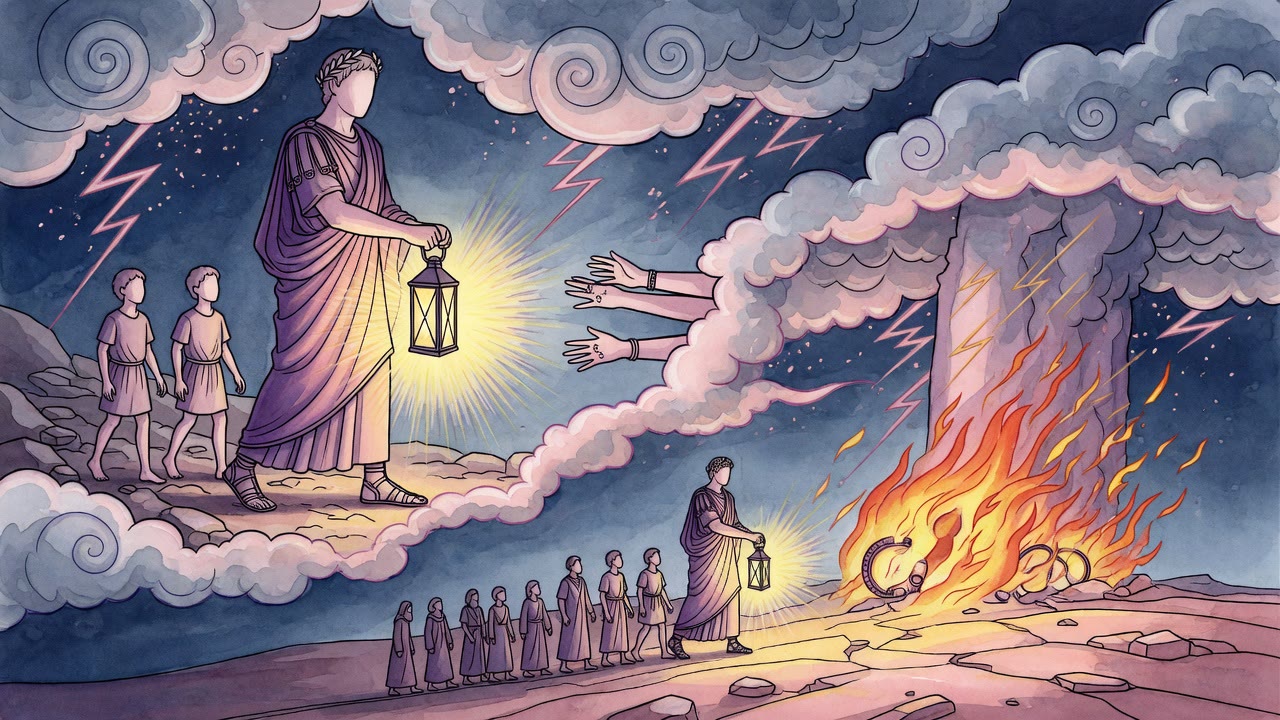
Josephus widened the defense from stones to souls. Other nations, he said, stumble through their statutes and hire experts when they break what they never learned. Jewish children meet the Torah early enough that the laws are "engraven on their souls." Ordinary people can recite obligations more readily than their own names. Transgression is rare, and when it comes, the community does not shrug.

He described Jewish government as sacred order rather than fashion. Priests held a high standard because the whole people lived inside practice, not outside it as spectators of a cult. A nation trained that way does not invent a yearly Greek victim. The charge insults the education Josephus claimed for every child who could speak the commandments before he could flatter a king.

Voluntary Lie Against Living Memory

Josephus named Apion's story a "voluntary lie," built for hearers too lazy to inspect the Temple's plan. Prejudice travels faster than measurement. A fattened Greek is easy to picture. Four courts and a High Priest's single day of entry demand attention. The lie chooses the easy picture.

The case that remains is simple and hard. Antiochus wanted treasure. Apion wanted a moral fog. Josephus answered with architecture, calendar, and a people whose law was not a private horror but a public teaching from childhood. The chamber empties. The courts stand. The High Priest walks in alone on the one day appointed, and the Greek at the luxury table dissolves into the air of a grammarian's malice.

Apion's method was always the same shape. Invent a private horror, attach it to a public building, and dare the audience to demand measurements. Josephus answered with measurements. He had walked the war and the books. He knew how a story travels in Greek dinner halls after the Temple has fallen and the people who could correct it are far away or dead. That is why he spends so much fury on one fattened Greek. The charge is not only false. It is a template for every later lie that needs Jewish blood to make a foreign king look clean.

He also understood the politics of silence. If he left the chamber unchallenged, the drum of the world would keep beating it. So he names the graded courts, the single day of the High Priest, the furniture of the inner house, and the education that makes such a rite unthinkable to anyone raised inside the law. The answer is long because the lie is sticky. Sticky lies need more than a shrug. They need a map of stone and a map of the heart, both drawn in public.


← All myths
From the tradition

Sources

4 sources

The texts behind this telling. Some cards carry a translation of the source; others are our own retelling of it, and each card says which. Every card links out to the original.

Against Apion 8:1Against Apion

Retold in our words. Read the original at the link below.Against Apion, trans. William Whiston · Public Domain

Josephus, the first-century Romano-Jewish scholar, takes on Apion's wild accusations in his work Against Apion, and it’s a doozy. Apion, in his eagerness to smear the Jewish people, concocts a tale so outrageous it’s almost comical. He claims that Antiochus, while raiding the Temple in Jerusalem, discovered a secret chamber. Inside, he found a Greek man living in luxury, surrounded by a table laden with delicacies.

The man, according to Apion, was being fattened up for a gruesome ritual: a yearly sacrifice where the Jews would kill a Greek, taste his entrails, and swear eternal enmity against all Greeks. Apion even has the man begging Antiochus for rescue, pleading with him to thwart the Jews' bloodthirsty plot.

Josephus isn't laughing. He's indignant. He points out the sheer implausibility of the story. First of all, Apion is more interested in defending a sacrilegious king than telling the truth. He's trying to excuse Antiochus's greed and perfidy, his desecration of the Temple for money. But even if such a thing were happening, would that excuse Antiochus's actions? Of course not!

Josephus asks, how could all the Jews possibly gather for such a sacrifice? And how could one man's entrails possibly feed them all? He also wonders why Antiochus wouldn't have paraded this rescued Greek hero through the streets, garnering praise and support from the Greek world. It makes absolutely no sense.

But more importantly, Josephus highlights the fundamental misunderstanding – or, more likely, deliberate misrepresentation – of Jewish Temple practices. He reminds us that the Temple was structured with a series of increasingly restricted courts. As Josephus says, there were four courts: one for everyone (even foreigners!), one for Jewish women, one for Jewish men, and the innermost court for the priests. Each had its own rules about who could enter and when. The holiest place, the Kodesh Hakodashim, the Holy of Holies, was only accessible to the High Priest, and only on Yom Kippur, the Day of Atonement.

"All such as ever saw the construction of our temple, of what nature it was, know well enough how the purity of it was never to be profaned," Josephus declares.

He emphasizes the meticulous care taken to maintain ritual purity. Priests could only enter at specific times, and even then, only with the proper garments and for specific purposes. Nothing extraneous was allowed inside – only the altar of incense, the table of shewbread, the censer, and the candlestick, as prescribed by Jewish law.

As we find in Midrash Rabbah, the details of Temple service were meticulously planned and executed, leaving no room for secret, gruesome rituals. The Talmud, in Tractate Yoma, further elaborates on the High Priest's preparations and actions on Yom Kippur, emphasizing the solemnity and transparency of the Temple service.

Josephus concludes by calling out Apion's blatant fabrication. He accuses him of inventing a preposterous tale about secret feasts and forbidden access to the Temple. It’s a “voluntary lie,” Josephus says, designed to mislead those who won't bother to investigate the truth. It’s a stark reminder of how easily prejudice and misinformation can spread, especially when fueled by malice.

Apion's story, though demonstrably false, reveals a deeper truth: the enduring power of prejudice and the importance of critical thinking. How often do we hear narratives that, upon closer inspection, crumble under the weight of their own absurdity? And what responsibility do we have to challenge those narratives and seek out the truth?

Full source
Against Apion 35:1Against Apion

Retold in our words. Read the original at the link below.Against Apion, trans. William Whiston · Public Domain

Ever hear a story so outlandish, so dripping with bias, that you just have to raise an eyebrow and ask, "Really?" That's exactly the kind of tale

Josephus, a first-century Romano-Jewish scholar and historian, wrote Against Apion as a defense of Judaism against its detractors. And believe me, there were detractors aplenty. One such critic, whose name Josephus doesn't even bother to grace with permanence, is the target of our scrutiny today. This unnamed individual spins a yarn about the Jewish people that's… well, let's just say it's a creative interpretation of history.

In this critic, the Jews didn't exactly have a divine mandate to the land. Oh no. Instead, they were a bunch of diseased folks, gathered at temples, seeking oracles from [Jupiter] Hammon. I know. Hammon? Where did that come from? Josephus is just as perplexed as we are. He wonders if this refers to all Jews or just those afflicted with skin diseases. And why are they being called Jews if they're supposedly Egyptians? The whole thing is a tangled mess of contradictions.

This critic claims that after the king (again, conveniently unnamed) drowned many of these… individuals… in the sea and banished the rest to the desert, a vast multitude still managed to cross that very desert, build a city, and erect the Beit Hamikdash (בית המקדש), the Temple, "which hath been so famous among all mankind." It's a logistical nightmare! How did they survive? How did they build? Our critic offers no explanation.

And what about Moshe Rabbenu (משה רבינו), Moses, the lawgiver? He's barely mentioned, just a name tossed into the mix. There's no discussion of his origins, his motivations for creating these new laws, or the journey through the wilderness. Why would Egyptians suddenly abandon their customs? And if they were foreigners, wouldn't they have brought their own traditions and laws with them?

Josephus rightly points out the absurdity of it all. Sure, these people might have sworn animosity towards those who ejected them. That's understandable. But to declare war on everyone, especially when they needed assistance from everyone? As Josephus puts it, "this demonstrates a kind of mad conduct indeed; but not of the men themselves, but very greatly so of him that tells such lies about them."

Then comes the real kicker. Our critic claims that the city was originally named something akin to "Robbers of the Temples" – Hierosyla in Greek, though Josephus is quick to note that there's no equivalent single word for this in Hebrew. Apparently, the city-builders thought this was an honorable name! Josephus finds this suggestion utterly ridiculous. He sees it as a desperate attempt to smear the Jewish people, even if it means twisting logic and language beyond recognition.

What's fascinating is how this ancient smear campaign resonates even today. We still see misinformation and prejudice swirling around, often based on flimsy evidence and outright lies. It reminds us to question narratives, to seek out truth, and to be wary of those who seek to divide us with fear and falsehoods.

Josephus, clearly exasperated, declares that he's said enough to this person peddling nonsense. He concludes this section of Against Apion, promising to continue his defense of the Jewish people in the next "book," or section. He leaves us pondering the power of words, the persistence of prejudice, and the importance of knowing our own history so that we can recognize and refute the lies when we hear them.

Full source
Against Apion 18:1Against Apion

Retold in our words. Read the original at the link below.Against Apion, trans. William Whiston · Public Domain

Most people, as Josephus points out in his treatise Against Apion, are pretty clueless about their own legal systems. They bumble along, accidentally break a rule, and only then do they realize they’ve done something wrong. Even government officials, the very people who should be upholding the law, often admit they're not experts! They need advisors, specialists to guide them.

What if things were different? What if knowledge of the law was so ingrained, so fundamental, that it was as natural as breathing?

That, Josephus argues, is the case with the Jewish people and the Torah, the Law. That’s the image Josephus paints. From the moment they gain awareness, Jewish children are immersed in the teachings of the Torah, these laws become "engraven on their souls."

It's a powerful claim, isn't it? This isn't just about rote memorization, it's about internalizing a moral and ethical framework so deeply that it shapes your very being.

And because of this deep understanding, Josephus continues, transgressions are rare. And when they do occur, there’s no escaping the consequences. The community is so invested in upholding the Law that accountability is swift and sure.

Now, we might look at this ideal with a critical eye. Is it really true that every single Jew knows the law so intimately? Perhaps Josephus is idealizing a bit, emphasizing the unique character of his people to a Greco-Roman audience. But there’s a deeper truth here. He's not just talking about legal codes; he's talking about a way of life, a shared understanding of right and wrong that binds a community together.

This concept of a law so deeply internalized, so thoroughly integrated into the fabric of one’s being… it's a powerful ideal, isn't it? It makes you wonder: What laws, what principles, are engraved on our souls? And how do those principles shape the way we live in the world?

Full source
Against Apion 22:1Against Apion

Retold in our words. Read the original at the link below.Against Apion, trans. William Whiston · Public Domain

Isn't it amazing to consider the different ways people organize their societies, and how those structures reflect their deepest beliefs?: what could be a more sacred form of government than one where the entire community is steeped in religious practice? Where the priests are held to an incredibly high standard, and the whole structure of society feels like one continuous, sacred ritual?

That's the picture Josephus paints in his Against Apion. He's talking about the Jewish people, of course, and contrasting their way of life with that of the surrounding cultures. He’s essentially saying: what other nations might experience as fleeting moments of religious fervor, their "Mysteries and Sacred Ceremonies," as he puts it, we live every single day. It's a pretty powerful claim!

So, what are these commands and prohibitions that shape this all-encompassing way of life? Well, according to Josephus, they are surprisingly straightforward.

First and foremost, there's the fundamental understanding of God. He describes a God who is all-encompassing, perfect, self-sufficient, the source of everything – "the beginning, the middle, and the end of all things." This God is revealed through His works, visible in the blessings and wonders all around us. We see God in the light, the heavens, the earth, the sun, and the moon.

But here's the thing: while God's presence is undeniable, God's essence remains beyond our grasp. Josephus emphasizes that no material, no matter how precious, is worthy of representing God. No human artistry can truly capture the divine. We can't truly see or even imagine what God is like, and to try to create an image would be, frankly, impious.

Instead, we see God’s creations: the light, the heavens, the earth, the sun, the moon, the waters, the animals, the fruits of the earth. God made these things "not with hands, nor with labor, nor as wanting the assistance of any." God simply willed them into existence, and they were good.

And the proper response to this divine generosity? To emulate God through virtuous living. Josephus tells us that that is the holiest form of worship: "All men ought to follow this Being, and to worship him in the exercise of virtue; for this way of worship of God is the most holy of all others."

It makes you think, doesn't it? Is true devotion found in grand gestures and elaborate rituals, or in the quiet, consistent effort to live a life of goodness and integrity? What does it mean to see God in the everyday world? And how does that vision shape the way we live?

Full source