Aristeas Frees Judea's Captives in Egypt
Ptolemy's father had hauled thousands of Jews out of Judea as war spoil. Aristeas came to Alexandria for scrolls, but he asked for the slaves first.
Table of Contents
 Click for full size
Chains Beside the Nile
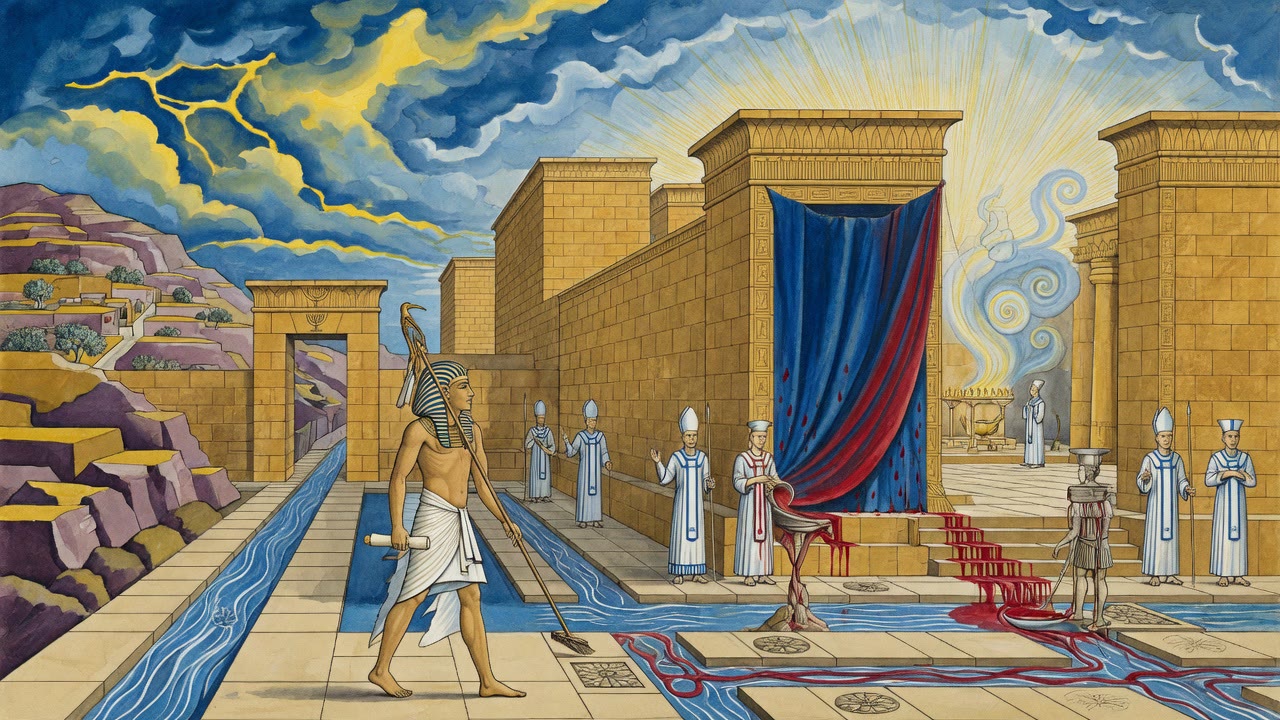
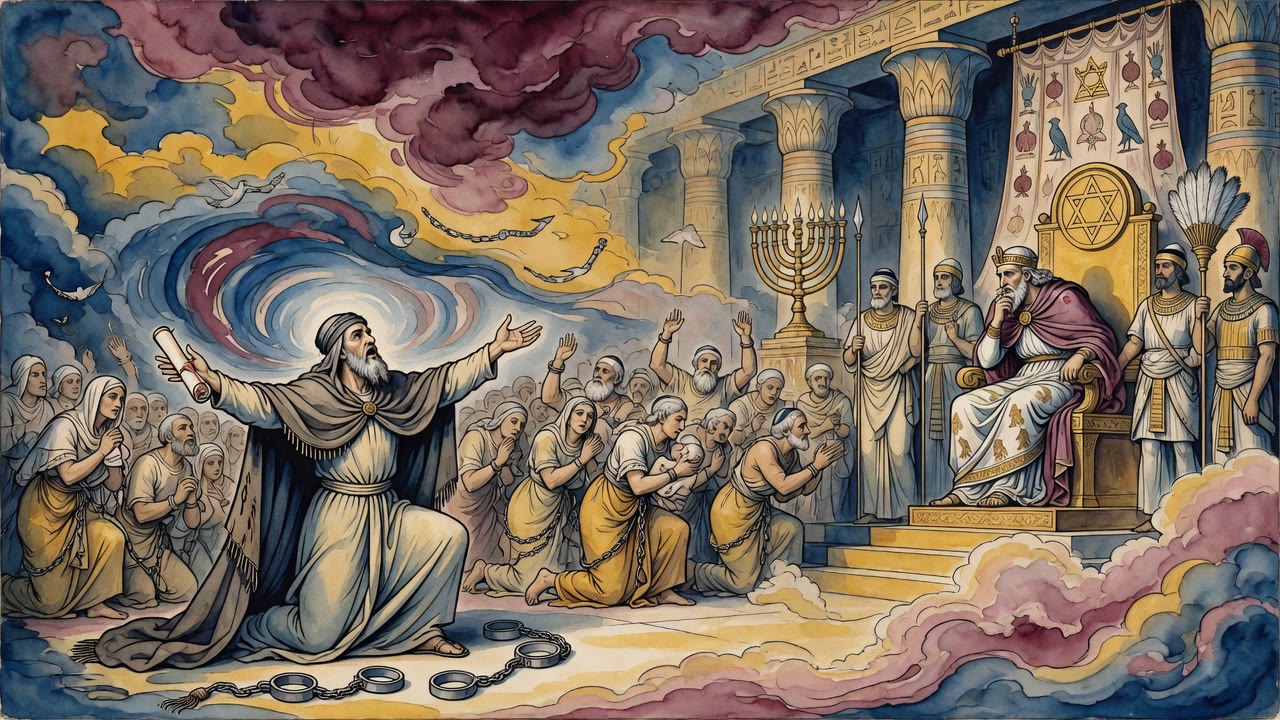
Aristeas stood where palace marble met the smell of river mud and heard a market of human voices priced like grain. Old men too slow for spears. Women with infants. Boys who would never see Judea's hills again. Ptolemy son of Lagus had taken them when he first seized Egypt, and his soldiers had claimed the rest as pay. Thirty thousand of the strong he had armed and posted in garrisons. The rest he had not meant, in his own telling, to enslave. War made the claim for him.
Aristeas had come for books. He wanted the Law of the Jews for the great library. Before he spoke of scrolls, he spoke of bodies. The embassy he undertook with heat, not cool scholarship. First the captives. Then the translation. He would not let ink ride on the backs of people still in collars.
A scribe waited with a tablet. Outside, a woman from Judea sold water she did not own. Inside, a courtier laughed at the idea that a king should undo his father's victory. Aristeas set his jaw and asked for an audience.
What the Soldiers Claimed
Jews had entered Egypt before, under Persian banners and earlier still to help Psammetichus against Ethiopia. Those were fewer. The haul of Ptolemy son of Lagus was different: a flood of captives after conquest of Judea and the land of Egypt. The best men, prime of life, courage marked on them, took arms in Egyptian service. The old, the young, the women, fell into slavery because veterans demanded reward.
Aristeas would not let that sentence stand as the last word of Greek justice. He prepared arguments as carefully as any general prepares a line. Let deeds not give the lie to words, he would say. A king who praises law while keeping stolen households is a contradiction walking on two legs.
In his mind he already wrote to his brother, the one who shared blood and a hunger for what builds the soul. The captivity belonged in that letter as much as any record of high priests and holy custom. Captivity was also a fact worth relating about the Jewish race.
The Plea Before the Throne
When the king sat, Aristeas did not open with flattery about libraries. He opened with names without names: the mass too old, too young, too female for the garrisons. He spoke of holy law, of men living by it, of a sympathy the king claimed to honor. He framed freedom as consistency. A ruler who wants wisdom from Judea cannot keep Judea's children as cattle and call the arrangement civilized.
Courtiers shifted. Emancipation costs money. Compensation for soldiers who thought captives were wages would have to be found. Aristeas pressed. Unreason, he said in effect, is to let deeds deny the speeches kings love to make about justice.
Somewhere in the city a Jewish mother still counted days since her son was taken. The speech in the throne room was the only rope long enough to reach her.
God, in the speech of the Jews Aristeas admired, was not a mascot for empire. If the king wanted to stand near holiness, he would have to open locks.
From Collar to Scroll
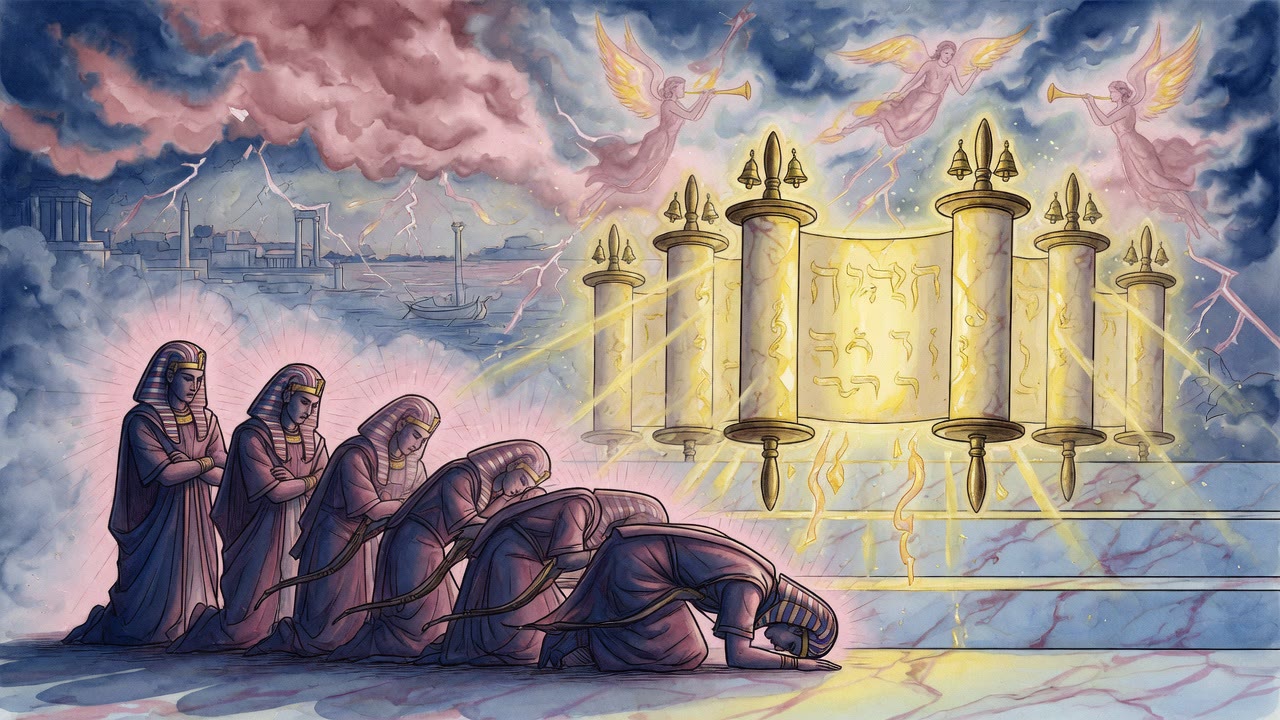
The embassy did not stop at mercy. Once captives could breathe as free people again, the path to the Law's translation cleared. High priests of Egypt's learned land had already given Aristeas records of the Jewish race. He had sent his brother such notes before. Now he would send a larger tale: a king moved, a people unchained, then seventy-two elders and a banquet of questions.
But first the simple fact. Iron came off ankles. Markets lost stock. Garrison Jews stayed under arms by choice of the state, while the weaker were no longer property. Aristeas walked out under Alexandria's sun with a victory that did not look like a battlefield and still changed the count of living free.
He would write it for the brother who came from the island hungry for soul-building accounts. He would write it so the library's hunger for books would not erase the prior hunger of captives for air.
A Letter That Still Breathes
Years later the Letter of Aristeas still smells of that room: ambition for scripture braided with a political act of release. The narrator insists he undertook the embassy with enthusiasm. Enthusiasm here is not a soft word. It is the heat of a man who saw a chance to plead and took it before the translators ever sat down.
Judea in battle had fed Egypt's slave pens. Aristeas made the pen open. Between those two motions lies the whole pressure of the tale: empire takes, a courtier argues, a king can still reverse a father's spoils if someone dares to ask.
Dust on the road from Judea never fully left those captives' sandals. Freedom did not erase the taking. It only stopped the chain from becoming permanent history written only by the winners.
← All myths