The Librarian Who Made Hebrew Speak Greek
The shelves held more than two hundred thousand scrolls. The Jewish law was not among them. It still lived in Hebrew, in Jerusalem.
Table of Contents
 Click for full size
Two Hundred Thousand Scrolls and One Hole
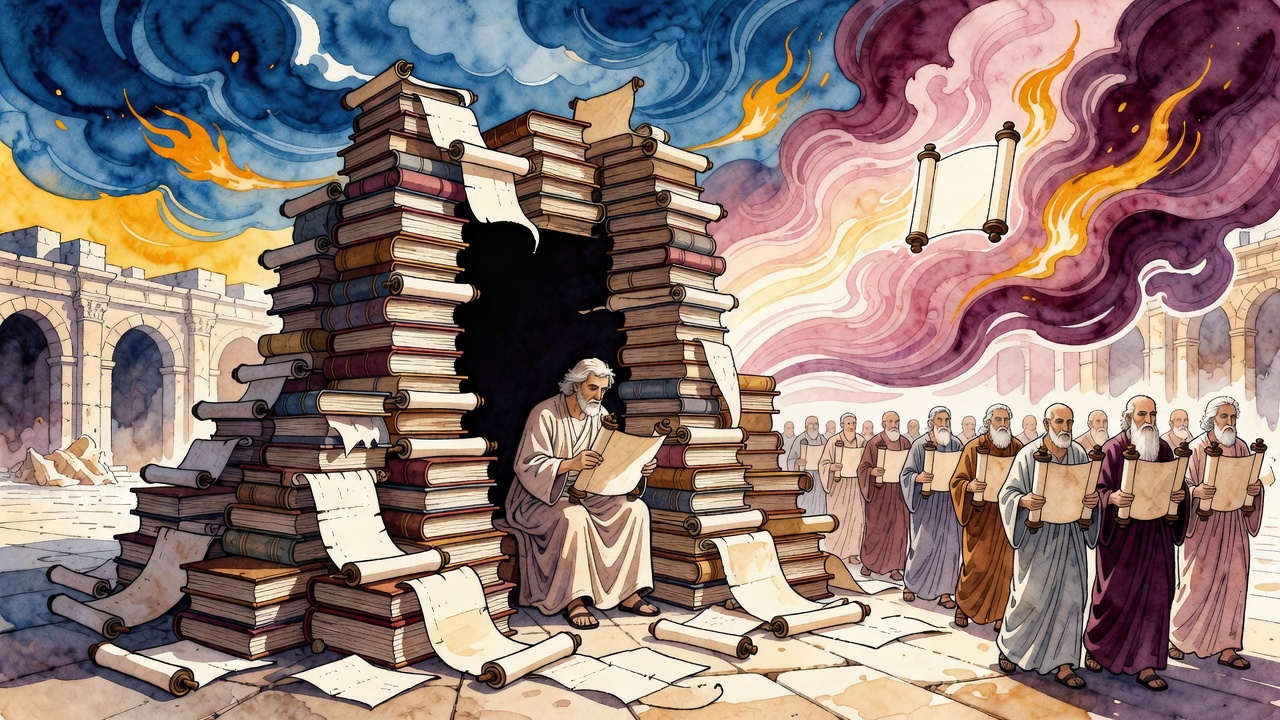
Demetrius of Phalerum stood in the king's library and answered a number. More than two hundred thousand, he told Ptolemy. The target was five hundred thousand. He had money, scribes, ships, and the purchasing power of a court that meant to collect every book on earth.
Then he named the hole.
"I am told that the laws of the Jews are worth transcribing and deserve a place in your library." The shelves held the world's writing in Greek. The Jewish law still lived in Hebrew, in Jerusalem, in a peculiar alphabet the court scholars could not read. They thought the Jews spoke Syriac. Demetrius knew they did not. The language was their own. The librarian who could buy a book from any harbor could not buy this one ready-made.
Demetrius Told the King the Law Needed Greek
"What is to prevent you from doing this?" Ptolemy asked. Everything necessary had been placed at Demetrius's disposal. "They need to be translated," Demetrius answered. "In the country of the Jews they use a peculiar alphabet, just as the Egyptians have a special form of letters, and they speak a peculiar dialect."
The king understood. He ordered a letter to the Jewish High Priest. Hebrew would have to speak Greek, or the library would stay incomplete by one fire.
The request was not a raid. It was an admission. The keepers of the law lived in Jerusalem. Alexandria could copy anything except the thing it did not yet understand.
Aristeas Prayed Before He Asked for the Captives
Aristeas served in that court. He was a Jewish man with a petition of his own, and he did not walk into the audience on politics alone. He prayed. He asked God to dispose the mind of the king so that the captives might be set at liberty. The human race, he told himself, is God's creation and is swayed by Him. He called on the One who rules the heart.
He had great hopes. When men plan some action from pure motives, in the interest of righteousness, God brings their purposes to a successful issue. Then the king raised his head, looked up at Aristeas with a cheerful countenance, and asked.
Aristeas asked for the Jewish captives first. It would be indecent to request a gift of law from Jerusalem while Jerusalem's people were held in chains in the city making the request. Ptolemy freed them. He paid their former owners from the royal treasury. The letter to the High Priest went out with gifts large enough to say the petition came with respect.
The Translators Crossed to the Island of Pharos
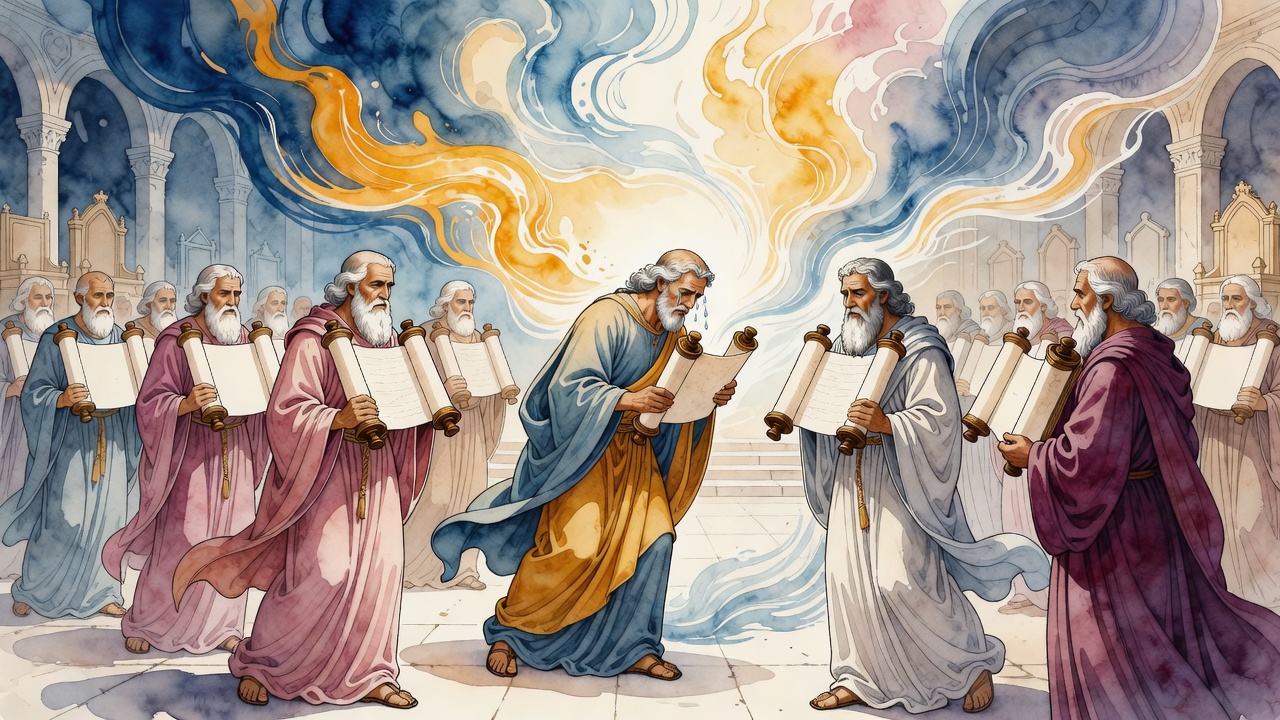
The elders came from Jerusalem. Three days later Demetrius took the men along the sea-wall, seven stadia long, to the island. He crossed the bridge and made for the northern districts of Pharos. He assembled them in a house built on the seashore, beautiful and secluded, and invited them to begin, since everything they needed had been placed at their disposal.
They set to work comparing their several results and making them agree. Whatever they agreed upon was copied out under Demetrius's direction. The librarian who had counted scrolls now sat with men who had carried the Hebrew from childhood, and he watched the law become Greek without the truth being left on the table.
Hebrew spoke Greek in that house by the water. Not by conquest. By agreement, line by line, until the copies matched.
The Elders Forbade Anyone to Correct a Word
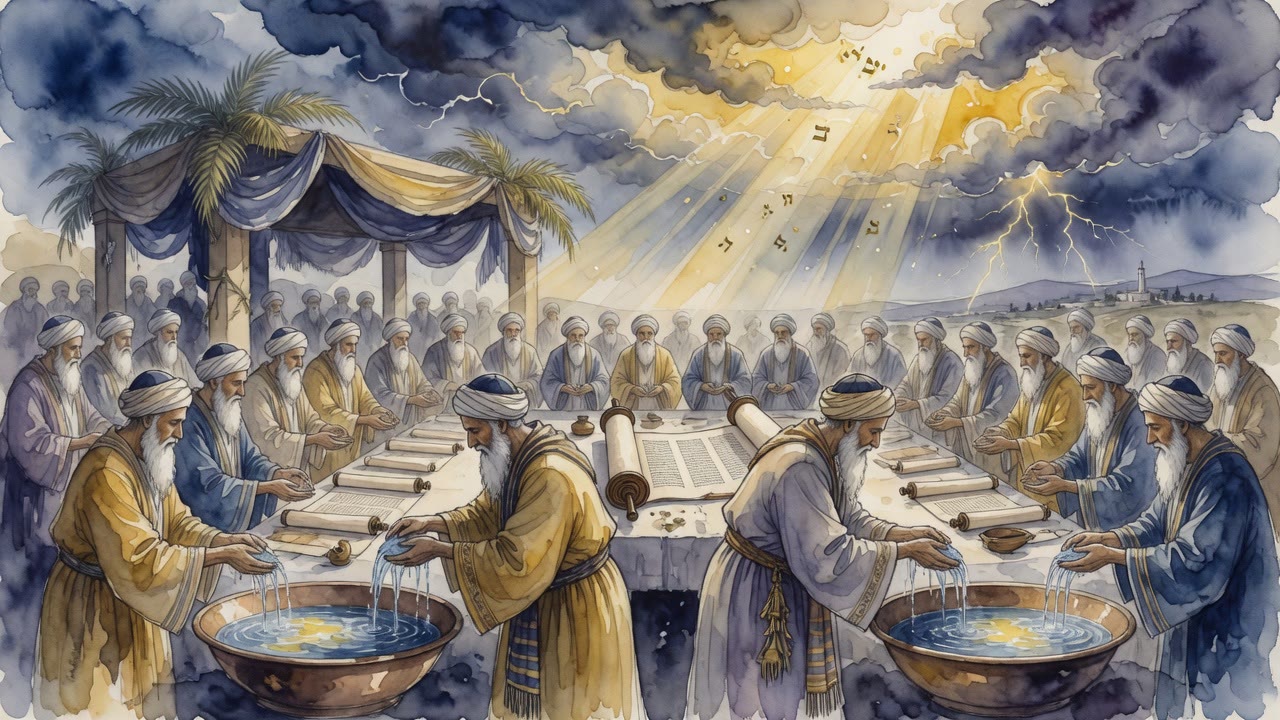
When the reading of the books was finished, Demetrius gathered the community at the place where the work had been done. He read the Greek Torah aloud. The priests, the elders of the translators, the sons of the congregation, and the leaders of the people rose together.
They declared that the translation had been done well, with accuracy, in every good way, and that it should remain as it now stood. No one was to make any correction in it.
The librarian had wanted a missing book. What he received was a book the community would not let him edit. The hole in the shelves was filled. The fire stayed the fire.
← All myths