5 min read

Aud Made the Sun Shine at Midnight on Israel

After seventy days of mourning Deborah, a Midianite priest named Aud lit the night like noon until Israel traded God for a false sun.

Curated by Arthur · Told by Maggid ·
Table of Contents
  1. Wicks Thick Enough for a Nation
  2. Thirty-One Kings and a River That Remembered
  3. Seventy Days of Quiet
  4. Noon at Midnight
  5. What the False Sun Could Not Do
Aud Made the Sun Shine at Midnight on Israel Click for full size

Wicks Thick Enough for a Nation

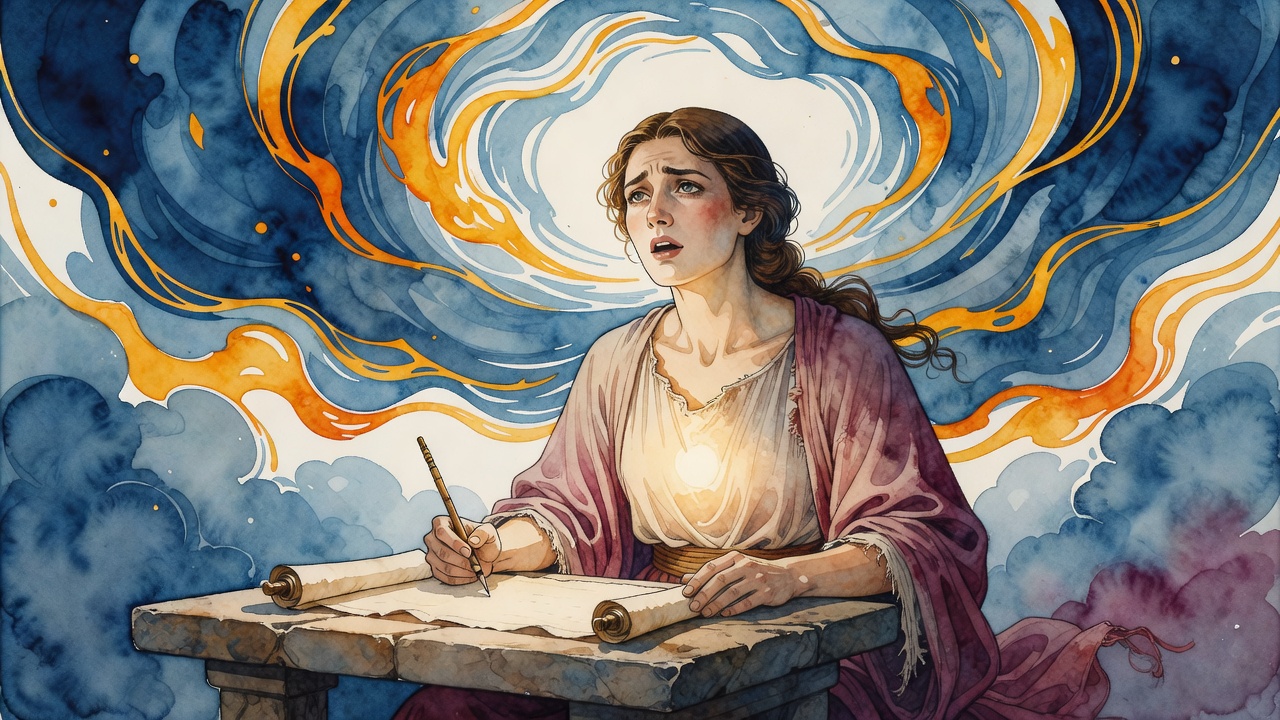
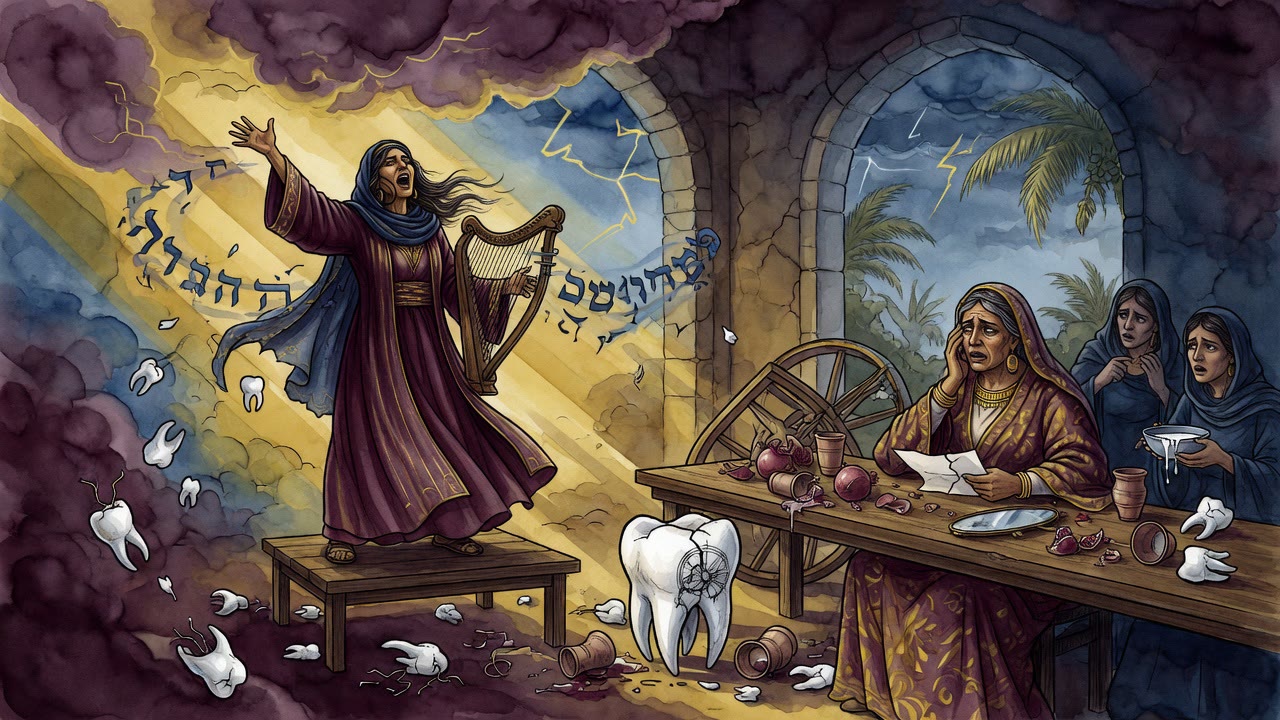
Deborah twisted wicks thick so the sanctuary lamps would burn long. Her husband Barak, called Lipidoth, "Flames," carried candles at her urging into a house of God that had grown dim for lack of scholars. Heaven answered the labor of light with a larger flame. "Thou takest pains to shed light in My house," God said, "and I will let thy light shine abroad in the whole land." Prophecy settled on her. Judgment followed. Under a palm she heard cases while the age around her stumbled without teachers.

After Ehud died, no judge rose to fill the gap. An angel brought rebuke. Israel had left the ways taught through Moses. Enemies would rule until the people cried. Then a woman would be sent. Deborah was that answer walking in daylight.

Thirty-One Kings and a River That Remembered

Sisera gathered what Joshua had left unfinished. Thirty-one unconquered kings of the land massed under his command, a force the tradition counts like forty thousand armies of a hundred thousand each. Deborah and Barak faced a second conquest of Canaan with fewer names and less steel. God joined them with water and fire. The Kishon rose. The fiery hosts of heaven fought, all but the star Meros. Long before, the river had been pledged a role against Sisera, as if the drowning of Egypt's dead had left a debt the water still meant to collect.

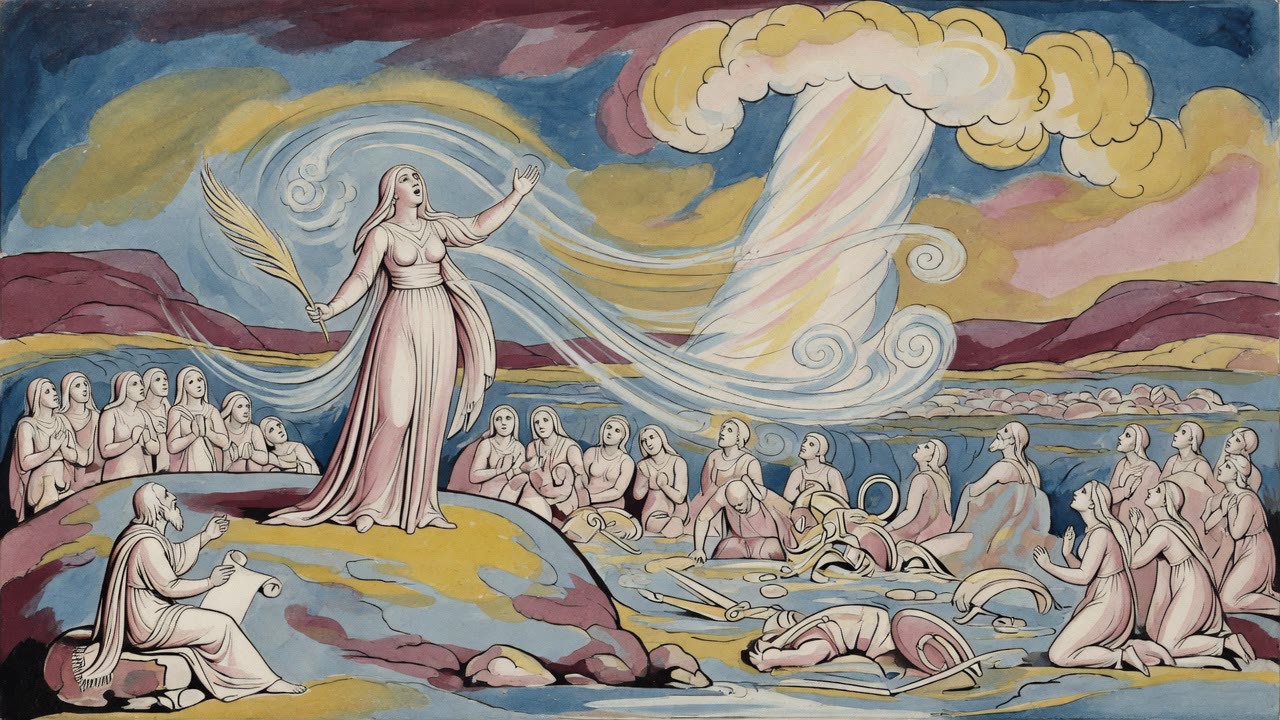
Victory broke the night of that age. Israel sang. The Song of Deborah rose from throats that had just watched chariots fail in mud and stars. God pardoned the people's sins for the piety of that music. For a breath, the land knew how to praise without bargaining.

Seventy Days of Quiet

When Deborah's life ended, the whole nation mourned seventy days. Seven years of peace followed, a soft stretch after so much iron. Markets opened without the flinch of raiders. Children learned the song before they learned the fear. The palm where she had judged stood empty, yet the memory of thick wicks still scented the sanctuary talk.

Peace is a dangerous teacher. The edge dulls. The hymn becomes habit. Into that softness walked a Midianite priest named Aud, carrying witchcraft like a portable sun.

Noon at Midnight

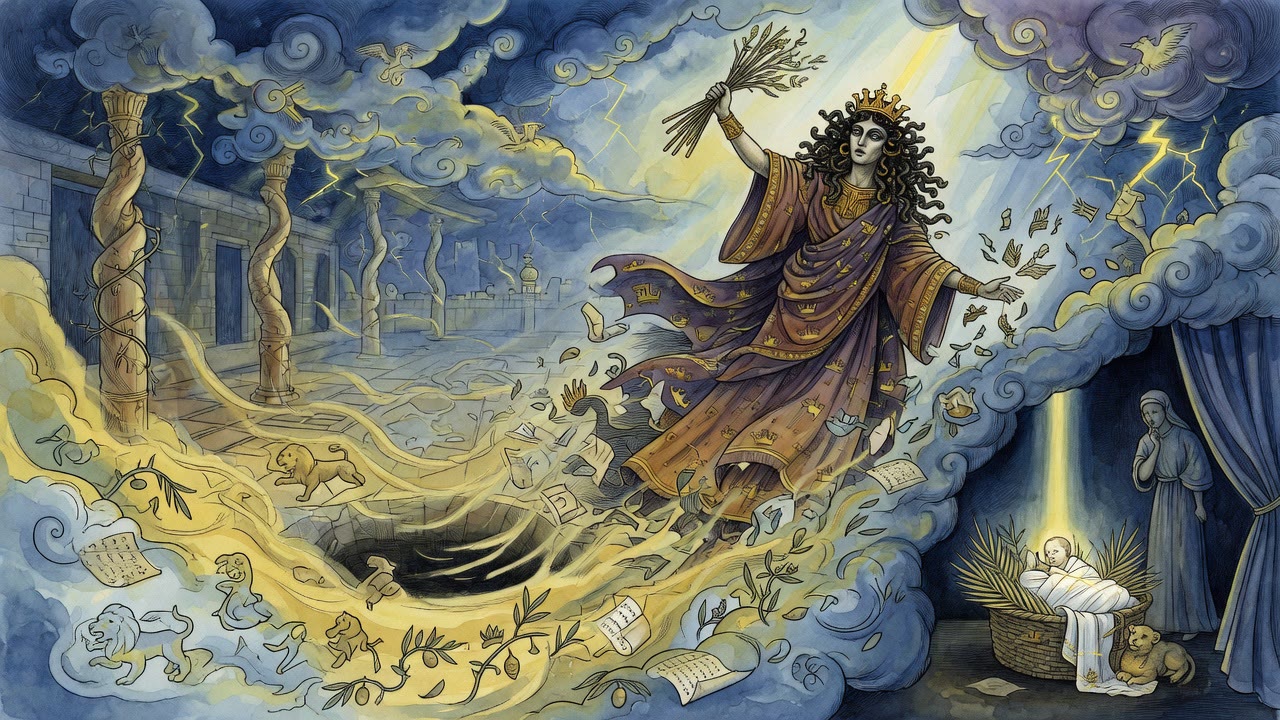
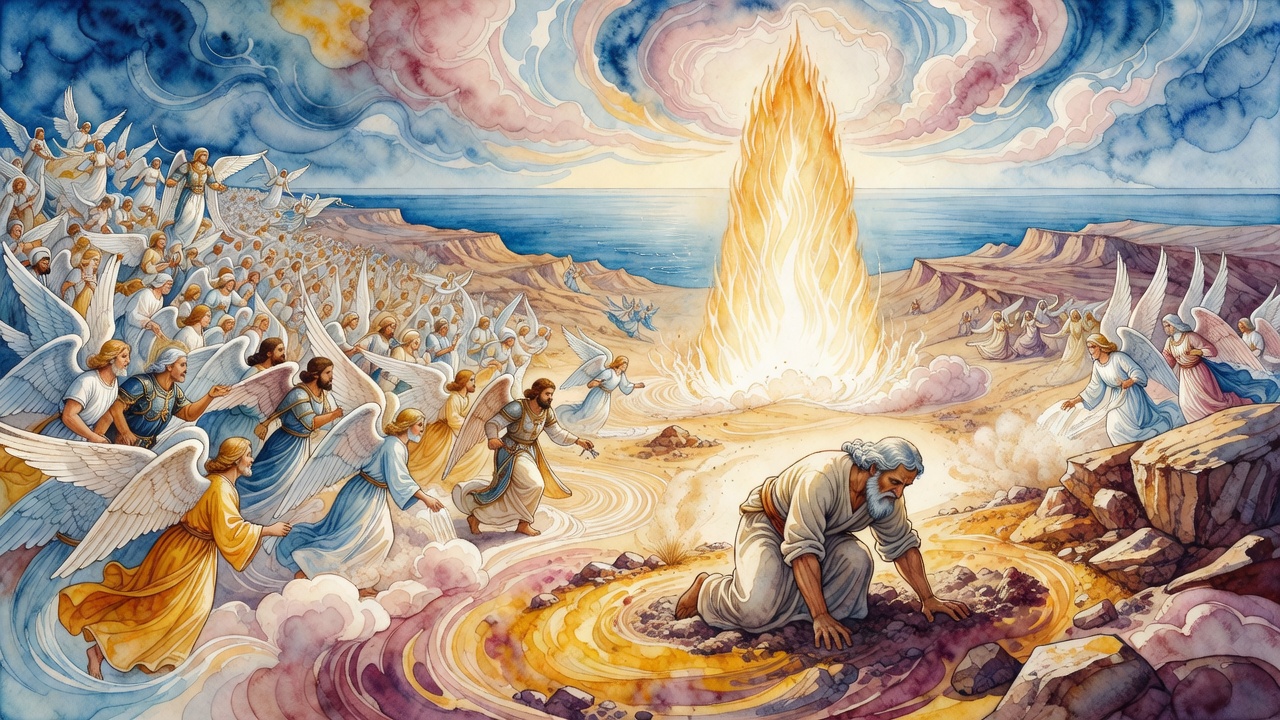
Aud made the sun shine at midnight. Night forgot its job. Fields that should have slept stood in false day. Israel looked up and measured gods by spectacle. If Midian's idols could turn the clock inside out, what was left of the God who had drowned chariots and answered a woman's thick wicks with prophecy? The eye, always hungry for proof, knelt to the trick.

Backsliding followed the light show the way shadow follows a torch. Old ways returned. Trouble returned faster. God delivered them into Midianite hands, the same nation whose priest had sold them a midnight noon. The song of Deborah still existed. It could not outshout a sky that lied on schedule.

What the False Sun Could Not Do

Deborah's light had been oil, wick, and a life spent judging under a tree. Aud's light was theft of night. One light made a people brave enough to face thirty-one kings. The other made a people stupid enough to trade covenant for theater. Seven years of peace after seventy days of mourning should have been inheritance. It became the quiet room where a sorcerer hung his lantern.

Barak had once carried candles because he was no scholar. Deborah had made the flames last. Aud needed neither scholarship nor patience. He needed only one impossible hour of daylight after dark. Israel bought it. The Midianite yoke that followed was the receipt. Somewhere the Kishon still remembered how to fight for them. On the night Aud stole the sun, no river rose. Only a people staring upward while their freedom thinned.

Deborah had judged under a palm while men came with cases too heavy for local pride. She sent Barak toward a battle that looked like suicide on paper and became song in the mouth. Thick wicks, thin odds, a river that kept an old pledge. That was Israel's true lighting system. Aud offered a cheaper lamp with a higher voltage of wonder and a lower cost of obedience.

After the seventy days of mourning, houses still smelled of ash and tears. Peace settled like dust on unused shields. Midianite traders smiled wider. Aud's midnight sun rose over that softness and made farmers kneel in their nightshirts. A people who had watched stars fight Sisera now watched a priest steal the clock and called it proof. The yoke that followed was iron enough to correct the eyes, but the eyes had already bought the lie.

Somewhere a lamp in the sanctuary still used the style of wick Deborah loved, slow and thick. It could not compete with a sky turned wrong. Faithfulness rarely looks like noon at midnight. It looks like oil measured for a long burn while enemies count chariots. Israel learned that difference the expensive way, under Midianite hands, long after the false sun set and left ordinary dark behind.


← All myths
From the tradition

Sources

4 sources

The texts behind this telling. Some cards carry a translation of the source; others are our own retelling of it, and each card says which. Every card links out to the original.

Legends of the Jews 2:50Legends of the Jews

Retold in our words. Read the original at the link below.The Legends of the Jews by Louis Ginzberg (1909) · Public Domain

The Israelites certainly did, after the triumphant victory led by Deborah.

The Legends of the Jews reminds us that the whole nation mourned Deborah for seventy long days, evidence of her impact. And for seven glorious years, the land knew peace. (Ginzberg, Legends of the Jews, tells us this, drawing from various Midrashic (rabbinic interpretive commentary) sources.)

They sang a hymn, the Song of Deborah, a powerful expression of gratitude. And God, seeing their piety, forgave their transgressions. A clean slate, a fresh start.

As often happens in these stories, the peace didn't last. Why is that? What makes us so prone to wander?

According to the Legends, their backsliding was fueled by a Midianite priest named Aud. This Aud wasn't just any priest; he was a master of illusion, a sorcerer who could seemingly manipulate the very fabric of reality. He made the sun shine at midnight! He used this spectacle to convince the Israelites that the idols of Midian were more powerful than God. It's a stark reminder of how easily we can be swayed by the spectacular, the immediate, even when it contradicts what we know to be true.

And God, seeing their straying hearts, allowed them to fall into the hands of the Midianites. They began to worship their own reflections in the water – a potent symbol of vanity and self-absorption, perhaps? And they were struck with terrible poverty. So dire was their situation that they couldn't even afford a simple meal offering, the offering of the poor. We find this in Ginzberg's retelling in Legends of the Jews, drawing from various midrashic sources.: spiritual and material poverty hand-in-hand.

It was on the eve of Passover, of all nights – the night we remember liberation – that Gideon cried out in despair. "Where are all the wondrous works which God did for our fathers on this night," he lamented, "when he slew the first-born of the Egyptians, and Israel went forth from slavery with joyous hearts?" (Again, Ginzberg draws from various Midrashic sources for this narrative.) It’s a heartbreaking question, a plea born of desperation and a longing for the miracles of the past.

And then, God appeared to him. Not with thunder and lightning, but with a quiet affirmation: "Thou who art courageous enough to champion Israel, thou art worthy that Israel should be saved for thy sake."

What a powerful message! It wasn't about Gideon's perfection, but his willingness to stand up, to be a champion. His courage, his willingness to remember the past and yearn for a better future, made him worthy. What are we worthy of? And what are we willing to champion?

Full source
Legends of the Jews 2:39Legends of the Jews

Retold in our words. Read the original at the link below.The Legends of the Jews by Louis Ginzberg (1909) · Public Domain

A story about Deborah, a woman who literally, and figuratively, brought light to a dark time in Israel's history.

The familiar telling remembers the big names, the mighty warriors, but what about the everyday acts of devotion that can change the course of history?

In Legends of the Jews, the land was suffering under a tyrant. To free Israel, God chose Deborah and Barak. And Barak? Well, he's described as being, shall we say, not the sharpest tool in the shed. Ginzberg paints a picture of a time that was "singularly deficient" in scholars. Ouch.

So, what was Barak good at? According to the story, he carried candles to the sanctuary at Deborah's suggestion. A simple act. But it's this act that earned him the name Lipidoth, meaning "Flames." It's a small detail, but it highlights the importance of even the most humble contributions.

But the real star here is Deborah. She wasn't just telling Barak what to do; she was actively involved in the service. We're told that she made the wicks of the candles thick so they would burn longer. Seems insignificant? Think again.

God noticed. And He said, "Thou takest pains to shed light in My house, and I will let thy light, thy flame, shine abroad in the whole land."

Talk about a reward for dedication! Because of her devotion, Deborah became a prophetess and a judge. She rose to a position of leadership and guided her people. She dispensed judgment in the open air, because it wasn't considered appropriate for men to visit a woman in her home for such matters.

What I love about this story is that it shows us that leadership doesn't always come from the most obvious places. It wasn't the strong warrior or the brilliant scholar who saved the day. It was a woman, dedicated to the service of God, who paid attention to the small details. It was Deborah, who made sure the light kept burning.

So, the next time you're feeling like your contributions are insignificant, remember Deborah. Remember that even the smallest act of devotion can have a profound impact. You never know, you might just be the one to bring light to a dark world.

Full source
Legends of the Jews 2:42Legends of the Jews

Retold in our words. Read the original at the link below.The Legends of the Jews by Louis Ginzberg (1909) · Public Domain

Their task? It was not slight. In fact, according to Legends of the Jews, it was comparable to Joshua's entire conquest of Canaan! Now, you might remember Joshua. He took on the land of Canaan and defeated thirty-one kings. But here's the thing: he only defeated half of them. The other thirty-one were still out there, causing trouble. And guess who was leading them? The fearsome Sisera.

Ginzberg, in Legends of the Jews, tells us these unconquered kings amassed a staggering force. Arrayed against Deborah and Barak. So how did they stand a chance?

Well, like so many stories in Jewish tradition, the answer is: with a little help from above. As the tale goes, God aided Israel with both water and fire.

The Kishon – that’s the river we’re talking about here – and “all the fiery hosts of heaven” joined the battle. Except for the star Meros, that is. The Kishon, it turns out, had a long-standing appointment to play a crucial role in Sisera's downfall. But how does a river get involved in divine promises, you ask?

This is where it gets really interesting. The story goes that when the Egyptians were drowning in the Red Sea, God commanded the Angel of the Sea to cast their corpses onto the land. Why? So the Israelites could see the destruction of their enemies and wouldn't later doubt that the Egyptians had truly perished.

But the Angel of the Sea wasn't thrilled. He complained about having to give up a "gift," as we learn from Ginzberg. So, God promised compensation. The Kishon was offered as security, pledging to deliver half as many bodies again as the Angel of the Sea was giving up at the Red Sea. A divine IOU, if you will!

So, when Sisera's troops sought refuge from the scorching heavenly fire in the cool waters of the Kishon, God commanded the river to redeem its pledge. According to Legends of the Jews, the river rose up and swept the heathen down into the Sea. And the fishes in the Sea, well, they exclaimed, "And the truth of the Lord endureth forever!"

A pretty dramatic ending. The river Kishon, fulfilling its ancient promise, washing away the enemies of Israel. A reminder that even seemingly inanimate objects can play a part in the divine plan. A reminder that sometimes, the most unlikely allies can rise to meet the challenge. And maybe, just maybe, a hint that even when things seem impossible, the universe might just be on your side.

Full source
Legends of the Jews 2:37Legends of the Jews

Retold in our words. Read the original at the link below.The Legends of the Jews by Louis Ginzberg (1909) · Public Domain

The story of Deborah unfolds not long after the time of Ruth, another woman held up as an ideal. The Book of Judges tells us that after the death of Ehud, a judge who delivered Israel from the Moabites, the people "again did what was evil in the sight of the Lord." (Judges 4:1). And when they strayed, trouble followed.

In Ginzberg's retelling in, Legends of the Jews, God sent an angel to the Israelites with a rather stern message. It's a message that really gets to the heart of the covenantal relationship. "Out of all the nations on earth, I chose a people for Myself," the angel declared, "and I thought, so long as the world stands, My glory will rest upon them. I sent Moses unto them, My servant, to teach them goodness and righteousness. But they strayed from My ways." Ouch.

The consequences? God threatened to rouse their enemies against them. They'd be ruled over, and in their distress, they would cry out, "'Because we forsook the ways of our fathers, hath this come over us.'"

Here's where it gets interesting. Even in this moment of rebuke, there's a glimmer of hope. The angel continues, "Then I will send a woman unto them, and she will shine for them as a light for forty years." A woman. Not a king, not a warrior, but a woman who would lead them out of darkness. This is Deborah. And her story is just beginning. What does it mean that God would send a woman to lead? What kind of "light" would she bring? These are the questions that her story invites us to explore.

Full source