5 min read

Jael Laid Roses for Sisera Then Raised the Peg

Sisera fled fire and a river that kept an old vow. Jael met him in jewels, offered roses and rest, and finished the war with a tent peg.

Curated by Arthur · Told by Maggid ·
Table of Contents
  1. Thirty-One Kings Still Unconquered
  2. Fire From Heaven, Debt in the River
  3. Jewels at the Tent Mouth
  4. The Peg and the Quiet Hand
  5. Barak's Road and Deborah's Order
Jael Laid Roses for Sisera Then Raised the Peg Click for full size

Thirty-One Kings Still Unconquered

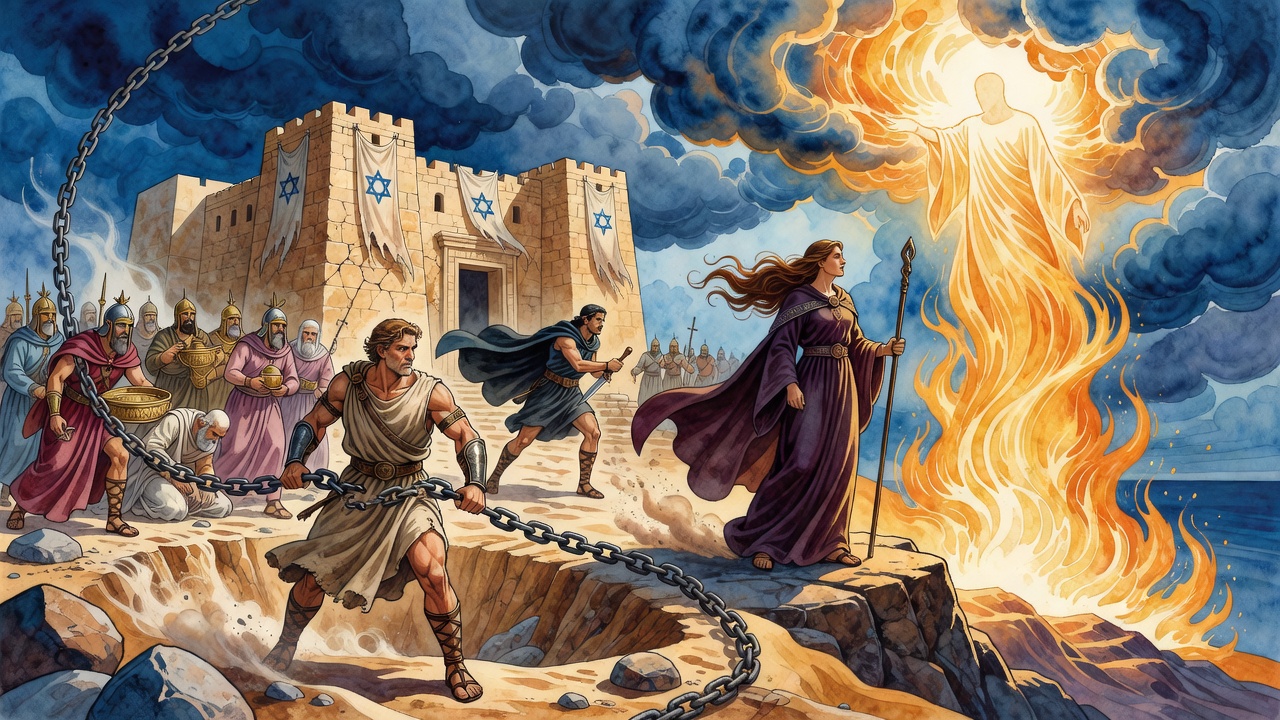
Deborah sent Barak toward a war that matched Joshua's unfinished work. Joshua had toppled thirty-one kings. Another thirty-one still breathed under Sisera's command, a host large enough to darken the valley floor.

After Ehud died, Israel had done evil again. An angel came with a rebuke that left little room for self-pity. Out of all nations God had chosen a people; He had sent Moses to teach them; they had strayed. Enemies would rise. In their distress they would admit the forsaking. Then the angel promised a different light: a woman would shine for them for forty years.

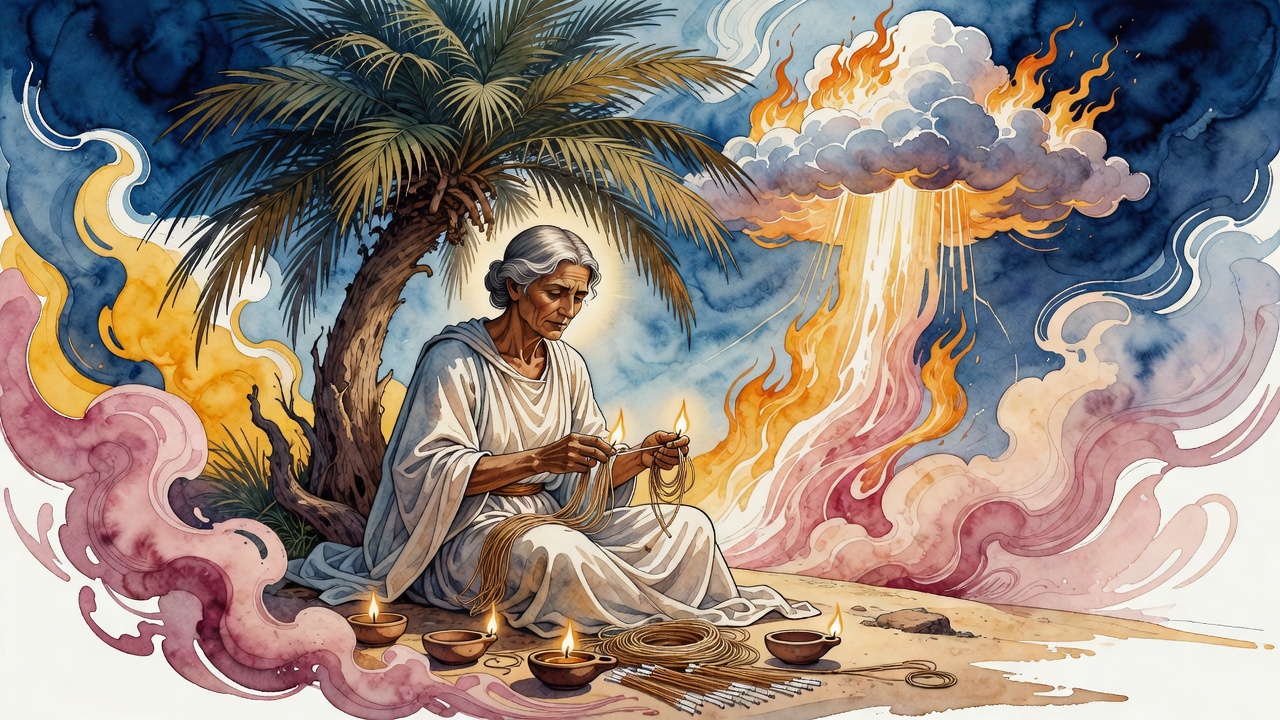
Deborah was already sitting under her palm when that promise matured into orders.

Fire From Heaven, Debt in the River

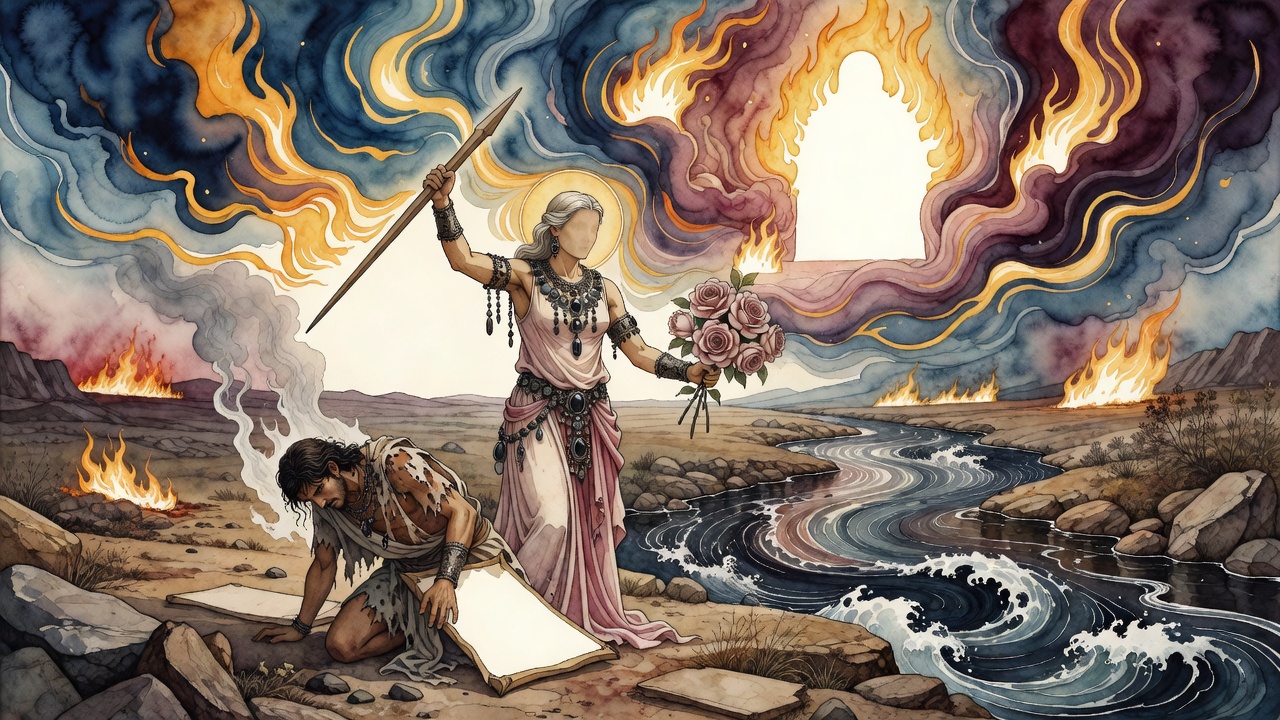
On the day of battle, water and fire took Israel's side. Heavenly fire pressed Sisera's ranks. The star Meros alone refused the summons. Men fled the heat toward the Kishon, thinking a river could be a mercy.

The Kishon had an older appointment. When Egypt drowned at the Sea of Reeds, God told the Angel of the Sea to cast the corpses onto land so Israel would see and not doubt. The Angel of the Sea complained of losing a gift. God pledged the Kishon as security: half as many bodies again when the time came.

Sisera's soldiers stepped into cool water and found a creditor. The river rose, swept the host toward the sea, and the fish cried that the truth of the Lord endures forever.

Jewels at the Tent Mouth

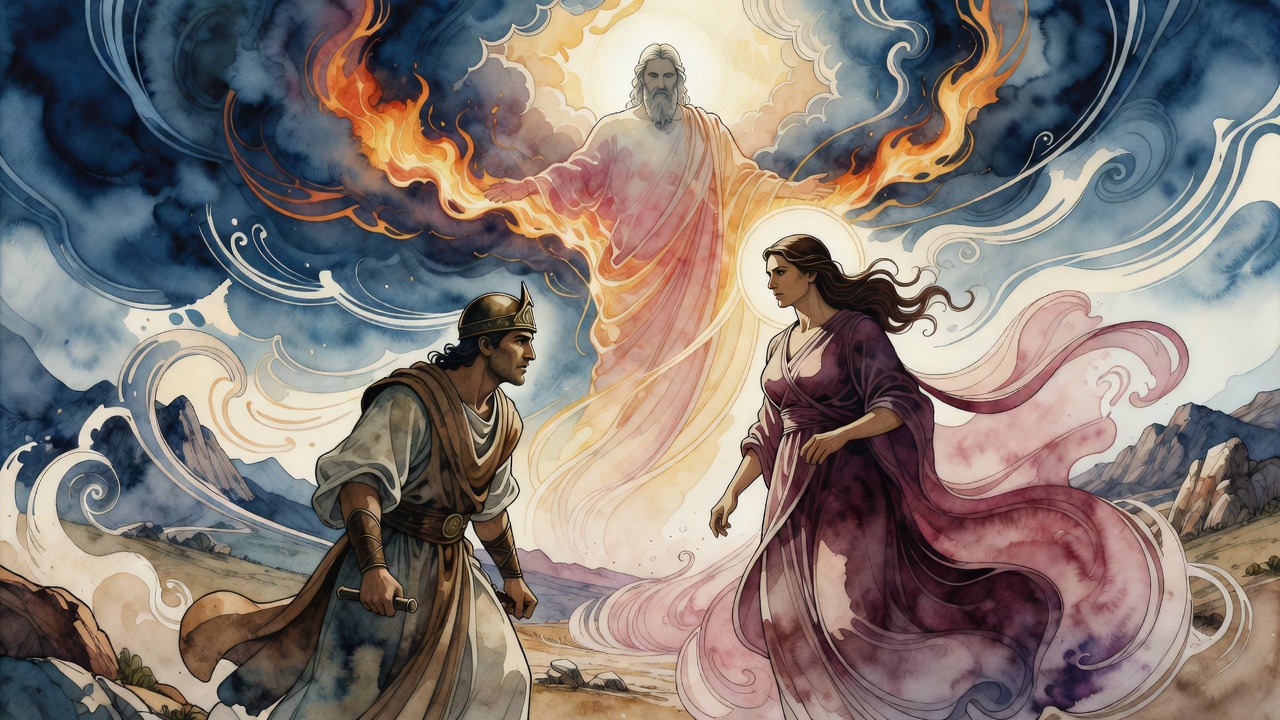
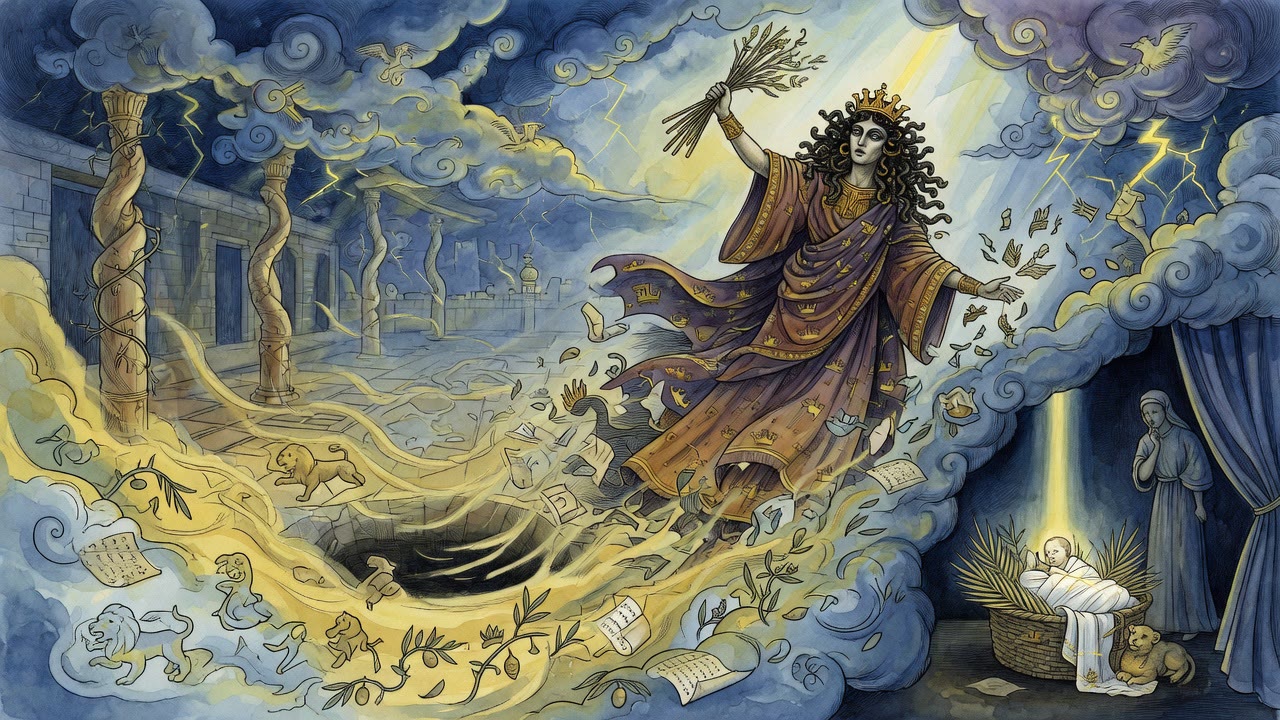
Sisera fled alone on horseback through the wreck of his ambition. Then he saw Jael. She came out dressed in rich garments and jewels, beauty arranged like a welcome. Her voice, the legends say, held a pull no other woman's held that day.

"Enter and refresh thyself with food," she said, "and sleep until evening, and then I will send my attendants with thee, for I know thou wilt not forget me, and thy recompense will not fail."

Inside, a bed strewn with roses waited. Exhaustion and vanity did the rest. Sisera already imagined bringing her home to his mother as a prize wife once safety returned. He slept as if the war had been a rumor.

The Peg and the Quiet Hand

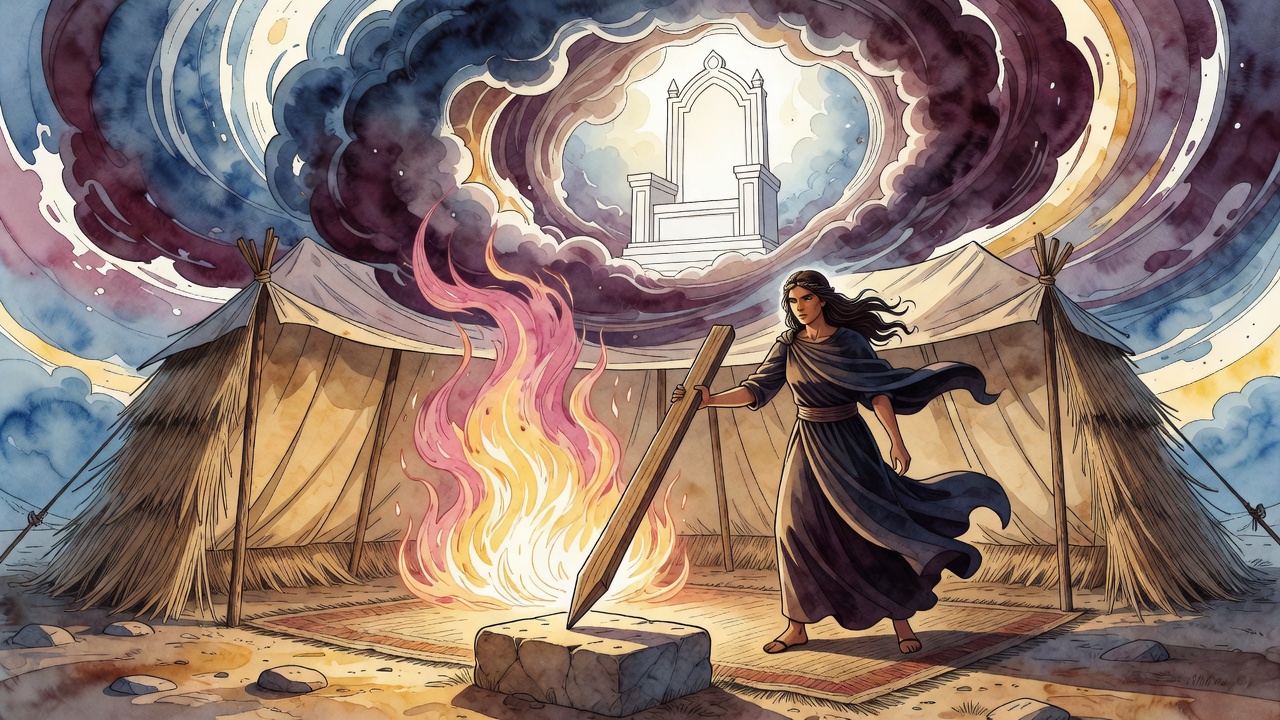
Jael did not send attendants. She took a tent peg and a hammer, tools of her own household, and ended the general who had made kings arrange themselves like a second Canaan. The woman promised as light for forty years had allies in river, fire, and a Kenite wife who knew how to host a hunted man.

Barak arrived to find the battle finished in a tent. Deborah's song would name both the stars that fought and the hand that did not tremble.

Barak's Road and Deborah's Order

Barak wanted Deborah beside him before he would move. The prophetess did not flatter the request. She gave him the road and the warning that glory would lean toward a woman's hand. The valley filled with iron and horses. Israel looked small until the sky joined the muster.

Fire from above is not metaphor in this telling. Men burned and ran. The Kishon waited like a clerk with a ledger. Long ago the Angel of the Sea had surrendered Egyptian corpses to the shore so Israel would believe. The river had been named as collateral. Sisera's host, cooling themselves in the current, paid a debt they never signed.

Jael's hospitality was a weapon sharpened as welcome. Roses on a bed are not kindness when the guest is the hammer of Canaan. Sisera's last plans were domestic fantasies: a beautiful woman, a mother's approval, a recompense for a general who still thought the war might renegotiate itself by morning.

The peg entered where sleep had made him soft. Deborah's forty years of light began not only with songs and palms but with a Kenite wife who understood that some guests must not leave. Barak found a finished corpse and an unfinished empire of kings who would not rise again under Sisera's whip.

The valley that morning had smelled of wet iron and horse sweat. By evening it smelled of river mud and a tent that had become a courtroom. Deborah's prophecy about a woman's hand did not need a second witness after the peg. Sisera's mother, far off, would wait at a window for chariot music that never returned. Israel kept the quieter music of a palm tree and a woman who judged beneath it while the kings of Canaan counted empty saddles.

Jael wiped nothing poetic from her hands. She had offered milk and rest the way a hunter offers shade. The roses were part of the snare. The jewels were part of the snare. The recompense she promised him was real; it was only not the recompense he imagined while he planned to present her to his mother as spoil of a war he had already lost to fire and water.


← All myths
From the tradition

Sources

3 sources

The texts behind this telling. Some cards carry a translation of the source; others are our own retelling of it, and each card says which. Every card links out to the original.

Legends of the Jews 2:42Legends of the Jews

Retold in our words. Read the original at the link below.The Legends of the Jews by Louis Ginzberg (1909) · Public Domain

Their task? It was not slight. In fact, according to Legends of the Jews, it was comparable to Joshua's entire conquest of Canaan! Now, you might remember Joshua. He took on the land of Canaan and defeated thirty-one kings. But here's the thing: he only defeated half of them. The other thirty-one were still out there, causing trouble. And guess who was leading them? The fearsome Sisera.

Ginzberg, in Legends of the Jews, tells us these unconquered kings amassed a staggering force. Arrayed against Deborah and Barak. So how did they stand a chance?

Well, like so many stories in Jewish tradition, the answer is: with a little help from above. As the tale goes, God aided Israel with both water and fire.

The Kishon – that’s the river we’re talking about here – and “all the fiery hosts of heaven” joined the battle. Except for the star Meros, that is. The Kishon, it turns out, had a long-standing appointment to play a crucial role in Sisera's downfall. But how does a river get involved in divine promises, you ask?

This is where it gets really interesting. The story goes that when the Egyptians were drowning in the Red Sea, God commanded the Angel of the Sea to cast their corpses onto the land. Why? So the Israelites could see the destruction of their enemies and wouldn't later doubt that the Egyptians had truly perished.

But the Angel of the Sea wasn't thrilled. He complained about having to give up a "gift," as we learn from Ginzberg. So, God promised compensation. The Kishon was offered as security, pledging to deliver half as many bodies again as the Angel of the Sea was giving up at the Red Sea. A divine IOU, if you will!

So, when Sisera's troops sought refuge from the scorching heavenly fire in the cool waters of the Kishon, God commanded the river to redeem its pledge. According to Legends of the Jews, the river rose up and swept the heathen down into the Sea. And the fishes in the Sea, well, they exclaimed, "And the truth of the Lord endureth forever!"

A pretty dramatic ending. The river Kishon, fulfilling its ancient promise, washing away the enemies of Israel. A reminder that even seemingly inanimate objects can play a part in the divine plan. A reminder that sometimes, the most unlikely allies can rise to meet the challenge. And maybe, just maybe, a hint that even when things seem impossible, the universe might just be on your side.

Full source
Legends of the Jews 2:43Legends of the Jews

Retold in our words. Read the original at the link below.The Legends of the Jews by Louis Ginzberg (1909) · Public Domain

Legends of the Jews turns to Sisera in Battle.

Sisera, the commander of the Canaanite army, was having a terrible day. A really, really terrible day. His massive army? Decimated. He was fleeing for his life on horseback, a lone figure amidst the wreckage of his ambitions.

Then, he saw her. Jael.

In Legends of the Jews, when Jael saw him approach, she went out to meet him decked out in rich garments and jewels. Imagine the scene: this weary, defeated general, eyes wide with desperation, sees this vision of beauty and welcome. Ginzberg's retelling emphasizes that she was unusually beautiful, her voice possessing a seductive quality unlike any other.

She spoke to him, offering respite, sanctuary. "Enter and refresh thyself with food," she purred, "and sleep until evening, and then I will send my attendants with thee to accompany thee, for I know thou wilt not forget me, and thy recompense will not fail." The promise in her words. The allure of safety. For a man on the run, it must have sounded like a slice of paradise.

And Sisera, blinded by exhaustion and perhaps a touch of vanity, fell for it hook, line, and sinker. He stepped into her tent, and there it was – a bed strewn with roses, carefully prepared by Jael.

Can you picture his thoughts? Legends of the Jews suggests he was so taken by Jael's beauty and the promise of comfort that he even envisioned taking her home to his mother as his wife, once he was secure. He was already planning his future with her!

But, of course, we know this isn't a love story. It's a story of survival, of courage, and of a woman who chose to defy expectations and become a heroine.

Jael's actions, while seemingly hospitable, were part of a much larger, divinely orchestrated plan. How often do we misread situations, seeing only what we want to see, blinded by our own desires or fears? And how often does a seemingly ordinary person hold the key to extraordinary change?

Full source
Legends of the Jews 2:37Legends of the Jews

Retold in our words. Read the original at the link below.The Legends of the Jews by Louis Ginzberg (1909) · Public Domain

The story of Deborah unfolds not long after the time of Ruth, another woman held up as an ideal. The Book of Judges tells us that after the death of Ehud, a judge who delivered Israel from the Moabites, the people "again did what was evil in the sight of the Lord." (Judges 4:1). And when they strayed, trouble followed.

In Ginzberg's retelling in, Legends of the Jews, God sent an angel to the Israelites with a rather stern message. It's a message that really gets to the heart of the covenantal relationship. "Out of all the nations on earth, I chose a people for Myself," the angel declared, "and I thought, so long as the world stands, My glory will rest upon them. I sent Moses unto them, My servant, to teach them goodness and righteousness. But they strayed from My ways." Ouch.

The consequences? God threatened to rouse their enemies against them. They'd be ruled over, and in their distress, they would cry out, "'Because we forsook the ways of our fathers, hath this come over us.'"

Here's where it gets interesting. Even in this moment of rebuke, there's a glimmer of hope. The angel continues, "Then I will send a woman unto them, and she will shine for them as a light for forty years." A woman. Not a king, not a warrior, but a woman who would lead them out of darkness. This is Deborah. And her story is just beginning. What does it mean that God would send a woman to lead? What kind of "light" would she bring? These are the questions that her story invites us to explore.

Full source