5 min read

Othniel, Ehud, and Deborah Break Israel's Chain

From Assyrian tribute to Moab's palace at Jericho to an angel's rebuke, three deliverers rise as Israel slides back into the same pit.

Curated by Arthur · Told by Maggid ·
Table of Contents
  1. Tribute That Tastes Like Dust
  2. A Palace Built on Stolen Ground
  3. The Locked Door at Jericho
  4. An Angel After the Judge Dies
  5. The Palm and the War
Othniel, Ehud, and Deborah Break Israel's Chain Click for full size

Tribute That Tastes Like Dust

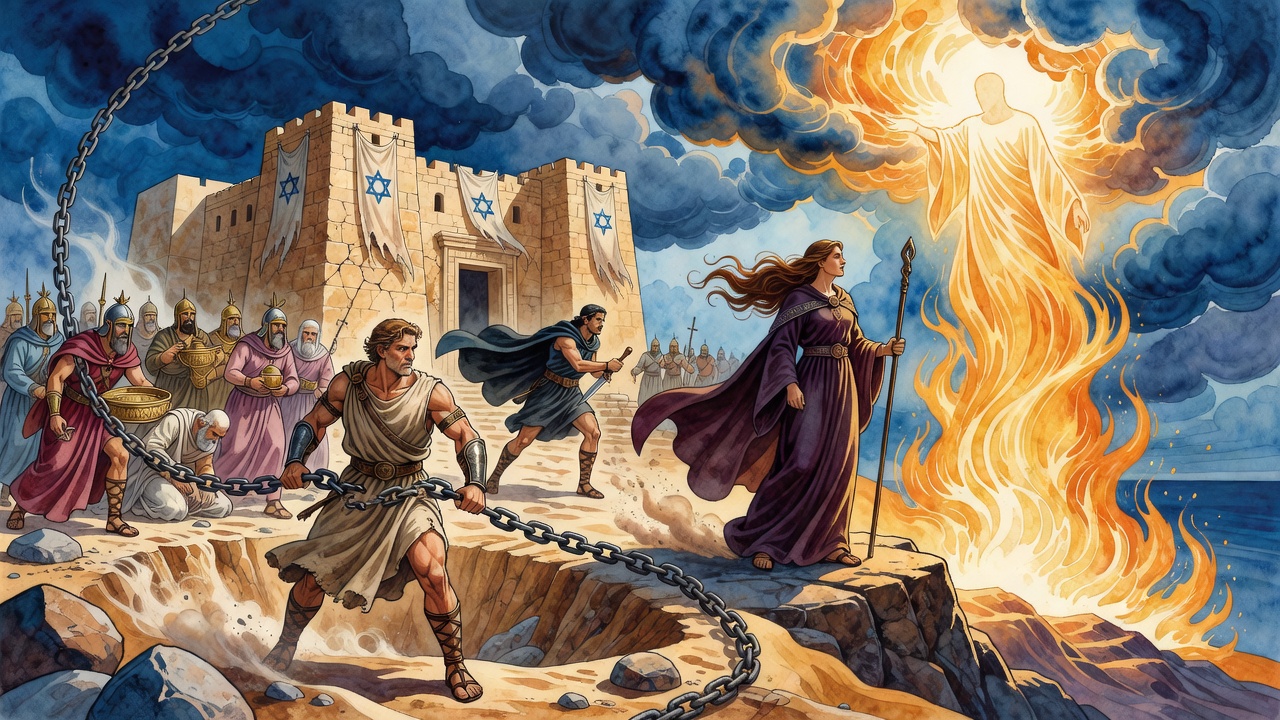
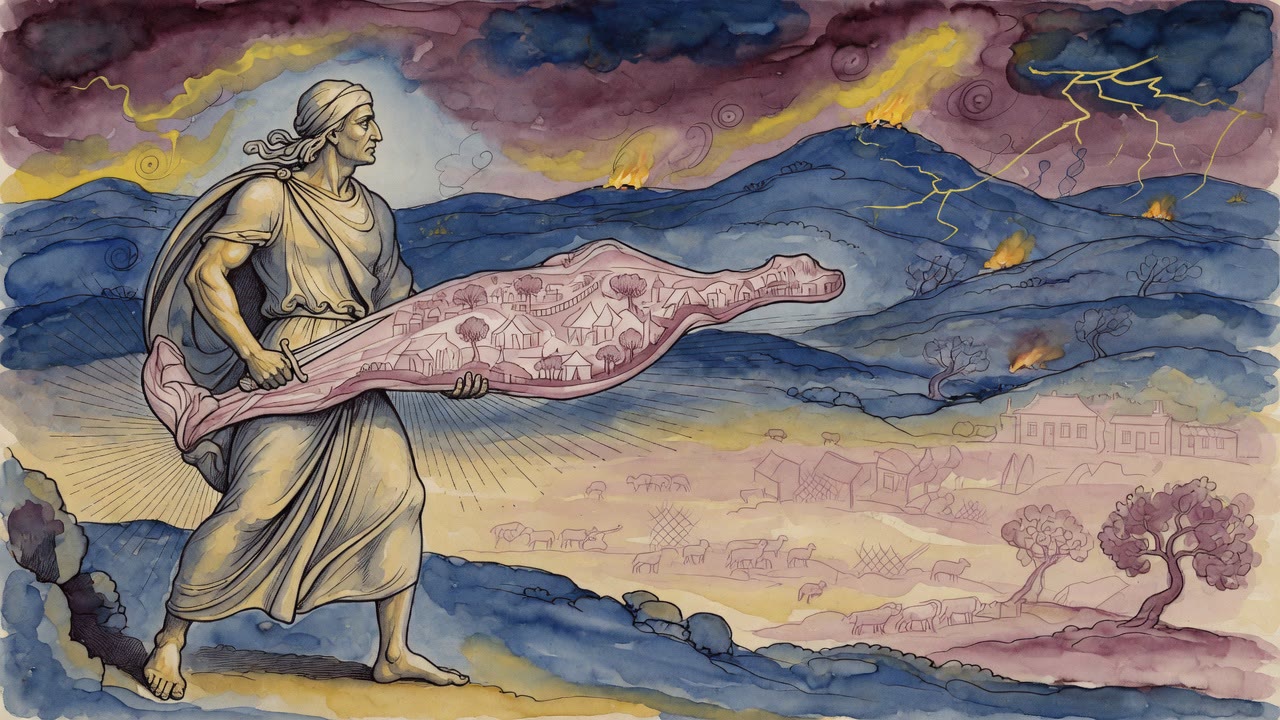
Othniel son of Kenaz walked among men who flinched when a foreign messenger approached the threshing floor. For eight years Chushan of Assyria had milked Israel of grain, silver, and pride. The fields still grew, but the harvest left the country thinner each season, as if the soil itself had learned to pay tax. Canaanite customs sat in houses where the law of God had once been taught by fathers who now shrugged. The army had lost its edge the way iron loses a temper in soft fire.

A command came to Othniel that did not wait for a council or a show of hands. He gathered a small band, men too restless to stay home and too few to look like a nation on the march. They hit the Assyrian garrison hard enough that fear changed sides overnight. More fighters came when the first smoke rose over the enemy storehouses. Othniel drove the occupiers back toward the Euphrates and judged Israel forty years. Peace settled like a heavy blanket. Under it, the old habits waited with infinite patience.

In those years he also took strong cities by strange paths. One city hid its only entrance in a hollow almond tree leading to a cave. An informer sold the secret. The city fell. Legends later claimed the informer's reward was a town death itself could not enter unless a resident chose to leave. Even in victory, the stories refused to stay ordinary.

A Palace Built on Stolen Ground

After Othniel died, Eglon of Moab smelled the decay and marched. Eighteen years of Moabite rule followed. Eglon planted a royal house at Jericho, deep in Israelite land, so that tribute walked past Israel's own ruins on the way to a foreign throne. The people paid and bowed and learned the shape of endurance without hope. Children grew up thinking a Moabite palace on their soil was simply weather.

Ehud the Benjamite learned a different craft. He was left-handed, strong, patient, and willing to smile while he planned. He brought gifts until the king's servants trusted his face the way men trust a familiar merchant. On his right thigh, where a right-handed guard would not search first, he strapped a short blade and walked into the heat of a summer afternoon with tribute in his hands and a private sentence in his chest.

The Locked Door at Jericho

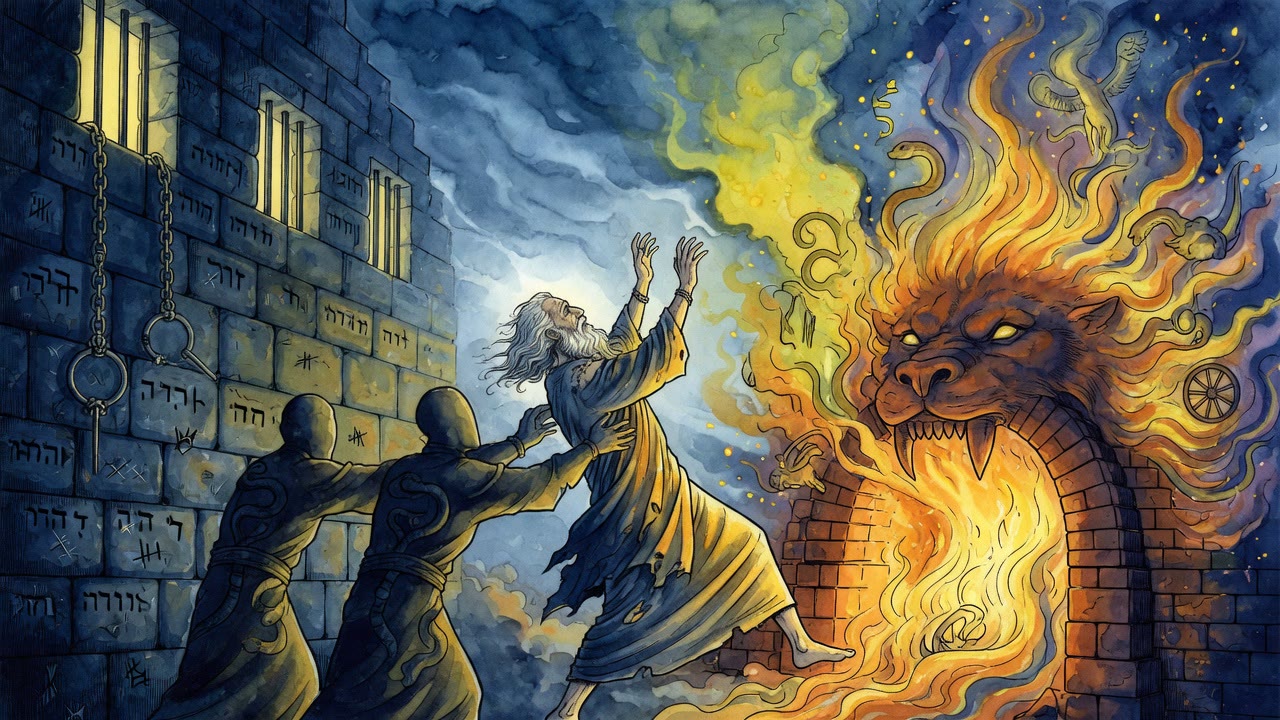
Ehud sent his own servants away and told Eglon he carried a word from God. The fat king rose from his seat in excitement, greedy for a secret from heaven the way he was greedy for tribute from earth. Ehud drove the dagger in and left it buried to the hilt. He locked the chamber door behind him and walked out as if the audience had been ordinary flattery. The servants waited outside, embarrassed to interrupt what they thought was private royal business, until the smell and the silence argued otherwise and courage finally outranked protocol.

By then Ehud was already raising the hills with a horn and a shout. Moab's grip broke in pieces. Israel breathed. For a while the chain of oppression held open like a door kicked off its latch.

Between judges the land learned the cost of forgetting in small installments: a shrine on a hill, a marriage into a foreign cult, a weapon left to rust while men argued about borders. Deliverance, when it came, always looked personal before it looked national.

An Angel After the Judge Dies

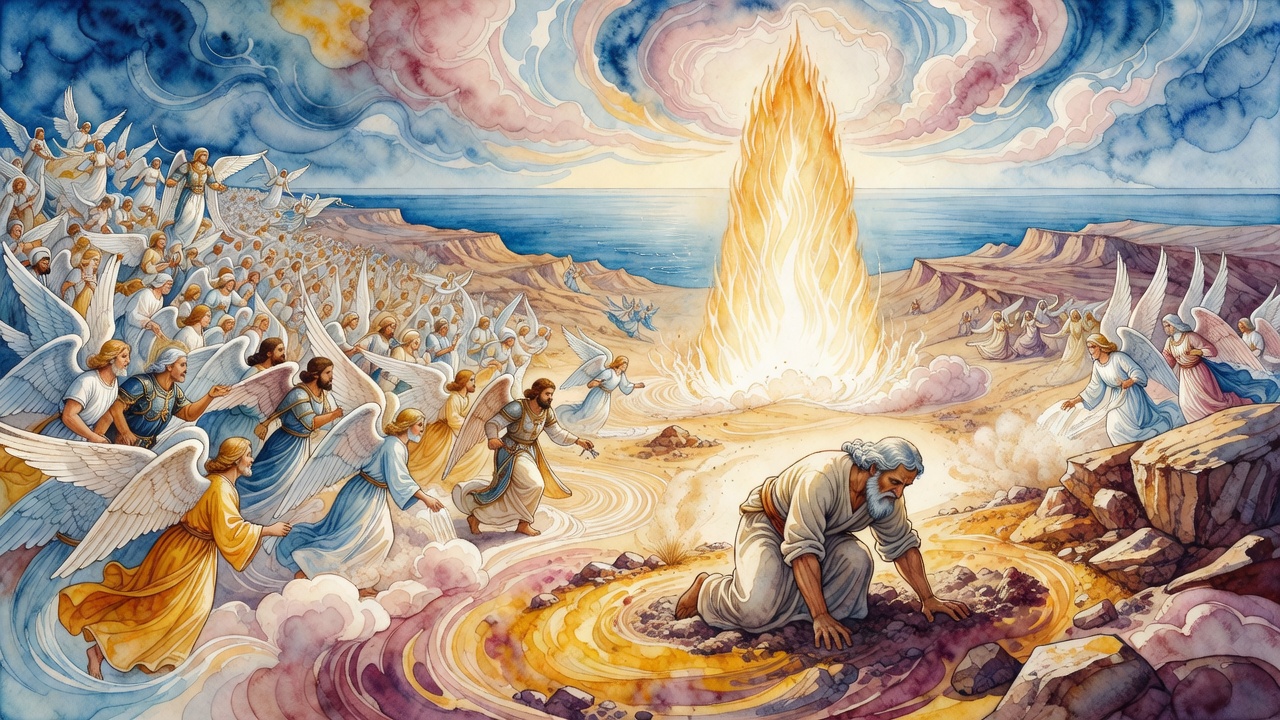
When Ehud died, Israel slid again with the ease of a habit. The book says they did evil in the sight of the Lord (Judges 4:1). An angel came with a message that cut closer than any foreign tax. Out of all nations God had chosen this people. He had sent Moses to teach goodness and righteousness. They had strayed from those ways as if the teaching had been a rumor. Enemies would rise. In distress they would confess that forsaking the ways of the fathers had brought the weight down on their necks.

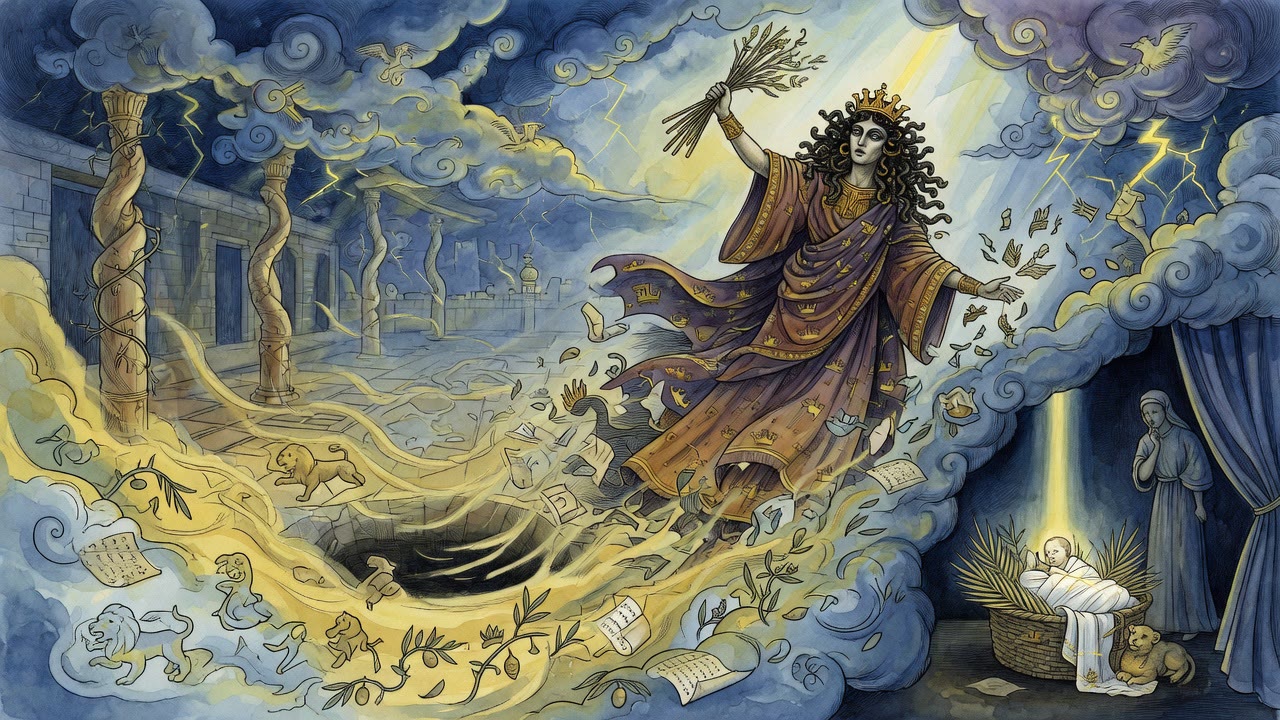
Then the angel promised a strange rescue. Not another left-handed man with a hidden knife. "I will send a woman unto them, and she will shine for them as a light for forty years." The light had a name waiting in the next generation: Deborah.

The Palm and the War

Deborah sat under a palm tree where every case could be seen by anyone who cared to watch. She judged in the open so no private room could stain her rulings with suspicion. From that shade she sent Barak to war against Sisera, and the pattern that had defined the people for ages turned again: oppression, cry, deliverance. Sin would return after her light as it had after Othniel and Ehud. The chain never fully broke. It only loosened in the hands of those willing to grip it while it burned.

Three deliverers. Three temporary dawns. The same God who sent them also sent the angel's rebuke, because rescue without memory is only a pause between captivities.


← All myths
From the tradition

Sources

3 sources

The texts behind this telling. Some cards carry a translation of the source; others are our own retelling of it, and each card says which. Every card links out to the original.

Antiquities V.3-4Antiquities of the Jews (Josephus)

Retold in our words. Read the original at the link below.Antiquities of the Jews, trans. William Whiston · Public Domain

The pattern that defined Israel for centuries started here: sin, oppression, repentance, deliverance. Then sin again. Josephus traces this brutal cycle through the first judges with the unflinching eye of a historian who has watched his own nation repeat every mistake.

It began with the tribe of Dan. The Canaanites pushed the Danites off the fertile plains and into the mountains, leaving them without enough land to survive. Five scouts traveled north to find new territory, reaching the foothills near Mount Lebanon, where they discovered rich, undefended land near the city of Sidon. The entire tribe relocated there and built a city they named Dan, after their ancestor (Judges 18:29).

Meanwhile, the rest of Israel sank. They abandoned God's laws, adopted Canaanite customs, and lost their military edge. Chushan, king of Assyria, conquered them easily. For eight years the Israelites endured crushing tribute and total subjugation. Then a man named Othniel, son of Kenaz, from the tribe of Judah, received a divine command to act. He gathered a small band of men, most were too afraid or too comfortable to join. And destroyed the Assyrian garrison. As more people rallied behind him, he drove the occupiers back across the Euphrates. Othniel judged Israel for forty years before he died.

The peace did not last. Eglon, king of Moab, saw Israel's spiritual decay and attacked. He crushed their army, forced them into submission, and built himself a royal palace at Jericho, right in the heart of Israelite territory. For eighteen years the Moabites drained them dry.

Deliverance came through an assassination. Ehud, a left-handed Benjamite of extraordinary strength, cultivated a friendship with Eglon through gifts and flattery until he became a trusted visitor. One summer afternoon, Ehud arrived with tribute and a dagger strapped to his right thigh, hidden where a right-handed guard would never think to check. He sent his servants away and told the king he had a message from God. Eglon leaped from his throne in excitement. Ehud drove the blade into the king's belly, left it buried there, locked the door behind him, and walked out. By the time Eglon's servants worked up the courage to check on their master, Ehud had already rallied the Israelites. They seized the fords of the Jordan, cut off the Moabite retreat, and killed over ten thousand soldiers. Not one escaped. Ehud governed Israel for eighty years, a remarkable tenure for a man whose rise began with a single, perfectly timed act of violence.

Full source
Legends of the Jews 2:37Legends of the Jews

Retold in our words. Read the original at the link below.The Legends of the Jews by Louis Ginzberg (1909) · Public Domain

The story of Deborah unfolds not long after the time of Ruth, another woman held up as an ideal. The Book of Judges tells us that after the death of Ehud, a judge who delivered Israel from the Moabites, the people "again did what was evil in the sight of the Lord." (Judges 4:1). And when they strayed, trouble followed.

In Ginzberg's retelling in, Legends of the Jews, God sent an angel to the Israelites with a rather stern message. It's a message that really gets to the heart of the covenantal relationship. "Out of all the nations on earth, I chose a people for Myself," the angel declared, "and I thought, so long as the world stands, My glory will rest upon them. I sent Moses unto them, My servant, to teach them goodness and righteousness. But they strayed from My ways." Ouch.

The consequences? God threatened to rouse their enemies against them. They'd be ruled over, and in their distress, they would cry out, "'Because we forsook the ways of our fathers, hath this come over us.'"

Here's where it gets interesting. Even in this moment of rebuke, there's a glimmer of hope. The angel continues, "Then I will send a woman unto them, and she will shine for them as a light for forty years." A woman. Not a king, not a warrior, but a woman who would lead them out of darkness. This is Deborah. And her story is just beginning. What does it mean that God would send a woman to lead? What kind of "light" would she bring? These are the questions that her story invites us to explore.

Full source
Legends of the Jews 2:25Legends of the Jews

Retold in our words. Read the original at the link below.The Legends of the Jews by Louis Ginzberg (1909) · Public Domain

Tucked away in the ancient stories of the Israelites, we find hints of just such a place. Our story begins with Othniel. Now, Othniel's reign, which lasted forty years, starts with a bang: his victory over Adoni-bezek. You might not recognize the name, and that's okay. Adoni-bezek wasn't exactly a king in the traditional sense, but he was a force to be reckoned with. According to Ginzberg's retelling in Legends of the Jews, this guy had conquered seventy other kings! Seventy! He wasn't top dog, but he was certainly a major player in the region.

Following this victory, the Israelites set their sights on a city called Luz. Capturing Luz, however, was no easy feat. Its defenses were… unconventional. The only way in was through a cave, and the path to that cave was hidden inside a hollow almond tree.

It seemed impossible to breach Luz's defenses. Until… a resident of the city betrayed its secrets. Think about the weight of that decision. The risk! Because of this unnamed informant, the Israelites were able to find the hidden passage and finally capture the city.

What about the informer? What became of them? That God rewarded this person in a truly remarkable way. The city that they founded, as a reward for their assistance, was granted divine protection.

And here's where the story takes a turn towards the unbelievable. This city, founded by the grateful informer, was untouched by both Sennacherib and Nebuchadnezzar – two of the most powerful and destructive rulers in ancient history. Not only that, but even the Angel of Death had no power within its walls!

The inhabitants of this city, according to the legend, were immortal. They lived forever, unless, weary of life – tired of existence itself – they chose to leave. Only then would death claim them. A city where death holds no sway unless invited. A place where the burdens of life, the endless cycle of days, could eventually lead someone to simply… walk away.

This idea of a hidden city, protected by divine favor, untouched by the ravages of time and war. It raises so many questions. What was life like in this immortal city? What were their joys, their sorrows, their challenges? Did the absence of death create a utopia, or a unique form of stagnation?

We don't know. The text doesn't say. But this brief glimpse into the legend of Luz offers a tantalizing peek into the tradition of Jewish folklore, a reminder that within these ancient stories lie profound reflections on life, death, and the enduring power of choice. And perhaps, just perhaps, a whisper of hope for a world where even death can be overcome.

Full source